






AI FORCE ASSOCIATION HQ: For more than 60 years, most Americans have thought of nuclear weapons as an all-or-nothing game. The only way to win is not to play at all, we believed, because any use of nukes will lead to Armageddon. That may no longer be the game our opposition is playing. As nuclear… Keep reading →
asia
WASHINGTON: The much-debated “pivot to Asia” works even in the face of sequestration and is reassuring our Pacific allies that we will stand behind them, the Navy’s most senior officer said on his return from the region. “Our budget situation is tough, [but] it’s not going to stop the rebalance,” pledged Adm. Jonathan Greenert, chief… Keep reading →
China Takes Baby Steps On Military Transparency; Blots Copybook Whining About Pacific Pivot
By Colin Clark
WASHINGTON: Even the grim, dark and powerful Soviet Union came to share fairly detailed information about the size and potency of its military to ensure nobody made a wrong step by over- or underestimating its military prowess. The current rising power, China, so far, has largely refused to share much information about either how its forces are organized or what weapons it fields.
So when official Chinese media were joined by Western media in reporting that the Peoples Liberation Army had issued a White Paper, “Diversified Employment of China’s Armed Forces,” offering greater transparency, I checked with a range of experts on the PLA to see if that was, in fact, the case.
“There is really nothing that stands out as a remarkably new emphasis or form of ‘transparency.’ The identification of all PLA Army units as mobile forces with their military region affiliation is a better explanation of order of battle,” said Larry Wortzel, one of Washington’s most respected China military analysts and also a member of the congressional U.S.-China Economic and Security Review Commission, in an email.For contrast, here’s what the Peoples Liberation Daily says about the White Paper:
“…China’s military is transforming from ‘responding to questions’ to ‘explaining proactively’, which shows the country is more transparent and willing to take on responsibilities. The national defense white paper shows Chinese army’s transparency and openness. Along with the accelerating pace of going out, Chinese army has taken the initiative to show its image to the world. It is obvious to see the country’s sincerity and hard working in military transparent.”
OK. And Dean Cheng, China analyst at the conservative Heritage Foundation (where Wortzel used to work), offered the Chinese a tiny nod.
“To give the Chinese credit, I don’t think we’ve ever had a nice, neat summary by them of which units (or at least their designations) are in the Nanjing or Lanzhou Military Region. It’s a (baby) step towards transparency. It’s also at an extremely meta-level: armies, fleets,” Cheng says in his email.
But the real problem both the Chinese and Western countries face is that, as the Chinese paper said: “Western countries have suspected Chinese army for a long time, guessing whether Chinese army is defensive or offensive.”
The Chinese says simply that this latest paper, “has answered the suspicion directly. ‘China will never seek hegemony or behave in a hegemonic manner, nor will it engage in military expansion,’ the white paper says.”
As is clear from Wortzel and Cheng’s observations, that may not entirely be the case.
Cheng also detailed how this paper differs from earlier Chinese offerings:
- “Space and cyber are only mentioned twice (as far as I can tell), both in passing. However, some mention of informationization (which is broader than cyber). Information dominance (specifically mentioned) would include counter-space and cyber activities.
- “Military support to national development is now listed AFTER protecting territorial sovereignty. This is a shift from the previous order when discussing ‘new historic missions” of the PLA.
- “Heavy emphasis (or at least prominent reference) to maritime security, including securing SLOCs (Sea Lines of Communication), defense of territorial waters, etc.”
“‘Some countries are strengthening their Asia-Pacific military alliances, expanding military presence in the region, and frequently making the situation there tenser,’ the 40-page report on the ‘Diversified Employment of China’s Armed Forces’ said, without naming any particular state,” the People’s Liberation Daily says. Keep reading →
NATIONAL HARBOR: China bullies its neighbors, hacks computers around the world, and tests a missile designed to sink American aircraft carriers. The US Navy reallocates its newest and most combat-capable warships to the Pacific. The retired Vice-Chairman of the Joint Chiefs of Staff, the sinophilic Gen. James “Hoss” Cartwright, says the Air Force and Navy’s high-profile AirSea Battle concept “is demonizing China.”
But amidst these tensions — indeed, precisely because of them — American officers are eager to build relationships with their People’s Liberation Army counterparts to prevent misunderstandings and defuse any potential conflict, preferably before it even begins. “Strengthening our military-to-military relationship with China” is listed in the Pentagon budget proposal released Wednesday as a priority to be protected from funding cuts, singling out an annual search-and-rescue exercise in Hong Kong (SAREX) involving both militaries as an example. This month, the Chinese even formally accepted the Navy’s inivitation to participate in the massive multinational Rim of the Pacific (RIMPAC) exercise for the first time. Keep reading →
For a host of security and economic reasons, American foreign and defense policy will increasingly focus on the Asia-Pacific region in the decades ahead. With over 60% of all U.S. exports going to Asia-Pacific Economic Cooperation (APEC) countries and 40% of total global trade emanating from Asia-Pacific, the United States cannot be an impartial observer of events in the region.
That interest should be heightened by the accelerating military and particularly naval buildup that is playing out across East Asia and the Western Pacific in response to China’s rapid and opaque military modernization efforts. Countries from Vietnam to the Philippines to Japan are responding to Beijing’s recent assertiveness and growing military capabilities by investing in advanced systems of their own, fostering a potentially volatile climate in the economically-essential waters of East Asia. Keep reading →

We have heard much about the anti-access/area denial threat China poses to American and allied forces in the Pacific. We have read much about new Chinese missiles such as the DF-21, which supposedly can destroy maneuvering ships at sea — especially US aircraft carriers. We have read that Pacific allies wish to deploy substantial fleets of F-35s, and then critics decide that these “short range” assets can not meet the crucial needs of warfighting in the Pacific.
We have also learned in the press that core competencies like amphibious assault have now become virtually impossible because of the A2/AD capabilities of China. What is lost in all of this hyperbole is what the United States and its allies are doing to shape a new combat capability appropriate to the 21st century. It may be true that a linear airpower force would find it difficult to cope with such threats. One deploying what we call S-cubed evolution capabilities — sensors, stealth, and speed — can create a powerful distributed force in the Pacific, one that so complicates Chinese military planning as to greatly enhance US deterrence. Keep reading →
WASHINGTON: Singapore is expected to announce sometime in the next 10 days that it plans to buy its first squadron –12 planes — of some 75 of Lockheed Martin’s F-35Bs, further bolstering what had been the flagging fortunes of the world’s most expensive conventional weapon system.
The fact that American allies in the Pacific are the ones committing to the controversial and over-budget aircraft is telling. If you want to understand the calculus driving these choices, first look at China, which to countries such as Singapore, Japan, Australia, and South Korea is the primary long-term threat. Keep reading →
Amidst all the budgetary gridlock, it’s nice to know something still works in the federal government. The first of the Navy’s controversial Littoral Combat Ships, LCS-1 Freedom, will sail for Singapore, our not-quite-ally, this Friday, March 1st — the same day the sequestration cuts will start taking effect — sporting a new camouflage paint job that sets its apart from traditional naval vessels.(Paint schemes and the cost of applying them to something as massive as a warship are a big deal in the Navy).
Intended to build a new class of small, agile, and innovative warships, the LCS program has come under bitter criticism that the ships are too expensive for their size and too fragile for major combat. Freedom in particular has taken flak for hull cracks, which contractor Lockheed Martin insists are all repaired and won’t reoccur on redesigned follow-on ships. After years in development hell, the first LCS is finally underway on a real-world mission — headed for the Pacific amidst rising tensions between China and its neighbors. Keep reading →


WASHINGTON: What does America need an army for, anyway? The question has bedeviled policymakers since the Founding Fathers, who wrote their distrust of large ground forces into the Constitution. The question returns as budgets come back down after every land war.
Colin Clark
Sydney J. Freedberg, Jr.
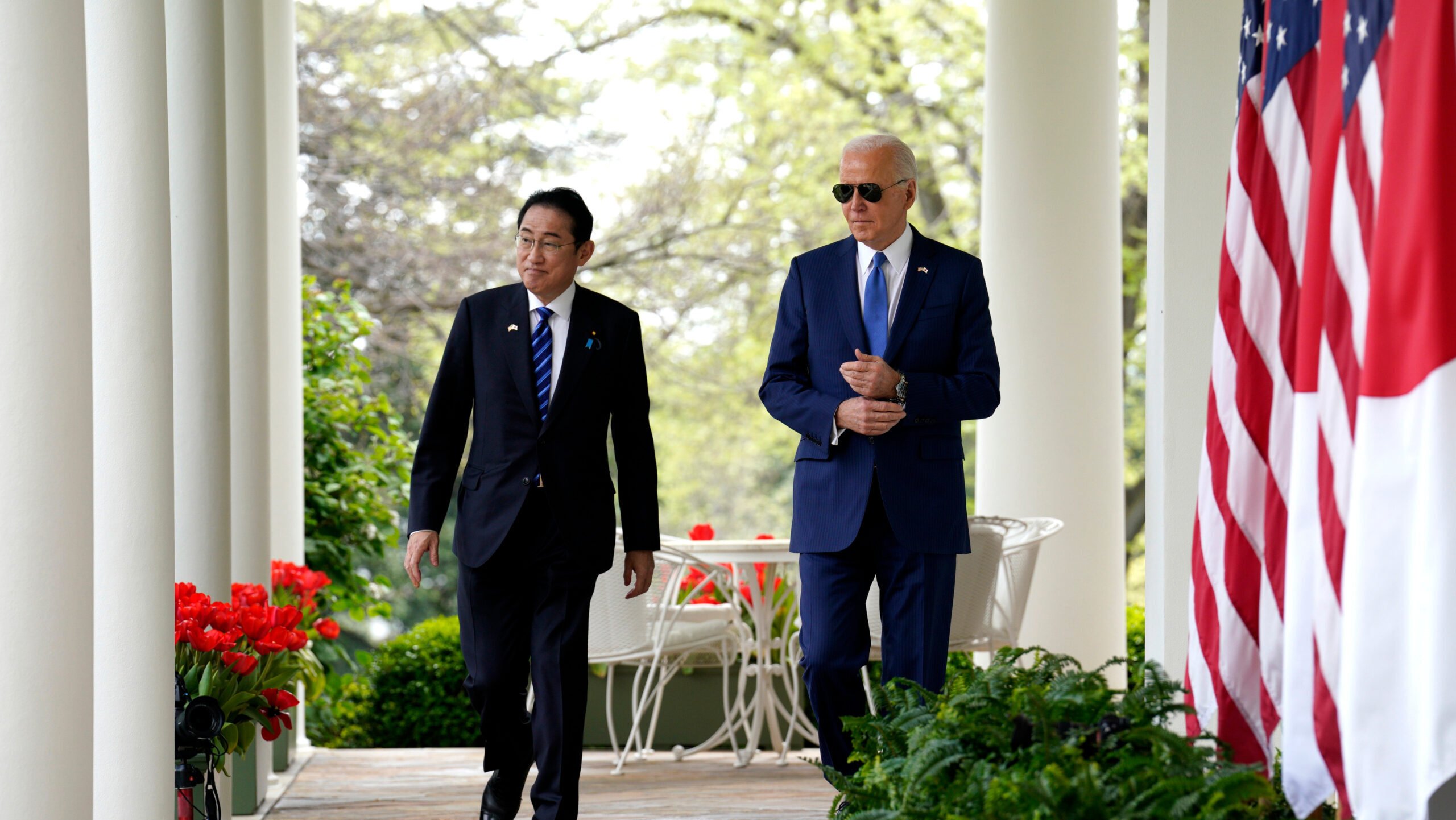
Hagel Offers China, North Korea Clear Guidance: Japan Is US Ally So Back Off
By Robbin Laird and Ed Timperlake The Chinese, who have been shoving their neighbors around with considerable panache over the last year, upped the ante yesterday with a claim in the official People’s Daily — not yet disavowed by the government — that the PRC may have a claim to Okinawa and others of the… Keep reading →