










lcs

CAPITOL HILL: Yes, the defense budget is a mess. Continued uncertainty about whether sequestration will go away or is the new norm has thrown the annual budget process into even greater disarray than usual. But, Rep. Randy Forbes believes there’s a silver lining. Precisely because the president’s budget request is largely overtaken by events, Congress… Keep reading →

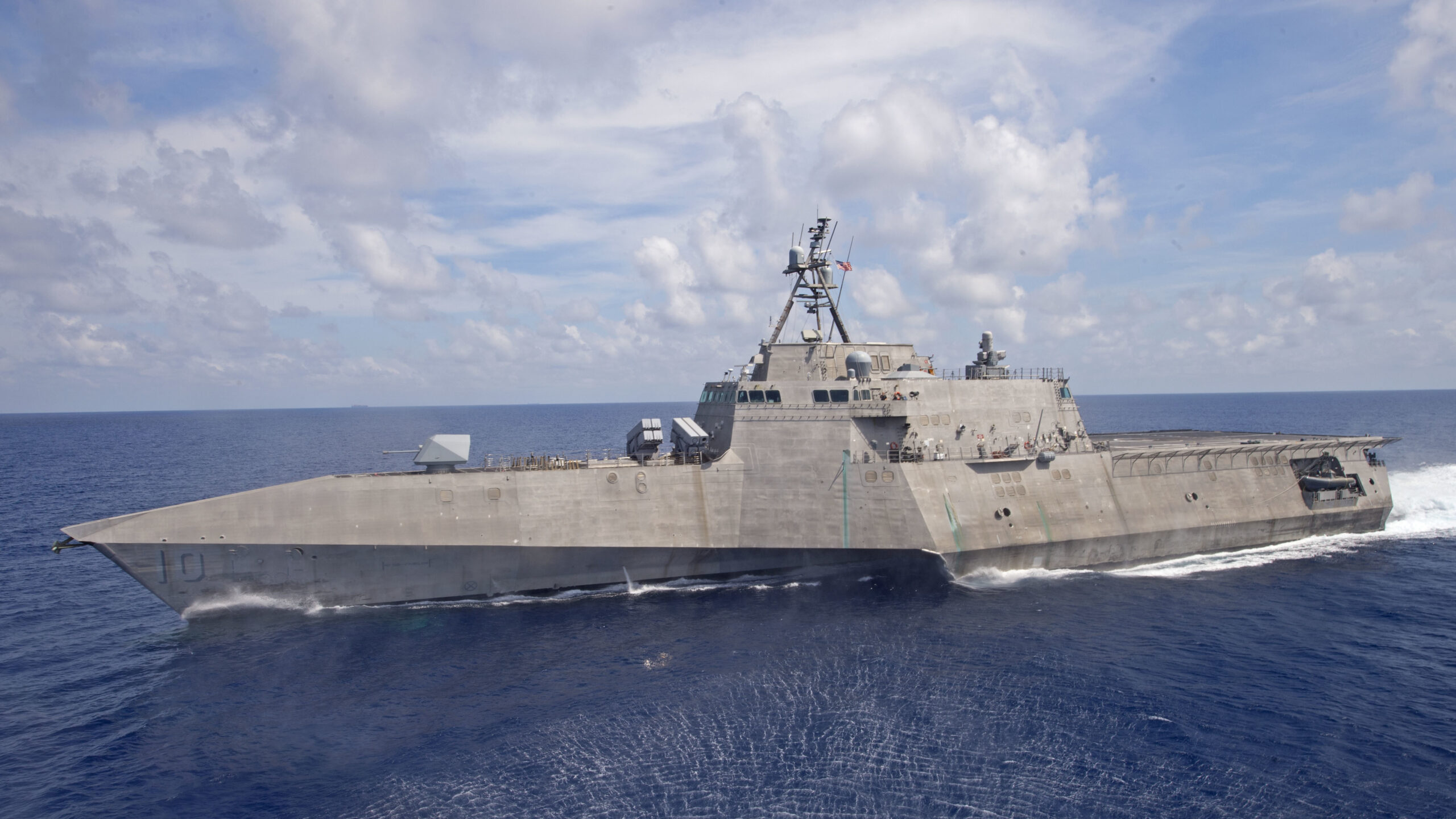
LCS-1 Freedom in Guam 8600054408_7d148ae721

In a hastily convened conference call with journalists, the Navy pushed back today against recent congressional criticisms of its Littoral Combat Ship. Yesterday, the LCS program took a 1-2 blow from BreakingDefense, which got a draft of a Government Accountability Office (GAO) report questioning the Navy’s cost estimates to operate it. There was also one… Keep reading →

The $13 billion supercarrier USS Ford under construction in Newport News, Va.

CAPITOL HILL: It’s been a rough 48 hours for the US Navy. Yesterday, the Littoral Combat Ship was battered by House appropriators and questioned by a leaked report. Today it was the Senate Armed Service seapower subcommittee’s turn to grill the Navy about its aircraft carrier and submarine programs. While the automatic 10-year budget cuts known as sequestration played a major role… Keep reading →

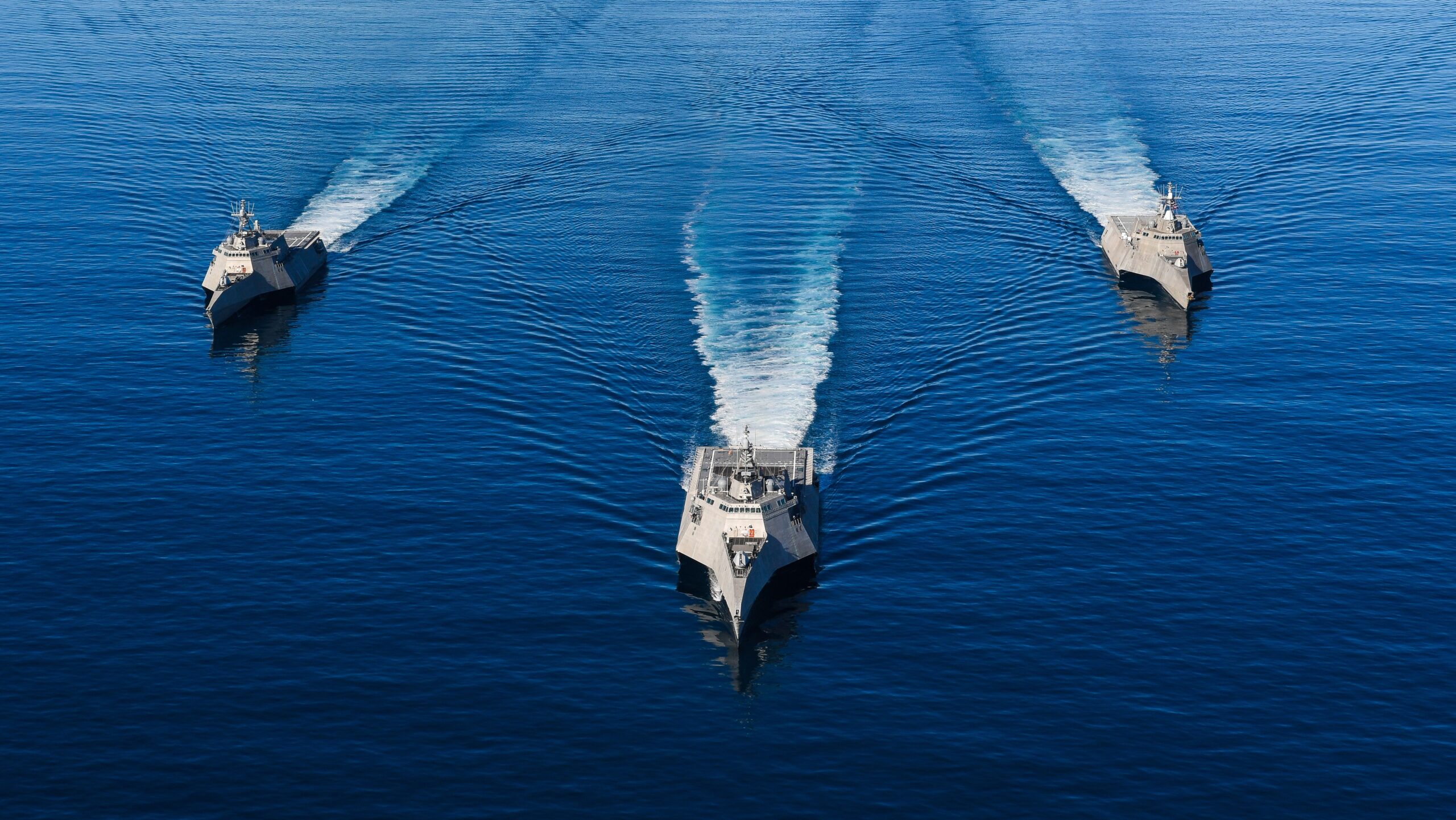
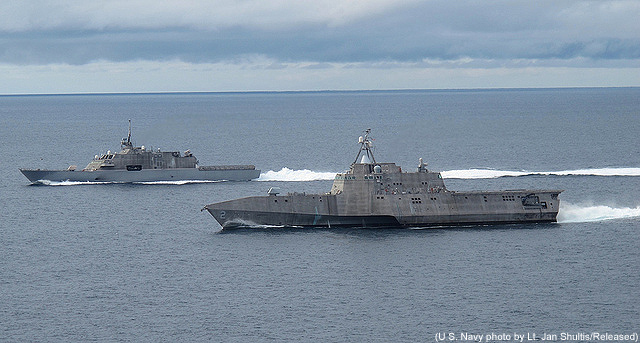
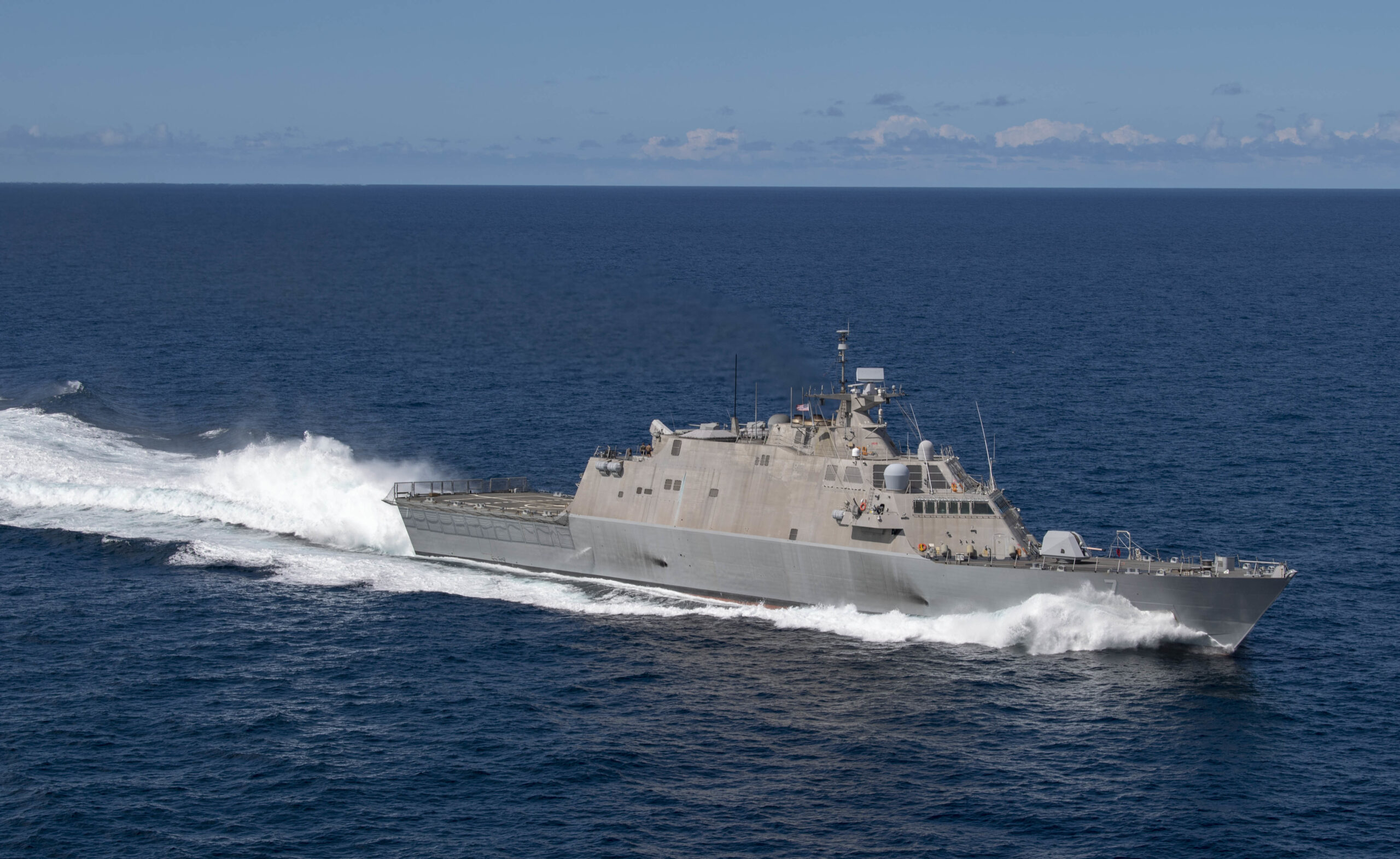
The two Littoral Combat Ship variants, LCS-1 Freedom and LCS-2 Independence.

CAPITOL HILL: The Navy is 90 percent sure its current estimated cost to operate and maintain the controversial Littoral Combat Ship is off target, according to a draft Government Accountability Office report obtained by BreakingDefense. According to the anonymous authors – whose diagnosis, we should emphasize, is not yet the official and fully vetted conclusion… Keep reading →

CAPITOL HILL: Navy Secretary Ray Mabus talked up the controversial Littoral Combat Ship days before departing for Asia to visit the first LCS, USS Freedom, which recently arrived in Singapore (sporting a sniffy camo paint job). Freedom has been bedeviled by cost overruns, delays, and manufacturing defects, with a new problem, seawater contamination in lubricant fluid, arising on its trans-Pacific trip. But the bigger picture Mabus said, is how this new class of small and nimble ship will cooperate with foreign partners to keep the peace in the volatile South China Sea and the strategic Strait of Malacca.

“Freedom is the first of its class, and it was built as an experimental ship, and every first of the class has some issues,” Mabus said of the seawater contamination, speaking to reporters after a Friday speech on energy security hosted by the Truman National Security Project. “One of the reasons we sent Freedom forward on deployment was to see what those issues were.” Keep reading →

WASHINGTON: The Navy’s top admiral talked up cheap ships and high tech this morning, from laser weapons to a new double-decker version of the Mobile Landing Platform vessel (pictured above). Chief of Naval Operations Adm. Jonathan Greenert said precious little about the rolling budget cuts called sequestration. He clearly preferred to emphasize a bold vision of the future rather than the current budget crisis that has forced the fleet to halve its aircraft carrier presence in the volatile Persian Gulf.

Indeed, speaking at a Newseum conference sponsored by McAleese & Associates and Credit Suisse [click here for full coverage], the CNO struck a remarkably optimistic note about the current fiscal misery: “If we get a bill at the end of this month, all of the carrier woes” — delays not just to deployments but to maintenance overhauls — “all go away,” Adm. Greenert said. “The money’s in place; we [just] need the authority to spend it.” Keep reading →

Amidst all the budgetary gridlock, it’s nice to know something still works in the federal government. The first of the Navy’s controversial Littoral Combat Ships, LCS-1 Freedom, will sail for Singapore, our not-quite-ally, this Friday, March 1st — the same day the sequestration cuts will start taking effect — sporting a new camouflage paint job that sets its apart from traditional naval vessels.(Paint schemes and the cost of applying them to something as massive as a warship are a big deal in the Navy).

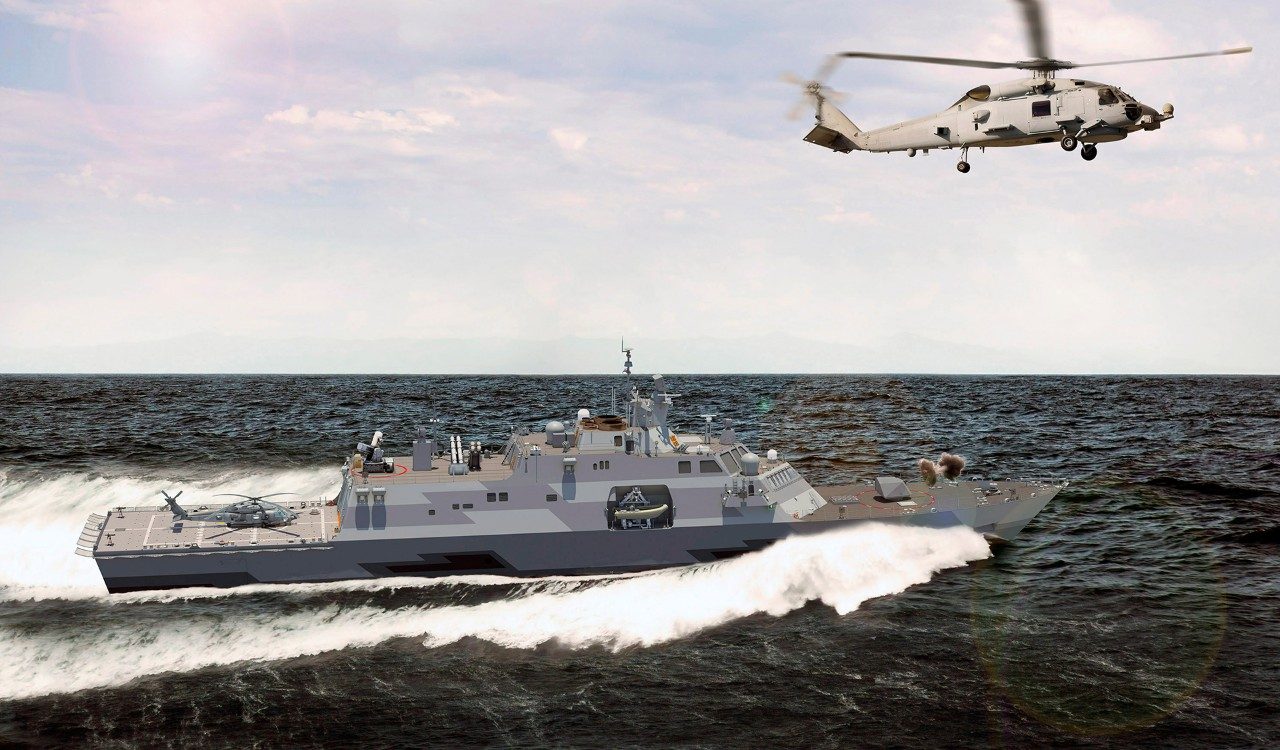
Intended to build a new class of small, agile, and innovative warships, the LCS program has come under bitter criticism that the ships are too expensive for their size and too fragile for major combat. Freedom in particular has taken flak for hull cracks, which contractor Lockheed Martin insists are all repaired and won’t reoccur on redesigned follow-on ships. After years in development hell, the first LCS is finally underway on a real-world mission — headed for the Pacific amidst rising tensions between China and its neighbors. Keep reading →

CRYSTAL CITY: From standardizing paint schemes to buying fewer types of valves, the Navy is going all-out to save money as budgets tighten. This new emphasis on affordability goes beyond the usual mundane economies to a sea change in how the service develops new vessels and technologies, with the much-criticized Littoral Combat Ship as the high-stakes pilot project.

“You can’t just do some really effective system anymore; it’s got to be effective and highly affordable,” declared Rear Adm. Matthew Klunder, who heads the Office of Naval Research. ONR is normally associated not with cost-cutting but with high-tech, high-cost innovations such as railguns. But at last week’s Surface Navy Association conference in Crystal City, just south of the Pentagon, Klunder framed even the case for railguns in economic terms, arguing they would let the Navy shoot down incoming threats much more cheaply than firing interceptor missiles. Keep reading →

WASHINGTON: Full speed ahead and damn the drawdown — that’s the confident note that the Navy’s top admiral struck today.

“We’re not downsizing, we’re growing,” declared Adm. Jonathan Greenert, the Chief of Naval Operations, at the National Press Club. “The ship count is going up and the number of people is going up.” Keep reading →

WASHINGTON: Defense contractors believe they must sell to foreign countries as US spending shrinks. But what’s materialized overseas so far is much too small to make up for the decline at home. So when Lockheed Martin‘s Mission Systems & Sensors unit, nicknamed MS2, convened reporters today ahead of next week’s Association of the US Army conference, they talked up their global strategy and a lot of prospects, but could offer precious few actual sales.

It’s true that Foreign Military Sales hit a record $65 billion for fiscal 2012, driven largely by Asia and the Middle East, and it’s those two regions Lockheed is targeting. Global sales help not only the company but the United States as well, claimed Michele Evans MS2′s business development chief, because they equip friends and allies with compatible equipment, keep the industrial base open, and keep production volumes up so all customers, US and foreign alike, can reap economies of scale. Keep reading →

Page 1 of 512345