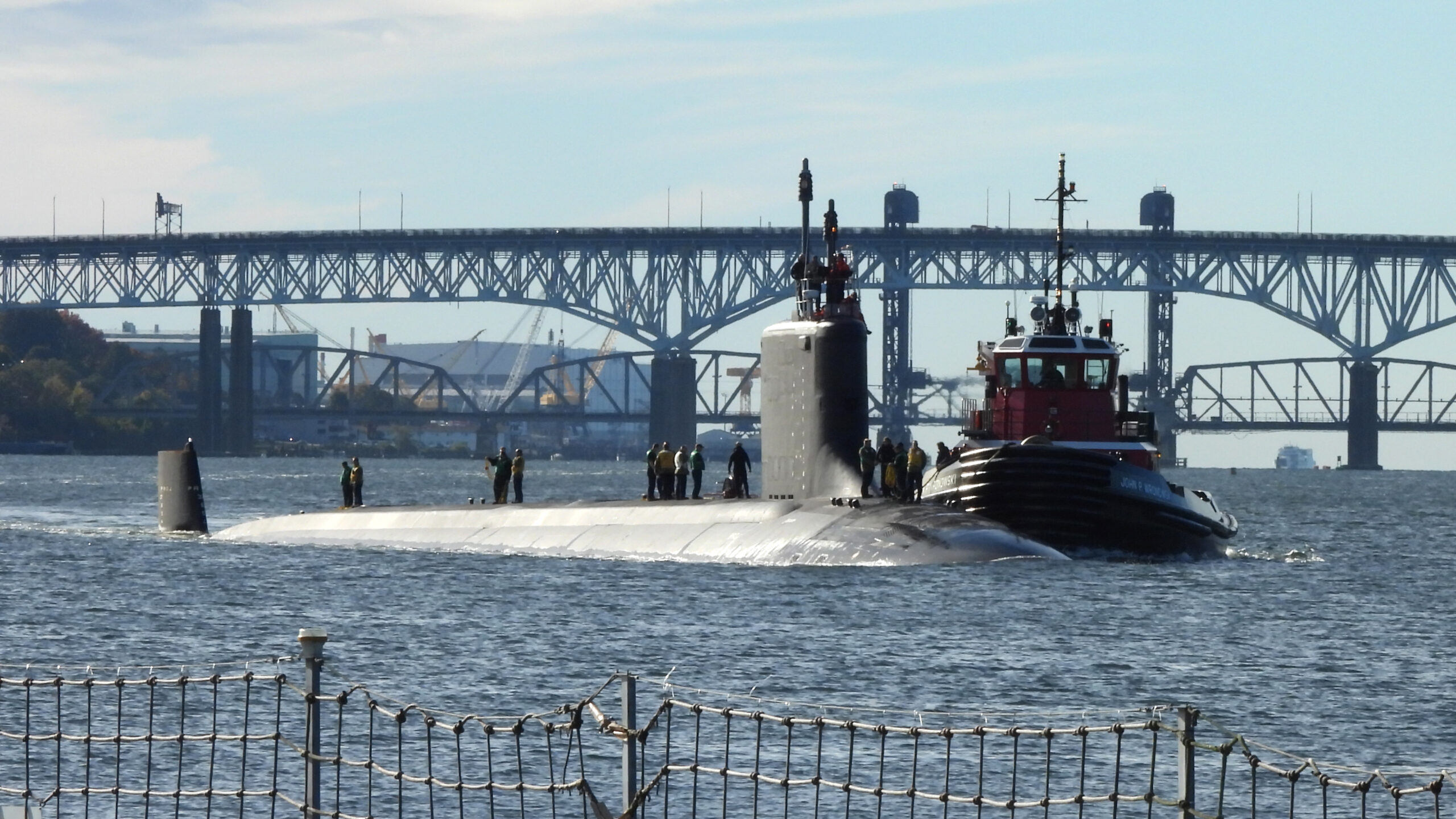







submarines

130426-G-KU792-717

[Corrected drug submersible range] WASHINGTON: The automatic, across-the-board spending cuts known as sequestration will reduce the Coast Guard and Navy forces available to intercept South American cocaine to record lows, said Rear Adm. Charles Michel, the Coast Guard two-star who commands Joint Interagency Task Force-South (JIATF-South). The result? “The sequestration cuts in aircraft and ships… Keep reading →

The $13 billion supercarrier USS Ford under construction in Newport News, Va.

CAPITOL HILL: It’s been a rough 48 hours for the US Navy. Yesterday, the Littoral Combat Ship was battered by House appropriators and questioned by a leaked report. Today it was the Senate Armed Service seapower subcommittee’s turn to grill the Navy about its aircraft carrier and submarine programs. While the automatic 10-year budget cuts known as sequestration played a major role… Keep reading →

CAPITOL HILL: Sequestration is not the Navy’s only shipbuilding problem. In the near term, the automatic cuts to the 2013 budget are bedeviling efforts to save money by buying ships in bulk. Negotiators are racing the clock to salvage a multi-year procurement contract to buy 10 DDG-51 Aegis destroyers for the price of nine; Navy Secretary Ray Mabus told reporters today he was “optimistic.”

In the longer term, however, after the 10-year, $500 billion cut in defense spending required by sequestration, the Navy has dug a different hole for itself. The service has crafted a 30-year shipbuilding plan that requires massive increases in funding to levels that the Navy’s acquisition chief Sean Stackley admitted to Congress had not been seen since the Reagan build-up.

“Can you present… a scintilla of evidence” that the 30-year plan can be funded, an exasperated Rep. Randy Forbes, the chairman of the House Armed Services Committee’s panel on seapower, asked during a hearing this morning.  Keep Reading →

For a host of security and economic reasons, American foreign and defense policy will increasingly focus on the Asia-Pacific region in the decades ahead. With over 60% of all U.S. exports going to Asia-Pacific Economic Cooperation (APEC) countries and 40% of total global trade emanating from Asia-Pacific, the United States cannot be an impartial observer of events in the region.

That interest should be heightened by the accelerating military and particularly naval buildup that is playing out across East Asia and the Western Pacific in response to China’s rapid and opaque military modernization efforts. Countries from Vietnam to the Philippines to Japan are responding to Beijing’s recent assertiveness and growing military capabilities by investing in advanced systems of their own, fostering a potentially volatile climate in the economically-essential waters of East Asia. Keep reading →


Anti-submarine warfare has given rise to some of the best war movies — “Run Silent, Run Deep;” “The Hunt For Red October” and “Das Boot” come to mind.

The romance of the terror of being hunted and of the human conflict inherent in submarine warfare offers great material for auteurs. But the sometimes unbearable tension of a boat maneuvering through different temperature bands of water (thermoclines), hiding in plain sight and using high-tech spoofing and quirky sonar experts to survive in an underwater battle with other subs or destroyers lurking above may become a thing of the past if a new program run by the Pentagon’s Defense Advanced Research Projects Agency (DARPA) succeeds. Keep reading →

Submariner William H. Hilarides (bio @ http://bit.ly/XzHgCv ) promoted to Vice Admiral, will head NAVSEA (Naval Sea Systems Command) @SydneyFreedberg

[Updated Friday 12/21] CAPITOL HILL: It looks like the country’s getting a defense bill for Christmas, with provisions on everything from boosting cybersecurity to sanctioning Iran to loosening export controls on satellites.

In what passes for high efficiency in Congress these days, the House and Senate Armed Services Committees completed their conference on the National Defense Authorization Act for Fiscal Year 2013 only two and a half months after the start of fiscal ’13 and just two weeks before sequestration may make many of their carefully wrought compromises moot. Keep reading →

WASHINGTON: Where’s the strategic beef? That’s what Andrew Krepinevich wants to know.

“When the administration came out with its strategic guidance [in] January, I thought the guidance made a lot of sense in terms of setting priorities,” the head of the influential Center for Strategic and Budgetary Assessments said this morning at the headquarters of the Air Force Association. “Western Pacific No. 1, Persian Gulf region No. 2, that certainly made a lot of sense. But what I haven’t seen since then is the strategy. If these are the objectives, how do we go about meeting those objectives?” Keep reading →


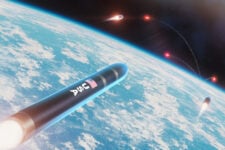
As part of its ongoing strategic “pivot” towards the Pacific, early this year the Defense Department announced it would design a new missile able to quickly cross long distances and penetrate sophisticated air defenses, of the kind rapidly proliferating across Asia. The so-called “conventional prompt strike option” would be submarine-launched, the Pentagon said in its January Defense Budget Priorities and Choices release.

The department placed great emphasis on the new weapon, declaring that “we had to invest in capabilities required to maintain our military’s continued freedom of action.” Keep reading →


Anyone who has spent much time around either submarines or the Bahamas is likely to have heard of something called AUTEC. Not many people know much about it since it involves submarines and testing to ensure the subs and their weapons work well. AUTEC’s main base is on Andros Island, a short flight from Nassau. A key part of AUTEC is its North Atlantic Treaty Organization (NATO) Naval Forces Sensor and Weapons Accuracy Check Sites (FORACS), known as NFA. AUTEC was picked for its access to the Tongue of the Ocean, a remarkable site protected from the open Atlantic so ambient noise is at a minimum. Here’s the surprisingly readable and detailed entry on it from Wikipedia:

“Chosen because of its ideal natural characteristics, and its climate which permits year-round operations, the TOTO is a U-shaped, relatively flat-bottomed trench approximately 20 miles (32 km) wide by 150 miles (240 km) long with a depth which varies gradually from 3,600 feet (1,100 m) in the south to 6,600 feet (2,000 m) in the north. Its only exposure to the open ocean is at the northern end, and except for this ocean opening, the TOTO is surrounded by numerous islands, reefs, and shoals which make a peripheral shelter isolating it from ocean disturbances, particularly high ambient noise which degrades undersea tests and evaluations.” Keep reading →

Page 1 of 41234