warfighting

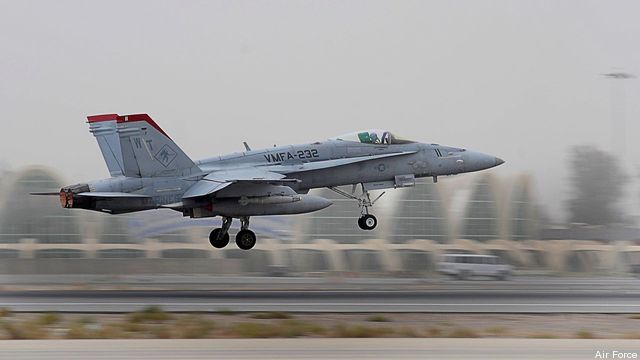
CAPITOL HILL: The commandant of the Marines told Congress today that his service could not handle even one major war if Congress doesn’t undo the $500 billion, 10-year cut to defense spending known as sequestration. The Navy, for its part, would have only one aircraft carrier ready to “surge” in a crisis instead of two or three, allowing it to reinforce only one war zone at a time.

A central tenet of American strategy has been the ability to fight and win two major wars in two theaters at the same time since World War II. How well the military could actually meet that requirement has been open for debate, but it was always upheld as the official ideal — until January 2012, when the Obama administration’s Defense Strategic Guidance downgraded the goal to, in essence, win one, hold one. Keep reading →

Seoul on alert. Pyongyang declares “state of war” w South, "has blocked access to Kaesong and threatened a nuclear attack on America: FT sez @colinclarkaol

WASHINGTON: “Pure intimidation” is how one of America’s most respected analysts of the Chinese military characterized the act of a Peoples Liberation Army Navy skipper who “painted” a Japanese naval ship with his fire control radar.

The action raises the stakes in an already troubled dispute between the two Pacific powers as they maneuver for influence in the South China Sea, with the current focus being on the uninhabited Senkaku Islands. What’s particularly worrying is the involvement of warships, when previous confrontations were largely limited to Japanese Coast Guard and Chinese non-military “maritime surveillance” vessels. Keep reading →


WASHINGTON: A combat patrol is four soldiers walking, under orders to look for trouble and react to it. For most of modern history, infantry squads have been the military’s principal sensors, forcing an enemy to respond, allowing American forces to judge the situation and respond. But that is an always risky, often bloody way to generate intelligence.
“Essentially, you are asking them to troll for trouble,” the retired vice chairman of the Joint Chiefs of Staff, Marine Gen. Hoss Cartwright, told an audience at the Center for Strategic and International Studies today.

But the squad’s role is changing, part of a monumental shift underway in the US military, as enormously powerful computers gather data from a huge array of sources and turn that data into predictive tools. Keep reading →

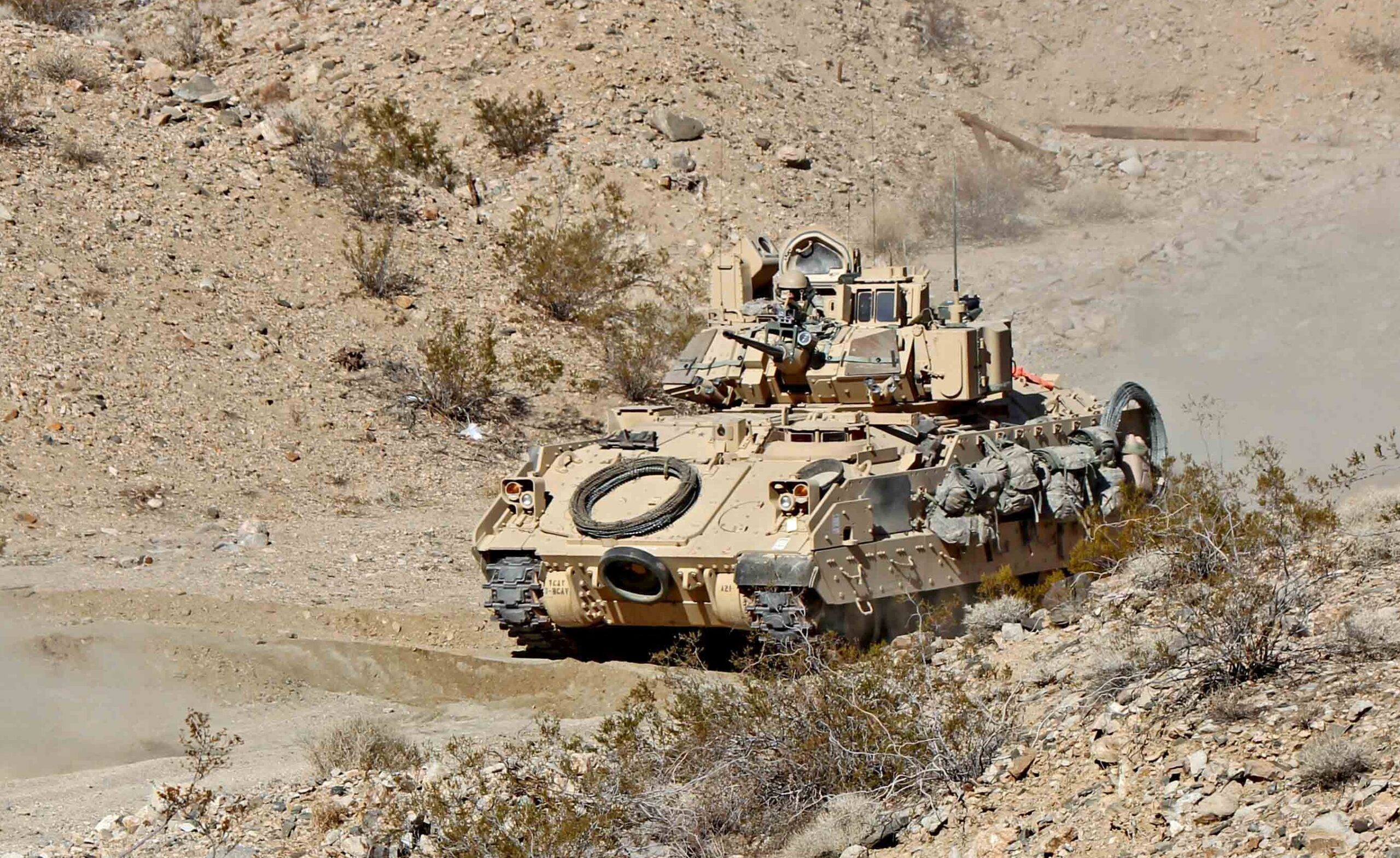
After years of ups and downs and threats of cancellation, the Army and Marines are about to award contracts to develop a new Joint Light Tactical Vehicle to replace the venerable and vulnerable Humvee. In an exclusive interview with Breaking Defense, retired Vice Chief of Army Staff Gen. Peter Chiarelli — the man who did more than anyone to save the JLTV from cancellation — argued that the new armored truck is critical not just to protect US troops but to carry the fight to the enemy in future wars.

“When I was vice [chief of staff], we were about ready to lose JLTV because of the cost; the Marine corps and the Army were heading in two different directions; and it was really [Marine Corps Assistant Commandant] Joe Dunford and I who said wait a second, we really need this vehicle, we can’t afford this service parochialism,” Chiarelli recalled. Keep reading →

There were only four men in U.S. History awarded the five star rank of Fleet Admiral: Chester Nimitz, “Bull” Halsey, William Leahy and Ernie King. From their days at Annapolis to commanding the greatest naval fleet in history, each man spent significant time at sea interspersed with time ashore furthering their education. Not only did they consistently demonstrate physical courage but they honed a profound grasp of the harsh reality that all military technology is evolving and thus in a constant relative action/reaction cycle against a reactive enemy. Keep reading →


Call it Somalia on steroids. Call it Syria next week. Either way it’s a scenario the US military needs to prepare for: an intervention into a failing state where rival factions have looted a sophisticated arsenal, from tanks to shoulder-fired anti-aircraft missiles to weapons of mass destruction.

There’s no political will in Washington to intervene (directly) in the Syrian conflict as it now stands. The military cost of breaking down Syria’s defenses outweighs the political benefit of stopping the killings. But if the Assad regime imploded — and it’s under greater pressure ever day — that equation would change: The Syrian defenses would become less coordinated and formidable, though still dangerous, while the pressure on the US to act, if only to secure the regime’s chemical weapons, would rise sharply. Keep reading →


As the US commander in Korea requests reinforcements against the Northern threat and the Chinese stage one of their regular river-crossing exercises along the Yalu, conservatives in South Korea are campaigning to keep the joint US-Korean military headquarters that is currently slated to be dissolved in 2015.

One of Korea’s most prominent newspapers, the right-leaning Chosun Ilbo, reported yesterday that Gen. James Thurman, commander of US Forces Korea, has proposed retaining the Combined Forces Command, the joint headquarters that controls over 600,000 of both countries’ troops on the peninsula. As part of current plans to give Seoul full “operational control” over its own forces in 2015 — originally scheduled for this year but delayed at Seoul’s request — the CFC is supposed to break up into separate US and Korean organizations at separate locations. Keep reading →


WASHINGTON [Corrected at 6 pm Friday]: The latest crash of a V-22 tiltrotor may be a black mark on the aircraft’s safety record, but it won’t bring down the program. Despite literally decades of criticism — which is now certain to flare up again — there’s simply too much budgetary momentum, political support, and, yes, operational value to the V-22.

Yesterday evening, a CV-22 — the Air Force Special Operations version of the Osprey — crashed in Florida. (The 1st Special Operations Wing aircraft was based out of Hurlburt Field, part of Eglin Air Force Base in Florida). The five people aboard were injured and taken to local hospitals, but the Air Force announced this afternoon that none of their injuries was life-threatening; four crewmen were listed as stable and one in “guarded” condition. [Updated Friday 3:45 pm: Two of the crewmen were released from hospital Friday; three remain hospitalized]. The wing commander, Col. James Slife, said in a press conference there was no general safety issue apparent that would require grounding the CV-22 fleet. Keep reading →


WASHINGTON: In the budget wars between the services, “hybrid threats” and “AirSea Battle” have become rallying buzzwords of two opposing camps.

On one side, Army leaders talk of hybrid threats, whose blend of guerrilla tactics and high-tech weapons pose the greatest plausible threat on land, now that Soviet-style tank armies are extinct and the nation has largely sworn off large-scale counterinsurgency. On the other, Air Force and Navy leaders speak of AirSea Battle as a way to coordinate their expensive hardware in a high-tech war with regional powers like China or Iran. Keep reading →

Page 1 of 612345...6