Twenty-first century threats require new ways of fighting.
Recent conflicts have only reinforced the critical role of unmanned systems in both delivering and guiding munitions. The U.S. military is investing heavily in new kinds of weapons able to plug into battle networks, loiter, and strike targets over long distances, and there is universal recognition that unmanned systems are critical to their success.
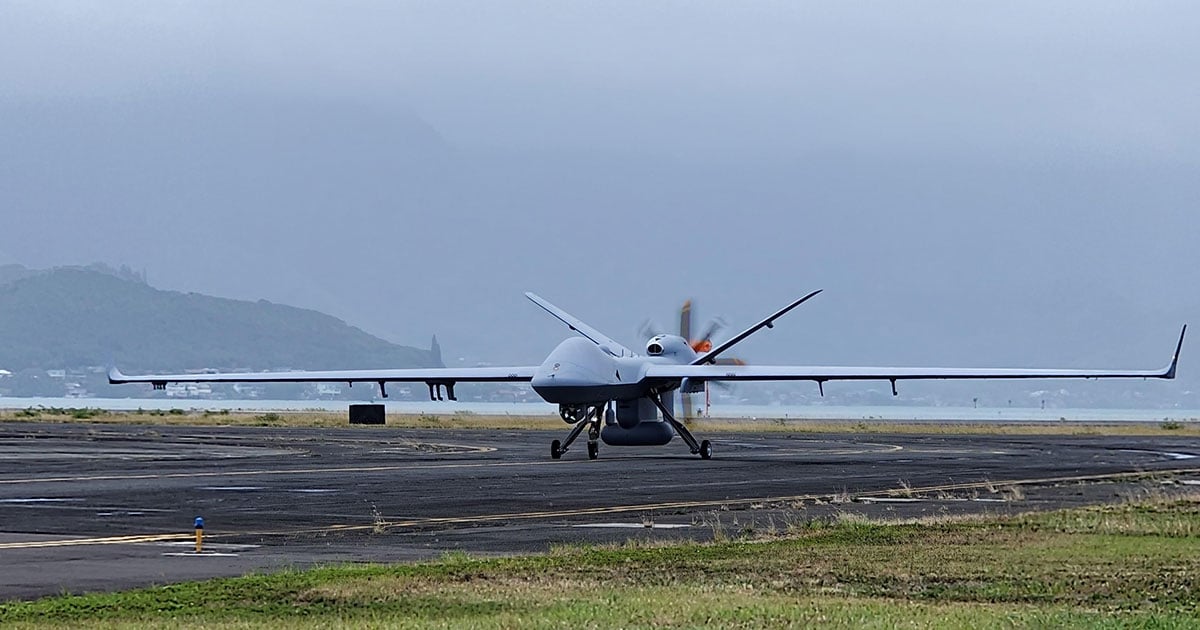
A key advancement to the MQ-9B SeaGuardian® opens new concepts of operations and increases the effectiveness of the joint force, enabling ships and aircraft carrying network-enabled weapons to target hostile forces both at sea and on land.
General Atomics Aeronautical Systems, Inc. (GA-ASI) announced on April 7 in a press release that it had demonstrated in a lab environment the ability to feed real-time in-flight target updates to net-enabled weapons with an unnamed industry partner. What’s more, the company announced it was preparing a live demonstration later this year.
“We continue to build on the innovative capabilities of SeaGuardian for the U.S. Navy,” said GA-ASI President David R. Alexander. “The advanced targeting we’ve demonstrated will be especially valuable in contested environments, enabling an unmanned asset like SeaGuardian to be used for higher-risk missions instead of putting manned assets at risk.”
Talking to the arrow
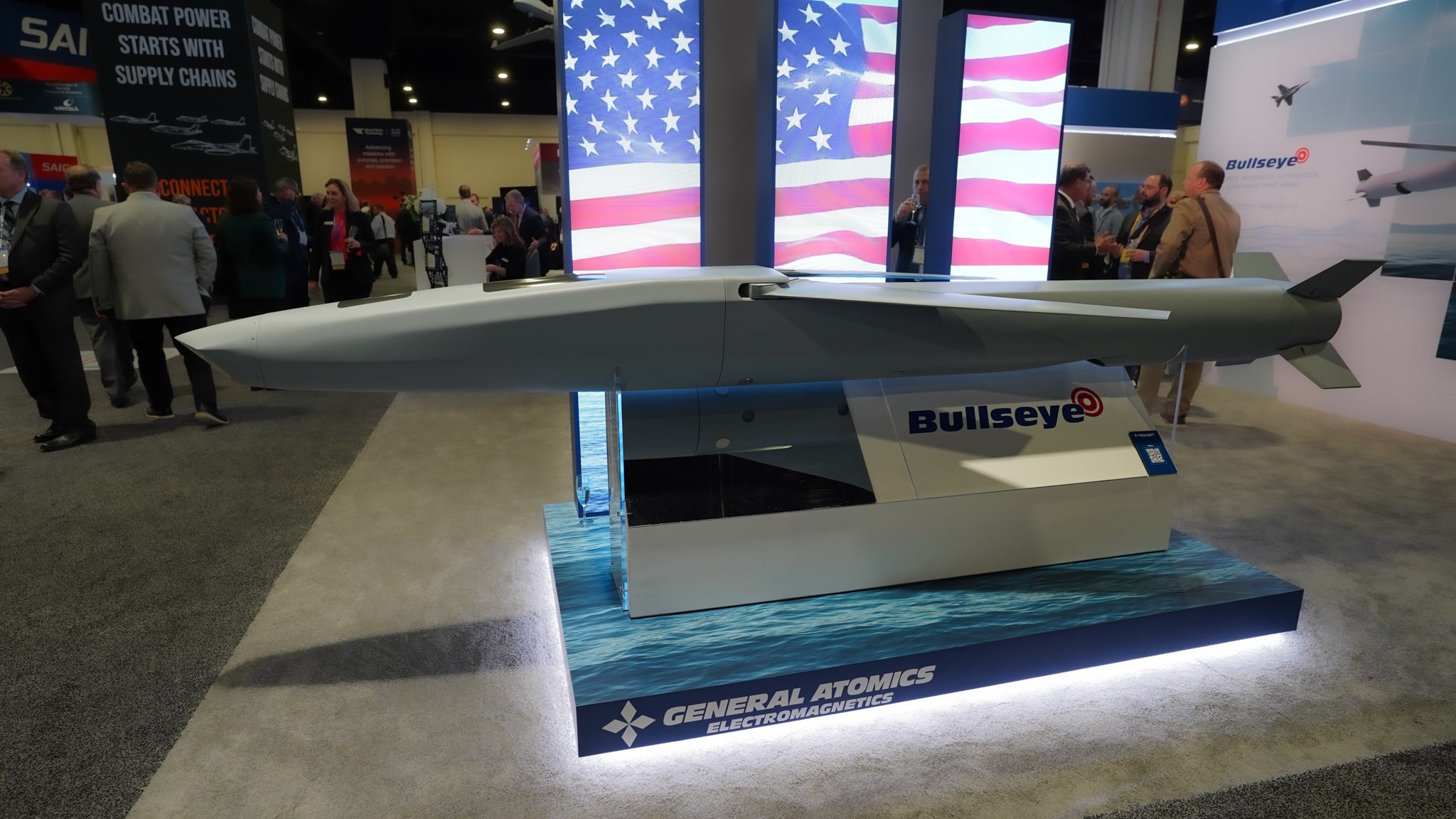
Network-enabled weapons can receive targeting data from off-board sensor platforms like the SeaGuardian, a key capability for hitting targets such as ships and other targets that don’t stay in a fixed position. A network-enabled weapon can be fed real-time data on a track’s position, allowing it to adjust its flight path and then prosecute the target. Picture an archer releasing an arrow from a bow aimed at a bullseye set up out of sight behind the next hill and then another observer telling the arrow precisely where to stick.
In practice it would look like this:
An MQ-9B SeaGuardian launches from a friendly air base in the Pacific for a 20-hour patrol of the theater. SeaGuardian uses a combination of onboard electronic support measures and sensors to detect enemy emissions. Five hours into the mission, SeaGuardian encounters a strike group of enemy ships that threaten allied forces nearby.
Meanwhile, three F-35C Lightning IIs that belong to an aircraft carrier strike group are operating 200 nautical miles from the enemy ships. Each jet carries two net-enabled weapons. The SeaGuardian’s operators relay the targeting information on the adversary forces. The Navy commander gives the F-35s weapons release authority.
The enemy vessels begin high-speed maneuvers, but the SeaGuardian relays in-flight target updates in real time on the positions of the enemy ships, allowing the missiles to alter course, putting the weapons on the best possible path when they enter the terminal phase.
The net-enabled weapons achieve mission kills on the enemy strike group, and the SeaGuardian continues its patrol to search for additional targets.

A true multi-mission aircraft
The successful lab demonstration of the in-flight target updates builds on an earlier success, where GA-ASI and the Navy proved out the basis of this capability, said Peter Yelle, a former naval officer now working for GA-ASI’s Strategic Development Group.
During a training exercise last summer, MQ-9B successfully transmitted high-quality track data to a network-enabled weapon, Yelle said. The data was packaged using Link 16 messages generated from a terminal that comes standard in SeaGuardian’s avionics bay and is powered by General Atomics’ Quadratix software environment, he added.
“The phenomenal thing here isn’t just the data seeding or in-flight target update capability we’ve demonstrated and will validate later this year,” Yelle said. “What’s exciting is how this capability complements SeaGuardian’s existing capabilities. It is truly a multi-mission aircraft.”
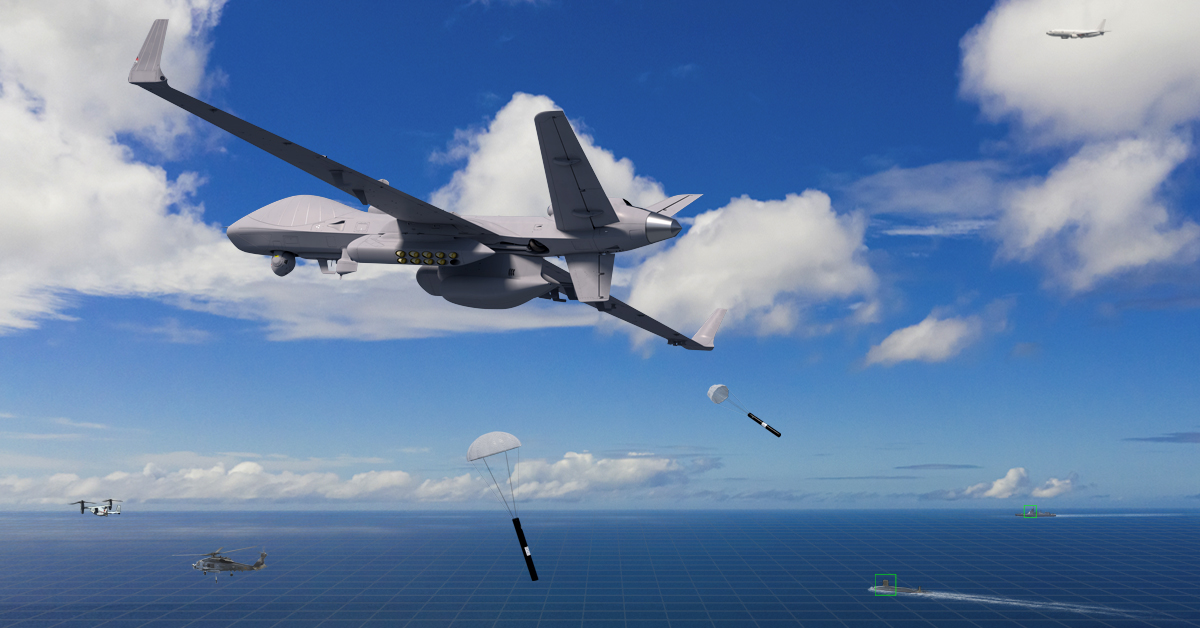
In the fictional scenario above, the same SeaGuardian could help guide the net-enabled weapons to their intended targets and then flex to an emerging anti-submarine warfare (ASW) mission. With a self-contained ASW suite, the aircraft simply could pivot to new tasking without needing to land and swap mission packages.
“The MQ-9B’s internal and external mission payload capacity is unmatched by any competitors,” Yelle said. “It’s the Swiss Army Knife of the 21st century battlefield, whether over land or at sea.”
Working smarter
A big part of what makes MQ-9B such a game changer is the Quadratix software suite that powers its in-flight operations.
Quadratix synthesizes inputs from multiple sensors into a unified operational picture. In practice, this means that instead of each payload requiring its own specialist operator, a single SeaGuardian or SkyGuardian® operator can operate an entire intelligence, surveillance, and reconnaissance (ISR) sensor suite.
In the Quadratix environment, operators can also fly multiple aircraft simultaneously, leveraging advanced autonomy, artificial intelligence, and target correlation/machine learning.
For example, operators can program multiple aircraft to search designated areas and report back only when the aircraft has identified a target of interest—a military vehicle, a suspicious ship, or any number of developing potential threats.
This means the human crews and operators at the ground station can focus on other things, or manage other aircraft searches, until the system alerts them to a target of interest.
The net effect of these changes is that operators will get a more complete operational picture along with a streamlined experience between flight and sensor operations—resulting in a more effective system that requires less training and smaller crew sizes.
“MQ-9B is already the most capable [medium-altitude, long-endurance] system on the market,” Yelle said. “What I think we’re demonstrating with it, however, is that we’re committed to constant improvements and ever-greater capabilities, both to the platform and to the Quadratix software that powers it.
“Whether that’s adding the sonobuoy dispensing system we demonstrated last year, or the in-flight target updates we’re demonstrating this year, General Atomics is always working to make the system better for the warfighter.”
PHOTOS: Sea Air Space 2025

 Gallery