Land Warfare

Army taps teams to build new Precision Strike Missile for targets beyond 1,000 km

The development program carries a new name, the Long Range Maneuverable Fires missile, and includes a new form factor and propulsion system.

LRMF Graphic 1920×1080
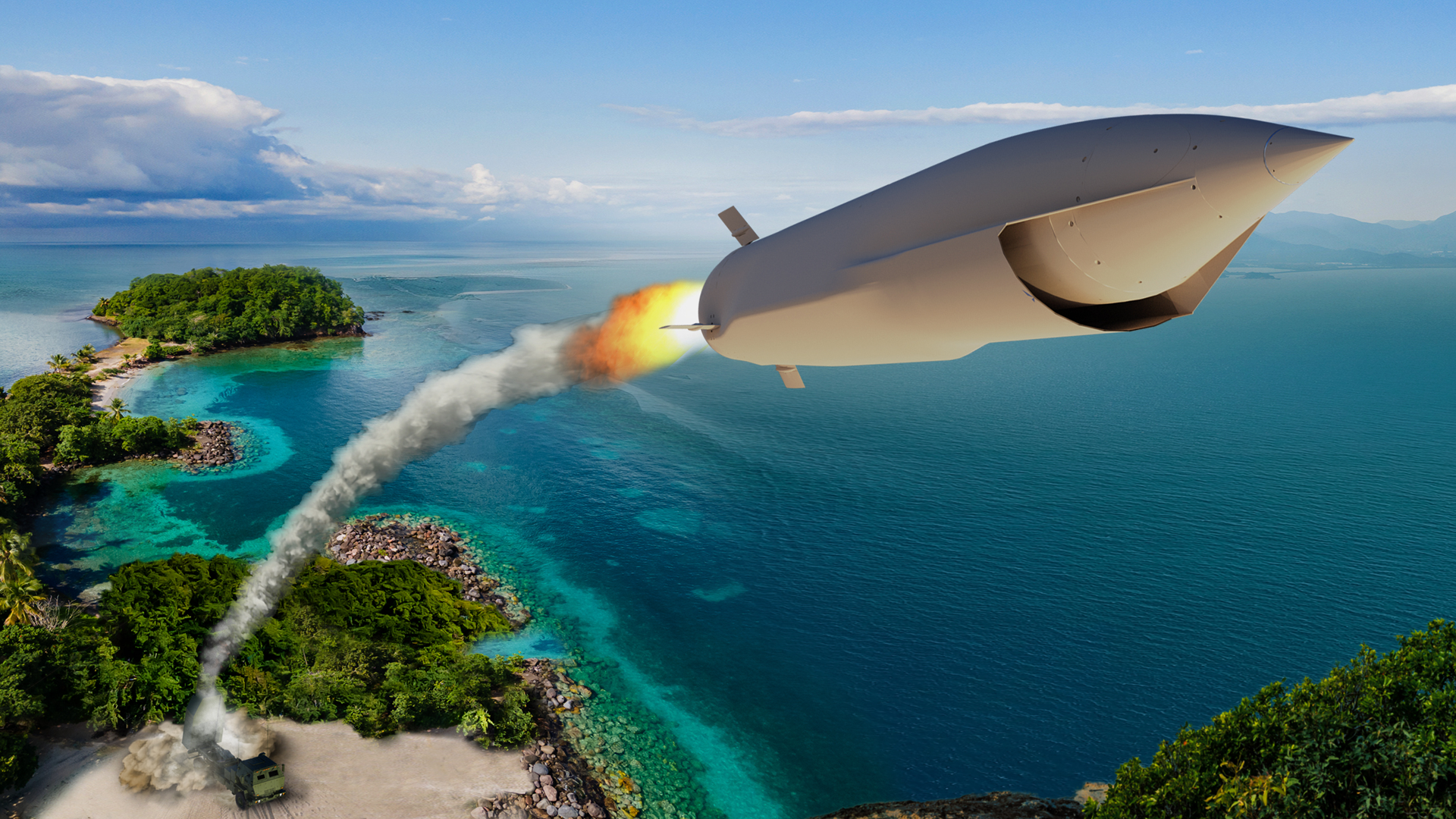
Lockheed Martin has released a rendering for its vision of what a PrSM Increment 4 missile might look like. (Lockheed Martin)

GLOBAL FORCE 2023 — As the US Army eyes weapons that can travel longer distances over waters in the Indo-Pacific region, it has selected at least two teams to work on a future Precision Strike Missile (PrSM) that can fly more than 1,000 km, possibly double the range of the current version.

Both Lockheed Martin and a Raytheon Technologies-Northrop Grumman team have told Breaking Defense they received Army contracts to develop a new missile form factor and propulsion system for the service’s PrSM Increment 4. That particular version of PrSM also has a new name: the Long Range Maneuverable Fires (LRMF) missile.

According to the Army-affiliated Aviation & Missile Technology Consortium, it appears that PrSM incumbent Lockheed Martin received $33.3 million for the development and demonstration of a “Long Range Fires Capability,” while the Raytheon team received almost $100 million for “Long Range Precision Fires air-breathing missile prototypes.”

The Army did not immediately respond to Breaking Defense’s questions about the competition, including the number of competitors, but industry and budget documents have shed some light on plans to build the new weapon under what has been known as PrSM Increment 4.

Lockheed Martin is currently producing PrsM Inc 1 to replace the company’s MGM-140 Army Tactical Missile System (ATACMS) and hit targets at least 500 km away. That missile, along with future missile increments, can be launched from both the M270A2 Multiple Launch Rocket System (MLRS) and the M142 High Mobility Artillery Rocket System (HIMARS).

Under the future PrSM Inc 2, the service is designing a multimode seeker to integrate into PrSM, known as the Land-Based Anti-Ship Missile (LBASM) seeker, PrSM Inc 3 then seeks to add in enhanced lethality payloads. 

For PrSM Inc 4 — which may be ready before Inc 3 — the Army is eyeing a new missile form factor possibly with a new propulsion system to strike targets at least 1,000 km away. This new propulsion system could potentially be a ramjet, an airbreathing jet engine that uses the forward motion of the engine to produce thrust. 

While recent budget justification documents do not detail exact plans for PrSM Inc 3 and Inc 4, ones from 2023 noted that the service planned to request $237 million for fiscal 2024 for research and development of its PrSM line and another $19 million for Long Range Maneuverable Fires advanced tech.

For that second pot of money, the Army wrote at the time that it supports “developing, maturing and demonstrating next generation multi-domain operations extended range weapon system technology for [the] Precision Strike Missile to increase survivability, penetration, and range in complex anti access/area denial (A2/AD) and denied environments.”

“This project also includes both the maturation and demonstration of advanced extended range missile technology and autonomous, unmanned launcher technology,” the service added. “The combination of these technologies offers the potential to dramatically increase force projection through increases in range, firepower, and magazine depth.”

Starting Line

So far, only two teams have said they have received Army contracts for PrSM Inc 4, but it is possible additional, currently unknown teams could also be working on the development program.

“Phase 1 focuses on design and risk-reduction activities, with optional follow-on phases leading to flight test demonstration,” Lockheed wrote in a March 27 press release. “Following flight tests, LRMF will transition to the US Army’s Strategic and Operational Rockets and Missiles (STORM) project office to inform the design of an extended-range Precision Strike Missile (PrSM) Increment 4.”

During a March 24 interview with Breaking Defense, Raytheon and Northrop officials also provided additional insights into the competition but declined to discuss specific details about their “Deep Strike-Extended Range” weapon or the competition’s structure. 

“The focus of this [technology maturation & risk reduction] phase, from a Raytheon perspective, is maturing our system design and working with our partner Northrop, specifically, to focus on co-designing, building and testing its advanced propulsion system, which is a key enabler for reaching the extended range that’s been defined by the Army,” said Brad Barnard, Raytheon’s executive director of precision fires and maneuver.

“We’re still going through some of the key design and requirements … but we have a baseline that we think is going to be uniquely qualified to meet the aggressive requirements,” he later added.

Chris Gettinger, Northrop’s director of Advanced Propulsion and Systems, declined to disclose the team’s proposed propulsion system but said the missile will build on the work the company has done on ramjet/scramjet solutions.

“Whether it’s… solid rocket motor propulsion or air breathing systems, we can bring all that to bear along with controllable solid propulsion solutions and subsystems for thrust vectoring and altitude control systems,” Gettinger added. He noted that the company has demonstrated prototype versions of its proposed propulsion system and the subsystem, and it is now about integrating those into Raytheon’s new missile formfactor.

PHOTOS: AUSA Global Force 2023

PHOTOS: AUSA Global Force 2023

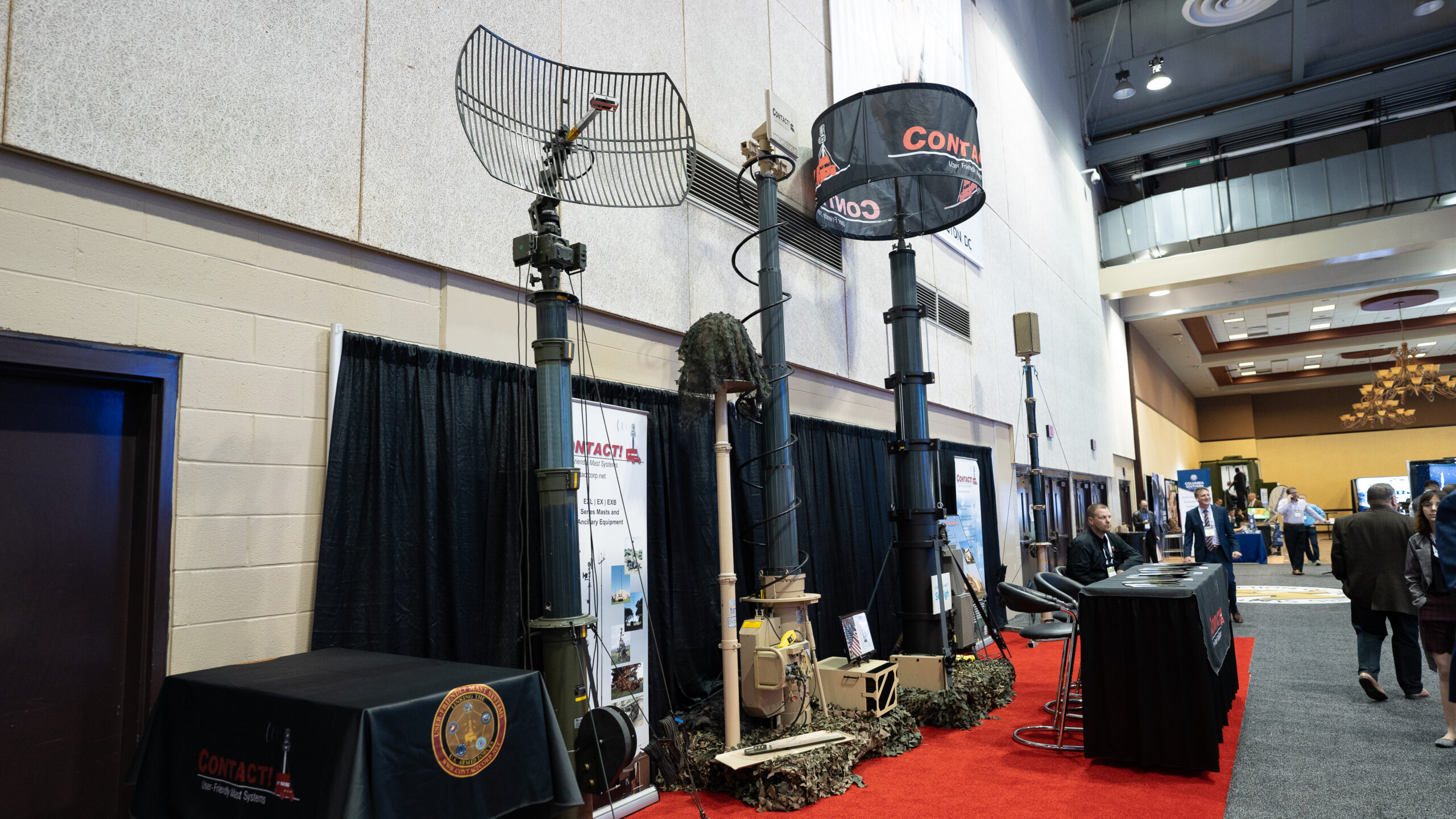
The Contact! Corporation booth had their various satellite mast offerings out. Among them was is the SkyHigh their “newest innovation on tactical vehicle masts.” The company claims the “20 meter mast is deployable in less than 2 minutes." (Brendon Smith / Breaking Defense)
RHEINMETALL had a large booth displaying their various new tech. Their MK93 Mount Upgrade Kit is touted by the company as “the future of mounting solutions." (Brendon Smith / Breaking Defense)
An interesting display by the Invariant corporation showed their deployable container system capable of supporting various weapon systems. (Brendon Smith / Breaking Defense)
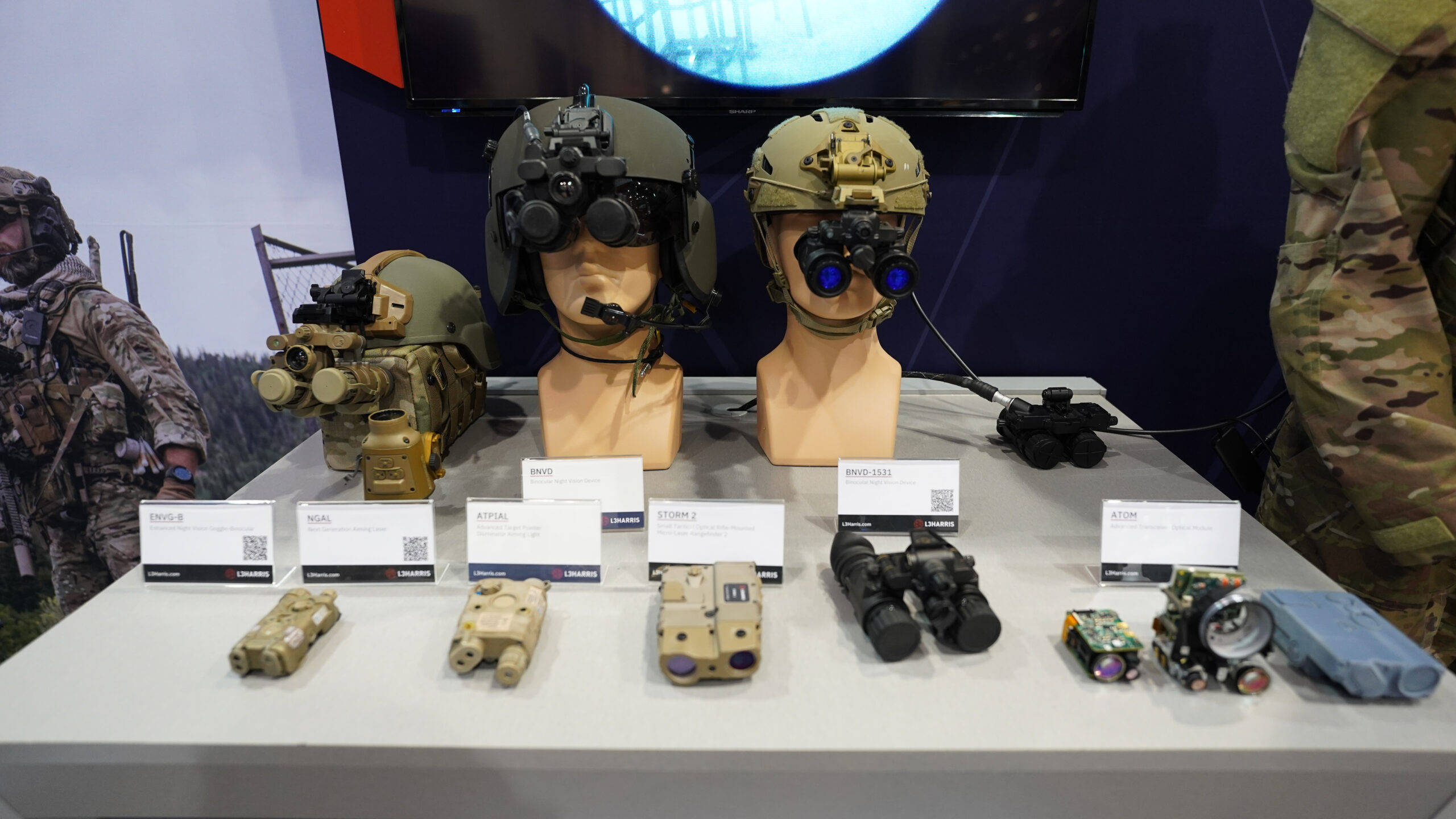
An array of various night vision goggles was on display at the L3HARRIS booth. Models such as their ENVG-B are advertised by the company as also offering Augmented Reality capabilities. (Brendon Smith / Breaking Defense)
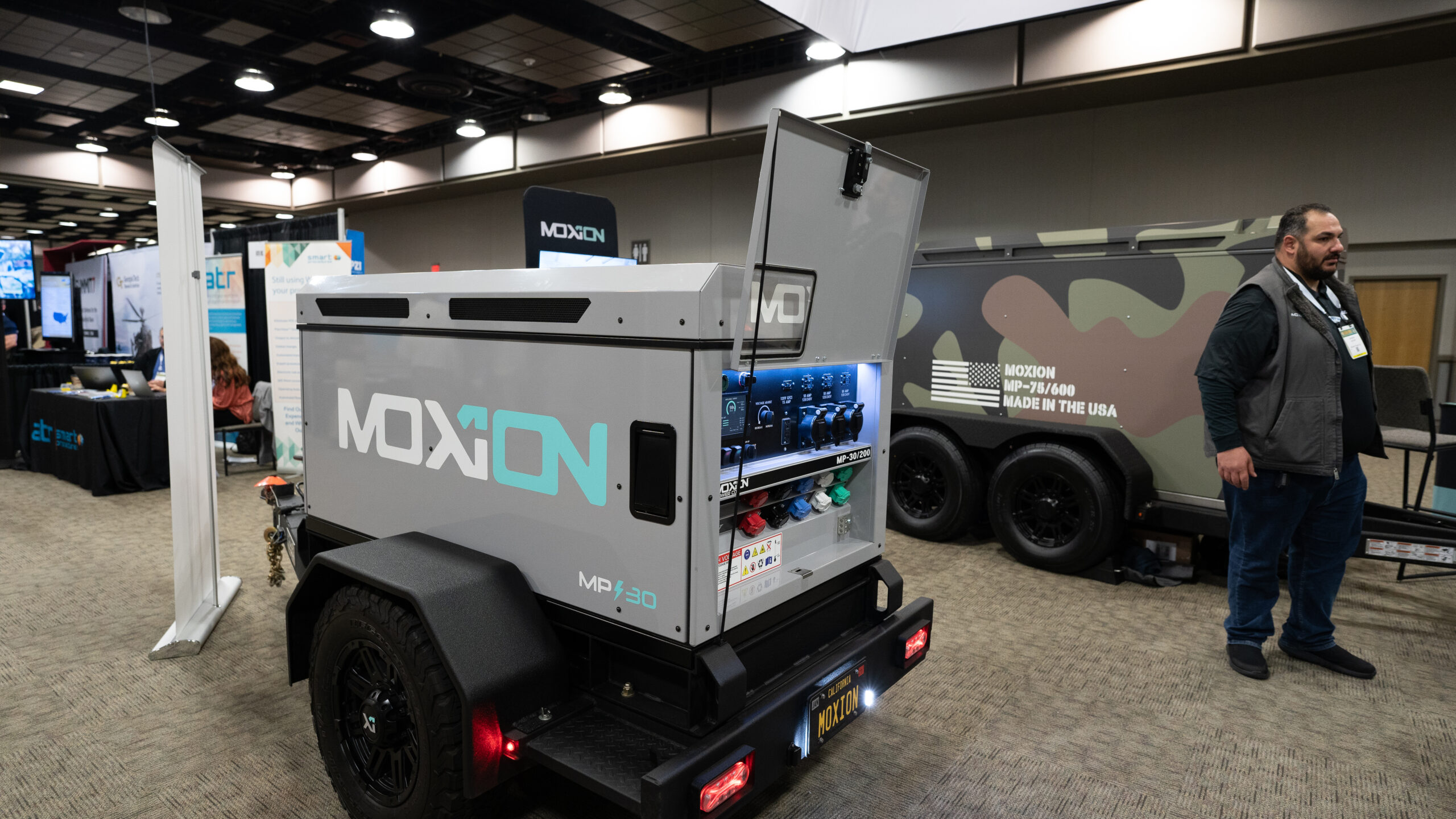
A portable energy solution by Moxion was prominent in the East Hall. The company claims the portable battery has “storage capacity of a nominal 200 Kilowatt Hours and a usable 180 Kilowatt Hours” also boasting a "charge time of only 5 hours”. (Brendon Smith / Breaking Defense)
Collins Aerospace has sky high hopes for its new oxygen supply system meant for “parachutists executing high altitude jump missions”. The company claims the new system “uses significantly less oxygen for a complete jump”. (Brendon Smith / Breaking Defense)
Part of the outdoor exhibit area at AUSA Global, Elbit Systems showed off two of their air defense systems on a tank. The Sling Mobile Mortar System and The MATR-X Multi-Mission Tactical Surveillance Radar. Elbit claims the MATR-X system “can simultaneously scan, identify, track and target thousands of low-altitude airborne targets including small drones, low flying manned aircraft, cruise missiles and other munitions.” (Brendon Smith / Breaking Defense)
AM General displayed their new “Soft Recoil Technology” on the new 2-CT Hawkeye Mobile Howitzer. The company claims the new howitzer improves on earlier models with “lower maintenance costs and converts current towed systems to self-propelled systems.“. (Brendon Smith / Breaking Defense)
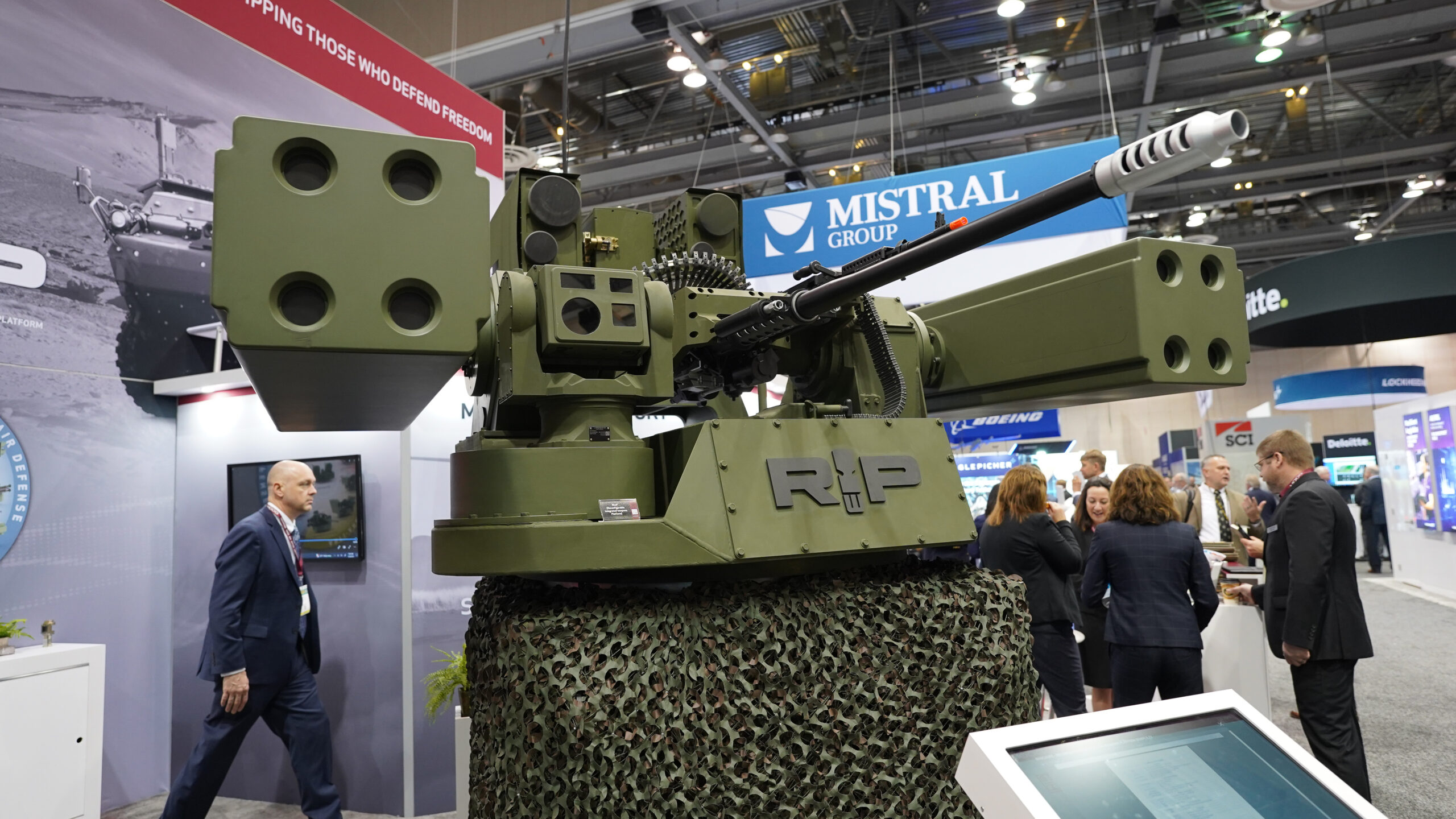
An interesting display by MOOG exhibited their reconfigurable weapons platform. Offering various weapon combinations the platform is described by MOOG as offering "air defense, anti-armor, or multi-mission capabilities. Designed to be weapon, sight, and platform agnostic, RIwP accommodates firepower growth to support future mission requirements.” (Brendon Smith / Breaking Defense)
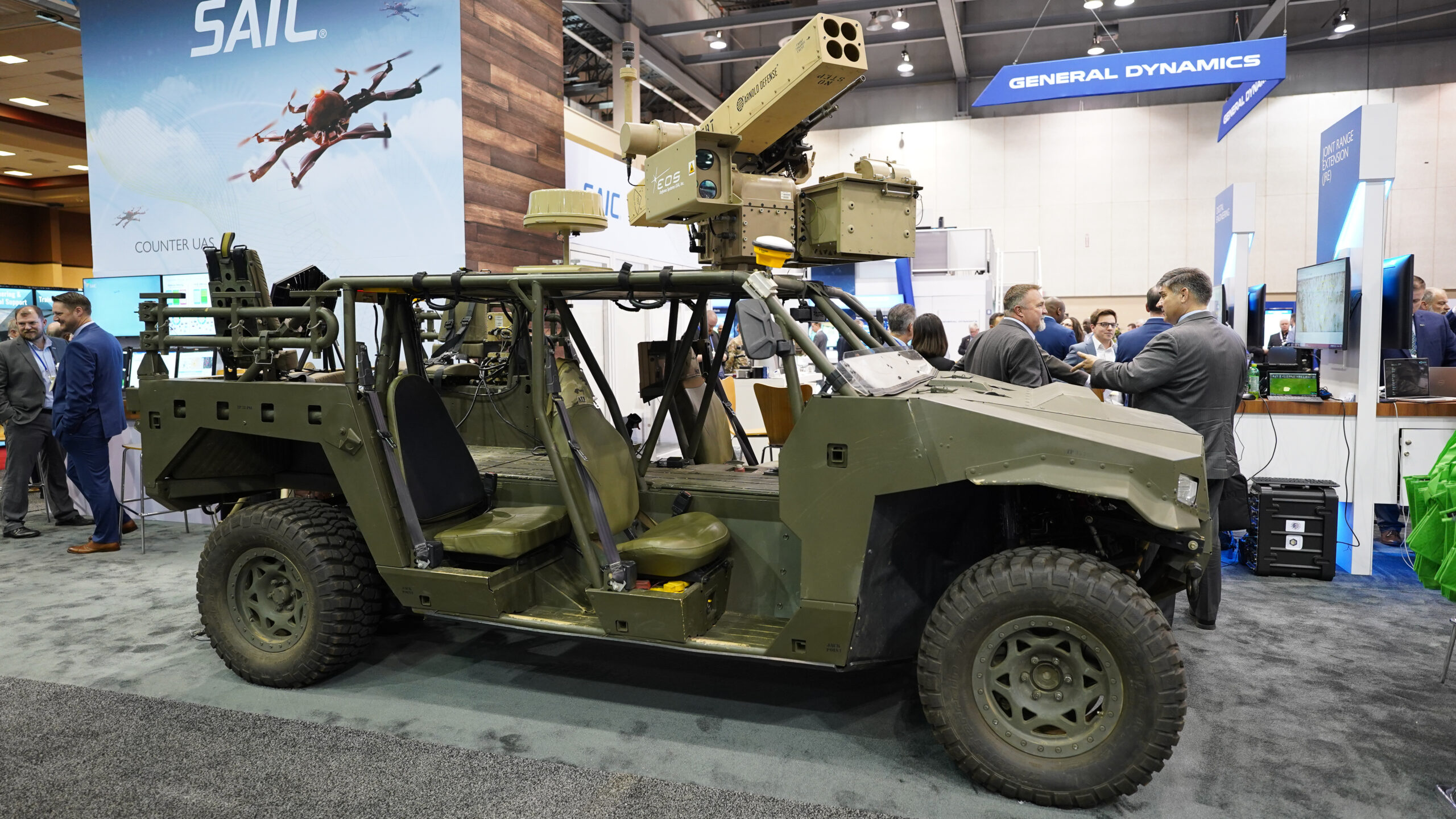
SAIC had a large center booth emphasizing their ground vehicles capability to easily pair with other defense systems. (Brendon Smith / Breaking Defense)
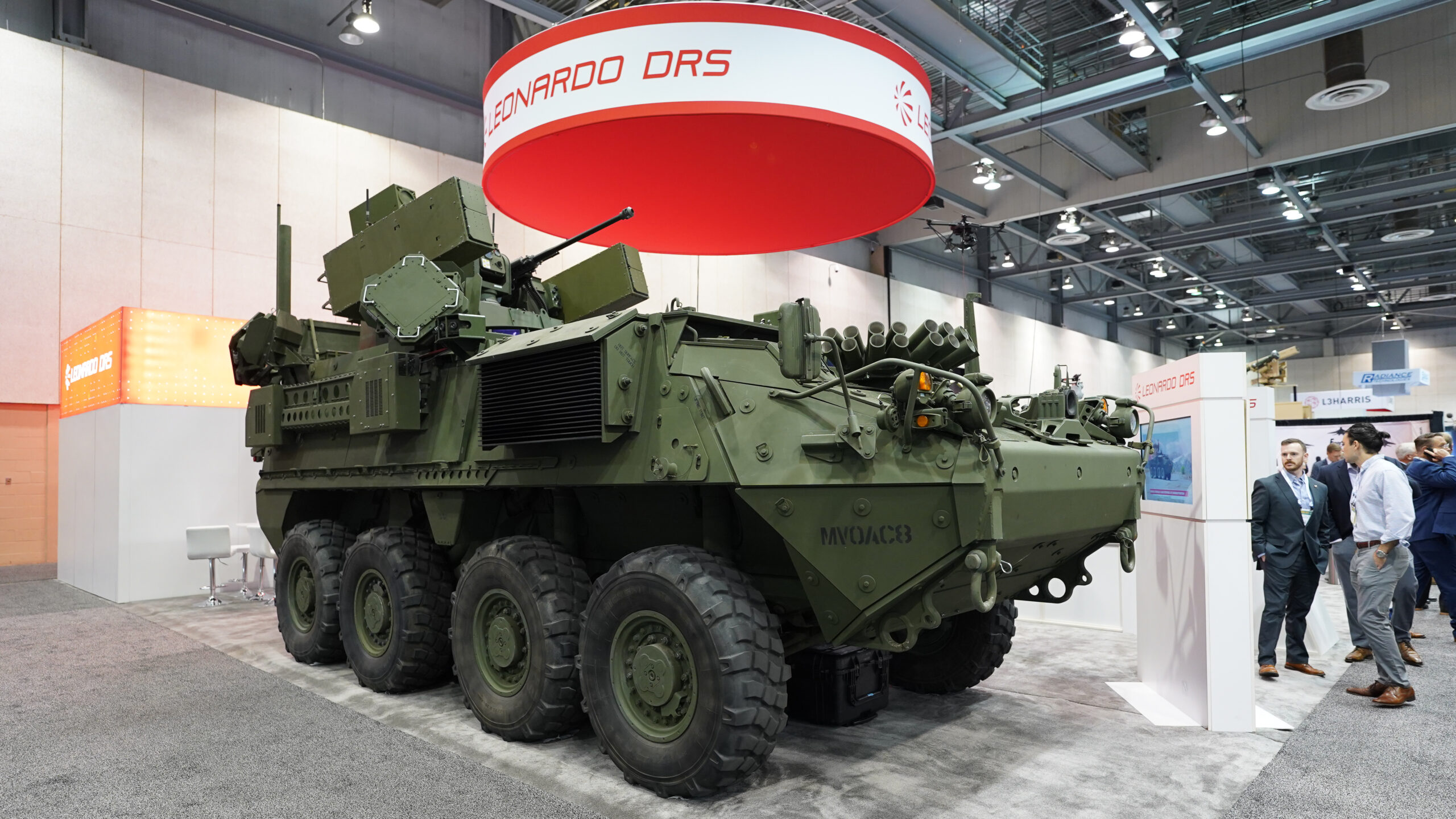
On display by Leonardo DRS is their high-profile C-UAS solution, the Stryker. According to the company, the vehicle “allows soldiers to detect, identify, track and defeat Group 1-3 UAS” with both kinetic and non-kinetic technologies. (Brendon Smith / Breaking Defense)
At the Quickset booth, the company showed off their equipments sensor and surveillance capabilities. Reps discussed the TAURUS-R camera system, which they claim are “optimized for the harshest mobile and stationary applications." (Brendon Smith / Breaking Defense)
Brigadier General Christine A. Beeler speaks to a large group at the Warriors Corner regarding Army Contracting at AUSA Global Day 2. (Brendon Smith / Breaking Defense)
Minstrel Group describes the THOR VTOL Mini-UAS as “a low altitude multi-rotor platform designed for a wide range of surveillance and reconnaissance missions.” Key Features they highlight include programmable flight patterns, fast deployment, low sound profile and signature, and a clear 360 degree view. (Brendon Smith / Breaking Defense)
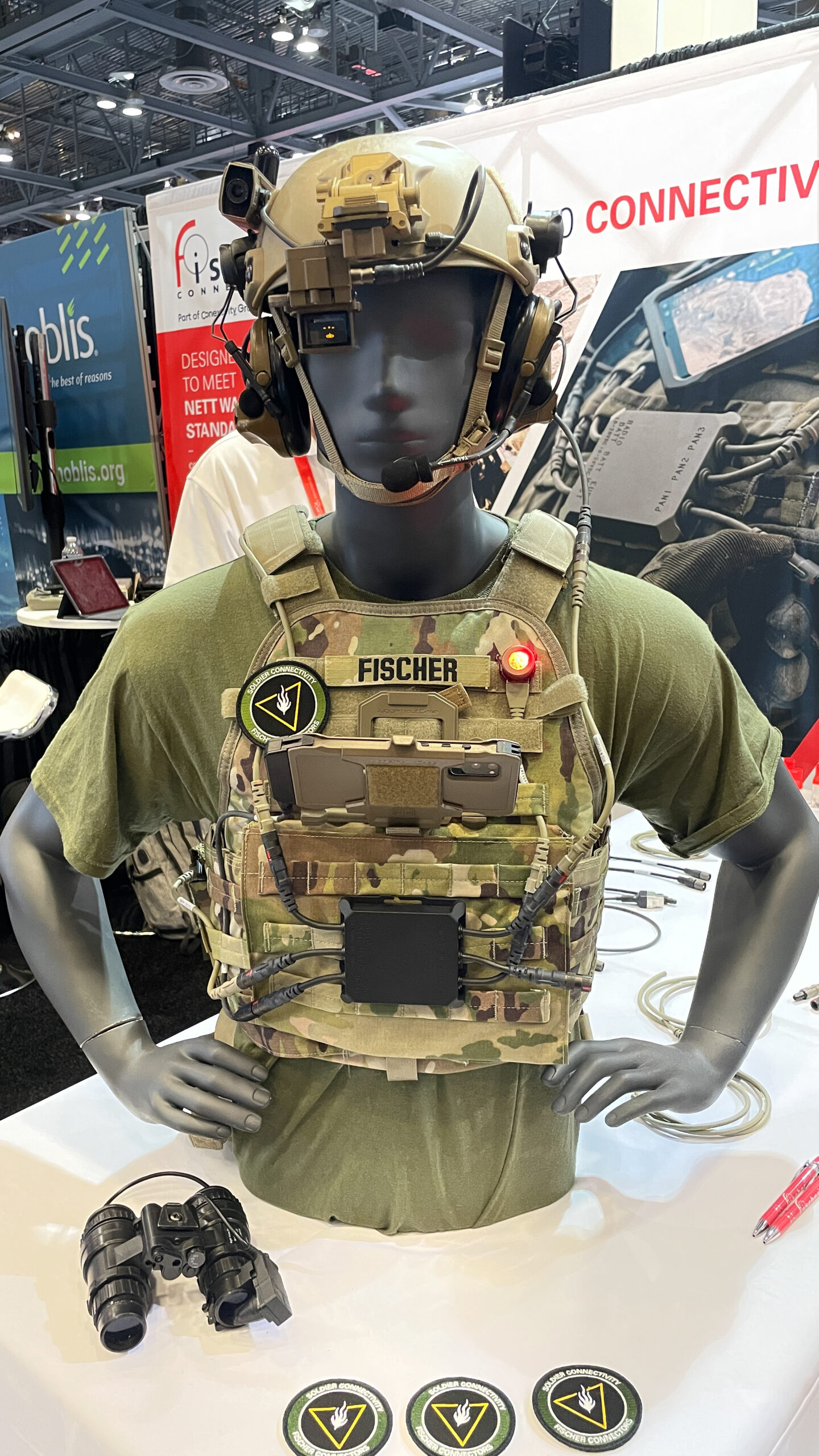
The “Multiport Tactical Hub” being touted by FISCHER a “easy to use” platform that pairs with an all in one application to manage both power and data flows of all connected devices soldiers might need. Connection to a HUD is designed to allow soldiers to view and manage their systems without looking down at a screen. (Brendon Smith / Breaking Defense)
For armored vehicles and tanks working in low visibility,the SetasVR system on display by HENSOLDT consists of a series of mounted cameras and sensors that provide a 360 degree view to soldiers operating the vehicle from inside. (Brendon Smith / Breaking Defense)
A medium weight fully robotic combat platform on display by General Dynamics showcases one of the many possible equipment variations. (Brendon Smith / Breaking Defense)
The BvS10 all terrain vehicle was displayed at a booth belonging to BAE SYSTEMS, showing off what the company said was the platform’s equipment flexibility for a variety of missions. (Brendon Smith / Breaking Defense)
Maker Northrop Grumman says this next generation of the Bushmaster Chain Gun reduces weight while also increasing gun stability and lowering gun recoil. Also showcased are new advanced munitions designed to take on the next generation of aerial threats. (Brendon Smith / Breaking Defense)