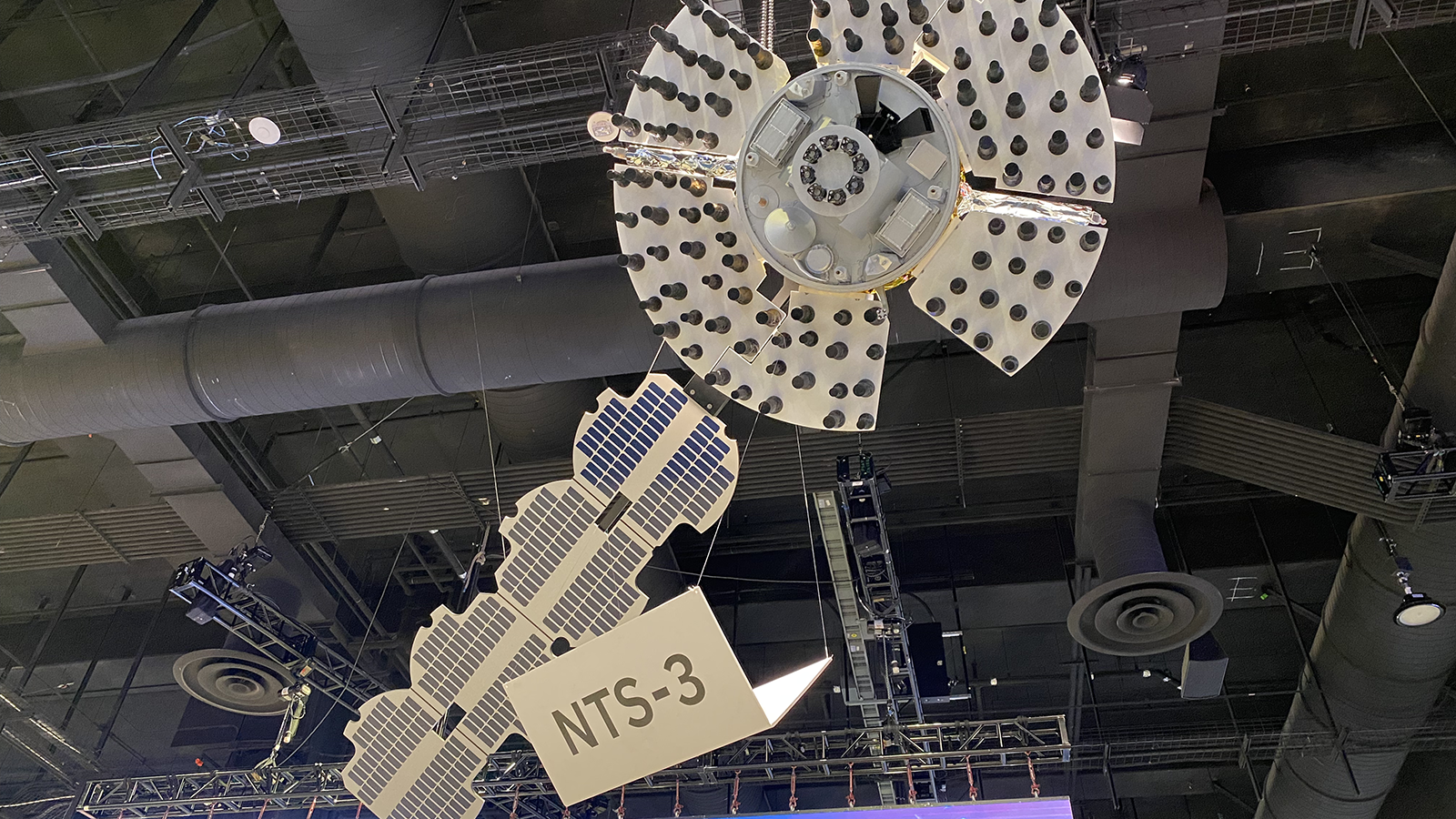
SEA AIR SPACE 2023 — Northrop Grumman today announced a high-powered team competing for a key contract to recapitalize a crucial Navy nuclear command, control and communications (NC3) program, a move that Breaking Defense has learned sets the stage for a faceoff with another longtime NC3 powerhouse: Collins Aerospace.
Northrop will lead a team including Raytheon’s Intelligence and Space segment as well as Lockheed Martin’s famous Skunk Works experimental lab. Accompanying the trio of defense primes is Crescent Systems, a Texas-based hardware and software systems engineering firm, and Long Wave Inc., an Oklahoma-based company focused on strategic communications systems.
Meanwhile, industry representatives revealed to Breaking Defense that at least one of Northrop’s competitors will be Raytheon subsidiary Collins Aerospace, which has recruited the privately held aerospace firm Sierra Nevada Corp. to join its team. (A Collins spokeswoman declined to name any of the other contractors with which the firm is working.)
The practice of defense contractors having different business units or subsidiaries enter government competitions on different teams — in this case Raytheon’s representation on both sides — reflects the value companies place on winning certain contracts. For example, different divisions of Boeing competed against each other in 2018 for the MQ-25 Stingray program, an unmanned, carrier-based drone designed to refuel strike fighter aircraft. In the end, the team with Boeing as the prime contractor won that fight.
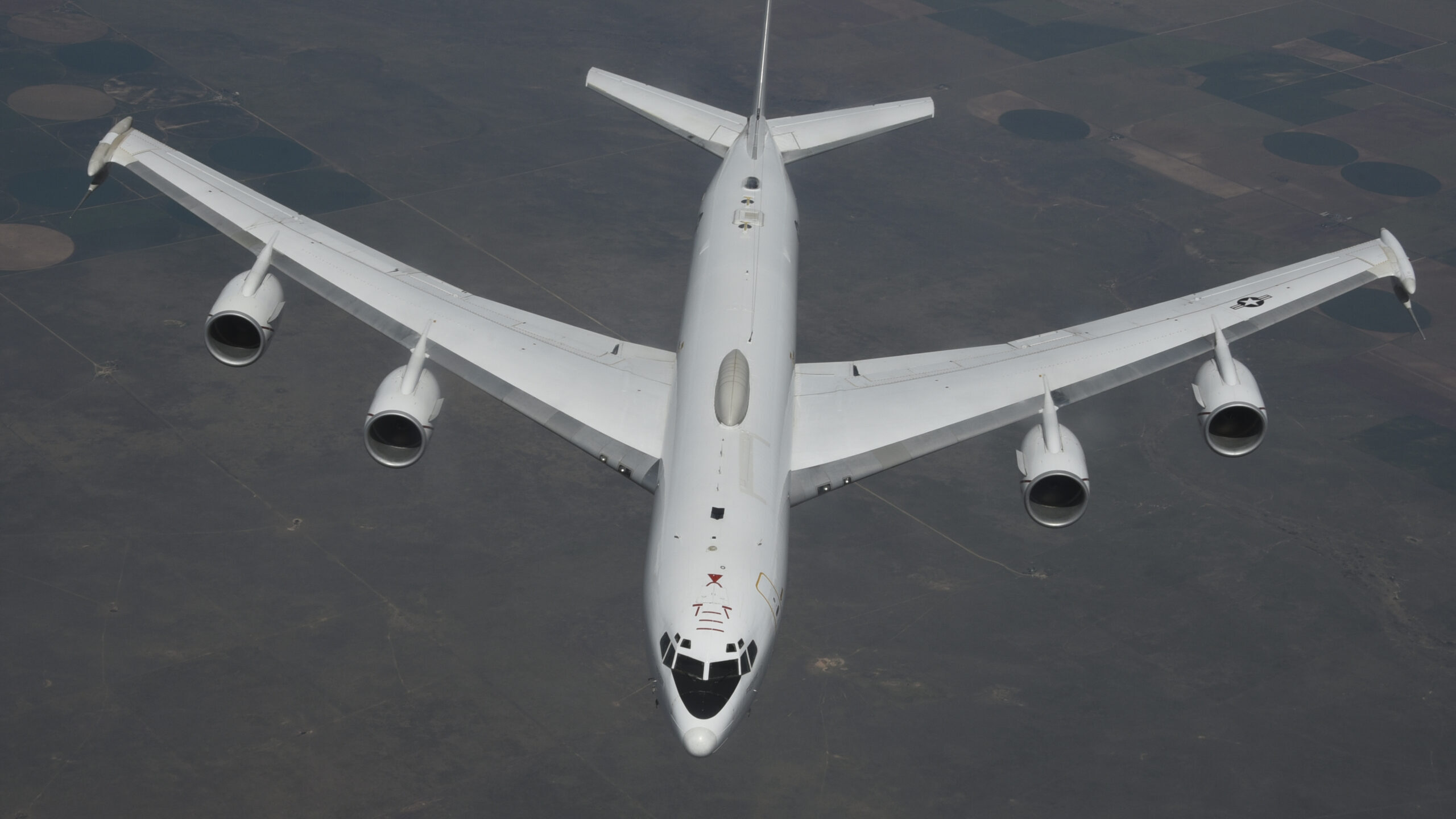
Now, at stake is the funding to recapitalize a Navy warplane, dubbed E-XX TACAMO, that in times of global crisis would be responsible for relaying orders from the president to the crews of submarines armed with nuclear weapons. The NC3 mission has for several years been identified by Pentagon leaders as a top priority; the president’s new budget request seeks more than $37 billion for nuclear modernization, including NC3.
In the president’s new budget request, the Navy projects it will purchase the first three E-XX TACAMOs in fiscal 2027 and another six in FY28. The request is also seeking $214 million in research and development funding in FY24 for the E-XX TACAMO program.
The contract Northrop and Collins will compete for is known as an “engineering manufacturing and development phase” — what effectively amounts to building and testing a prototype of the new aircraft prior to full-rate production. It’s not clear when the competition will begin, but the public documents state work on the contract is anticipated to run from FY25 through FY30. The price point for the contract has also not been publicized.
What is certain though is that the US Navy is poised to spend hundreds of millions of dollars on a capability — discussing nuclear launches in the most dire circumstances — that the government hopes never to use.
Who’s In, And Who’s Out
The contract’s winner will be responsible for integrating a Very Low Frequency subsystem into a Lockheed Martin C-130J-30 aircraft, as well as designing and integrating “a modernized TACAMO mission system” onto the same plane, according to a public Navy notice originally published last year on the government’s primary contracting website, SAM.gov. The VLF refers to a key piece of technology that enables the aircraft to communicate with submarines even when the boats are far below the surface.
A spokeswoman for Naval Air Systems Command, the service’s chief agency for buying warplanes, declined to answer any questions about E-XX TACAMO, only citing the program’s “current status.” She deferred to the notice on SAM.gov.
It’s still early days for the competition — the Navy has been having a preliminary correspondence with industry since May 2022 ― and other competitors could emerge. The Pentagon does not routinely reveal which contractors formally respond to its requests for proposal; however, publicly available documents associated with the E-XX TACAMO contract indicate six defense prime contractors attended an initial briefing with the Navy in August 2022 to discuss the potential work.
Northrop Grumman, Collins Aerospace, and Sierra Nevada Corp., all of whom were on that list, separately confirmed to Breaking Defense their intent to compete. Also on the list were L3 Harris and Lockheed Martin, whose spokespeople, prior to today’s announcement, provided statements to Breaking Defense that only acknowledged they were monitoring the pending request for proposals, but did not state whether they would respond to it. Northrop Grumman’s announcement today revealed that Lockheed Martin’s Skunk Works would join Northrop’s team.
Two major defense players have ruled themselves out of the competition. A spokeswoman for BAE, the sixth company on the list, told Breaking Defense the company does not plan to pursue the contract. A spokeswoman for Boeing — the prime contractor for E-XX TACAMO’s predecessor, the E-6B Mercury, first deployed in October 1998 and based off the company’s commercial 707 aircraft — also told Breaking Defense the company does not plan to pursue the recapitalization contract.
With Collins as its one confirmed competitor, Northrop is facing a company that has a long history in the NC3 space. Scott Pingsterhaus, senior director for business development at Collins Aerospace, told Breaking Defense his company has worked on systems in the E-6B and its predecessors for the past 60 years, going back to the Enola Gay, Boeing’s B-29 Superfortress bomber that became the first aircraft to drop an atomic bomb during a war.
“It’s a 60-plus-year relationship we’ve had with the Navy partnering with them on TACAMO,” he said. “It’s that legacy of knowing the mission. We believe we know the mission better than any other contractor and can apply that into our solution.”
Northrop, meanwhile, is touting its extensive background working on a variety of battle management systems as well as integration contracts involving warplanes from all of the major defense prime contractors, such as Lockheed Martin’s F-35.
PHOTOS: Sea-Air-Space 2023

 Gallery