Air Warfare

Air Force acquisition chief on tanker plans and negotiations with Boeing

"We just kind of need to get their no-kidding ground truth of, ‘this is what we think we can deliver and when we think we can deliver it,'" Andrew Hunter, the service's acquisition chief, said in a Sept. 5 interview at the Pentagon. 

KC-46 Elephant Walk
KC-46A aircraft assigned to the 157th Air Refueling Wing perform an elephant walk formation on the runway at Pease Air National Guard Base, Sept. 8, 2021. (U.S. Air National Guard Photo by Senior Master Sgt. Timm Huffman)

AFA 2023 — As the Air Force forges ahead with plans to procure a new batch of tankers, officials are trying to avoid shiny promises from industry and instead get at the absolute truth about what America’s industrial base can deliver, the service’s top weapons buyer tells Breaking Defense.

“We just kind of need to get their no-kidding ground truth of, ‘this is what we think we can deliver and when we think we can deliver it,'” Andrew Hunter, the service’s acquisition chief, said in a Sept. 5 interview at the Pentagon. 

In the spring, Hunter disclosed that the service is leaning toward procuring 75 more of Boeing’s KC-46A Pegasus tankers in lieu of a competitive effort that would see a bid from Lockheed Martin’s LMXT. Since then, a top Air Force official emphasized that the service still isn’t sure on its acquisition strategy, something Hunter said reflects the procurement process working.

“Mechanically, what has happened is we’ve gotten farther along in the requirements process,” Hunter said, which features input from the joint staff and settling on a more concrete idea about what’s being asked of industry.

“I’ve characterized it [the tanker procurement] as, it is very much in line with the KC-X requirement, which ultimately the KC-46 was selected to fulfill,” he said. The new tanker requirement, as Hunter has previously explained, entails more “modest changes,” like certain communications improvements. 

For years, the Air Force planned to follow the KC-46A with KC-Y and KC-Z contests, which on paper would have involved new offerings from industry for each phase. But as time went on, Air Force officials started to hint that a KC-Y competition was looking less likely.

In March, Hunter revealed that both KC-Y and KC-Z were no more, and that officials would in the near term pursue a more limited tranche of tanker procurement to get to a next-gen air refueler in the 2030s. A critical factor in the service’s decision, Hunter said, was the timeline for delivery, which he reiterated would be a key element of the service’s assessment for its upcoming tanker buy.

That currently is down to either more KC-46s, or potentially the Lockheed-Airbus teamup of a converted A330 MRTT branded as the LMXT. However, Lockheed will need to stand up an industrial base to support the effort, which company officials have said will require a minimum but unspecified amount of tanker production to make their business case viable.

RELATED: From cargo to cockpit: A KC-46A crew’s thoughts about the plane’s potential tanker rival

Hunter heeded those comments, noting that “one of the concerns has been the number of how many aircraft because there is some in industry who are looking at possibly establishing new production lines, and so the number of aircraft is important to them.”

After the Air Force recently released a notice to industry that a request for information (RFI) for the tanker program would be posted this month, Hunter said “what we gave them in the RFI essentially was a range. So the desire being we really want to understand, like, where’s the break point, and what can they do and what can’t they do?

“We’ve kind of heard some feedback on that informally, but obviously an RFI is a little more formal,” he added.

But asked whether he still anticipated that Boeing’s Pegasus may be the answer for the Air Force’s tanker plans, Hunter sounded more noncommittal than he did to start the year.

“To me, it’s all going to be dependent on what we get back in the RFI, and what they can actually deliver,” he said. 

Looking ahead to the Air Force’s futuristic tanker, known as the Next-Generation Air Refueling System (NGAS), Hunter warned that a looming continuing resolution (CR) could adversely impact the service’s near-term plans to move analysis work on the next-gen tanker forward.

Negotiations With Boeing

Last year, Hunter said that the Air Force had “struggled” to reach certain agreements with Boeing. In the year since, “we’ve definitely made some progress,” he said, though “it’s still a challenge.”

The acquisition czar explained that Boeing was having difficulty submitting proposals in a timely fashion with all the information officials needed — hampering their ability to even begin negotiations on factors like cost.

“It’s very frustrating, I think, to all of us, if we just sit around waiting for a proposal to get to the point where we get to argue about pricing,” he said. “In some cases that’s been many months, to even as long as a year or more.”

Problems with proposals aren’t “unique to Boeing,” Hunter added, but the company’s size is the issue: as one of the Air Force’s largest contractors, “the volume of proposals… stands out,” he said.

The plane builder has taken steps to improve its performance, Hunter said, such as by making internal investments and “staffing up and improving their ability to put together compliant proposals and do so in a much more timely way.” Boeing declined to comment. 

“They are endeavoring to meet that goal,” Hunter said. “And I think it serves us both if we can do that.” 

PHOTOS: AFA 2023
PHOTOS: AFA 2023

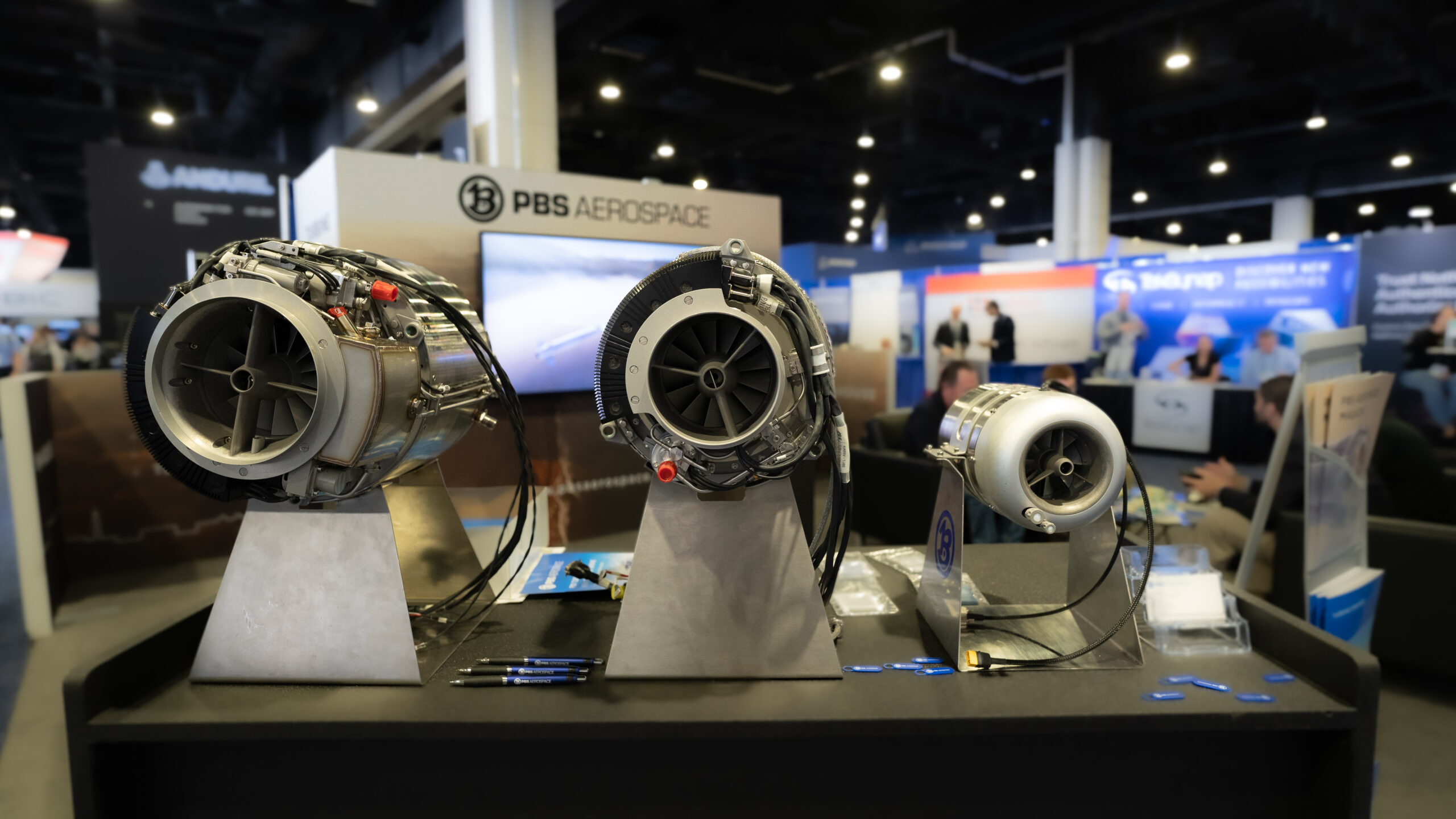
You don't see too many turbofans on unmanned aircraft systems but PBS Aerospace hopes to change that. Besides drones, they're also used for target drones, experimental aircraft, and ultralight helicopters.
Whether you fly fixed wing or rotary wing aircraft, Centex has a helment for you. Their suite of headborne protection systems manage hazardous conditions such as high-G, ejection, wind shear, noise and debris.

Elbit Systems of America wants to jam with you. That is, they. want to help you jam others with their systems that target threat radars, multiple emitters simultaneously, and surface-to-air and air-to-air missiles.

Augmented reality is going to be a boon to aircraft maintainers, in particular, and Amentum says it's perfect for reducing troubleshooting time and increasing situational awareness and collaboration. The dummy agrees.
CAE is here at AFA but their latest news came out of this week's Defence and Security Equipment International (DSEI) conference. CAE signed an MOU with Textron Aviation Defense that expands efforts to support defense force preparation, integrate next-generation aircraft. and develop advanced capabilities.
With decades of experience behind it, variants of the Aerojet Rocketdyne/L3Harris RL10 engine power the upper stages of United Launch Alliance’s Atlas V and Delta IV Heavy rockets. Two RL10 engines power the upper stage of ULA’s new Vulcan Centaur rocket, and RL10 engines also help propel NASA’s Space Launch System (SLS) rocket
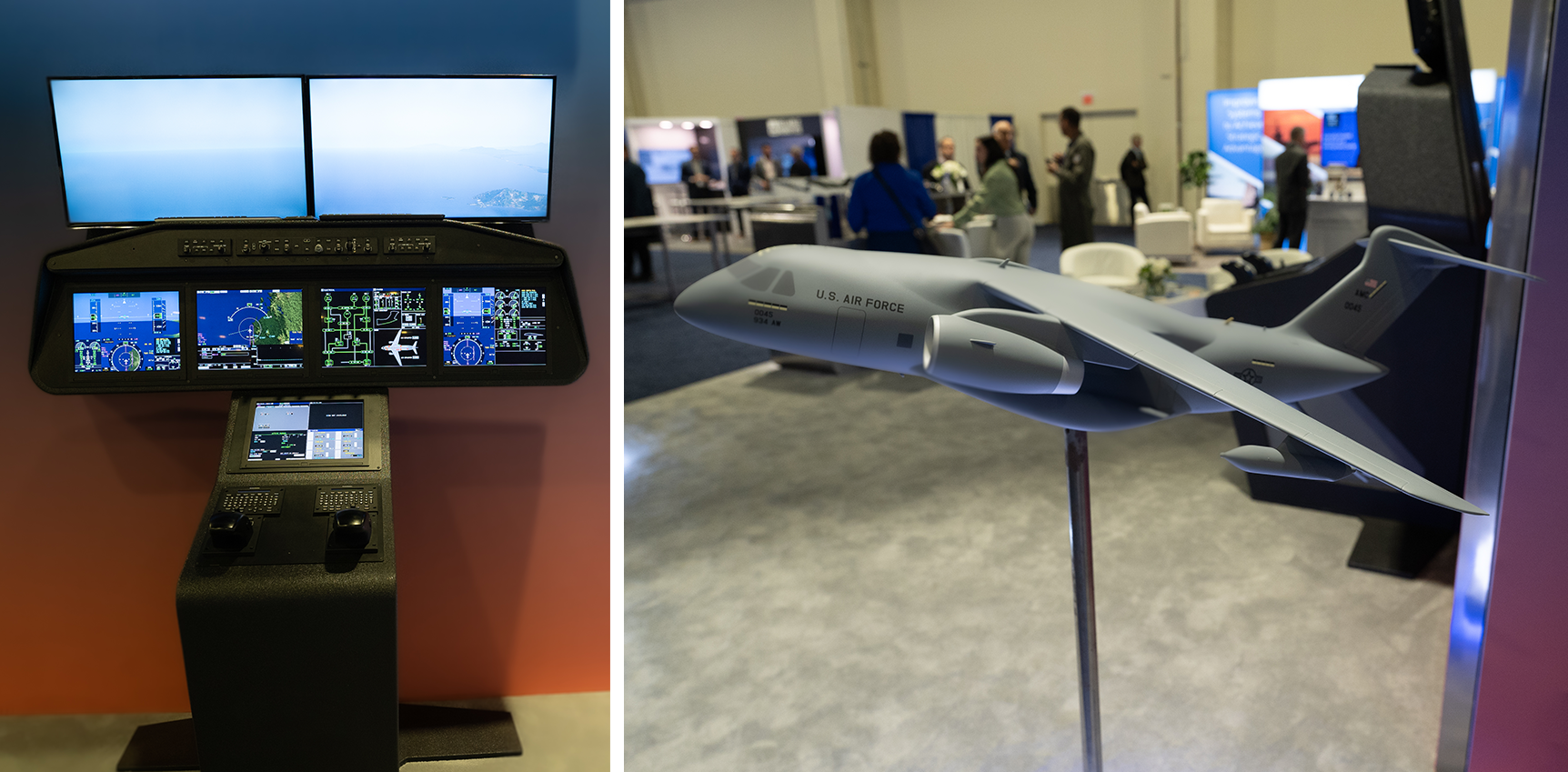
You can never have too many transport aircraft and Embraer is showing off its C-390 Millennium multi-mission transport to any US Air Force procurement execs walking the show flow. To the left are some of the C-390's cockpit controls. Embraer recently delivered the sixth C-390 multi-mission transport to the Brazilian Air Force.
Taking its visual cues from the Star Wars X-wing starfighter, the dart-like ROC-X VTOL precision strike missile from IAI is a version of the company's POINT BLANK electro-optically guided missile that is backpack carriable. Earlier this year, the DoD awarded IAI a multi-year, multi-million-dollar contract for the system. (Brendon Smith/Breaking Defense)
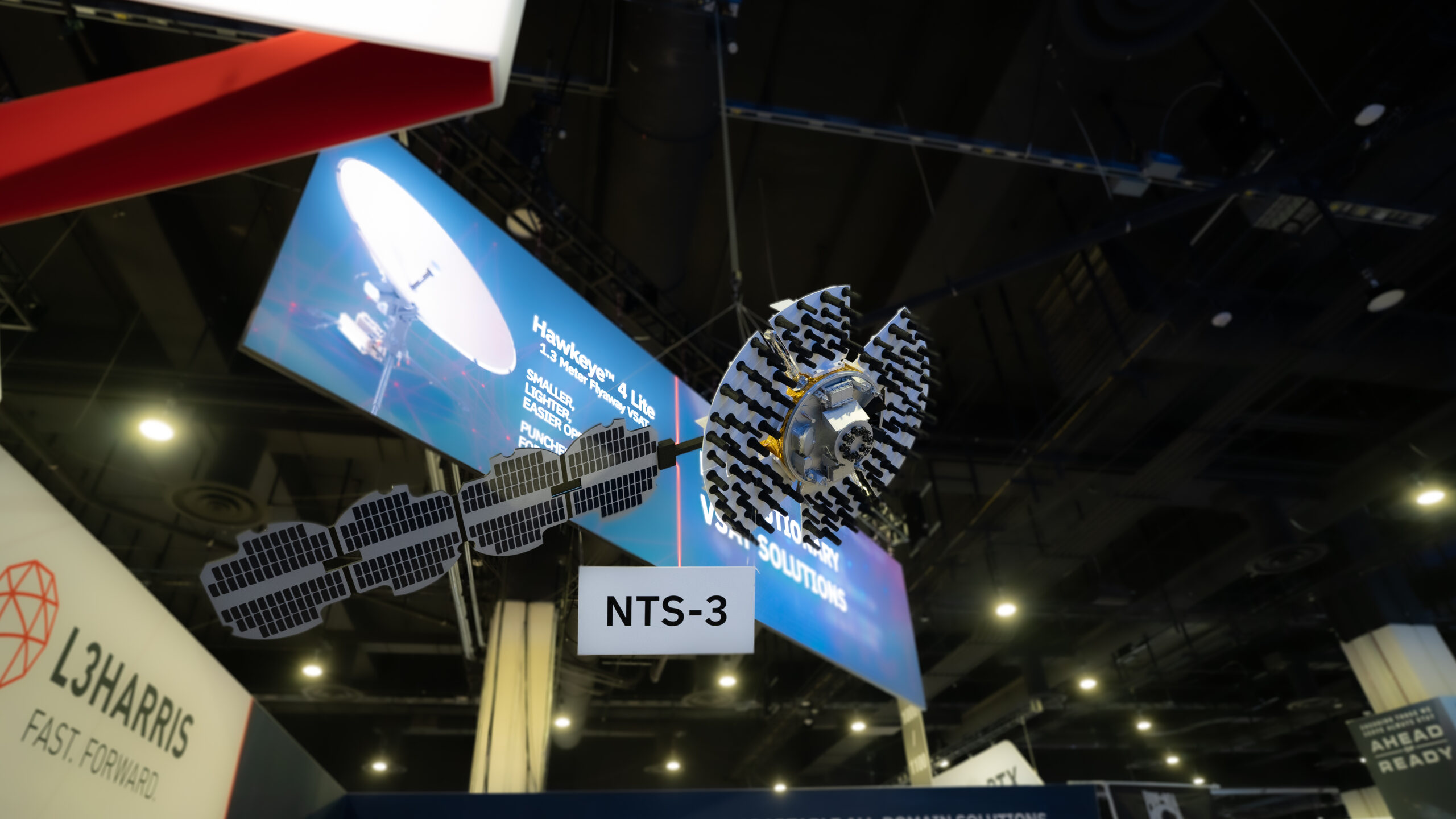
What do we want? We want uninterrupted position, navigation and timing. So says every military service. That's the purpose of the Navigation Technology Satellite – 3 Vanguard from L3 Harris. The NTS-3 is the first U.S. integrated satellite PNT experiment in almost 50 years, says the company. (Brendon Smith/Breaking Defense)
You know what would supercharge development and production of unmanned aircraft systems? That would be 3D printing. Earlier this year, General Atomics teamed with Divergent Technologies to support its additive manufacturing applications development efforts and implement a full digital manufacturing process for GA-ASI’s products. We all have the pleasure of seeing one of their early efforts here on the show floor. (Brendon Smith/Breaking Defense)
Red 6 envisions a future where warfighters across all domains are connected in a joint, augmented battlespace. The company is working to make that happen through its augmented-reality training helmet. (Brendon Smith/Breaking Defense)
The Kratos XQ-58A Valkyrie is not necessarily new but what it did recently was news. As part of a three-hour sortie in July, the Air Force Research Laboratory demonstrated for the first time a machine-learning trained, AI algorithms on an XQ-58A Valkyrie. (Brendon Smith/Breaking Defense)
It's both an advanced trainer and now also a light-combat aircraft. The M-346 trainer on the Leonardo booth, which also includes wares from its DRS company in the US, is also flying in a "Fighter Attack" version. (Brendon Smith/Breaking Defense)
Airmen all in a row. Given that they're at the FlightSafety booth, their virtual reality goggles are displaying training like emergency procedures, cockpit familiarization, and traffic pattern operations.
In his AFA 2023 keynote address, Air Force Secretary Frank Kendall talked about his plans to "optimize" how the service works. He recently released a memo mentioning broad plans to reorganize the Air Force. Details to come.
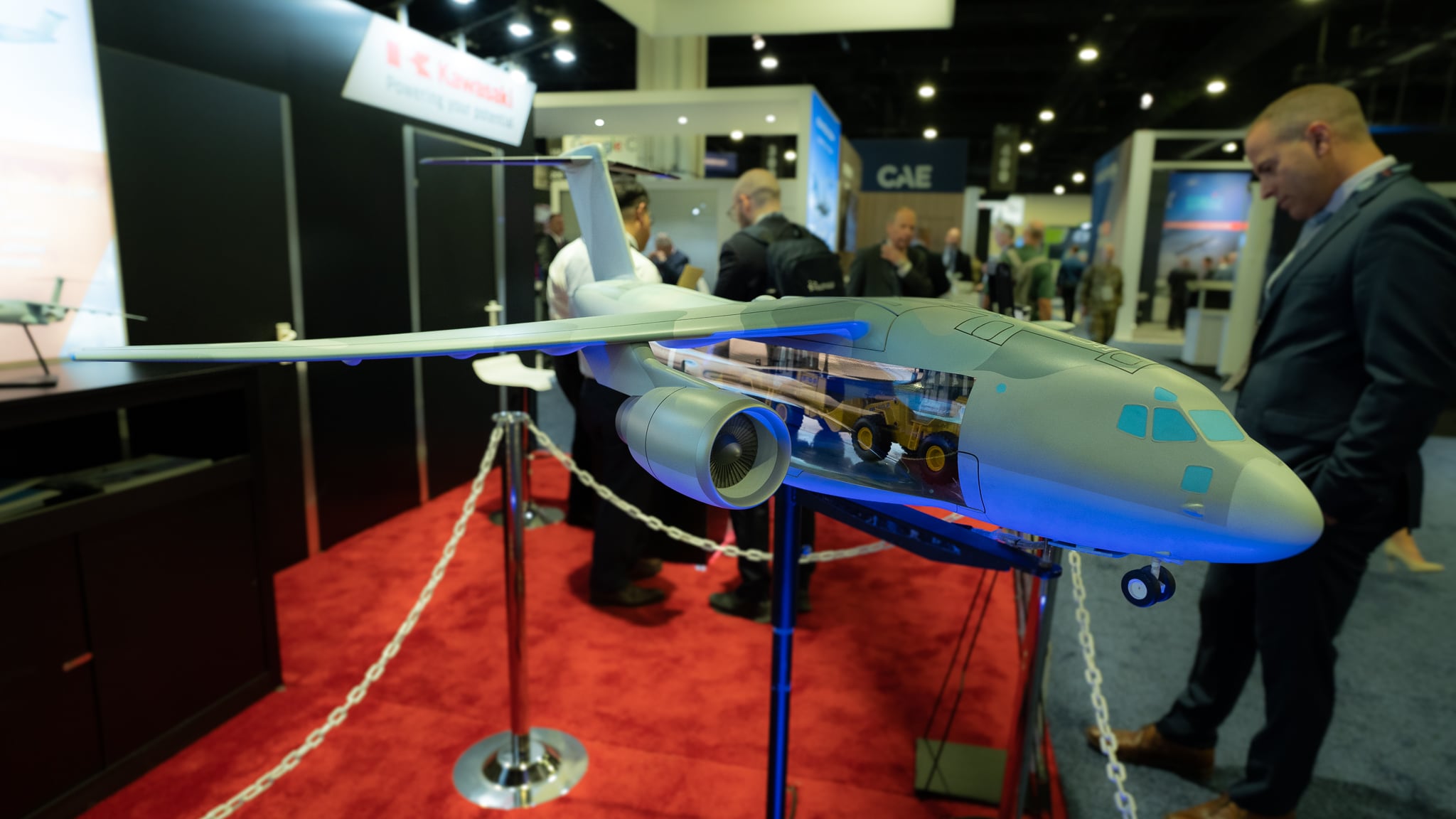
Kawasaki is here at AFA but not on two wheels. The C-2 transport model displayed a neat cut-out showing off its cargo capacity.
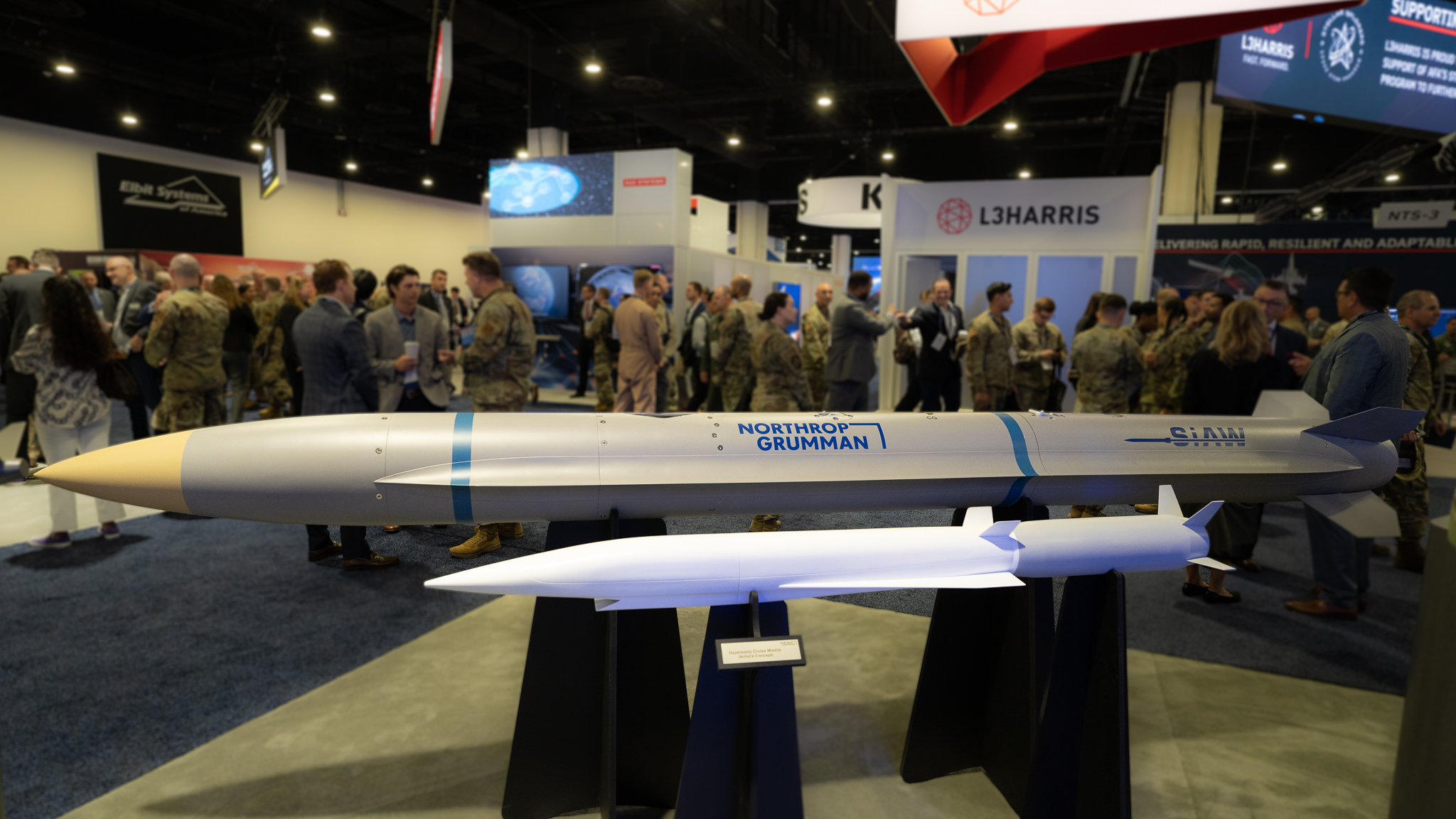
We spied a first-time visitor to be displayed at an industry show: a model of Northrop Grumman's scramjet engine that powered the Hypersonic Air-breathing Weapons Concept (HAWC) missile. Behind it is a Stand-in Attack Weapon for the Air Force.
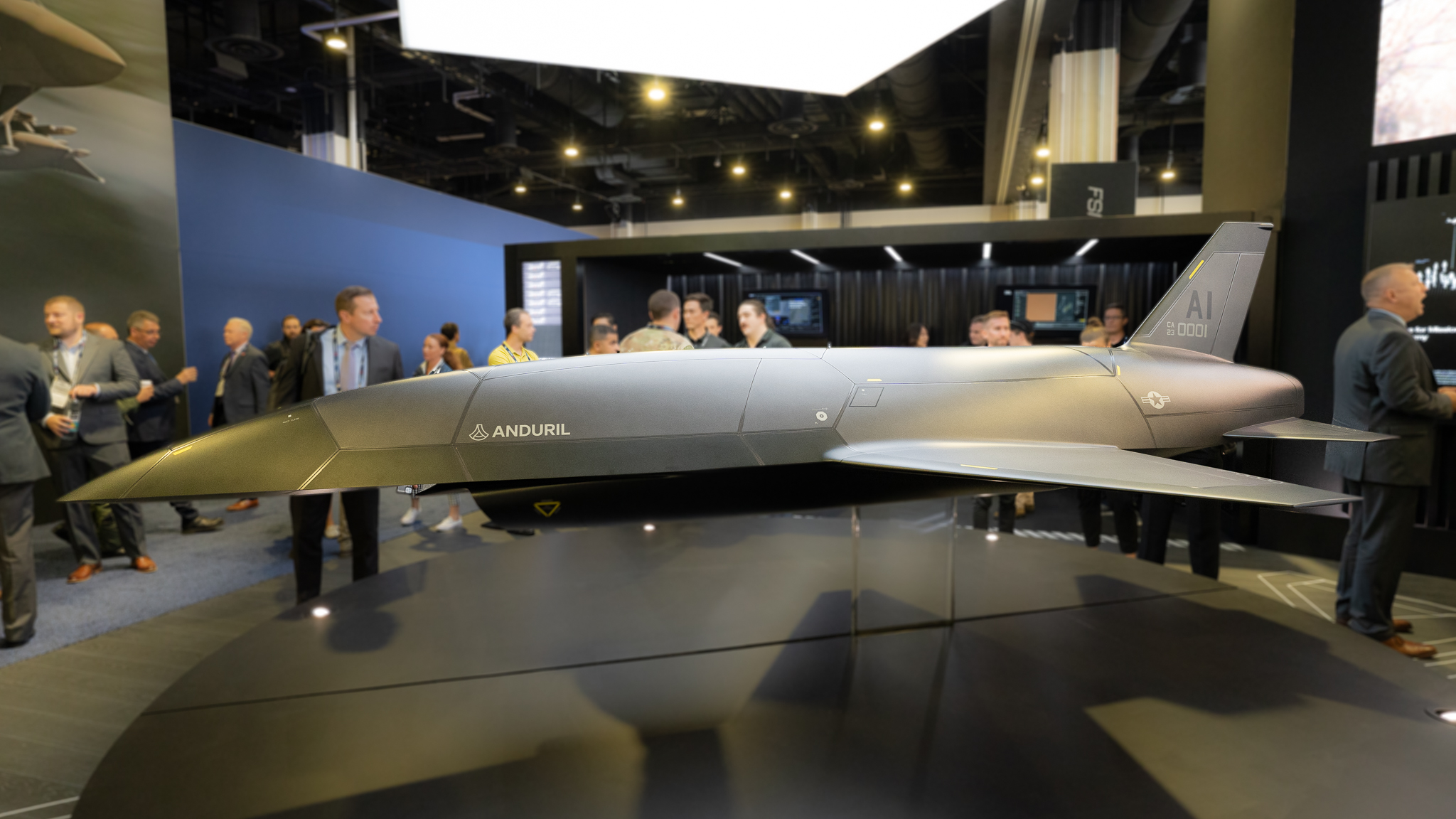
If looks could kill, Anduril's Fury multi-mission Group 5 autonomous air vehicle certainly fits the bill. Fury's mission is to accelerate the development, testing, and fielding of mission autonomy.
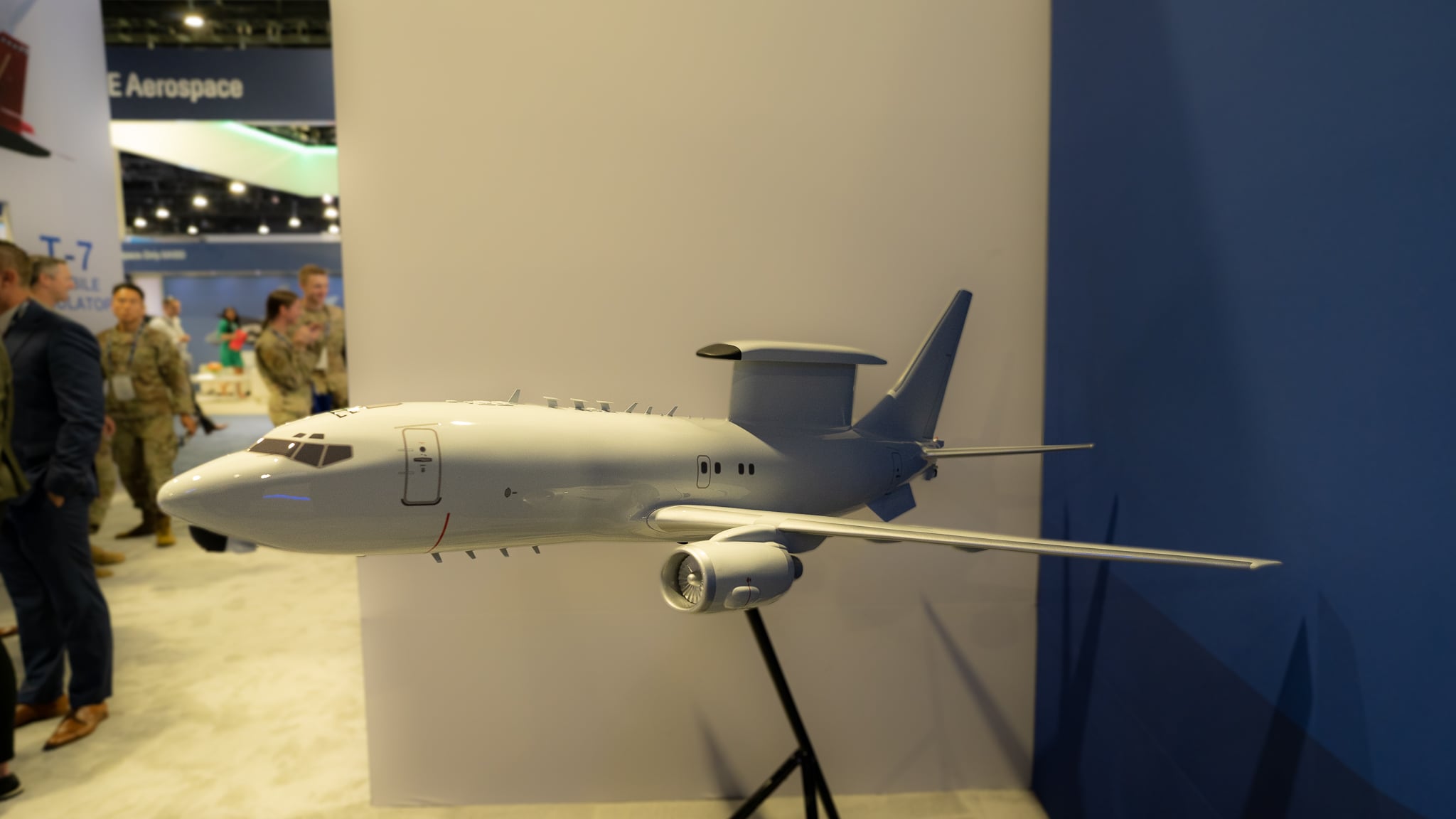
Tucked in a small seating area on the Boeing stand is a model of the E-7 airborne early warning and control aircraft. It's a command-and-control platform for multi-domain awareness.
Missiles a flyin' at AFA; at top left is a Joint Strike Missile from RTX. Also on their booth is an AIM-9X Sidewinder just below, an AIM-120 AMRAAM at top right, and a GBU-53/B StormBreaker glide bomb at bottom right.
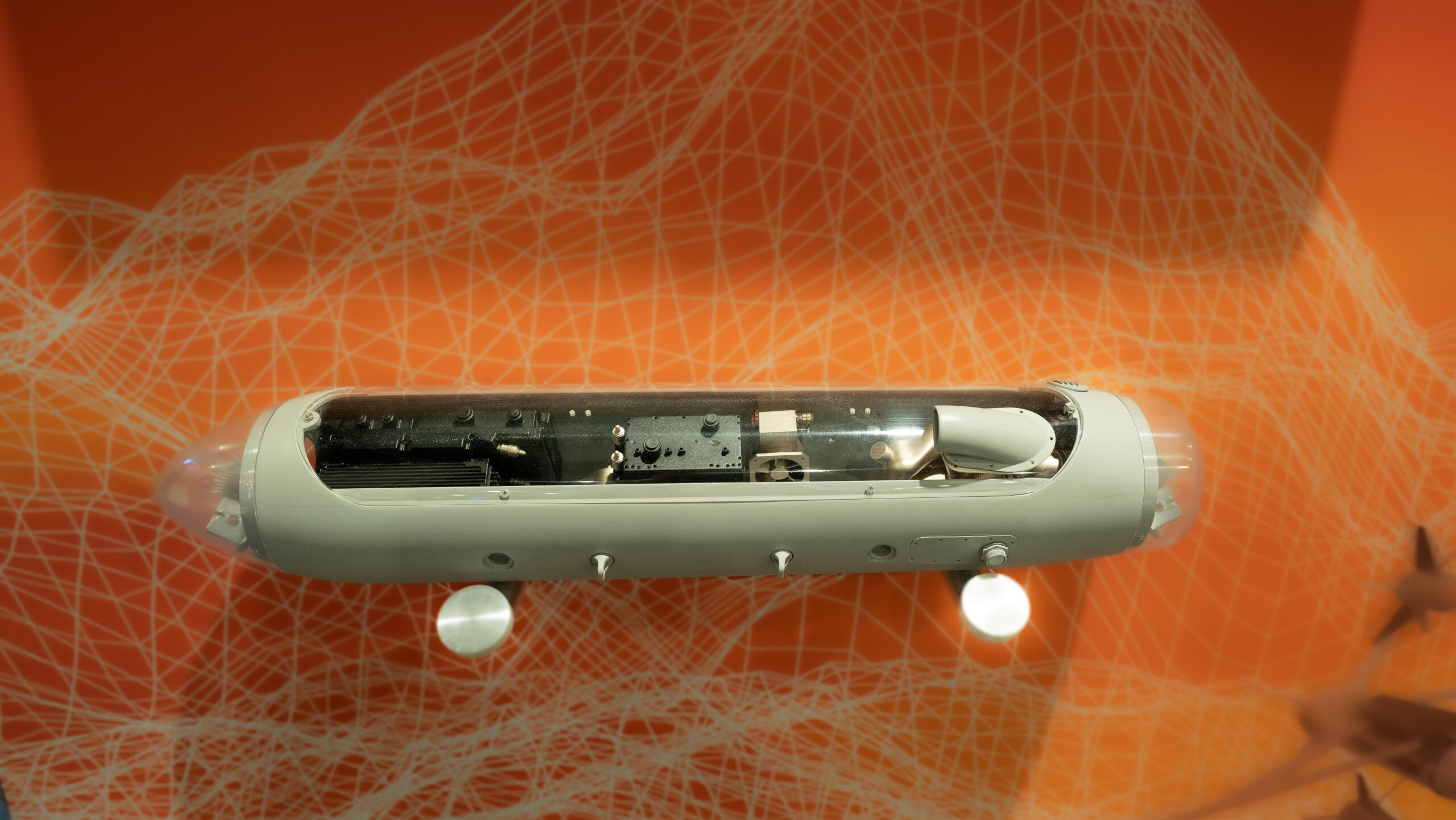
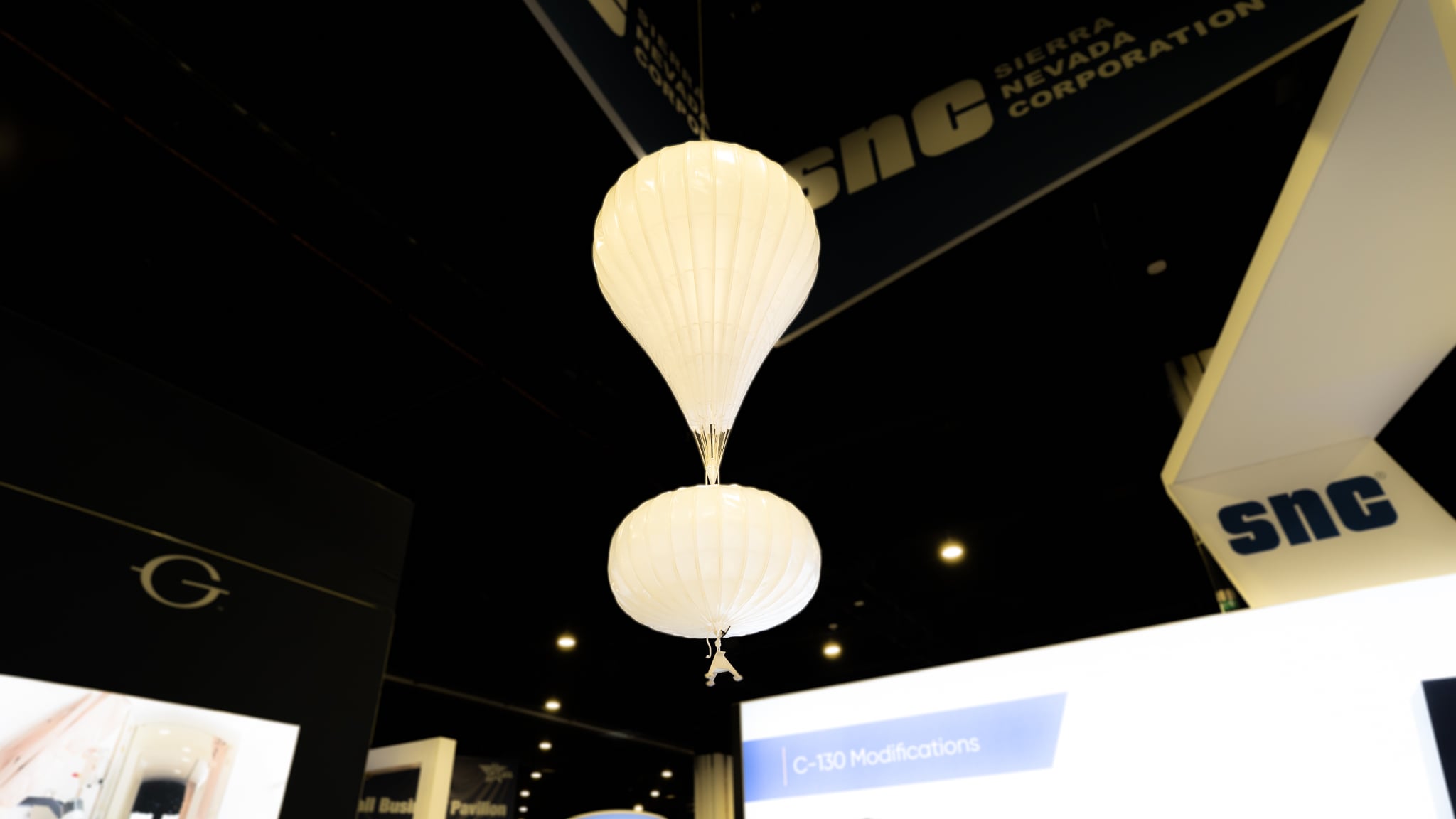
It's a surveillance and communications balloon named SHADE (Synchronized High Altitude Distributed Environment) that's designed to "leverage the stratosphere," says SNC. The black bit at the bottom of the model is a solar panel, and many more panels can be added depending on payload.