Land Warfare

Army plans to field first next-gen Sentinel A4 radar in late 2025

The Army and Lockheed Martin already have seen early interest among US allies and partners in the new Sentinel A4 radar.

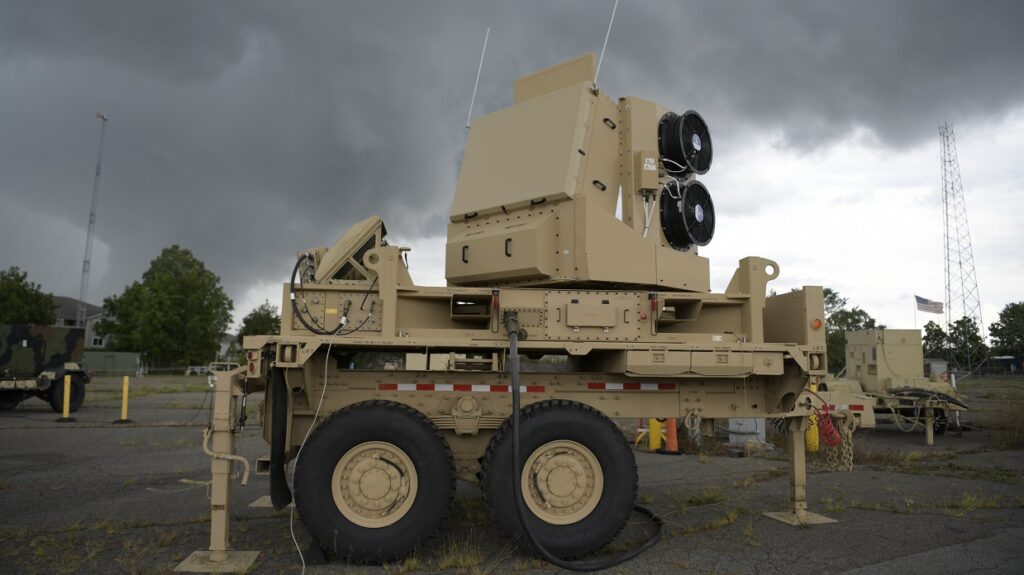
Sentinel A4 radar
Lockheed Martin is expected to go into full rate production of the the Sentinel A4 radar in mid-2025. (Photo provided by Lockheed Martin.)

AUSA 2023 — The Army expects its new Sentinel A4 radar, being developed by Lockheed Martin as a linchpin in the service’s plans for contributing to joint all-domain operations, to reach initial operational capability (IOC) in the fourth quarter of 2025, according to service and company officials.

Col. Jason Tate, project manager for the Search, Track, Acquire, Radiate, Eliminate (STARE) Project Office at the Army’s Program Executive Office for Missiles and Space, told reporters in an Oct. 4 briefing that the current plan is for initial operational test and evaluation to begin in early 2025, hopefully followed by a full rate production decision in the third quarter of that year that can kickstart fielding.

“The Army acquisition objective, the total number we plan on buying, is going to be 240 at the end of the day,” he added.

The Sentinel A4, which will use an active electronically scanned array (AESA), will replace Raytheon’s venerable Sentinel A3. It is designed to track cruise missiles, unmanned aerial systems, helicopters, planes, rockets, artillery and mortar threats — and most crucially, to track and classify those different threat types simultaneously.

The upgraded radar will link into the Army’s signature command and control network, the Integrated Battle Command System (IBCS) that represents the service’s contribution to the Pentagon’s Joint All Domain Command and Control, as well as the service’s own Forward Area Air Defense Command and Control (FAAD C2) network.

“The Sentinel A4 does provide data to these two systems, really allowing the Army to determine the best course of action to address the threats that are out there,” said Chandra Marshall, Lockheed Martin’s vice president/general manager for its Radar Systems and Sensors unit.

The new radar also will be integrated with the services future Indirect Fires Protection Capability to shoot down cruise missiles and large drones.

The Army and Lockheed Martin further have hopes that the Sentinel A4 will attract buyers among US allies and partners, with both Tate and Marshall confirming that some countries already are expressing early interest — but demurred on detailing which ones.

“From an international standpoint, we were seeking permission from the Tri-Service Committee to market and offer the Sentinel A4 to continue to build a robust strategy for future foreign military sales. The Army had received inquiries from numerous international partners. However, no cases currently exist,” said Tate.

The Tri-Service Committee is chaired by the Pentagon’s Office of the Under Secretary of Defense for Acquisition and Sustainment, currently headed by Bill LaPlante, and authorizes negotiations of International Armaments Cooperation Agreements.

PHOTOS: AUSA 2023

PHOTOS: AUSA 2023

A Blade-55 UAV from Alare Technologies lingers over visitors at AUSA 2023. (Brendon Smith / Breaking Defense)
At AUSA 2023, Boeing's Compact Laser Weapon System (CLWS) was seen fitted on a Polaris MRZR vehicle. (Tim Martin / Breaking Defense)
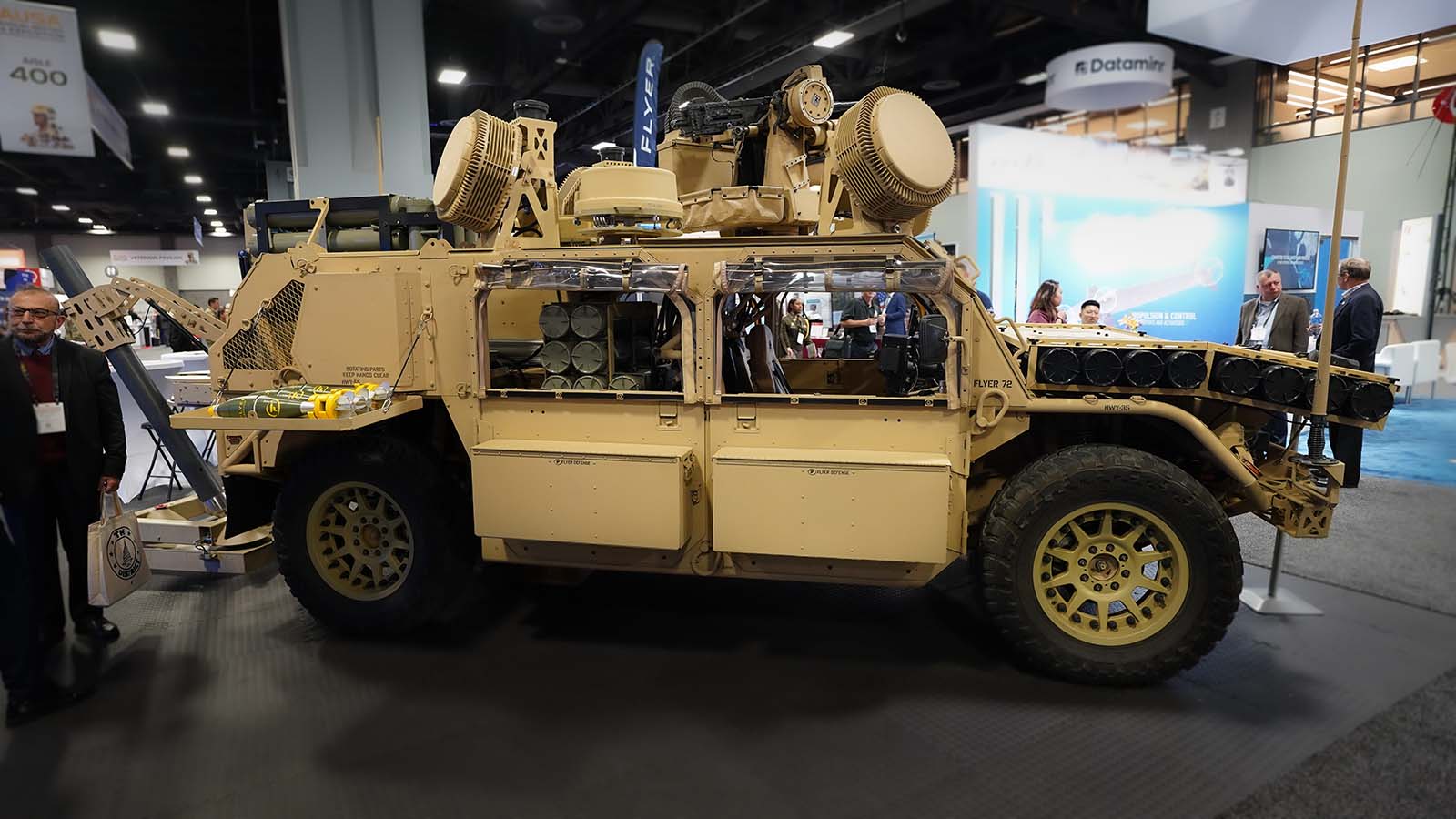
From Flyer Defense, "The Beast" Multi-Purpose Mobile Fire Support System is shown on the AUSA 2023 show floor. (Brendon Smith / Breaking Defense)
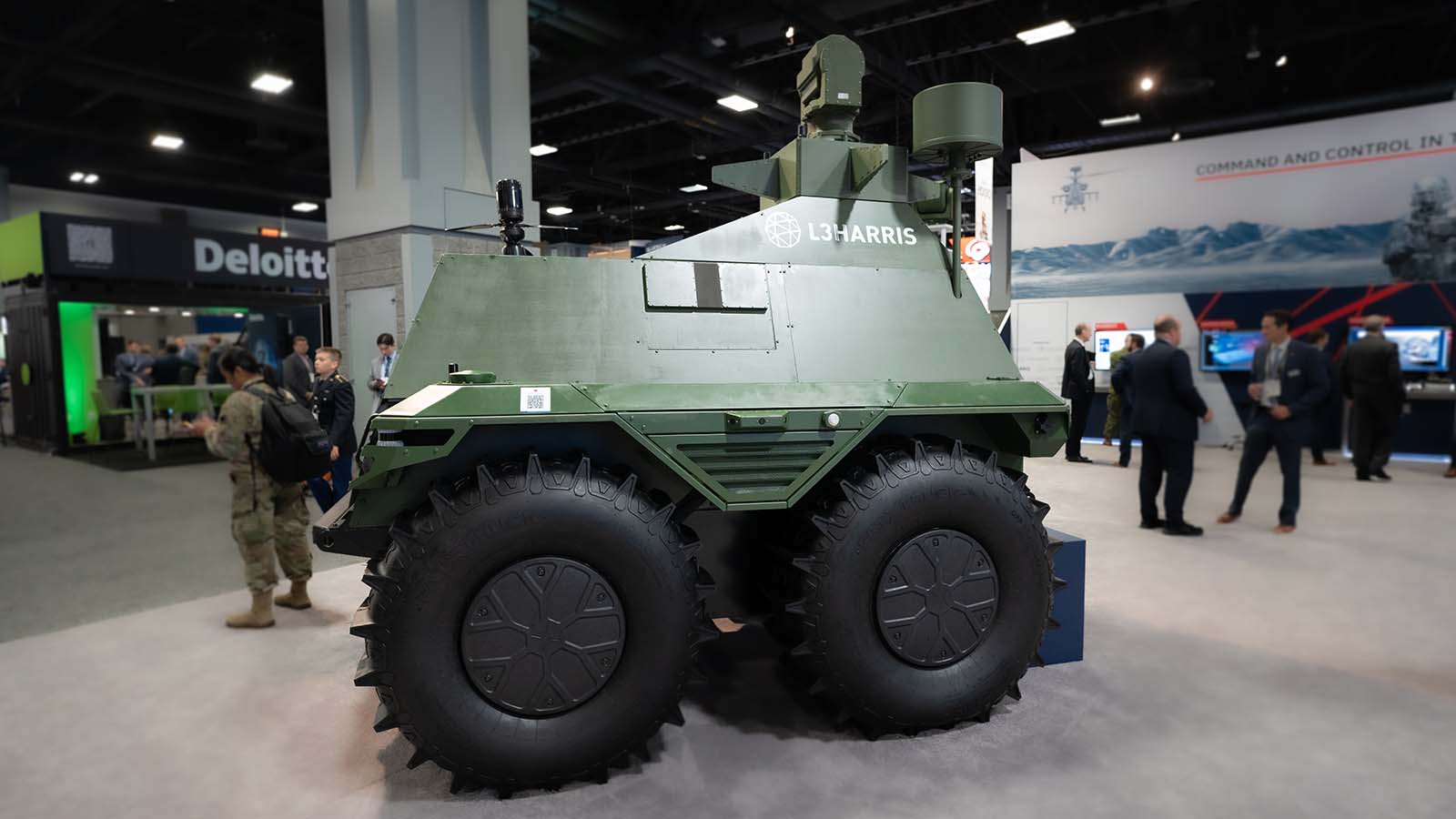
This squat robot, seen on the show floor at AUSA 2023, is made by L3Harris as a counter-UAS system. (Brendon Smith / Breaking Defense)
Leonardo DRS showed off a Stryker vehicle outfitted with its own c-UAS system at AUSA 2023. (Brendon Smith / Breaking Defense)
Among the many products on display by Northrop Grumman were several chain guns. (Brendon Smith / Breaking Defense)
The defense firm Recluse showed off its hybrid electric cargo UAV. (Brendon Smith / Breaking Defense)
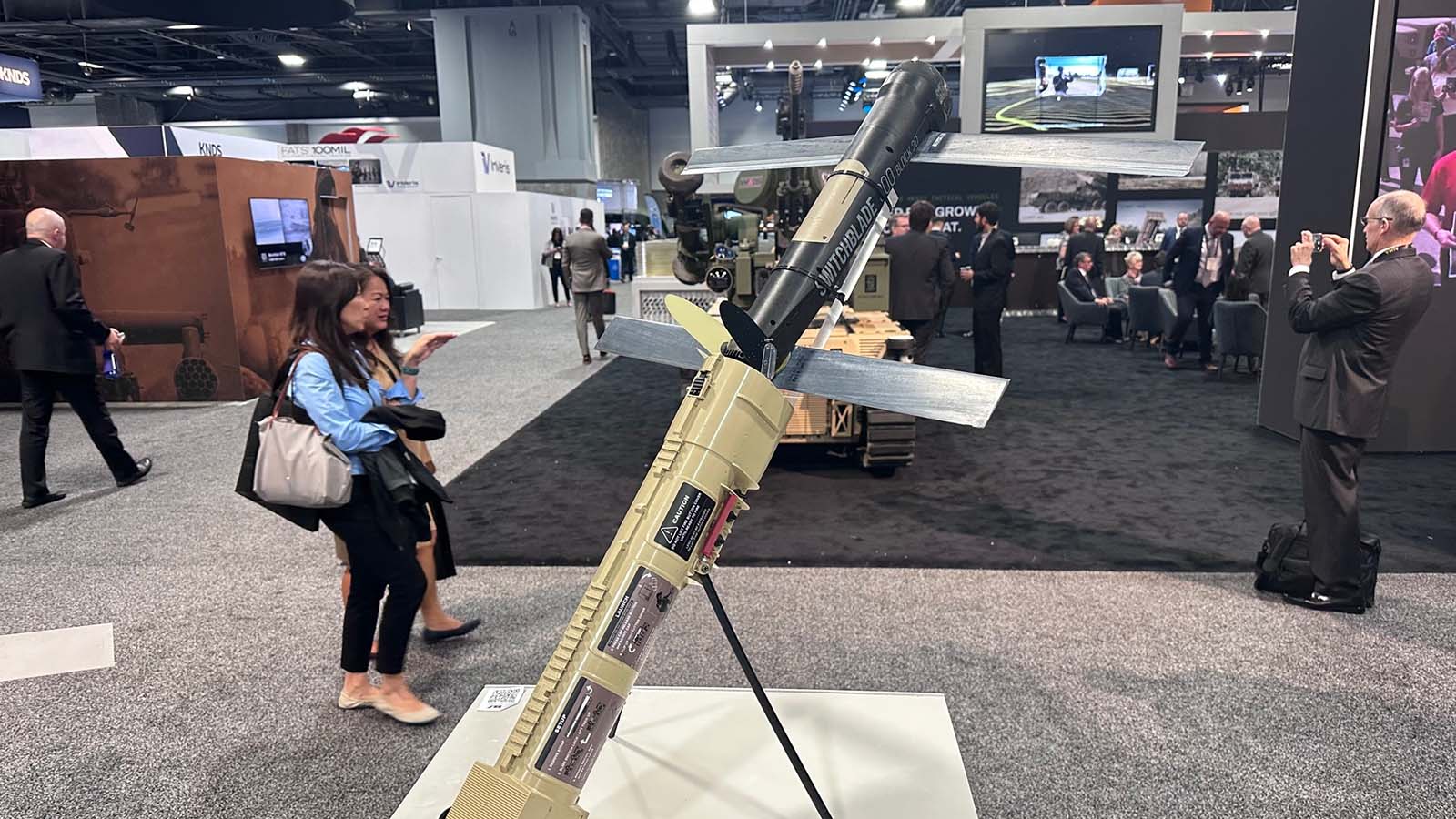
AeroVironment's Switchblade launcher sits on display at AUSA 2023. (Tim Martin / Breaking Defense)
General Dynamics 10-ton TRX-Shorad tracked robotic weapon at AUSA 2023. (Brendon Smith / Breaking Defense)
HDT Global's Wolf robotic system, configured with some serious firepower, at AUSA 2023. (Sydney Freedburg / Breaking Defense)
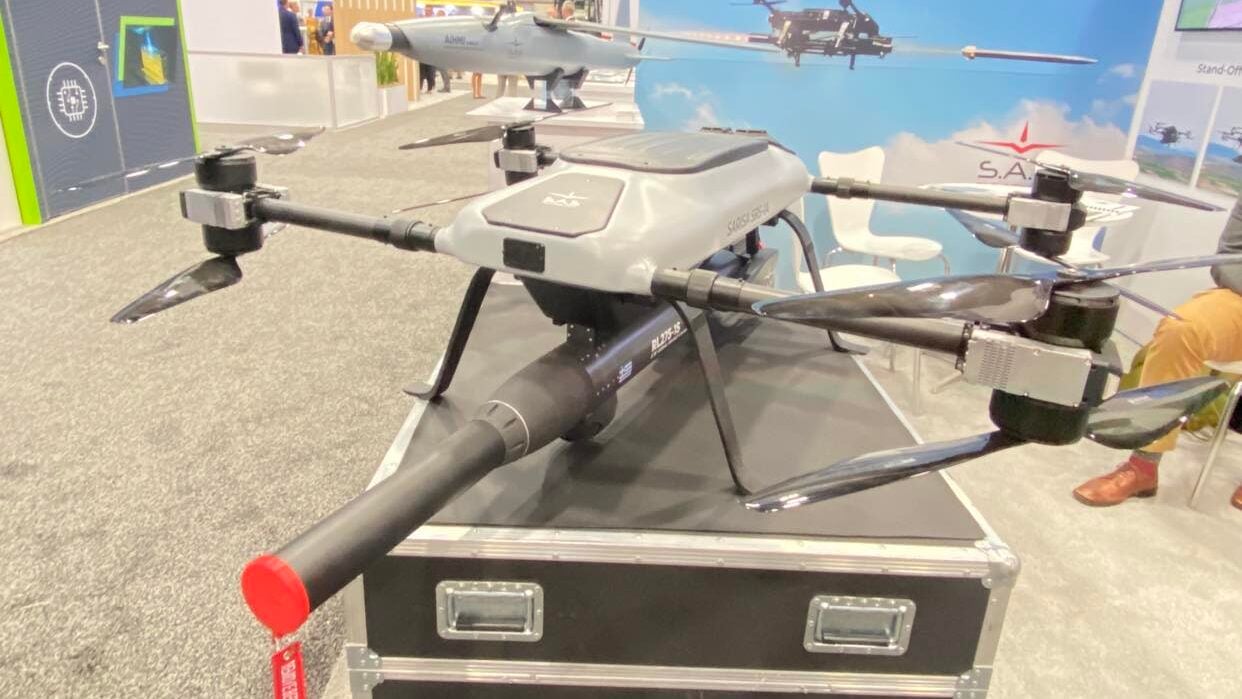
SARISA SRS-1A quadcopter equipped with a rocket launcher at AUSA 2023.
Qinetiq's RCV-L on display at AUSA 2023. (Brendon Smith / Breaking Defense)
A Mine-Resistant Ambush Protected, better known as MRAP, vehicle by Canadian firm Roshel sits on display at AUSA 2023. (Brendon Smith / Breaking Defense)
At Sig Sauer's booth at AUSA 2023, the firm displayed a small but very heavily armed robot. (Sydney Freedburn / Breaking Defense)
A model of a Textron Systems M3 Ripsaw Remote Combat Vehicle takes aim (at the ceiling) at AUSA 2023. (Brendon Smith / Breaking Defense)
Built for wide-area recon, Rohde & Schwartz's COMINT system is designed for radio monitoring and radio location. The system is shown here at AUSA 2023. (Brendon Smith / Breaking Defense)
AeroVironment’s Jump 20 VTOL fixed-wing drone lingers above visitors at AUSA 2023. (Brendon Smith / Breaking Defense)
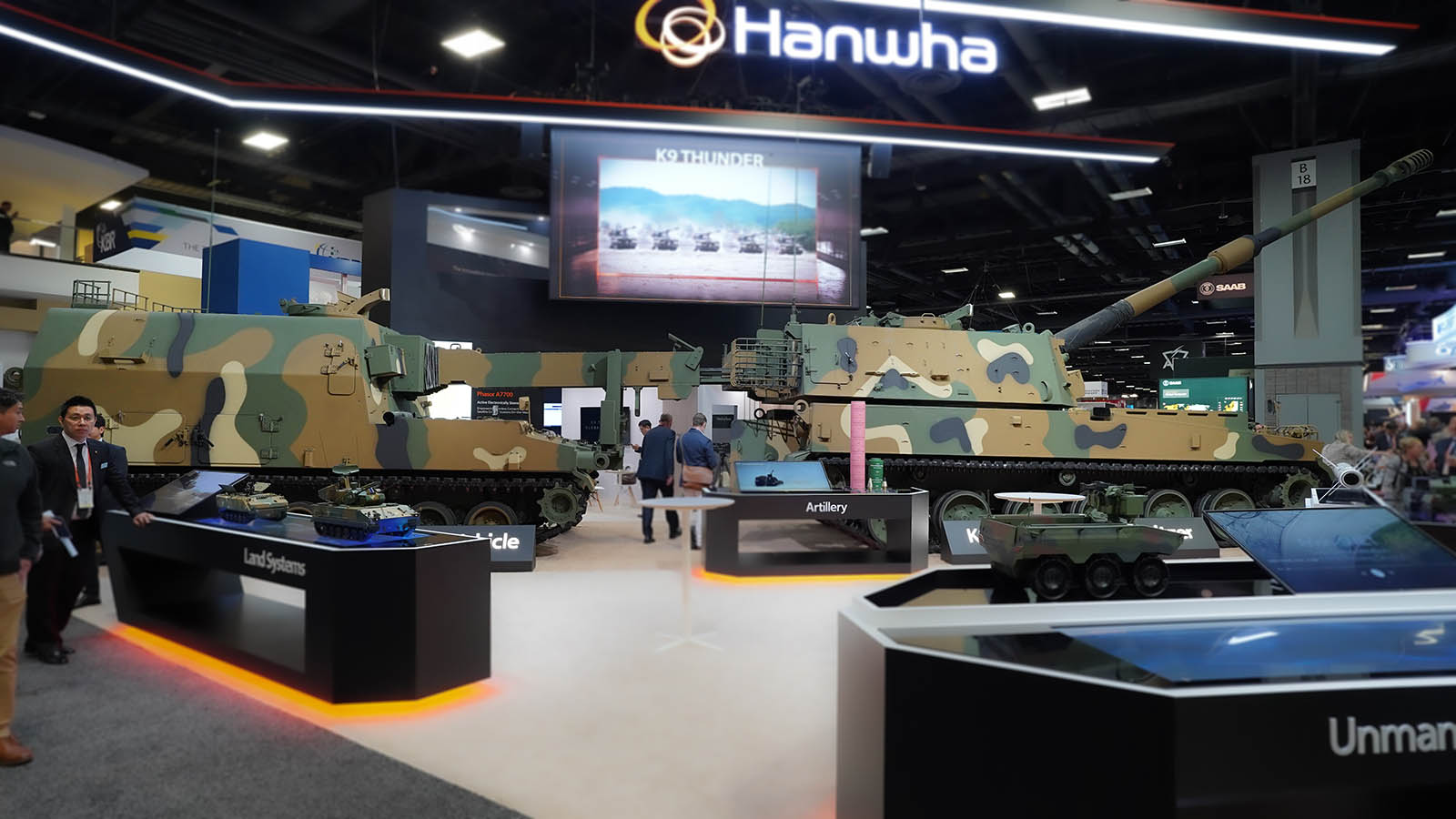
The South Korean defense contractor Hanwha brought out the big guns for AUSA 2023. (Brendon Smith / Breaking Defense)
Israel Aerospace Industries put its Rex robotic ground vehicle on display at AUSA 2023. (Brendon Smith / Breaking Defense)
Rheinmetall’s SSW40 automatic shoulder-fired grenade launcher, along with its munitions, on display at AUSA 2023. (Brendon Smith / Breaking Defense)
Greek firm SAS showed a loitering munition at the Hellenic Pavilion at AUSA 2023. (Aaron Mehta / Breaking Defense)
Attendees pose with a soldier mascot at AUSA 2023. (Aaron Mehta / Breaking Defense)