Naval Warfare

Epirus pitching anti-drone tech to Navy as potential solution for Red Sea

Andy Lowery, Epirus’ CEO, told Breaking Defense that the company's technology would be a good fit for the ongoing Red Sea situation.

Epirus_SAS_Render
An artist’s rendering of Epirus’ high-power microwave technology being used by Navy warships. (Provided by Epirus.)

SEA AIR SPACE 2024 — The Los Angeles-based technology contractor Epirus is preparing to test its high-power microwave capabilities in an upcoming Navy demonstration, one the company’s chief is pitching as  useful in the ongoing efforts to fend off Houthi attacks in the Red Sea.

This “isn’t really a cost equation problem,” Andy Lowery, Epirus’ CEO, told Breaking Defense in an interview, referring to the Navy’s weekly expenditure of interceptors to protect shipping lanes in the Red Sea. “It is a bigger problem than that… The bigger problem is attrition. It’s the war of attrition.”

Lowery described his company’s technology, nicknamed Leonidas, as a phased array that can be directed at incoming threats, such as an unmanned surface vessel carrying explosives. The high-power microwave technology temporarily disrupts any electronics — while remaining harmless to humans — in its path, disabling a potential drone trying to connect with a US ship.

“We can put the beam in a huge wall of energy,” said Lowery. “We can make a wall of energy that takes up… 20 percent, 30 percent of the sky and create this wall of energy that doesn’t allow anything through it.”

The upcoming demo is the Navy’s Advanced Naval Technology Exercise, or ANTX, which will take place from June through September. ANTX is a recurring event, hosted by the Navy, designed to offer industry a chance to demonstrate its tech to the service’s research and development enterprise. The capabilities ANTX focuses on varies from year to year, but the event this year, dubbed Coastal Trident 2024, will focus on defending critical infrastructure, port and maritime domain awareness, augmented and virtual reality modeling and unmanned systems, according to a document outlining the event.

The aim of the demonstration for the Navy will be to set up numerous unmanned vessels representing potential threats and show how the high-power microwave tech can disable multiple vessels simultaneously — without expending valuable ammunition.

Epirus’ technology is already being used by the US Army which previously picked the capability in a 2018 competition hosted by the service’s Rapid Capabilities and Critical Technologies Office. That competition subsequently led to the service awarding contracts to several companies, including a $66 million deal to Epirus for at least four production units over the next several years.

Since the start of the ongoing war between Israel and Hamas back in October, the US Navy has taken up positions in the Mediterranean and Red Seas, both to protect commercial shipping lanes from Houthi rebel attacks as well as try to prevent the conflict from spreading throughout the Middle East.

The warships on station have been successful at shooting down dozens of missiles and drones, but it has established a looming problem for big Navy in Washington, DC: How long can we do this before running out of ammo?

Some Navy officials have publicly bristled at the question, insisting the lives of sailors are priceless and no cost can be spared to ensure the safety of a ship. But Lowery, who himself is a retired Navy officer, said the service’s discomfort doesn’t change the answer to the problem.

“This is not a question of cost,” said Lowery. “This is a question of you running out of bullets. It’s not [about] how much those golden bullets are, it’s [about] you having no more in your magazine, and then having no bullets to protect those sailors with.”

PHOTOS: Sea Air Space 2024

PHOTOS: Sea Air Space 2024

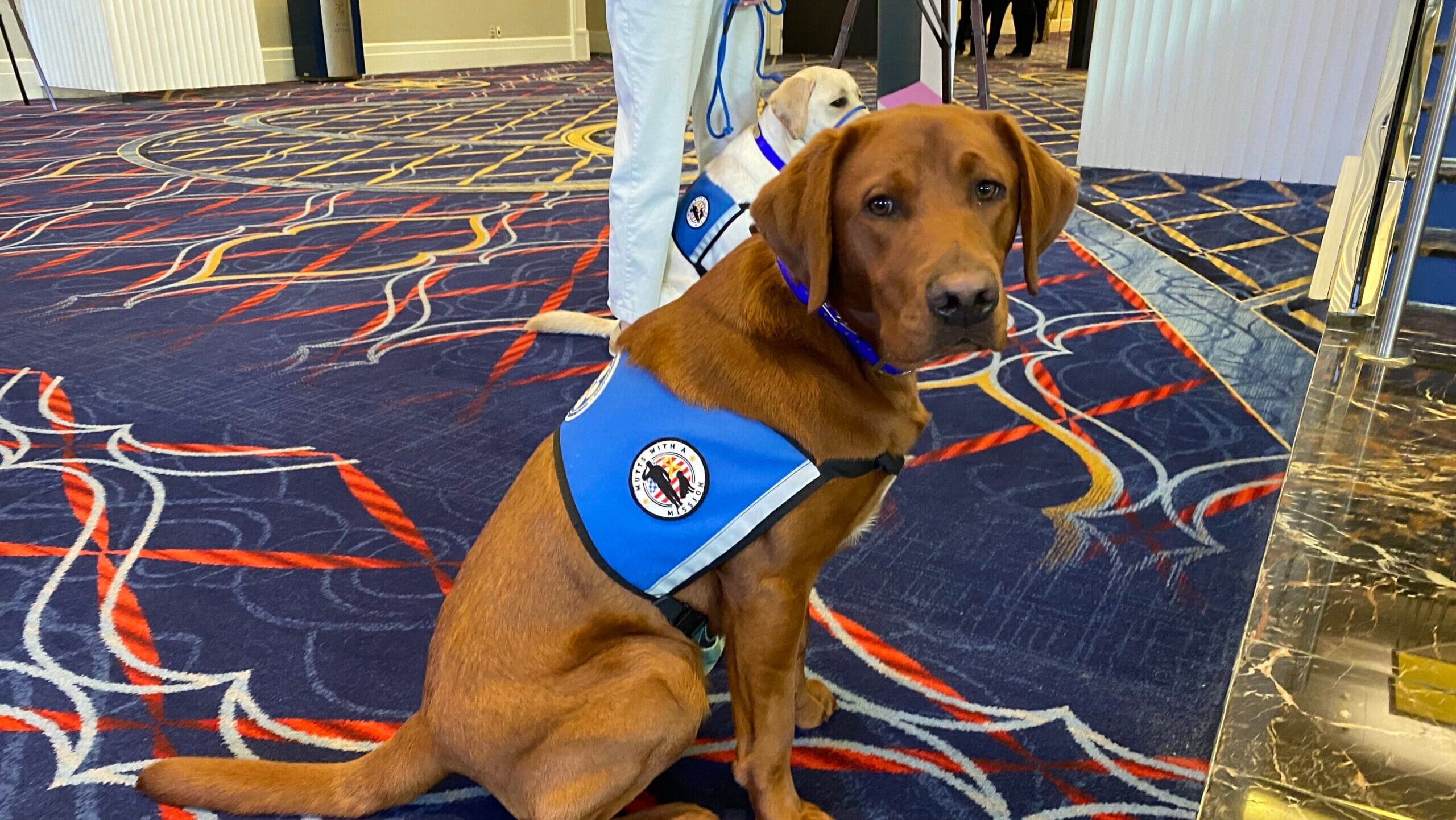
Rudder was a very good boy while touring the Sea Air Space show floor. Yes he was. (Aaron Mehta/Breaking Defense)
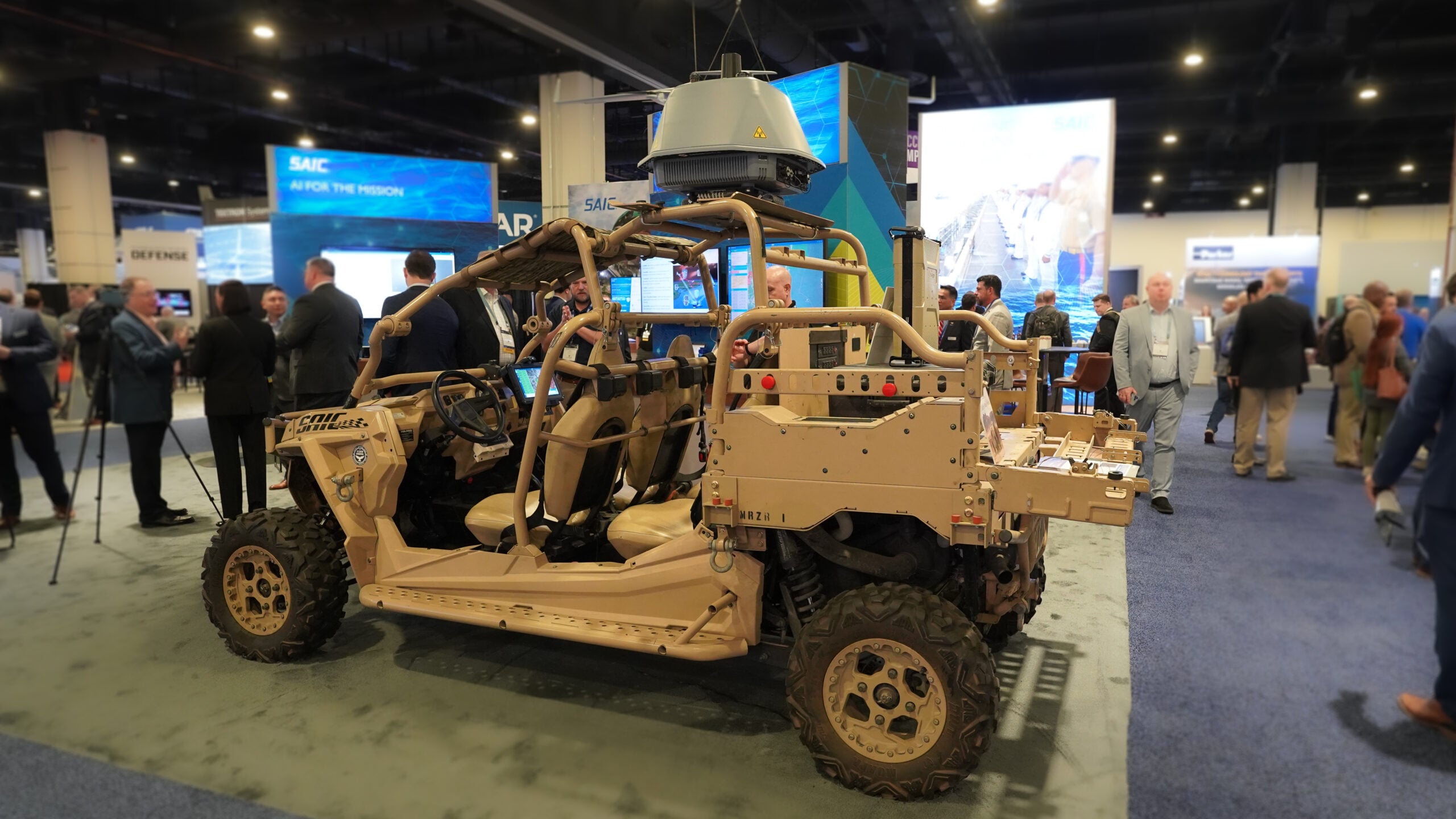
D-Fend Solutions and SAIC were showing off a mobile CUAS solution that allows modular configurability to tailor for mission specific goals. (Brendon Smith / Breaking Defense)
TenCate is the new manufacture of the Navy's two piece suit pictured here. The "Defender M" fabric technology is inherently flame resistant according to the company and could prove crucial during deck fires. (Brendon Smith / Breaking Defense)
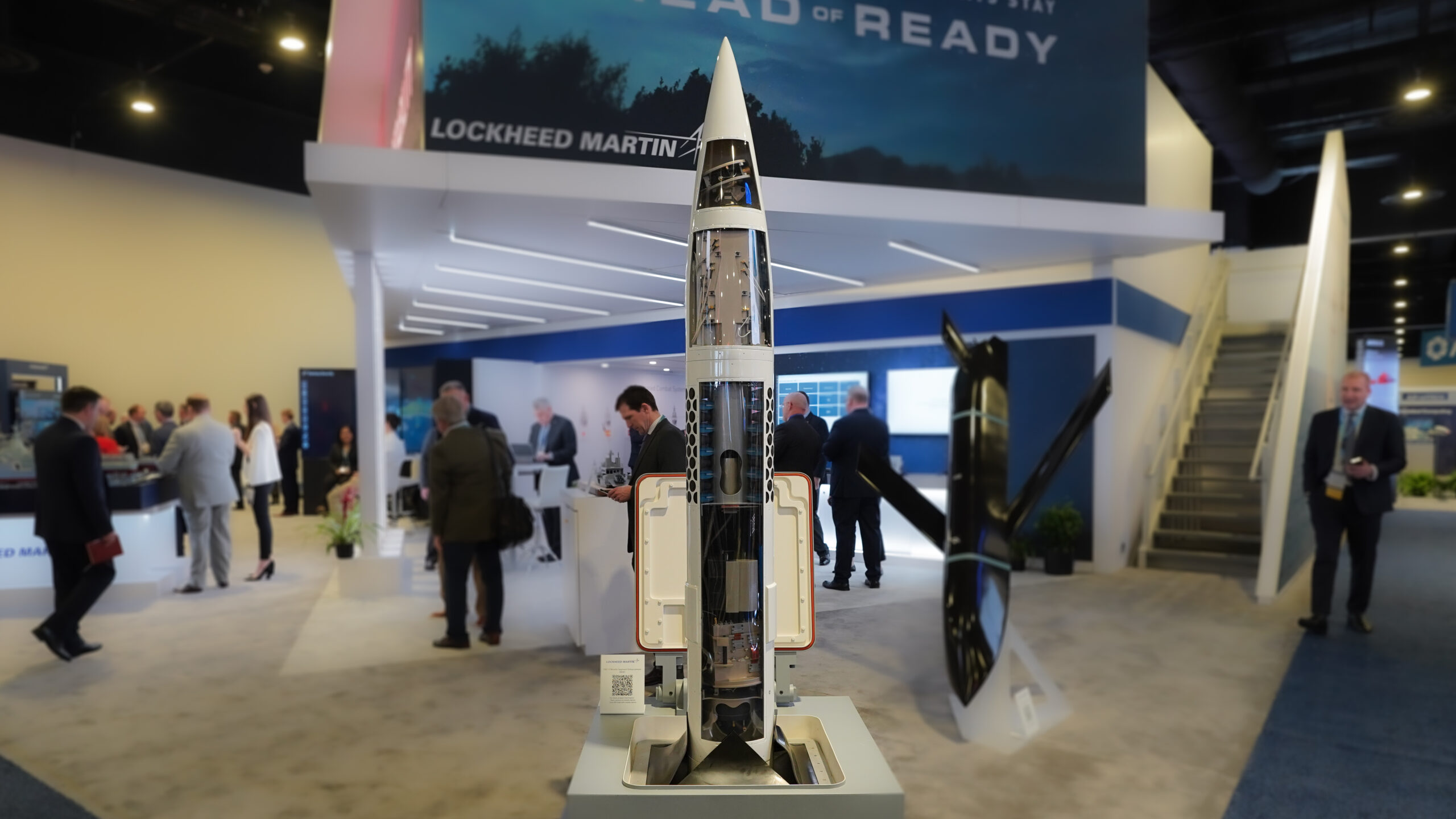
Lockheed offered an interesting look at the internals of their PAC-3 Missile. (Brendon Smith / Breaking Defense)
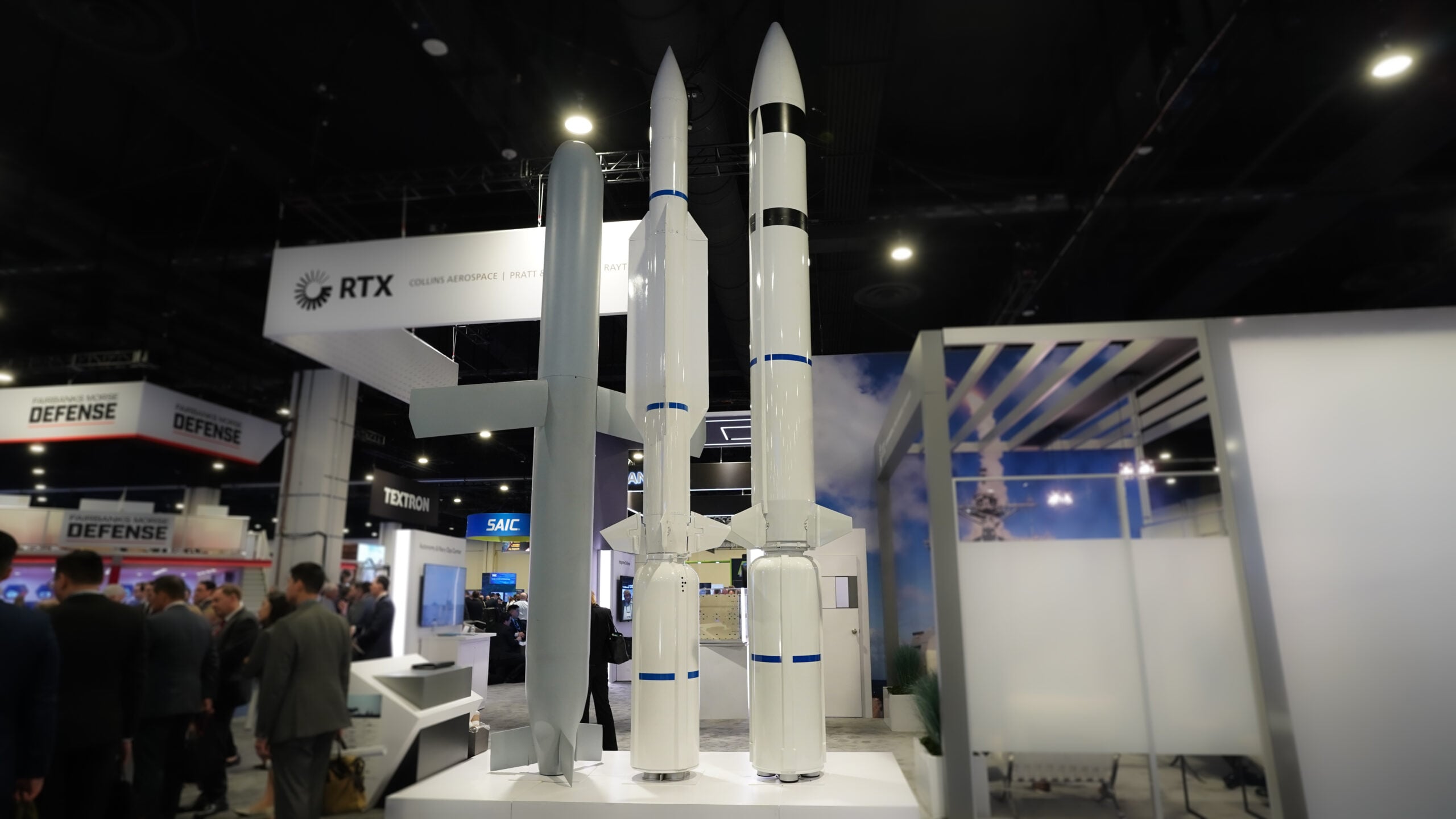
At the Raytheon booth, their new missle offerings could be seen from across the show floor. Up close it was hard to take in the enormity. Raytheon says these missiles, both. long and short range, will prove critical. (Brendon Smith / Breaking Defense)
The Australian pavilion at Sea Air Space 2024 was a popular location for visitors, with the AUKUS agreement being a major part of this year's conversation. (Aaron Mehta/Breaking Defense)
At the BlueHalo booth their CUAS offering touts advanced tracking that can operate in any sky condition, longer range, and a more powerful "High Energy Laser." (Brendon Smith / Breaking Defense)
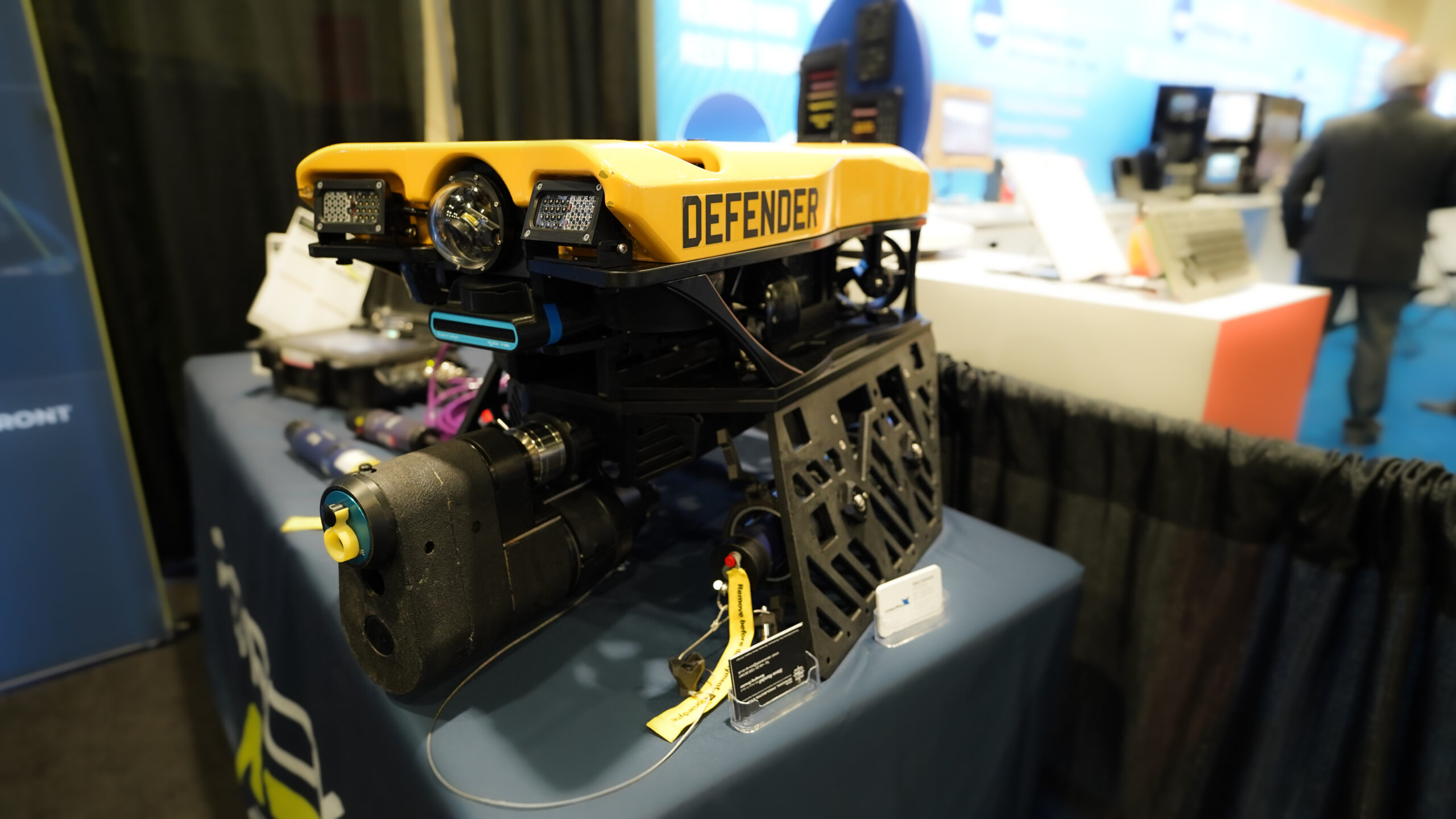
The Forcys Defender is a deep sea submersible meant to snuff out underwater explosives from a distance. (Brendon Smith / Breaking Defense)
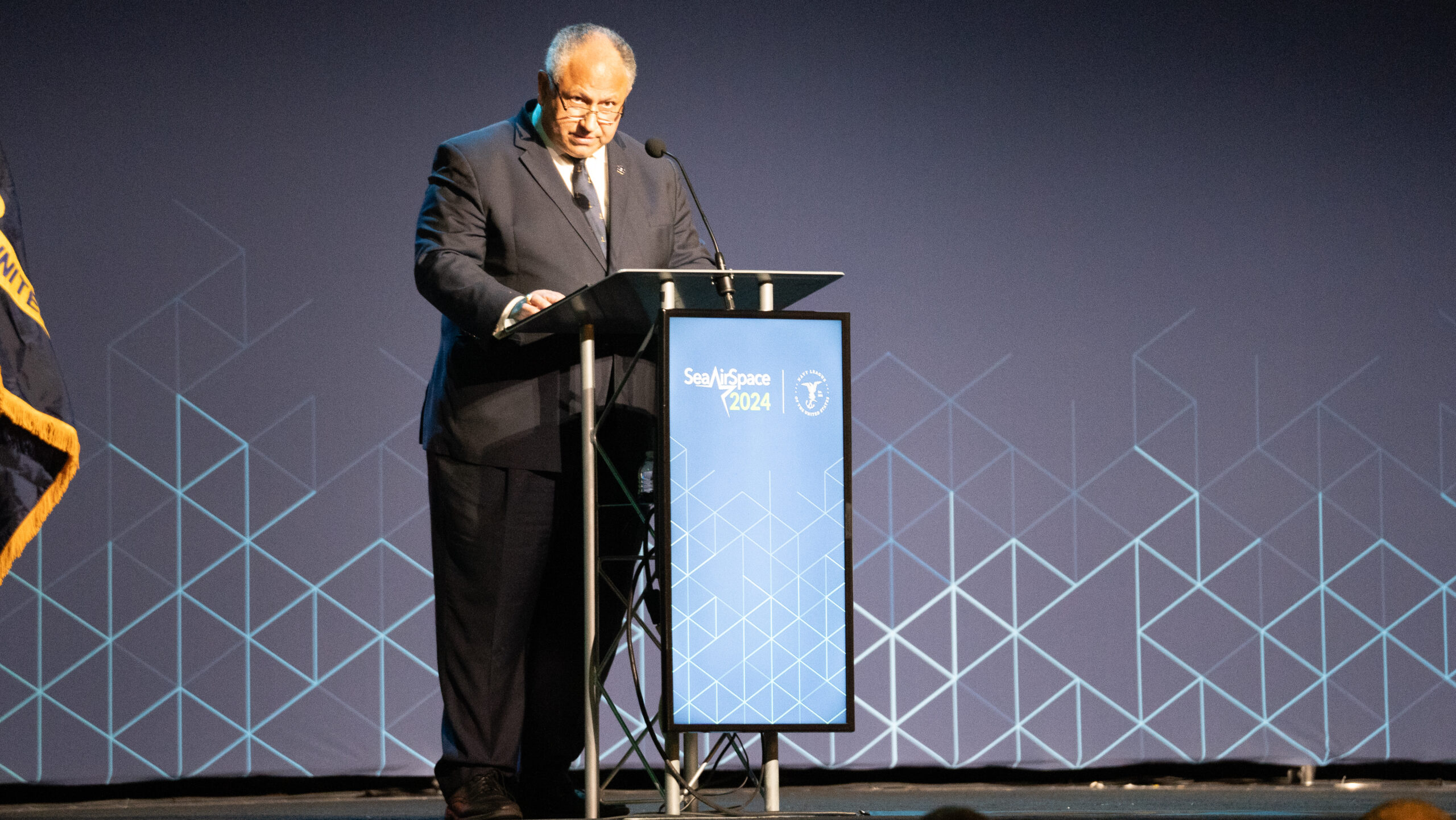
US Secretary of the Navy Carlos Del Toro was the keynote speaker on day 2 of the 2024 Sea-Air-Space conference. Del Toro recently released a shipbuilding review that found serious delays for key navy programs. (Brendon Smith / Breaking Defense)
DroneShield's RfPatrol Mk2 is a compact mobile CUAS system that aims to provide highly effective low maintenance support. (Brendon Smith/Breaking Defense)
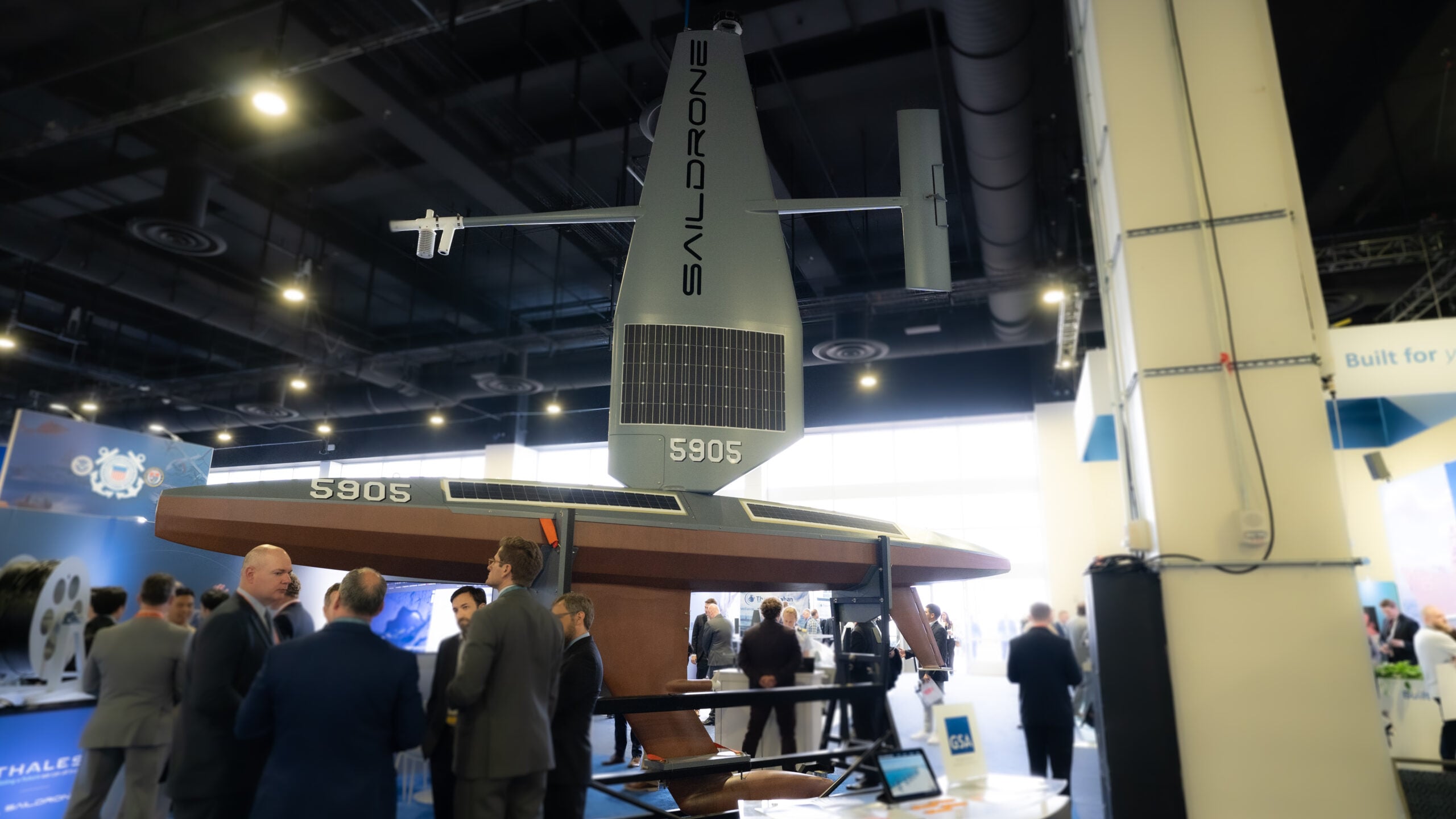
Surface drone maker Saildrone brought a model of its 5904 long range autonomous MDA/ISR solution. The company has seen its systems active in the waters of the Gulf in recent years. (Brendon Smith / Breaking Defense)
The show isn't just about big hardware. Defense Marine Solutions offers an "expansion of DMS' marine propulsion and propeller repair" with state of the art underwater support systems. (Brendon Smith / Breaking Defense)
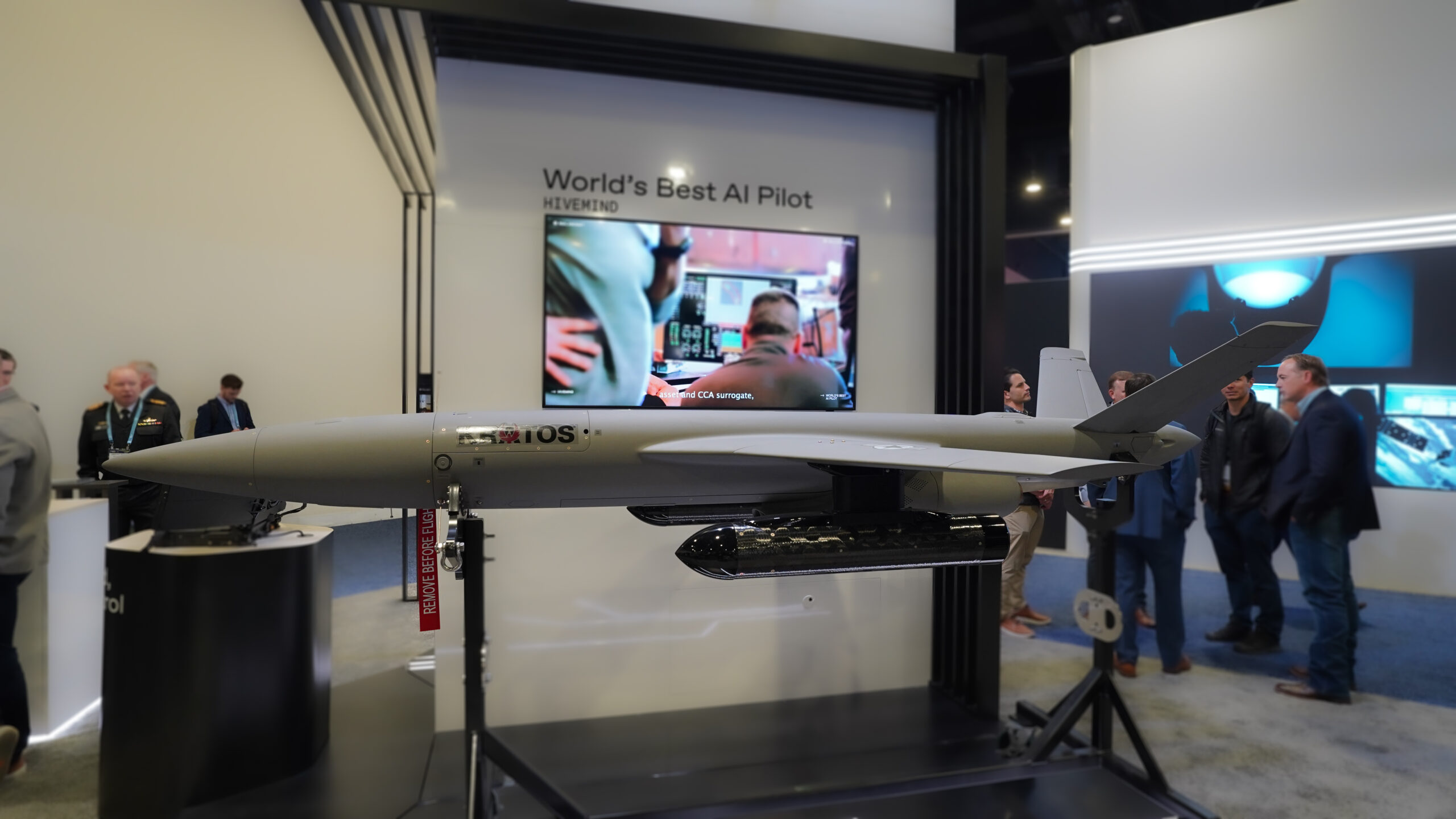
Kratos is teamed with Shield AI on this system, which the companies say will deliver state of the art AI drone piloting and the ability to complete mission objectives without gps, waypoints, or comms. (Brendon Smith / Breaking Defense)
A look at Northrop Grummans Autonomous VTOL Uncrewed Aircraft System at their booth. This was the first time the company brought the UAS to a show. (Brendon Smith / Breaking Defense)
Attendees gathered on the showroom floor for a packed NavAir leadership panel. (Brendon Smith / Breaking Defense)
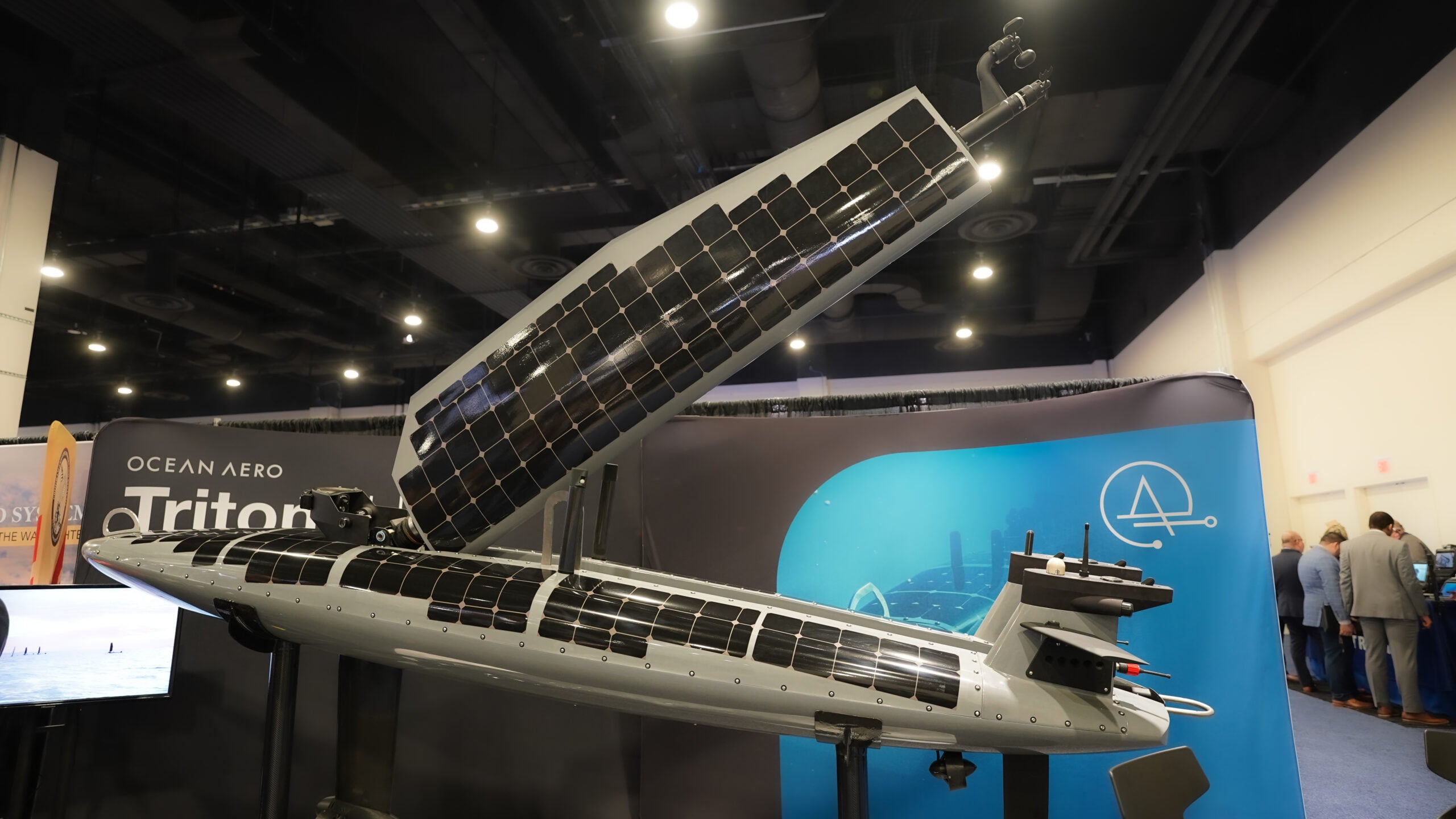
What the company says is a first of its kind fully solar unmanned submarine, Ocean Aeros "Triton" looks to allow longer duration surveys and other deep sea mission objectives. (Brendon Smith / Breaking Defense)
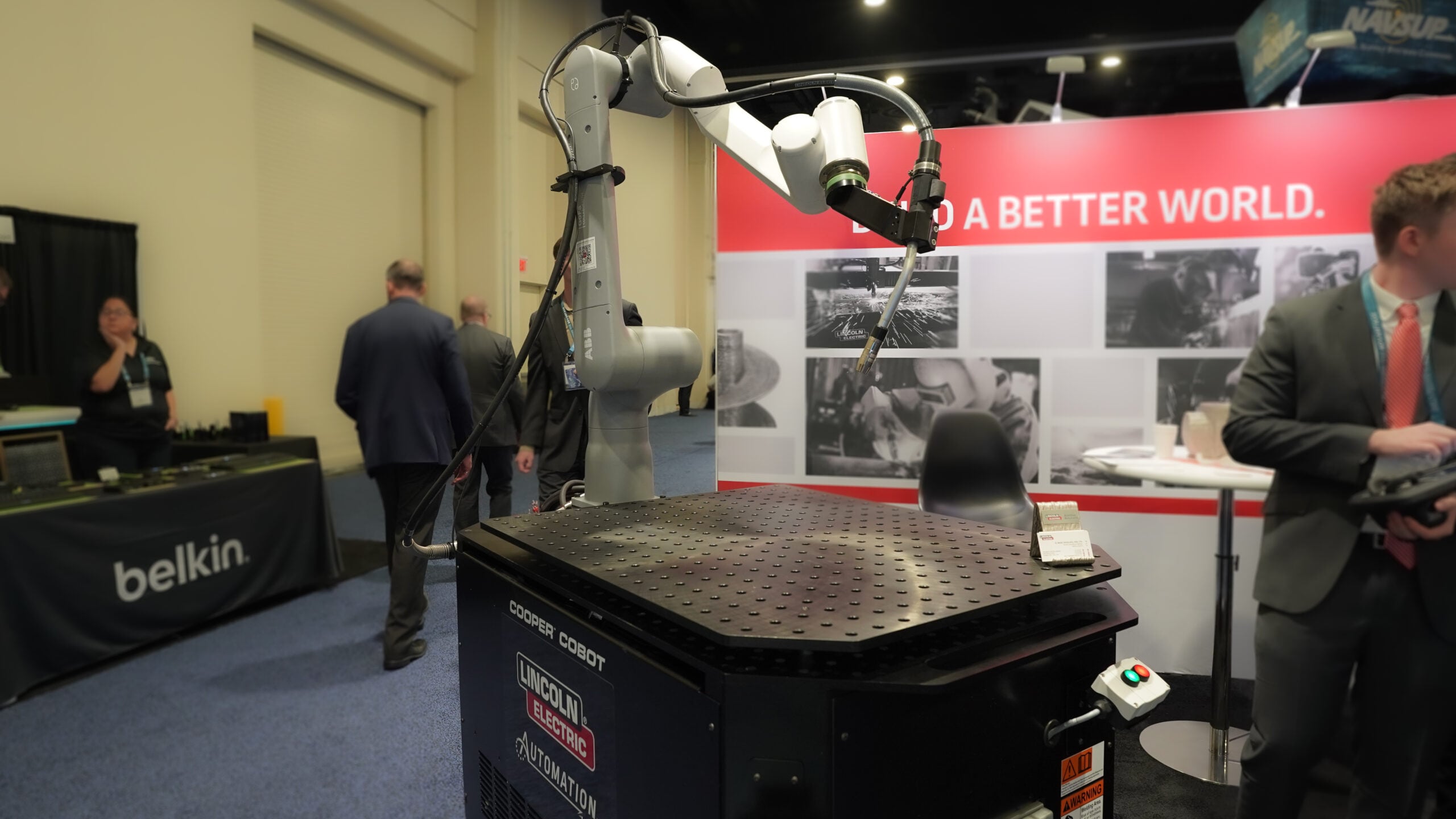
Lincoln electrics Cooper Cobot is meant to increase welding efficiency and accuracy. Acting as a productivity enhancing collaborator for its human counterparts. (Brendon Smith / Breaking Defense)
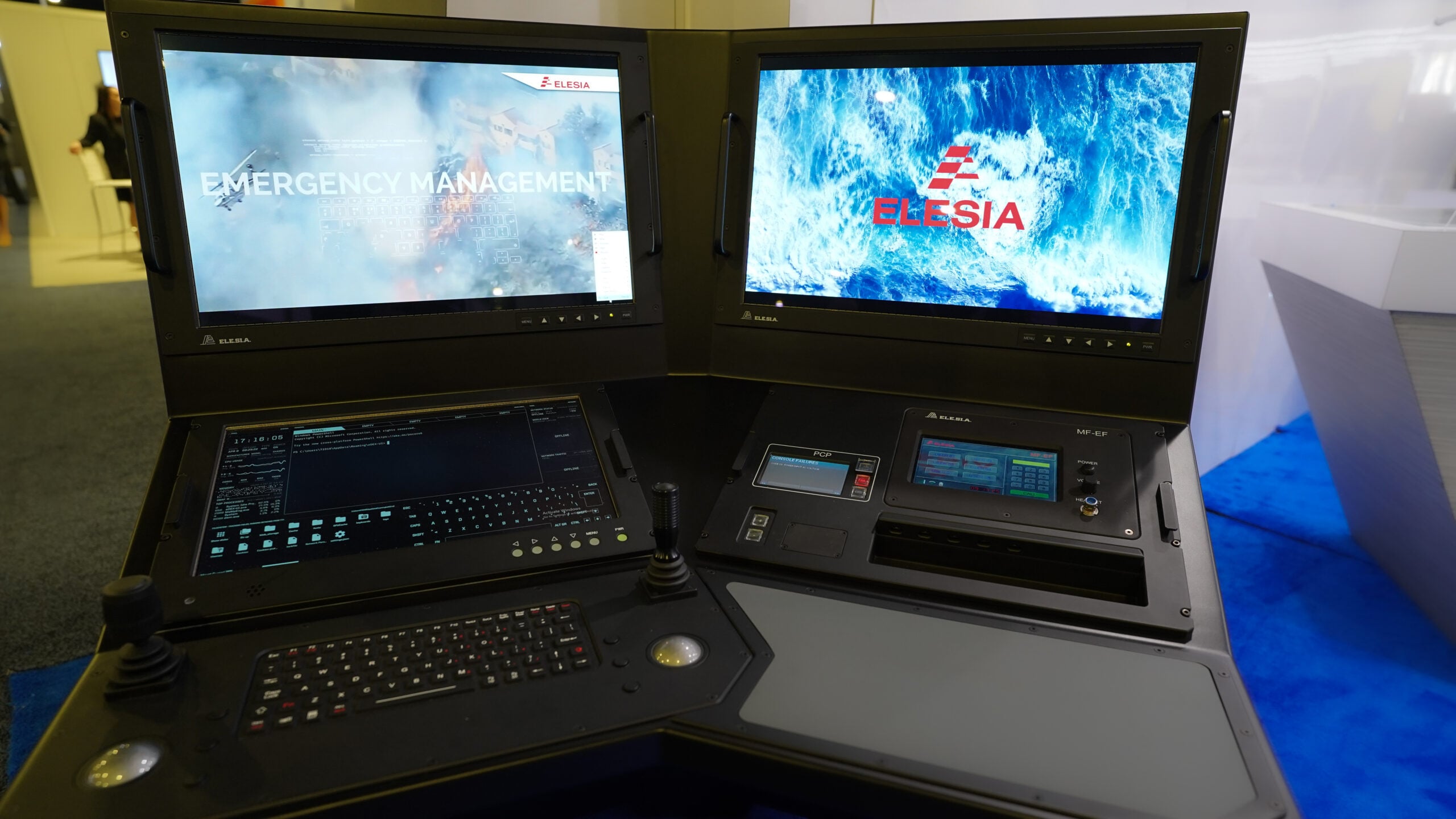
ELESIA's Single Operator MFC12 Console resists shock and vibrations on navy operations by "floating" within various shock absorbers. (Brendon Smith / Breaking Defense)
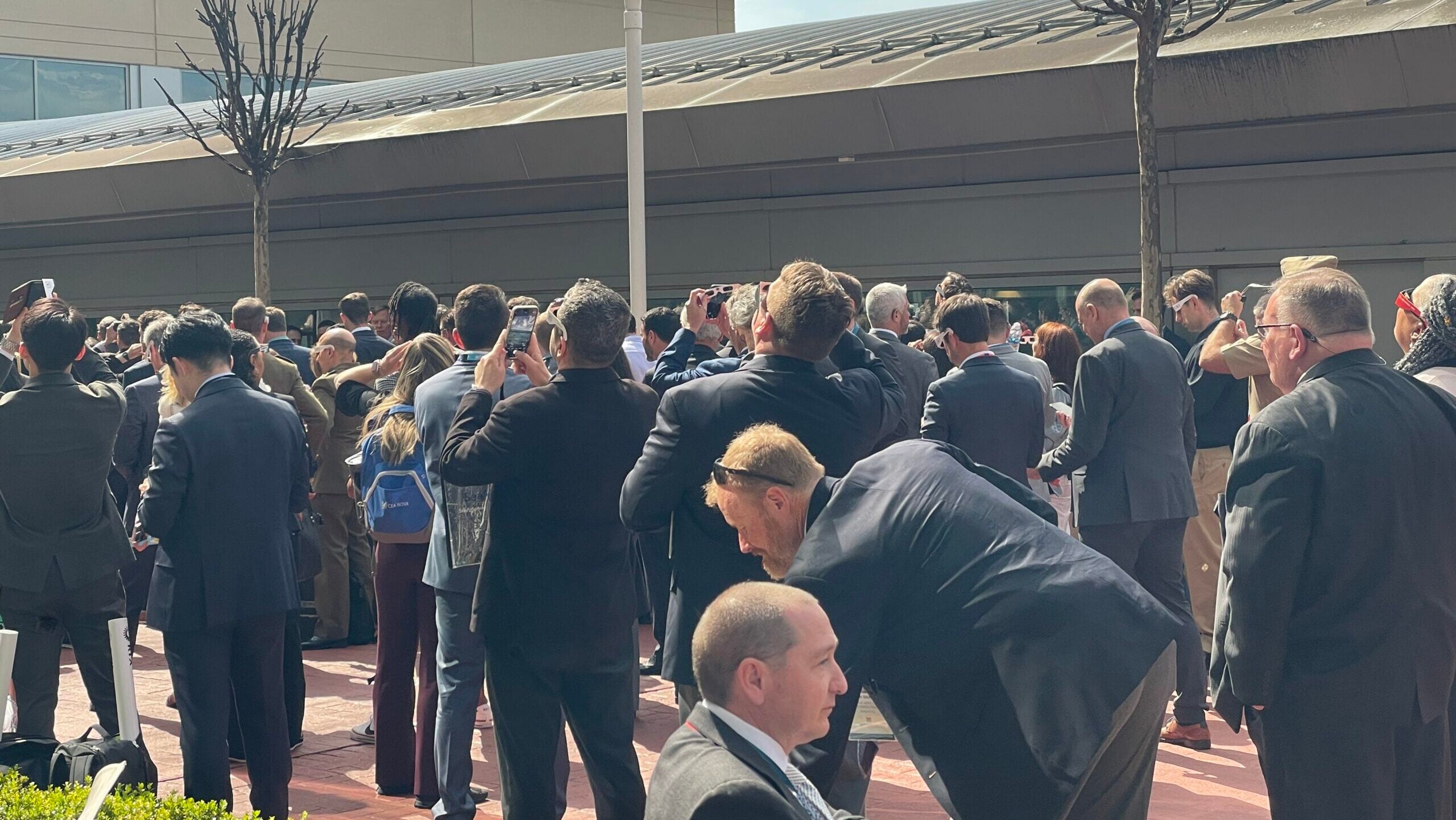
Attendees taking a break from the showroom floor to witness the solar eclipse Monday. (Brendon Smith / Breaking Defense)
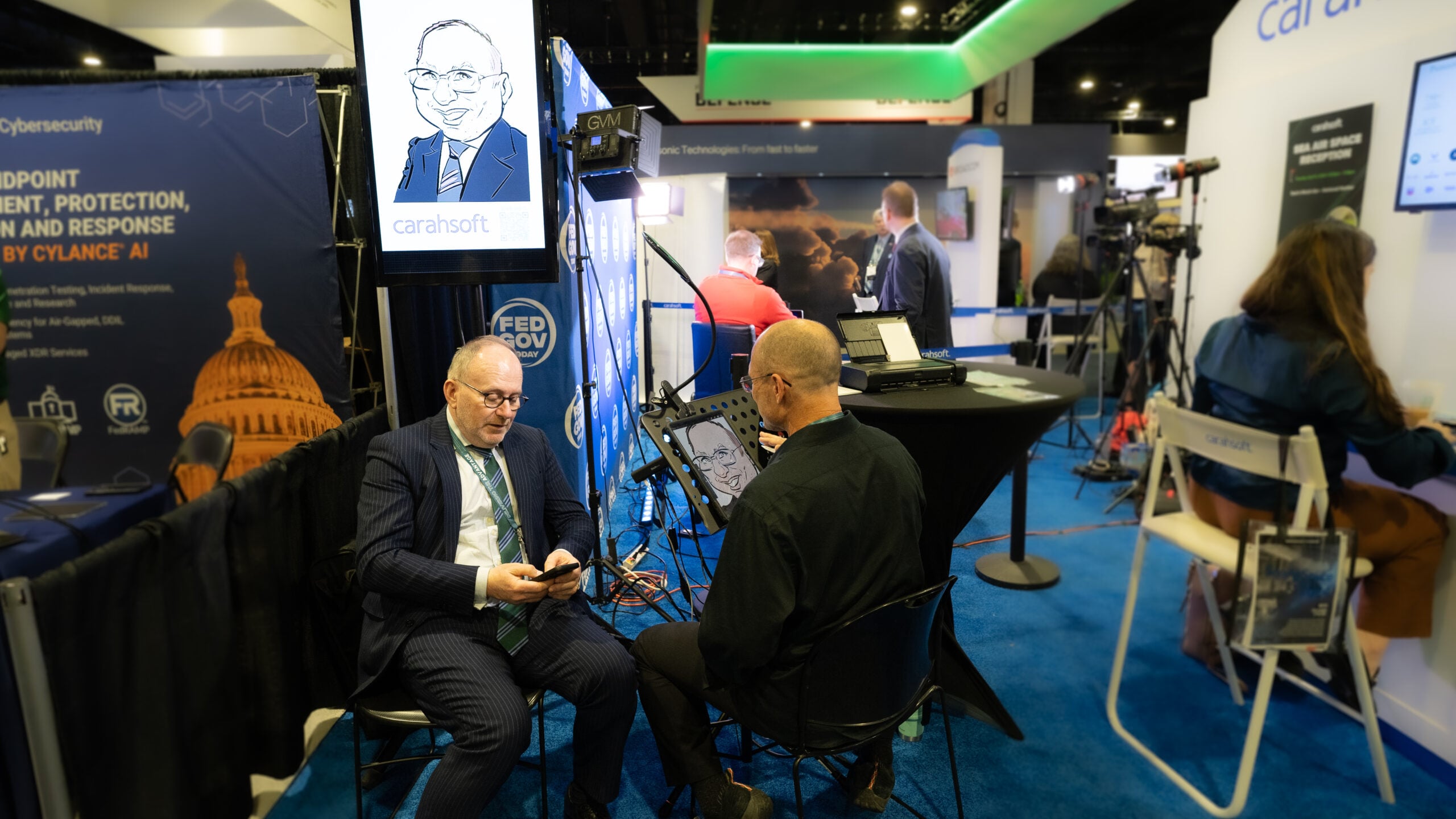
A cartoonist at the Carahsoft Booth was drawing caricatures of various attendees throughout the show. (Brendon Smith / Breaking Defense)
The Arete PILLS is what the defense firm says is a "streak tube imaging lidar" system with high resolution cameras and a AIRTRAC laser enhancing pulse rate frequency. (Brendon Smith / Breaking Defense)
ANDURIL's Roadrunner-M missle interceptor is "built for ground-based air defense that can rapidly launch, identify, intercept, and destroy" various aerial threats. (Brendon Smith / Breaking Defense)