Global

Fincantieri CEO looks to tap growing undersea market

“Underwater will be what was space 40 years ago,” company CEO Pierroberto Folgiero told Breaking Defense during a recent visit to Washington.

Pierroberto Folgiero fincantieri
Pierroberto Folgiero (c), CEO of Fincantieri, visits the company’s Marinette shipyard. (Fincantieri)

WASHINGTON — Italian ship-making giant Fincantieri believes the future is underwater — and is working to position itself to take advantage of both the defense and commercial markets that will emerge.

“Underwater will be what space was 40 years ago,” company CEO Pierroberto Folgiero told Breaking Defense during a recent visit to Washington — meaning that while it is in the relatively early days, there will be a big boost for dual-use technologies, a development Fincantieri wants to get ahead of.

In the big picture, he said, the company views the undersea market as worth up to $400 billion by 2030. A quarter of that, he predicted, will come from defense, which he described as the “short-term” market. Medium-term is the oil, gas and energy market, which he predicted would be larger than the military market. And down the road, the company sees a growth market in aquaculture.

“We are very serious about growing underwater capabilities because we believe that our country [Italy] will have to take care of the Mediterranean Sea,” he said. In the waters around Italy, he noted, “there will be more and more congestion … for immigration, for Russian submarines, for cables, for sea beds, for mining of sea beds.”

A lot of the same technologies that would be used for the oil and gas industry could also have defense applications. For instance, Folgiero said the firm is “focused” on developing a “mothership” concept specifically for underwater operations. That platform would work with remote operated vehicles, which would be useful for the oil and gas industry — or for demining a body of water.

That the Italian firm has a history of both defense and commercial shipbuilding positions it well to move in that direction, but the easiest way to gain traction might be mergers and acquisitions. Recent reports stated that Fincantieri is looking to buy Leonardo’s Whitehead Alenia Sistemi Subacquei (Wass) submarine unit.

Asked about those reports, Folgiero avoided specifics but acknowledged the company was looking around.

“What I can confirm is that we are pursuing a strategy for the growth, organic and inorganic, of our underwater business, starting from submarines, moving to drones, moving to the other technologies of the underwater. So the strategy is there,” he said. “How we move, what we consolidate, under which conditions at which prices with which financial structure, it’s delicate to disclose.”

The firm is also looking at potential partnerships, noting Fincantieri is “creating alliances with other players of the underwater domain in our region.” That includes new ties with telecom providers to understand what their needs are — another area where commercial and defense interests would align.

More broadly, Folgiero said the firm remains focused on expanding in both the Middle East and Southeast Asia.

In the Middle East, the company in February announced a new partnership with EDGE Group, the national champion of the United Arab Emirates. Under the agreement, of which EDGE holds 51 percent, the Emirati firm will take lead on sales for non-NATO nations. Beyond the Gulf, for Fincantieri the relationship with Abu Dhabi serves as a “door” into sub-Saharan Africa that should open up markets, Folgiero said.

In Asia, the needs are different, Folgiero said, noting the kind of joint venture formed with EDGE wouldn’t make sense in that region. However, the desire for localization will still be strong, a potentially complicated condition but one the executive said his firm is well versed in given its global footprint.

Notably, the company on March 28 signed a €1.18 billion ($1.27 billion) with Indonesia to supply two Multipurpose Offshore Patrol Vessels.

Justin Katz contributed to this report.

PHOTOS: Sea Air Space 2024

PHOTOS: Sea Air Space 2024

Rudder was a very good boy while touring the Sea Air Space show floor. Yes he was. (Aaron Mehta/Breaking Defense)
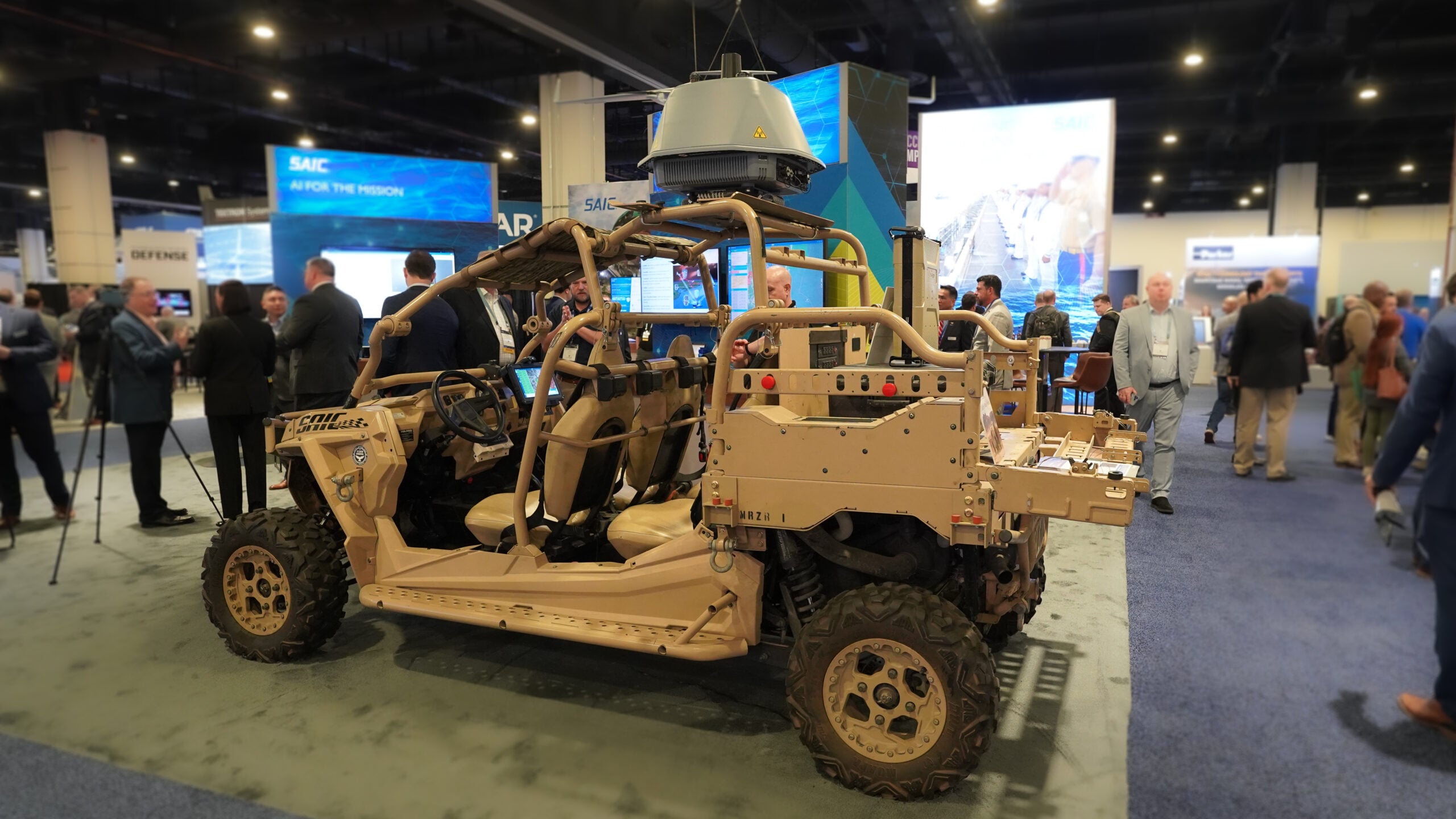
D-Fend Solutions and SAIC were showing off a mobile CUAS solution that allows modular configurability to tailor for mission specific goals. (Brendon Smith / Breaking Defense)
TenCate is the new manufacture of the Navy's two piece suit pictured here. The "Defender M" fabric technology is inherently flame resistant according to the company and could prove crucial during deck fires. (Brendon Smith / Breaking Defense)
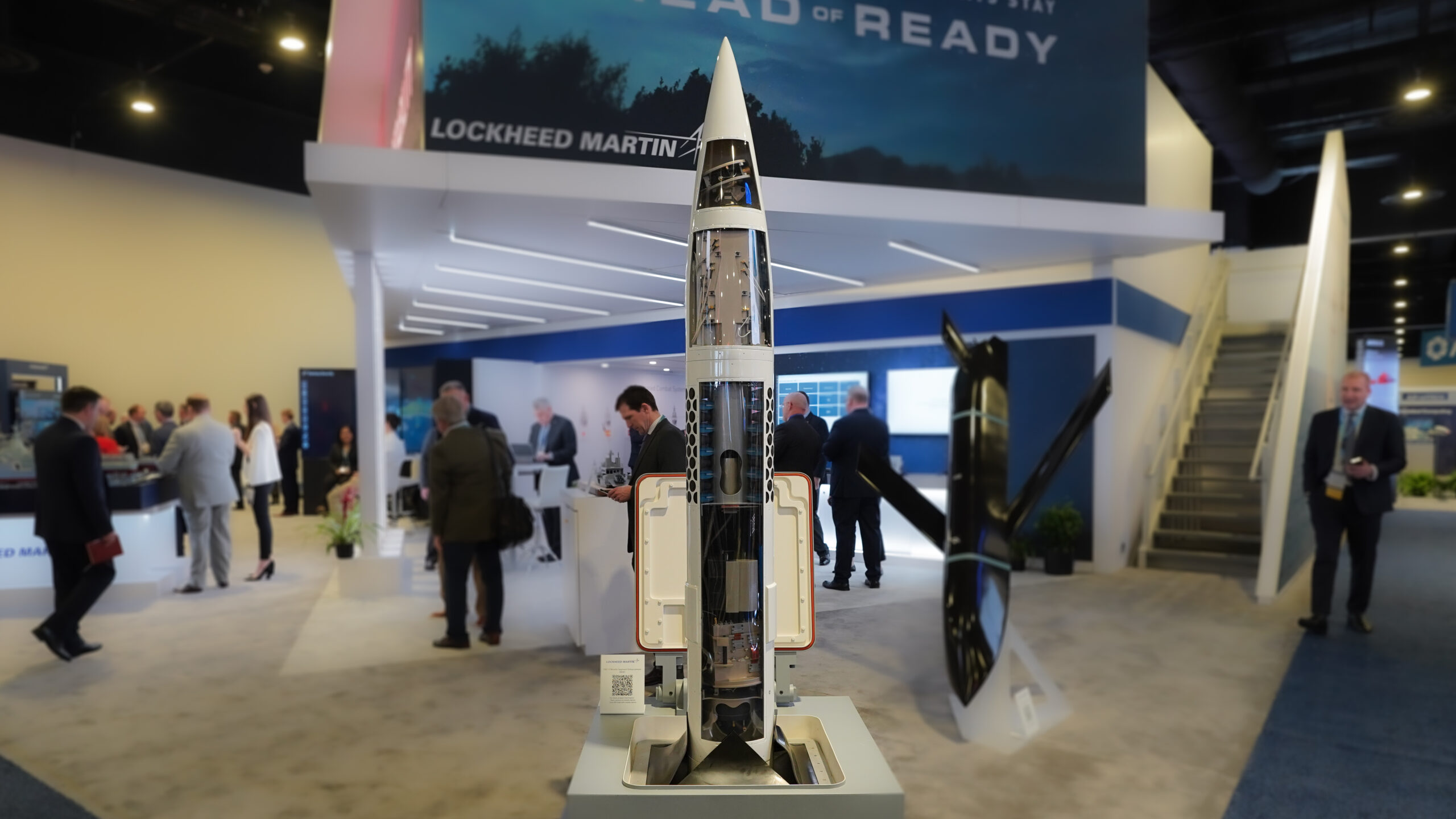
Lockheed offered an interesting look at the internals of their PAC-3 Missile. (Brendon Smith / Breaking Defense)
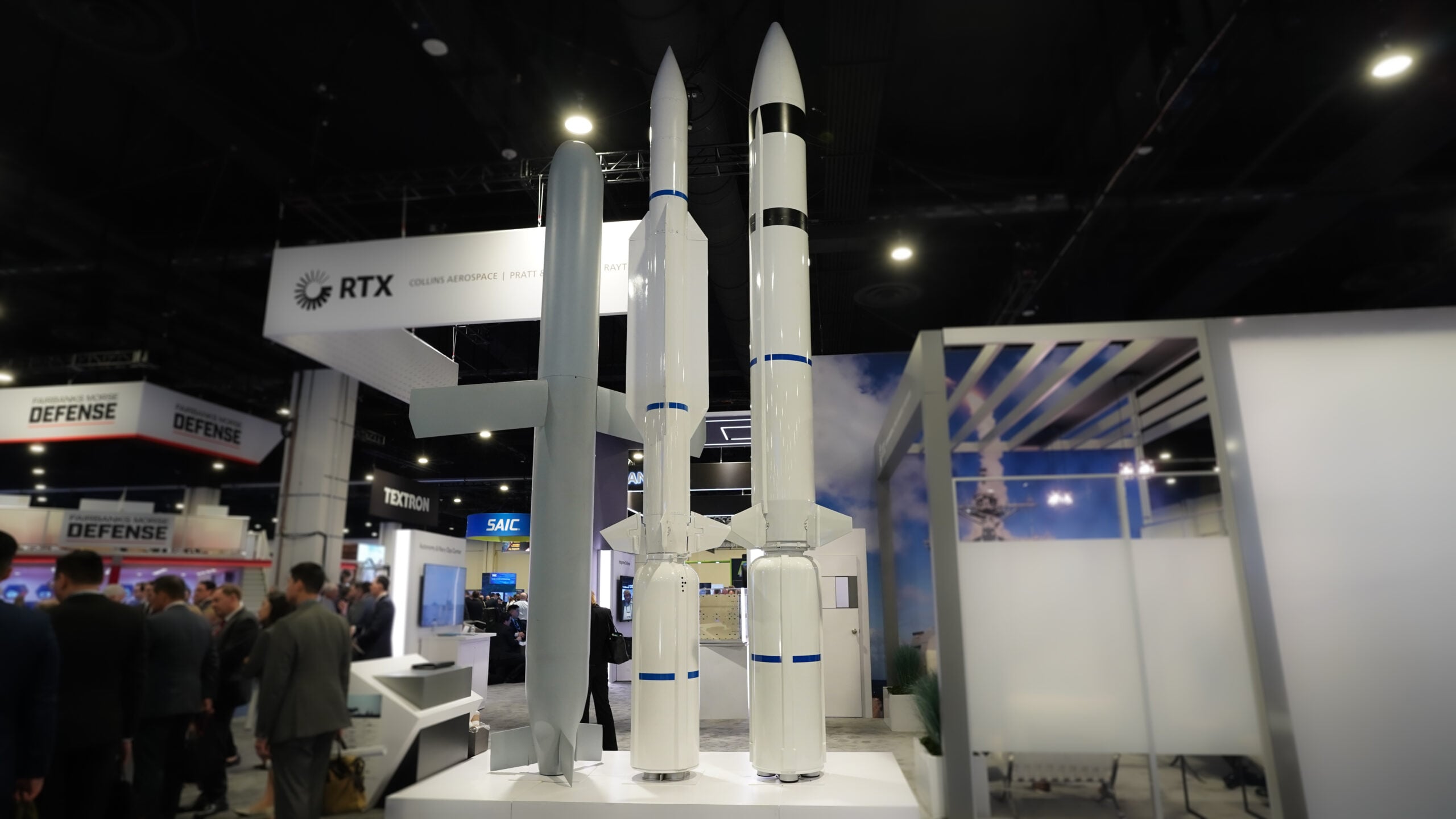
At the Raytheon booth, their new missle offerings could be seen from across the show floor. Up close it was hard to take in the enormity. Raytheon says these missiles, both. long and short range, will prove critical. (Brendon Smith / Breaking Defense)
The Australian pavilion at Sea Air Space 2024 was a popular location for visitors, with the AUKUS agreement being a major part of this year's conversation. (Aaron Mehta/Breaking Defense)
At the BlueHalo booth their CUAS offering touts advanced tracking that can operate in any sky condition, longer range, and a more powerful "High Energy Laser." (Brendon Smith / Breaking Defense)
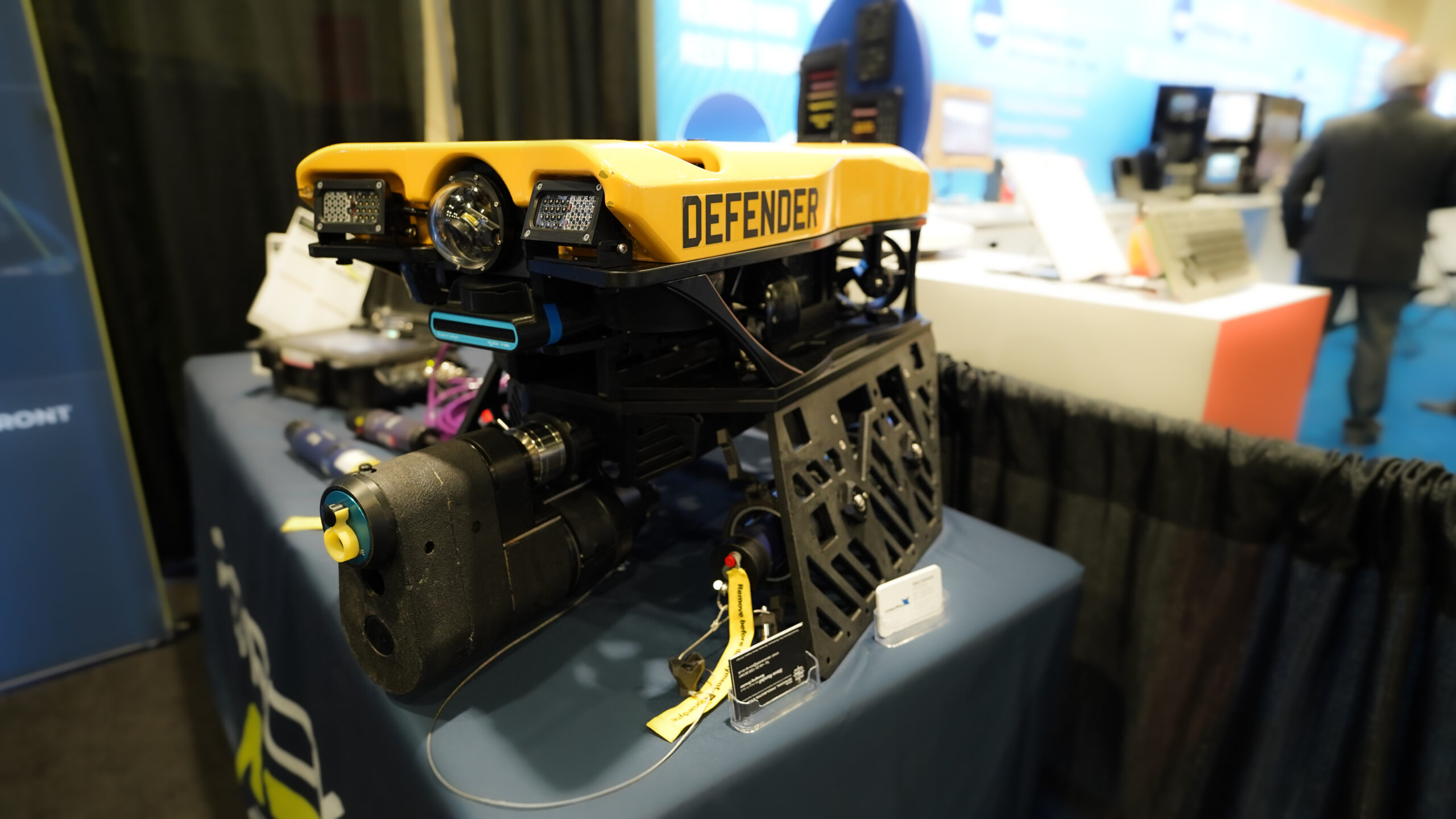
The Forcys Defender is a deep sea submersible meant to snuff out underwater explosives from a distance. (Brendon Smith / Breaking Defense)
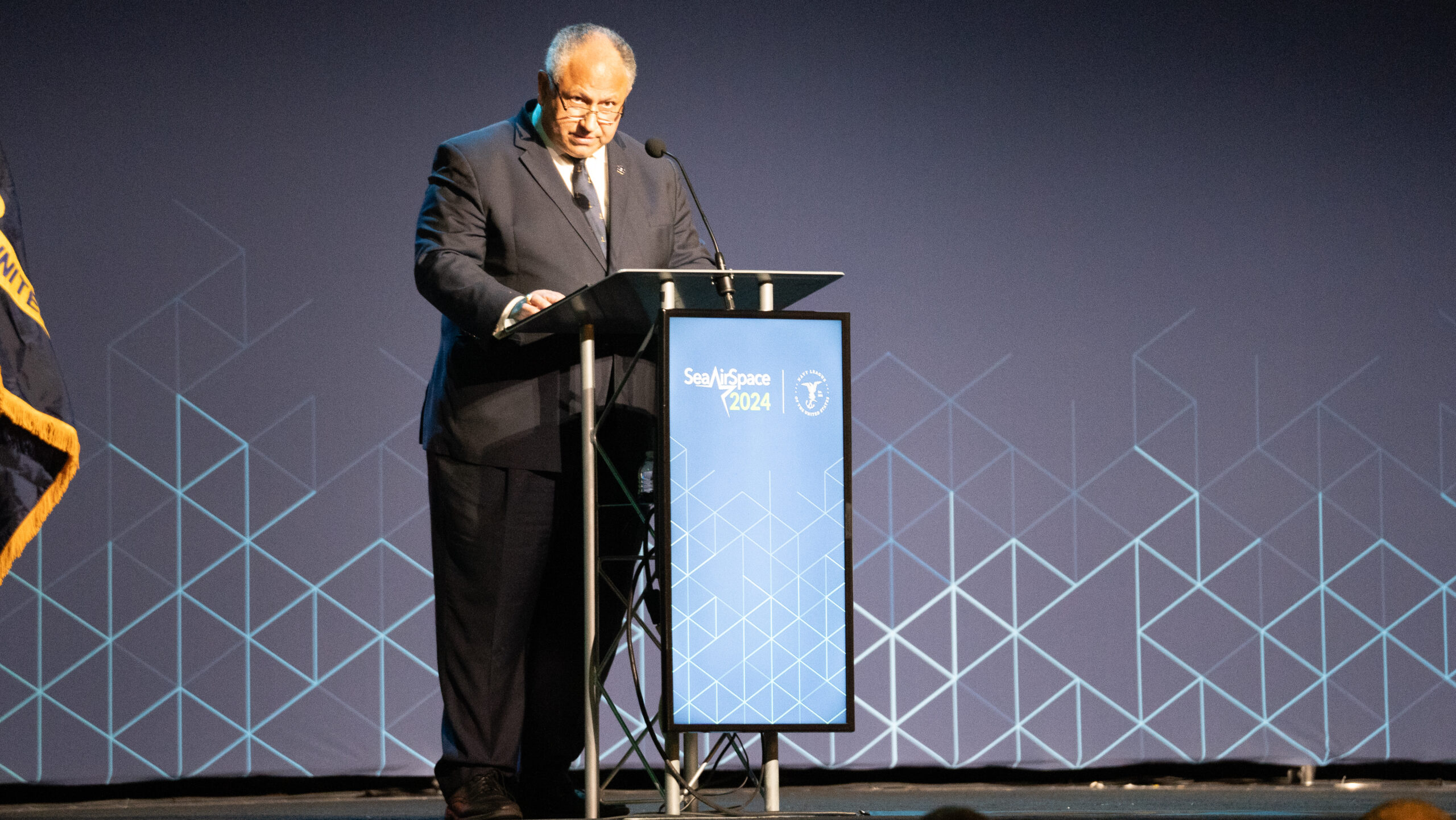
US Secretary of the Navy Carlos Del Toro was the keynote speaker on day 2 of the 2024 Sea-Air-Space conference. Del Toro recently released a shipbuilding review that found serious delays for key navy programs. (Brendon Smith / Breaking Defense)
DroneShield's RfPatrol Mk2 is a compact mobile CUAS system that aims to provide highly effective low maintenance support. (Brendon Smith/Breaking Defense)
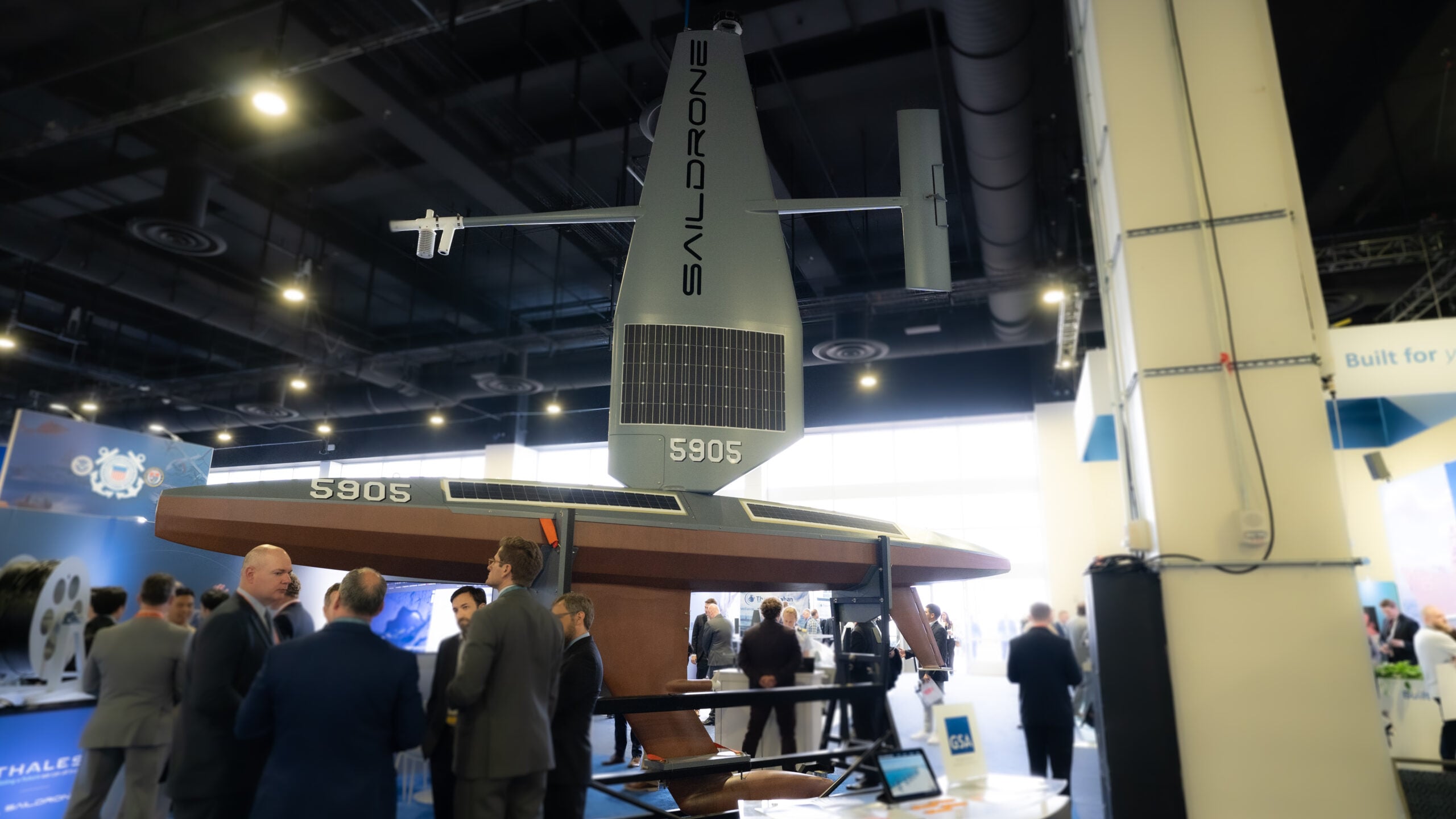
Surface drone maker Saildrone brought a model of its 5904 long range autonomous MDA/ISR solution. The company has seen its systems active in the waters of the Gulf in recent years. (Brendon Smith / Breaking Defense)
The show isn't just about big hardware. Defense Marine Solutions offers an "expansion of DMS' marine propulsion and propeller repair" with state of the art underwater support systems. (Brendon Smith / Breaking Defense)
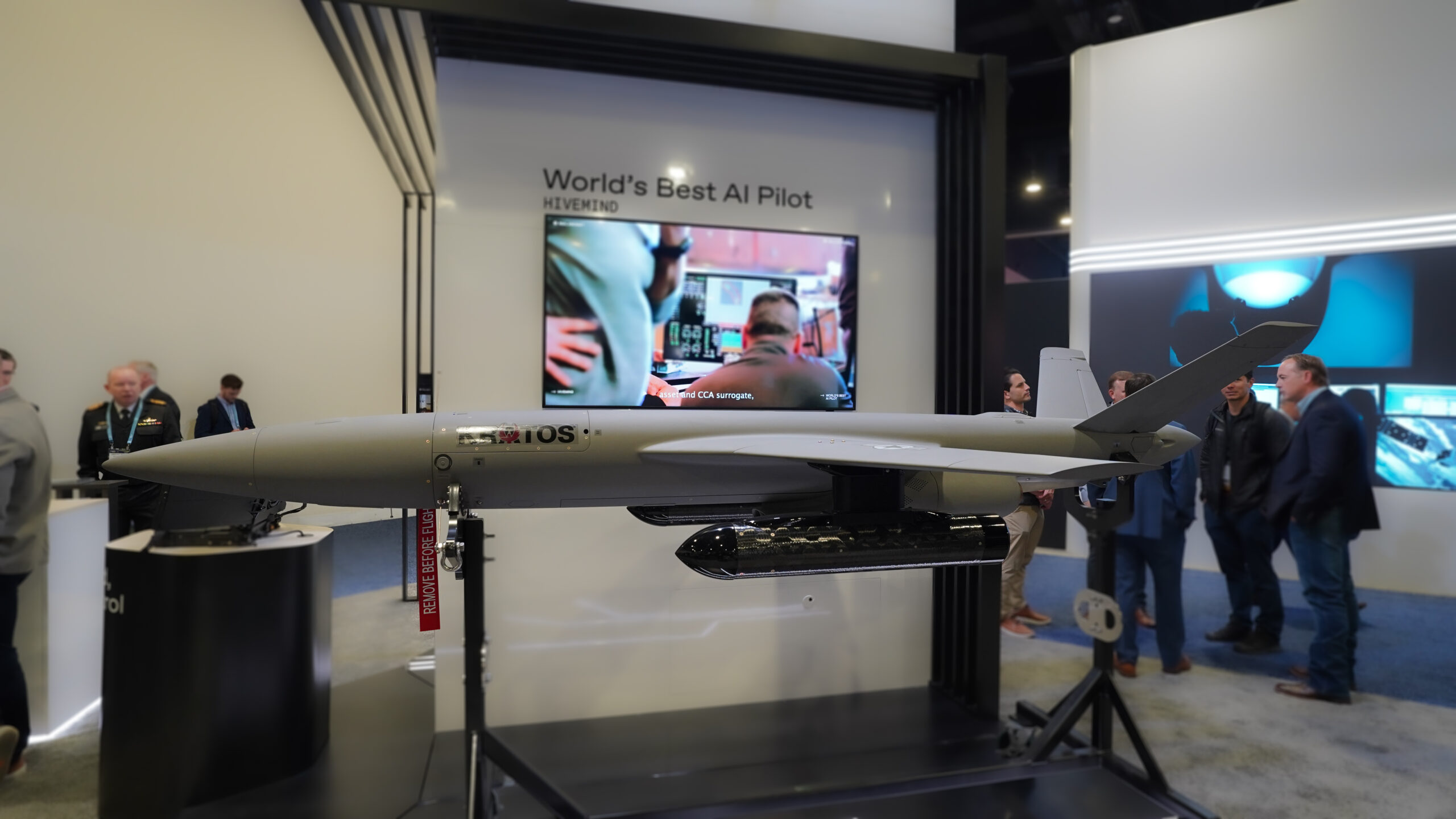
Kratos is teamed with Shield AI on this system, which the companies say will deliver state of the art AI drone piloting and the ability to complete mission objectives without gps, waypoints, or comms. (Brendon Smith / Breaking Defense)
A look at Northrop Grummans Autonomous VTOL Uncrewed Aircraft System at their booth. This was the first time the company brought the UAS to a show. (Brendon Smith / Breaking Defense)
Attendees gathered on the showroom floor for a packed NavAir leadership panel. (Brendon Smith / Breaking Defense)
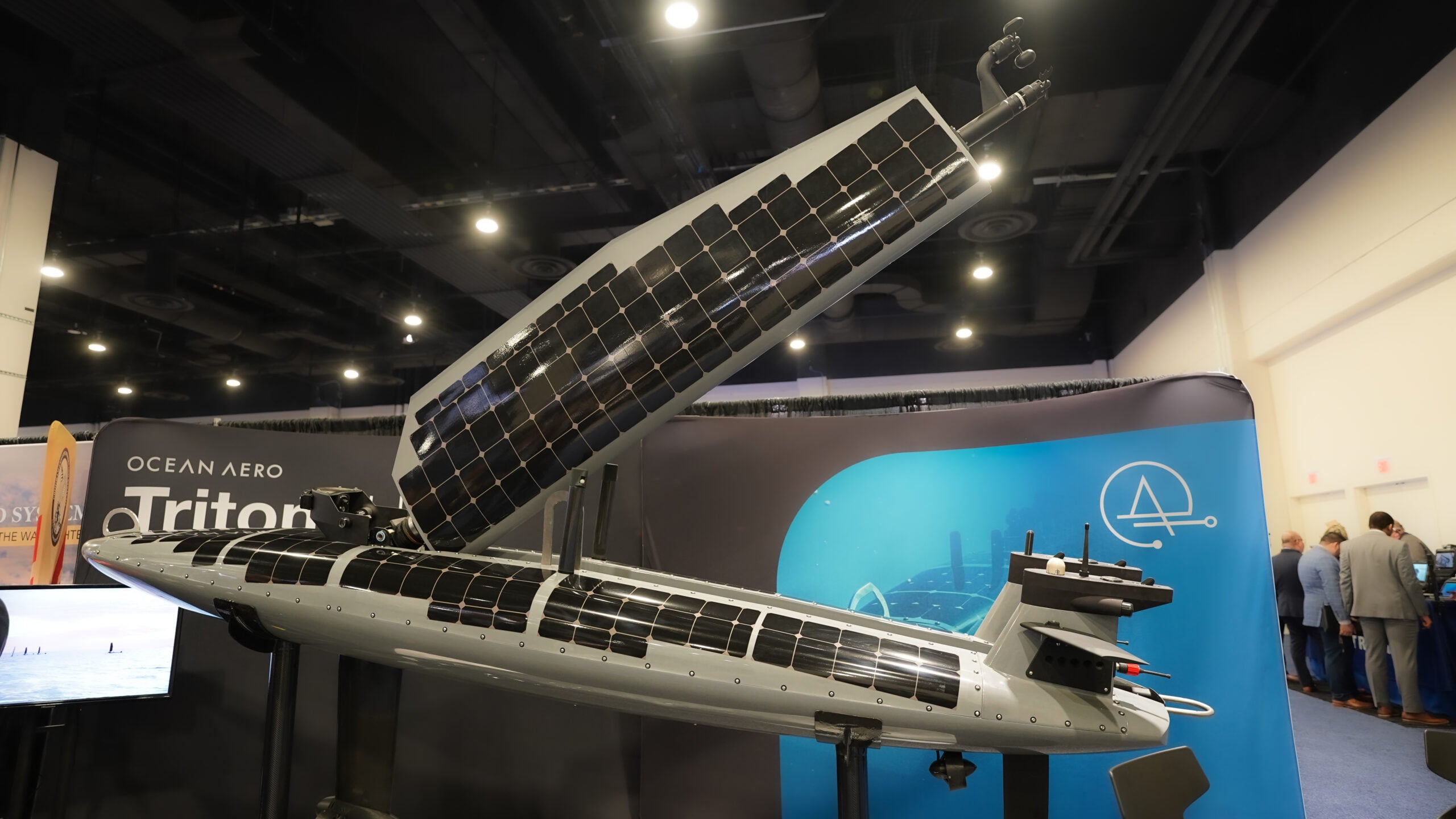
What the company says is a first of its kind fully solar unmanned submarine, Ocean Aeros "Triton" looks to allow longer duration surveys and other deep sea mission objectives. (Brendon Smith / Breaking Defense)
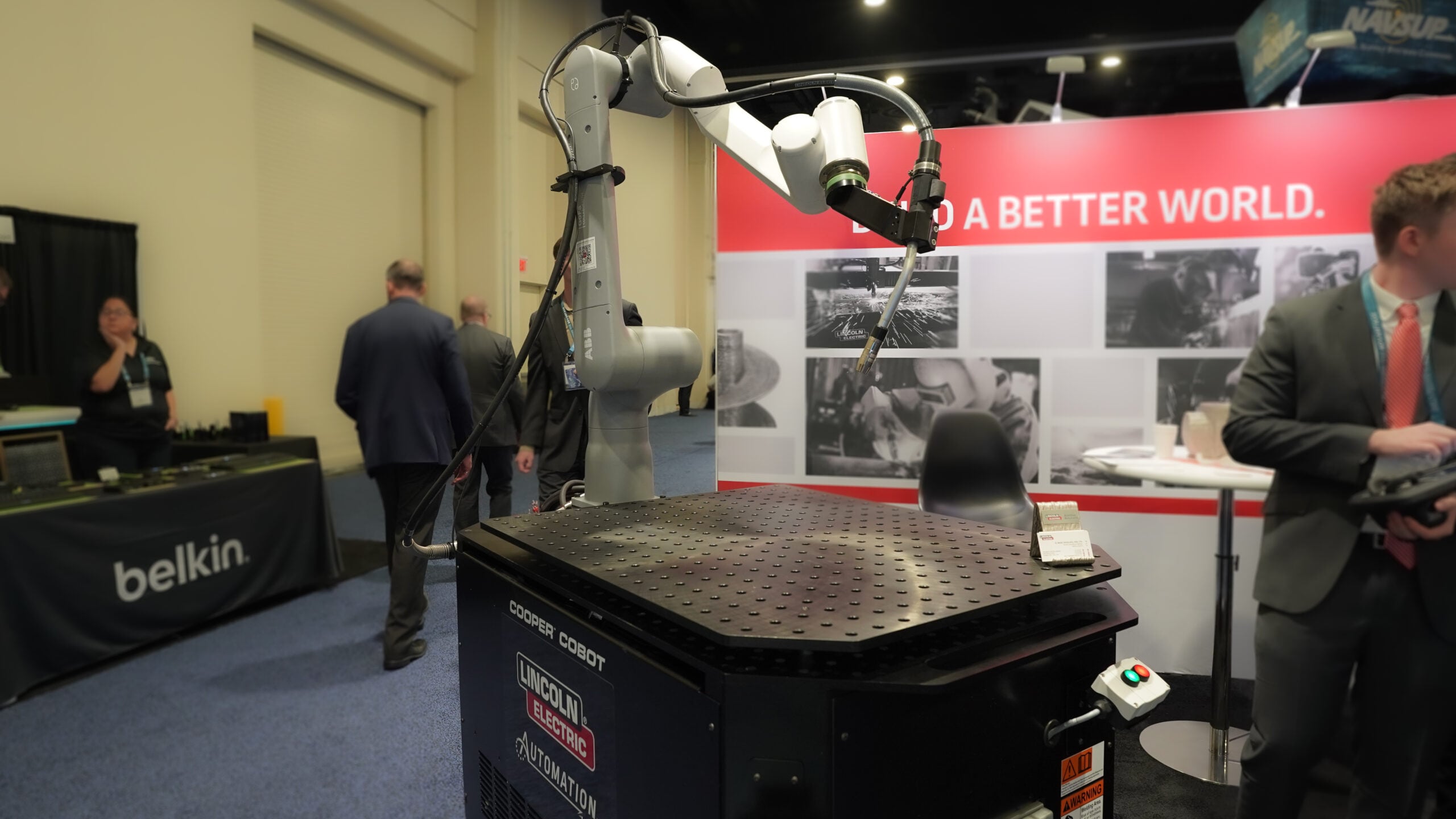
Lincoln electrics Cooper Cobot is meant to increase welding efficiency and accuracy. Acting as a productivity enhancing collaborator for its human counterparts. (Brendon Smith / Breaking Defense)
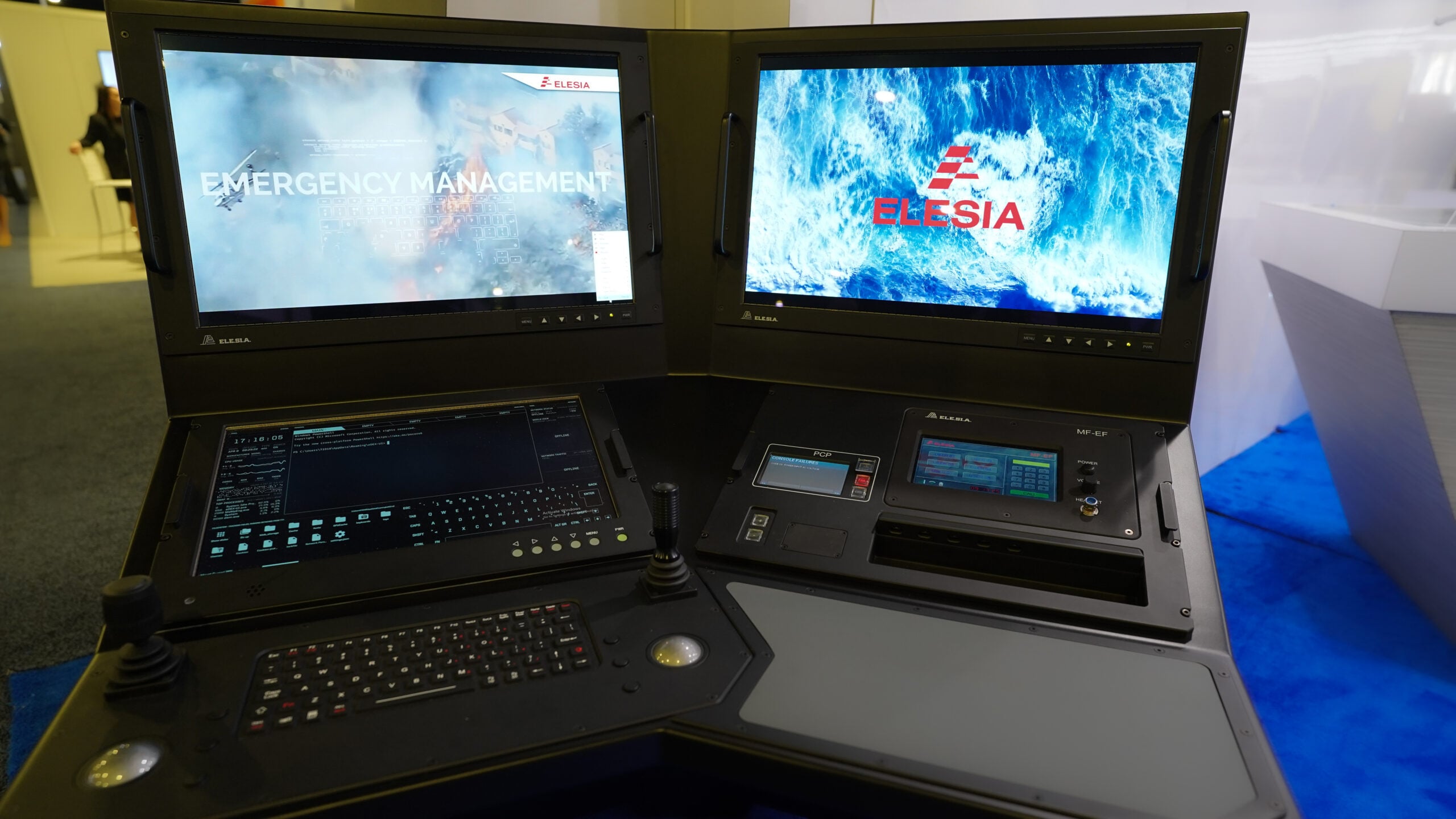
ELESIA's Single Operator MFC12 Console resists shock and vibrations on navy operations by "floating" within various shock absorbers. (Brendon Smith / Breaking Defense)
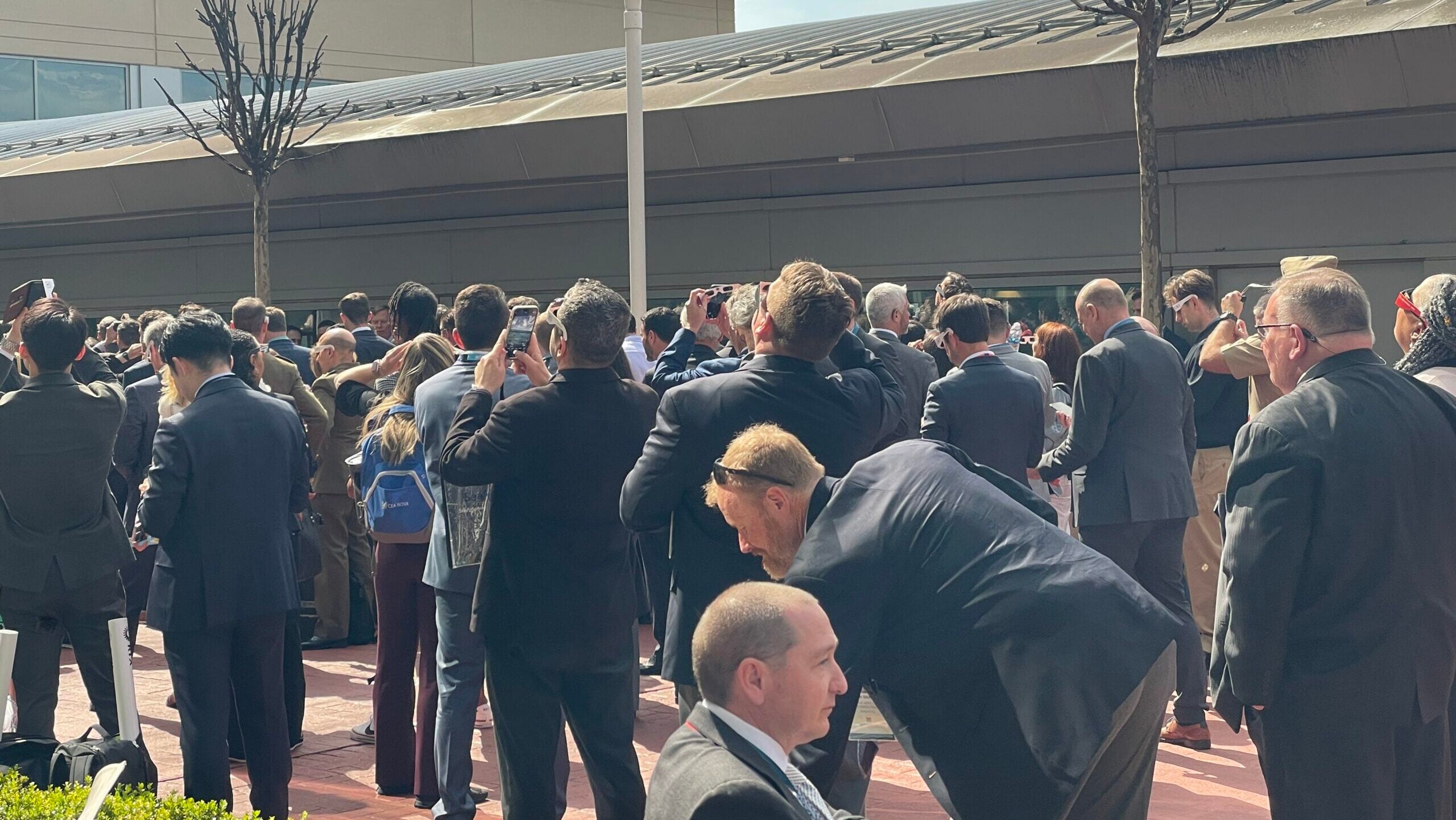
Attendees taking a break from the showroom floor to witness the solar eclipse Monday. (Brendon Smith / Breaking Defense)
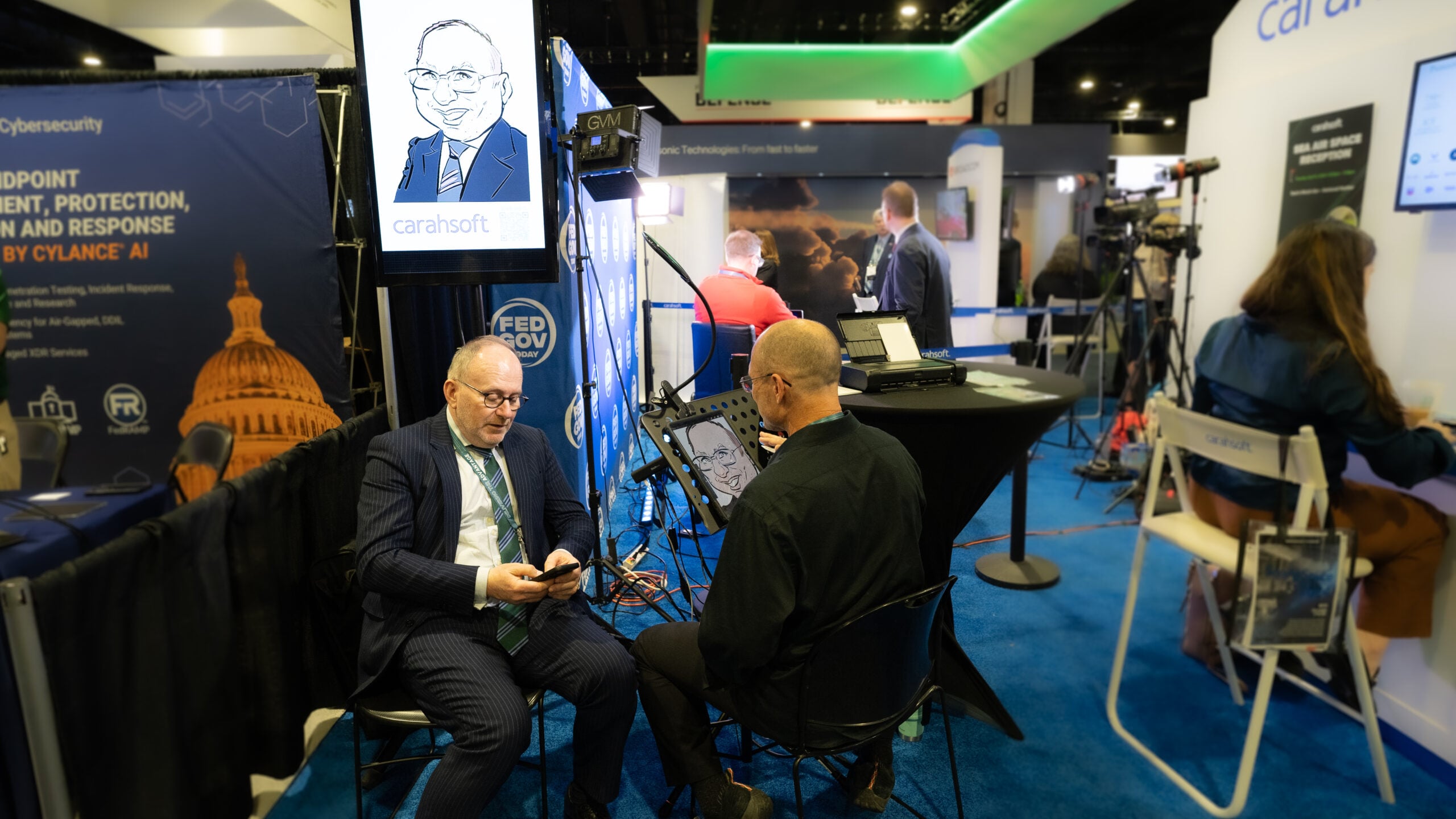
A cartoonist at the Carahsoft Booth was drawing caricatures of various attendees throughout the show. (Brendon Smith / Breaking Defense)
The Arete PILLS is what the defense firm says is a "streak tube imaging lidar" system with high resolution cameras and a AIRTRAC laser enhancing pulse rate frequency. (Brendon Smith / Breaking Defense)
ANDURIL's Roadrunner-M missle interceptor is "built for ground-based air defense that can rapidly launch, identify, intercept, and destroy" various aerial threats. (Brendon Smith / Breaking Defense)