Naval Warfare

‘Here and now’: CNO Franchetti on the looming munitions issue for ships in Middle East

Adm. Lisa Franchetti acknowledged the Navy hasn't invested in munitions sufficiently in previous years, but is sending a demand signal to industry.

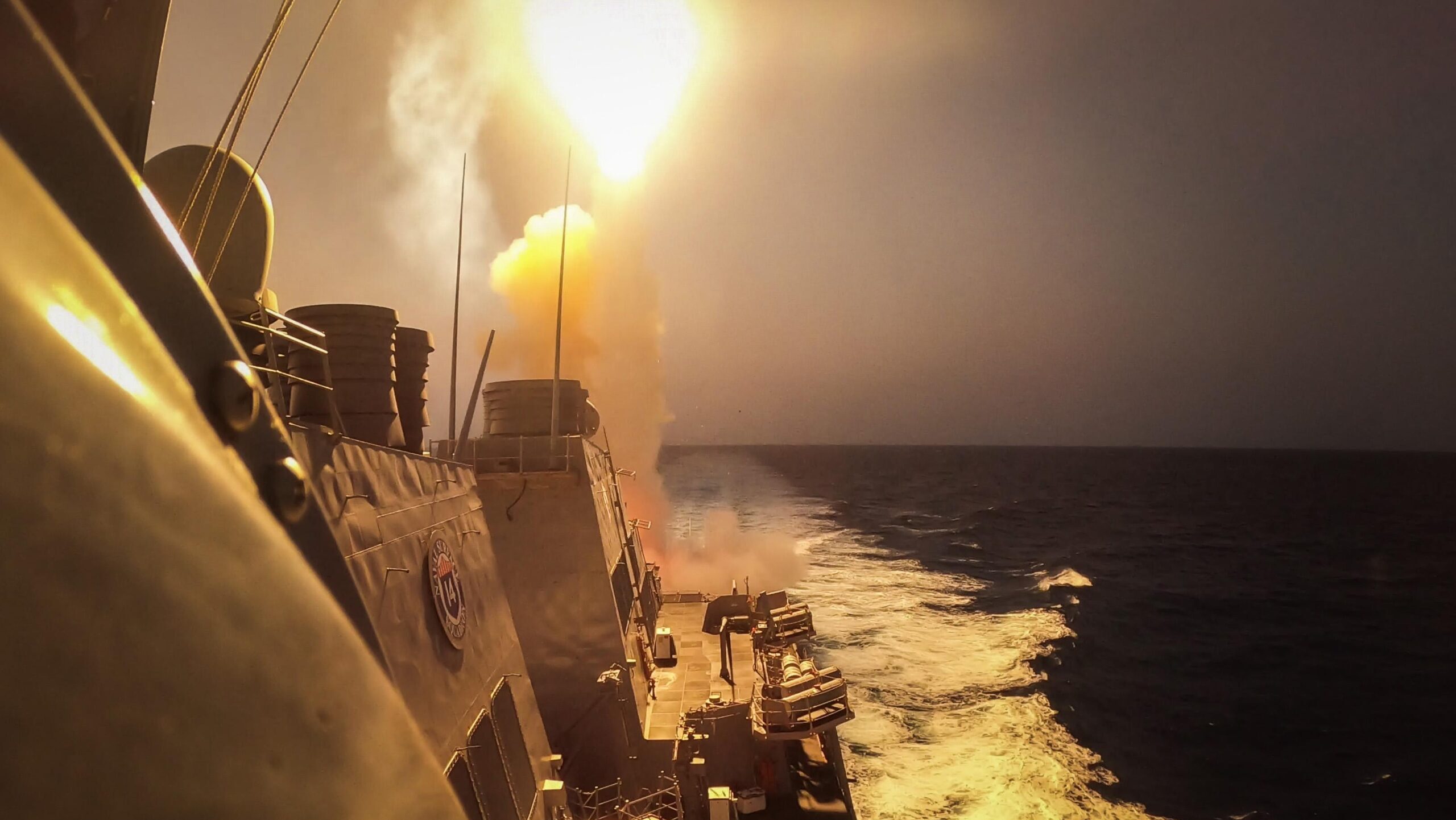
USS Carney Engages Houthi Missiles and UAVs
The Arleigh Burke-class guided-missile destroyer USS Carney (DDG 64) defeats a combination of Houthi missiles and unmanned aerial vehicles in the Red Sea, Oct. 19. (U.S. Navy photo by Mass Communication Specialist 2nd Class Aaron Lau)

SEA AIR SPACE — As US Navy ships shoot down aerial and seaborn threats in the Red Sea, the service’s top officer suggested today there’s a stretch on munition stockpiles due to past under-investment, but the race is on to shore up any shortfall.

“As you know, we did not invest in munitions, so we are where we are, because … it was not our focus in the past,” Chief of Naval Operations Adm. Lisa Franchetti told a small group of reporters today on the sidelines of the Sea Air Space Exposition.

“But over the past few years, really starting on Admiral [Michael] Gilday’s watch, he elevated munitions to be our primary focus area, and we are investing and sending that demand signal to industry that we need more munitions,” she continued.

The drain on the Pentagon’s munitions stockpiles came into public view following Russia’s invasion of Ukraine when it became clear Kyiv would lean heavily on the United States and NATO allies to provide it with arms to fight back the Russians. But for the Navy, that problem became more acute following Hamas’ October 2023 attack on Israel. Since then, Navy warships have taken up positions in the Red Sea and Mediterranean Sea with the goal of defending shipping lanes and trying to prevent the conflict from spreading throughout the Middle East.

In the Middle East, US warships have routinely used exquisite weapons such as Standard Missile-6 to take down much less expensive drones and other threats launched by the Houthi rebel group in Yemen.

RELATED: Crowded waters: Who’s doing what in the international hotspot of the Red Sea

The confluence of events has created a real anxiety in the Pentagon about how long it can continue to support Ukraine, defend shipping lanes in the Middle East and maintain a sufficient stockpile back home.

“I know from the Marine Corps perspective, we’re working very hard to get on the right side of the cost curve,” Marine Corps Lt. Gen. Karsten Heckl, that service’s top requirements officer, has previously said of the issue.

In the hours following Franchetti’s remarks to reporters, her second in command, Vice Chief of Naval Operations Adm. Jim Kilby told an audience here that the directions to the commodores on station in the Middle East are clear: “If you have the shot, you must take it.”

“The Houthis are not the highest-end threat that we are preparing for, which is China,” Kilby said. “But they are a thinking adversary, and they are advancing their tactics, and they are learning every day, which is what we want to do as well.”

Franchetti and other Navy brass will head to Capitol Hill later this week to begin defending the service’s annual budget request. During the Pentagon’s annual budget rollout in March, Under Secretary Erik Raven said the service’s munitions asks this year are relatively small because the fiscal year 2024 request sought the start of multiyear procurement contracts for several Navy programs such as the naval strike missile and the long range anti-ship missile.

“The munitions issue is here and now,” Franchetti said when asked about her message to lawmakers. “There is a supplemental on the Hill that has some funding in there for Navy again for our munitions. And again, that’s a conversation that we’re continuing to have.”

PHOTOS: Sea Air Space 2024

PHOTOS: Sea Air Space 2024

Rudder was a very good boy while touring the Sea Air Space show floor. Yes he was. (Aaron Mehta/Breaking Defense)
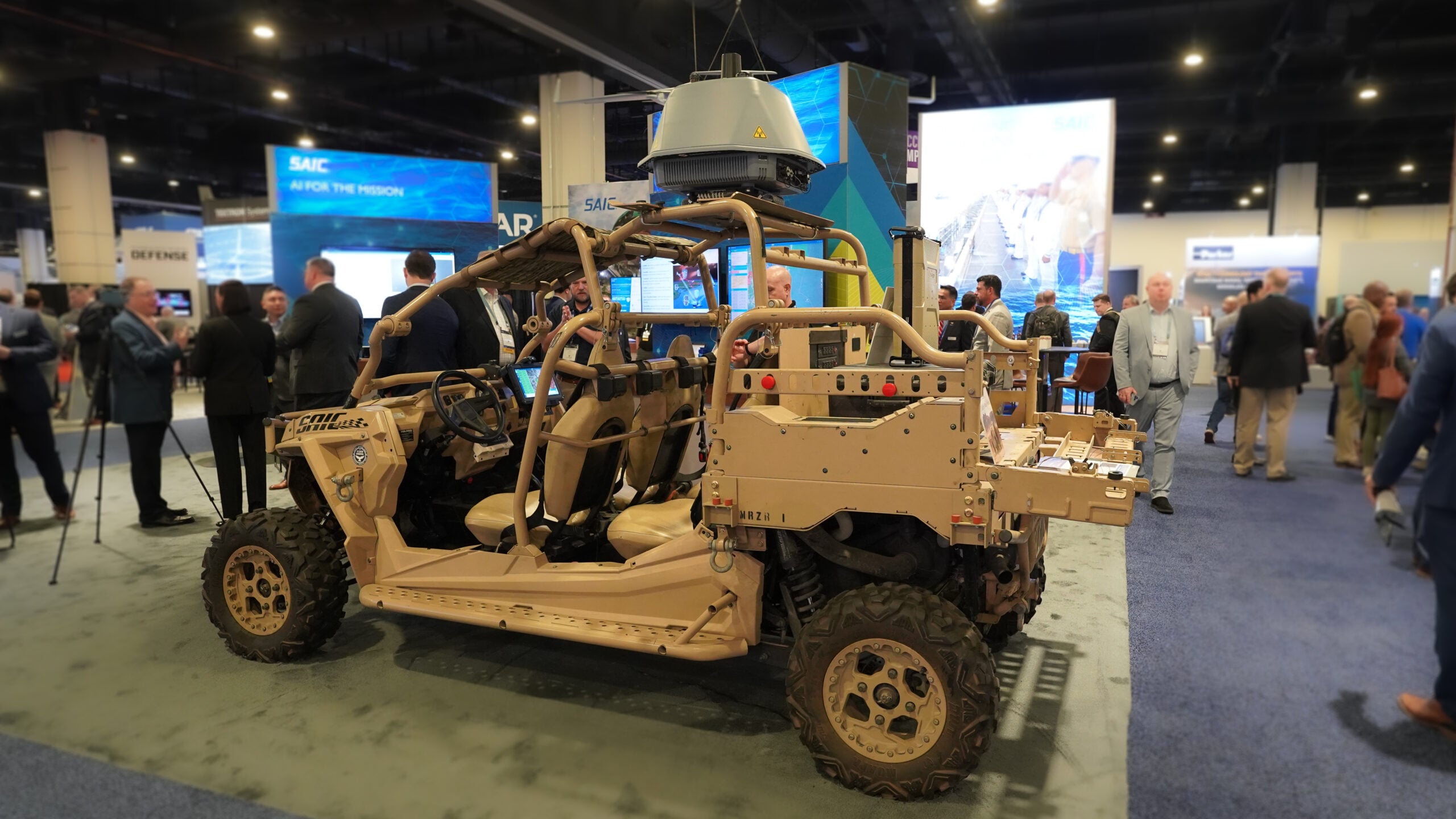
D-Fend Solutions and SAIC were showing off a mobile CUAS solution that allows modular configurability to tailor for mission specific goals. (Brendon Smith / Breaking Defense)
TenCate is the new manufacture of the Navy's two piece suit pictured here. The "Defender M" fabric technology is inherently flame resistant according to the company and could prove crucial during deck fires. (Brendon Smith / Breaking Defense)
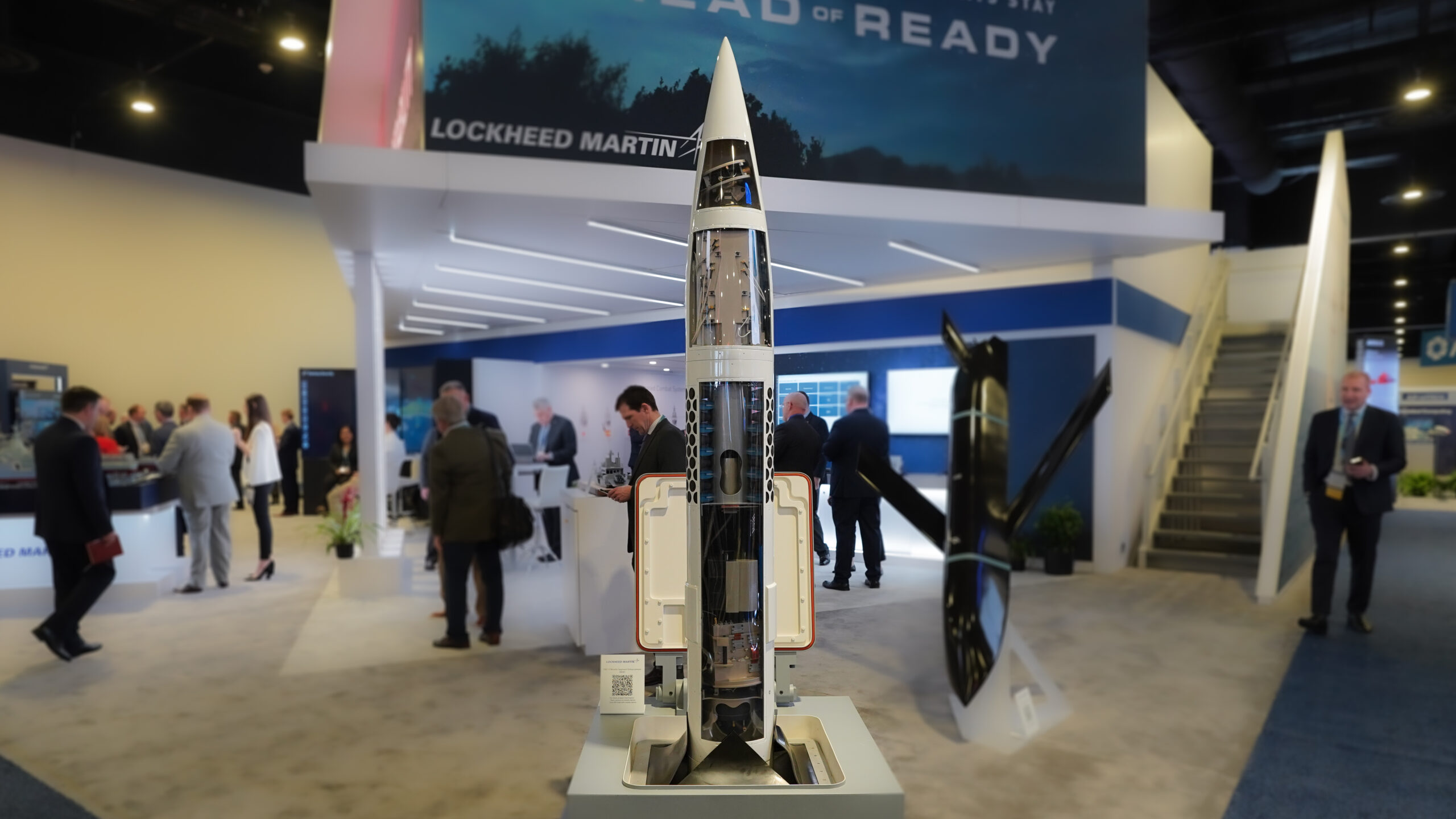
Lockheed offered an interesting look at the internals of their PAC-3 Missile. (Brendon Smith / Breaking Defense)
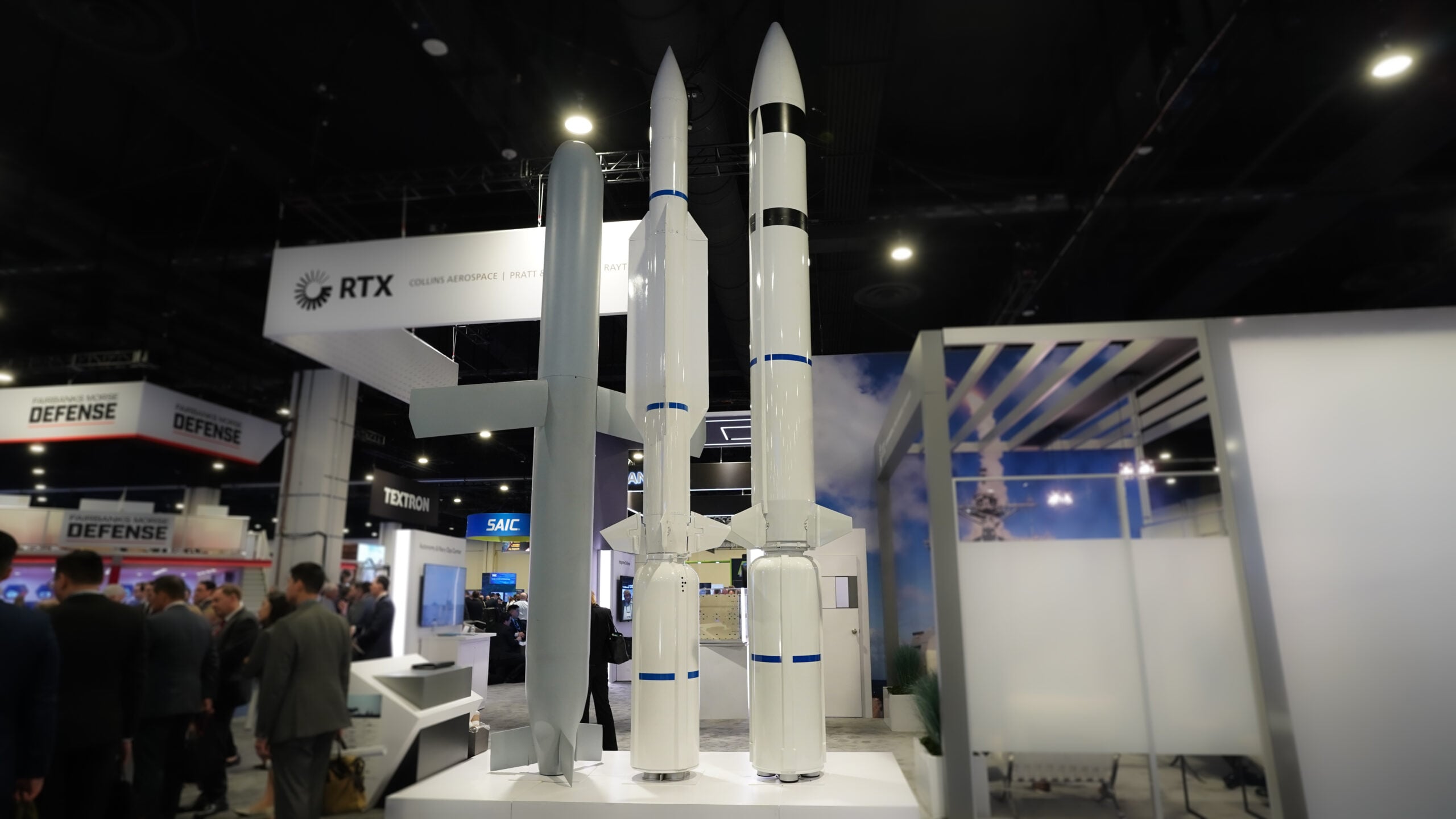
At the Raytheon booth, their new missle offerings could be seen from across the show floor. Up close it was hard to take in the enormity. Raytheon says these missiles, both. long and short range, will prove critical. (Brendon Smith / Breaking Defense)
The Australian pavilion at Sea Air Space 2024 was a popular location for visitors, with the AUKUS agreement being a major part of this year's conversation. (Aaron Mehta/Breaking Defense)
At the BlueHalo booth their CUAS offering touts advanced tracking that can operate in any sky condition, longer range, and a more powerful "High Energy Laser." (Brendon Smith / Breaking Defense)
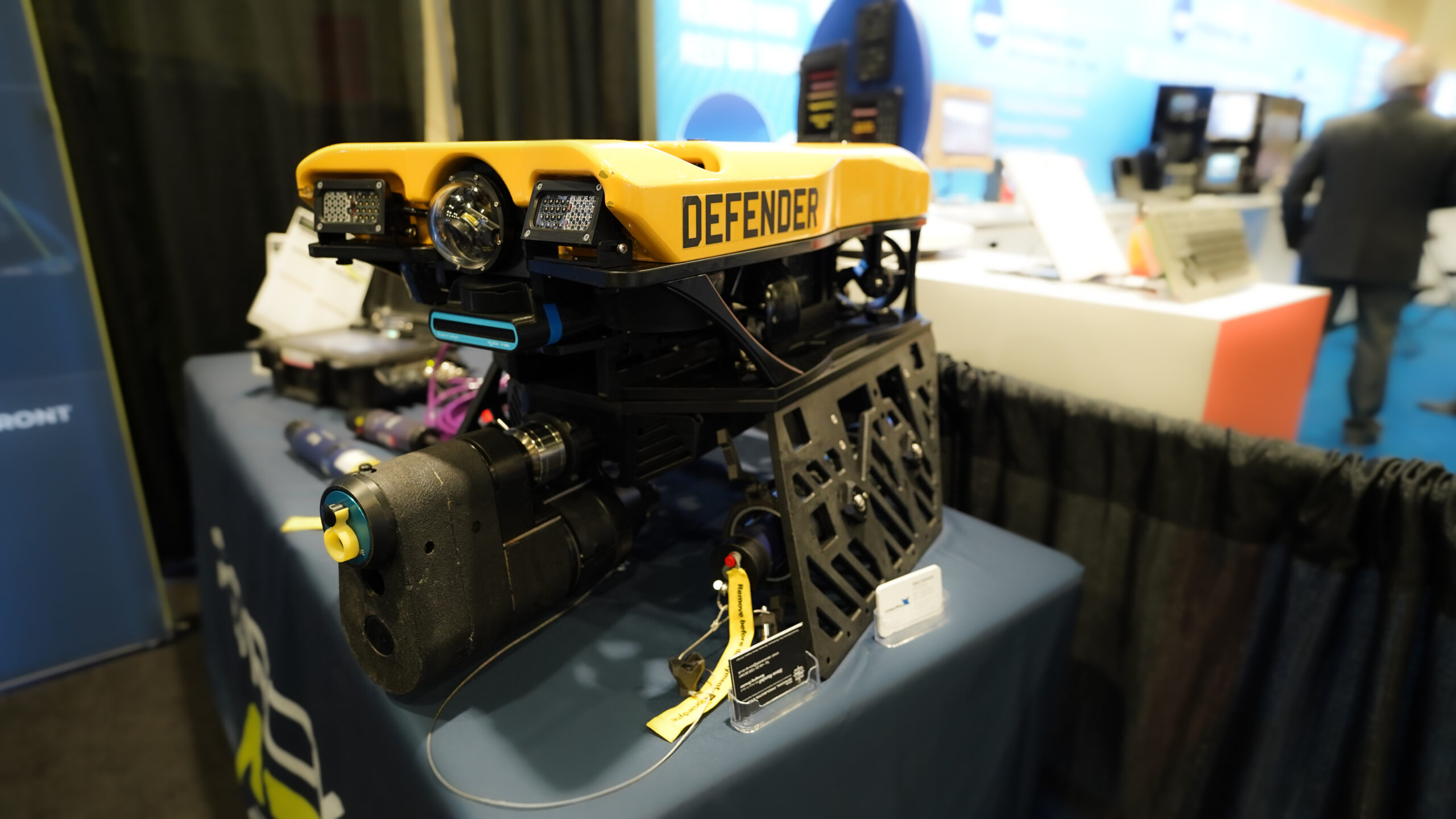
The Forcys Defender is a deep sea submersible meant to snuff out underwater explosives from a distance. (Brendon Smith / Breaking Defense)
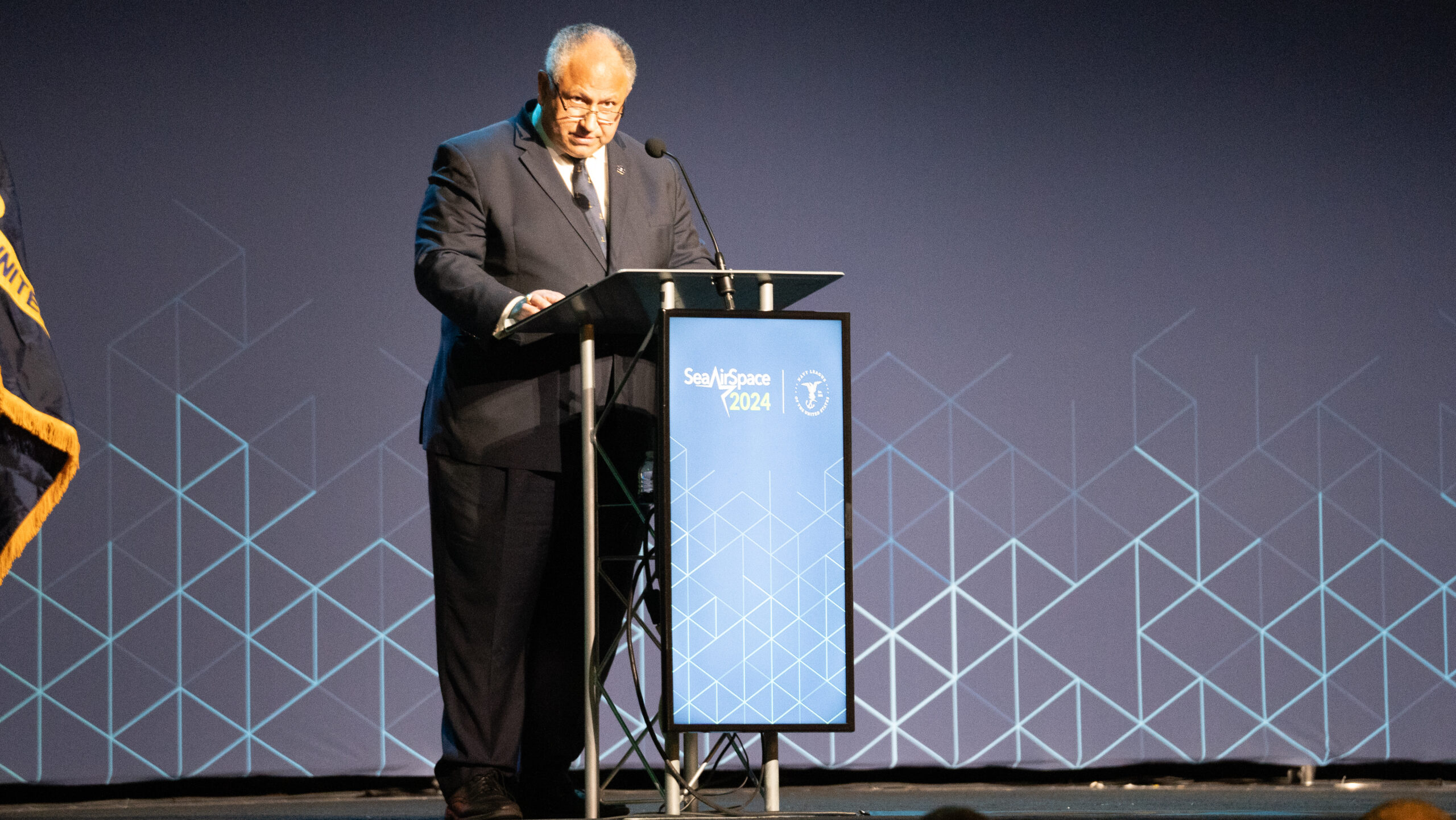
US Secretary of the Navy Carlos Del Toro was the keynote speaker on day 2 of the 2024 Sea-Air-Space conference. Del Toro recently released a shipbuilding review that found serious delays for key navy programs. (Brendon Smith / Breaking Defense)
DroneShield's RfPatrol Mk2 is a compact mobile CUAS system that aims to provide highly effective low maintenance support. (Brendon Smith/Breaking Defense)
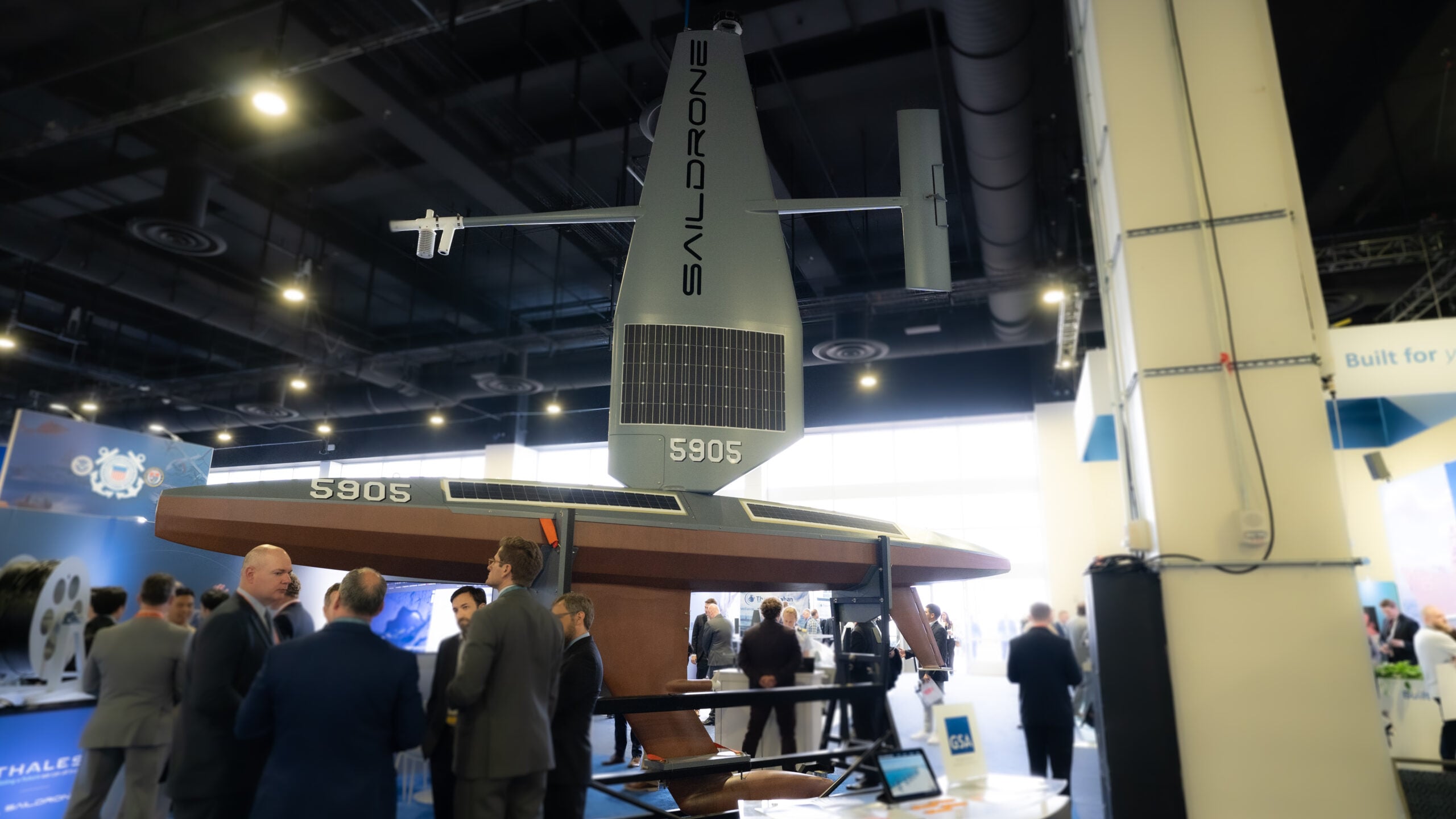
Surface drone maker Saildrone brought a model of its 5904 long range autonomous MDA/ISR solution. The company has seen its systems active in the waters of the Gulf in recent years. (Brendon Smith / Breaking Defense)
The show isn't just about big hardware. Defense Marine Solutions offers an "expansion of DMS' marine propulsion and propeller repair" with state of the art underwater support systems. (Brendon Smith / Breaking Defense)
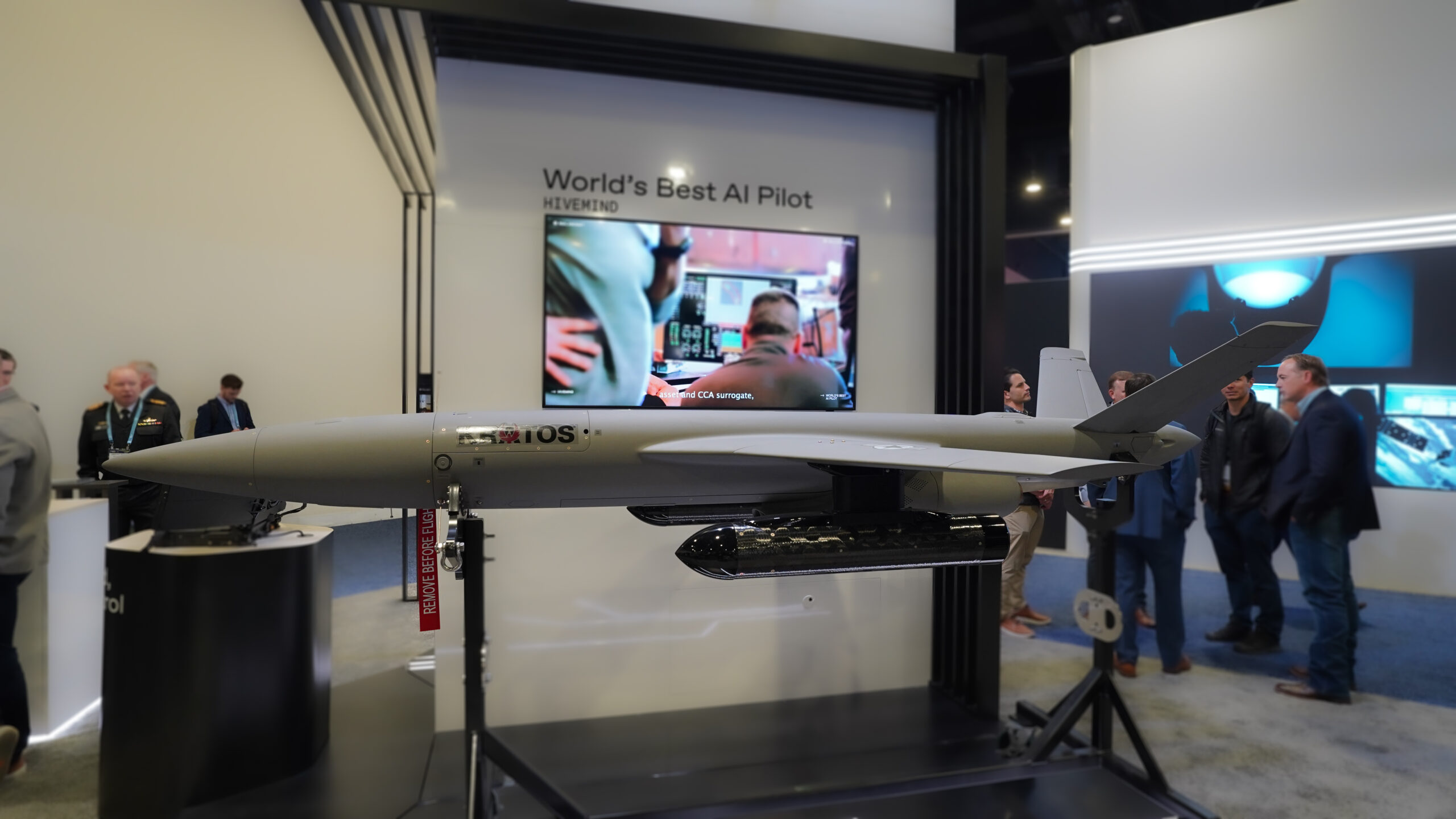
Kratos is teamed with Shield AI on this system, which the companies say will deliver state of the art AI drone piloting and the ability to complete mission objectives without gps, waypoints, or comms. (Brendon Smith / Breaking Defense)
A look at Northrop Grummans Autonomous VTOL Uncrewed Aircraft System at their booth. This was the first time the company brought the UAS to a show. (Brendon Smith / Breaking Defense)
Attendees gathered on the showroom floor for a packed NavAir leadership panel. (Brendon Smith / Breaking Defense)
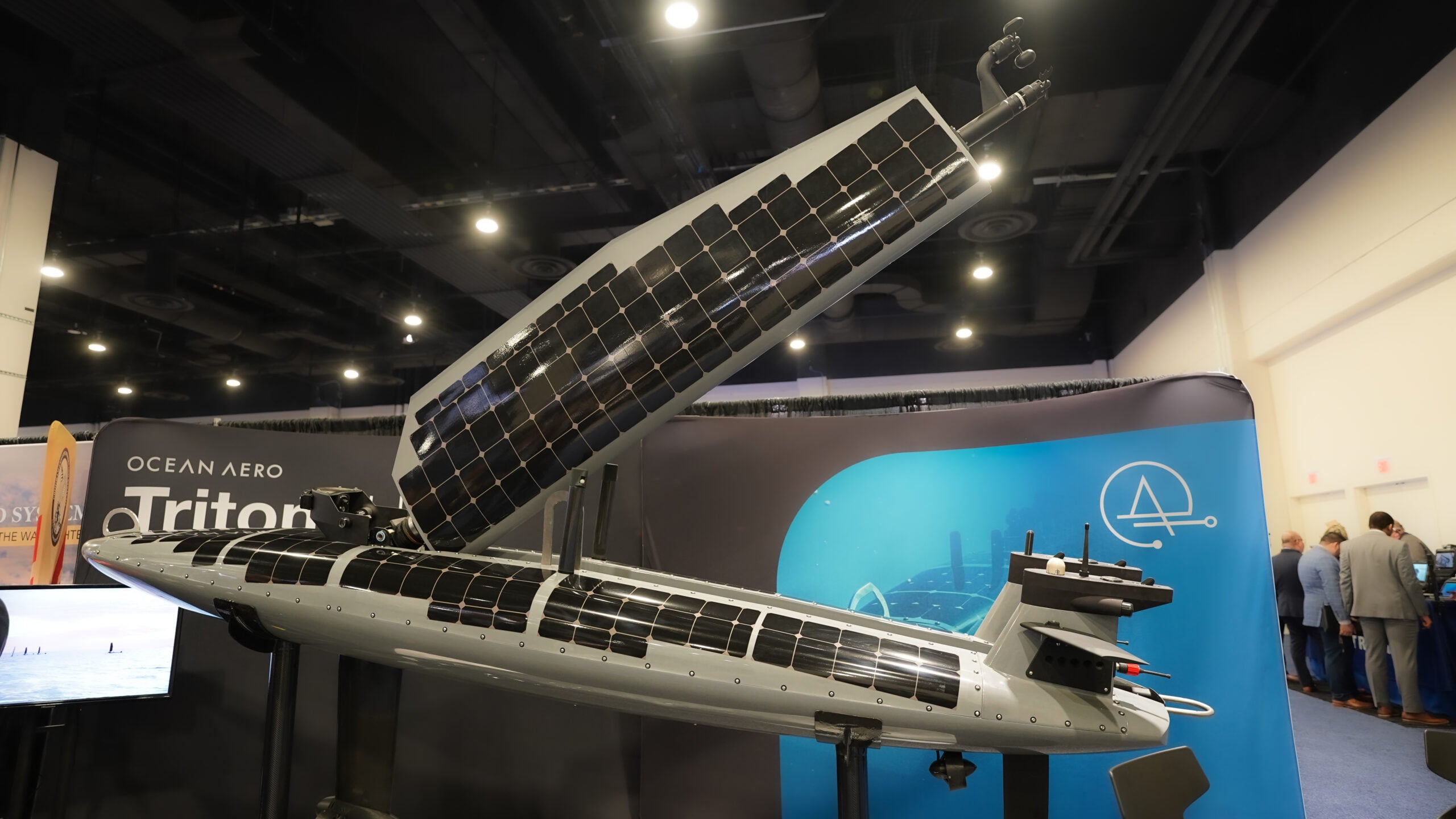
What the company says is a first of its kind fully solar unmanned submarine, Ocean Aeros "Triton" looks to allow longer duration surveys and other deep sea mission objectives. (Brendon Smith / Breaking Defense)
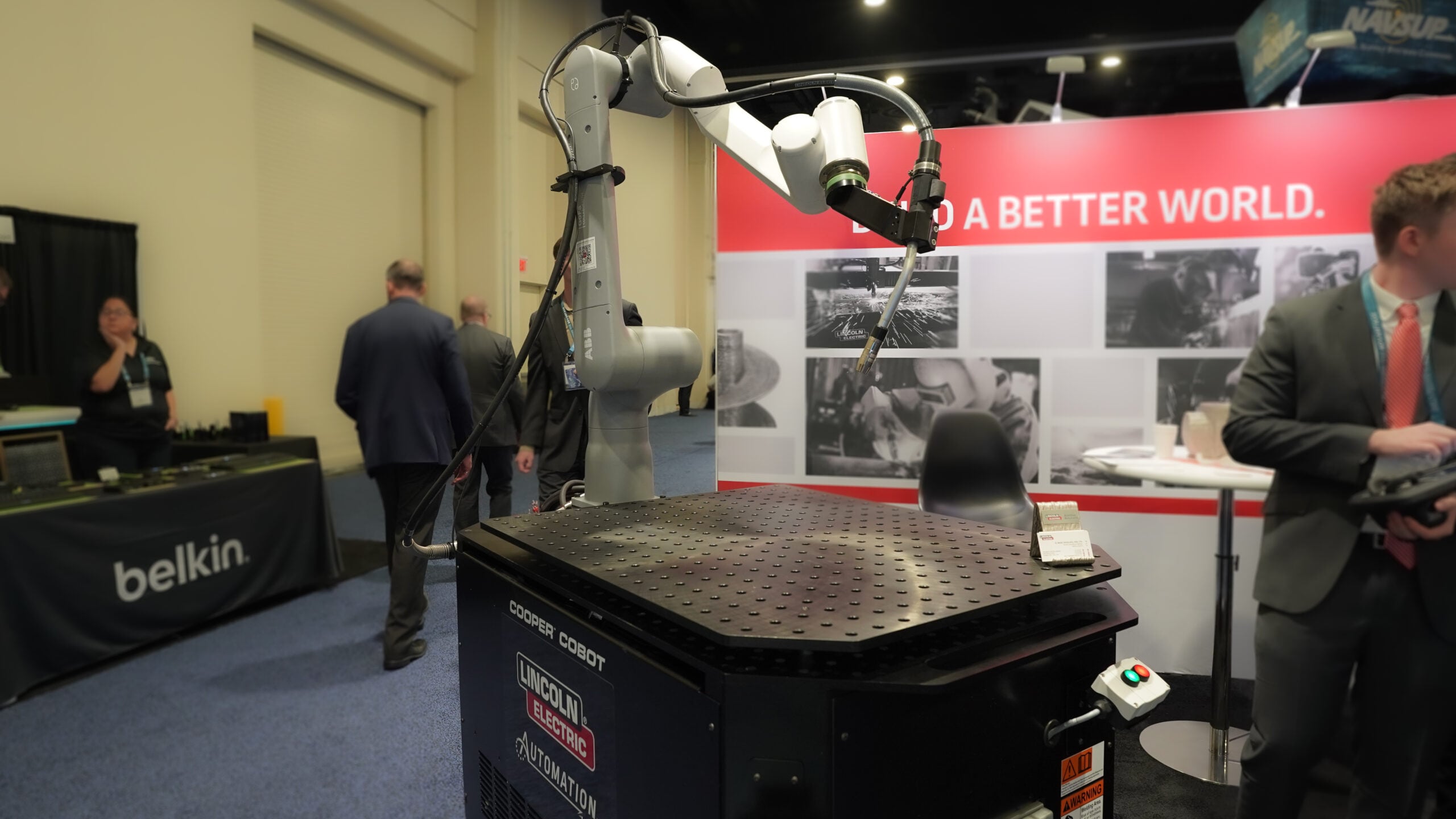
Lincoln electrics Cooper Cobot is meant to increase welding efficiency and accuracy. Acting as a productivity enhancing collaborator for its human counterparts. (Brendon Smith / Breaking Defense)
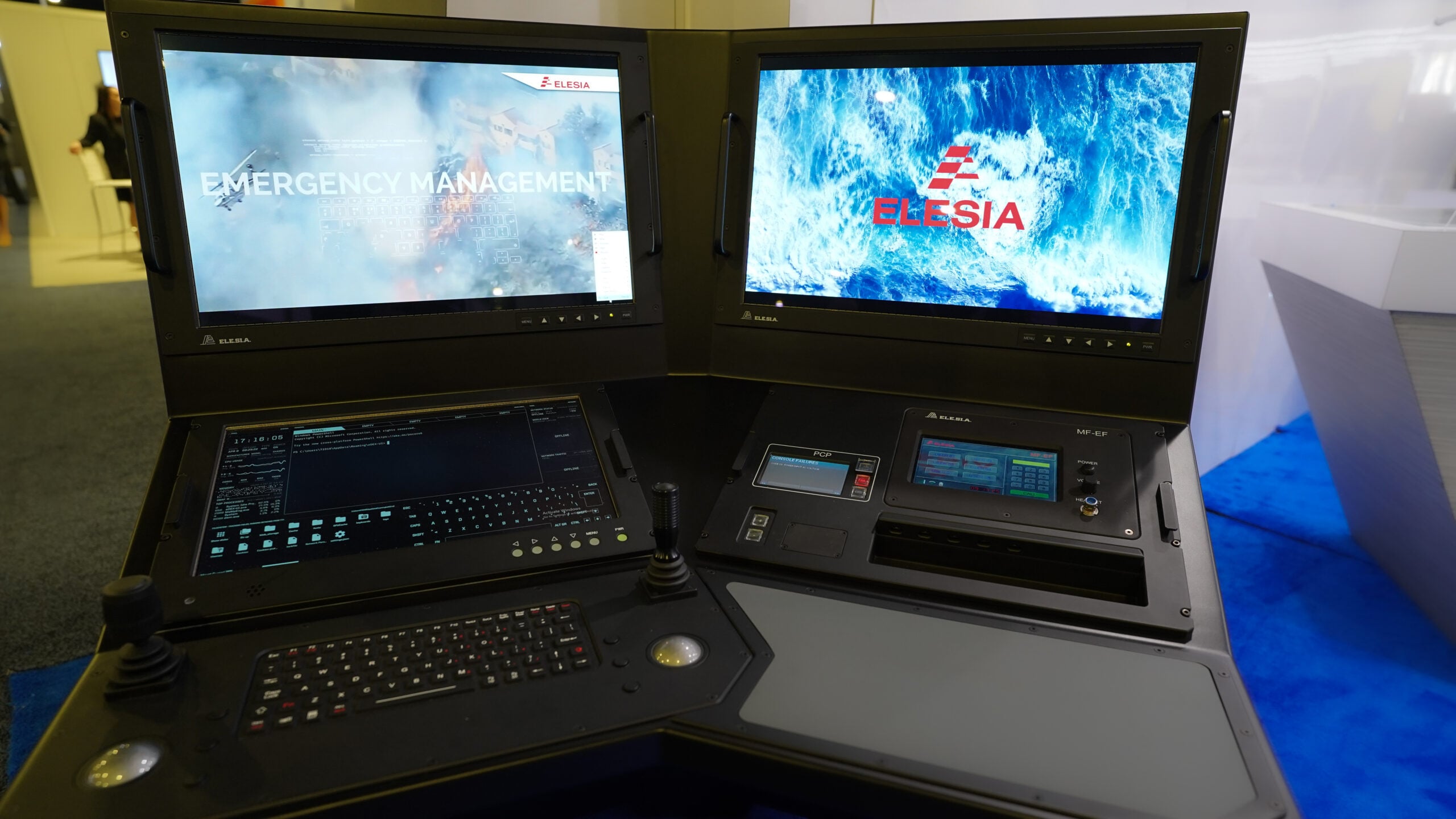
ELESIA's Single Operator MFC12 Console resists shock and vibrations on navy operations by "floating" within various shock absorbers. (Brendon Smith / Breaking Defense)
Attendees taking a break from the showroom floor to witness the solar eclipse Monday. (Brendon Smith / Breaking Defense)
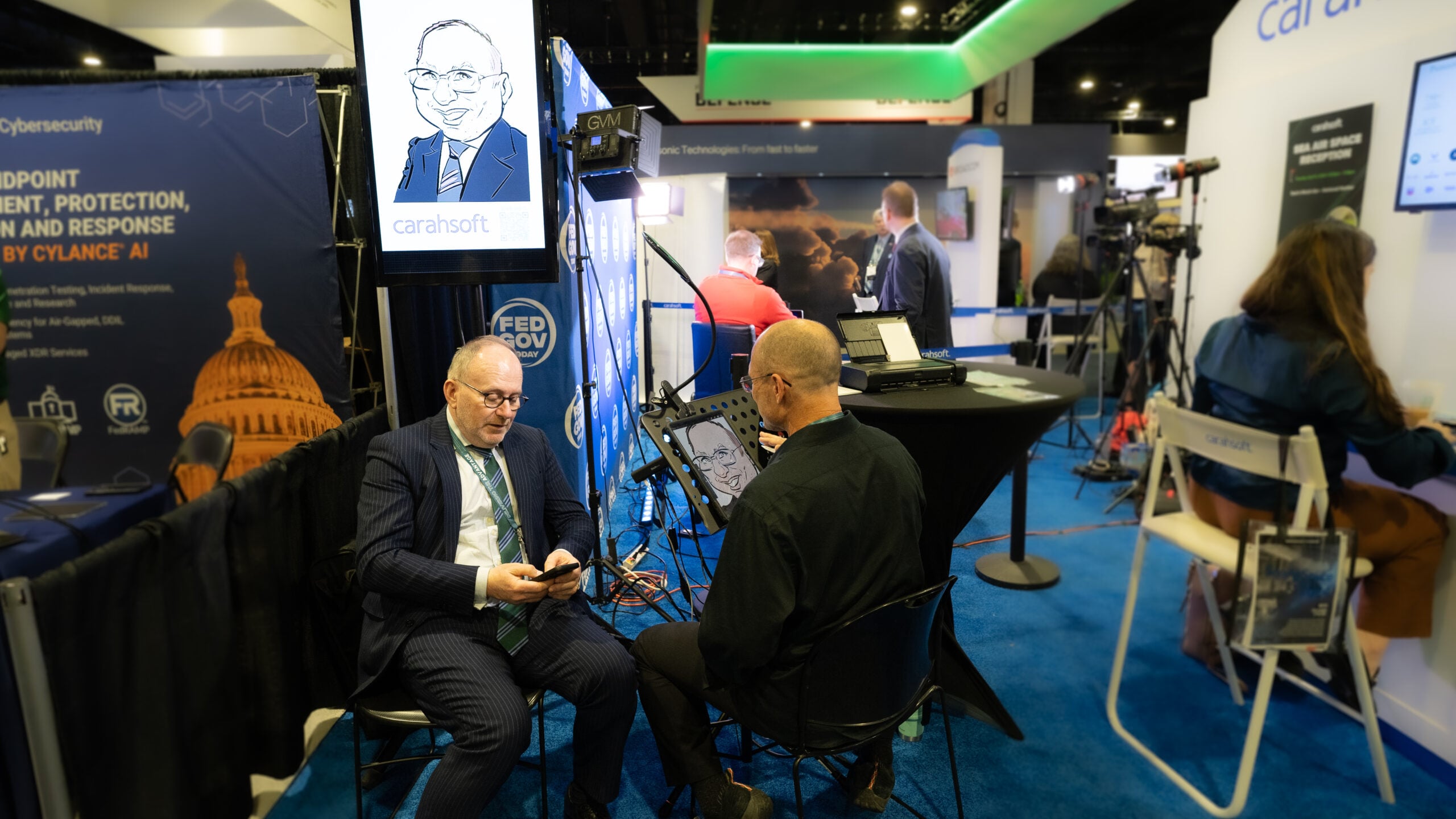
A cartoonist at the Carahsoft Booth was drawing caricatures of various attendees throughout the show. (Brendon Smith / Breaking Defense)
The Arete PILLS is what the defense firm says is a "streak tube imaging lidar" system with high resolution cameras and a AIRTRAC laser enhancing pulse rate frequency. (Brendon Smith / Breaking Defense)
ANDURIL's Roadrunner-M missle interceptor is "built for ground-based air defense that can rapidly launch, identify, intercept, and destroy" various aerial threats. (Brendon Smith / Breaking Defense)