Air Warfare

Pentagon weighs options to lengthen life of legacy nuclear platforms as new programs face delays

"The question is, how do you manage what you might call the transition from the legacy systems to modern systems?” John Plumb, assistant secretary of Defense for Space Policy, told reporters.

Ohio-Class Submarine Transits the Suez Canal Nov. 5, 2023.
An Ohio-class submarine approaches the Mubarak Peace Bridge while transiting the Suez Canal, Nov. 5, 2023. (U.S. Navy photo by Mass Communication Specialist 1st Class Jonathan Word)

WASHINGTON — The Pentagon may have to take steps to prolong the life of its legacy ballistic missile submarines and intercontinental ballistic missiles due to delays in fielding their replacements, the Defense Department’s top space policy official said today.

The DoD is committed to modernizing its nuclear triad, said John Plumb, assistant secretary of Defense for Space Policy. But with construction of the first Columbia-class submarine at least one year behind schedule and the first flight of Sentinel ICBMs delayed by two years, the department is deliberating how to keep its older Ohio-class submarines and Minuteman III ICBMs ready to respond to a conflict for longer than anticipated.

“So really, the question is, how do you manage what you might call the transition from the legacy systems to modern systems?” he told reporters during a Defense Writers Group roundtable today. “We’re also starting to look at, what are these other force posture changes we might be able to make that don’t break the bank or put too much strain on our nuclear complex that could help address that as well.”

Plumb declined to discuss what specific options are under consideration. However, a service life extension for the Minuteman III program, which was explored by the US Air Force before it committed buying a next-generation replacement, is not on the table, said Plumb, who is set to vacate the space policy job in early May. 

The Defense Department is currently conducting an evaluation of the Air Force’s Sentinel program after program costs increased by 37 percent, triggering a Nunn McCurdy breach that will force Defense Secretary Lloyd Austin to certify whether the program can move forward. Northrop Grumman won the Sentinel contract in 2020 and has defended its work, citing overly optimistic early cost estimates by the government and the discovery of complications in the Sentinel plan as it progressed.

Meanwhile, systemic industrial base challenges have dogged Navy shipbuilding efforts, leaving even its largest priority — the Columbia-class built jointly by General Dynamics Electric Boat and Huntington Ingalls Industries — between 12 and 16 months late, according to a Navy review unveiled earlier this month.

That leaves the B-21 bomber, also made by Northrop, as the lone nuclear modernization program that has largely stuck to its schedule — although inflation has driven a $1 billion financial loss on the initial production for which Northrop must pay due to the fixed-price terms of its contract with the Air Force.

In a October 2023 report, a congressional commission on US nuclear posture warned that the Pentagon’s nuclear modernization strategy is built on a “just in time” schedule where legacy systems are retired at the same time new platforms are become operational.

The commission made several recommendations to mitigate shortfalls in capacity that could be caused by modernization delays, such as funding upgrades to Ohio-class submarines to ensure they can operate past the current retirement timeline or — as part of the Minuteman III force structure ages out — spreading existing nuclear warheads to the nuclear platforms that remain operational. However, none are perfect solutions, the commission said.

“Some require significant additional investment and/or near-term decisions to hedge against the problem,” it said. “Others may require potential near-term decisions to be able to field different warhead loads. For example, sustaining the legacy force until its modernized replacement arrives will require additional investment in order to prevent a loss of capability and sustain the U.S. vital nuclear deterrent.”

PHOTOS: Sea Air Space 2024

PHOTOS: Sea Air Space 2024

Rudder was a very good boy while touring the Sea Air Space show floor. Yes he was. (Aaron Mehta/Breaking Defense)
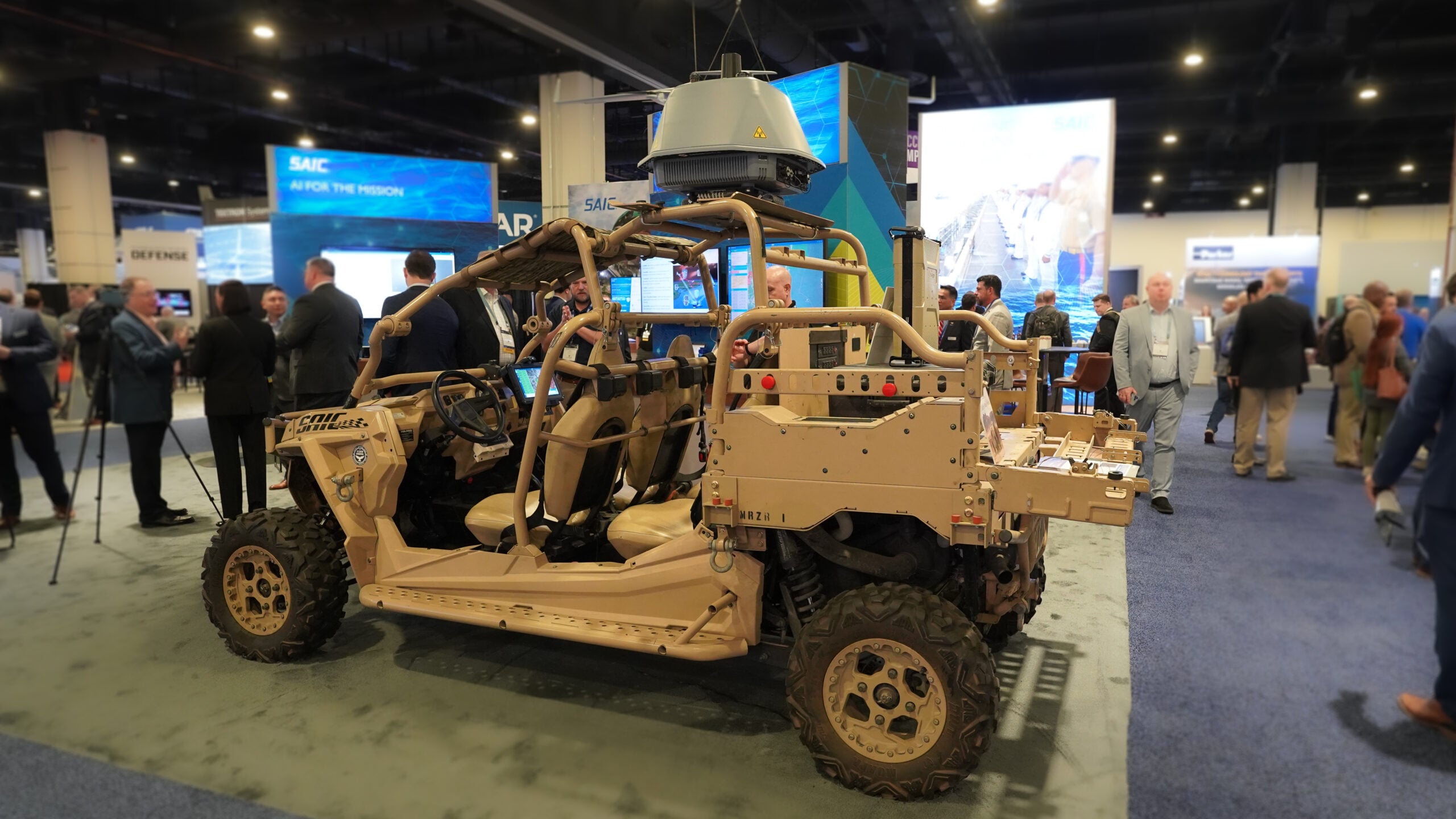
D-Fend Solutions and SAIC were showing off a mobile CUAS solution that allows modular configurability to tailor for mission specific goals. (Brendon Smith / Breaking Defense)
TenCate is the new manufacture of the Navy's two piece suit pictured here. The "Defender M" fabric technology is inherently flame resistant according to the company and could prove crucial during deck fires. (Brendon Smith / Breaking Defense)
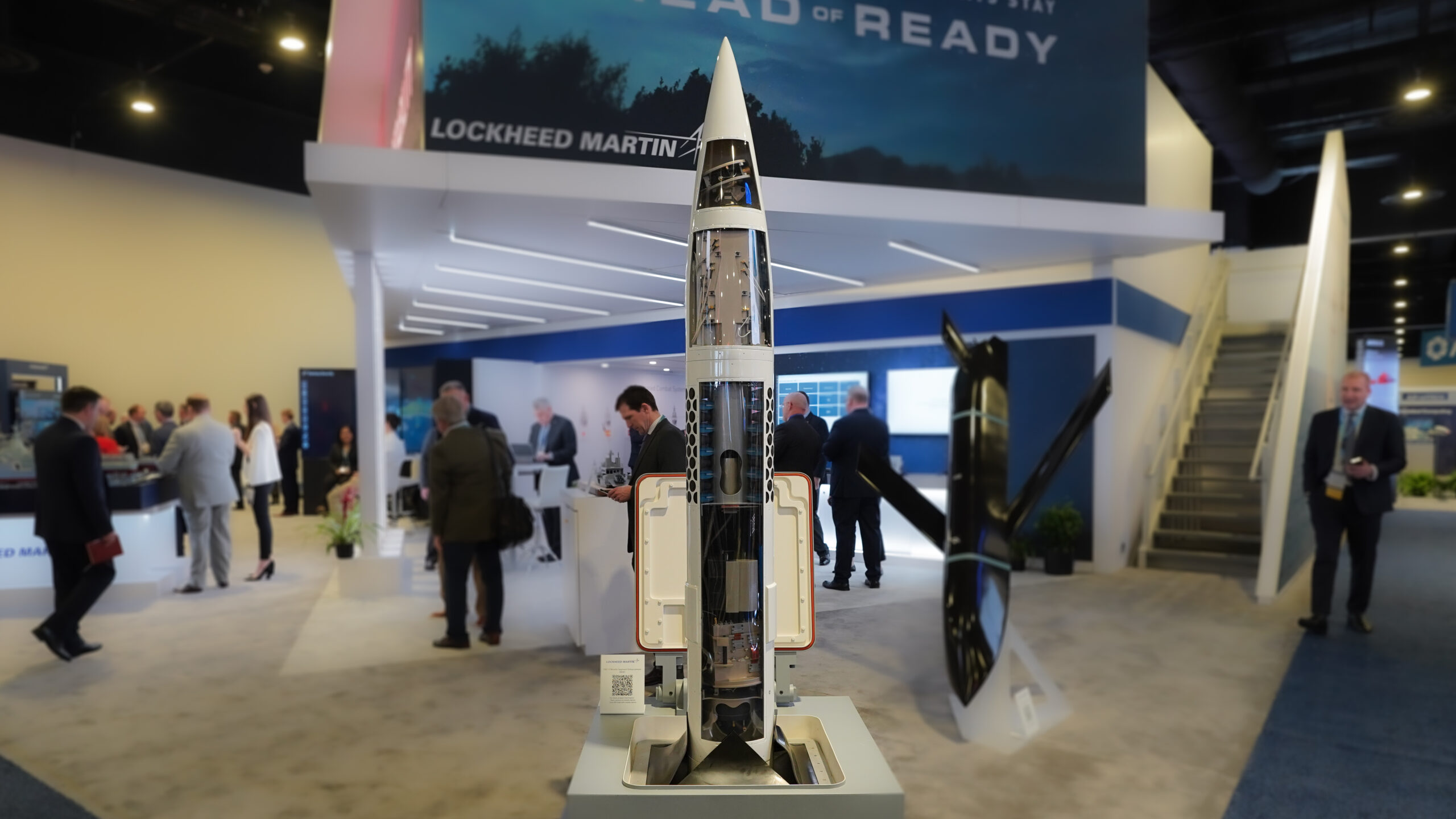
Lockheed offered an interesting look at the internals of their PAC-3 Missile. (Brendon Smith / Breaking Defense)
At the Raytheon booth, their new missle offerings could be seen from across the show floor. Up close it was hard to take in the enormity. Raytheon says these missiles, both. long and short range, will prove critical. (Brendon Smith / Breaking Defense)
The Australian pavilion at Sea Air Space 2024 was a popular location for visitors, with the AUKUS agreement being a major part of this year's conversation. (Aaron Mehta/Breaking Defense)
At the BlueHalo booth their CUAS offering touts advanced tracking that can operate in any sky condition, longer range, and a more powerful "High Energy Laser." (Brendon Smith / Breaking Defense)
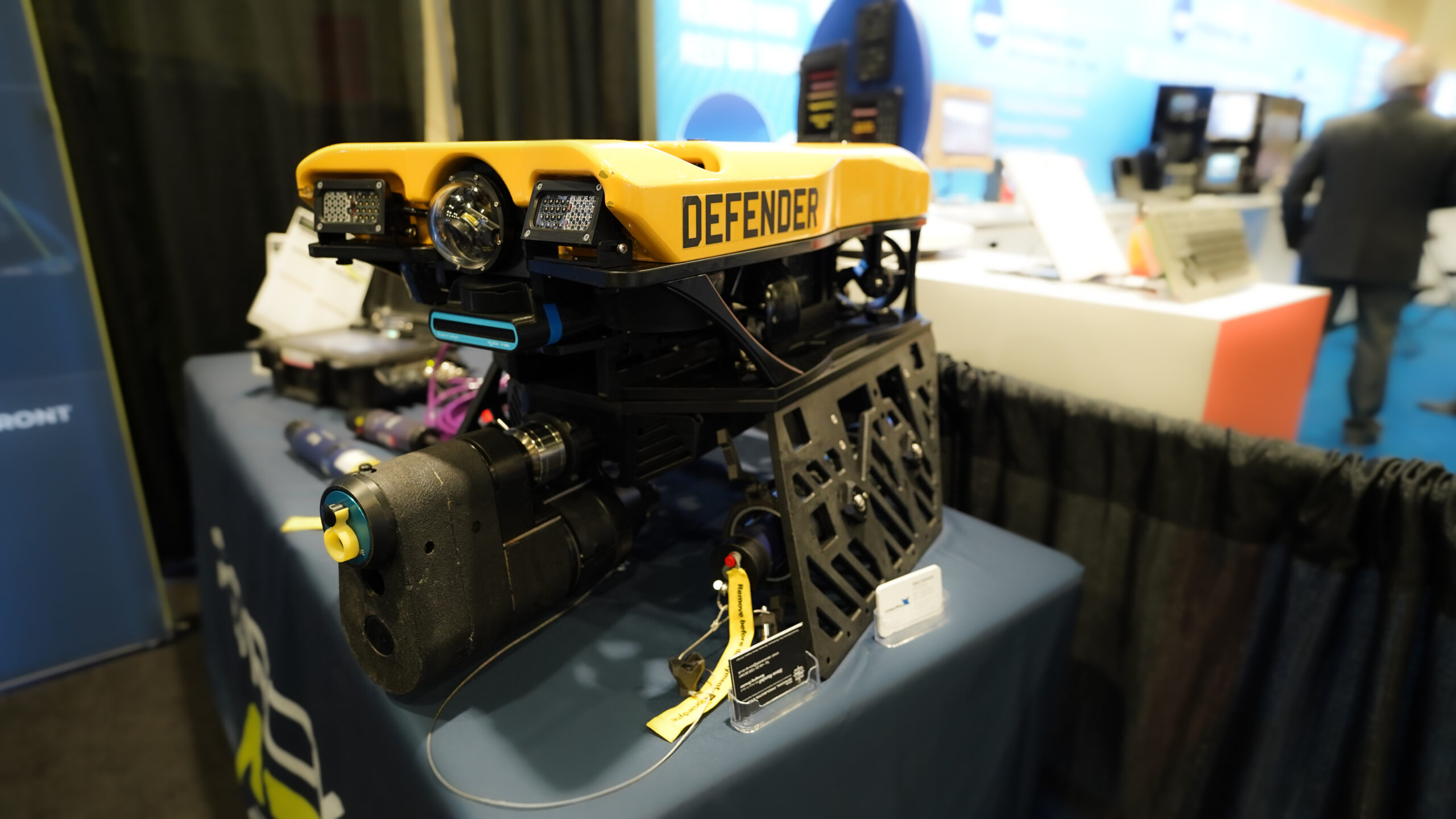
The Forcys Defender is a deep sea submersible meant to snuff out underwater explosives from a distance. (Brendon Smith / Breaking Defense)
US Secretary of the Navy Carlos Del Toro was the keynote speaker on day 2 of the 2024 Sea-Air-Space conference. Del Toro recently released a shipbuilding review that found serious delays for key navy programs. (Brendon Smith / Breaking Defense)
DroneShield's RfPatrol Mk2 is a compact mobile CUAS system that aims to provide highly effective low maintenance support. (Brendon Smith/Breaking Defense)
Surface drone maker Saildrone brought a model of its 5904 long range autonomous MDA/ISR solution. The company has seen its systems active in the waters of the Gulf in recent years. (Brendon Smith / Breaking Defense)
The show isn't just about big hardware. Defense Marine Solutions offers an "expansion of DMS' marine propulsion and propeller repair" with state of the art underwater support systems. (Brendon Smith / Breaking Defense)
Kratos is teamed with Shield AI on this system, which the companies say will deliver state of the art AI drone piloting and the ability to complete mission objectives without gps, waypoints, or comms. (Brendon Smith / Breaking Defense)
A look at Northrop Grummans Autonomous VTOL Uncrewed Aircraft System at their booth. This was the first time the company brought the UAS to a show. (Brendon Smith / Breaking Defense)
Attendees gathered on the showroom floor for a packed NavAir leadership panel. (Brendon Smith / Breaking Defense)
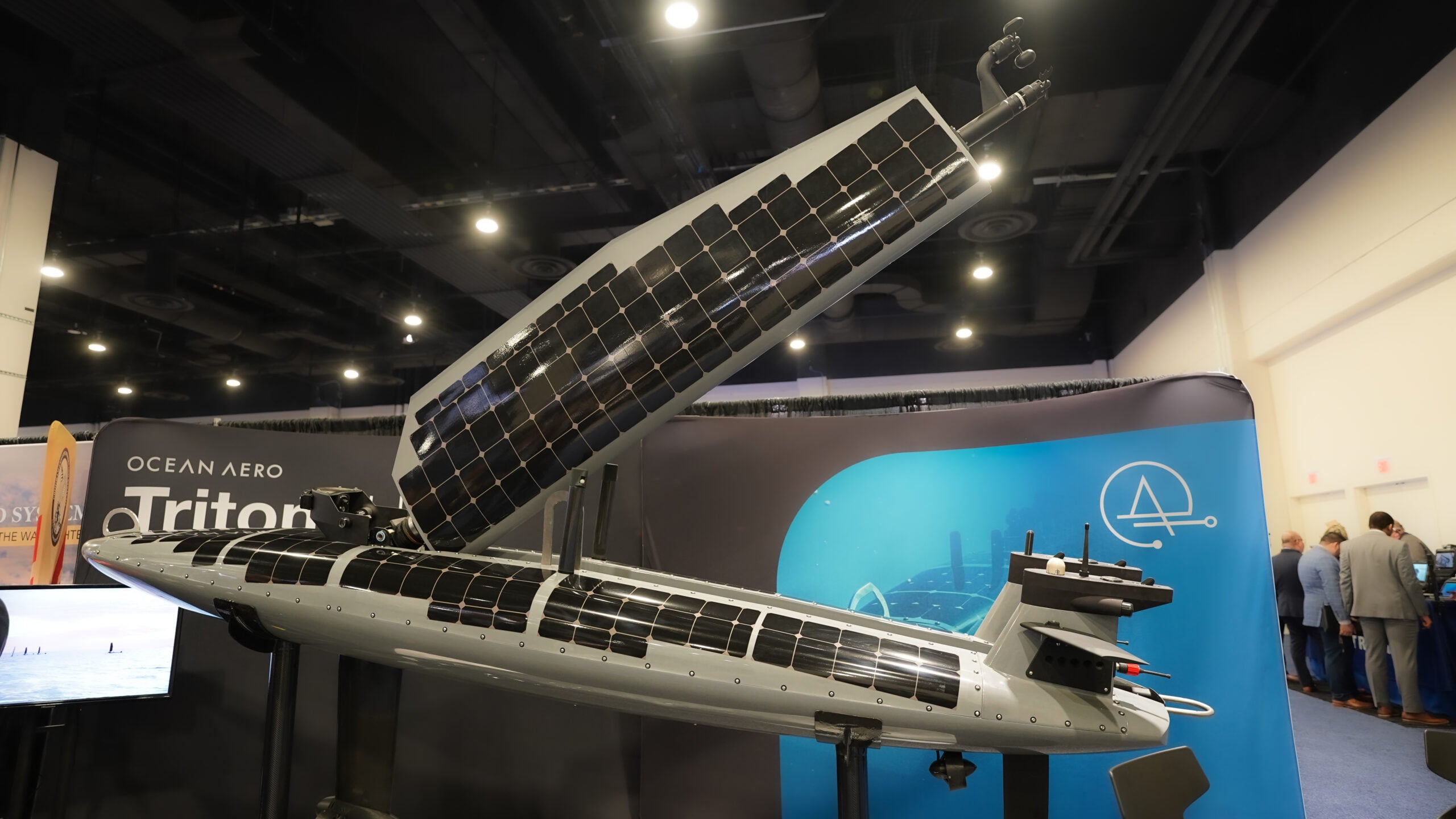
What the company says is a first of its kind fully solar unmanned submarine, Ocean Aeros "Triton" looks to allow longer duration surveys and other deep sea mission objectives. (Brendon Smith / Breaking Defense)
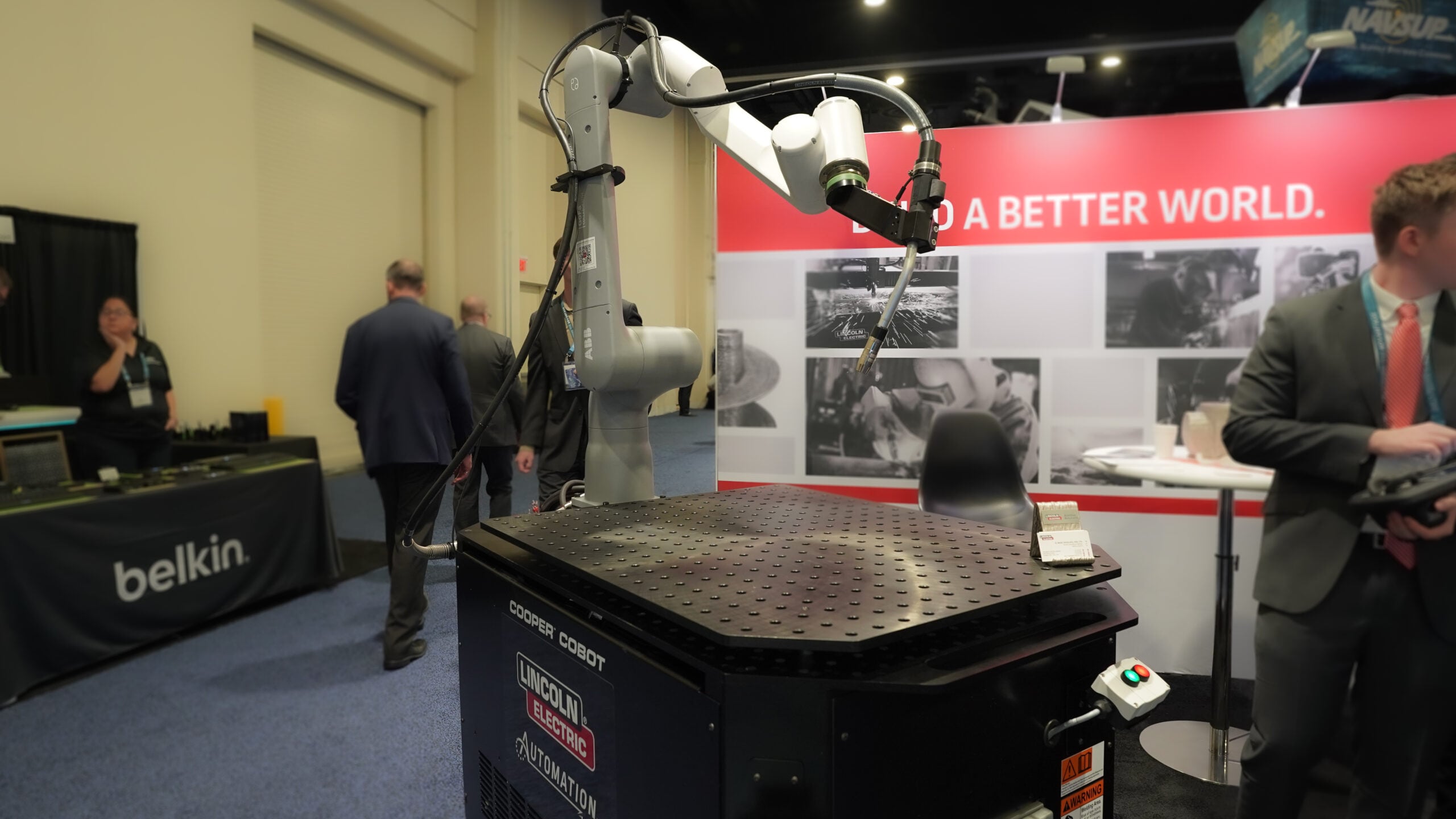
Lincoln electrics Cooper Cobot is meant to increase welding efficiency and accuracy. Acting as a productivity enhancing collaborator for its human counterparts. (Brendon Smith / Breaking Defense)
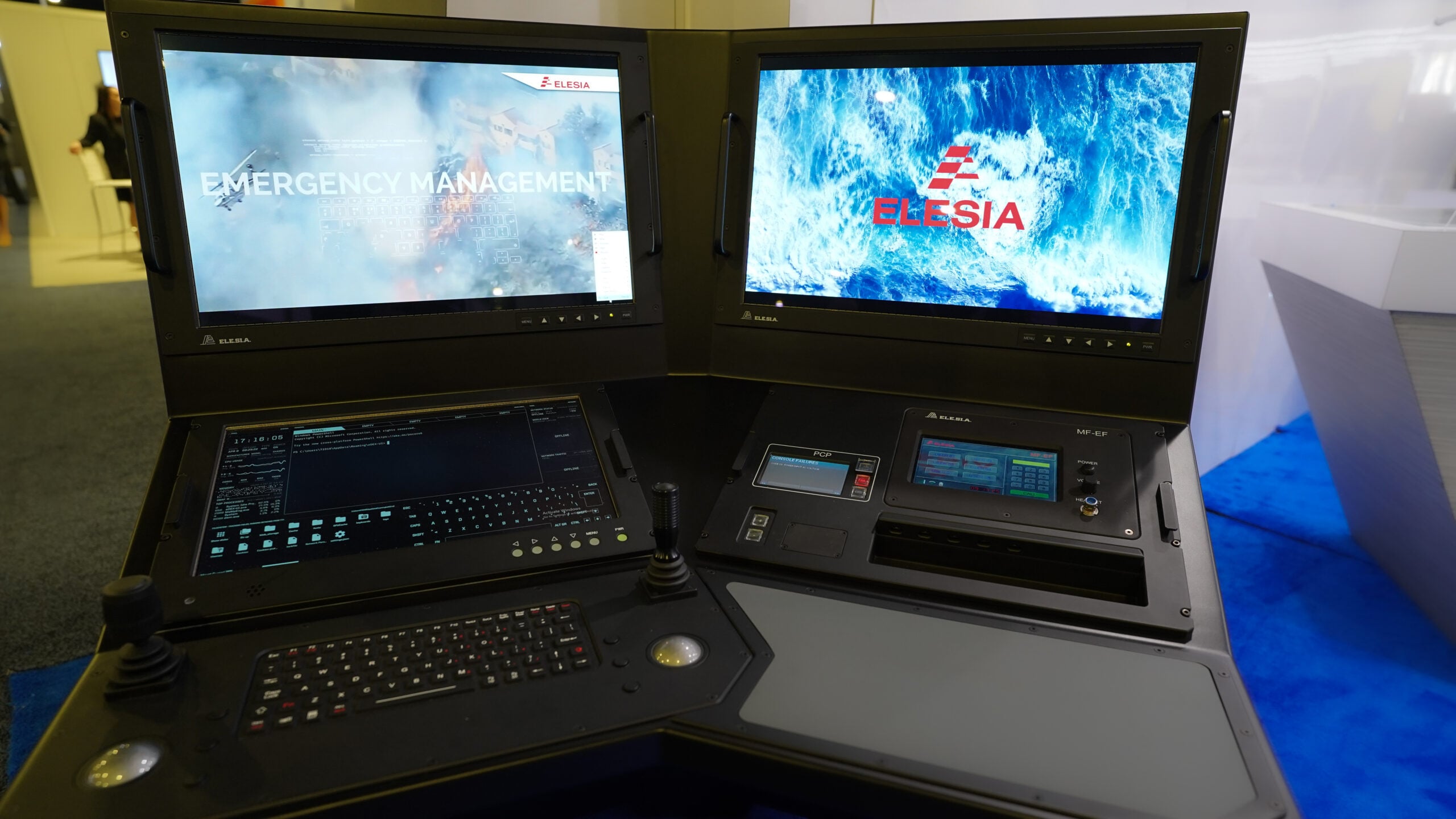
ELESIA's Single Operator MFC12 Console resists shock and vibrations on navy operations by "floating" within various shock absorbers. (Brendon Smith / Breaking Defense)
Attendees taking a break from the showroom floor to witness the solar eclipse Monday. (Brendon Smith / Breaking Defense)
A cartoonist at the Carahsoft Booth was drawing caricatures of various attendees throughout the show. (Brendon Smith / Breaking Defense)
The Arete PILLS is what the defense firm says is a "streak tube imaging lidar" system with high resolution cameras and a AIRTRAC laser enhancing pulse rate frequency. (Brendon Smith / Breaking Defense)
ANDURIL's Roadrunner-M missle interceptor is "built for ground-based air defense that can rapidly launch, identify, intercept, and destroy" various aerial threats. (Brendon Smith / Breaking Defense)