Air Warfare

Honeywell to demo new kinetic, soft-kill C-UAS for Air Force

“This system’s multi-layered defensive capabilities set it apart in the industry and enable it to not only track and detect, but also defeat multiple threats,” said Matt Milas.

Drone Incoming
The 11th Armored Cavalry Regiment and the Threat Systems Management Office operate a swarm of 40 drones to test the rotational units capabilities during the battle of Razish, National Training Center on May 8, 2019. (US Army/Pvt. James Newsome)

AFA 2024 — Early next year, the US Air Force will see a demo of a new Honeywell system that combines kinetic interceptors, directed energy and electronic warfare capabilities to protect high-value targets from swarms of inbound drones.

The company used this year’s Air & Space Forces Association conference outside of Washington, DC, to announce its Stationary and Mobile Unmanned Aerial System (UAS) Reveal and Intercept capability that cobbles together host technologies from other vendors.

“Modern warfare is rapidly changing, and the threat swarm drones pose to high-value assets can have a devastating effect on military operations,” Matt Milas, Honeywell Aerospace defense and space president, said in a press release. The scalable configuration, he added, is designed to be integrated onto vehicles, as well as fixed-based platforms to protect sensitive targets from incoming drones.

Although Honeywell did not disclose the technologies on the new system, key pieces of equipment are coming from Blue Halo, Leonardo DRS, Pierce Aerospace, Silent Sentinel, Walaris, Rocky Research and Versatol.

In a subsequent statement to Breaking Defense, a Honeywell spokesperson said the system marries up radar, electro-optical/infrared, and artificial intelligence detectors, and then knocks the drones down by either launching a kinetic interceptor, using a directed energy weapon or severing the radio contact back to the controller.

“This system’s multi-layered defensive capabilities set it apart in the industry and enable it to not only track and detect, but also defeat multiple threats,” Milas said in the press release.

The Air Force Global Strike team has now tasked Honeywell with demonstrating the system in January 2025, at which time the C-UAS system will be used to first detect an unspecified number of drones moving at a high speed before disabling them.

The growing role of drones on the battlefield inside Ukraine and in the Middle East has not only pushed the US military to ramp up its hunt for new capabilities, but also systems to defeat them. Part of that focus has revolved around existing kinetic options like Stinger missiles, while also testing out new directed energy ones like high-energy laser and high-powered microwaves that may one day drive provide a cheaper per unit kill option.

PHOTOS: AFA 2024

PHOTOS: AFA 2024

The Israeli firm Rafael came to AFA 2024, here displaying its ice Breaker "5th-gen long-range autonomous precision strike weapon system." (Brendon Smith / Breaking Defense)
Elta, a subsidiary of Israeli firm IAI, displayed the ELL-8222SB, an airborne electronic jamming pod, at AFA 2024. (Brendon Smith / Breaking Defense)
Air, Space & Cyber Conference. Keynote Address: One Air Force. Gen. David W. Allvin, Chief of Staff of the Air Force. September 16, 2024. (Mike Tsukamoto/ Air & Space Forces Magazine)
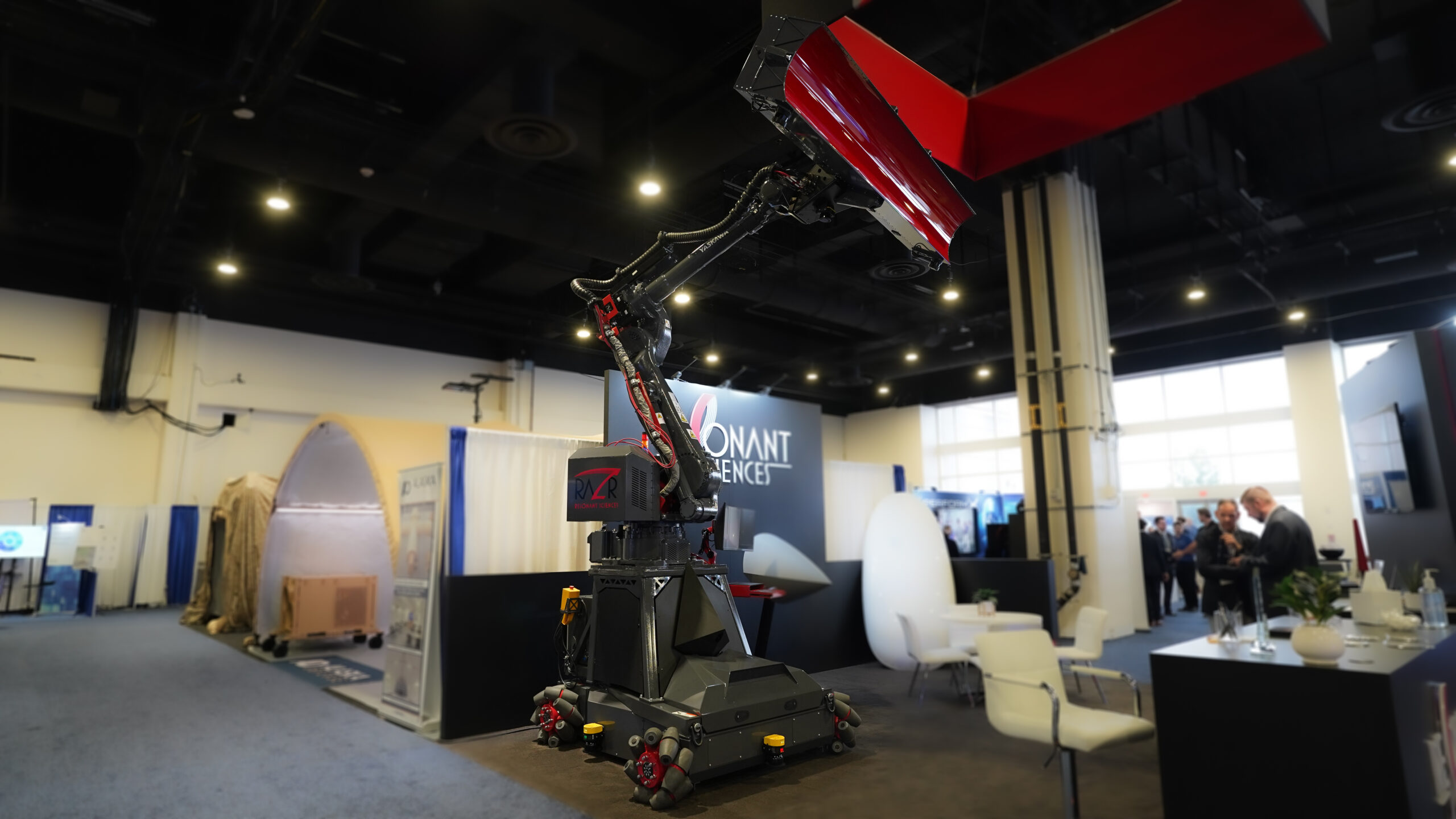
This curious contraption at one end of the AFA 2024 hall is Resonant Sciences's RAZR, a "high performing, fieldable, robotic system for close-range multi-spectral measurments of aircraft and aircraft components such as radomes, surfaces and edges," the company says. (Brendon Smith / Breaking Defense)
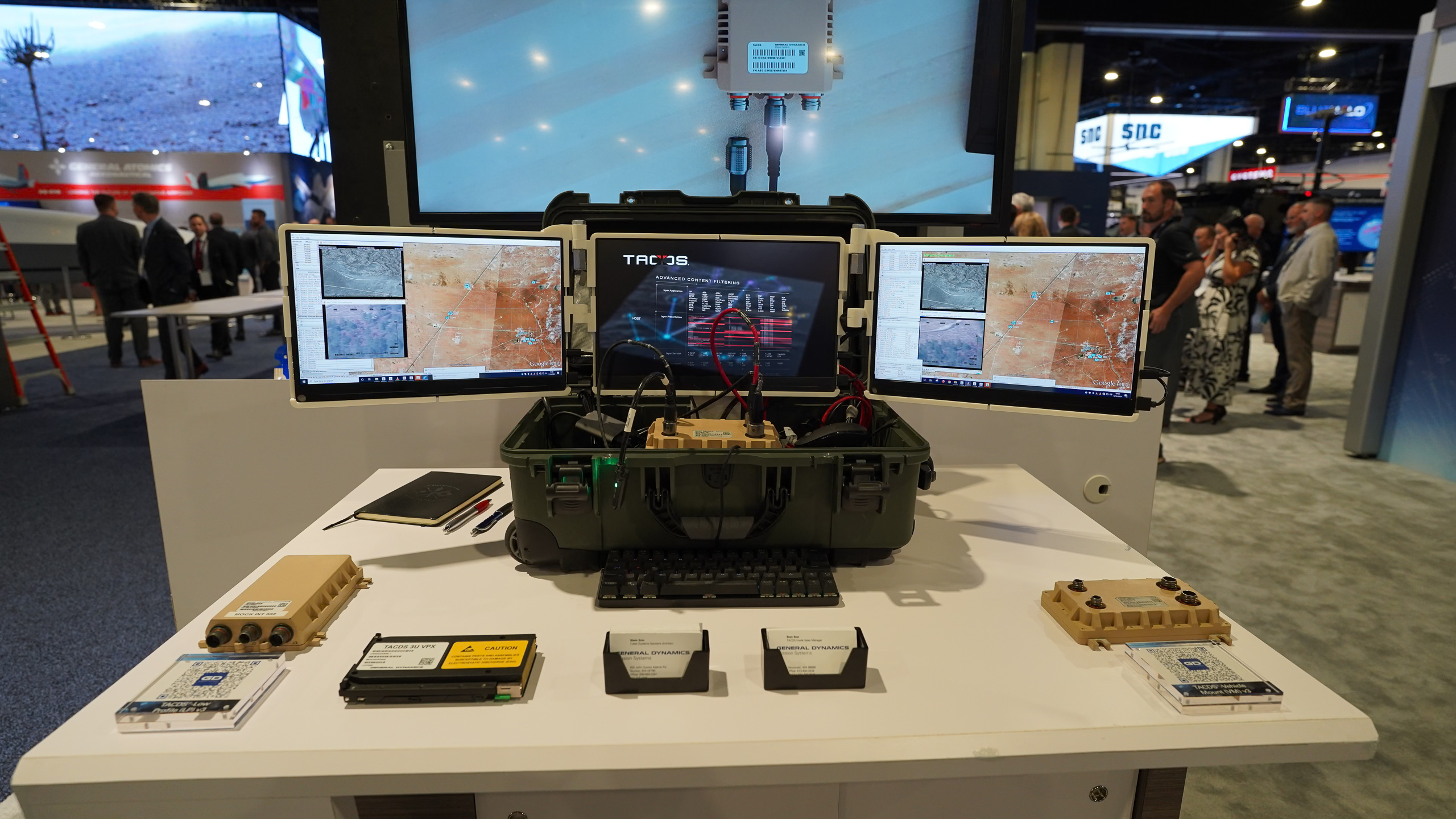
General Dynamic, a company that makes some seriously large platforms, comes the suitcase-sized Tactical Cross Domain Solutions system, or TACDS, on display at AFA 2024. (Brendon Smith / Breaking Defense)
Intellisense Systems' offerings at AFA 2024 included the LAD-2008 cockpit display system, as a virtual pilot banked left. (Brendon Smith / Breaking Defense)
General Electric went chromed out with its display of an F110 Turbofan engine at AFA 2024. (Brendon Smith / Breaking Defense)
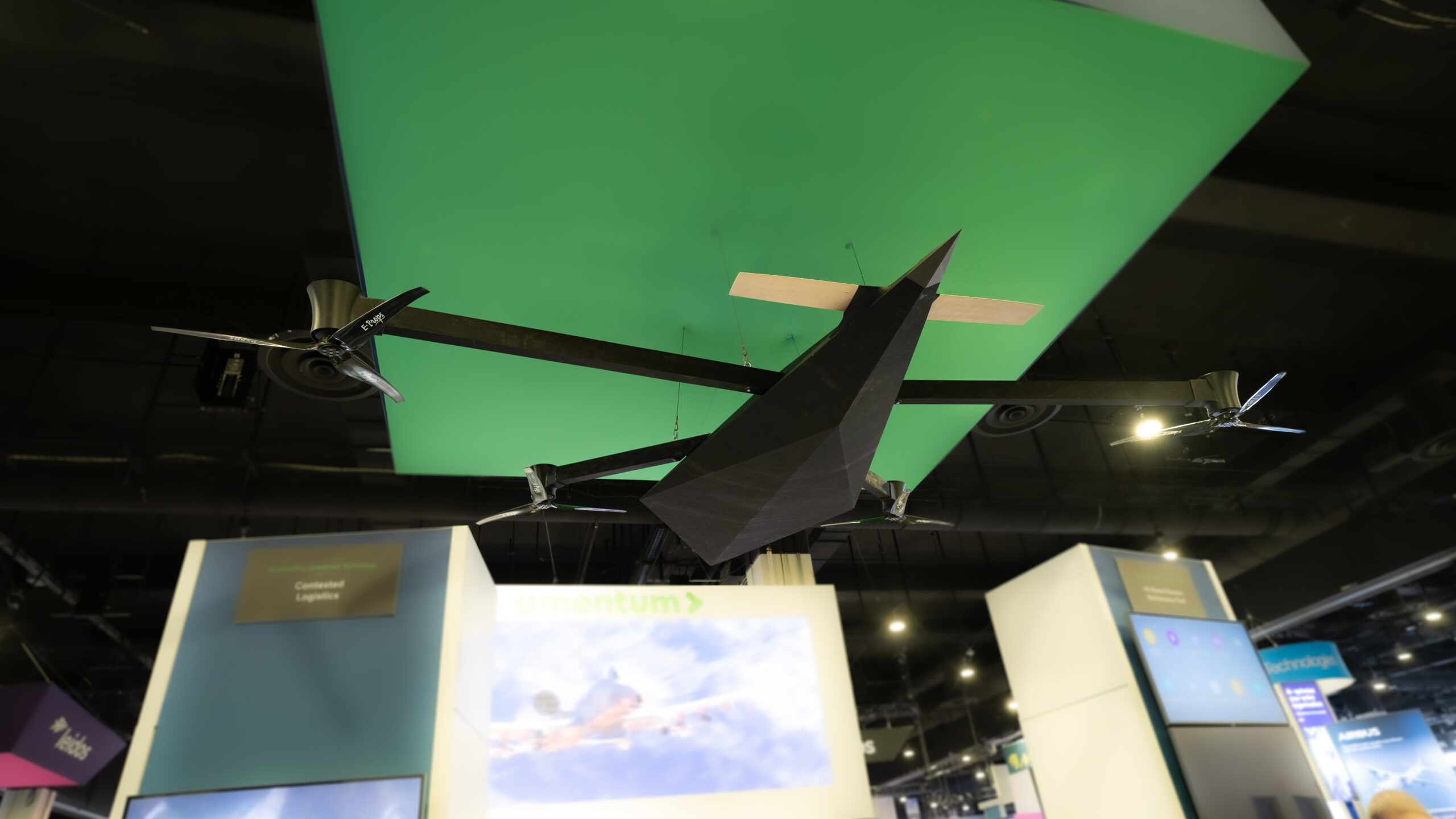
Looking especially sharp, Amentum's MULE UAV hung above visitors' heads at AFA 2024. (Brendon Smith / Breaking Defense)
iPerformX invited attendees at AFA 2024 to sit in its F-35 simulator to get a feel for the next-gen stealth fighter. (Brendon Smith / Breaking Defense)
A patch is shown on an airman's uniform for the service's ABMS effort. (Aaron Mehta/Breaking Defense)
Honeywell offers an x-ray view of its F124 engine at AFA 2024. (Brendon Smith / Breaking Defense)
A Ghost Robotics Vision 60 Q-UGV stands on all fours at the ready at AFA 2024. (Brendon Smith / Breaking Defense)
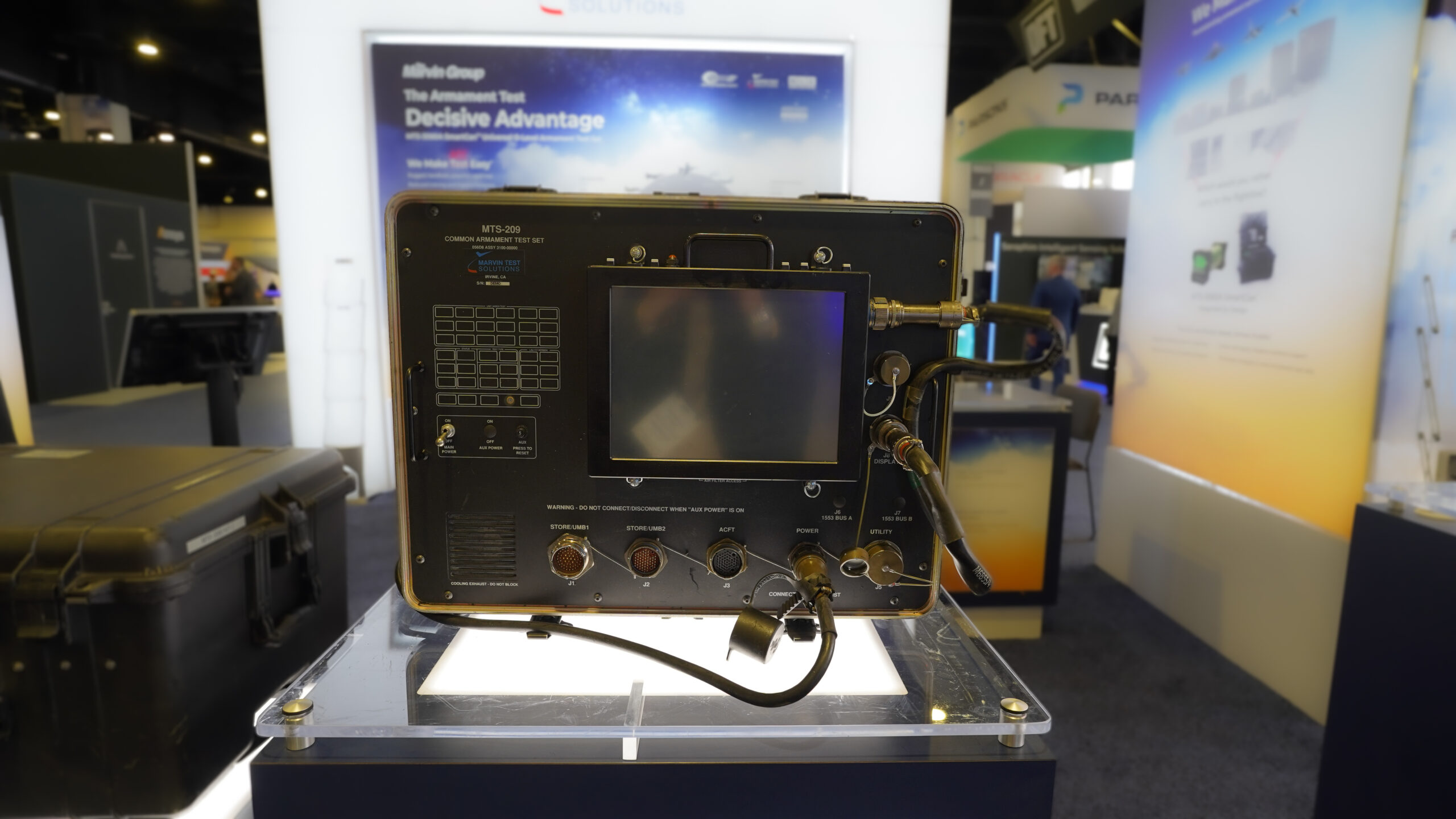
Marvin Group displays what it calls a common armament test set, or MTS-209, at AFA 2024. (Brendon Smith / Breaking Defense)
At AFA 2024, Verdego Aero showed off its VH-3-185 Hybrid Electric Aircraft Powerplant. (Brendon Smith / Breaking Defense)
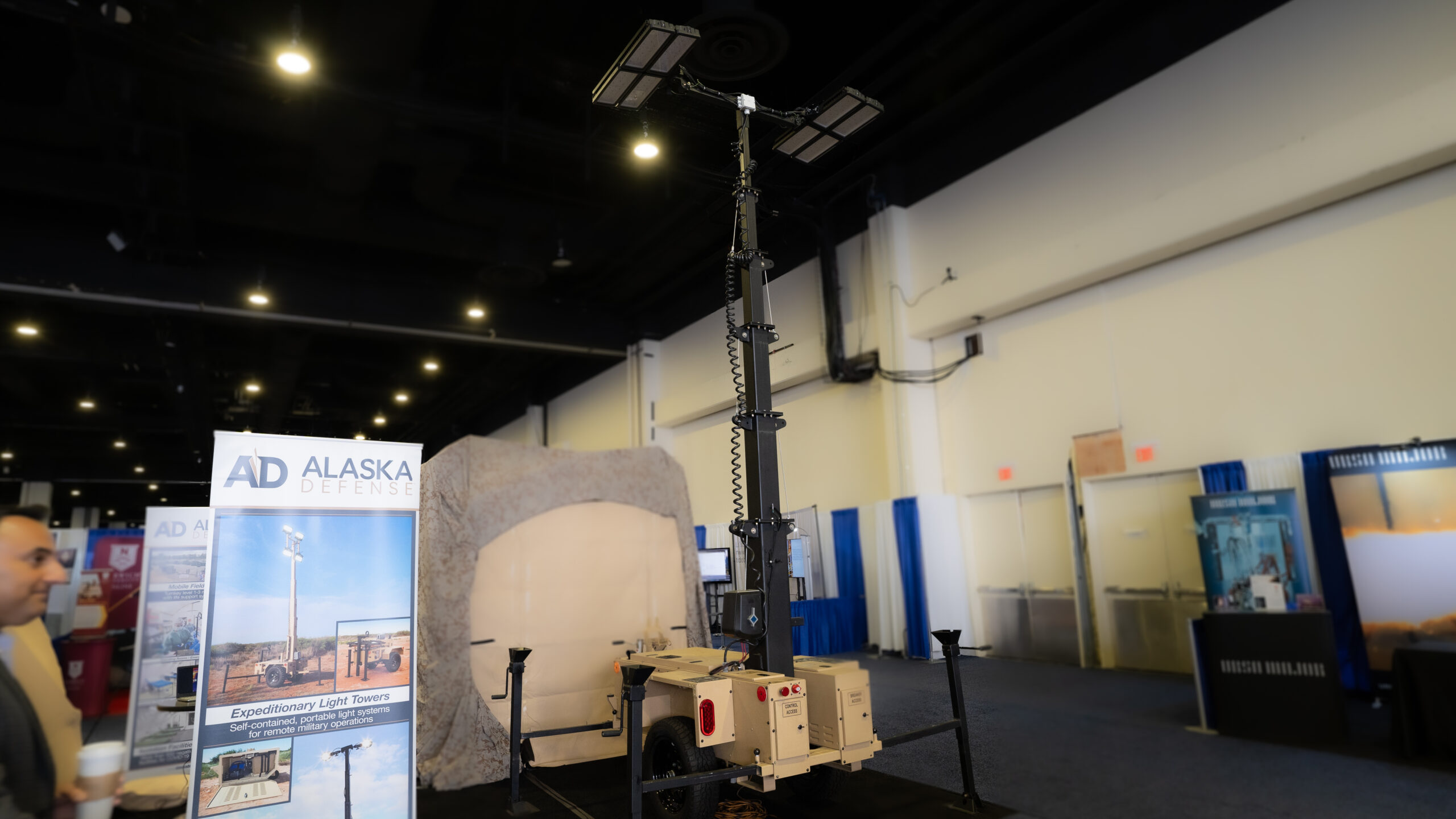
Alaska Defense extends a mobile lighting platform at AFA 2024. (Brendon Smith / Breaking Defense)
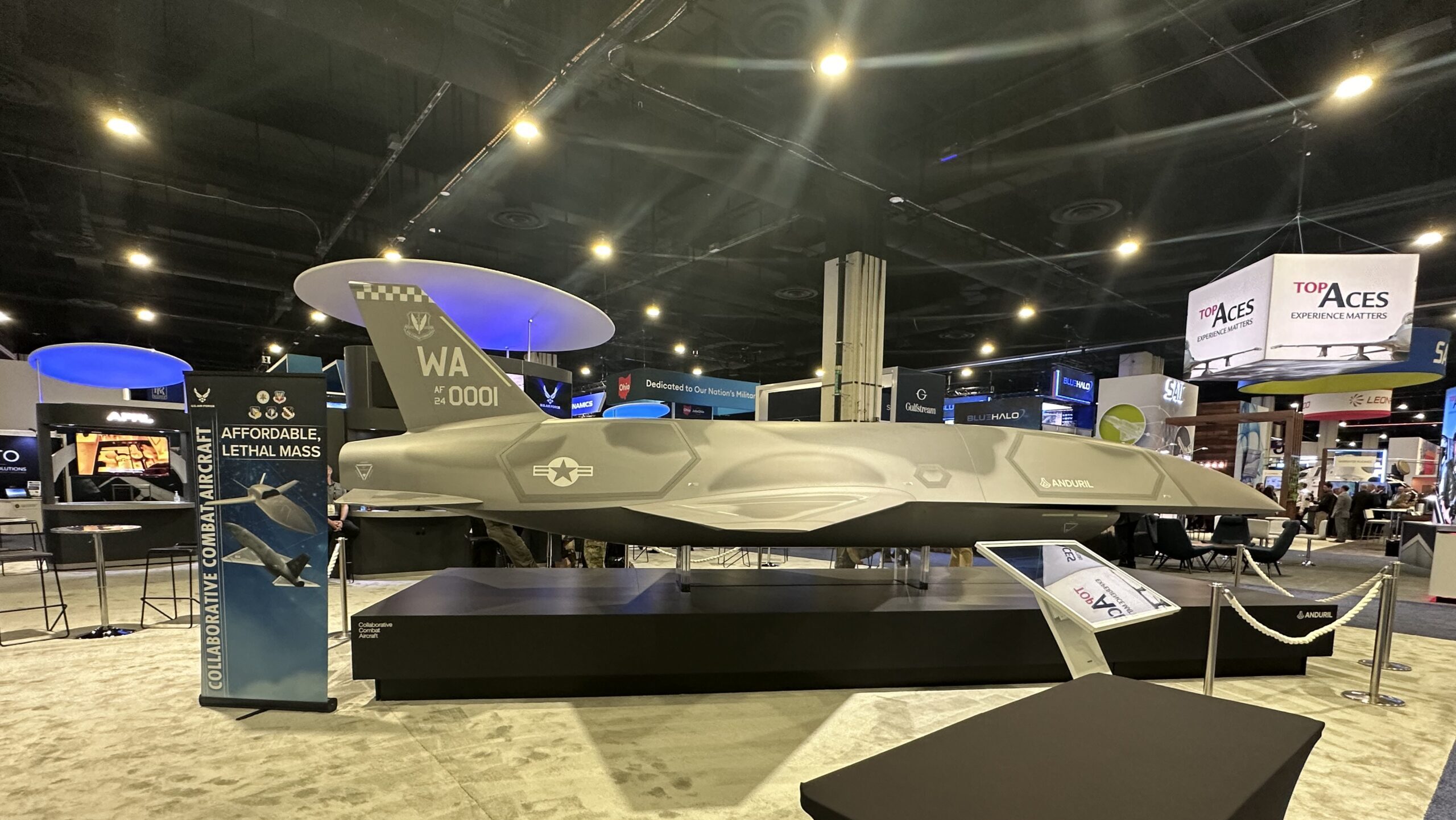
Anduril's Collaborative Combat Aircraft (CCA) on display at AFA. (Valerie Insinna/Breaking Defense)
General Atomics Aeronautical Systems, Inc's CCA on display at AFA 2024 (Valerie Insinna/Breaking Defense)
GA-ASI's XQ-67A OBSS on display at AFA 2024 (Valerie Insinna/Breaking Defense)
A couple aerial platforms from Europe's MBDA on dsiplay at AFA 2024. (Brendon Smith / Breaking Defense)
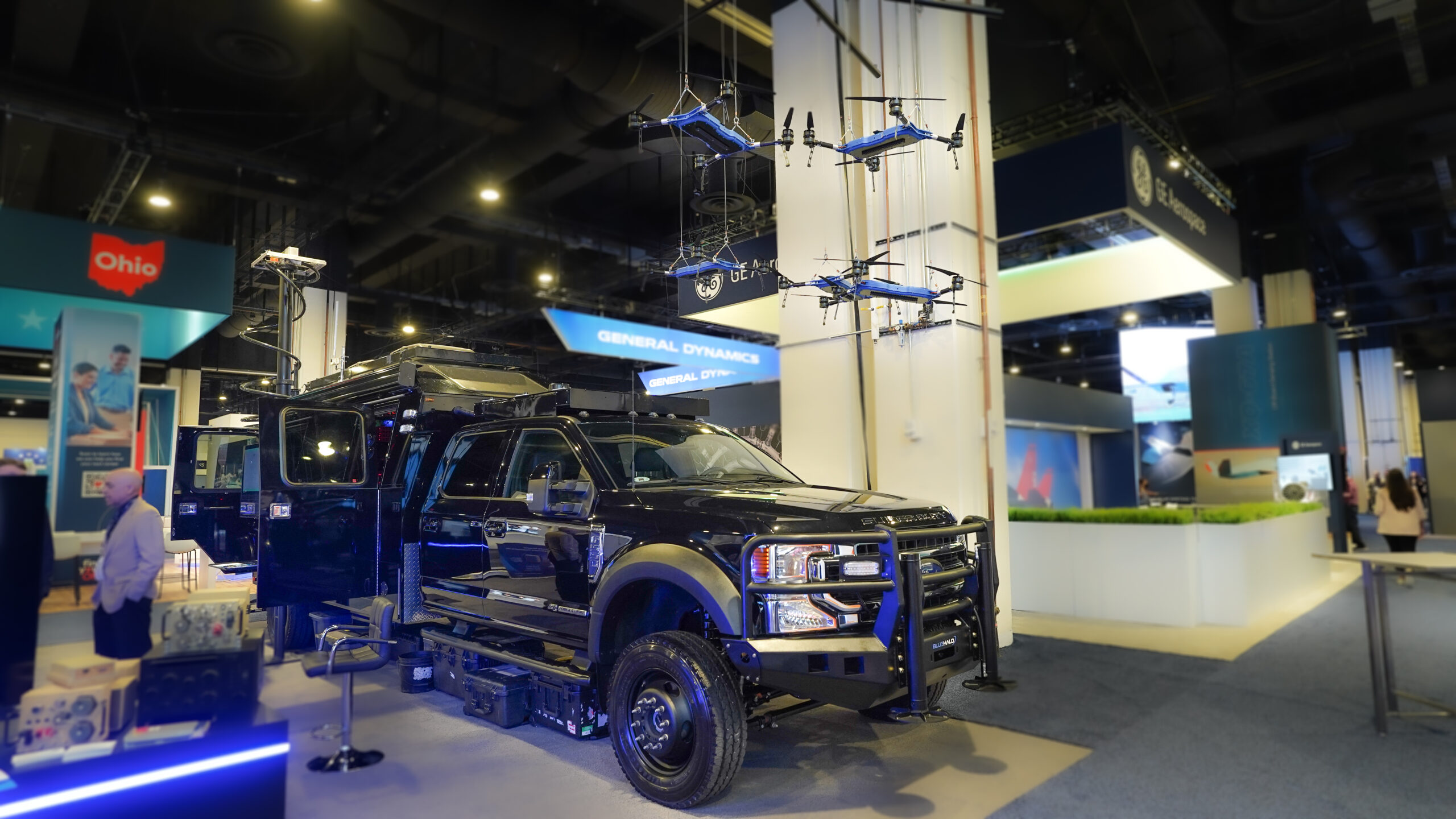
Blue Halo shows off a family of quadcopters to be used on mobile missions with its truck-based command post at AFA 2024. (Brendon Smith / Breaking Defense)
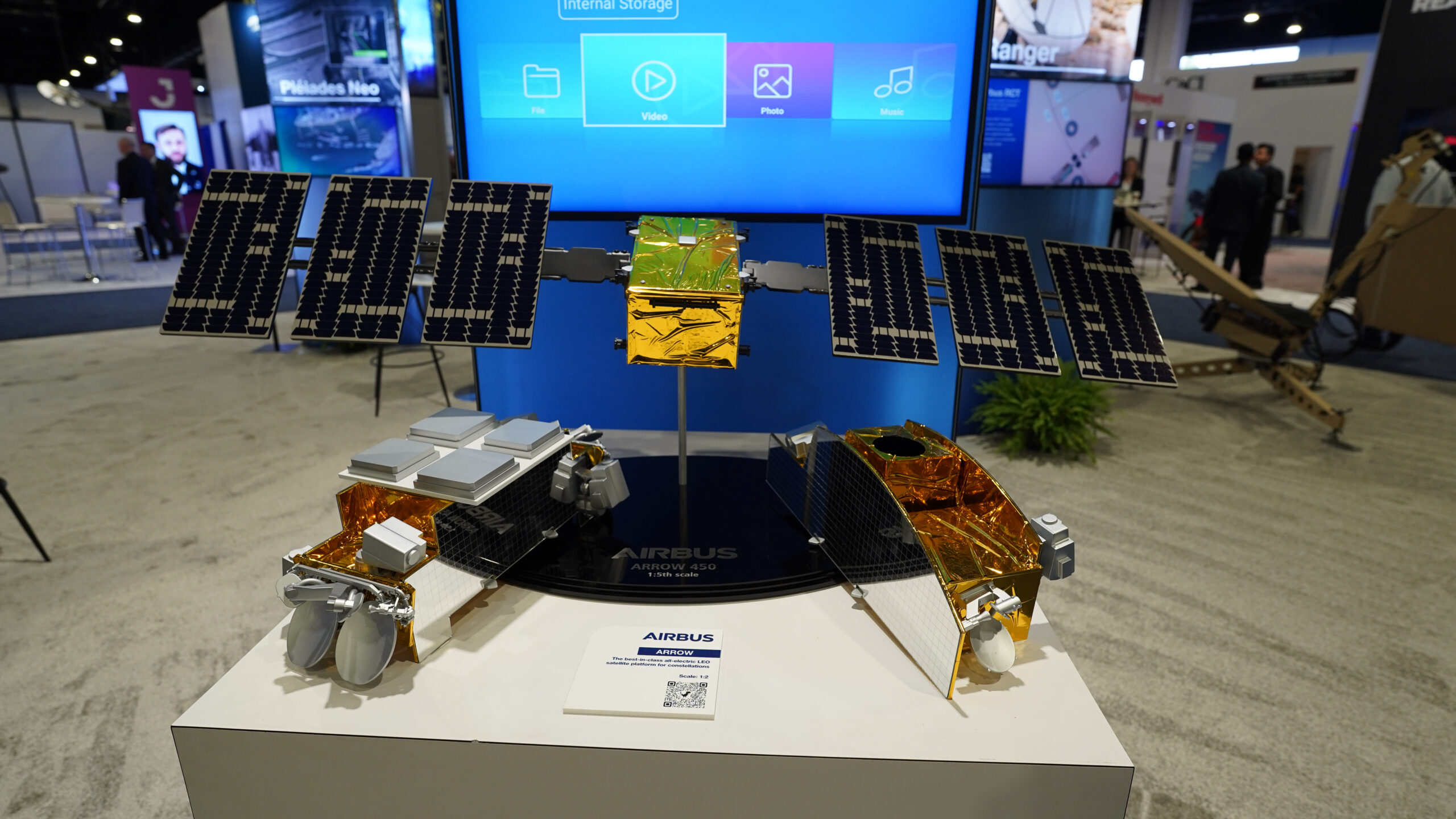
A model of Airbus's Arrow satellite playload at AFA 2024. (Brendon Smith / Breaking Defense)
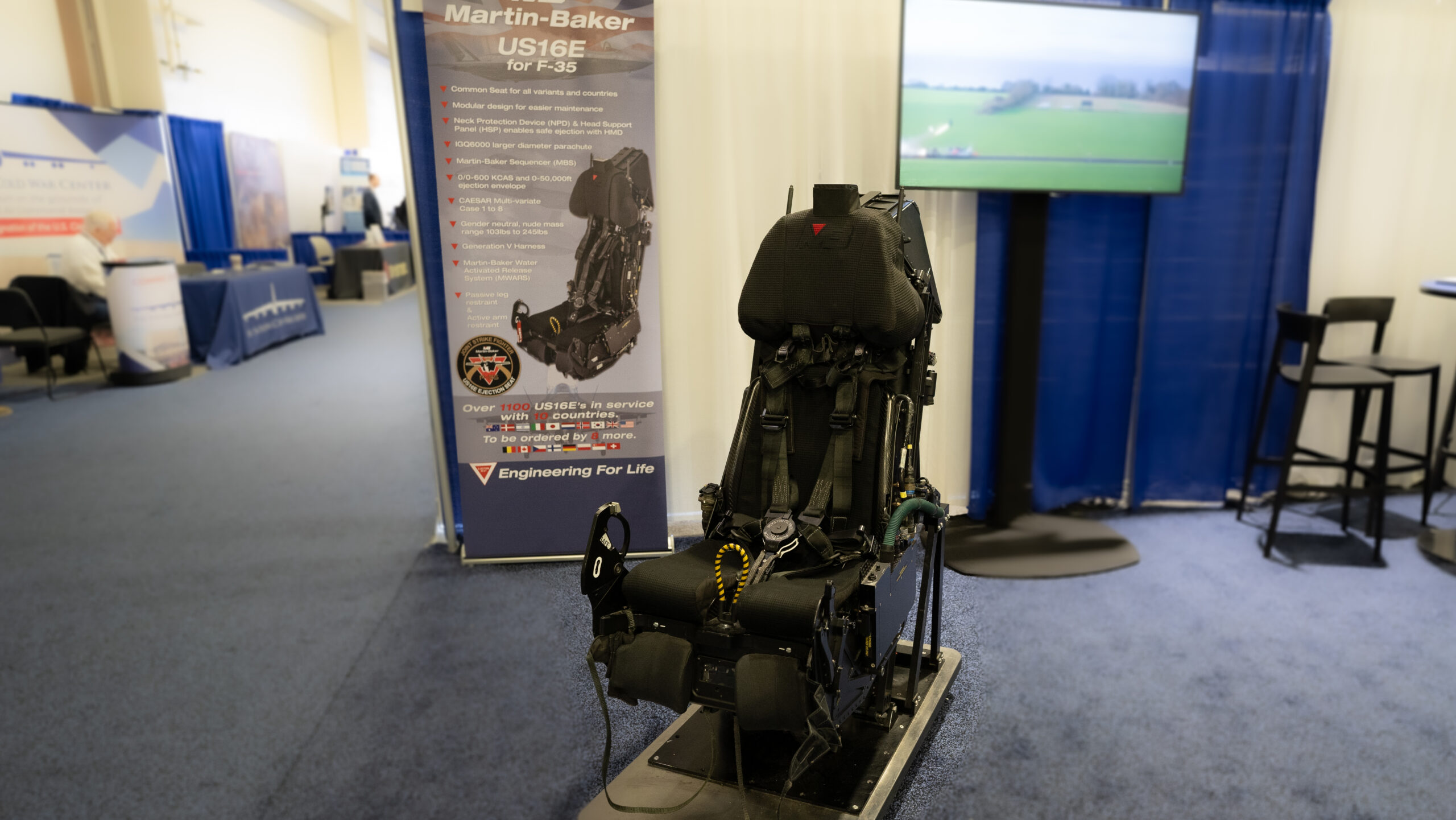
A seat for getting out of Dodge, Martin-Baker's F-35 ejection seat is shown at AFA 2024. (Brendon Smith / Breaking Defense)
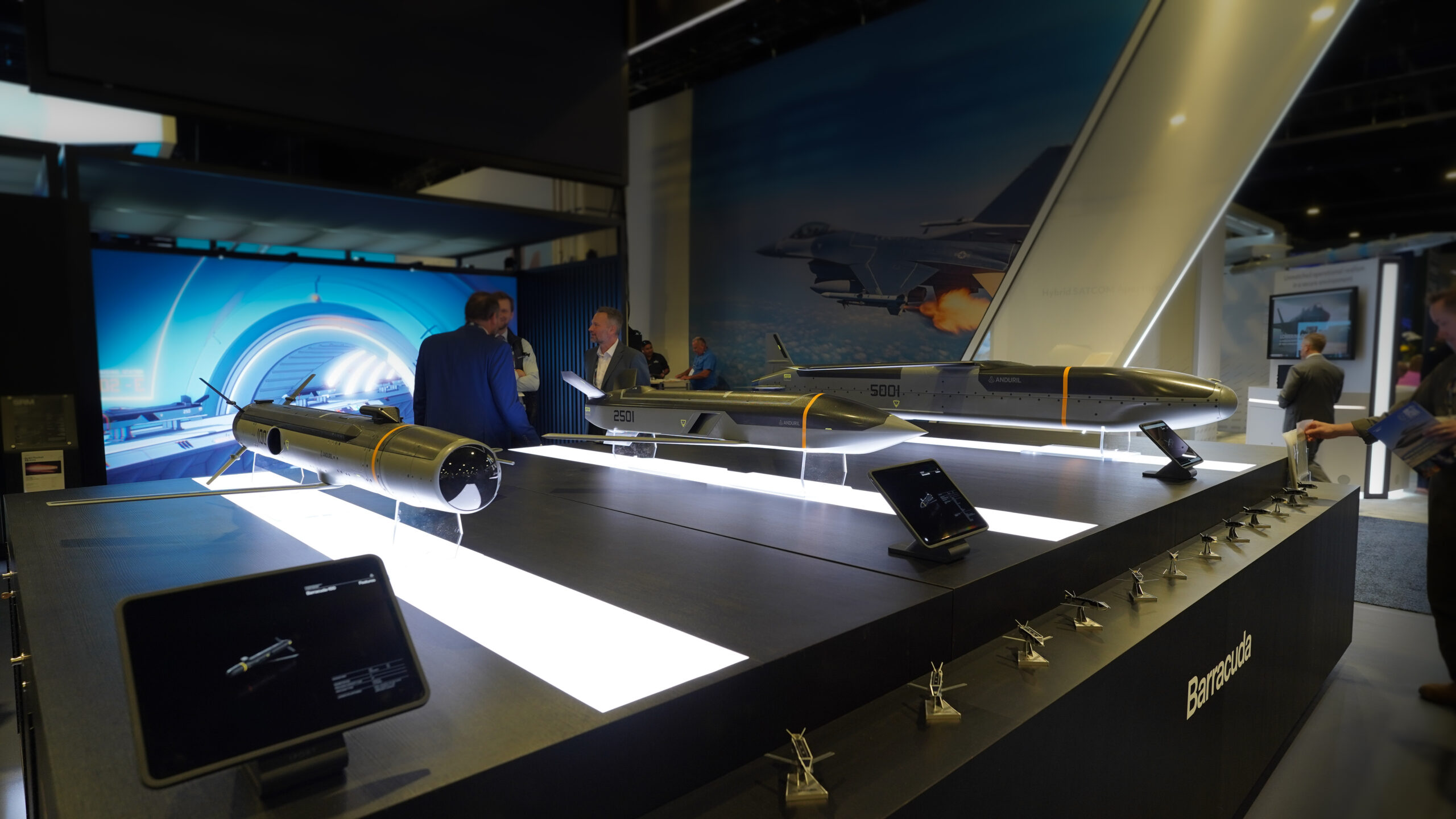
Anduril's Barracuda family of munitions at the company's stand at AFA 2024. (Brendon Smith / Breaking Defense)