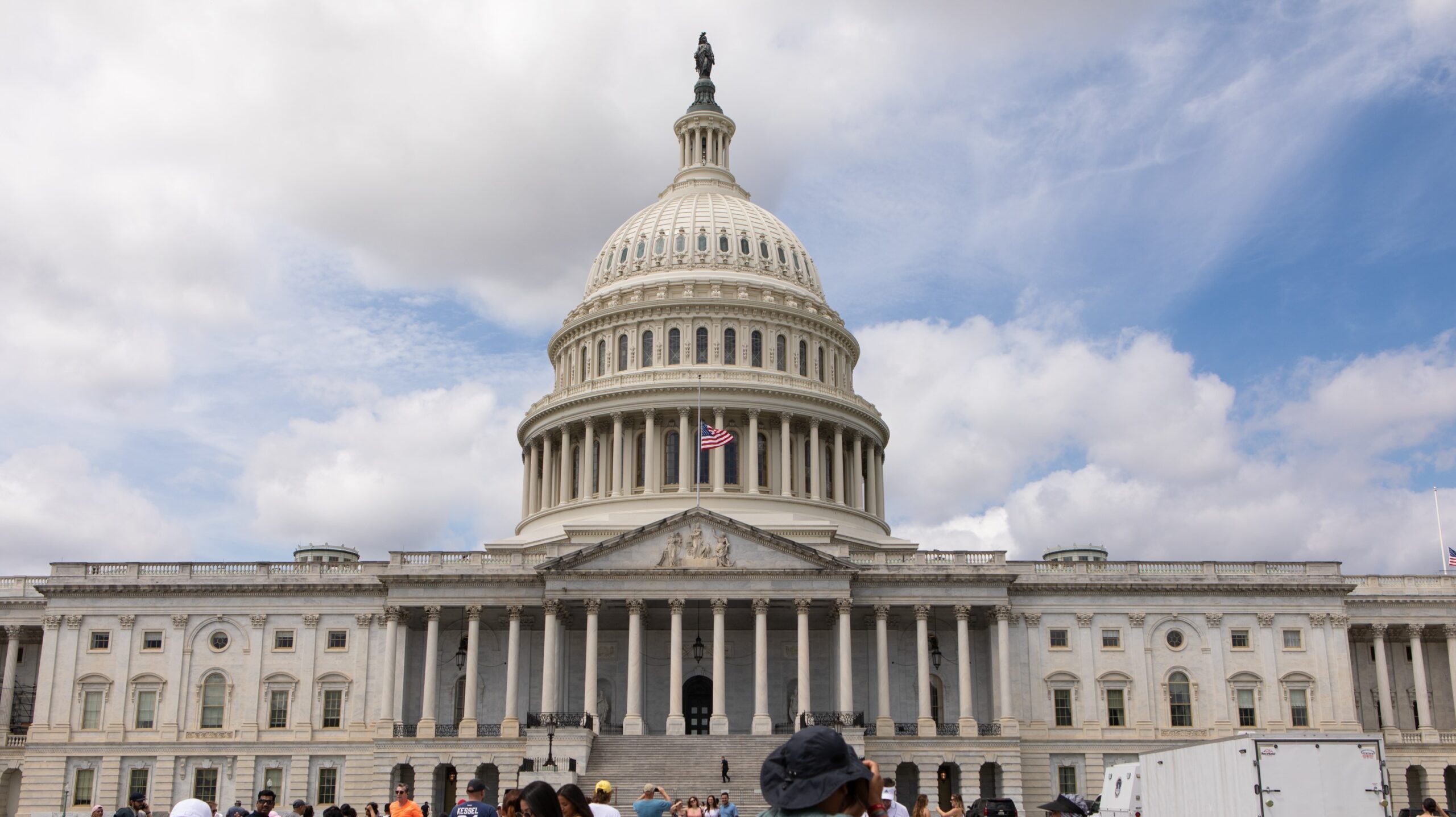
WASHINGTON — The House and Senate today passed a stopgap bill to carry federal funding into December, moving the measure at a breakneck speed to avert a government shutdown – and allowing lawmakers to return to their home states for one last month of campaigning before the presidential election.
The continuing resolution (CR) now makes its way to the White House, which on Tuesday issued a statement calling for “swift passage” of the measure and indicated that President Joe Biden will sign off on the bill well in advance of the Sept. 30 deadline.
To get the bill through both chambers before deadline, lawmakers agreed on a bare-bones CR with few “anomalies,” or additional funds needed to tackle near-term budget concerns. For instance, the bill does not include an additional $2 billion sought by the White House for Virginia-class submarine construction or the extension of Presidential Drawdown Authority to provide military aid to Ukraine.
The House passed the bill in a 341-82 vote, with Republicans making up the only “nay” votes. About two hours later, the Senate approved it in a 78-18 vote.
With funding now set to run until Dec. 20, the stage is set for yet another Congressional debate over the nation’s budget before the year ends and a new administration takes over the White House.
Out of the last three presidential election years – 2020, 2016 and 2012 – Congress was only able to pass full year appropriations before the end of the calendar year once, in 2020, the Center for Strategic and International Studies stated.
Getting the budget done quickly carries even higher stakes after the election this year. “Delaying the passage of FY 2025 appropriations into the new year risks linking them with other fiscal issues” like the debt ceiling, CSIS said. And if appropriations bills have not been signed into law by April 30, the Defense Department and other federal agencies will be subject to across-the-board sequestration cuts due to the terms of the Fiscal Responsibility Act.
“Like most, my preference would be to pass full-year appropriations bills through regular order, but we are out of time,” House Appropriations Committee Chairman Rep. Tom Cole said in a speech on the floor ahead of the vote. “We cannot afford a shutdown, which would be greatly damaging to our national security, to critical government programs and to the American people.”
Rep. Rosa DeLauro, the committee’s top Democrat, said that while funding the government through a CR was not an ideal solution, the bare-bones CR is a “responsible and sober measure” that avoids the problems that would have been prompted by a longer, six-month bill.
House Speaker Mike Johnson originally sought to push through a six-month version of the CR, which included additional money for submarines — as well as the SAVE Act, a conservative voter ID bill that Democrats said was a nonstarter. The move was criticized by defense hawks who contended that the CR should be kept to calendar year 2024 to minimize impact on national security priorities, with House Armed Services Committee chairman Mike Rogers, R-Ala., joining roughly a dozen other Republicans to defeat the bill in the House last week.
On Sunday, Johnson put forward a much more minimalist, three-month CR without the SAVE Act attached, garnering praise from House Minority Leader Hakeem Jeffries and Senate Majority Leader Chuck Schumer, who signaled that Democrats would approve the bill.
On Monday, House Majority Leader Steve Scalise said that the CR would bypass the House Rules Committee and go directly to the floor under a “suspension of the rules” that mandates a two-thirds majority for passage.
A day later, Schumer said the Senate would bring the bill to the floor without amendments for a vote directly after House approval on Wednesday.
In her own speech on the Senate floor this evening, Senate Appropriations Committee Chairwoman Patty Murray criticized the process in the House, stating that “it is getting a little exhausting to watch some House Republicans push again and again for the most extreme, partisan cuts and policies” before having to come back to the negotiating table and settle for a more bipartisan deal.
Defense Department and military leaders have warned that a long term continuing resolution — particularly a six-month bill — could delay key modernization efforts, including planned increases to munitions production, the B-21 bomber program and the Columbia-class submarine.
UPDATED 9/25/24 at 6:37 pm ET with results of Senate vote.