Air Warfare

Lockheed announces new ‘extreme range’ version of JASSM cruise missile

Lockheed is putting its own funds toward early development work on the missile, which could “significantly” expand the missile’s reach past the JASSM and the Long-Range Anti-Ship Missile variants currently being produced for the Air Force and Navy, said Michael Rothstein, Lockheed’s vice president of air weapons and sensors.

IMG_1718
A model of Lockheed Martin’s AGM-158 XR. (Valerie Insinna/Breaking Defense)

WASHINGTON — A new “extreme range” prototype of Lockheed Martin’s AGM-158 Joint Air-to-Surface Standoff Missile could be ready for flight testing in one or two years, a company official said today.

The Pentagon has not committed to buying the new weapon, known as AGM-158 XR, said Michael Rothstein, Lockheed’s vice president of air weapons and sensors. However, Lockheed is putting its own funds toward early development work on the missile, which he said could “significantly” expand the missile’s reach past the JASSM and the Long-Range Anti-Ship Missile (LRASM) variants currently being produced for the Air Force and Navy.

“I can’t give you any numbers at this point from a classification perspective” on the range of the weapon, Rothstein said. “It’s not minor. It’s not on the edge.”

Lockheed envisions the XR variant as the natural follow-up to the JASSM-D and LRASM-C3 currently in development for the Air Force and Navy. The most visible difference between AGM-158 XR and previous variants is its stretched design, but Rothstein noted that there are other “smart” modifications internal to the missile to increase modularity.

The most obvious benefit of the AGM-158 XR’s longer range is that it keeps the pilot further away from a threat. And because operators won’t have to drive in close to a target in order to strike it, it also cuts down the distance it takes for a combat aircraft to refuel and rearm — saving fuel and allowing it to conduct additional strikes over a given time period, Rothstein said.

The larger, heavier size of AGM-158 XR means that it cannot be carried by the F-16 and that other aircraft like the F-35 or F-15 that could use it will not be able to fly as far, Rothstein said. But in the latter case, that impact is negated by the longer range of the weapon itself.

The AGM-158 XR is still “several years out” from being ready for fielding, Rothstein said, adding that the timing would also depend on the services’ own budget priorities.

Looking at “the operational benefits, I think the war fighters go, ‘It makes perfect sense.’ And then leveraging, rather than a new weapon, leveraging a hot production line [and] mature supply chain, all that makes sense, too,” Rothstein said. “So the initial feedback we think is positive.”

PHOTOS: AFA 2024

PHOTOS: AFA 2024

The Israeli firm Rafael came to AFA 2024, here displaying its ice Breaker "5th-gen long-range autonomous precision strike weapon system." (Brendon Smith / Breaking Defense)
Elta, a subsidiary of Israeli firm IAI, displayed the ELL-8222SB, an airborne electronic jamming pod, at AFA 2024. (Brendon Smith / Breaking Defense)
Air, Space & Cyber Conference. Keynote Address: One Air Force. Gen. David W. Allvin, Chief of Staff of the Air Force. September 16, 2024. (Mike Tsukamoto/ Air & Space Forces Magazine)
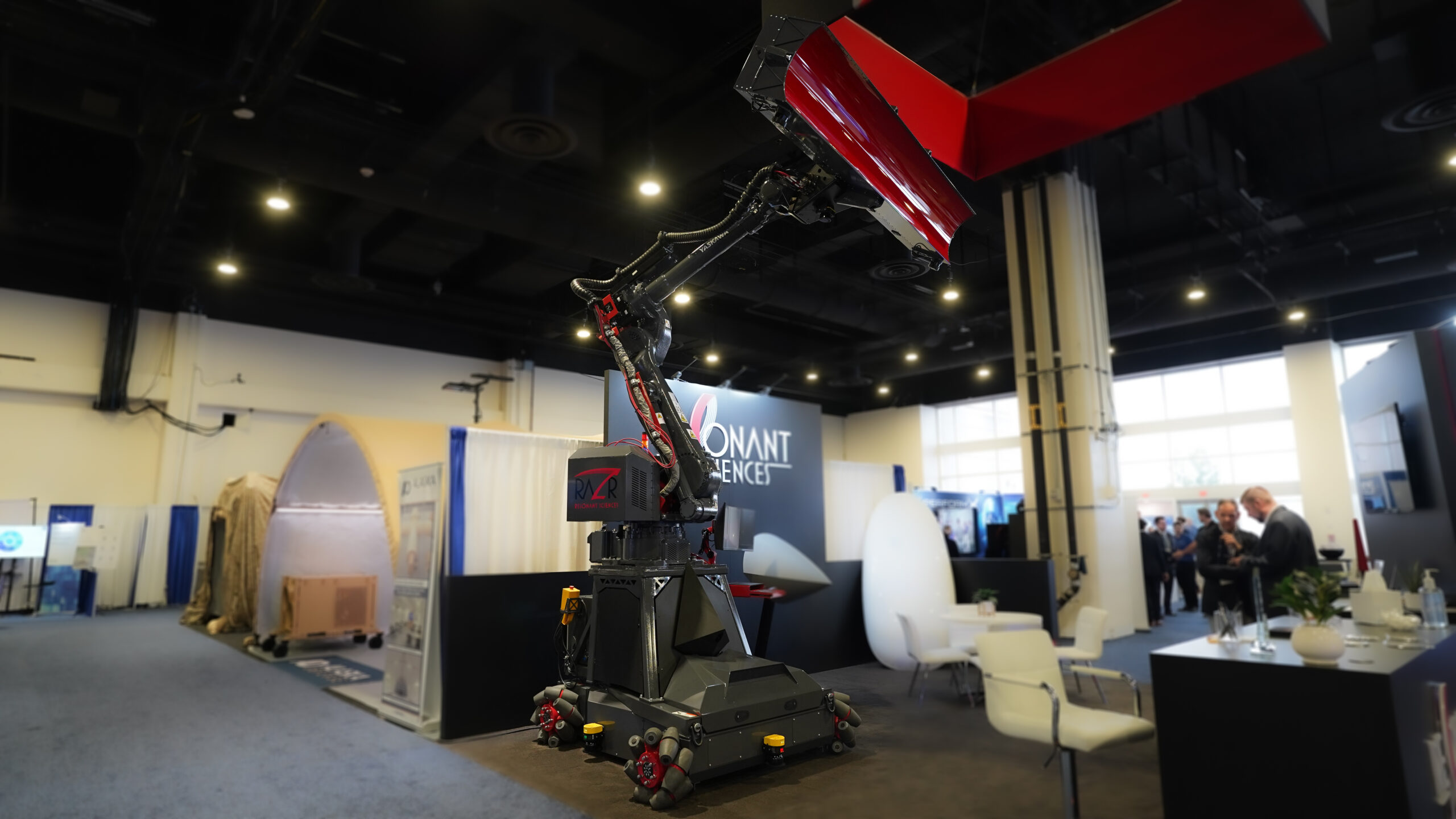
This curious contraption at one end of the AFA 2024 hall is Resonant Sciences's RAZR, a "high performing, fieldable, robotic system for close-range multi-spectral measurments of aircraft and aircraft components such as radomes, surfaces and edges," the company says. (Brendon Smith / Breaking Defense)
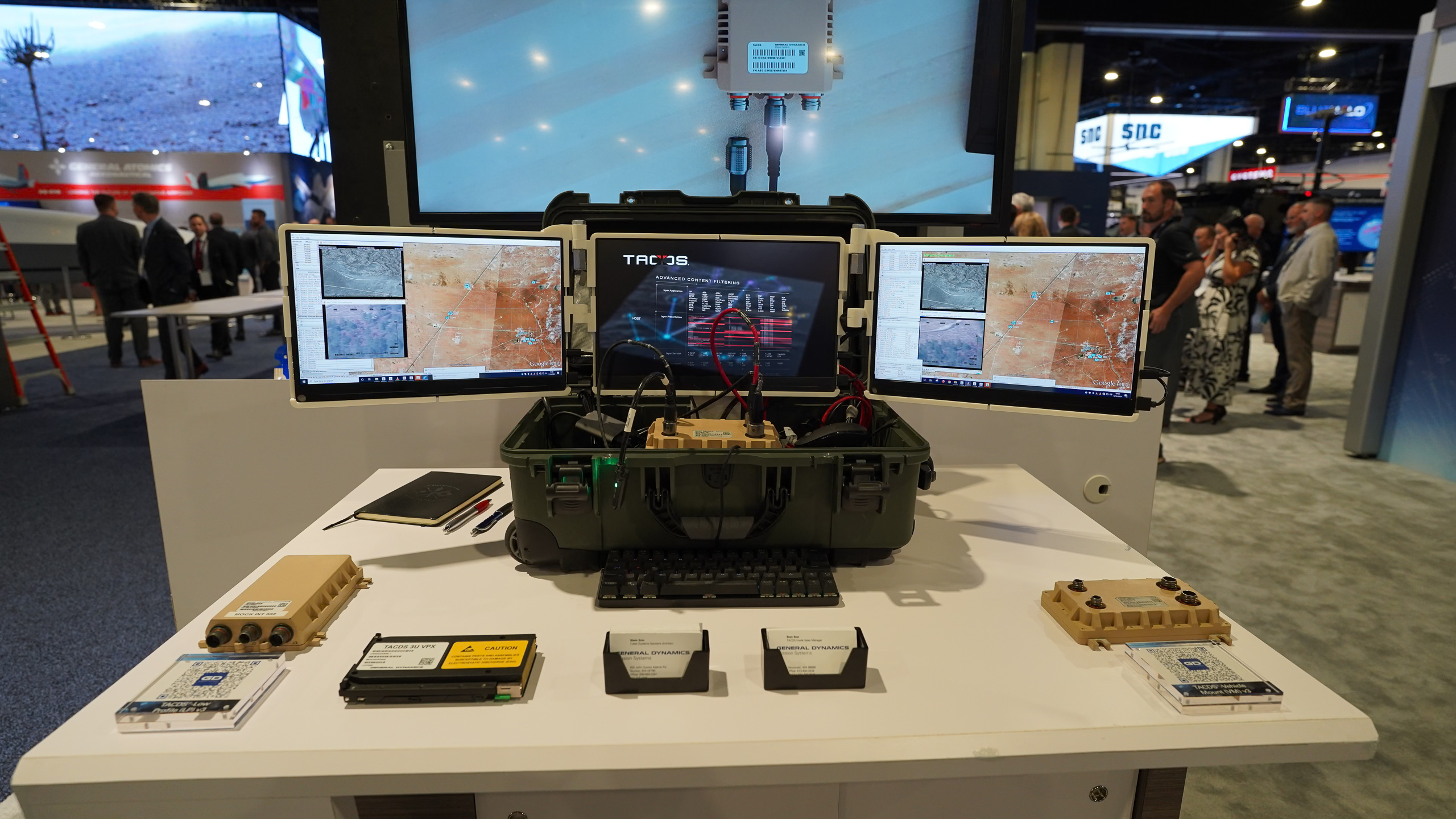
General Dynamic, a company that makes some seriously large platforms, comes the suitcase-sized Tactical Cross Domain Solutions system, or TACDS, on display at AFA 2024. (Brendon Smith / Breaking Defense)
Intellisense Systems' offerings at AFA 2024 included the LAD-2008 cockpit display system, as a virtual pilot banked left. (Brendon Smith / Breaking Defense)
General Electric went chromed out with its display of an F110 Turbofan engine at AFA 2024. (Brendon Smith / Breaking Defense)
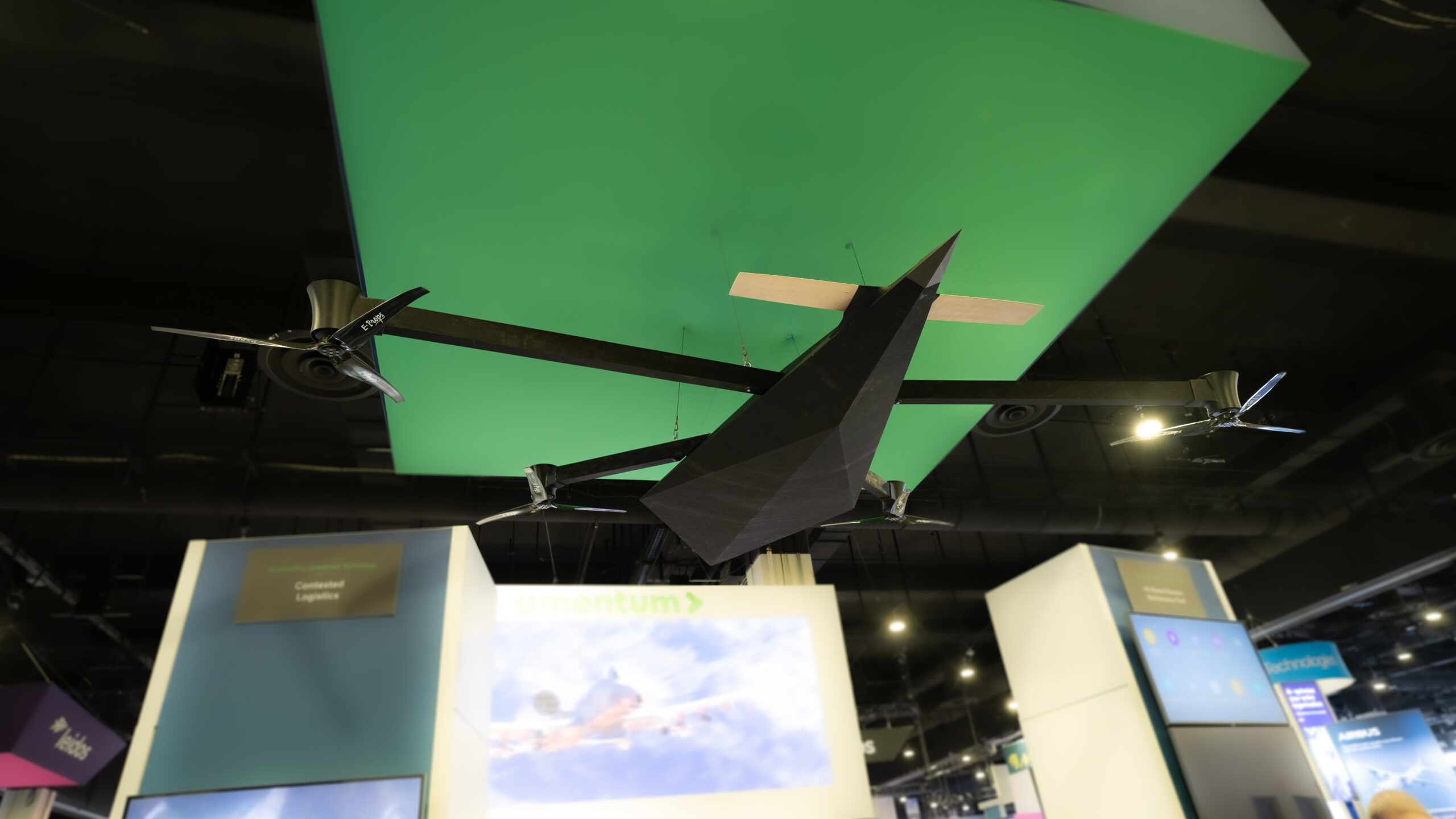
Looking especially sharp, Amentum's MULE UAV hung above visitors' heads at AFA 2024. (Brendon Smith / Breaking Defense)
iPerformX invited attendees at AFA 2024 to sit in its F-35 simulator to get a feel for the next-gen stealth fighter. (Brendon Smith / Breaking Defense)
A patch is shown on an airman's uniform for the service's ABMS effort. (Aaron Mehta/Breaking Defense)
Honeywell offers an x-ray view of its F124 engine at AFA 2024. (Brendon Smith / Breaking Defense)
A Ghost Robotics Vision 60 Q-UGV stands on all fours at the ready at AFA 2024. (Brendon Smith / Breaking Defense)
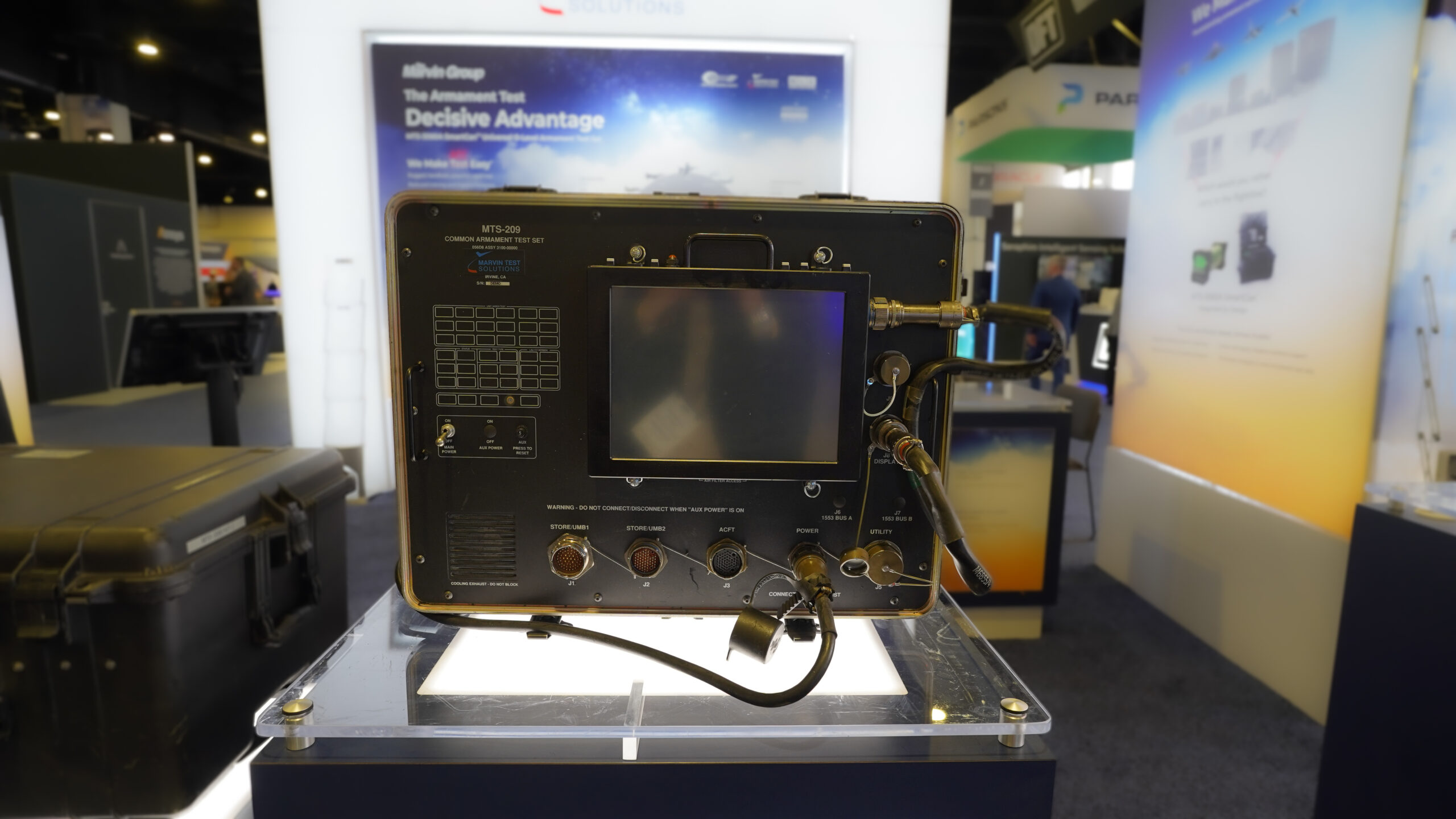
Marvin Group displays what it calls a common armament test set, or MTS-209, at AFA 2024. (Brendon Smith / Breaking Defense)
At AFA 2024, Verdego Aero showed off its VH-3-185 Hybrid Electric Aircraft Powerplant. (Brendon Smith / Breaking Defense)
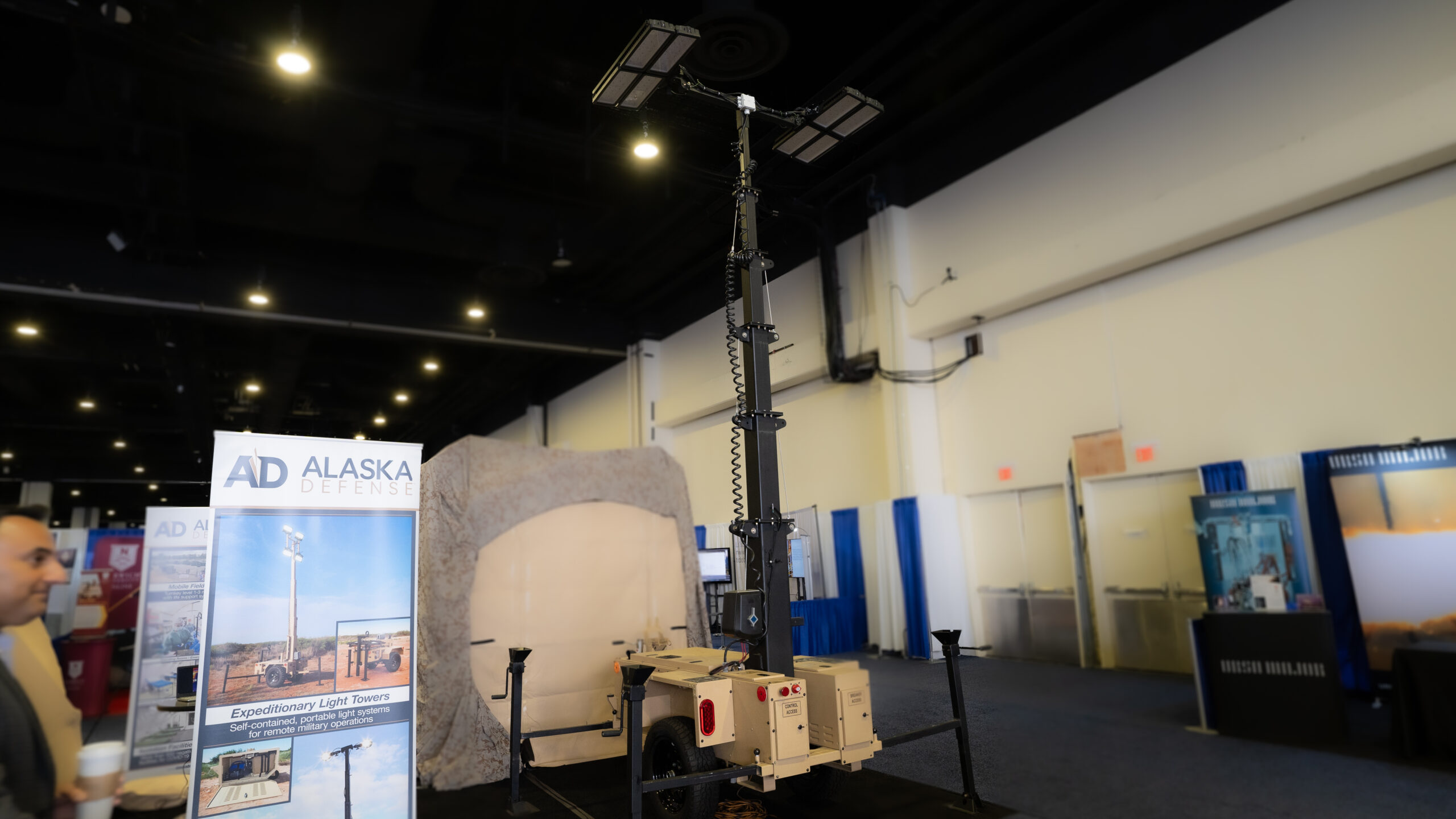
Alaska Defense extends a mobile lighting platform at AFA 2024. (Brendon Smith / Breaking Defense)
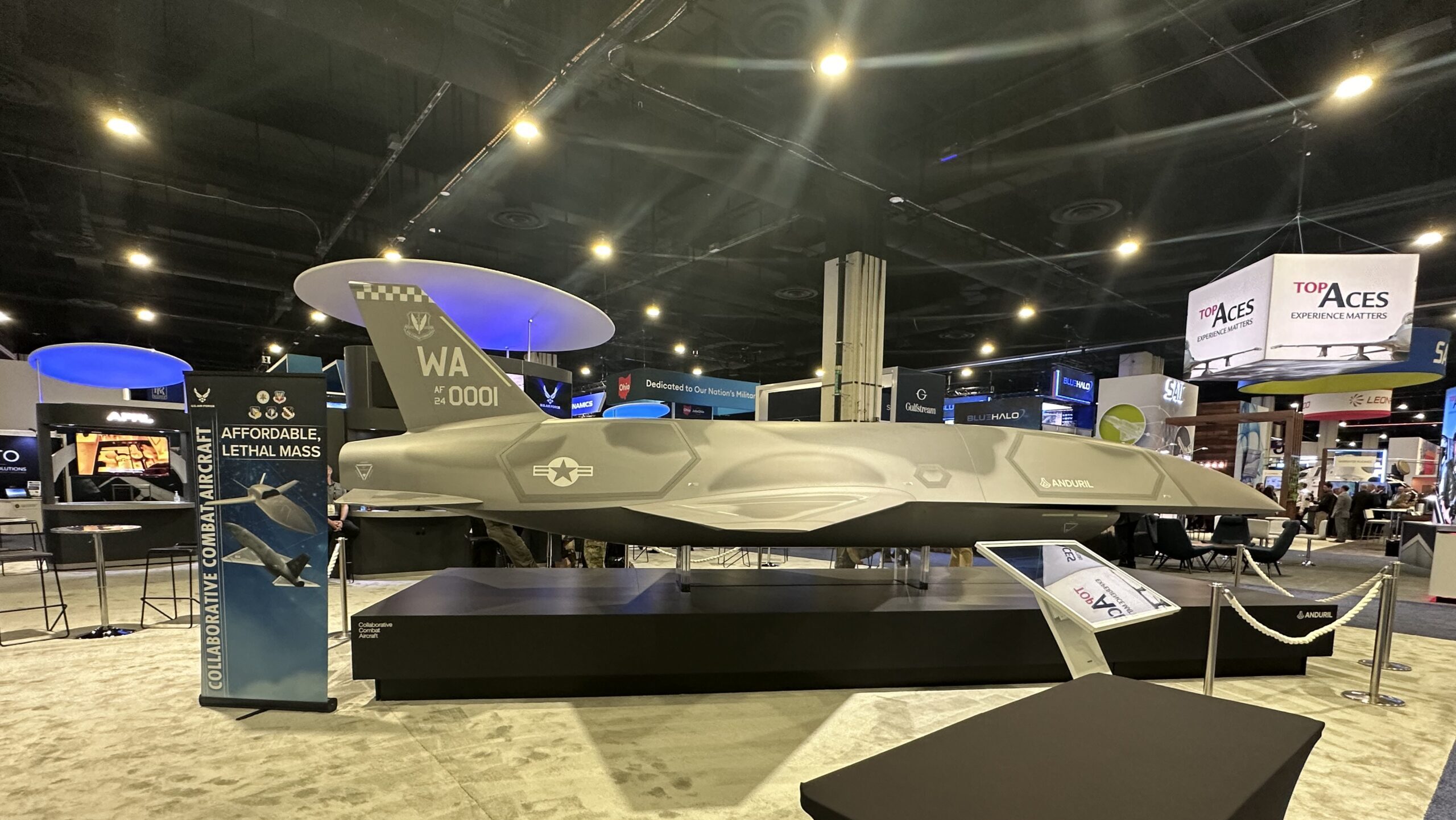
Anduril's Collaborative Combat Aircraft (CCA) on display at AFA. (Valerie Insinna/Breaking Defense)
General Atomics Aeronautical Systems, Inc's CCA on display at AFA 2024 (Valerie Insinna/Breaking Defense)
GA-ASI's XQ-67A OBSS on display at AFA 2024 (Valerie Insinna/Breaking Defense)
A couple aerial platforms from Europe's MBDA on dsiplay at AFA 2024. (Brendon Smith / Breaking Defense)
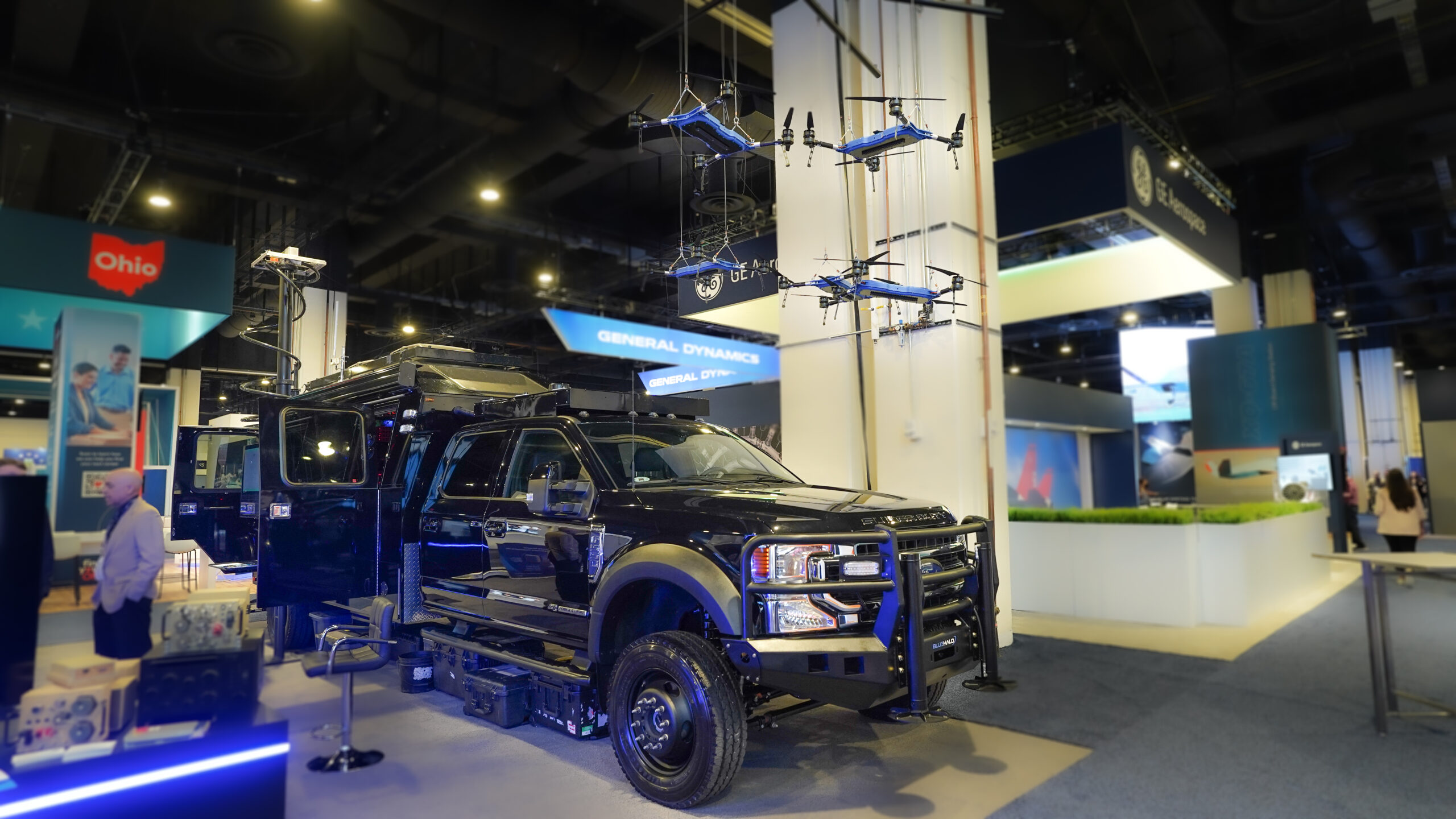
Blue Halo shows off a family of quadcopters to be used on mobile missions with its truck-based command post at AFA 2024. (Brendon Smith / Breaking Defense)
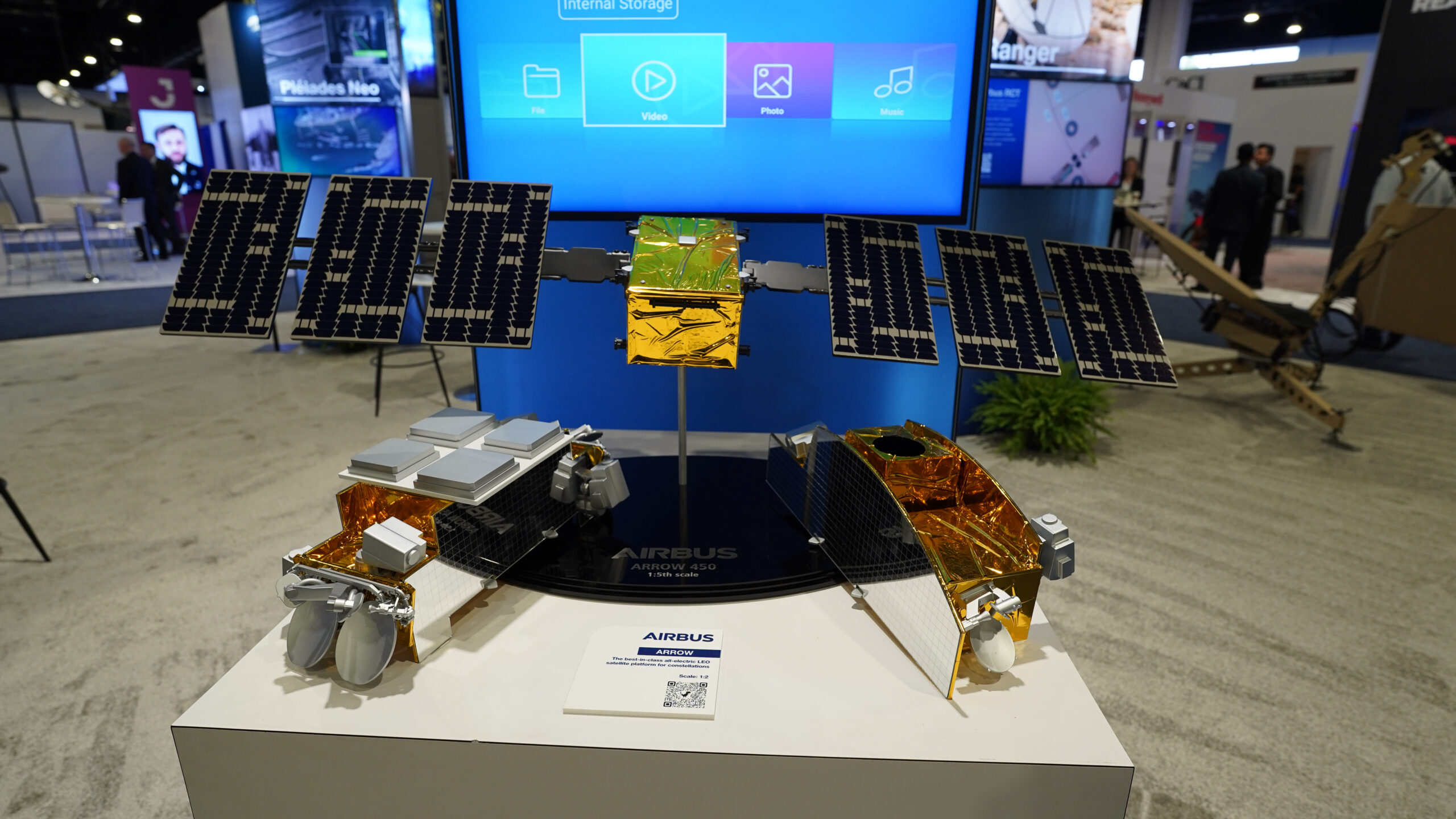
A model of Airbus's Arrow satellite playload at AFA 2024. (Brendon Smith / Breaking Defense)
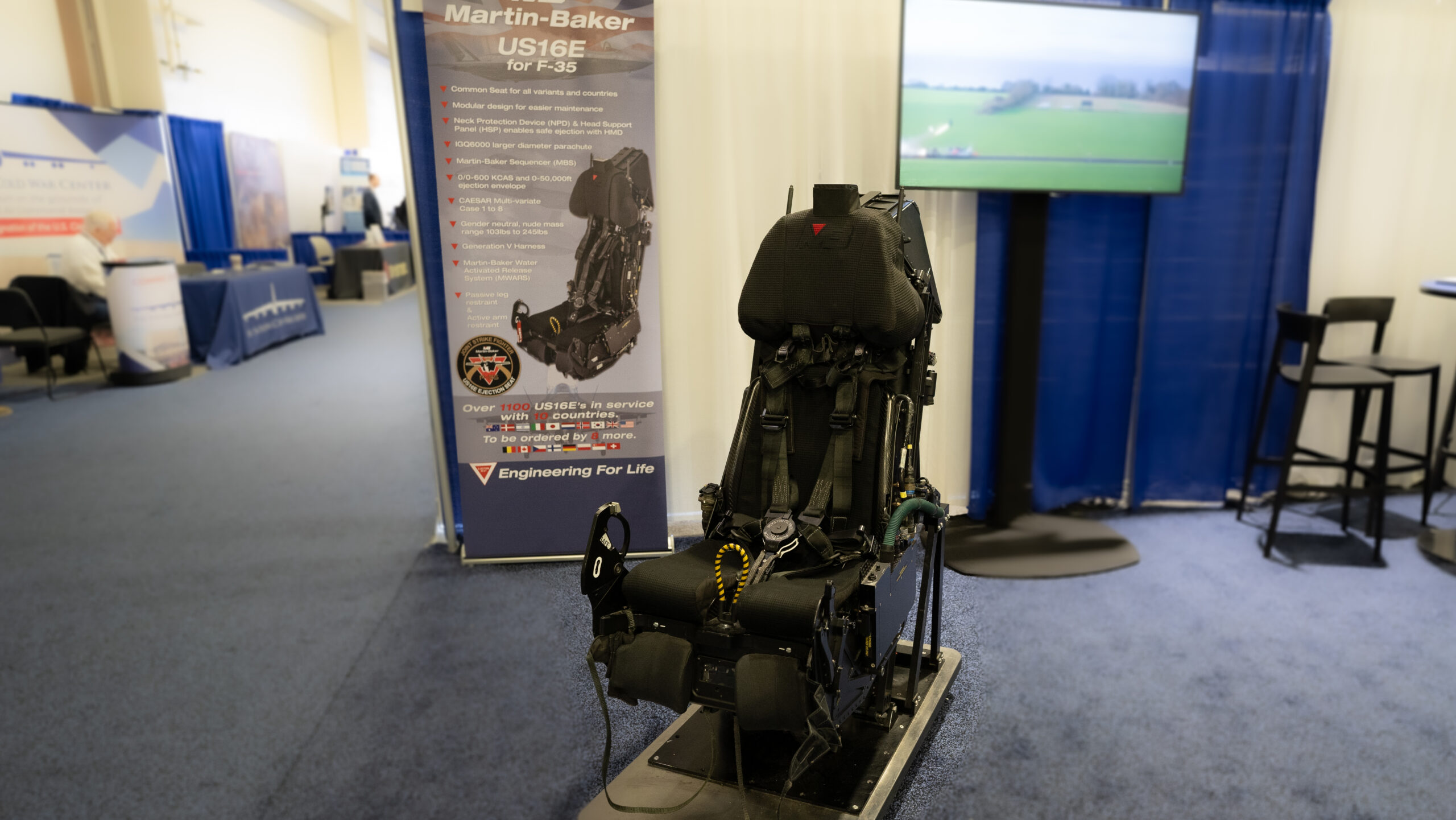
A seat for getting out of Dodge, Martin-Baker's F-35 ejection seat is shown at AFA 2024. (Brendon Smith / Breaking Defense)
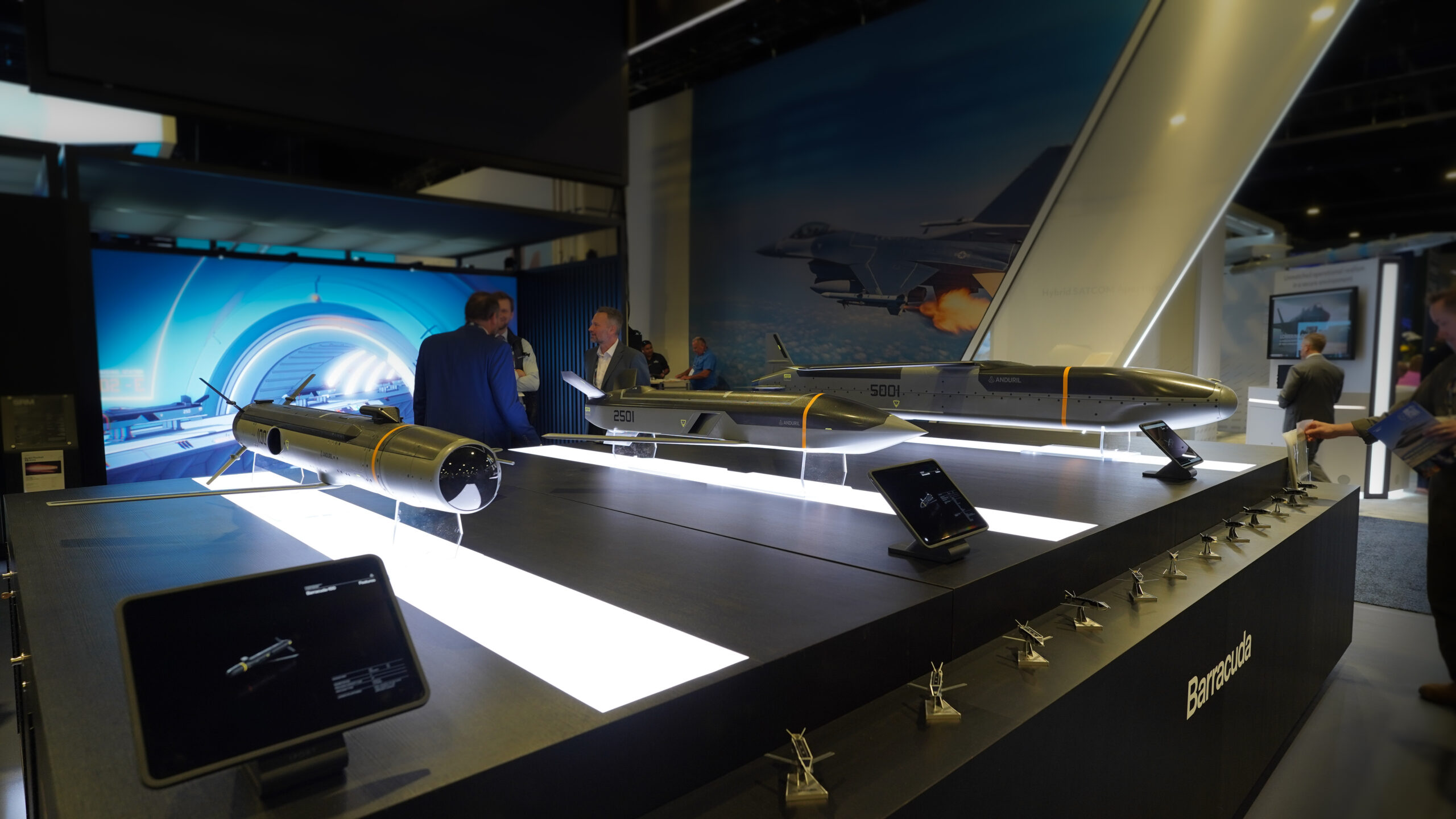
Anduril's Barracuda family of munitions at the company's stand at AFA 2024. (Brendon Smith / Breaking Defense)