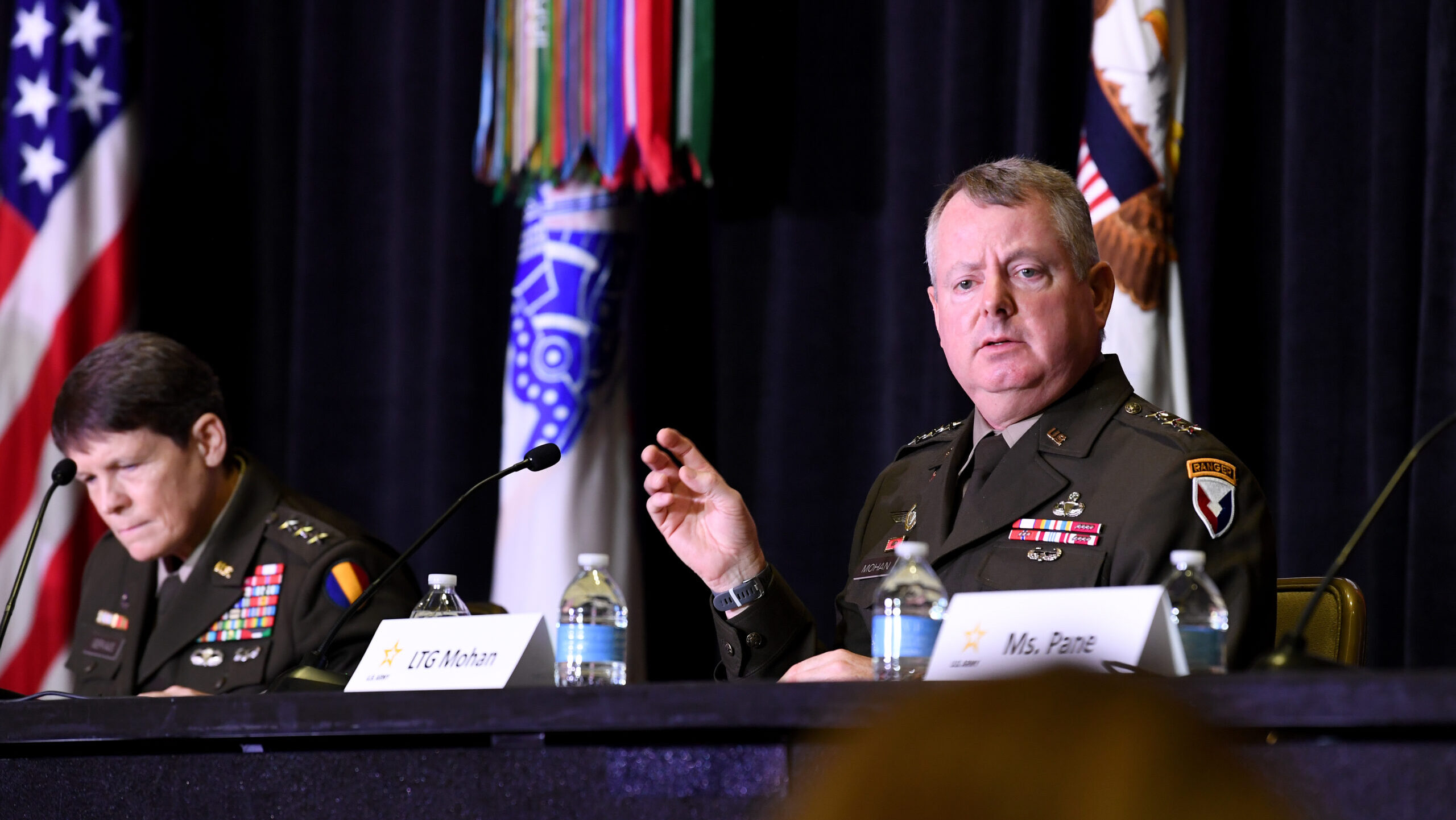
AUSA 2024 — From repositioning US Army equipment in Europe to eyeing new autonomous capabilities in the air, in the water and on the ground, acting commanding general Army Materiel Command, Lt. Gen. Christopher Mohan is pursuing a host of initiatives aimed at the better distribution of weapons and equipment.
Ahead of this week’s Association of the US Army conference in Washington, DC, Breaking Defense spoke with the three-star general about how conflicts around the globe and emerging tech are shaping AMC planning.
This interview has been edited for length and clarity.
BREAKING DEFENSE: Starting with the broader picture, can you provide an update of AMC’s role in supporting Ukraine and setting the theater?
MOHAN: We continue our operations for support to our Ukrainian partners, and that has been a heavy lift all across the organic industrial base. And so at Red River Army Depot, it’s seven days a week, two shifts a day, working on equipment. At the Iowa Army Ammunition Plant, that plant is shut down for a total of four hours per week, and that is so maintenance crews can do preventive maintenance… but other than that, it’s running 24/7, as well as up at Scranton [where the team] is working seven days a week on multiple shifts. So we are continuing our surge operations… It is an absolute battle drill at this point, as presidential drawdown directives get released, we identify the sourcing and then we start flowing the material.
But at the same time, we are working with our partners in US Army Europe and Africa and 21st Theater Sustainment Command (TSC), in particular, and we have depot teams forward from the expeditionary organic industrial base to rebuild track maintenance capability so that we have more options forward.
We have depot maintainers who are working to reset some of the APS [Army Prepositioned Stock] equipment that’s seen a high utilization, as well as we have depot teams working with our partners…who are training Polish mechanics on the operation of US equipment.
You are also in the process of moving one APS brigade combat team set of equipment to Powidz, Poland. Where does that stand today?
So that started with a NATO project several years ago. … Powidz, Poland is home to one of the largest airfields in Europe. … It is a massive airfield that is a central hub for not only Poland, but also NATO.
Part of the US facilities there is a state-of-the art APS storage facility with dedicated maintenance bays. Our Polish allies upgraded the rail infrastructure to increase the mobility coming in; they upgraded power and the road infrastructure, as well, to build out a world-class facility.
We signed for the keys to it in late spring, early summer [2024]… [and] within the last 45 days, in conjunction with our partners in the 21st TSC, we have been moving in that heavy brigade combat team [-worth of equipment] that was being stored at Coleman [in Germany] … and it’s almost 100 percent moved in now.
To the EUCOM commander, it is a strategic capability that will enhance our ability to rapidly respond to any contingency, just based upon the geography of the location. … We’ll continue to exercise portions of that in power projection exercises.
What role is the AMC playing with the Army’s new “transformation in contact” push to spin technology and weapons out to the force at a faster clip?
Because a lot of the new equipment has not been documented yet, the changes have not rolled down to APS. But [Army Chief of Staff Gen. Randy George] is full speed ahead on the transformation experimentation, the rollout of new kit, [and] he’s also being very deliberate about making sure that when we actually get to the documentation phase, that we make the right decisions.
We’ve just started to really integrate ourselves [with plans for transformation in contact]. And so right now, from the sustainment community, the contested logistics cross-functional team has been intimately involved with all things transforming [in] contact and all things modernization.
From our standpoint, the direction I am taking with this — the broader sustainment enterprise — is to really focus on those processes that we believe will better enable soldiers. We’re going to focus on the transformation in contact units, to streamline their operations … [to] think about helping them be more mobile by sweeping all their excess equipment … to put [those items] back in the supply system or dispose of, so we’ve lightened their load as well.
On top of that, we’ve got some property accountability pilots that we’ve executed at Fort Liberty, which is basically streamlining how long it takes to inventory equipment using modern tools that are loaded on an iPhone.
Another layer is advanced manufacturing. So, when the 2nd Brigade, 101st Airborne Division was down at the JRTC [Joint Readiness Training Center], we actually had a team from TACOM [the Tank-automotive and Armaments Command] down there, and we pushed a digital file from our digital repository of available parts to print. … We haven’t pushed that type of capability down that low, and so in the future we’re working with them to try to integrate that type of reality into [combat training center] CTC rotations.
What is the AMC’s tentative approach for 3D printing?
Printing at the tactical level is designed to specifically impact combat power for specific missions. It’s not the panacea that’s going to solve all our Class IX [supply system] problems, but it is a way to rapidly affect readiness for specific things so that units can continue their mission. Our Ukrainian partners, because of necessity, are pushing the boundaries on how they do this — both at the tactical level and all the way back at their depot system as well. The world has a lot to learn from how our Ukrainian partners are working.
Are you eyeing any new requirements or capabilities to help on the logistics front such as autonomous trucks or heavy lift helicopters, or additional ships?
In conjunction with the contested logistics cross-functional team and CASCOM [Combined Arms Support Command], we are really interested in autonomous distribution — both air and ground.
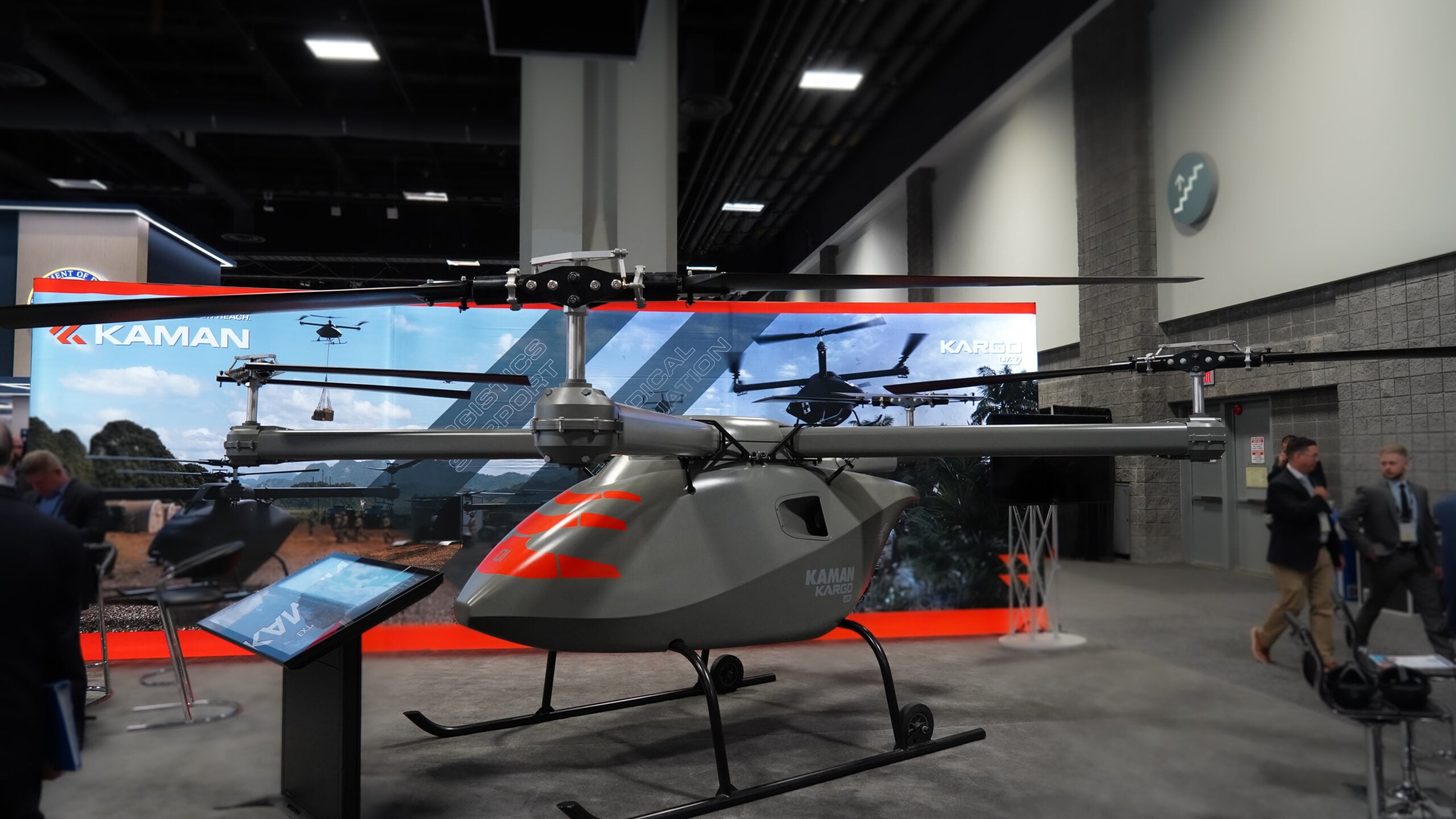
We’ve spoken before about telemaintenance and how we’re doing diagnosis over the horizon. … Think about if we had a fleet of autonomous delivery vehicles that we could place under in the belly of a [unmanned aerial system] UAS, and then that UAS could bypass other choke points in the distribution system and go right to the point of need, and then return to base. That technology is out there. I’m hoping at Project Convergence 5 that we will see some of that demonstrated but we know, for example, that there’s a company that will test fly a UAS that will carry 20,000 pounds.
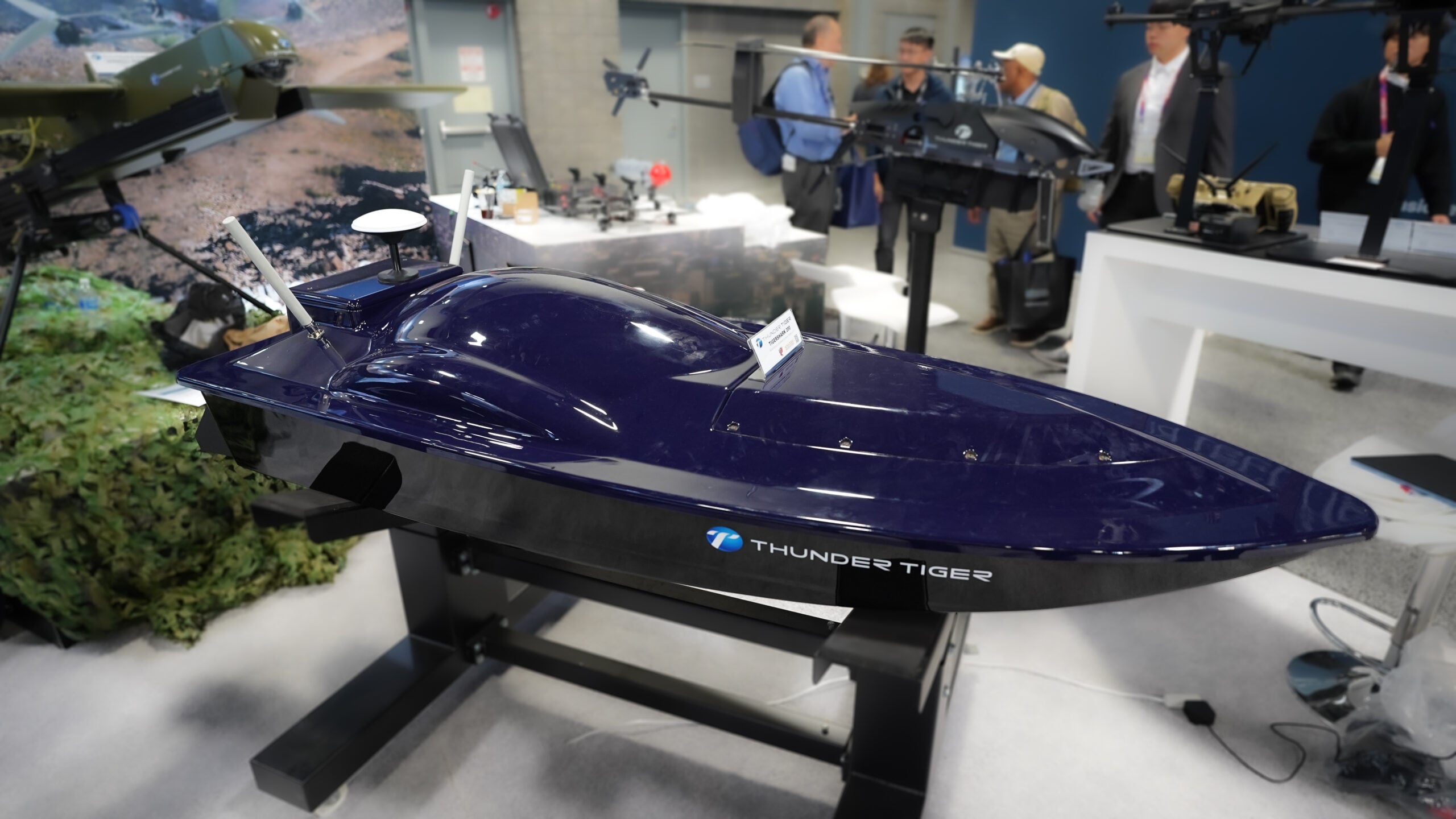
The other piece is, and it’s not just the air, it’s not just the ground, it’s also the sea. We have seen demonstrated autonomous watercraft that are either semi-submersible or traditional looking watercraft. … That capability is out there.
We have to change the way that we look at the requirement and be willing to go after these autonomous capabilities, and we’re driving that at our level.
PHOTOS: AUSA 2024

 Gallery