AUSA 2024 — As Army leaders put the finishing touches on tentative budget plans through 2030, they are literally banking on air and missile defense being a chief priority, according to a pair of senior officials.
“We’re still working on the ‘26 POM [program objective memorandum] submission across the department, but if you look at the trajectory of where we’ve been the last couple of years [for air and missile defense, it’s a] significant area of emphasis and growth,” Army Under Secretary Gabe Camarillo told Breaking Defense during an interview ahead of this week’s Association of the US Army conference in Washington, DC.
Camarillo and Army acquisition head Doug Bush say they are eyeing a myriad of air and missile defense investments that includes beefing up the Patriot force and number of counter-unmanned aircraft systems (C-UAS) to develop new interceptors to down incoming threats.
That continued focus on identifying ways to protect fixed sites and soldiers on the move from incoming aerial threats comes as insights from the ongoing wars in Ukraine and the Middle East continue rolling in, including from a recently announced deployment of Terminal High Altitude Area Defense (THAAD) battery to Israel along with US troops to operate it.
Speaking with reporters today, Army Secretary Christine Wormuth declined to say which unit was bound for Israel or when it would arrive, but said the service is not overly concerned about the deployment’s strain on the force.
“The THAAD deployment will have about 100 soldiers who will go over to Israel … that’s not a very large number of soldiers, so it’s not adding, you know, a tremendous amount of additional strain, broadly, to the community,” she said. “But as you know, the Air Defense Artillery community is the most stressed, they have the highest [operational tempo] really, of any part of the Army.”
Deployments like this one, combined with observations around the globe are, in part, fueling budgeting plans that span the fiscal 2026-2030 timeframe, although a new presidential administration could upend everything.
Patriots And THAAD
While neither Camarillo nor Bush disclosed just what that perceived air defense investment is envisioned to land at, they did drill down on a few focal points.
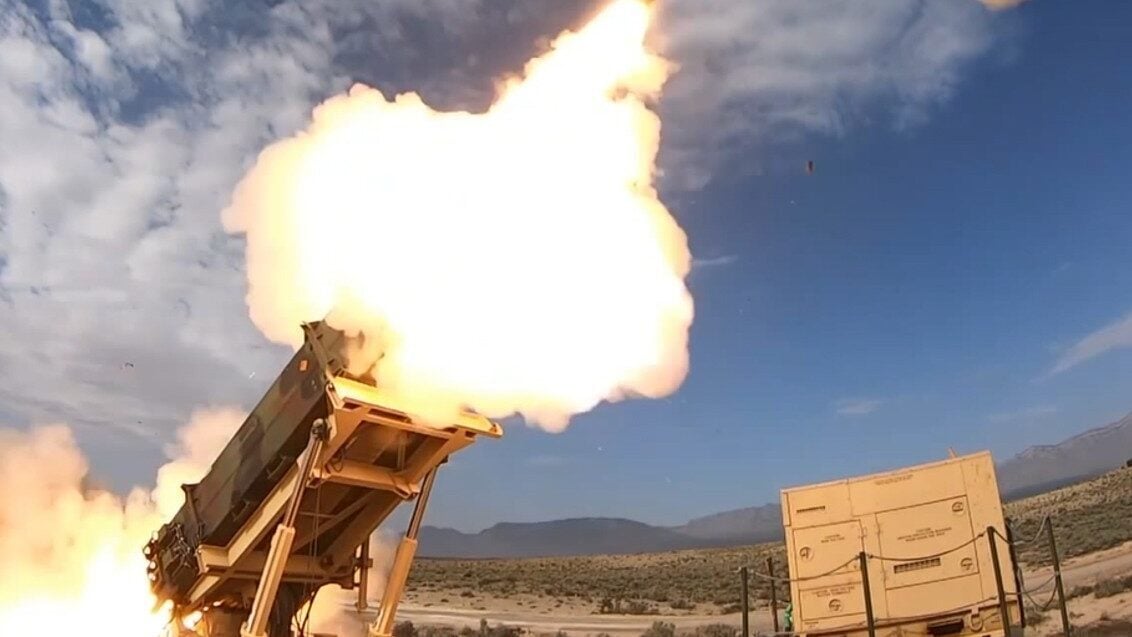
The Army’s Patriot force, for example, currently consists of 15 battalions but is one of the most in-demand assets inside the service. So, to help alleviate the stress on those units, the service is planning to add an additional two battalions to the force over the next five years, and the funding to do that will be spread out over that time period, Camarillo explained.
But, he added, “it’s hard to say” if 17 battalions will be the sweet spot.
“We see a lot more demand than we can possibly keep up with, that’s one of the reasons … the air defense force is so strained, frequent deployments [and the] significant demand signal to meet hotspots all over the world,” Camarillo said. “It’s not just the [Central Command area of responsibility] CENTCOM AOR, it’s Europe, and other places like the Pacific.
“One of the reasons we focused so heavily on air defense in our last force structure change was to try to give us more options and give us more units, and grow those capabilities so that we can meet worldwide demand,” he added.
By summer 2025, the Army is also expected to have its eighth THAAD battery fully operational, while it also continues testing out its new Indirect Fire Protection Capability Increment 2 (IFPC Inc 2) launcher. If IFPC Inc 2 testing proceeds smoothly, the service will be acquiring the launchers in mass and building out units to man them to defend against threats like supersonic cruise missiles.
Countering Drones
Developing and fielding new C-UAS weapons is expected to remain a top budget priority and a focus at this year’s AUSA conference as well.
Just a mere two weeks ago, for example, the Pentagon unveiled its new Replicator 2 initiative to find C-UAS systems to defend fixed sites inside and outside of the continental United States.
While Camarillo declined to disclose which systems the Army could put forward as potential contenders for funding, he noted it could be a mix of existing systems or ones in development.
“All of the services will be looking at participating in Replicator as a way to ensure that we can break down barriers in terms of policy, ensure that we are addressing production and manufacturing challenges and cohesively investing R&D [research and development] funding to try to get the next generation capabilities that we can produce and field at scale,” he said.
In a separate interview with Breaking Defense, Bush explained that it is not just about picking the most capable system for base defense. The Office of the Secretary of Defense, he explained, has asked the services to look at specific sites and respond with estimates of just what the cost and timeline would be to set up C-UAS defenses there. But because some of those sites are inside the US, that brings along an extra layer of scrutiny and regulation.
“We have restrictions here for good reasons that we don’t have … [in] Jordan or Iraq,” Bush added. “There are some significant policy issues that have to be worked through … in parallel.”
That means it’s not just a question of how quickly the services can scale production of new C-UAS systems, but instead a broader policy examination across the Department of Defense and other government agencies like the Federal Aviation Administration and Department of Homeland Security.
Regardless, Bush said he anticipates that the forthcoming FY26 budget request will reflect the way ahead on fixed-site protection and bets on Replicator 2.
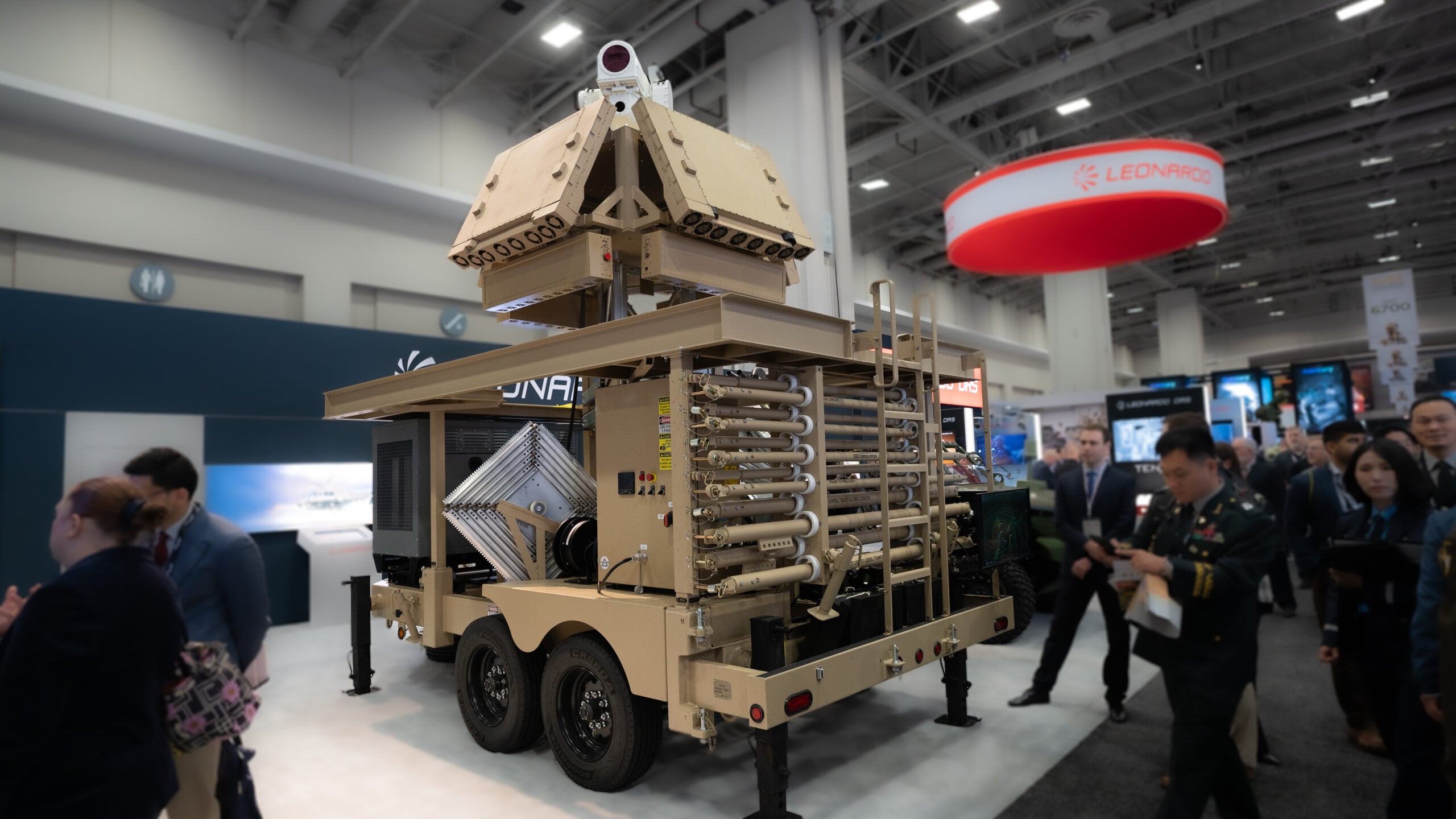
Replicator plans aside, both Camarillo and Bush said they are eyeing ways to spread the C-UAS bets across a variety of portfolios, including directed energy options — both high-energy lasers and high-powered microwaves — and kinetic ones too.
“You need a kind of portfolio approach, there’s not one system that’s going to solve the challenge: You need missile-based systems, such as Coyote and Roadrunner, … but you also need directed energy of different forms … and we believe we need a gun-based, low-cost system,” Bush said.
When it comes to those previously disclosed mixed results with testing a 50-kilowatt laser on Strykers in the Middle East this year, the service is adjusting and moving out with a new prototyping effort aimed at better sustainability and, possibly, a lower power class for smaller vehicles and robots.
“The Army is fully committed to ensuring that we field directed energy systems at scale as quickly as we possibly can to defeat this [UAS] threat,” Camarillo said.
“It’s not just one thing that’s going to defeat the small UAS threat, it is a range of approaches that we have to take, and we have to place many bets along different areas to ensure we’re constantly ahead of this highly evolving threat,” he added.
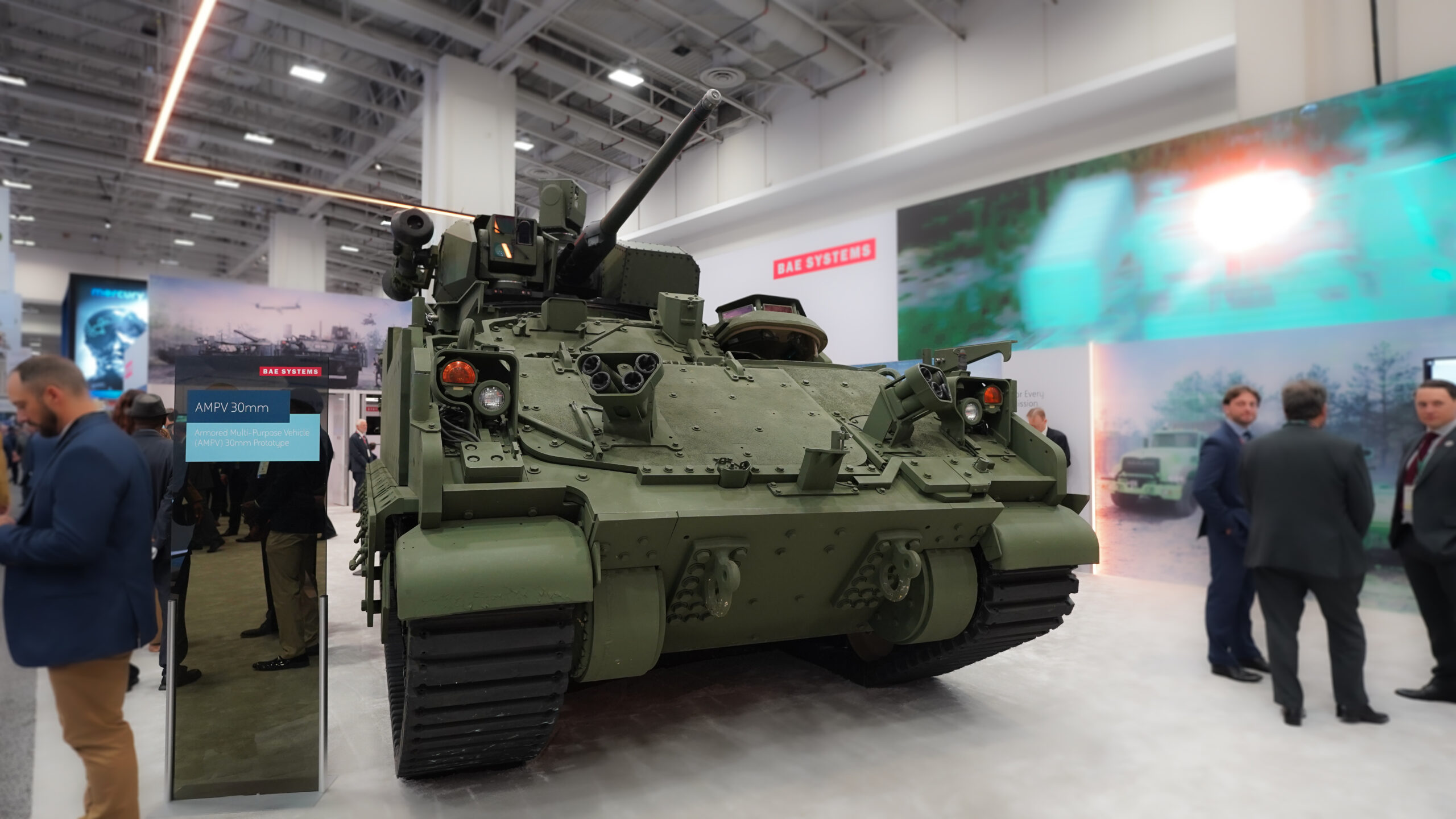
On the kinetic side, the Army is eyeing what comes after the Coyote interceptor and at a lower price point. Bush also cited the need for additional proximity rounds for cheaper per-unit shots. He noted that the Army is using such 30-millimeter rounds in theater today, and said it is considering outfitting Bradley Fighting Vehicles with additional caliber sizes for an enhanced C-UAS capability.
“We are focused on things that are cheaper and things that you can spread across the whole Army, not just in air defense units, because we’re also learning that it can’t just be an air defense unit mission, it’s going to be in every unit in the Army … like we’re seeing in Ukraine,” Bush said.
PHOTOS: AUSA 2024

 Gallery