Land Warfare

Army watercraft readiness precipitously declined over past 4 years: GAO

The Army is developing a strategy for a future fleet, but government auditors wrote it is less clear what is being done in the short term to mitigate problems.

188th Brigade Support Battalion participates in amphibious joint training exercise
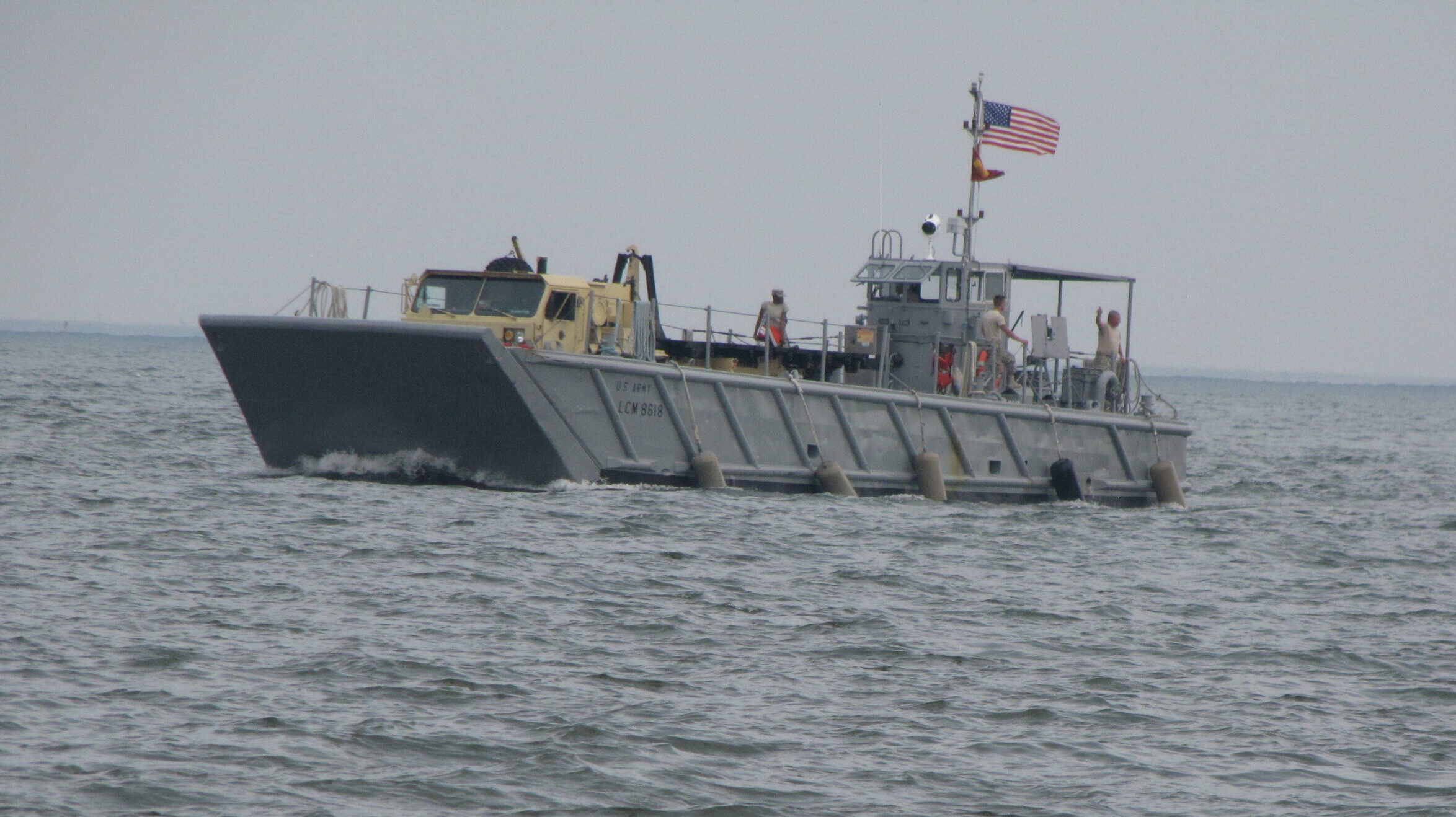
A 7th Transportation Brigade (Expeditionary) landing craft mechanized (LCM) transports a vehicle to the shore at Fort Story, Va., on Aug. 25. Soldiers of the 188th Brigade Support Battalion, 18th Field Artillery Brigade, train in how to load and offload equipment and vehicles with the watercraft. (Photo by Sgt. Benjamin Parsons)

AUSA 2024 — Readiness rates for the US Army’s fleet of watercraft have steadily declined over the past four years, highlighting a significant weakness in the service’s ability to move personnel and equipment as it prepares for a fight in the Indo-Pacific, according to a new independent government audit.

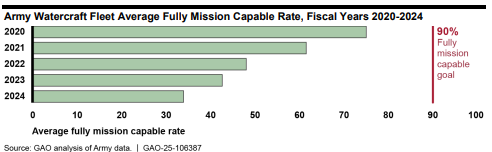
Army policies state that its equipment and assets, watercraft included, should aim for 90 percent of assets to be “fully mission capable” — meaning they are prepared to execute their full range of missions at a moment’s notice. Not only is the Army failing at that target, its readiness rates dipped from from 75 percent in 2020 to less than 40 percent this year, the Government Accountability Office stated in its report, released today.

“Army officials stated that these low mission capable rates, along with the smaller size of the watercraft fleet after divestment, hinder operational readiness and the ability to meet mission requirements,” the GAO writes. The watchdog examined the service’s watercraft readiness at the behest of a congressional direction included the 2023 annual defense policy bill.

Although the service told auditors that it is developing a watercraft modernization strategy aimed at projecting a future fleet in the 2030s and 2040s, GAO found it is “unclear” what mitigation is in place in the meantime to improve the service’s readiness.

“Moreover, the Army has struggled to address a series of longstanding maintenance challenges with its watercraft fleet. Using handwritten systems to manage maintenance has adversely affected the fleet’s readiness,” the GAO report stated. “For example, as of May 2024, one vessel had been out of service for over [five] years. Army officials reported several factors contributing to significant delays, including maintenance work.”

As part of its report, GAO made four recommendations that focus on Army leadership in Washington as well as operational commanders in the Indo-Pacific taking a variety of action to mitigate the ongoing readiness issues. Responding on behalf of the service, Secretary Christine Wormuth concurred with GAO’s recommendations.
Screenshot 2024-10-17 164204
A table from the GAO’s report on Army watercraft shows the annual drop in mission capable rates. (GAO)

The GAO’s report comes the same week that Army leadership at the annual AUSA exposition aggressively argued the service’s importance to the Pentagon’s broader strategy for fighting in the Indo-Pacific — a place where watercraft and moving troops and equipment around in them will be integral to winning a future conflict.

Gen. Charles Flynn, commander of US Army Pacific, told attendees at AUSA on Monday that the service is now making an effort to repair its watercraft forward, similar to how the Navy does ship repairs and maintenance in Japan.

“We’re trying to fix these watercraft forward in Japan, in the Philippines and Australia and Guam,” he said. “We were bringing our watercraft all the way back to the continental United States, in some cases, on the west coast and through the Panama Canal for the East Coast, just to fix the watercraft.”

“Army watercraft is a system,” he continued. “It’s tugs, it’s cranes, it’s connectors, it’s bridges. These systems, we have to have them forward, but we have to actually have them out in the Pacific operating.”

PHOTOS: AUSA 2024

PHOTOS: AUSA 2024

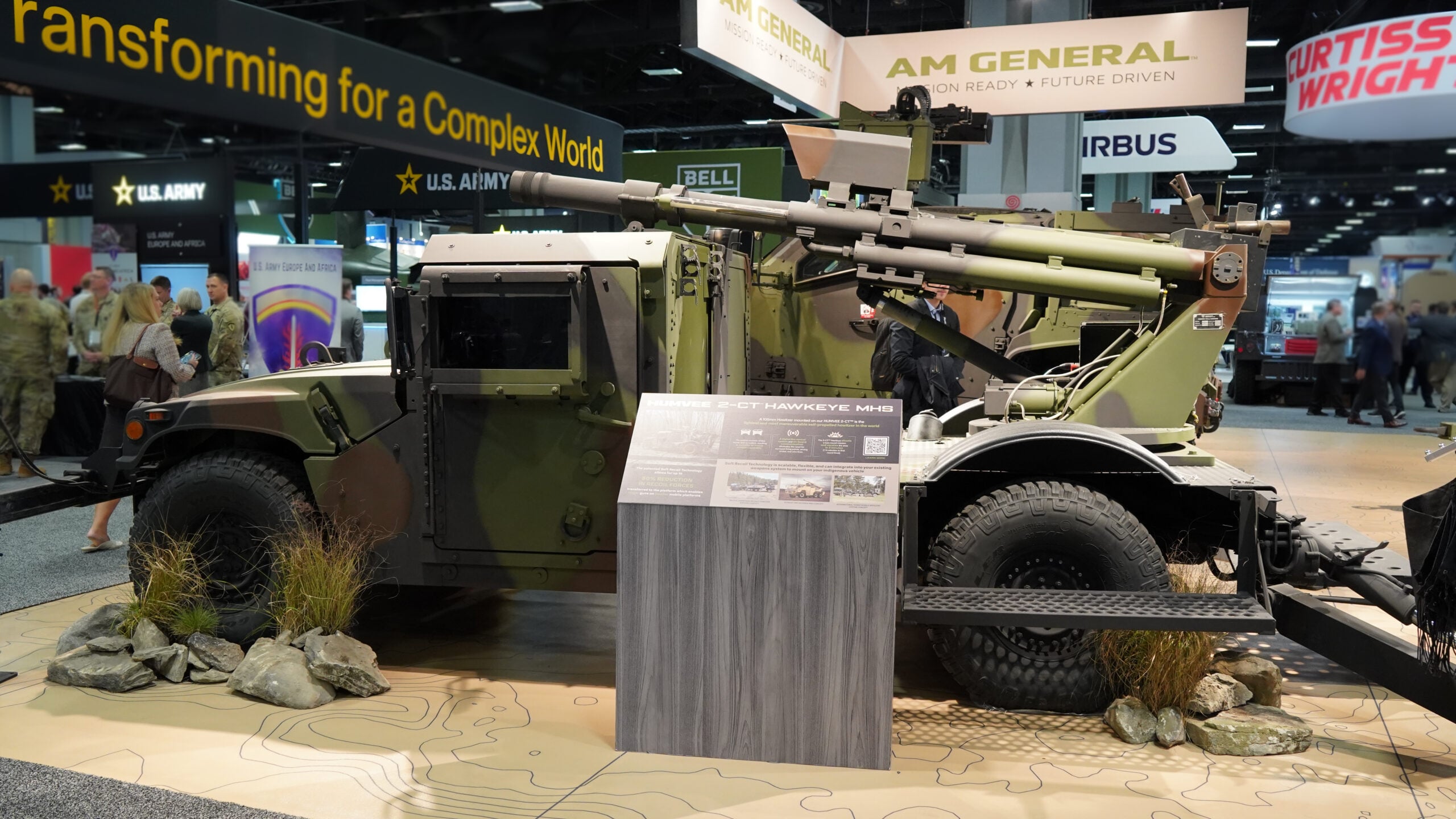
At AUSA 2024, land vehicle giant AM General rolled its HUMVEE 2-CT Hawkeye MHS, featuring a howitzer launcher on a hummer. (Brendon Smith / Breaking Defense)
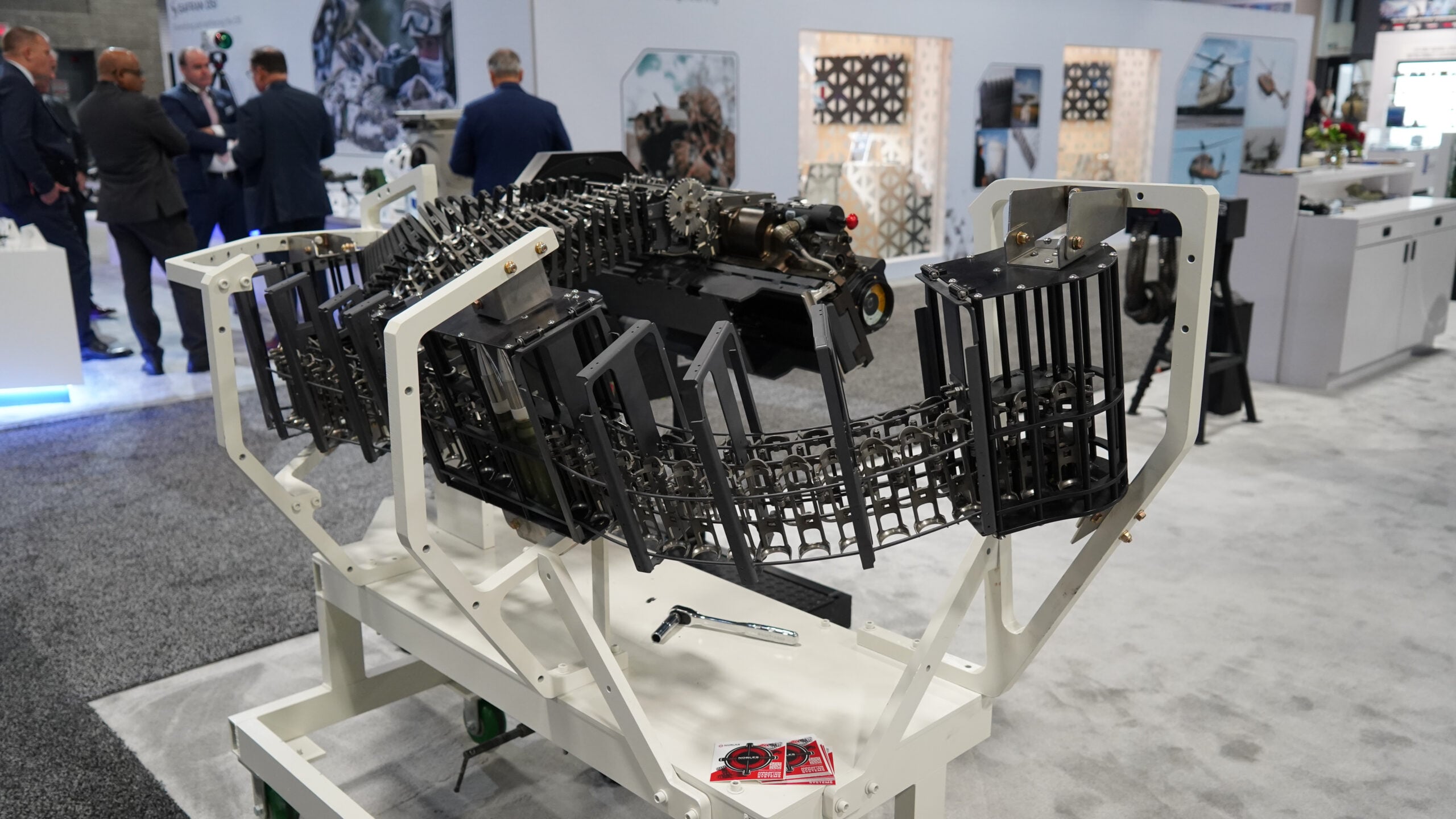
Ammo handling specialists Nobles Worldwide brought its closed loop, linkless ammunition handling system to AUSA 2024. (Brendon Smith / Breaking Defense)
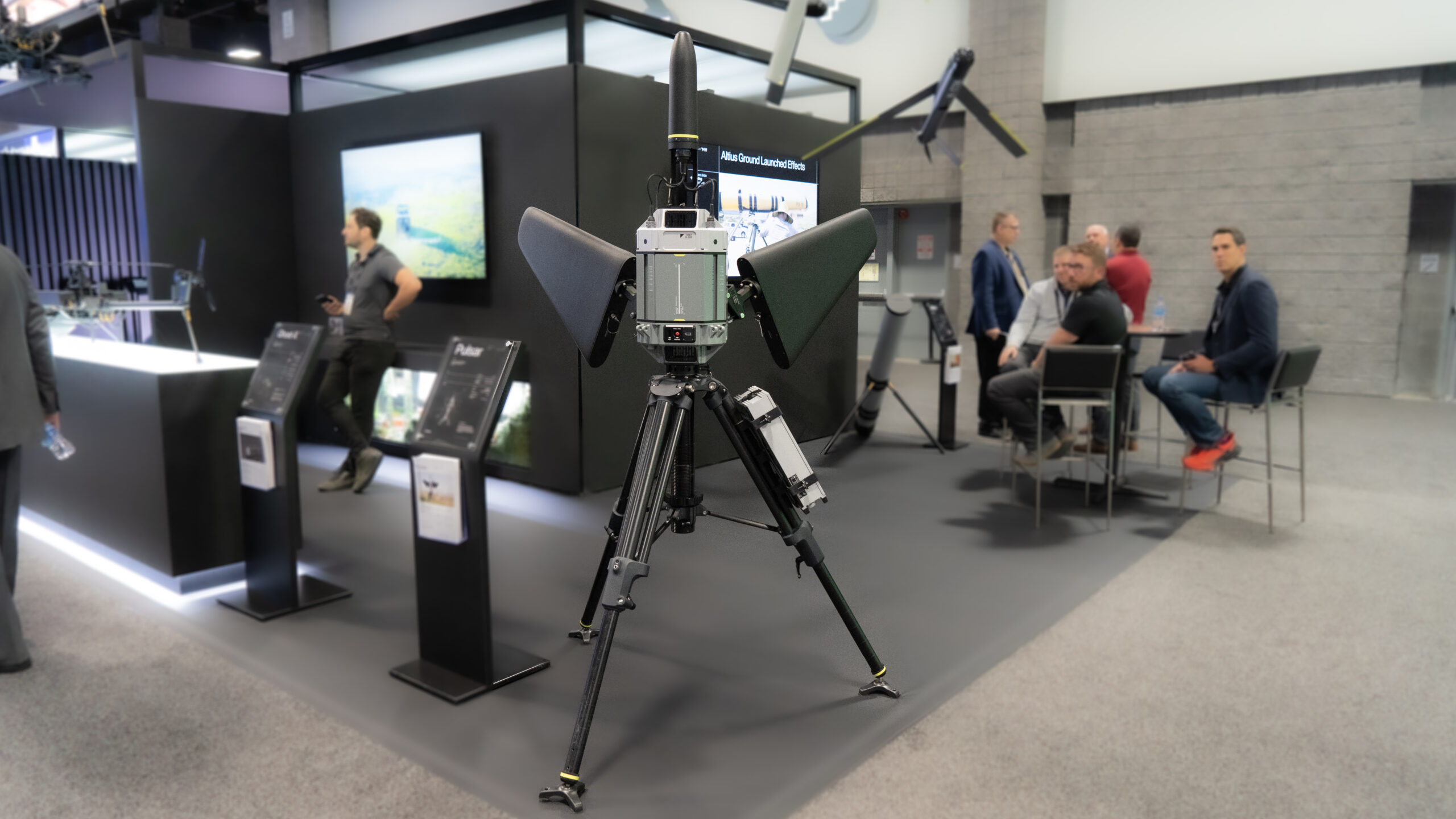
IEC Infrared Systems's Lycan counter-UAS system gazes out at attendees at AUSA 2024. (Brendon Smith / Breaking Defense)
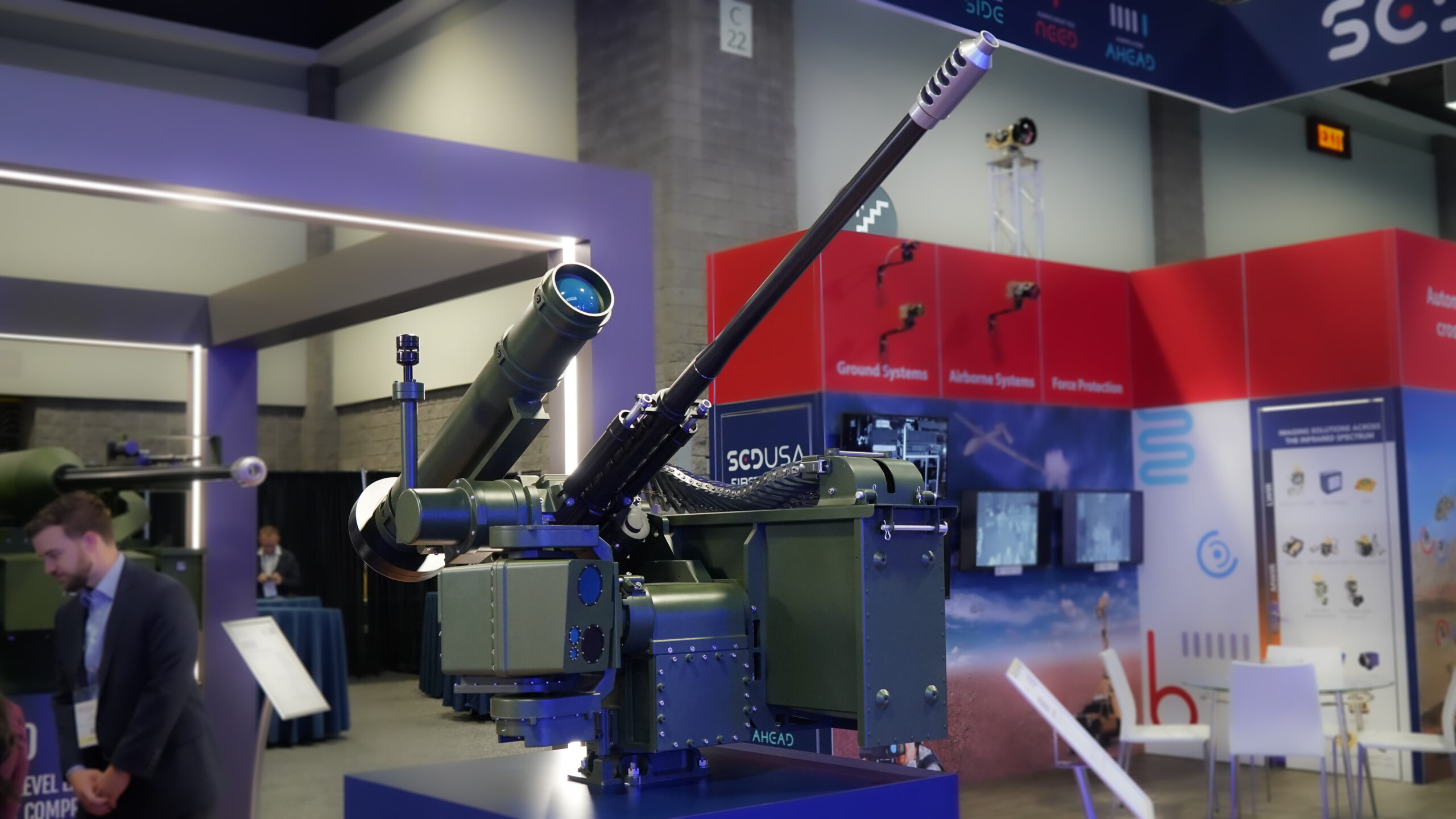
Australian firm EOS was at AUSA 2024, here displaying its Slinger kinetic counter-drone system. (Brendon Smith / Breaking Defense)
Defense start-up Anduril makes a wide range of products and at AUSA 2024, including his platform from its "family of autonomous systems and Electromagnetic Warfare (EW) systems powered by Lattice and AI at the edge." (Brendon Smith / Breaking Defense)
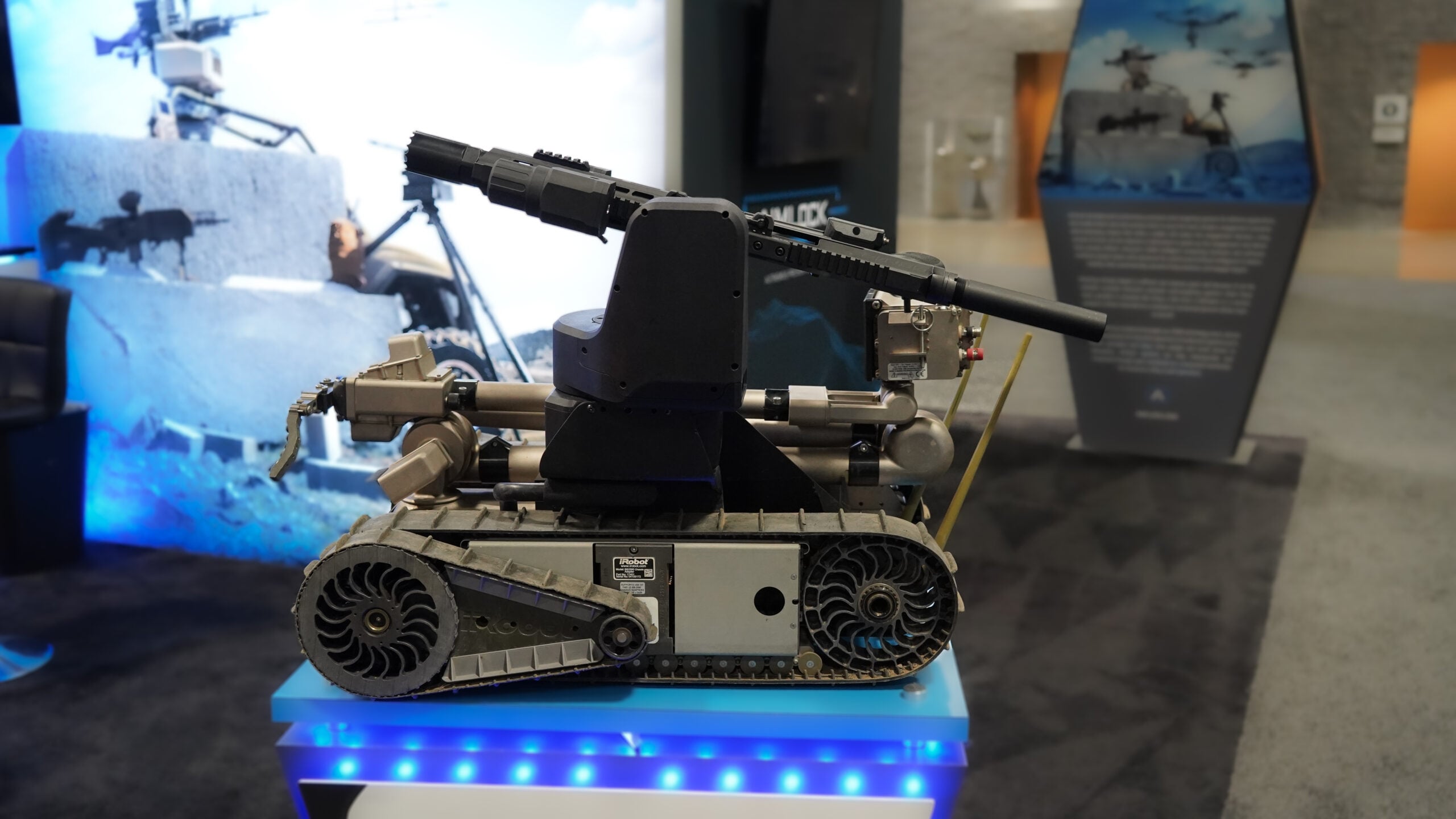
Aimlock, which develops "semi-autonomous precision auto-targeting systems" attached a 12-guage shotgun on a ground robotic vehicle at AUSA 2024. (Brendon Smith / Breaking Defense)
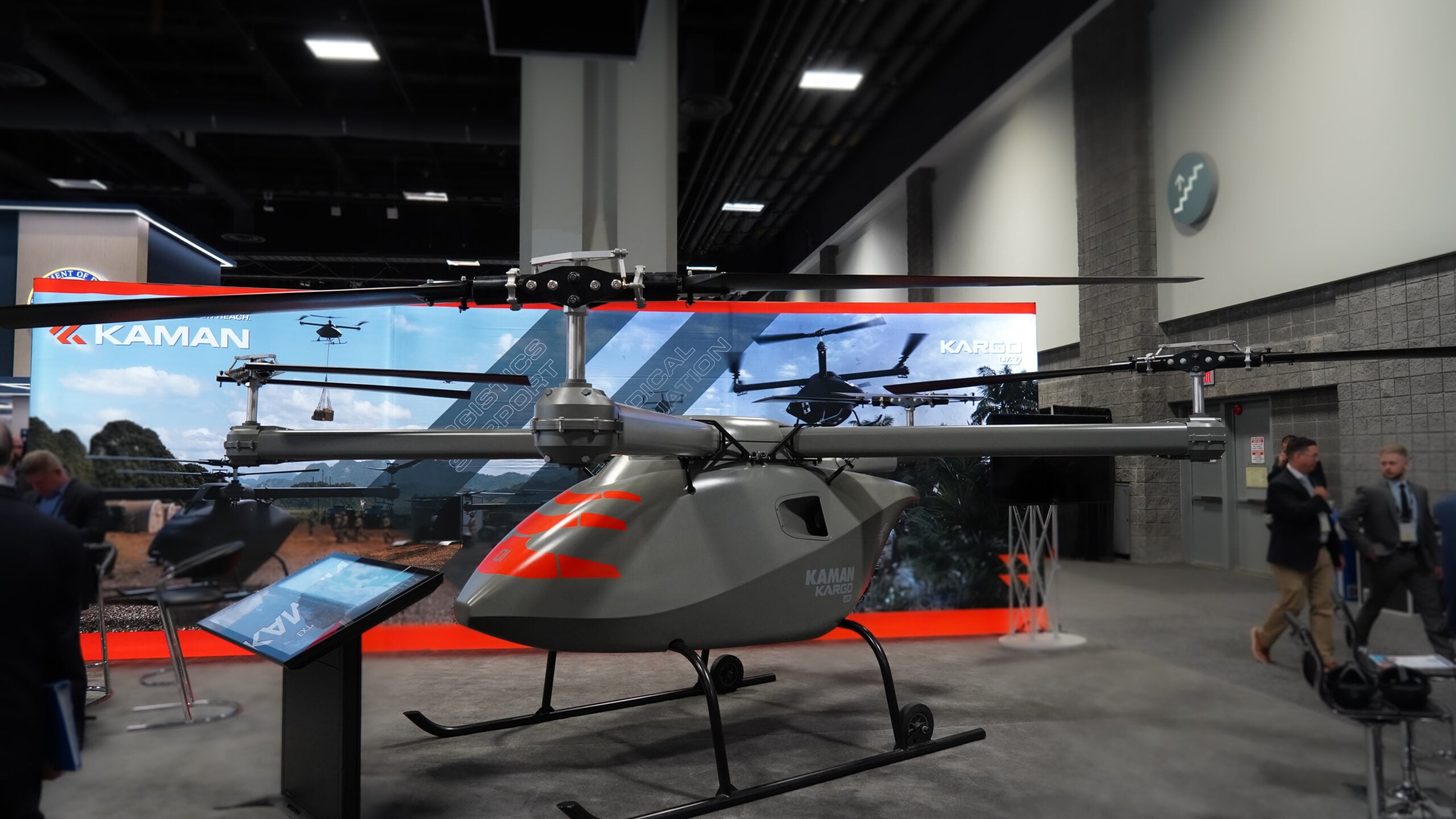
Connecticut-based Kaman Corporation offers unmanned cargo copters, as seen on the show floor at AUSA 2024. (Brendon Smith / Breaking Defense)
Defense giant Northrop Grumman shows off its Next Generation Handheld Targeting System (NGHTS), which the company says is designed to work in GPS-denied environments. (Brendon Smith / Breaking Defense)
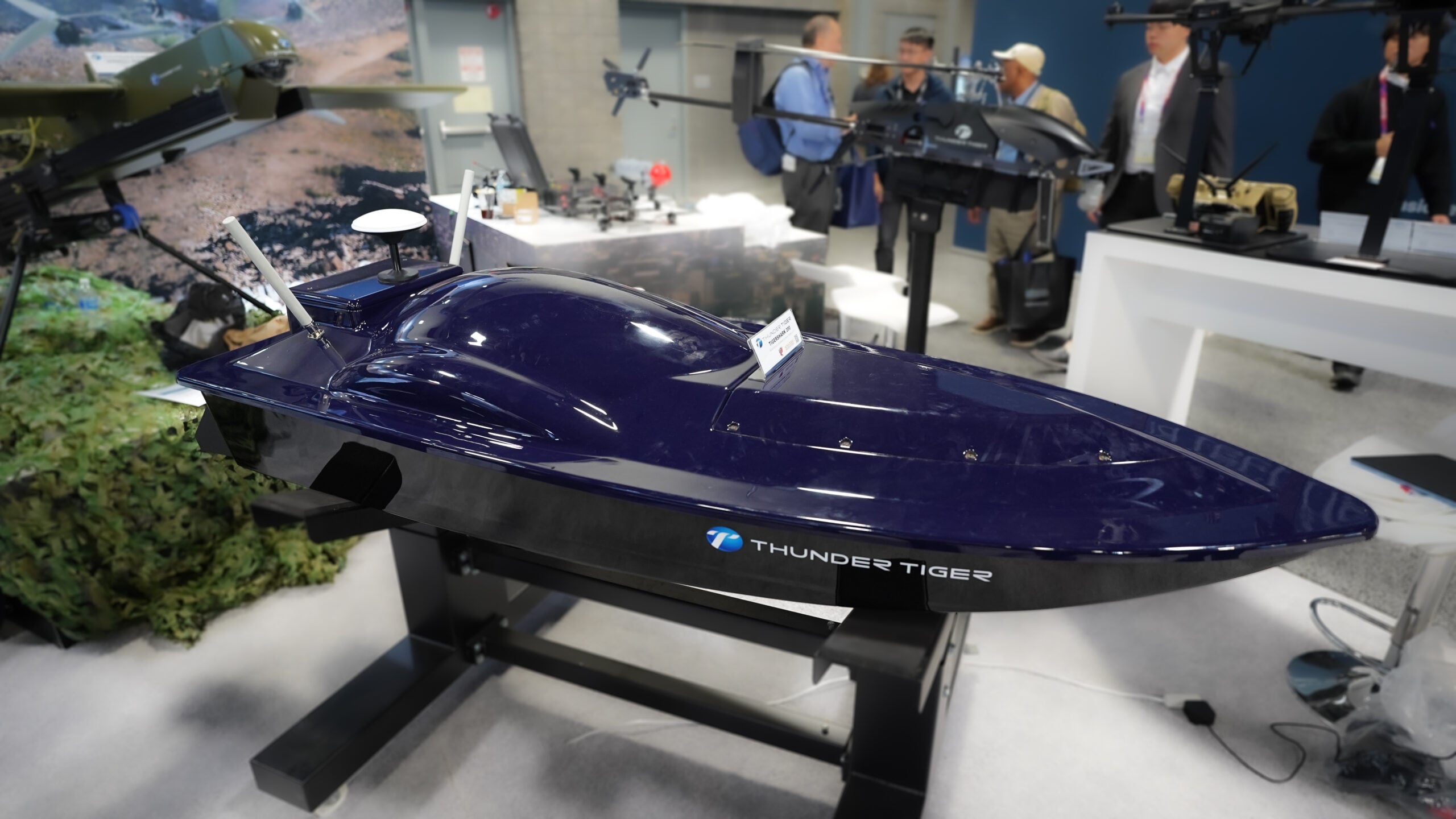
Taiwanese Thunder Tiger displayed an unmanned surface vessel, Seashark, at AUSA 2024. (Brendon Smith / Breaking Defense)
Northrop Grumman shows off its Bushmaster chain gun at AUSA 2024. The company launched a new Bushmaster M230LF (Link Fed) dual-feed chain gun, designed to neutralize UAS and ground threats, with the manufacturer targeting export customers for future orders. (Brendon Smith/Breaking Defense)
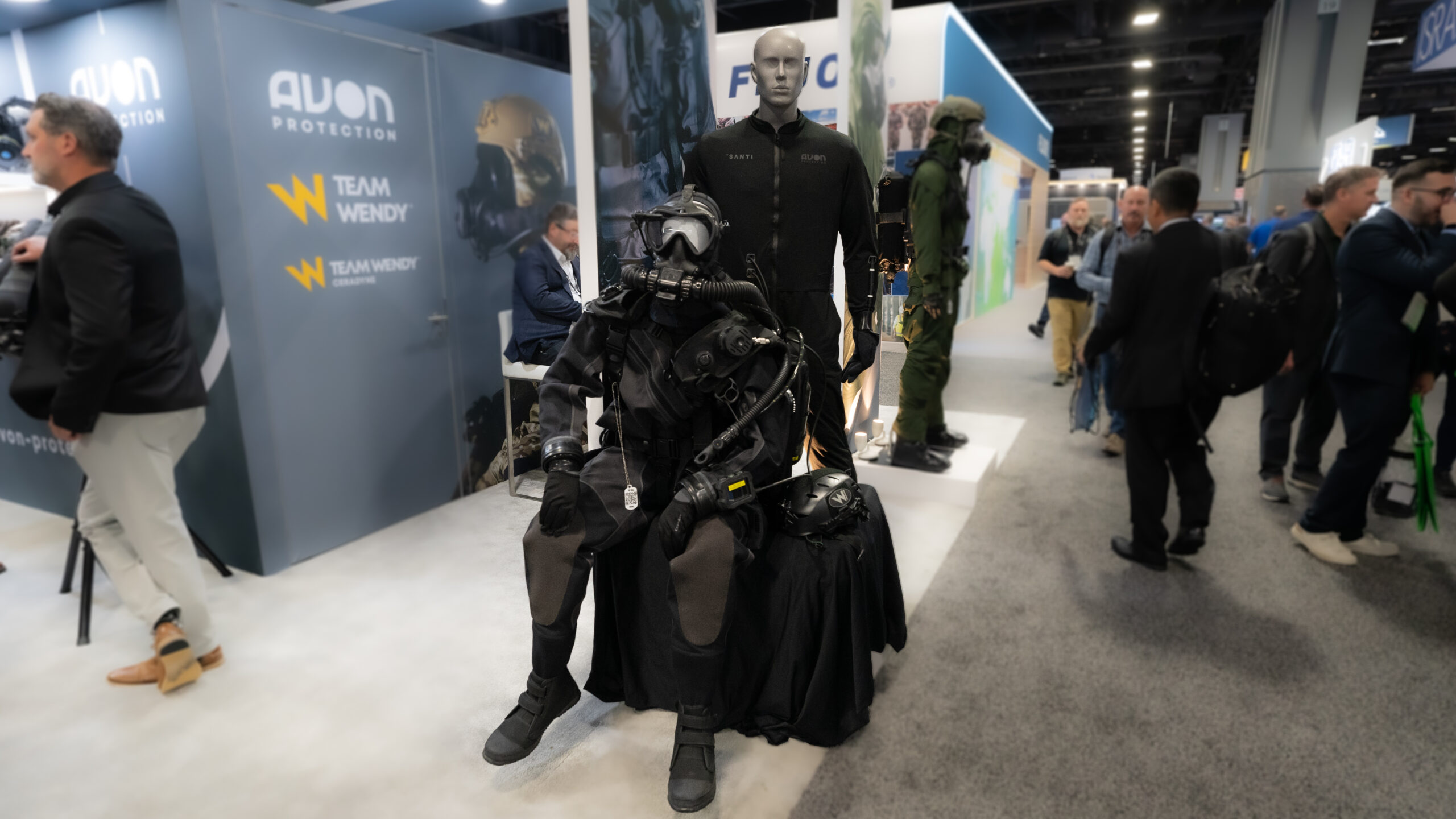
It's less ominous than it looks: Avon Protection's Core Intelligent undersuit and MCM100 Multi-Role Military Diving Rebreather are marketed on the show floor to help military divers keep warm under the water. (Brendon Smith/Breaking Defense)
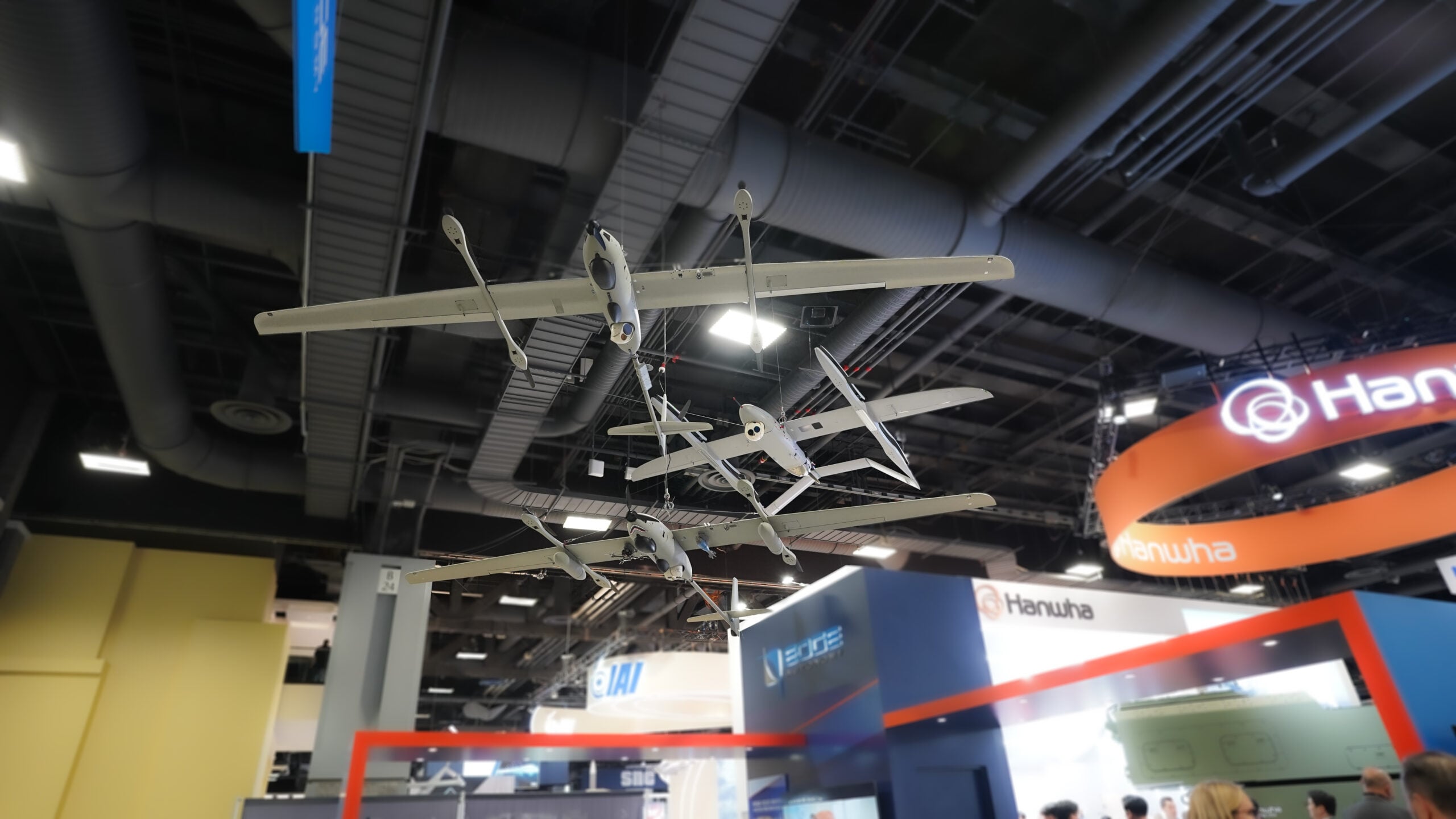
Edge Autonomy shows off its E140Z camera, part of its Octopus surveillance suite. (Brendon Smith/Breaking Defense)
Flyer Defense shows off its Flyer 72 vehicle at AUSA 2024. Selected by SOCOM, the company says it is capable of internal transport in the CH-47 and C-130 aircraft. (Brendon Smith/Breaking Defense)
The Kongsberg Protector RS6 is a Remote Weapon System for low-recoil 30mm cannons. The company says it will be able to equip other weapons in the future. (Brendon Smith/Breaking Defense)
Bell helicopters showed off a number of items on the show floor. (Brendon Smith/Breaking Defense)
One of BAE's two AMPV varients on the show floor at AUSA 2024, this one sports the company's Modular Turreted Mortar System. (Brendon Smith / Breaking Defense)
Oshkosh Defense displays its Remotely Operated Ground Unit for Expeditionary Fires (ROUGE-Fires) on the floor at AUSA 2024. (Brendon Smith / Breaking Defense)
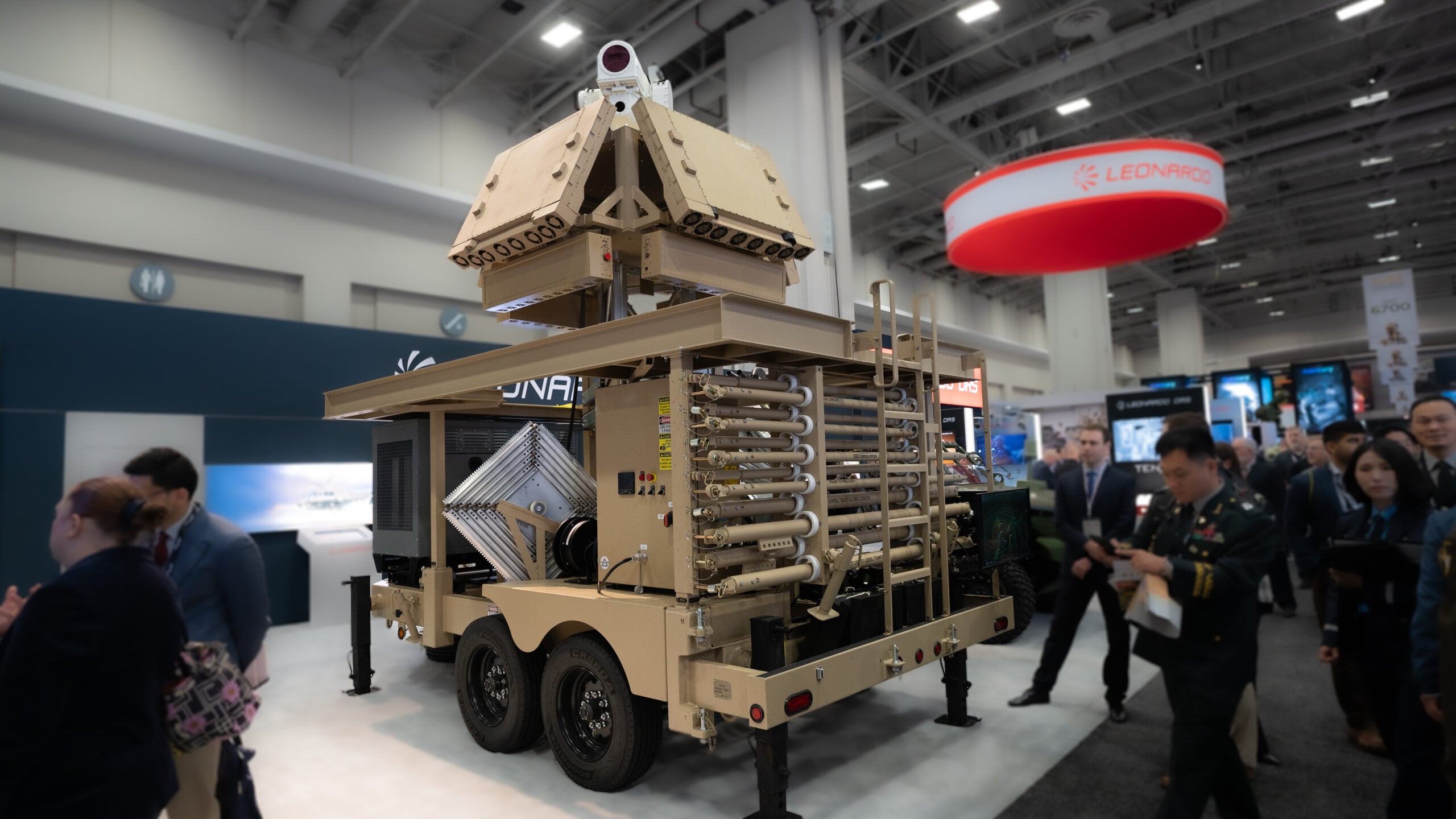
A Leondardo extended mast surveillance system ready to roll into position at AUSA 2024. (Breaking Defense)
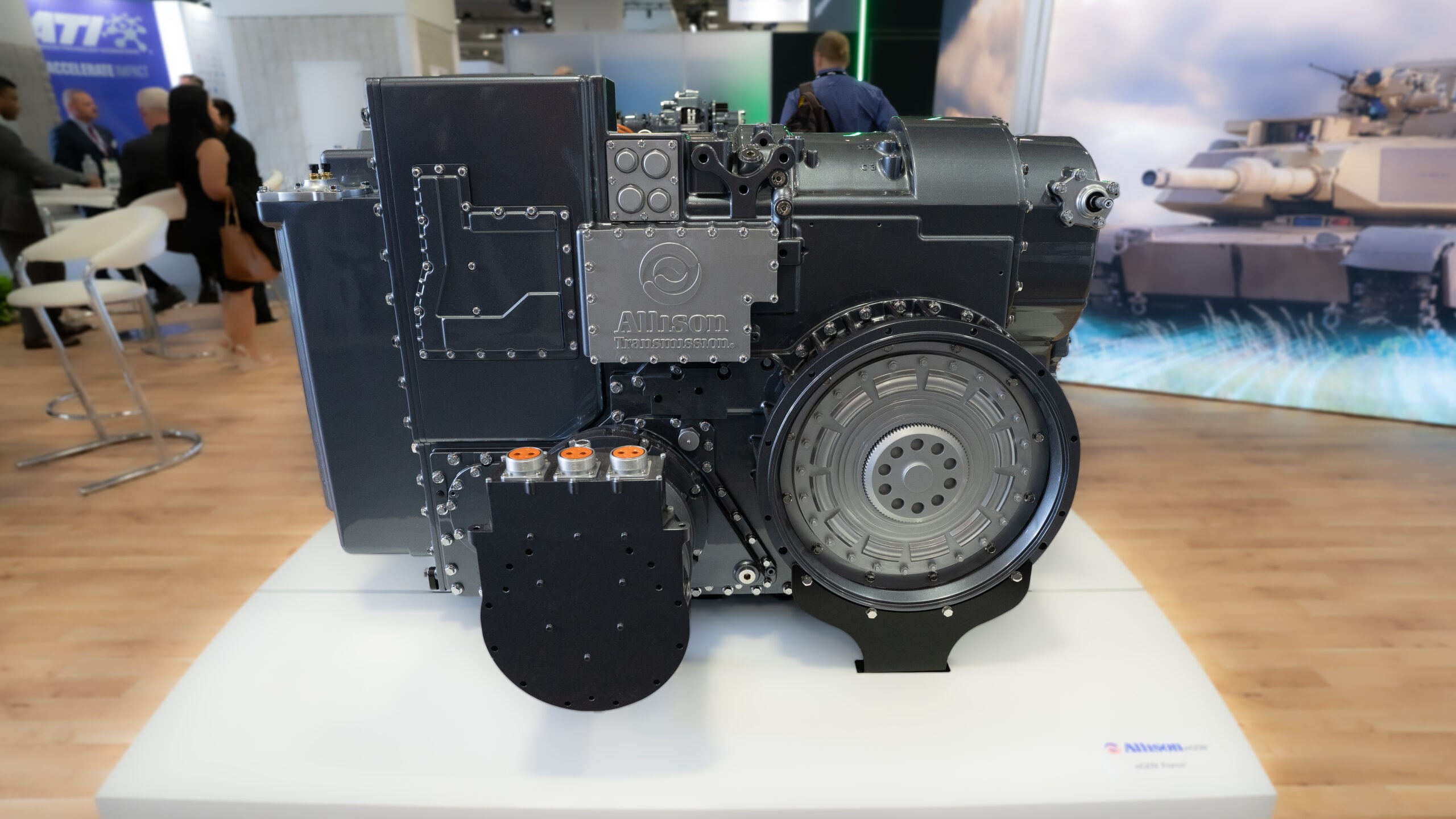
Allison Transmission eGen Power motor on display at AUSA 2024. (Brendon Smith / Breaking Defense)
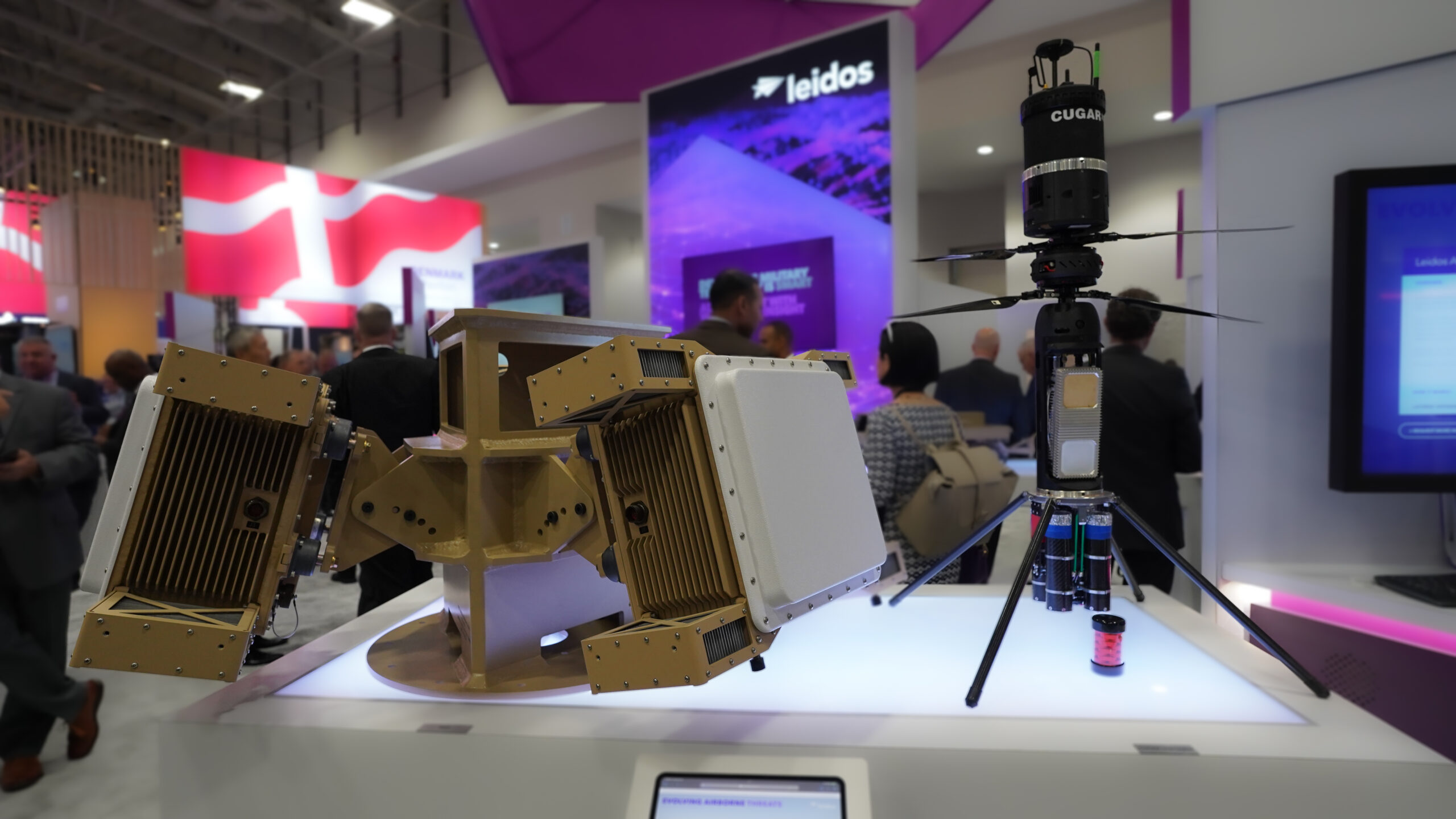
Leidos's Airshield counter-UAS system sits at the company's booth at AUSA 2024. (Brendon Smith / Breaking Defense)
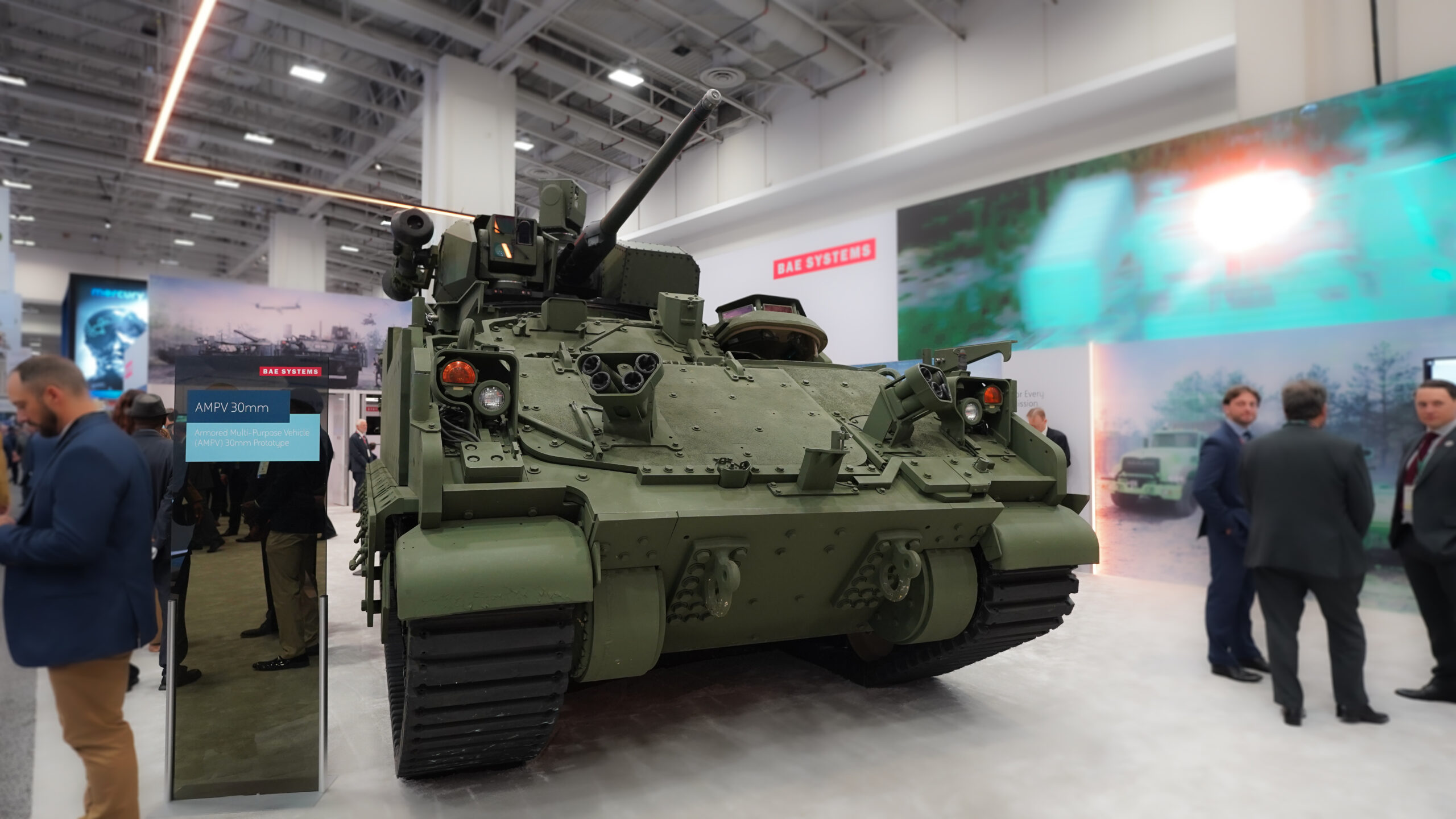
BAE's Armored Multi-Purpose Vehicle (AMPV) with a 30mm gun on display at AUSA 2024. (Brendon Smith / Breaking Defense)
A heavily armed next-gen tactical vehicle on display from GM Defense at AUSA 2024. (Brendon Smith / Breaking Defense)
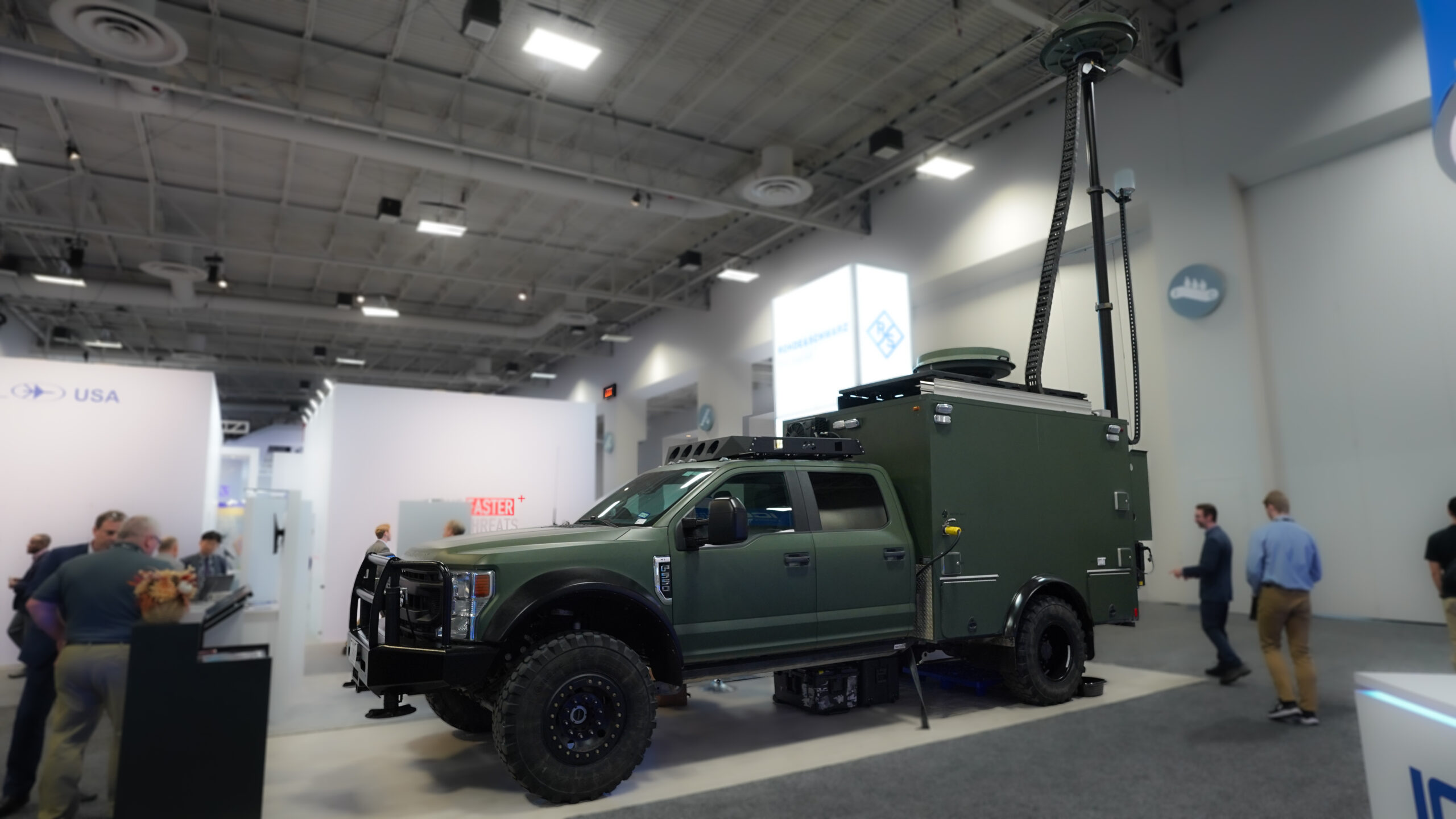
At AUSA 2024, Rohde & Schwarz displays a mobile signals system known as SigBadger. (Brendon Smith / Breaking Defense)