Editor’s Note: This article was originally published on May 15. We are reupping it on the home page in light of Israel’s decision to launch air strikes against Iran, including the Natanz nuclear site.
WASHINGTON — At a time when President Donald Trump is threatening military action to curb Iran’s nuclear program, a new open-source analysis has found that air defense systems around one of Iran’s most crucial nuclear sites may be less networked and more “brittle” than expected.
The research, shared exclusively with Breaking Defense, comes from the James Martin Center for Nonproliferation Studies, which used what analysts said was a rare Iranian operational security slip-up to get a look at radar information around Natanz, a key Iranian nuclear site.
Sam Lair, a researcher with the Martin Center, told Breaking Defense that while the glimpse was very brief, it provided “the clearest look that we’ve had for air defenses for nuclear sites.” He added that it was “remarkable” both for the amount of data able to be gleaned and as a slip up by Iranian censors who historically have covered up such information.
The information comes from a roughly two-second clip of an Iranian command center, released as part of the one-year anniversary of Israeli strikes on an Iranian drone facility located near Natanz. In that clip, a trio of screens shows information from four radar systems.
Using that information and open-source imagery, Lair and his colleagues were able to geolocate the radars and identify what kind of systems are in play around Natanz. Based on the findings, the researchers said they believe the four radars are an Iranian Najm 804 radar, associated with the Khordad-15 air defense system; two derivatives of the Soviet-era P-12 Spoon Rest A radars; and a Russian-origin Tor SAM system.
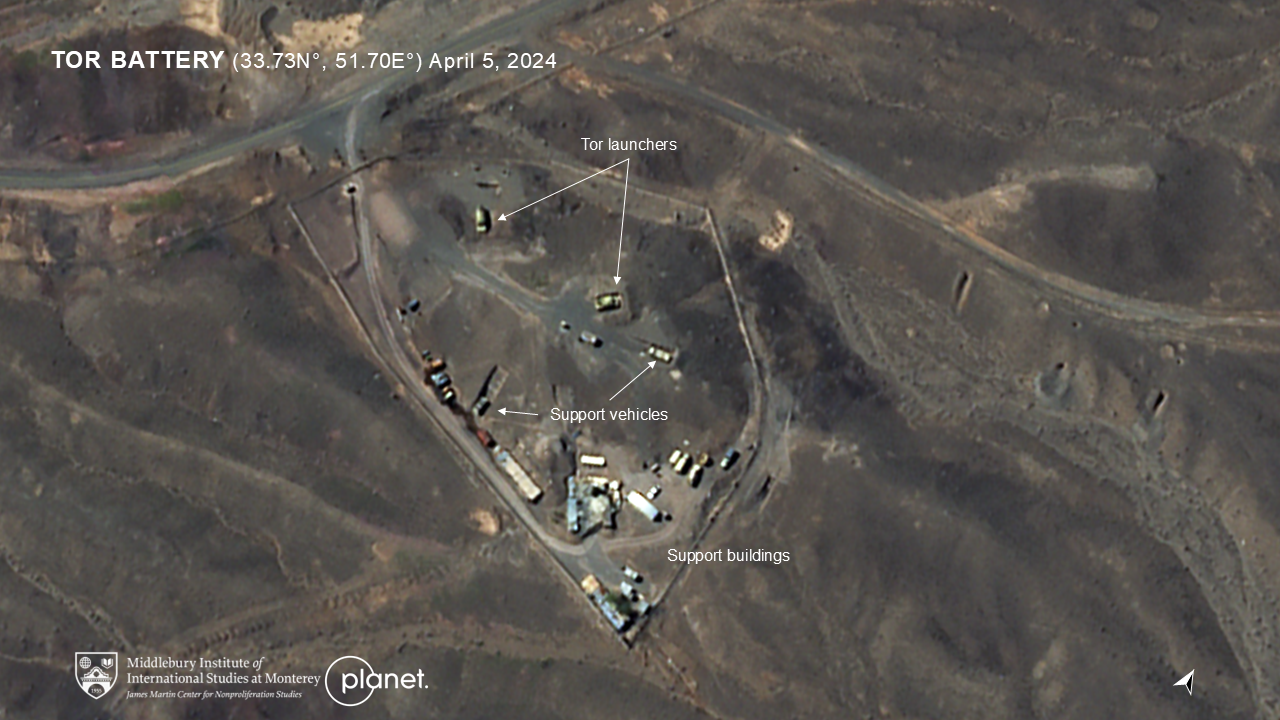
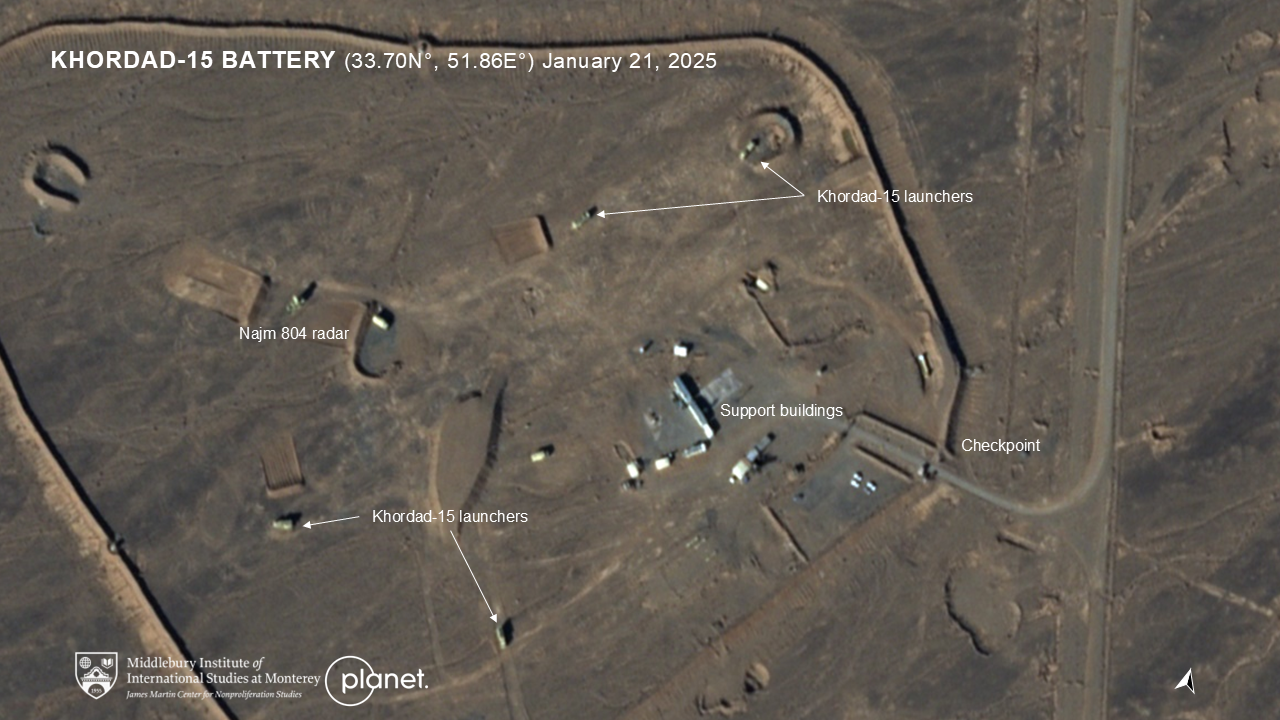
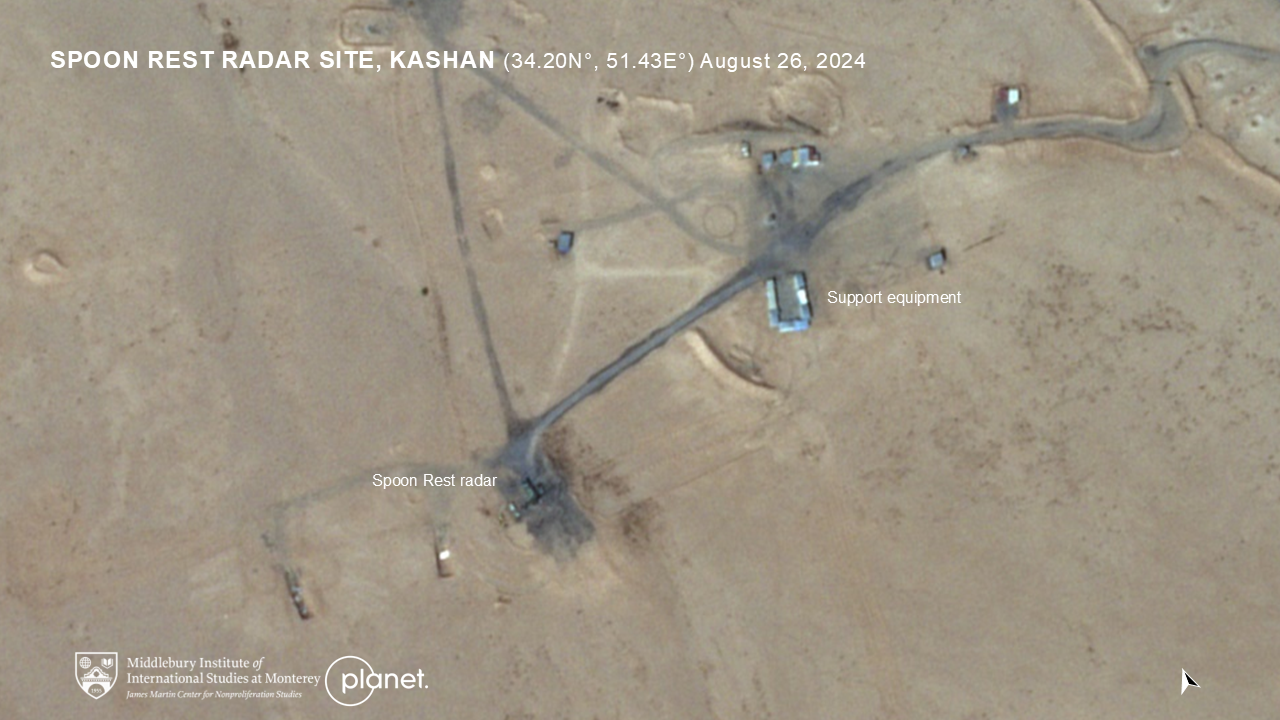
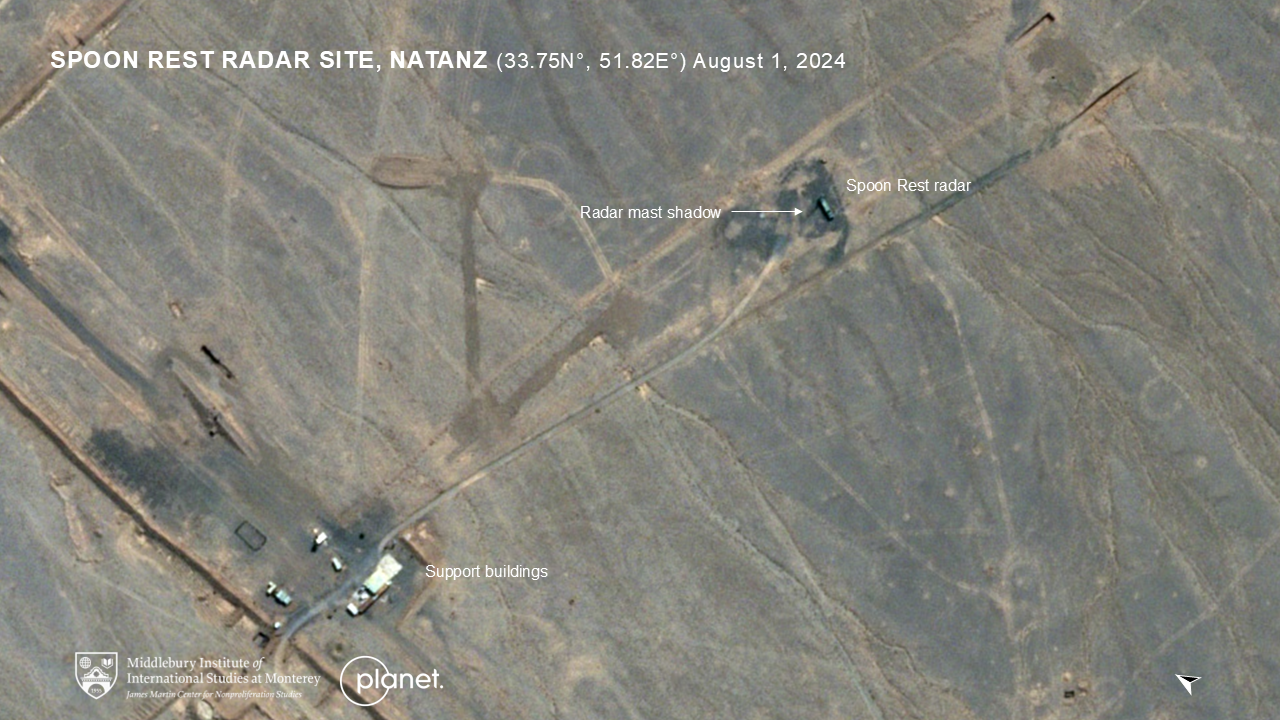
But the most interesting aspect is the fact the radars had to be displayed on different screens, a sign that the systems — a hodgepodge of older radar designs — are not able to work cooperatively.
“It is surprising that the defenses for one of the most sophisticated sites is this siloed and fragmented,” Lair said. “I expected a little more sophistication for such an area of importance.”
Is there a chance the information was broadcasted on purpose, perhaps in a misleading way to throw off observers like Lair? While it’s impossible to know for sure, Lair said he doubts it’s three-dimensional chess.
“I think this is just a fundamental truth about humans: We eventually make mistakes. And sometimes redactors are bad at their jobs,” he said. “I think it’s an honest-to-goodness mistake because in a lot of other videos, they’re much more careful to blur out monitors like this.”
(It would also not be the first time that public imagery relating to Natanz shared by Iran became fodder for eager open-source analysts. In 2008 then-Iranian President Mahmoud Ahmadinejad visited the nuclear facility and was photographed on an extensive tour — images that included nuclear centrifuges — revealing what one analyst told The New York Times was “intel to die for.”)
That Iran’s defenses might not be as able to share data as previously believed could be notable for American or Israeli military planners as they weigh options against Tehran — but at least for a strike on Natanz, Lair said, the new information might not matter.
“We were surprised” by the findings, Lair said, “but when we thought about it more deeply, we were surprised by how little that changed the strategic calculus.”
That’s because Natanz includes a network of deeply buried underground facilities, which would be difficult to destroy with air strikes, even with so-called “bunker buster” weapons.
However, there could be implications for other nuclear sites that are less hardened, if the weak networking holds true across Iran’s national defenses. Ironically, it also could mean that, while kinetic strikes could have an easier time getting through air defenses, a non-kinetic attack could be less effective as it would have trouble jumping system to system.
“I think maybe it suggests that, since the Iranians are using hardware of such diverse origins, maybe those systems don’t like taking to each other very much. It’s surprising that at the most sensitive sites has this kind of non-integrated defensive structure,” Lair said.
“And maybe that holds true for other places,” he added. “It’s hard to generalize, but it’s just surprising.”