AFA 2025 — An ongoing restructuring of the Sentinel ICBM program is expected to culminate in a new Milestone B decision by mid-2027, a key metric for a troubled program that Brig. Gen. William Rogers said today he has “every intention” of having fully operational before 2050.
“We’ll get Sentinel done, I am confident, before we would be ready to start fielding” a service life extension for the Minuteman III missiles that Sentinel is meant to replace, Rogers said in an interview with Breaking Defense and another outlet on the sidelines of the Air and Space Forces Association conference here.
The Government Accountability Office recently found the MMIII fleet could operate until 2050, but Rogers said Air Force officials were primarily trying to determine exactly how long the legacy missiles could last.
“So that date, I charged the team to plan to 2050 because, not because I don’t think I’m gonna crush that date with Sentinel. I have every intention of beating that,” he said. Instead, that date was forecast to correctly understand the “buffer on the back end, because this is the land leg of our nuclear triad.” Previously, Rogers said that the Air Force assessed the MMIII missiles, which are maintained by Boeing, could operate until 2045.
“I said, ‘Let’s go five more years and just take a look at what that would mean,’” he said.
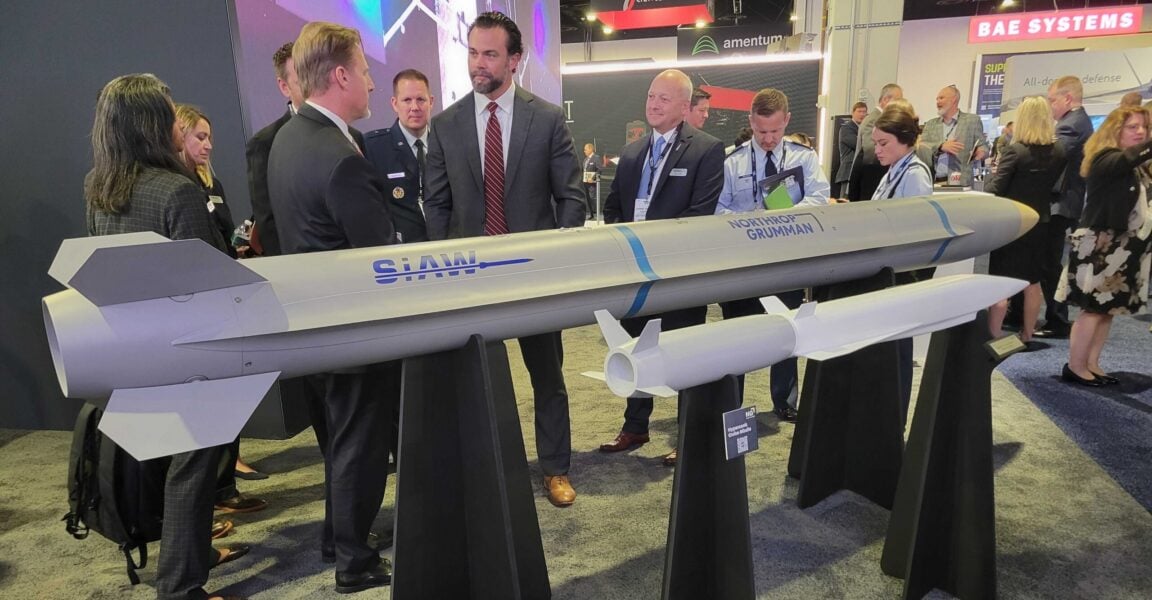
Sentinel is in the midst of a widespread literal and fiscal restructuring after in July 2024 Pentagon officials announced that the program, led by prime contractor Northrop Grumman, suffered a projected cost breach of roughly 81 percent. The Pentagon in the process pegged a new pricetag for Sentinel at $141 billion, a number that Rogers said Air Force officials are treating as a “cap.”
The Pentagon’s review also rescinded the program’s Milestone B decision, DoD parlance for the approval of a program to enter engineering and manufacturing development (EMD). The new Milestone B decision planned for 2027, which must be approved by the Office of the Secretary of Defense, would formally restart the EMD phase, even as work is ongoing. The Air Force plans to acquire 634 Sentinel missiles and an additional 25 for EMD.
“Our nationwide industry team has made substantial progress under the EMD contract, maturing Sentinel’s design and reducing risk as we prepare for production and deployment of this essential, national security capability,” a Northrop Grumman spokesperson said in a statement.
“We’ve tested every segment of Sentinel, including recent static fire qualification tests on stage 1 and stage 2 segments, we’ve resumed silo design work and made progress designing and testing support equipment. We will continue to work closely with the Air Force to restructure the program to meet the Air Force’s cost and schedule requirements. At this time, we defer questions about the timeline for milestone B to the Air Force Public Affairs Office,” they added.
Although the restructuring temporarily halted some aspects like the design of silos and launch centers, “There’s not much paused at all,” Rogers said. “And, in fact, we paused very little on the program overall,” he added, pointing to work that continued like the development of the Sentinel missile itself.
Earlier this year, Air Force officials revealed they no longer plan to reuse hundreds of Minuteman III silos to house the forthcoming Sentinel, and instead will now dig new silos, also known as launch facilities. The change is largely driven by discoveries in recent years, according to Rogers, including the need to remediate the presence of asbestos and lead paint, along with “unexpected variations” in the silos’ concrete.
Through updated market research conducted as part of the Sentinel’s restructuring, “The business case was actually better in terms of cost and schedule for just rebuilding new [silos] on the same sites,” Rogers said.
Rogers said a key way to speed up Sentinel, with attendant benefits like lowering costs, comes in the silo’s design itself. According to the general, a new approach now entails more simple modules “that can be built in a centralized spot” and shipped onsite for easier construction.
Drilling new silos also affords the opportunity to “mitigate” risks for fitting the Sentinel, which is somewhat larger than its MMIII predecessor, in existing silos. A new silo design would ameliorate those risks, Roger said, and provide more space to maintainers for upkeep.
As Breaking Defense previously reported, the Air Force recently took its first MMIII silo offline at F.E. Warren Air Force Base in Wyoming. Rogers said that launch facility is the only silo decertified so far, which was shut down to help inform planners of what equipment could be harvested and what steps are required in the process.
When the Air Force originally awarded the Sentinel contract, the service charged Sentinel prime contractor Northrop with laying cabling for the missiles’ facilities. As part of the restructuring, a mutual decision was made to reassign that cabling work to the Army Corps of Engineers that for now is focused at F.E. Warren, which Rogers said could in turn more aptly task better equipped telecommunications companies.
“Some parts of Sentinel’s infrastructure work — like laying fiber across hundreds of remote missile field sites — may be done more affordably by those who specialize in it every day. Rather than having Northrop perform that work, the Air Force and our industry partners agreed it makes more sense to leverage alternate methodologies, such as leveraging the U.S. Army Corps of Engineers as the design and construction agent for the utility corridor at F.E. Warren, along with local subcontractors,” Rogers said.
“This approach taps into community expertise and strengthens the local industrial base that supports our mission. We’ll also remain flexible with who performs the work to keep the program on cost and schedule while delivering the best quality product,” he added.
The recent GAO review also found that the Air Force could reintroduce multiple independently targetable reentry vehicles (MIRVs) for the MMIII fleet to mitigate potential delays with Sentinel, a previous feature of the missiles that was removed due to arms control requirements. Rogers acknowledged that a decision to re-MIRV the MMIII would require a policy change by the US government, though he said such a decision would be technically feasible.
“Would I be postured to support [it] if I was given the order? Yes,” he said.
PHOTOS: AFA 2025

 Gallery








Breaking Defense Video