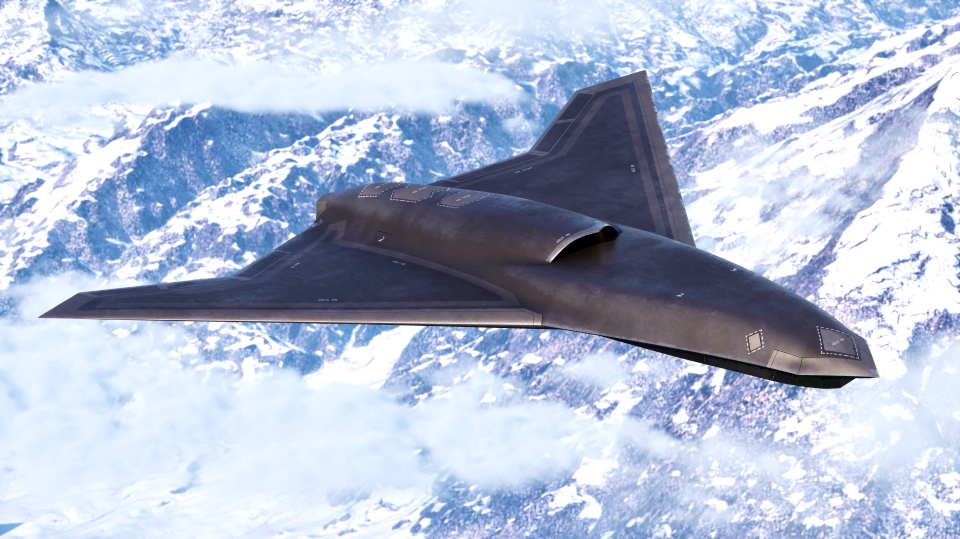
WASHINGTON — Lockheed Martin’s secretive Skunk Works advanced development arm has unveiled a new project — a stealthy autonomous drone it calls Vectis that Lockheed intends to fly by the end of 2027.
The first Vectis prototype is currently “in progress,” but is envisioned as a large “Category 5” reusable drone designed to be customizable to match shifts in the threat environment, said OJ Sanchez, Skunk Works’s vice president and general manager.
“Vectis provides best-in-class survivability at the CCA [Collaborative Combat Aircraft] price point,” Sanchez told reporters ahead of the Air Force Association’s Air Space and Cyber conference. “Prototype parts are ordered, the team is in work, and we intend to fly in the next two years.”
Lockheed sees the range, endurance and flexibility of Vectis’s design as key to its appeal. Despite Sanchez’s reference to CCA, the aircraft wasn’t designed for the second iteration of that competition or any competition in particular. Rather, he said, it was developed by Skunk Works for the US and international markets based on feedback it had heard from multiple customers about the future battlefield.
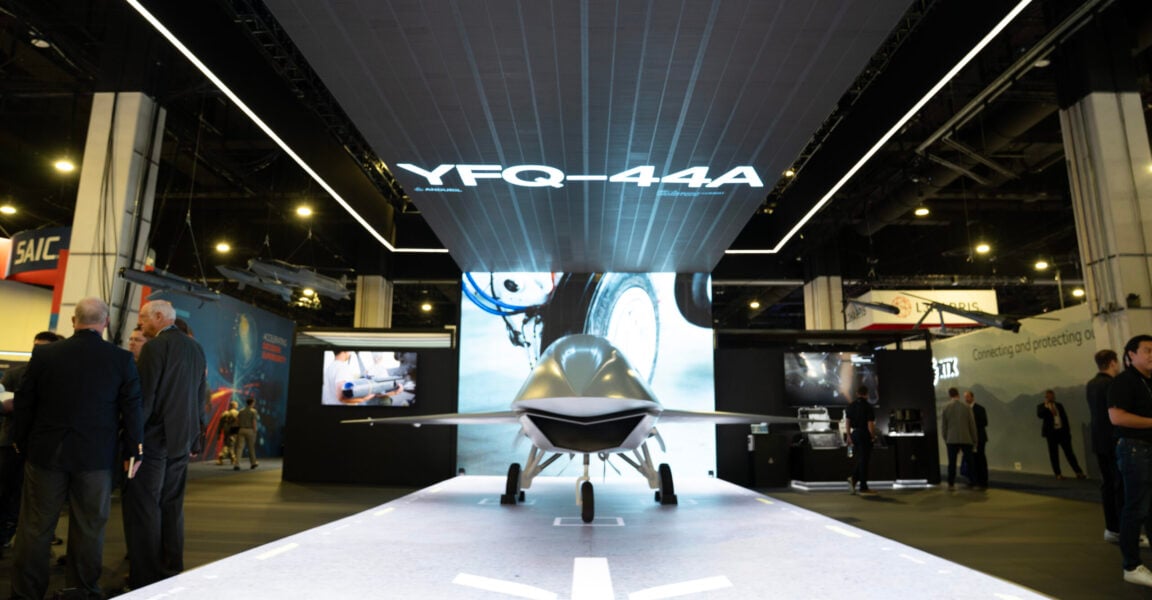
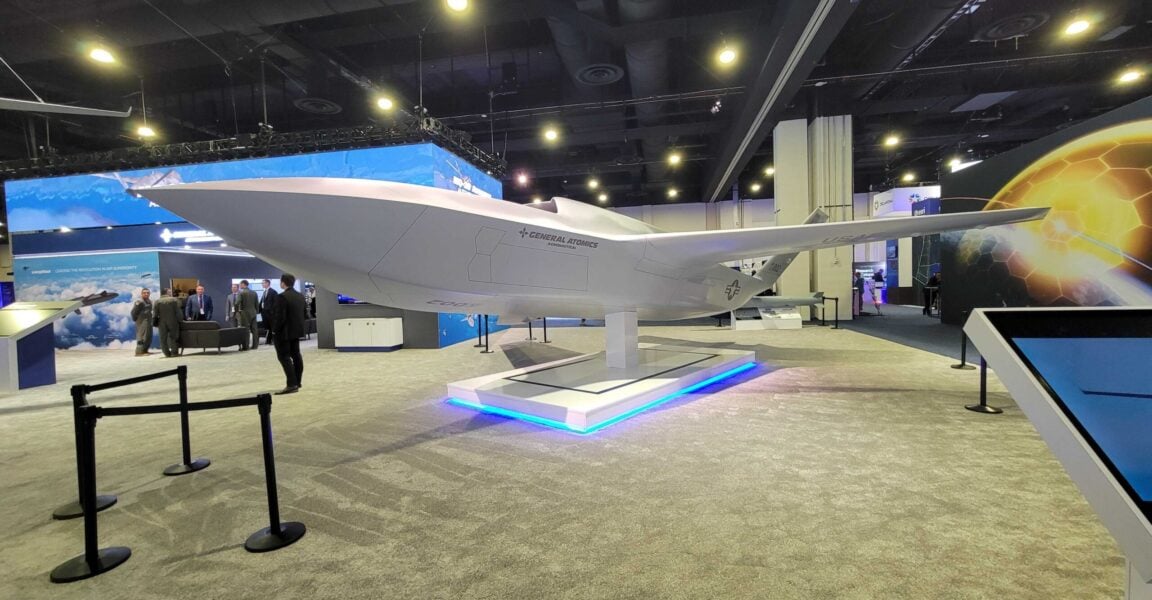
RELATED: Air Force picks Anduril, General Atomics for next round of CCA work
Vectis can carry out mission sets ranging from air-to-air, air-to-ground and ISR, and has an open systems architecture allowing it to interface with platforms and mission systems not built by Lockheed Martin, he said.
Certain aspects of the drone — such as which payloads it can carry, or whether it is optimized for regular operations or used less frequently on deployments — can be fine-tuned even further to meet a customer’s specific requirements.
For instance, “we will have built into it the ability for it to be a daily flyer, reliably work alongside its crew teammates, to be able to integrate into operations for training, as well as for deployment,” Sanchez said. “At the same time, if the requirement is ease of storage and ease of assembly, it’s absolutely built into the design. … That’s where we’ll work closely to listen with any individual customers and go from there on their operations choice, but the flexibility is built in.”
As with most Skunk Works projects, Sanchez declined to comment on certain aspects of the aircraft’s design, such as its engine or top speed, though he noted that Lockheed’s analysis “doesn’t point toward supersonic [speeds]” as a requirement for drones.
EXCLUSIVE: Navy taps four aerospace primes to design autonomous drone wingmen
In its current iteration, Vectis would be dependent on a runway to take off and land. However, it is designed to be maintainable in a deployed environment, with a simple design made of “and durable, reliable materials” and easy access to the aircraft’s internal systems if repairs need to be made, Sanchez said.
While Vectis has not flown, Lockheed has conducted operational analysis and simulations that paired the drone with the F-22 and F-35, with Sanchez noting that its low-observable signature and communications gear are “compatible” with fifth- and sixth-generation aircraft.
It was also informed by previous experience designing tailless aircraft like the X-44 MANTA, Lockheed’s work building a sixth-generation fighter prototype for the Air Force’s Next Generational Air Dominance program, and prior demonstrations involving open missions systems and autonomy, he said.
“We’re building in that kind of autonomy, that flexible autonomy, if you will, so that we can work with more countries, more partners, to really listen to what their needs are,” he said. “That flexibility has been demonstrated through multiple demonstrations. Now we’ll go out and build it, and we’ll work to prove in the open air.”
While Sanchez stopped short of saying Vectis would certainly be Lockheed’s offering for CCA increment 2, it could be a fit depending on the Air Force’s final requirements for the program.
“Should the US Air Force find that they need a highly survivable platform with the flexibility that Vectis enables for increment 2, I think it will be a great candidate,” he said. “We respect their process as they go through and see what’s needed.”
PHOTOS: AFA 2025

 Gallery