Land Warfare

Driscoll vows Silicon Valley model is the Army’s future

At AUSA 2025, Army Secretary Daniel Driscoll took aim at traditional primes, saying the future Army will “break down barriers until we measure acquisitions not in years and billions, but months and thousands."

Secretary of the Army, Hon. Dan Driscoll, visits U.S. Army Rangers assigned to 1st Battalion, 75th Ranger Regiment, at Hunter Army Airfield, Savannah, Ga., August 26, 2025. (U.S. Army photo by Sgt. David Resnick)

AUSA 2025 — Army Secretary Daniel Driscoll vowed this morning that “organizational acquisition reform” is on the horizon, promising to adopt a “Silicon Valley” approach to getting tools, technology and weapons into the hands of soldiers faster than the traditional way of doing business.

“After seeing the power of combining venture capital money and mentorship with startup culture, I can say unequivocally that the Silicon Valley approach is absolutely ideal for the Army,” Driscoll said, according to prepared remarks.

“It will identify promising startups, quickly fund them and get minimally viable products to soldiers in weeks,” he later added. 

The secretary’s comments come after the service announced the FUZE initiative last month — a venture capital-like acquisition model designed to speed up the private development of emerging technologies for soldiers. The program aims to invest $750 million over the next year and, as Driscoll announced this morning, it will increase to $765 million the next year. 

“That’s an over 150 percent increase in the Army’s funding towards emerging tech and innovation,” he said. 

Driscoll announced the first FUZE competition, called xTechDisrupt and “powered by” Silicon Valley startup accelerator Y Combinator, would start “right here at AUSA.”

“Like Shark Tank, contestants will make a product pitch for $500,000, then sprint for 30 days to launch their breakthrough tech,” he said.
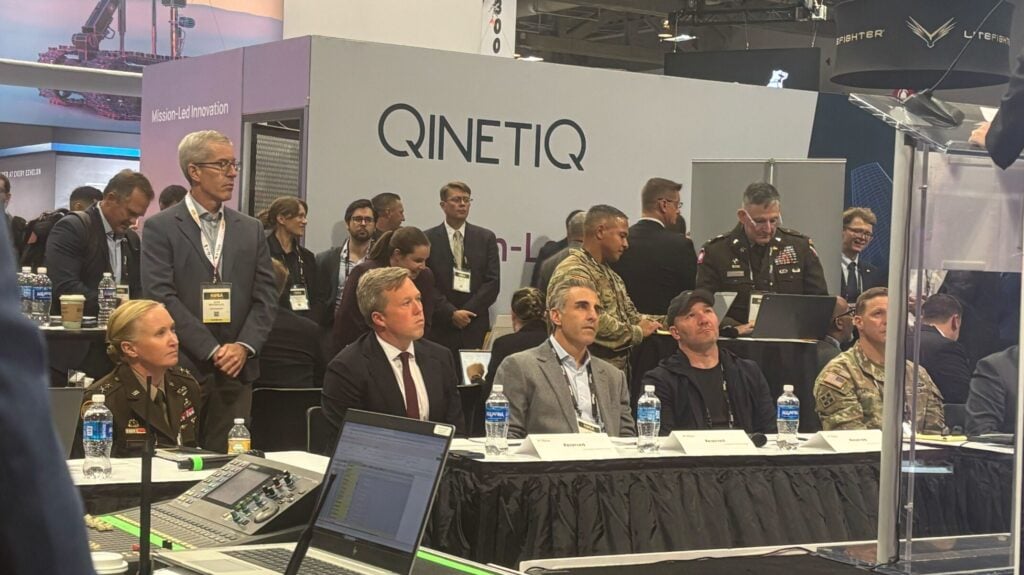
Secretary of the Army Daniel Driscoll listens to pitches at the first of the Army’s FUZE accelerator event at AUSA on Oct. 13, 2025. (Carley Welch / Breaking Defense)

Hours after Driscoll’s morning address, he sat before vendors who pitched their products for the electronic warfare arm of the FUZE program. Tomorrow the secretary plans to hear pitches on unmanned aerial systems.

Driscoll, like other key Pentagon appointees, hails from the private equity and venture capital worlds, with previous jobs that include chief operating officer of the $200 million Flex Capital VC fund.

The point of this new acquisition model is to break down barriers, Driscoll said, emphasizing that the current way the Army operates has “lined the primes’ pockets for so long.” The line echoed previous eyebrow-raising comments Driscoll made in May when he said he would consider it a “success” if he sees a prime defense contractor shutter on his watch.

Driscoll argued this morning that primes contribute to the “12-18 month contracting cycle” that prohibits the service from providing weapons and tech to the warfighter at the speed that is necessary. 

“No one can predict the next war, but we cannot wait. We cannot fucking wait to innovate until Americans are dying on the battlefield,” he later added.

Simultaneously, this morning Driscoll teased an upcoming acquisition shakeup at which the Army has been nodding for several months. 

“Our acquisitions enterprise is more complicated than it should be, and that’s getting in the way of empowering soldiers. So, we will combine it all under a single organization that reports directly to senior Army leadership,” Driscoll said. “We want simple, fast and efficient. We want to get soldiers the tools they need now, not a decade in the future. We will break down barriers until we measure acquisitions not in years and billions, but months and thousands.”

PHOTOS: AUSA 2025

PHOTOS: AUSA 2025

A view of a show floor at the 2025 Association of the US Army's Annual Meeting & Exposition in Washington, DC, Oct. 13, 2025. (Rachel Cohen/Breaking Defense)
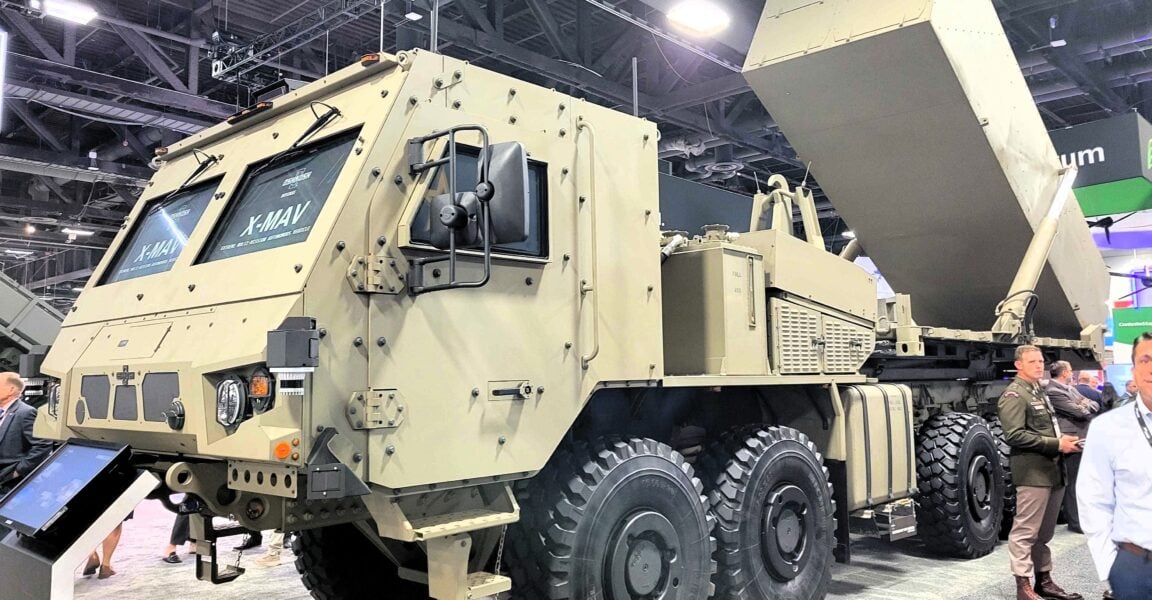
Oshkosh Defense debuts its Extreme Multi-Mission Autonomous Vehicle (X-MAV), an "autonomous-capable launcher solution that is engineered to support the future of long-range munitions," Oct. 13, 2025, at the Association of the US Army's Annual Meeting & Exposition in Washington, DC. (Rachel Cohen/Breaking Defense)
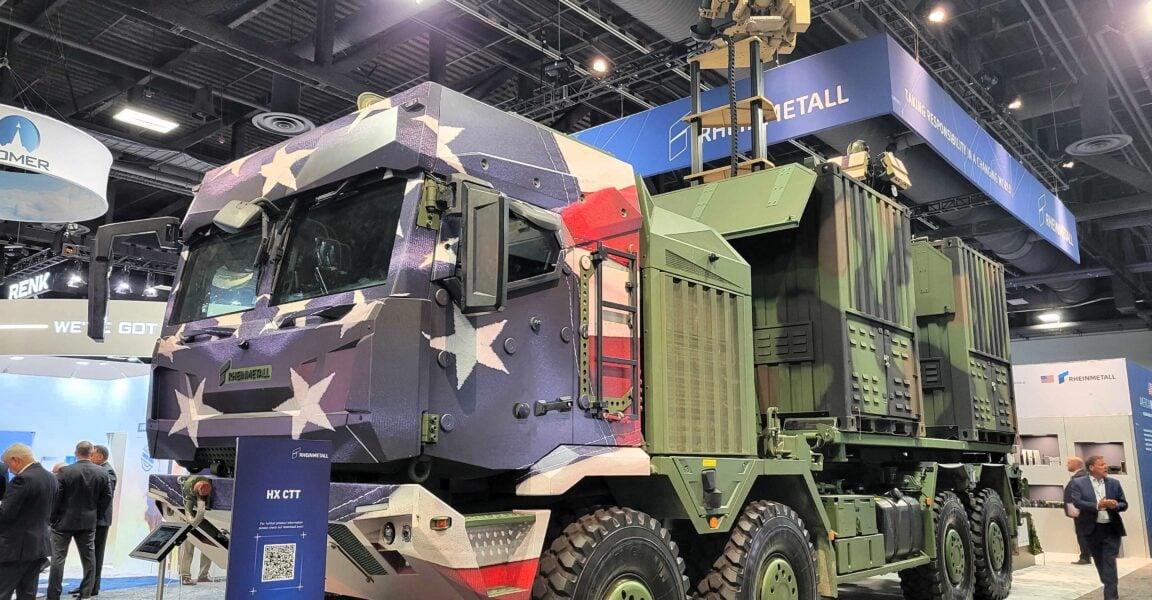
Rheinmetall brought its HX Common Tactical Truck, built in partnership with GM Defense, to the Association of the US Army's Annual Meeting & Exposition, Oct. 13, 2025. (Rachel Cohen/Breaking Defense)
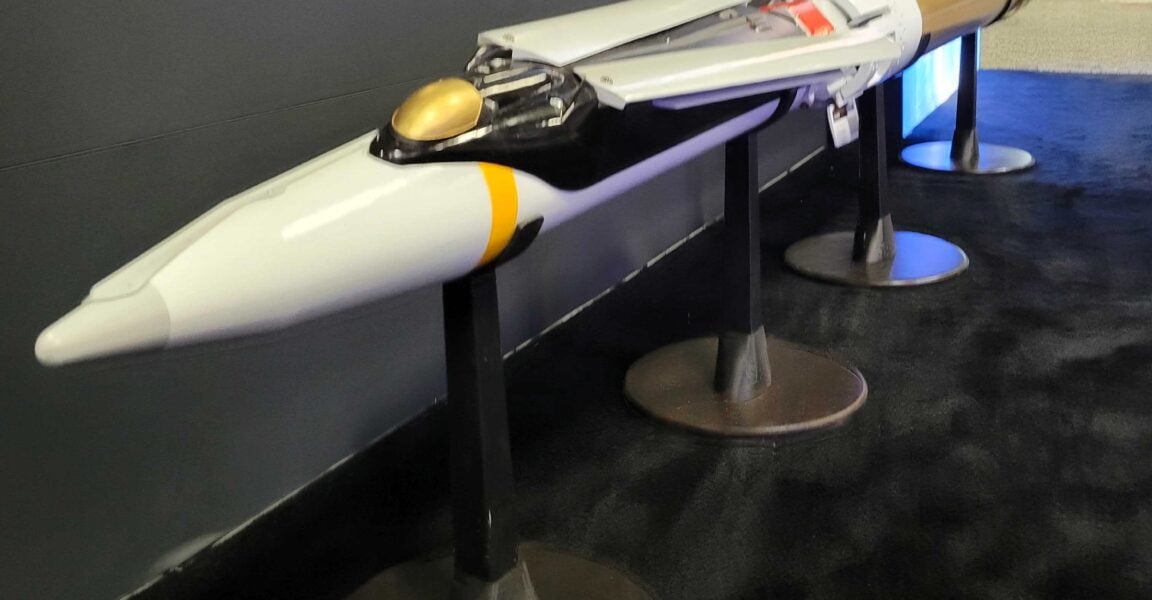
Saab's Ground-Launched Small Diameter Bomb is based on Boeing's SDB and Lockheed Martin's Multiple Launch Rocket System. (Rachel Cohen/Breaking Defense)
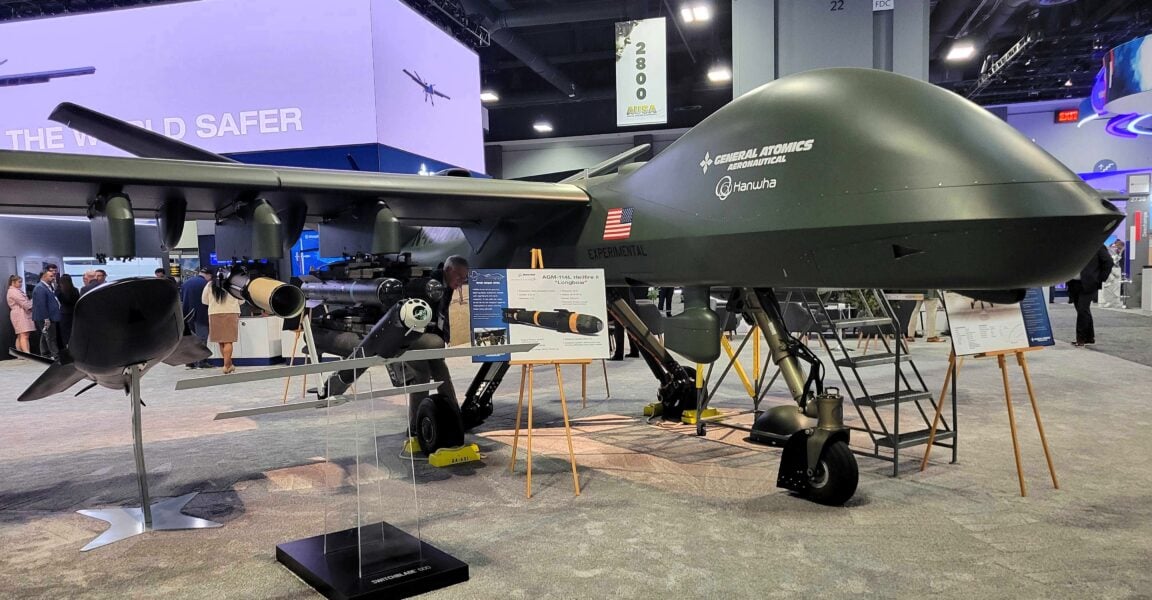
General Atomics Aeronautical Systems and Hanwha Aerospace are collaborating on a short takeoff-and-landing version of the MQ-1C Gray Eagle drone. (Rachel Cohen/Breaking Defense)
Rafael's Iron Beam is a 100kW-class laser weapon on track for operational use this year. (Aaron Mehta/Breaking Defense)
Honeywell's SAMURAI anti-drone system is one of myriad counter-drone technologies on display at AUSA 2025. (Daniel Woolfolk/Breaking Defense)
Hanwha Defense USA pitches its 155 mm, 52-caliber K9 Thunder self-propelled howitzer at the Association of the US Army's Annual Meeting & Exposition in Washington, DC. (Rachel Cohen/Breaking Defense)
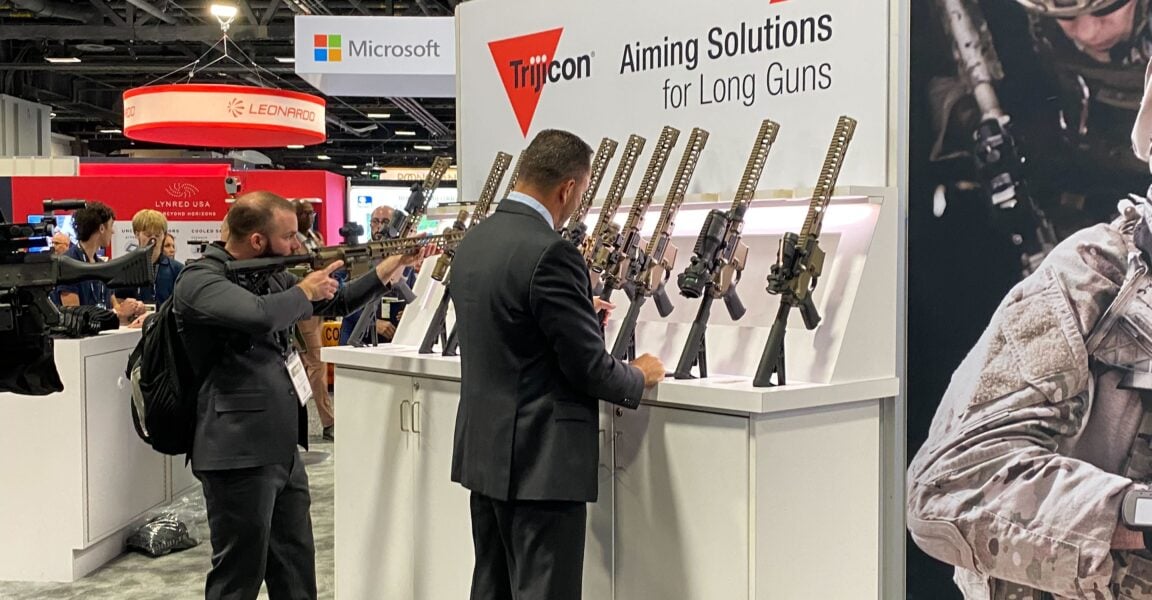
Conference attendees try out Trijicon's firearm sights and scopes. (Aaron Mehta/Breaking Defense)
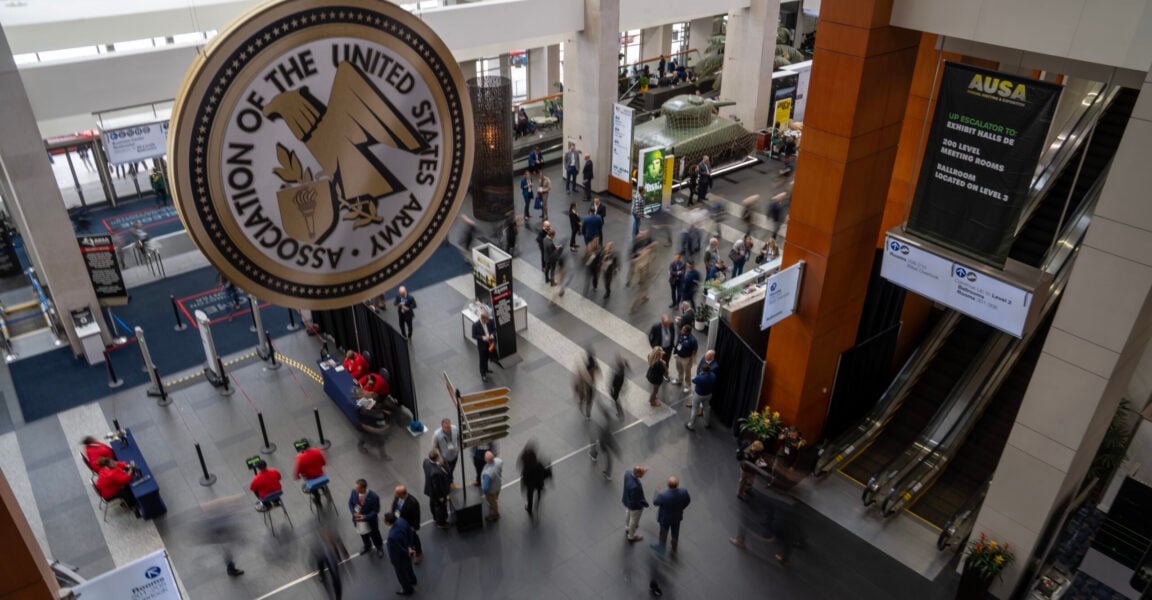
Attendees roam the halls of the Walter E. Washington Convention Center in downtown Washington, DC, Oct. 13, 2025. (Daniel Woolfolk/Breaking Defense)
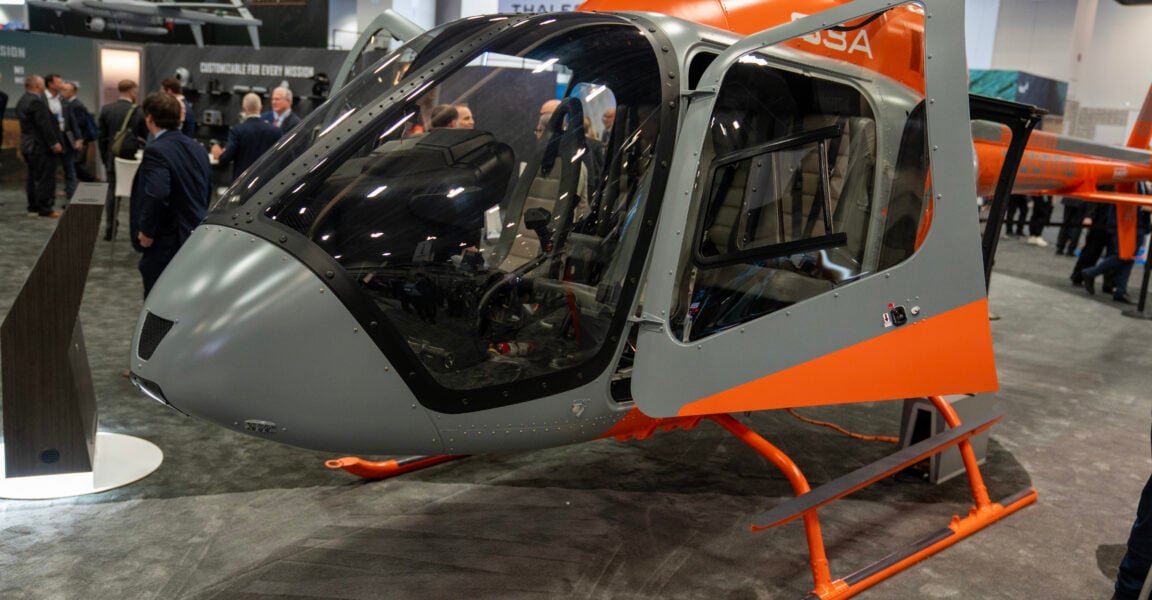
The Bell 505 Jet Ranger X is a contender for the Army's Flight School Next program. (Daniel Woolfolk/Breaking Defense)
GM Defense's Infantry Squad Vehicle-Utility is based on the Chevrolet Colorado ZR2 and can be adapted to carry mortars, counter-drone equipment and more. (Aaron Mehta/Breaking Defense)
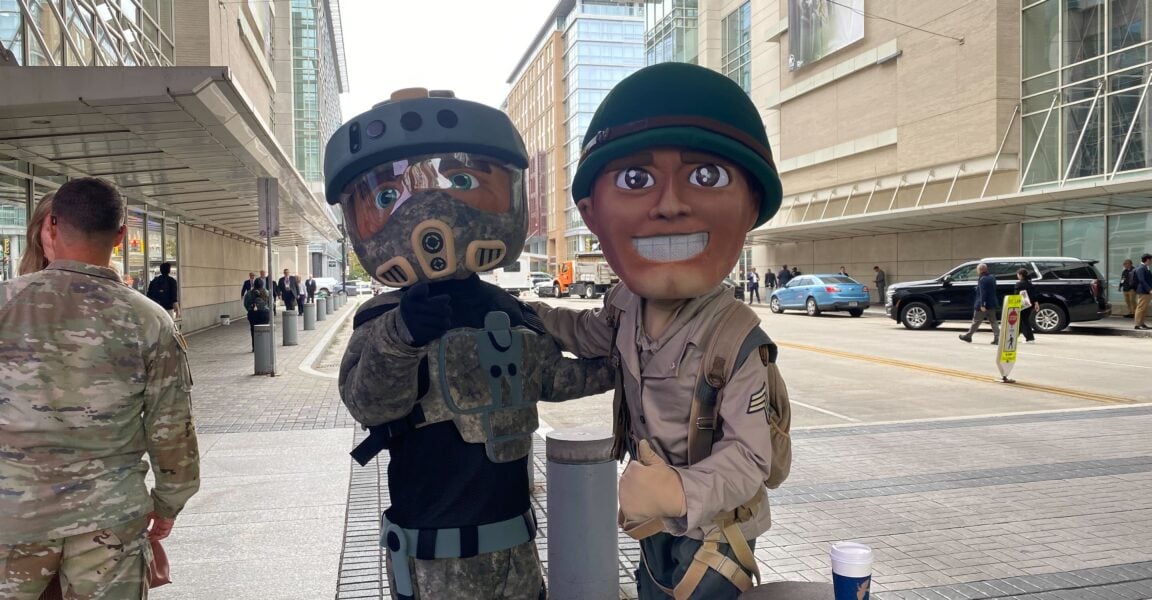
Name a more iconic duo. I'll wait. (Aaron Mehta/Breaking Defense)
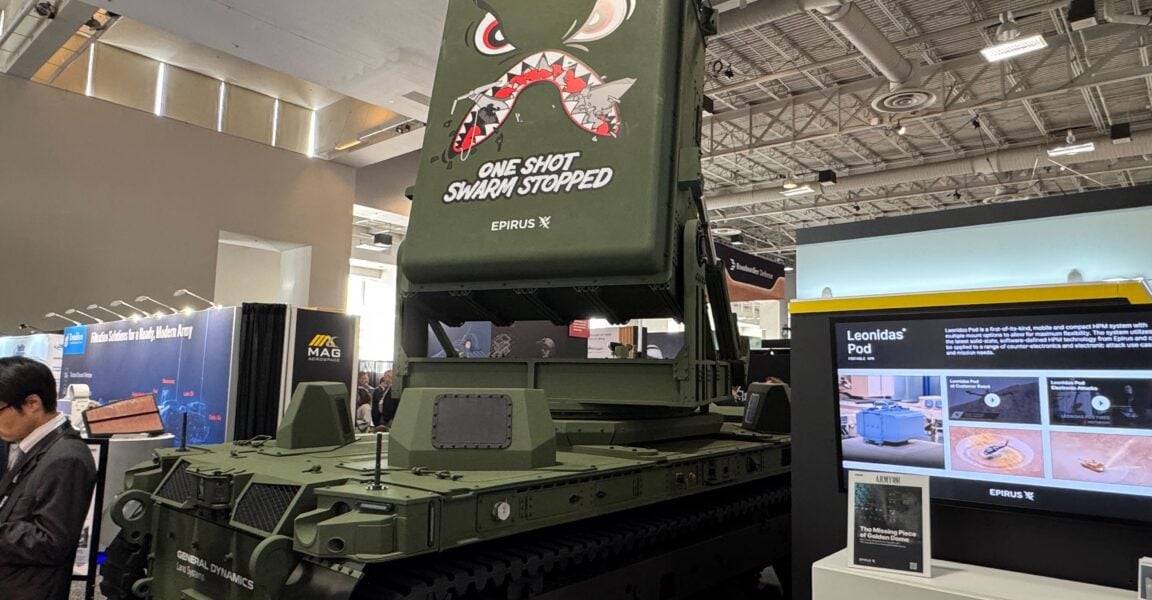
Epirus’s Leonidas high-powered microwave system is mounted on top of a General Dynamics land vehicle. (Michael Marrow/Breaking Defense)
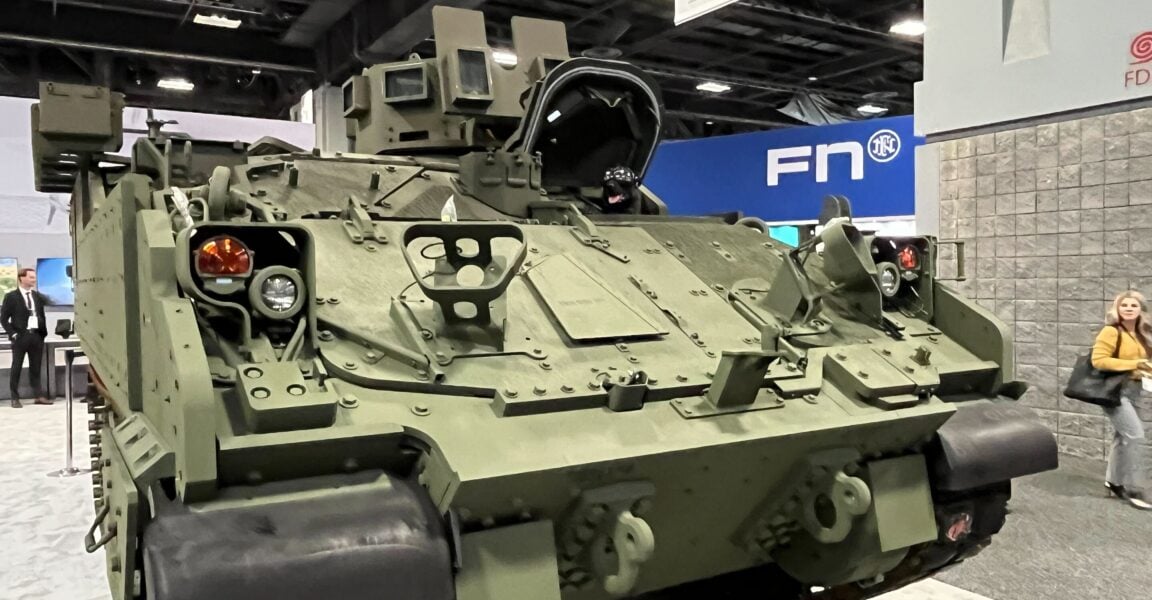
A four-legged attendee checks whether the infantry carrier variant of BAE Systems' Armored Multi-Purpose Vehicle can also carry canines. (Sydney Freedberg/Breaking Defense)
It wouldn't be a defense trade show in 2025 without a robot dog on hand. (Aaron Mehta/Breaking Defense)
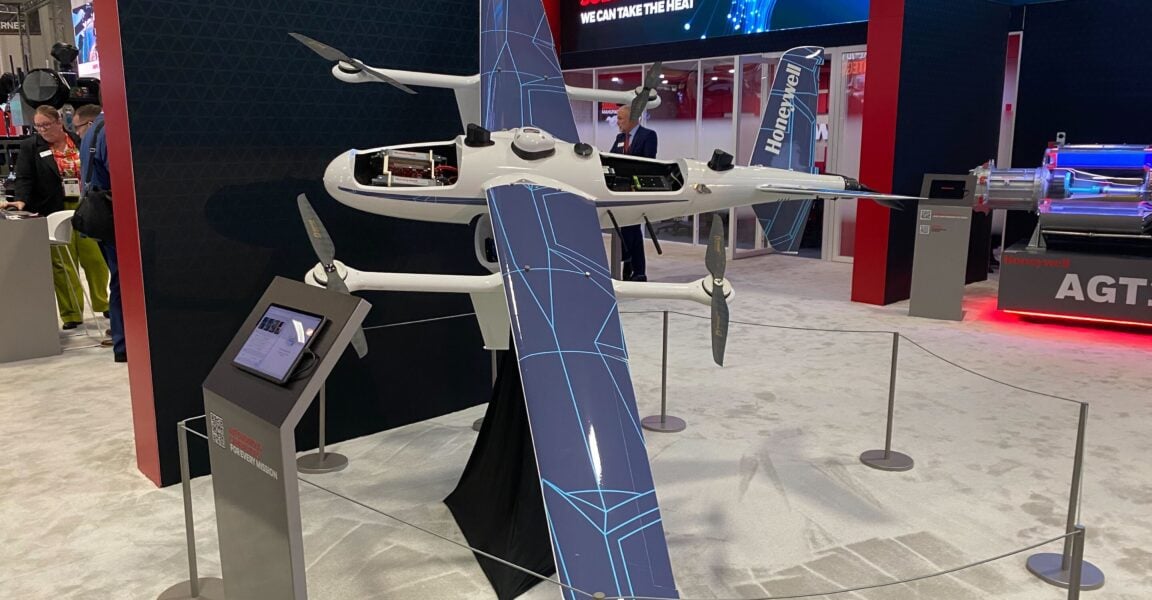
Honeywell showcases a hybrid quadcopter/fixed-wing drone on the show floor. (Aaron Mehta/Breaking Defense)
RTX displays its missiles and a Lower Tier Air and Missile Defense Sensor. (Aaron Mehta/Breaking Defense)