AUSA 2025 — Major programs from the Army’s aviation portfolio have been on the chopping block as part of its overarching transformation initiative, dubbed ATI. But between the ATI and the looming acquisition shakeup, the head of the Program Executive Office for Aviation told Breaking Defense that not only will the office’s mission remain the same, but he sees the changes as a way to double down on some of the service’s biggest priorities.
“It comes down to the fundamental [fact] that our mission really hasn’t changed here at PEO Aviation. We design, deliver, support the very best modernized capabilities to soldiers, formations, our partners and allies. That’s not fundamentally changing,” PEO of Aviation Brig. Gen. David Phillips told Breaking Defense in a recent interview.
“What has changed is that we’ve doubled down on the Army’s priorities, and I believe our Army senior leaders and Congress are helping us remove some of the barriers to acceleration,” he added.
The priorities, Phillips said, are the Future Long-Range Assault Aircraft (FLRAA) program, drones, launched effects and the High Accuracy Detection and Exploitation System (HADES) program. The ATI put the helo FLRAA program at the top of the list of the service’s aviation priorities and as a result, the program, which is estimated to cost around $70 billion, is slated to potentially take funds away from other aviation programs.
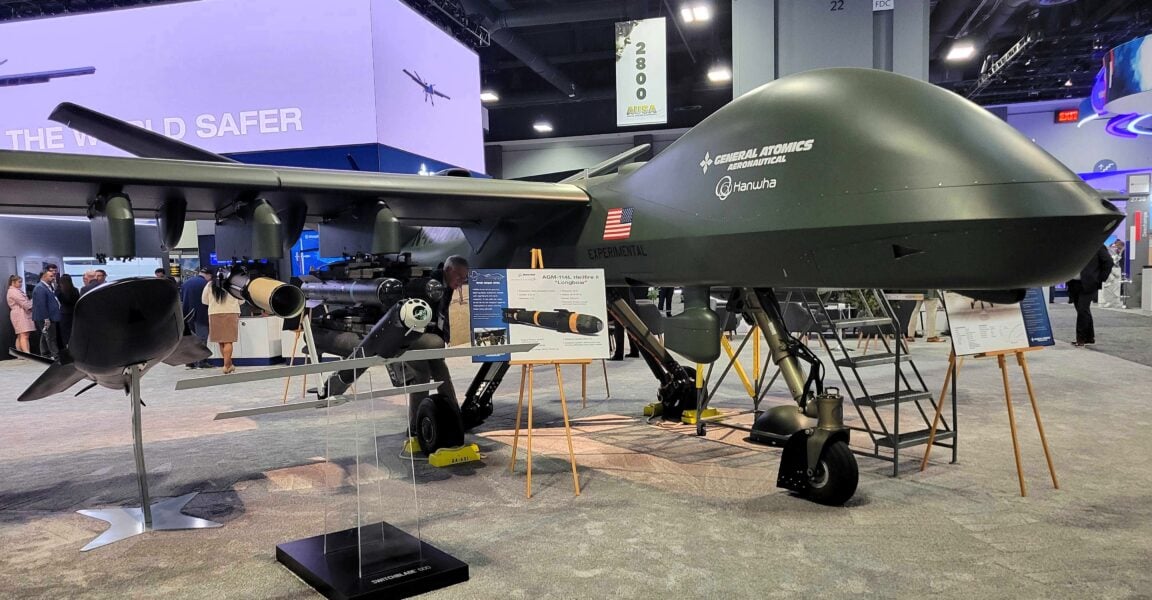
For example, the Army is halting buys of General Atomics’ Gray Eagle drone, shelving AH-64D Apaches, and stopping the Future Tactical Uncrewed Aircraft System competition. It’s also considering ending General Electric’s development of the Improved Turbine Engine Program (ITEP) and maybe reducing the quantity of HADES aircraft to fund FLRAA, Breaking Defense has previously reported.
Phillips said he was unable to provide much context for the future of such programs, however he did say that his office is continuing to conduct testing on the ITEP initiative, which is slated to provide a new engine for UH-60 Black Hawks and AH-64 Apaches. Despite receiving money from the reconciliation bill, it’s still unclear if the service will move forward with the program.
“So far we’ve been really successful with integration testing. We also have a lot of ground testing on the engine in altitude chambers. We’re continuing on with the resourcing we have available, and at the same time representing the course of action that Army senior leadership has,” Phillips said, adding that he sees an opportunity to complete the preliminary flight testing in fiscal 2026, at which point future procurement priorities will dictate where they go from there.
In regards to the HADES program, meant to be the service’s next-gen high-altitude intelligence, surveillance and reconnaissance (ISR) aircraft, Army senior leaders told reporters in the spring that the service may buy six HADES aircraft instead of the originally intended 12 due to the rearranging of priorities spurred by the ATI. Phillips declined to comment on the status of the decision, but said it would ultimately depend on what the Army tells PEO Aviation to procure.
Nonetheless, Phillips said he believes HADES is “probably one of the best examples of agile and adaptive acquisition” given the speed at which the program has been moving. Army officials have said they want to have an initial aircraft ready for the force by the end of 2026 or early 2027, and last month the Sierra Nevada Corporation (SNC) announced it received the second aircraft to be configured for the program. (SNC was awarded a 12-year indefinite delivery, indefinite quantity Army contract worth up to nearly $1 billion last year for the program.)
“We see real opportunity given the Army’s priorities and the Army’s very clear guidance, and the Secretary of War’s very clear guidance, on how to execute some of our priorities,” Phillips said, using a secondary name for the Secretary of Defense. “So really we look at 2026, [and] we’re very optimistic.”
PHOTOS: AUSA 2025

 Gallery