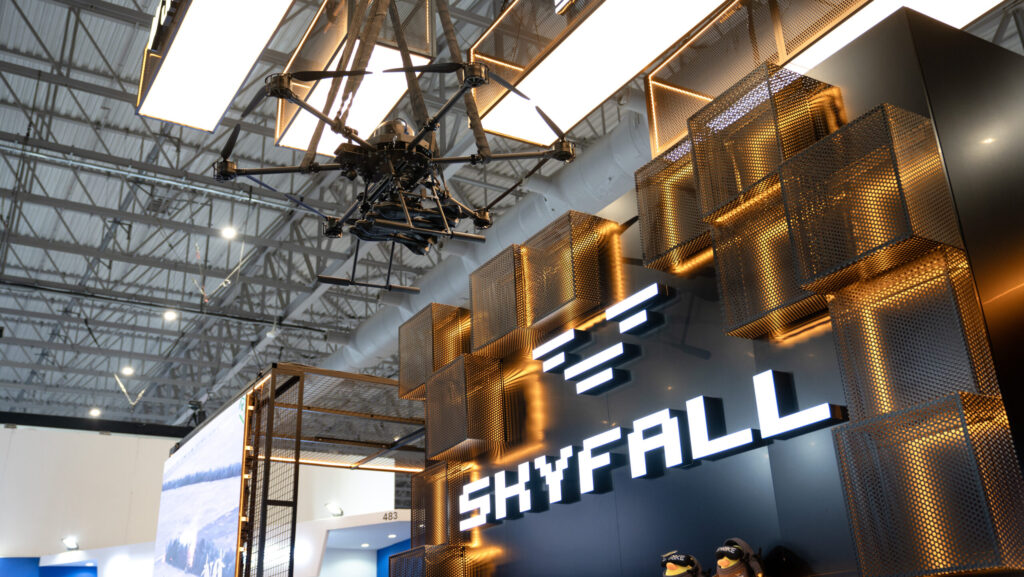
DUBAI AIRSHOW — As smaller unmanned systems have come to define the conflict in Ukraine, one Ukrainian drone maker has its wares on display here in Dubai, hoping to garner international attention and opportunities to build platforms for one of the biggest customers in the world: the US military.
“So the US government and the armed forces, they are waiting for our drones to appear in the American market, actually,” a representative for Skyfall said Wednesday in an interview with Breaking Defense on the sidelines of the Dubai Airshow here. Company officials requested anonymity for security reasons.
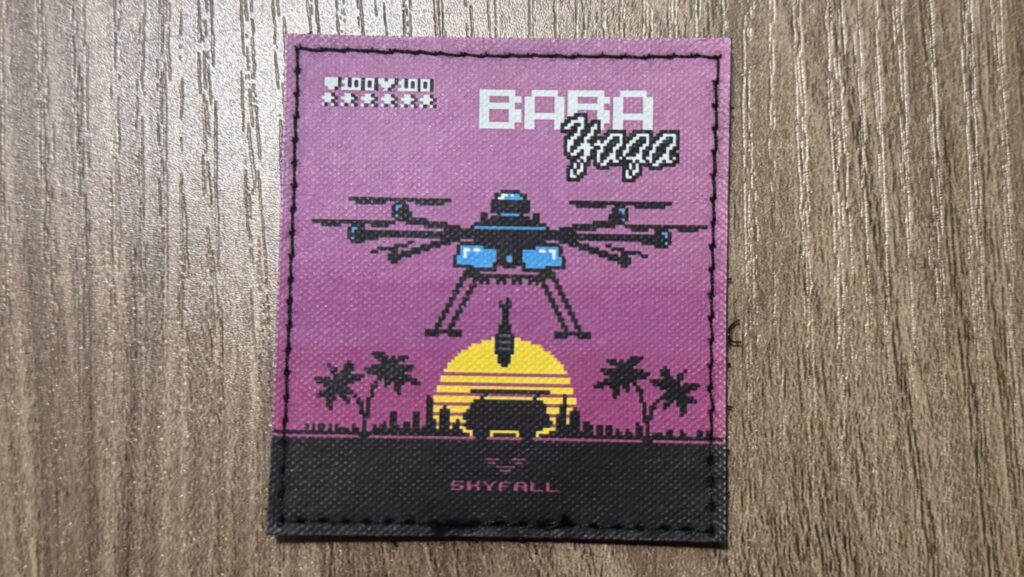
Founded in the wake of Russia’s invasion in 2022, Skyfall has quickly emerged as a producer of key unmanned systems like the Vampire — allegedly dubbed the Baba Yaga by Russian forces — and Shrike, a first-person-view drone.
But for the company’s products to find their way into the international market, the representative said, a regulatory framework needs to be established to clear the way for drone exports. Ukraine has recently expressed interest in selling its drones abroad, and the person said compacts must first be reached between Kyiv and potential customers like Washington.
RELATED: Ukraine’s startups want to export to the West, but Kyiv is standing in the way
In the meantime, they told Breaking Defense that Skyfall has been in contact with Western defense companies to be ready to go with arrangements like partnerships once government-to-government agreements are reached. A chief reason for Skyfall’s presence here, the person said, is actually to meet with NATO-aligned contractors, not necessarily those based in the Middle East, though they emphasized global interest is largely welcome.
Should those agreements come to pass, Skyfall could play a role in helping the US military ramp up its acquisition of unmanned systems, a top priority of the Trump administration. Army Secretary Dan Driscoll, for example, has now set a goal of buying one million drones over the next two-to-three years.
Skyfall is no stranger to the American drone industry, either. The company’s Vampire bomber drone is a member of the Defense Innovation Unit’s Blue UAS List, and the company representative said that the Skyfall participated in the DIU’s Artemis project aimed at fielding long-range, one-way unmanned systems. (When the Artemis participants were announced in March, DIU only said two unnamed Ukrainian teams had been involved.) The representative said manufacturing within America may also be on the table, regulations permitting.
“That would be nice for us to have a safer area for operating but … only according to the rules that our governments agree [to],” they said.
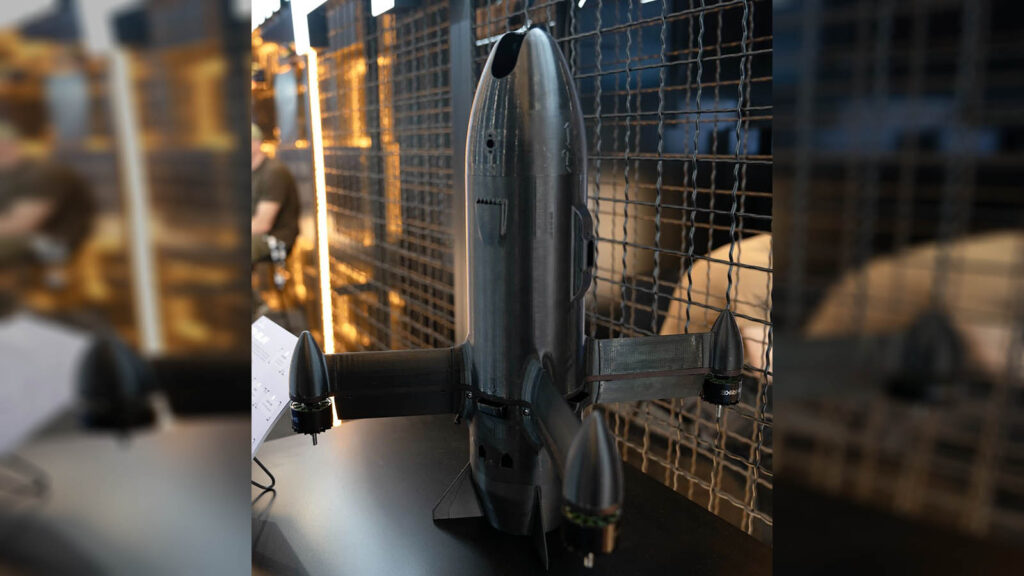
Beyond its signature attack drone offerings, Skyfall has developed an interceptor dubbed the P1-Sun and debuted it on an international stage in Dubai. The representative said the counter-drone system can take on targets like Iranian-made Shaheds, a class of unmanned systems that Russia has used in mass in Ukraine and that the US Army finds a particularly vexing challenge.
NATO countries are now racing to catch up with Ukrainian companies on the cutting edge of drone tech, whose systems are regarded among the best in the West due in large part to real-time feedback. The need to prevail on the battlefield, the representative said, is why companies like Skyfall have been able to find relative success with their tech.
“We are in different environments,” the person said. “We don’t have Friday pizza and days off.”
For Ukrainian firms like Skyfall, the Dubai Airshow can be a strange forum, where Russian armsmakers are in attendance too. Asked what it’s like to attend the show alongside Russian officials and defense companies, the representative said that Russian attendees will try to “provoke” them with propaganda, arguments and insults.
“We pay no attention towards them,” the representative said. “We just silently do effective work. Silently protect residential buildings, our people, kids, our families, and support our armed forces. That’s the priority for us.”
PHOTOS: Dubai Airshow 2025

 Gallery