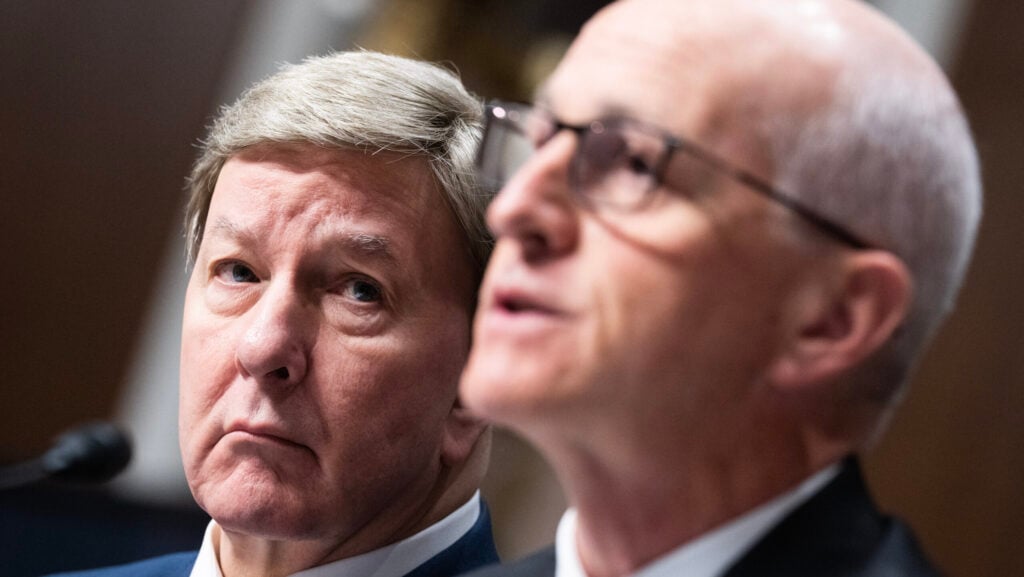
RNDF 2025 — The topline for the fiscal 2026 National Defense Authorization Act is shaping up to be about $8 billion higher than the president’s budget, the House Armed Services Committee’s top Democrat told Breaking Defense today.
“We’re going to put a marker out there that’s like $8 billion above the president’s budget, but we’ll see. It’ll depend on what the appropriators work out,” Washington Rep. Adam Smith said during an interview on the sidelines of the Reagan National Defense Forum.
Leaders on the House and Senate armed services committees, together with congressional leadership, are in the final stretches of hammering out a compromise version of the FY26 NDAA, with Smith stating that only “three or four issues” remain to be resolved.
“We’re making a lot of progress. I think we’ve come pretty close,” he said. “We’re trying to finalize that in the next 24 hours.”
Politico reported Wednesday that the NDAA — which was widely expected to be released on Thursday — was delayed as the White House and GOP leadership debated adding a Senate housing package, as well as other outside legislative provisions, to the bill.
RELATED: Can Congress pass a FY26 defense budget this year? Here are 12 key issues for lawmakers.
The additional $8 billion in defense funds come with caveats: It is possible that the final topline of the NDAA could change in the final hours of negotiations. In addition, Smith foot-stomped that it will ultimately be congressional appropriators that have the final word on the Pentagon’s topline budget for FY26, as the authorizing committees only provide funding recommendations and do not wield the power of the purse.
However a $8 billion increase to the topline defense budget — essentially a compromise from the House NDAA, which stuck to the Pentagon’s budget request, and the Senate numbers, which are $32 billion above the department’s request — could set the stage for a similar arrangement for defense appropriators.
Similar to the authorizing committees, the House approved a bill that adheres to the Pentagon’s request, while the Senate bill adds about $22 billion.