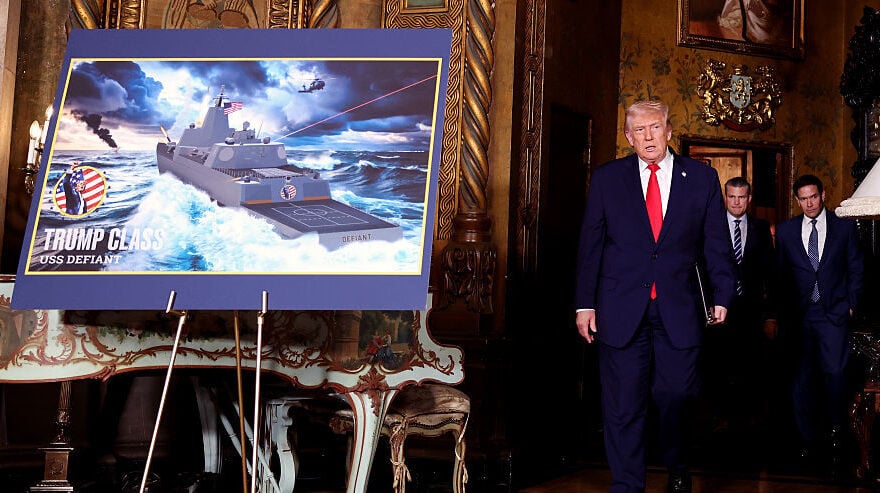
SURFACE NAVY 2026 — The first Trump-class battleship could cost up to about $21 billion if ordered today, with the price inching toward $22 billion if ordered in 2030, according to an estimate put forward by the Congressional Budget Office.
Eric Labs, an analyst with the CBO’s national security division, said in a presentation Thursday that based on cost-by-weight estimates, the lead battleship could range in cost from $14.3 billion to $20.6 billion if ordered today. Those estimates vary depending on the ultimate displacement — or weight — of the ship, as well as differing depending on the details of which historical US warship is used to inform the assessment, according to presentation slides published by the CBO.
If the Navy waits to order its first battleship until 2030, the price of the first battleship could increase to anywhere from $15.1 billion to $21.6 billion.
Follow on ships could cost anywhere from $9 billion to $13 billion per vessel if orders begin today, or from $10 billion to $15 billion if the first ship order is deferred until 2030, the CBO presentation stated.
IN DEPTH: What it would take to build Trump’s Golden Fleet ‘battleships’
In December, President Donald Trump announced that the Navy would buy new battleships as part of the White House’s “Golden Fleet” concept meant to solidify US naval power.
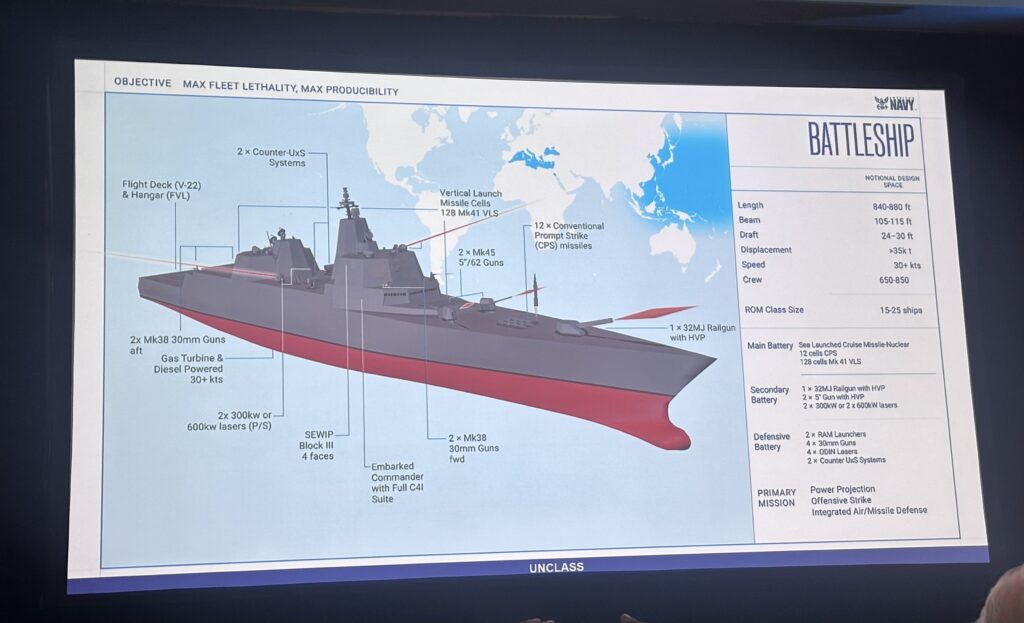
A graphic shown by Navy officials at the Surface Navy Association symposium on Thursday showcased a ship design with a displacement of more than 35,000 tons, and a suite of weapons that includes nuclear cruise missiles, hypersonic missiles, vertical launch systems for other missiles, guns, laser weapons and railguns.
However, many details of the program are yet to be decided and could influence the battleship’s ultimate price, according to the CBO.
Modern shipbuilding techniques and a more simplified design could help to drive down cost, the CBO analysis said. The composition of the ship, such as the level of armor and weapons, could also impact cost.
“An armored ship could be cheaper to build per unit of weight,” the presentation states. “The ship could carry more weapons relative to its size and thus could cost less per unit of weight compared with analogous ships built in the past.”
At the same time, workforce challenges and supply chain issues could raise the cost of the battleship, as could difficulties integrating its new sensors and weapons, the CBO stated.
“If the BBG-1 has more survivability features — greater compartmentalization or internal structure, for example — than the Navy’s current surface combatants, costs could increase,” according to the CBO.