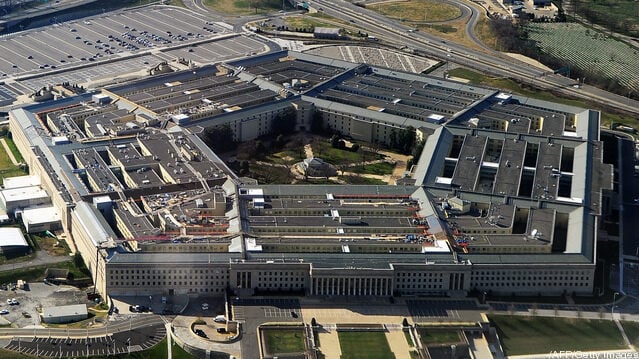
WASHINGTON — It’s “pencils down” on options for a $1.5 trillion defense spending request for fiscal 2027, but the Trump administration is still fleshing out just what vehicles it will use to ask for those dollars, according to Jules Hurst who is performing the duties of the Pentagon’s comptroller.
“We’re in the final stages” of cementing the budget, Hurst told Breaking Defense at the McAleese Defense Programs conference Tuesday. “We’ll keep the FY27 budget intact, and then if there’s a supplemental, it would be separate from the budget.”
The budget’s “going to procure many more aircraft during the FYDP [Future Years Defense Program], more ships, tens of thousands of critical munitions,” he added. “It’s going to make sure that we stay dominant in space … and allow us to make the big investments needed in drone dominance,” he said earlier on stage.
While the executive branch is required to deliver its annual budget request to Congress in early February, it is often delivered much later in the year, with the FY26 request hitting Capitol Hill in June. Rep. Rob Wittman, who leads the House Armed Services Committee’s tactical air and land subcommittee, told Breaking Defense that the budget — originally rumored for release in mid-March — could hit the streets “maybe late April, early May.”
But Hurst said he’s not quite sure if that timing is accurate, as it could be delivered “faster than that.”
Regardless of when it is delivered, both Hurst and Wittman said they expect the Trump administration to request at least $1.5 trillion to fund the Defense Department next year, but it is not yet clear if that figure will be relegated to the base budget or the total will be reached when the administration delivers a forthcoming supplemental to pay for military operations in Iran.
“What we’re doing is we’re providing options of leadership, they need to decide if that’s additive or part of the $1.5 [trillion],” Hurst said on stage.
From his vantage point as the top ranking Democrat on the House Armed Services Committee, Washington Rep. Adam Smith questioned whether a $1.5 trillion defense topline was a realistic endeavor given trillions of dollars in US debt and GOP reluctance to raise taxes.
“I don’t see a $1.5 trillion budget coming through this Congress,” he said Tuesday. “If it did, it would set us up for some pretty big failures down the road.”
Instead, he added, the Pentagon has to start making choices between the more affordable — and potentially expendable — systems like drones and exquisite platforms like fighter jets, submarines and warships.
“The greatest example of that, of course, is the battleship. It’s estimated at $22 billion by the way,” he said. “Personally I don’t think it’s going to happen, but if it happens, it’s going to be a lot more than that.”