Air Warfare

Navy tests long-range JDAM, striking out to 200 nautical miles

The modified Joint Direct Attack Munitions were launched from Navy F/A-18E Super Hornets in back-to-back tests, according to JDAM-maker Boeing.

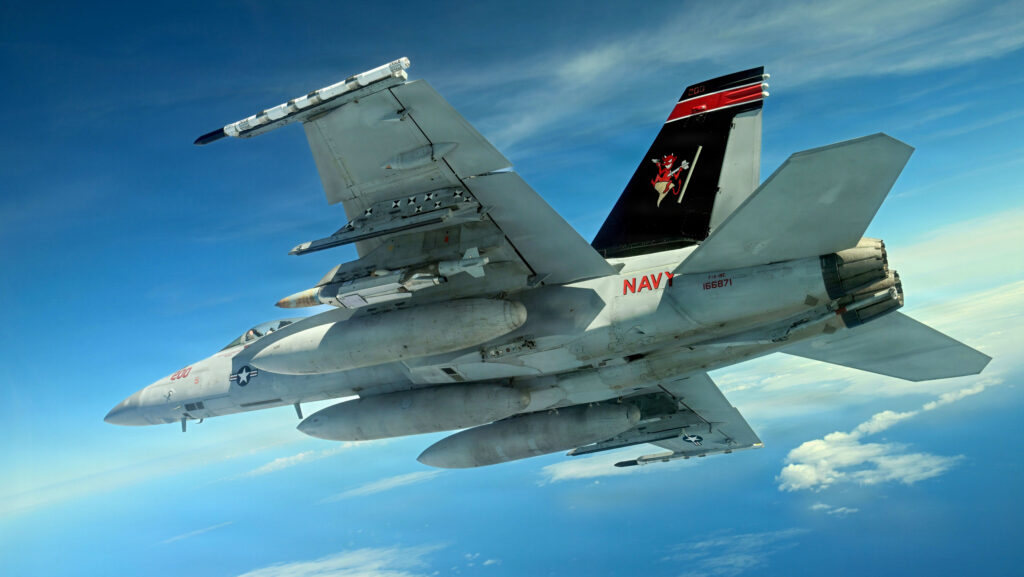
A Navy F/A-18 carries the new Joint Direct Attack Munition (JDAM) Long Range (LR) variant during a test event in early April off the coast of California (U.S. Navy photo/released)

NATIONAL HARBOR, Md. — The US Navy revealed that it has completed inaugural tests of a Joint Direct Attack Munition (JDAM) modified with a turbojet engine for greater range, which the service said flew roughly 200 nautical miles — five times the next-longest JDAM variant’s range.

The tests, conducted earlier this month off the coast of California, “demonstrated the weapon’s safe separation; the ability to use existing aircraft interfaces; and controlled, powered free-flight and navigation” according to a Navy press release published Monday.

Results from flight testing of the new JDAM — a dummy bomb equipped with a precision kit manufactured by Boeing — show a dramatic range boost for the munition. The JDAM’s current “extended range” variant can fly “greater than 40 nautical miles,” according to a Boeing fact sheet. The extended range variant functions as a glide bomb. 

“This new capability allows pilots to engage targets from significantly safer distances, maintaining a tactical advantage in contested environments,” Capt. Sarah Abbott, program manager for precision strike weapons, said in the Navy’s release. 

The engine-boosted JDAMs, dubbed the GBU-75, were released from a Navy F/A-18E Super Hornet fighter jet, where the first flight test on April 1 featured a roughly 200 nautical mile journey for the weapon. The Navy described the munition as “maintaining consistent guidance directly to its target” in both tests; a release from Boeing Monday said the first one “landed within meters of its planned target.”

A second test on April 3 “successfully incorporat[ed] altitude changes and weapon maneuvering during an otherwise similar flight,” according to the Boeing release. The company claims the new “long range” JDAM boasts a range “greater than 300 nautical miles.” 

Boeing said the JDAM LR used a TDI-J85 turbojet engine manufactured by Kratos. Modifying the relatively low-cost JDAM with the powerplant aims to offer a lower-cost standoff munition with an effective payload, a Boeing spokesperson told Breaking Defense.

“The goal is to keep the cost on the low end of the spectrum compared to other low-cost cruise missile systems,” the spokesperson said. “Additionally, the payload on JDAM LR [Long Range] means fewer munitions to achieve the same effect. JDAM LR is a 1,000-pound weapon system that carries a 500-pound-class warhead, while many other low-cost effectors carry warheads under 100 pounds.” 

The Navy’s release says that the successful flight tests have paved the way to “the next phase of qualification,” where there is an “emphasis on shipboard integration.”

PHOTOS: Sea Air Space 2026

PHOTOS: Sea Air Space 2026

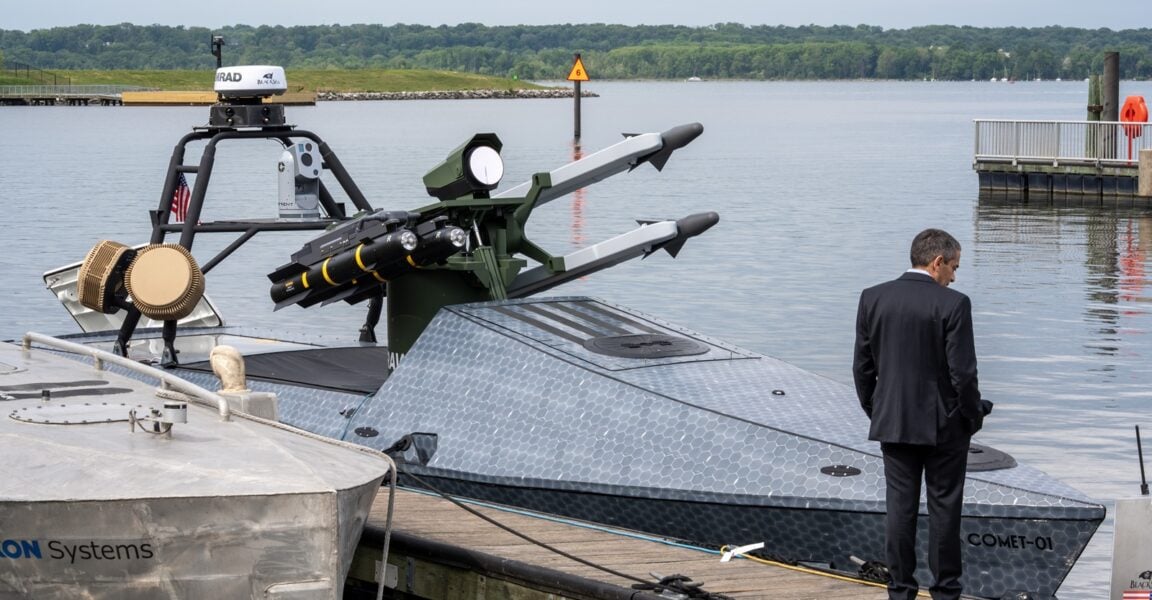
The Black Sea Comet -01 43’ High Speed Interceptor is pictured on the docks outside the 2026 Sea Air Space conference at Maryland’s National Harbor. (Daniel Woolfolk / Breaking Defense)
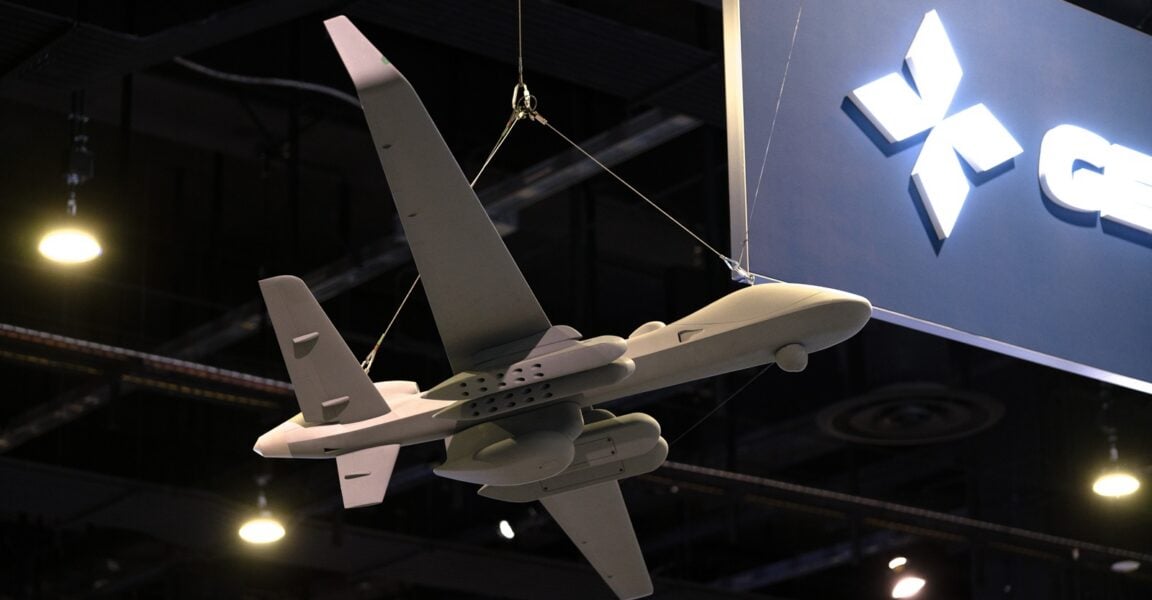
The MQ-9B SeaGuardian is seen here during the Sea Air Space conference at Maryland’s National Harbor. (Daniel Woolfolk / Breaking Defense)
A view of the dock where several naval systems are positioned for display outside the 2026 Sea-Air-Space conference at the National Harbor, Md. (Daniel Woolfolk / Breaking Defense)
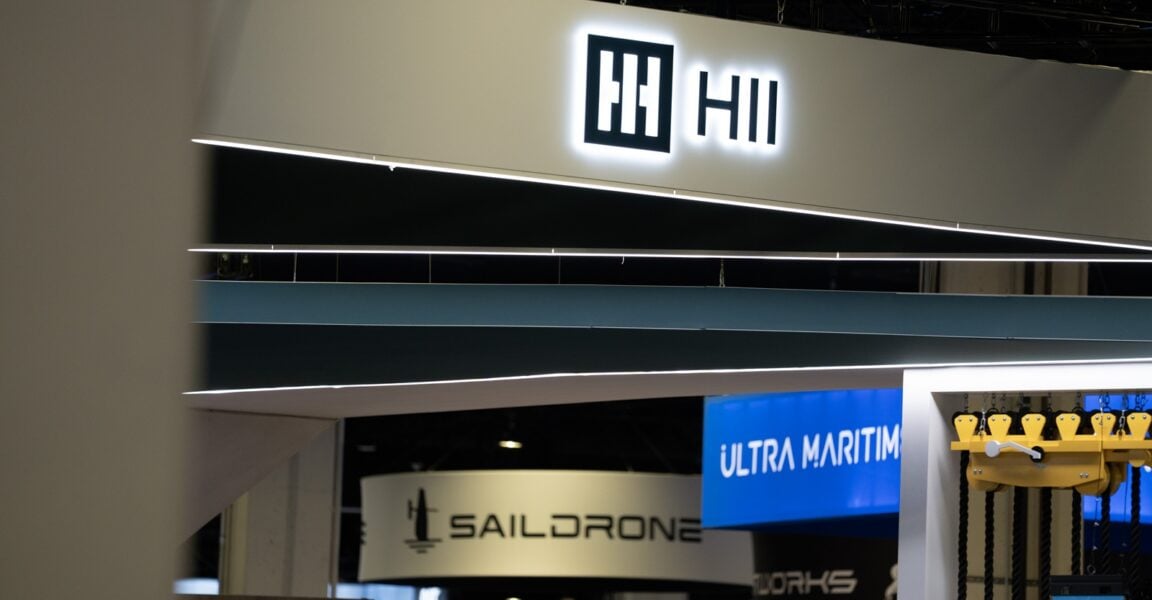
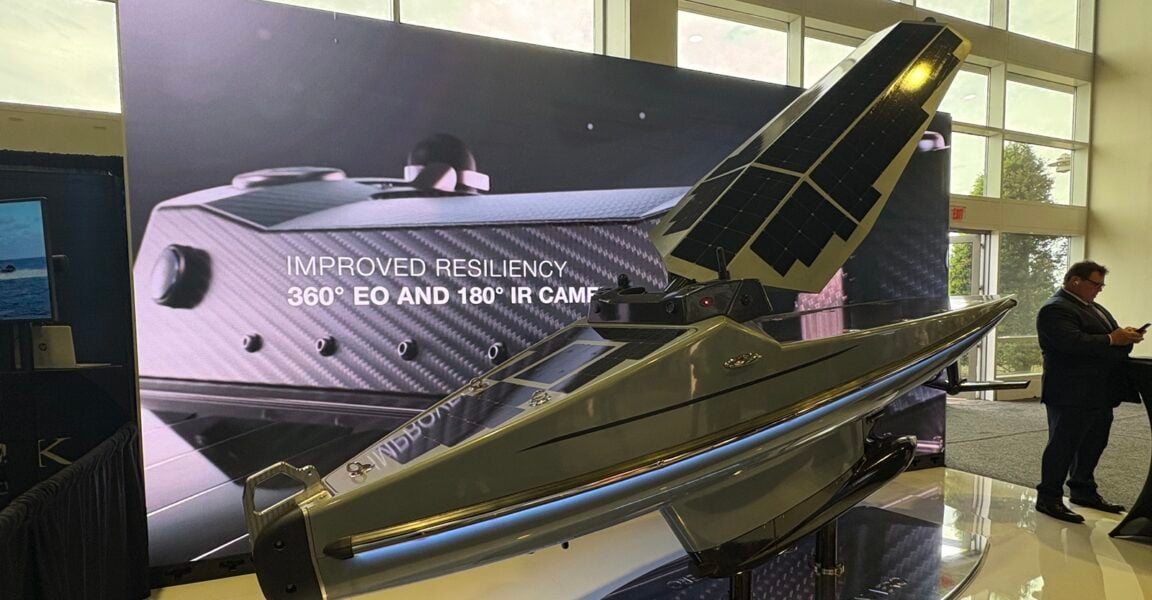
Maritime companies UltraMarine, Saildrone and HII set up their displays on the show floor of the Sea Air Space conference at Maryland’s National Harbor. (Daniel Woolfolk / Breaking Defense)
The General Atomics Electromagnetic Unmanned Underwater Vehicle as seen at the Sea Air Space conference from Maryland’s National Harbor. (Daniel Woolfolk / Breaking Defense)
A display for Romulus, an autonomous ship from HII, is pictured on the show floor at the Sea Air Space conference from Maryland’s National Harbor. (Daniel Woolfolk / Breaking Defense)
A Triton autonomous underwater and surface vehicle from Ocean Aero is displayed at the Sea Air Space conference at National Harbor, Md. (Daniel Woolfolk / Breaking Defense)
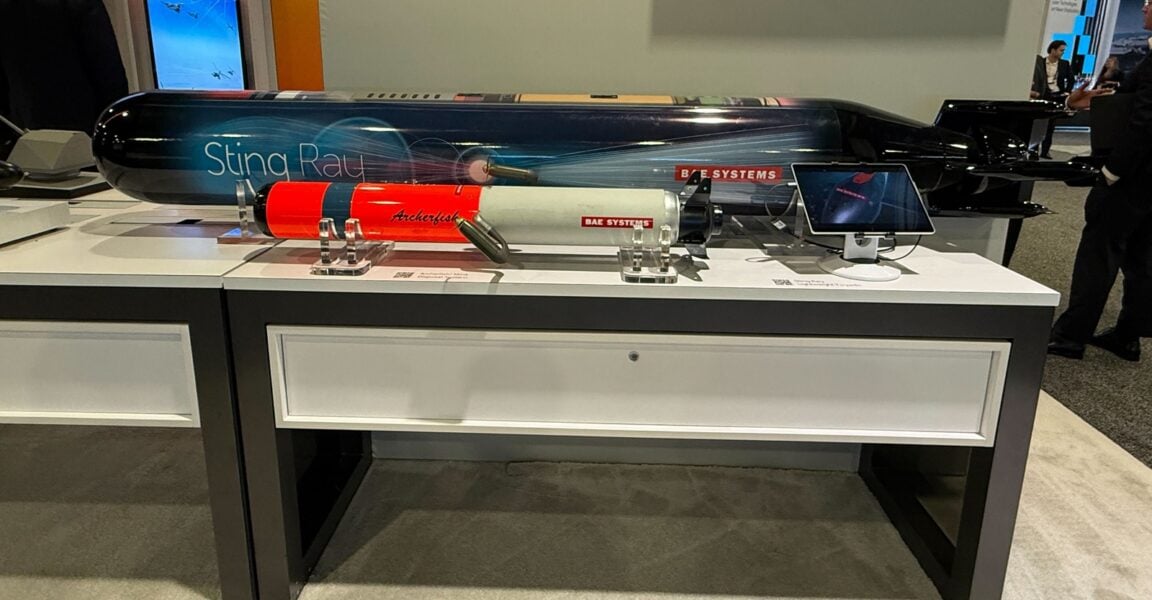
The Archerfish mine disposal weapon is displayed alongside a Sting Ray torpedo from BAE Systems at the Sea Air Space conference at National Harbor, Md. (Brendon Smith / Breaking Defense)
A view of attendees and booths on the last day of this year’s Sea-Air-Space conference at the National Harbor, Md. (Daniel Woolfolk / Breaking Defense)
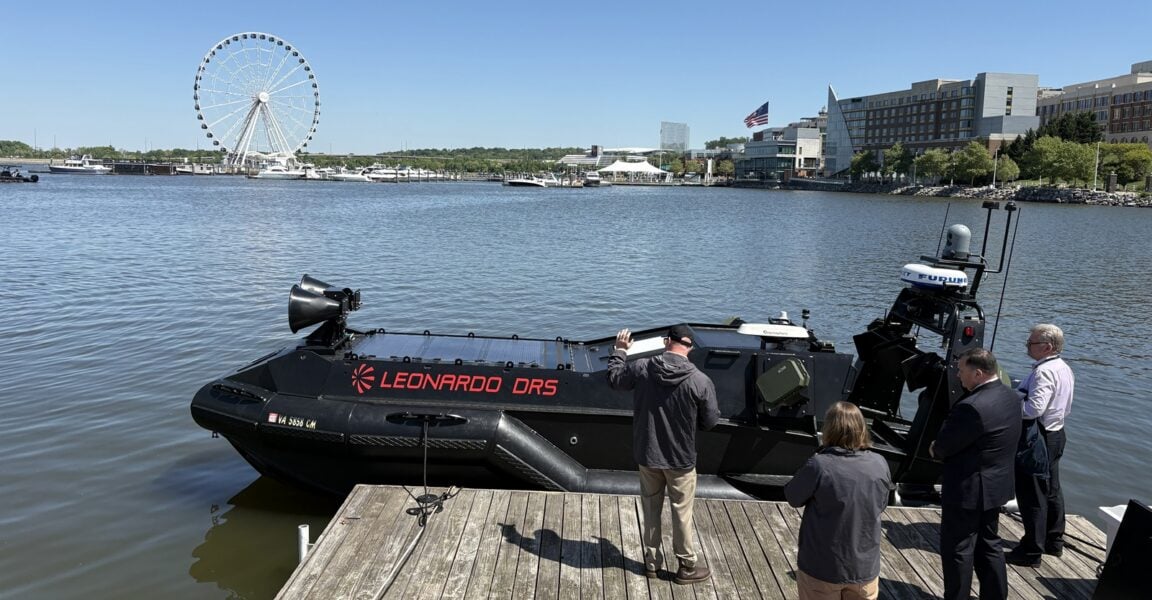
Leonardo DRS showcased its Autonomous unmanned surface vessel, which is integrated with its Maritime Mission Equipment Package. (Daniel Woolfolk / Breaking Defense)
A dramatically camouflaged model stands at Qintel’s booth. (Daniel Woolfolk / Breaking Defense)
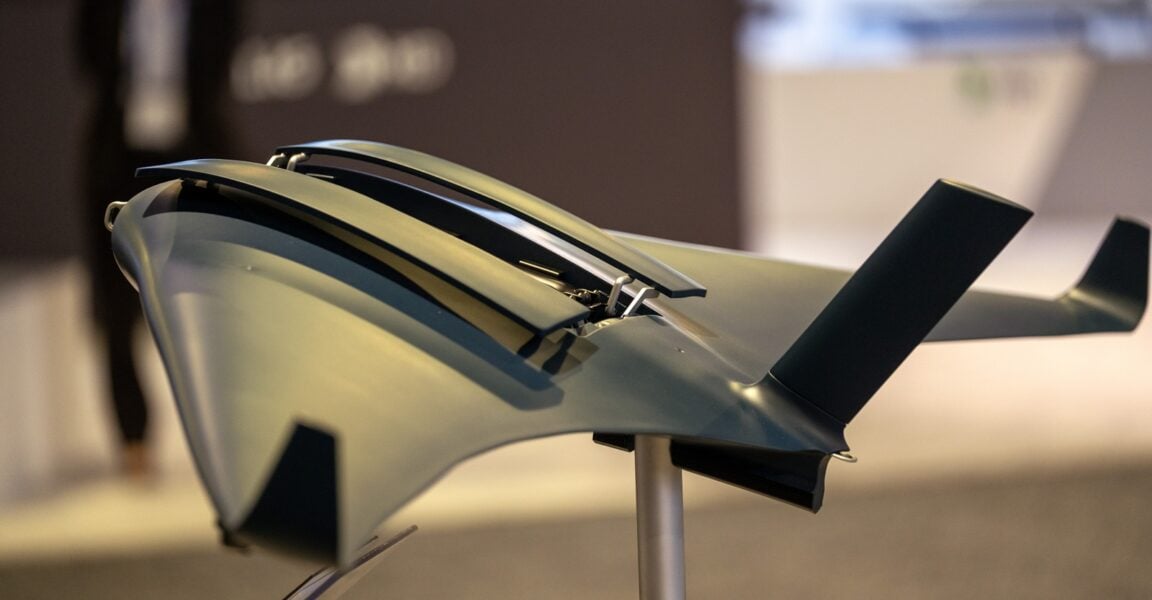
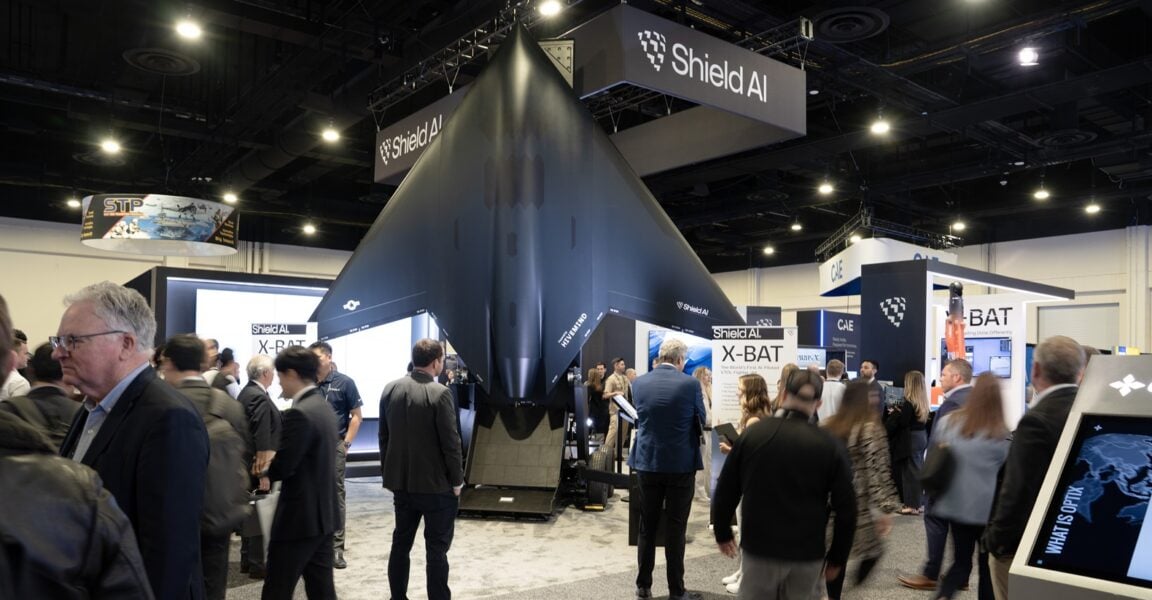
Shield AI’s X-BAT is an AI-piloted VTOL fighter jet apparently ready to blast off. (Daniel Woolfolk / Breaking Defense)
Former Navy Secretary Carlos Del Toro visits with sailors at the Sea-Air-Space conference. (Daniel Woolfolk / Breaking Defense)
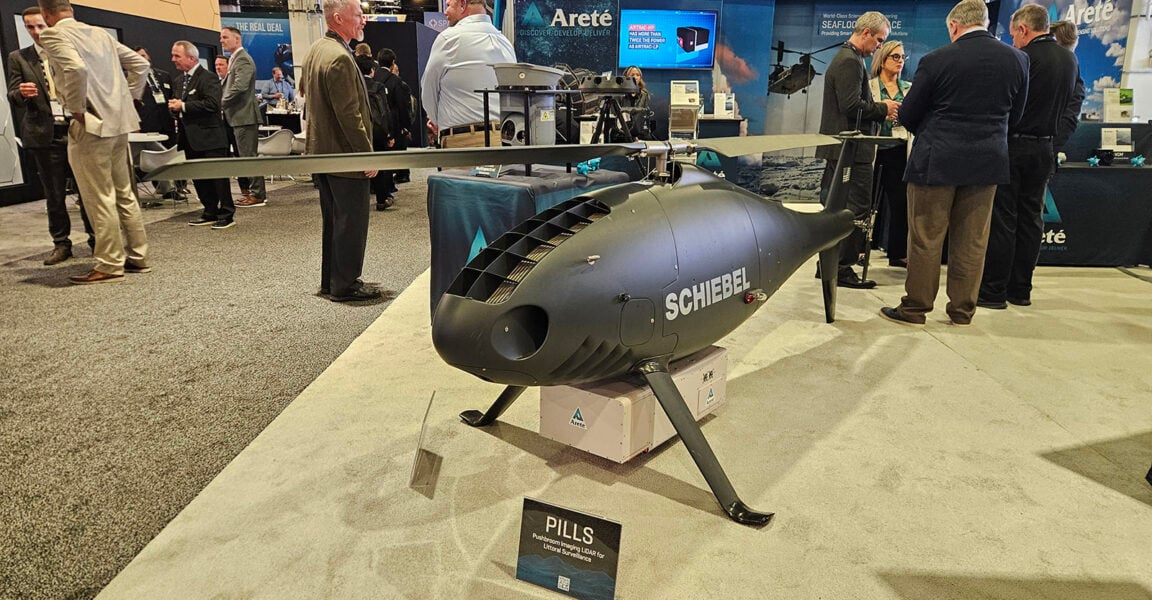
Schiebel displays the PILLS unmanned rotorcraft at Sea Air Space 2026. (Breaking Defense)
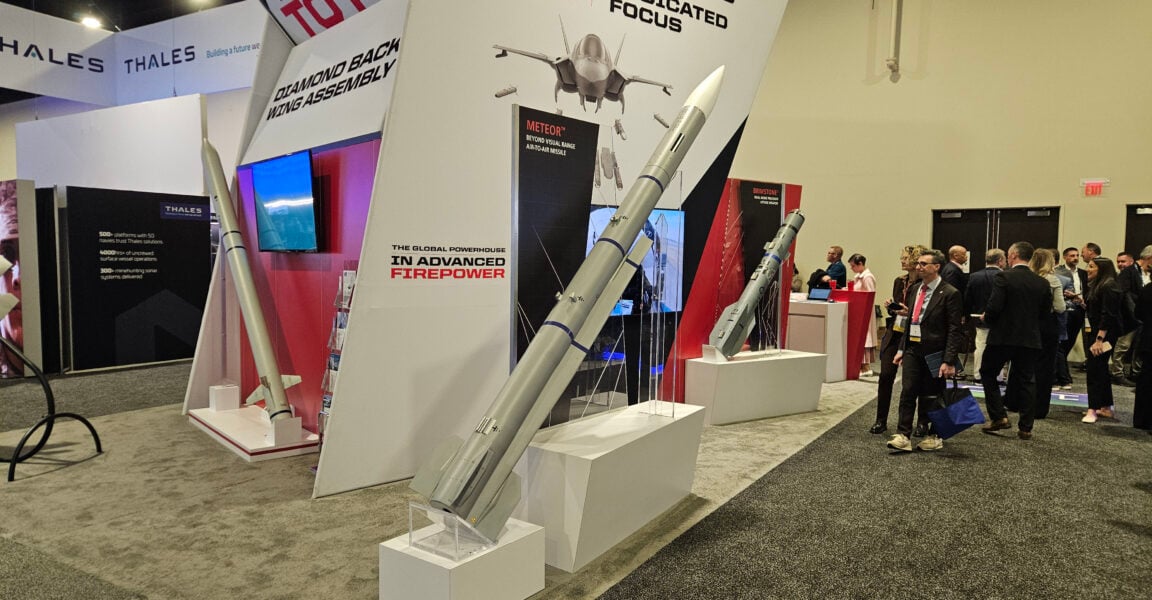
An American arm of European missile-maker MBDA displays the Meteor missile at Sea Air Space 2026. (Breaking Defense)
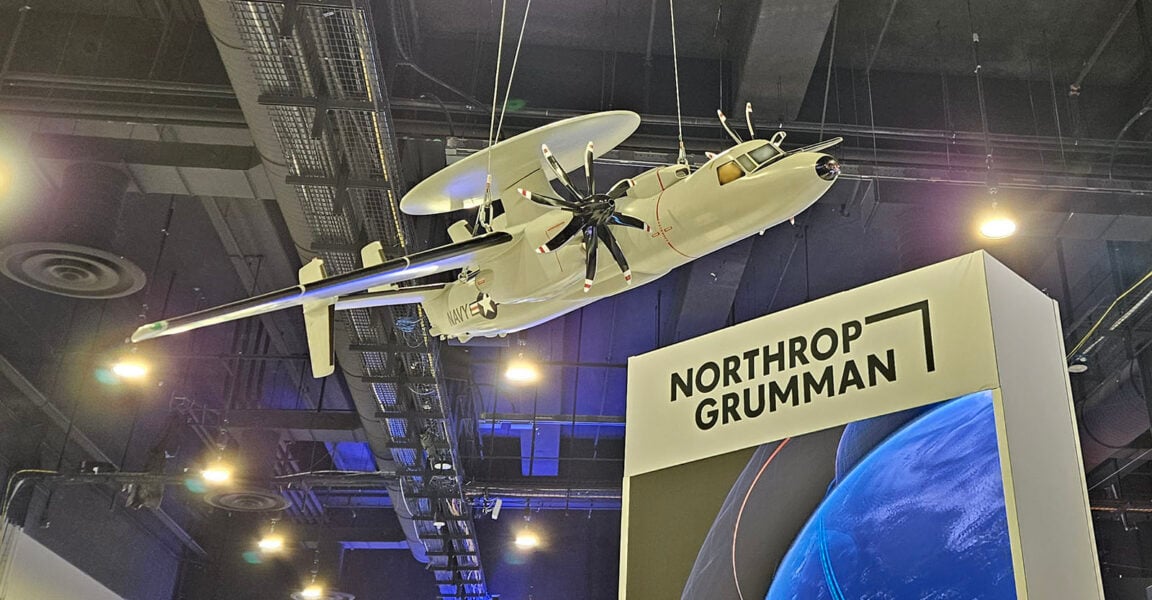
A Northrop Grumman surveillance plane (model) looms over attendees at Sea Air Space 2026. (Breaking Defense)
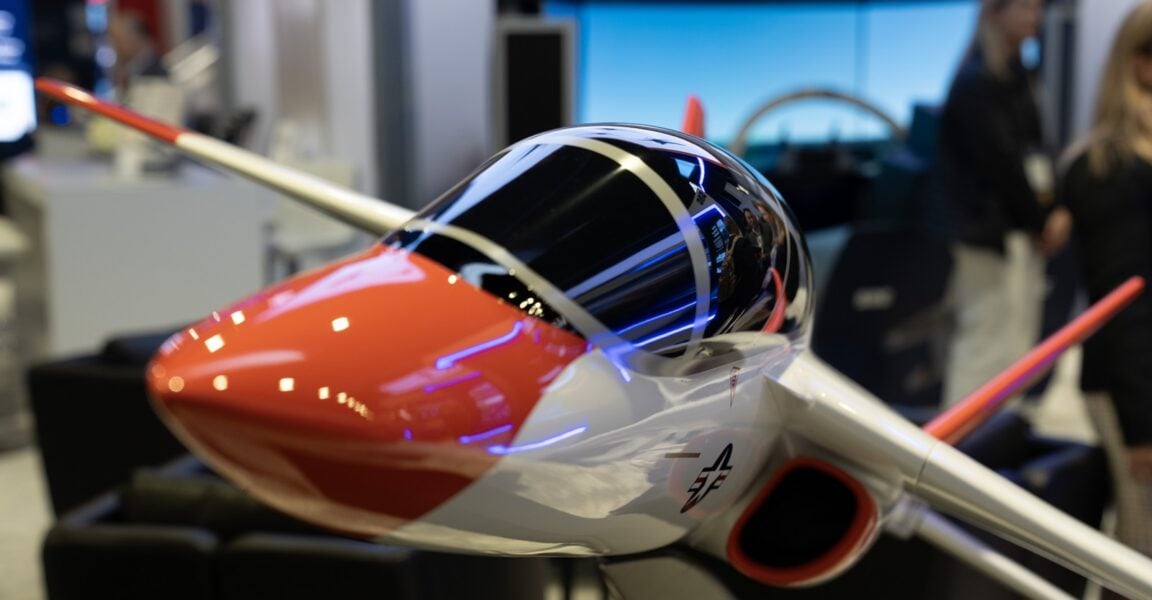
An SNC Freedom Trainer on display at Sea Air Space 2026. (Daniel Woolfolk / Breaking Defense)
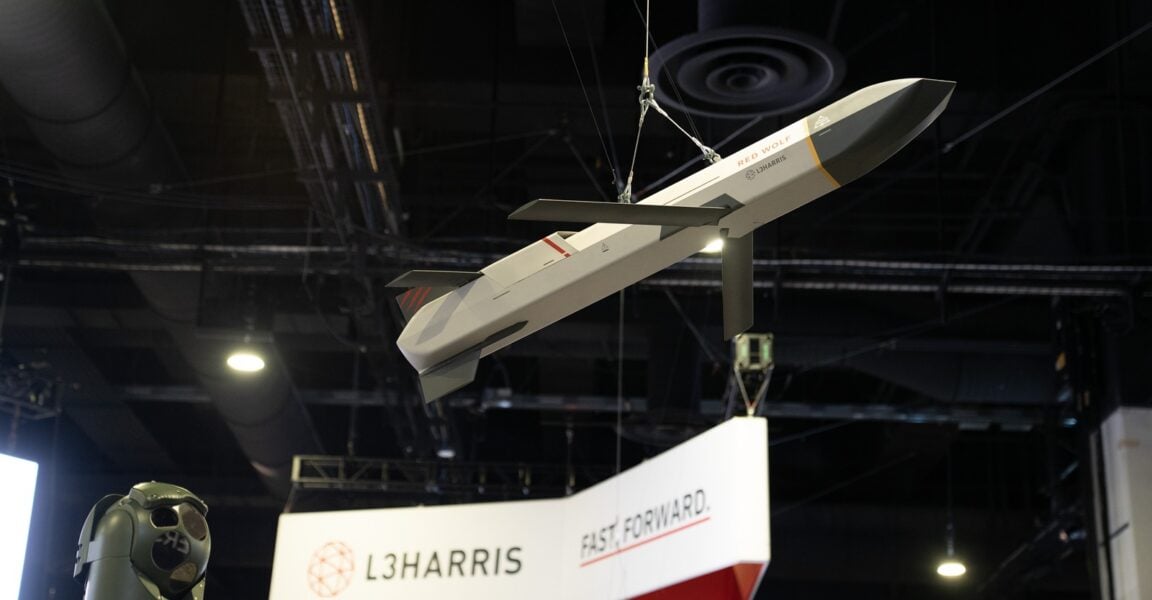
The U.S. Naval Air Systems Command selected L3Harris to develop its Red Wolf munitions for the Marine Corps’ Precision Attack Strike Munition program. (Daniel Woolfolk / Breaking Defense)
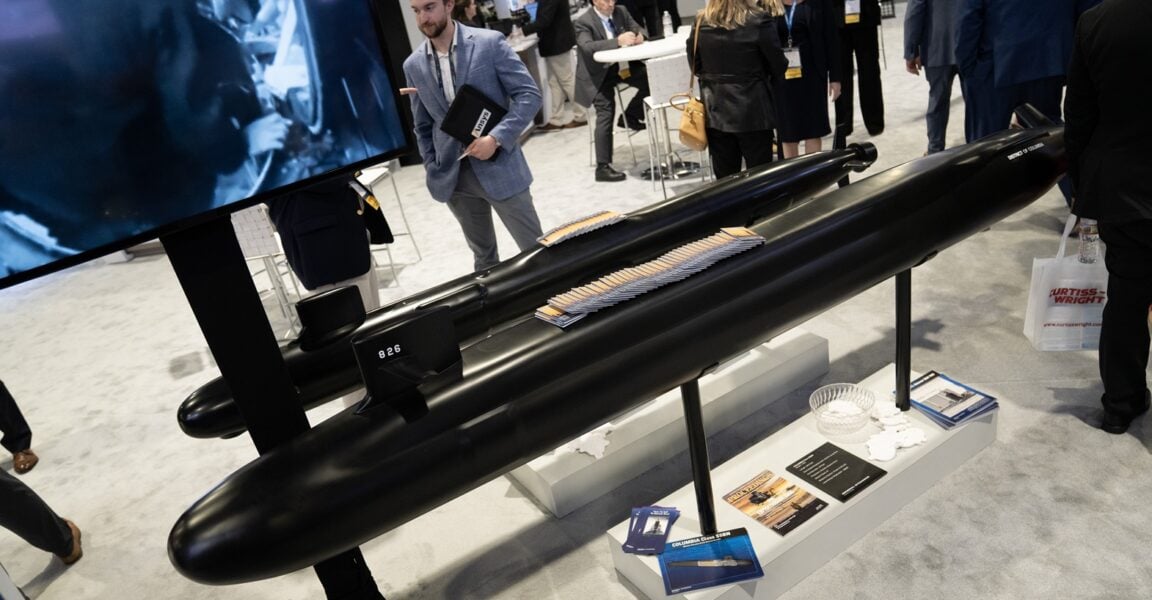
General Dynamics Electric Boat Columbia Class submarine (front) and Virginia Class submarine (back). (Daniel Woolfolk / Breaking Defense)
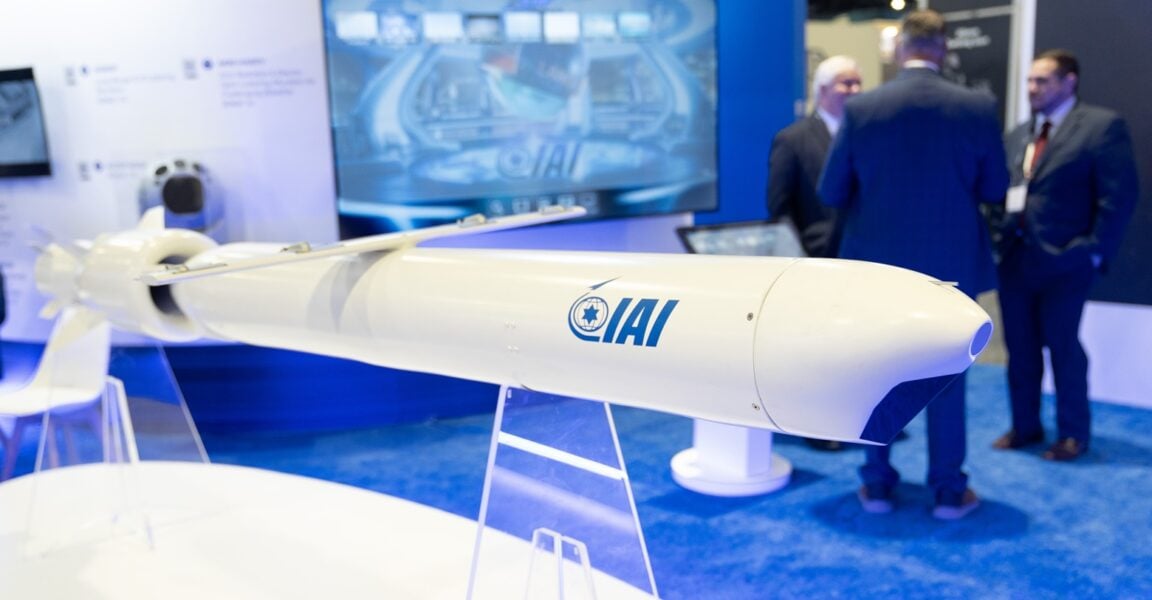
IAI’s Sea Demon - Affordable Surface to Surface Cruise Missile on display on the show floor. (Daniel Woolfolk / Breaking Defense)
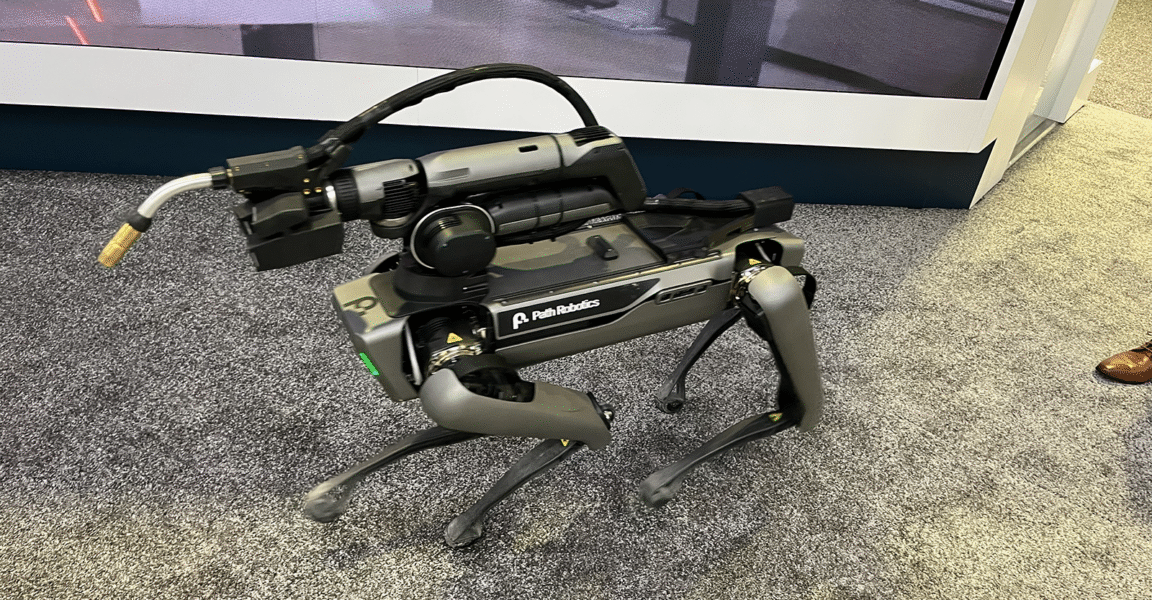
Path Robotics robot "dog" with welding torch on its "head," as seen at at Sea-Air-Space 2026. (Sydney Freedberg / Breaking Defense)
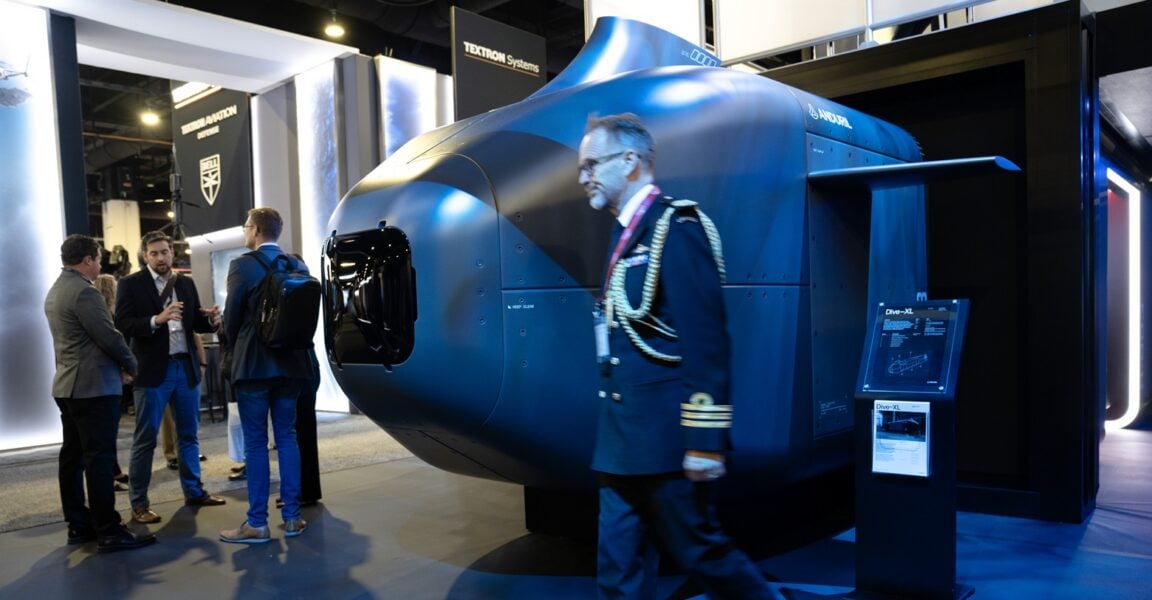
Anduril displays its Dive XL nose and this year's Sea Air Space. (Daniel Woolfolk / Breaking Defense)
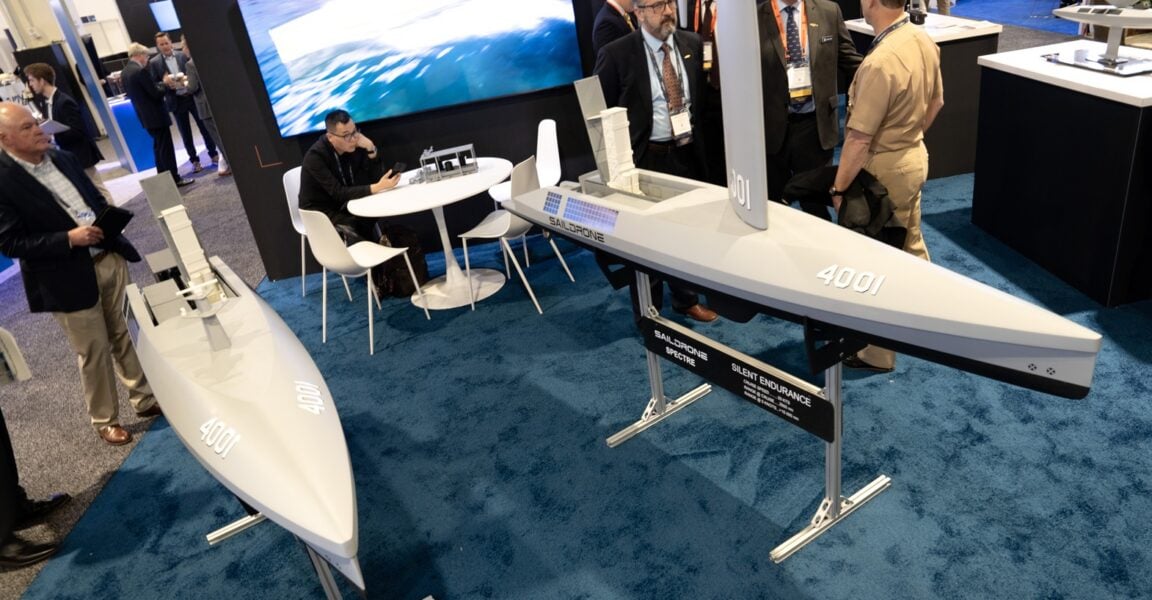
Saildrone released a wingless Spectre USV. (Daniel Woolfolk / Breaking Defense)