Land Warfare

Avio, Lockheed sign agreement for solid rocket motor production

The deal will pave a path for Avio USA to become a new provider of motors on Lockheed Martin’s Extended Range GMLRS and the Precision Strike Missile.

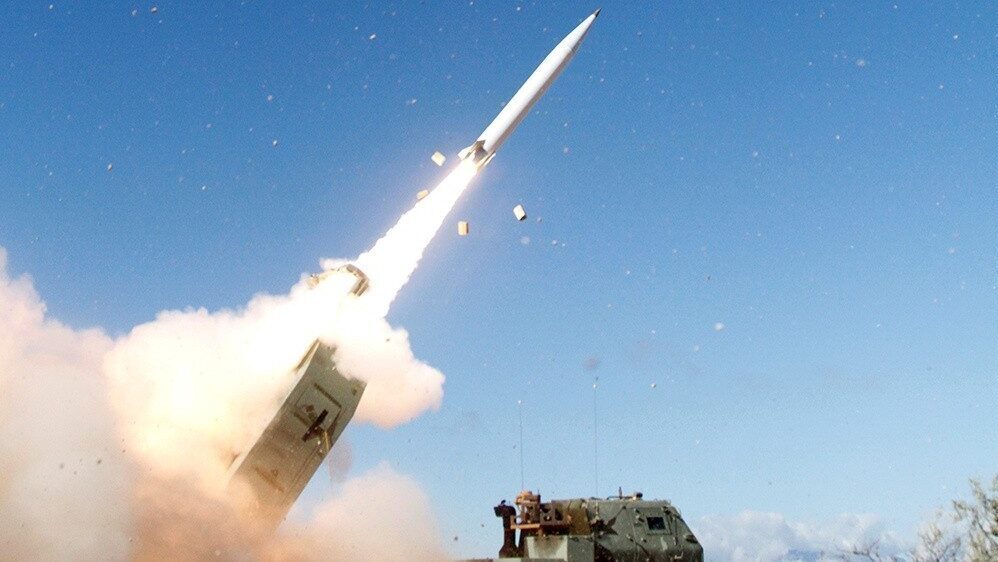
The PrSM, pictured here, is a next-generation, long-range precision-strike missile in the US inventory. (U.S. Army/Darrell Ames)

WASHINGTON — The US arm of Italian rocket maker Avio will build and qualify solid rocket motors for Lockheed Martin’s Extended Range GMLRS and the Precision Strike Missile, paving the way for Avio to become a full-time supplier, the companies announced today.

The strategic cooperation agreement will provide Lockheed a second motor source for PrSM and an additional source of motors on the popular GLMRS round once those motors are fully qualified, Avio USA CEO Jim Syring told Breaking Defense in an interview.

“They’re essentially reserving capacity,” he said. “It’s a win for us and it’s a win for Lockheed.”

Tim Cahill, Lockheed’s president of its missiles and fire control, said in a news release that the agreement “enables us to speed up production of essential capabilities, ensuring our customers maintain their competitive edge against emerging threats.”

Solid rocket motors have historically been a chokepoint for the munitions industry after decades of consolidation left L3Harris and Northrop Grumman as the only two domestic providers. New entrants — such as Anduril, Ursa Major and X-Bow — have entered the market and are currently developing and testing motors, but the qualification process can take years.

Although Avio is a longtime producer of solid rocket motors in Europe, its US-based subsidiary is a relative newcomer. It broke ground on its first American manufacturing plant in September, with the 900,000-square-foot plant in Hurt, Va., scheduled to start building motors in 2029.

Avio’s status as a legacy solid rocket motor maker in Europe will give its American arm several advantages that new entrants lack, Syring said. Like its parent company, Avio USA will make certain components like cases and nozzles in house, meaning that it will not have to rely on an already stressed supply chain.

The company’s manufacturing experience also has benefits for training. One selling point for locating the production plant in southern Virginia was the access to trade workers like mechanics, electricians and welders, Syring said. However, all of those employees will need to undergo specialized training in order to take on the demanding job of making rocket motors.

“We’ll be able to take the people that have that technical discipline and experience and train them to be solid rocket motor manufacturing experts, and what we’ll do is we will take advantage of our parent company in Italy to send them over to Italy for three to four months to train in an actual factory,” he said.

Ahead of production, Avio has already begun putting raw materials like steel on order, with plans to purchase equipment with long lead times — like industrial-size mixers, ovens and x-ray machines — by the end of the year, Syring said.

Beyond its work on GMLRS and PrSM, Avio is also conducting engineering work for building the Mk104 solid rocket motor used for Raytheon’s Standard Missile family. The company is slated to complete its critical design review for that motor in spring 2027, Syring said.

PHOTOS: AUSA 2026

PHOTOS: AUSA 2026

Attendees file in during the first day of the 2026 Association of the US Army annual conference in Washington, DC, on October 12, 2026. (Breaking Defense)
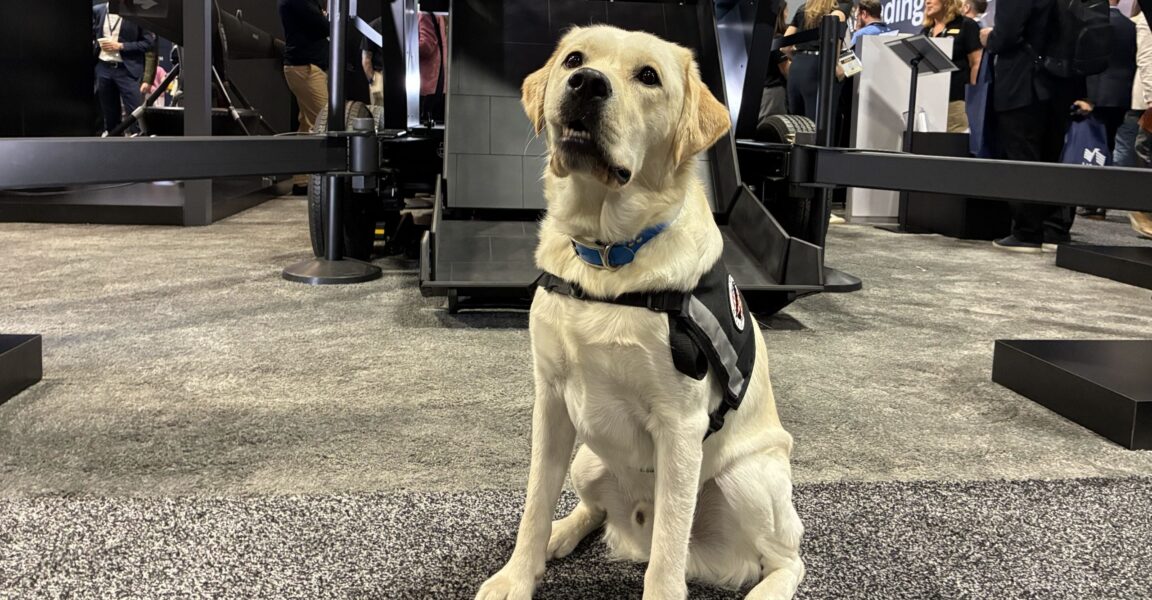
Patriot, who is expected to go to a wounded veteran when the dog’s training finishes, is happy to greet attendees outside the Shield AI booth on the show floor. (Breaking Defense)
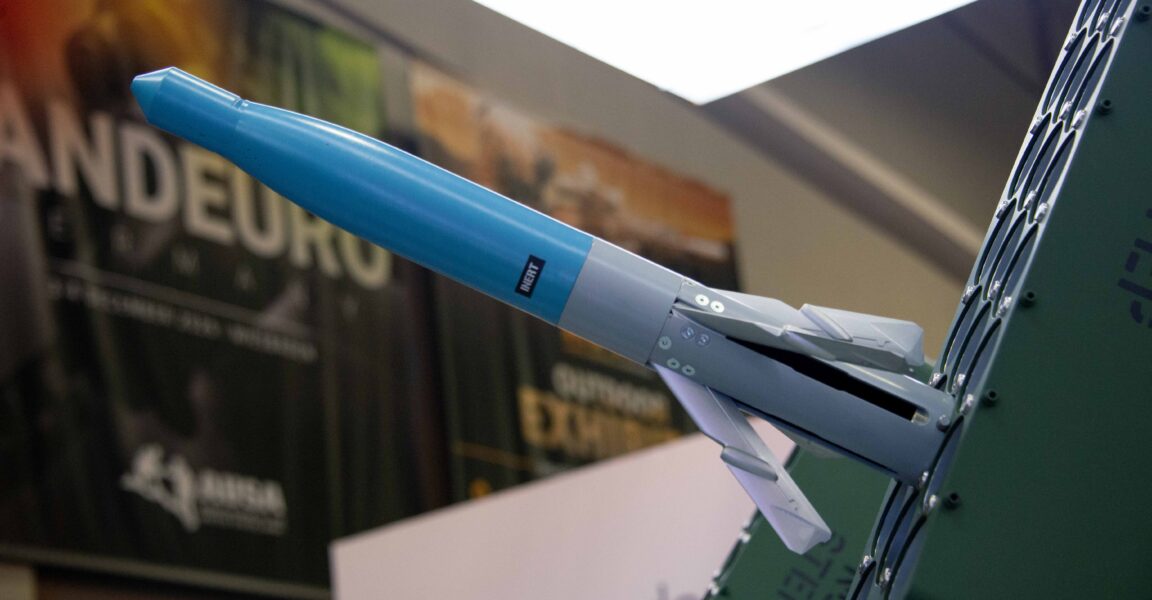
A close-up look at a munition from Sierra Nevada's Brawlr (Battery Revolving Advanced Weapons Launcher Reconfigurable) air-defense system, as seen at the 2026 AUSA conference. (Breaking Defense)
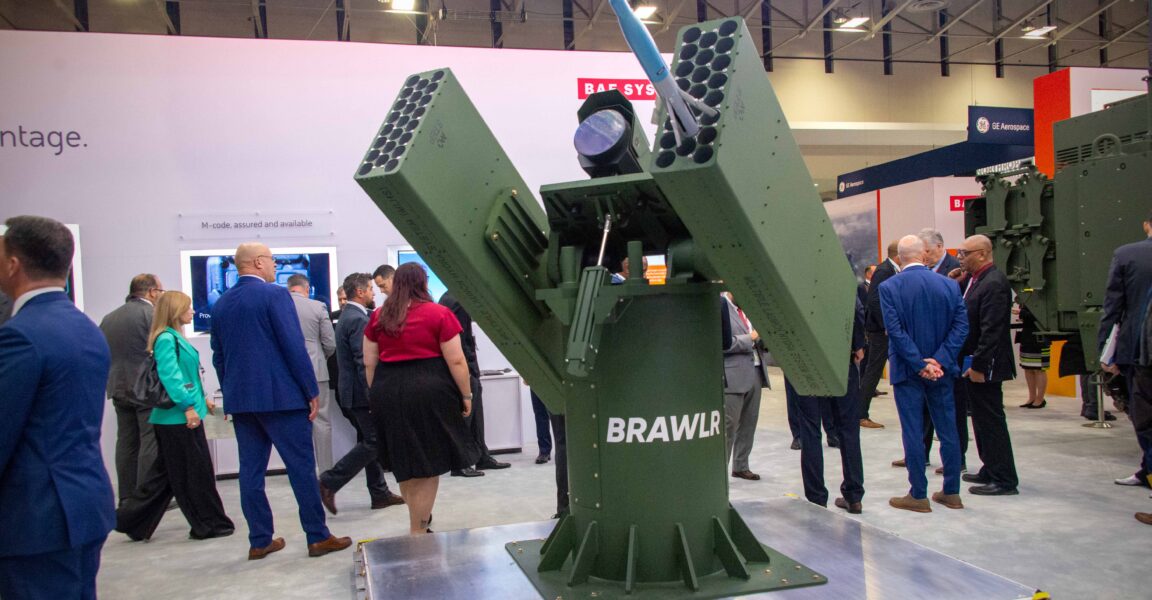
A wider shot of Sierra Nevada's Brawlr air-defense system at the 2026 AUSA conference. (Breaking Defense)
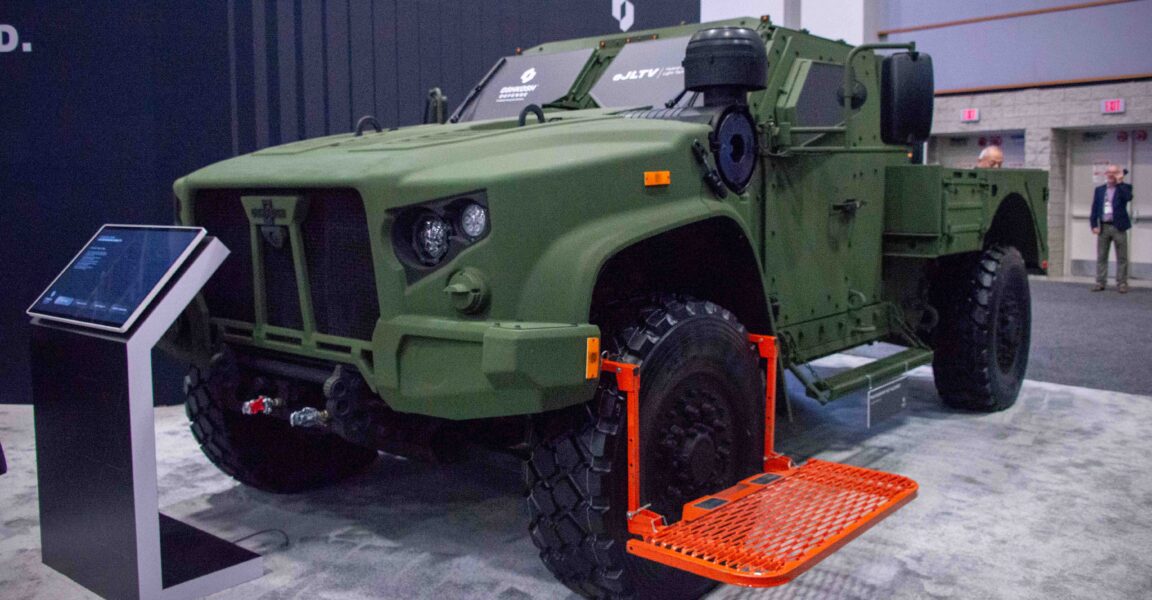
Oshkosh's electric Joint Light Tactical Vehicle on the AUSA show floor Oct. 12, 2026. (Breaking Defense)
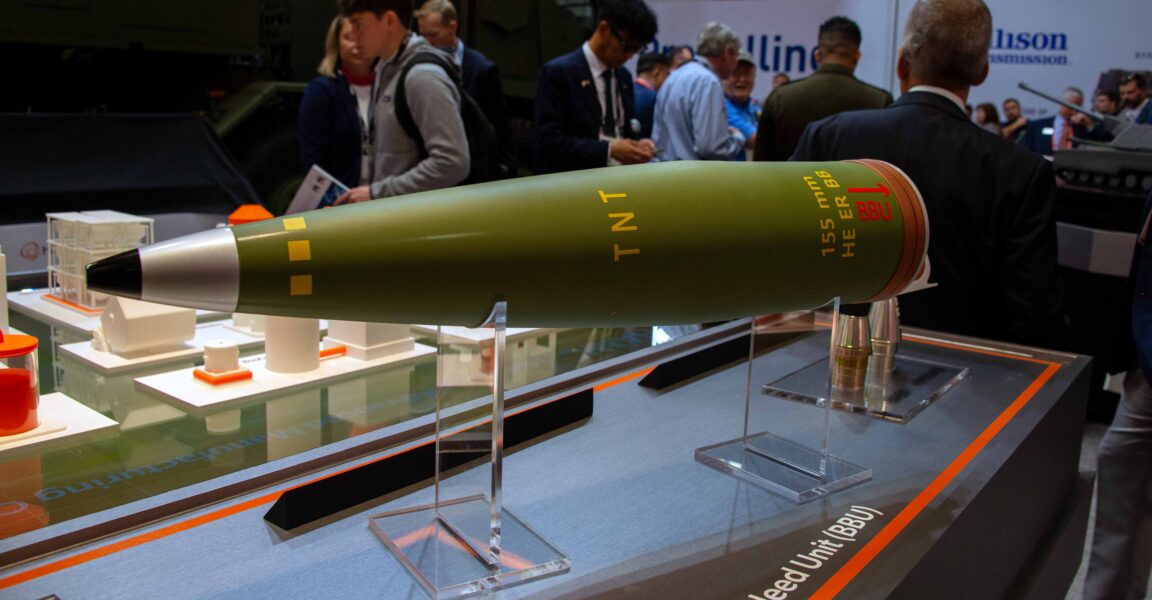
Hanwha Defense USA showed off its 155 mm artillery shells at the 2026 AUSA expo. (Breaking Defense)
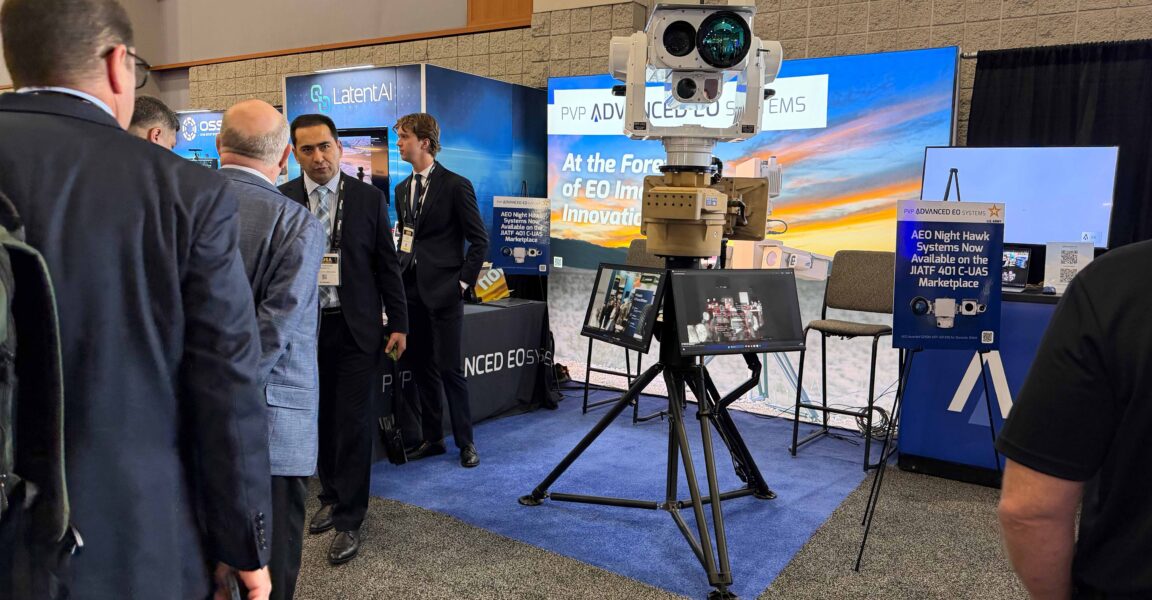
AEO Night Hawk Systems displayed their surveillance assembly, with sensors honing in on bystanders at the 2026 AUSA conference in Washington. (Breaking Defense)
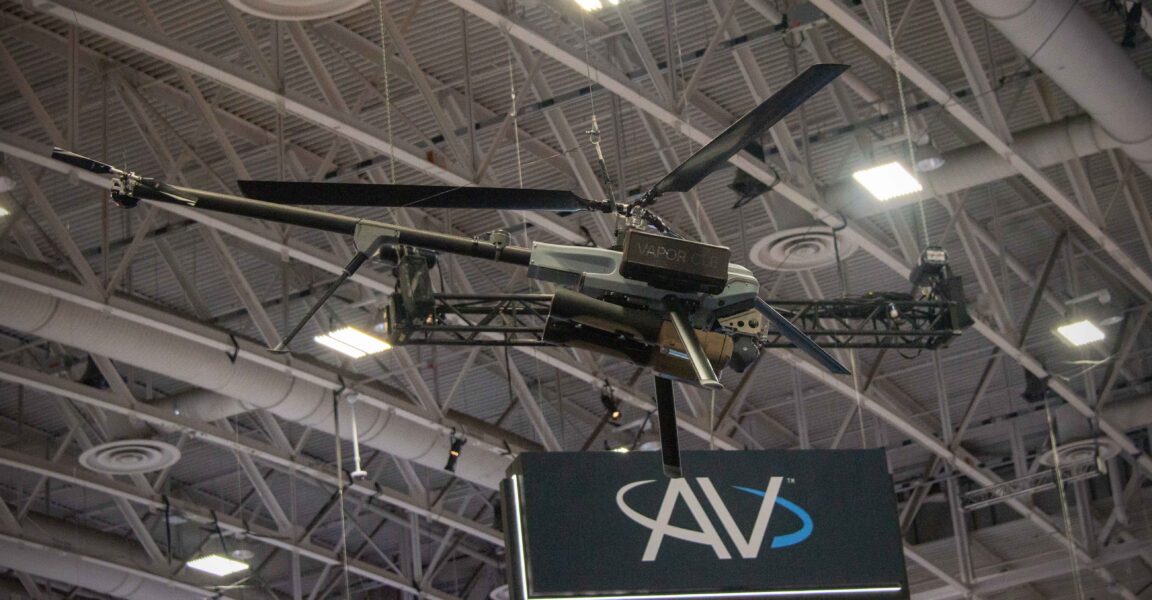
AeroVironment’s VAPOR is an all-electric, single-rotor vertical takeoff and landing (VTOL) helicopter unmanned aircraft system. Here it is suspended above attendees at the 2026 AUSA conference. (Breaking Defense)
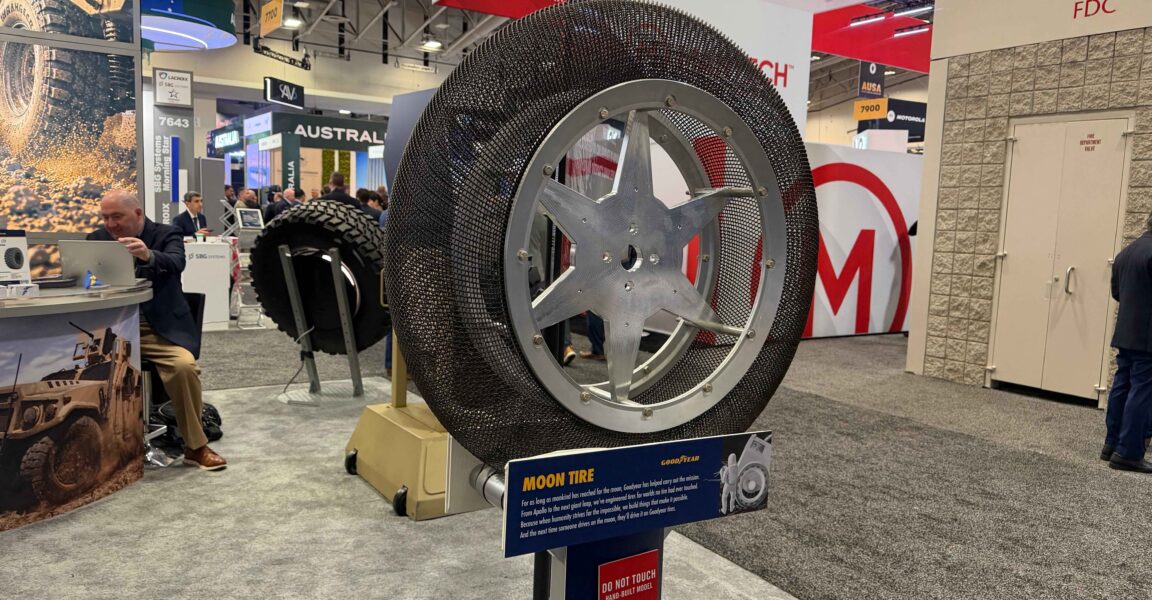
Goodyear representatives brought a sturdy but very unusual "moon tire" for lunar exploration to the 2026 AUSA expo. (Breaking Defense)
Colt optics had one of the busiest displays, with dozens of attendees observing a wall of assault rifles with specialized optics at the 2026 AUSA expo. (Breaking Defense)
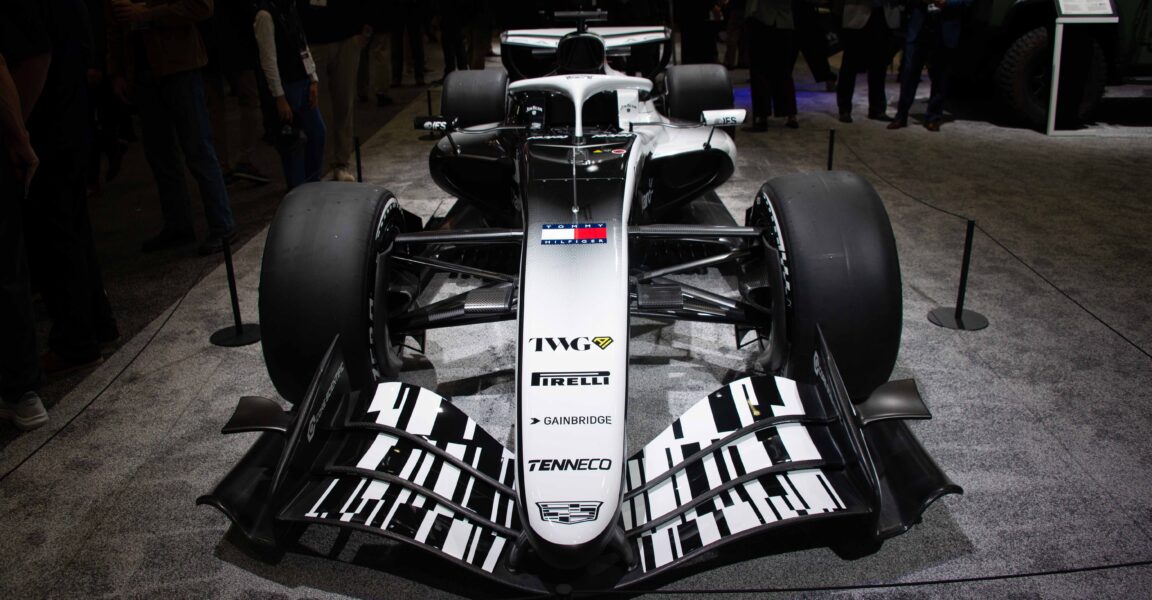
Cadillac brought its Formula 1 team racecar to the 2026 AUSA conference in Washington. (Breaking Defense)
AUSA mascots Sgt. Hero and George Washington descend the escalator at the 2026 annual conference. (Aaron Mehta / Breaking Defense)
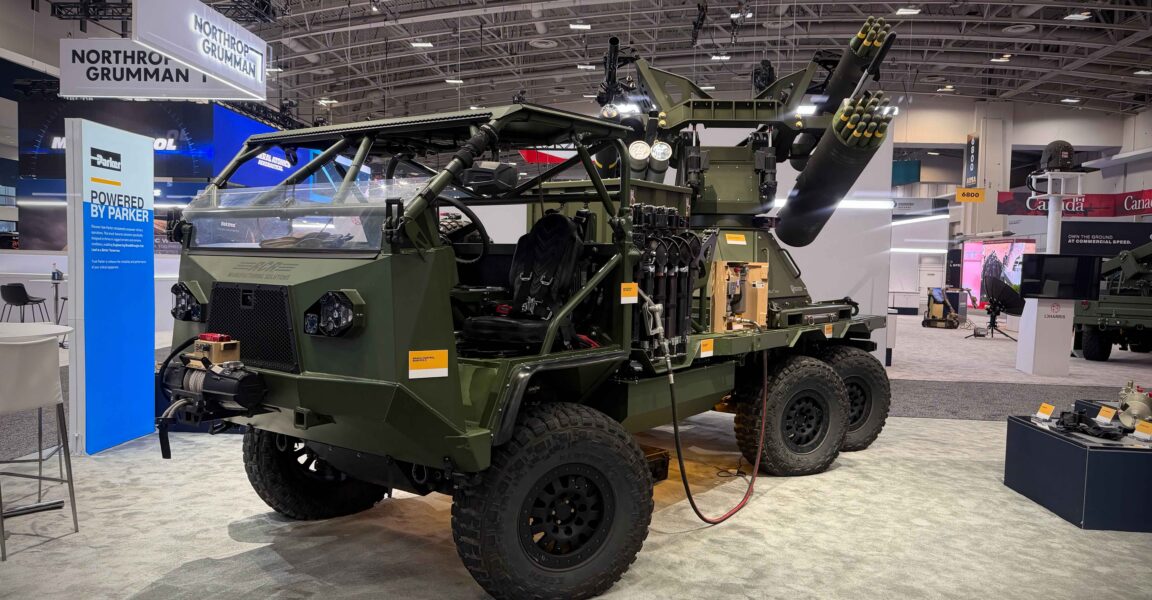
Parker Hannifin showcased many of its components onboard the MDH Strategic Services Airwolf c-UAS system, which is shown here fixed atop the RCR 6WAP vehicle. (Breaking Defense)
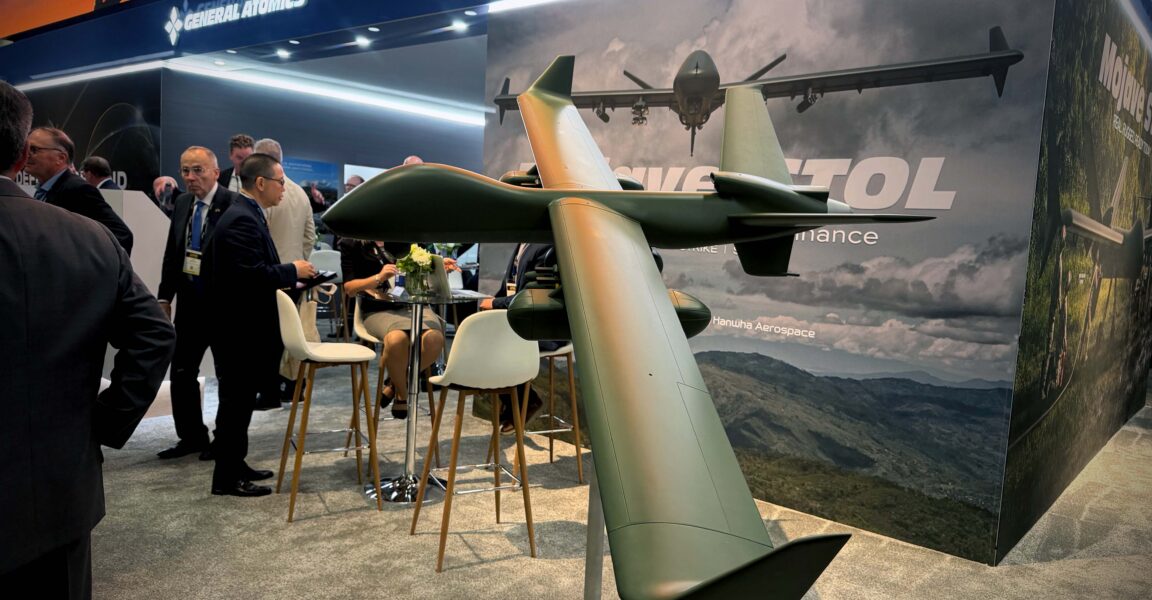
General Atomics Aeronautical Systems Inc. and Hanwha Aerospace co-developed the Mojave short takeoff and landing (STOL) uncrewed aircraft, pictured here at the 2026 AUSA trade show. (Breaking Defense)
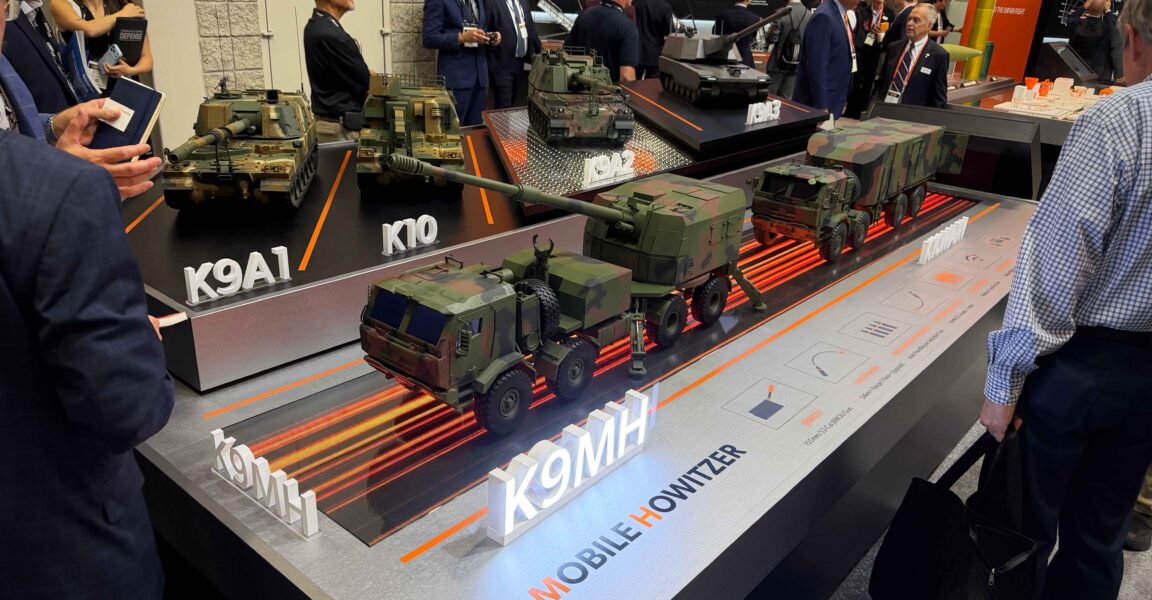
Hanwha Defense USA displayed a range of scale model armor and artillery systems on the AUSA show floor. (Breaking Defense)
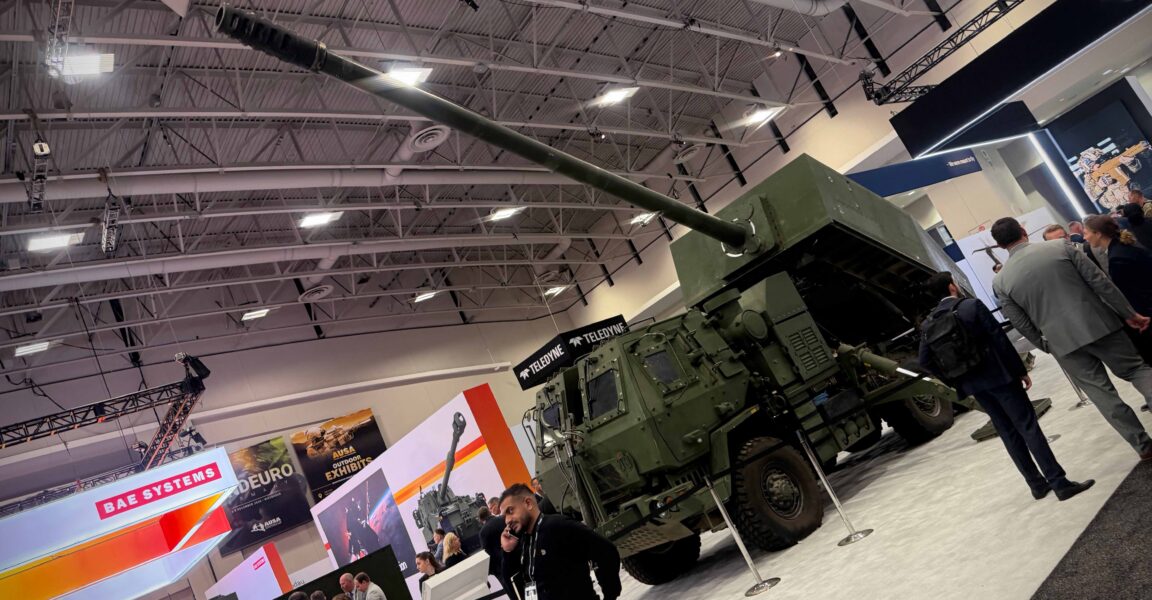
BAE’s Multi-Domain Artillery Cannon System stands tall at the 2026 AUSA trade show in Washington, DC. (Breaking Defense)
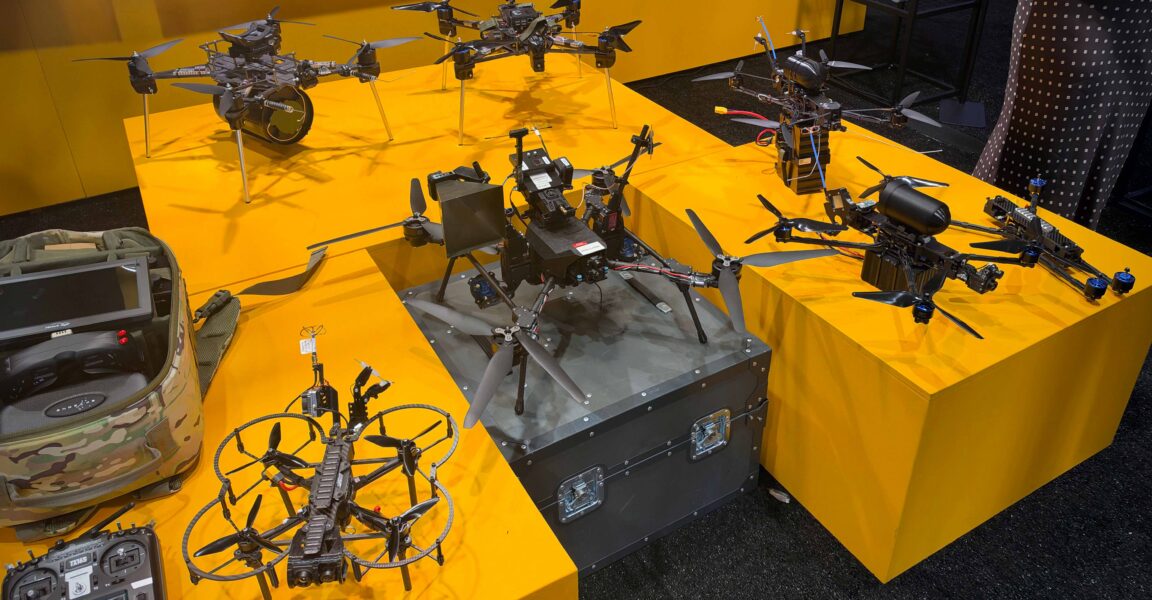
The Ukrainian military’s 3rd Army Corps brought a variety of small drones to the 2026 AUSA trade show. (Valerie Insinna / Breaking Defense)
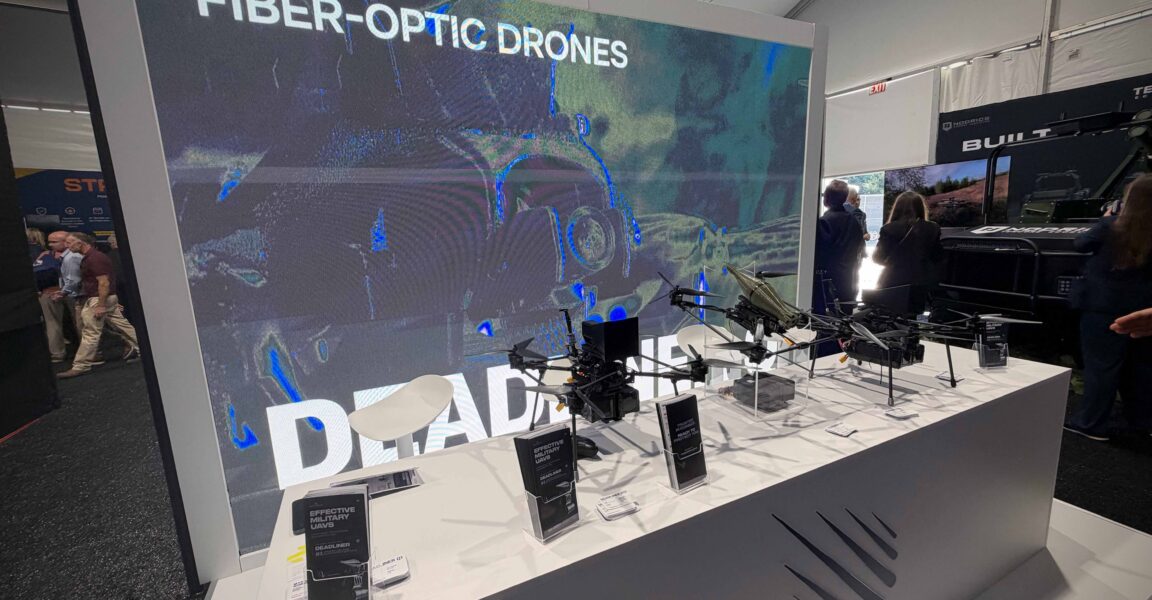
Kyiv-based defense tech firm Stellarion brought several fiber-optic drones to the 2026 AUSA expo. (Valerie Insinna / Breaking Defense)
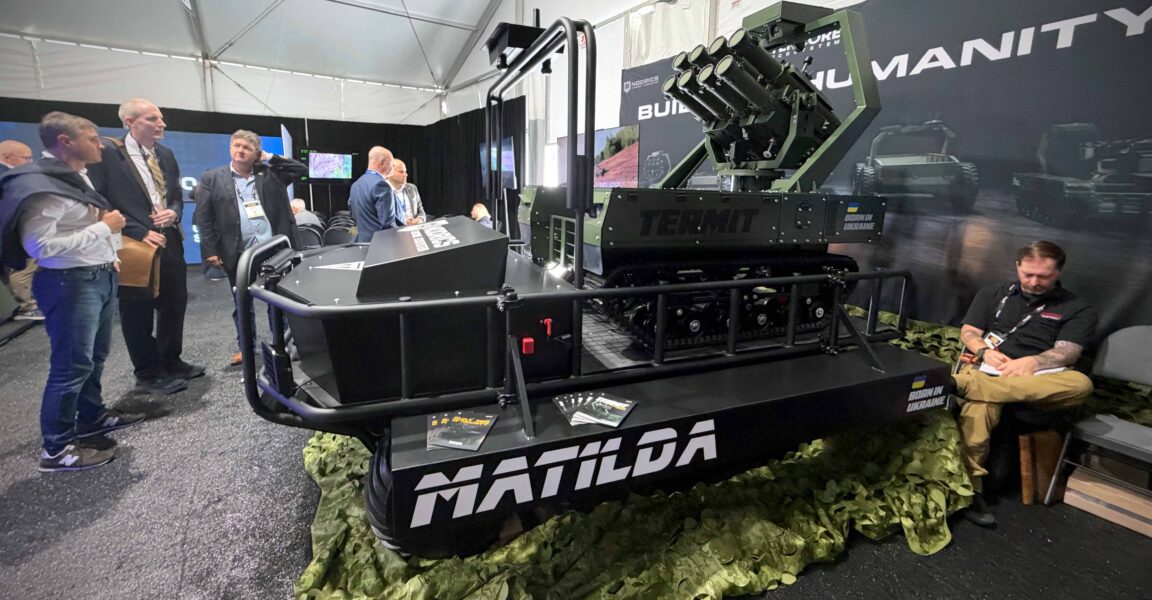
Ukrainian defense firm Tencore showcased an amphibious unmanned ground vehicle called MAT1LDA (Mesa Associates’ Tactical Integrated Light-Force Deployment Assembly), which is carrying Tencore’s TerMIT ground robot, at the 2026 AUSA trade show. (Valerie Insinna / Breaking Defense)
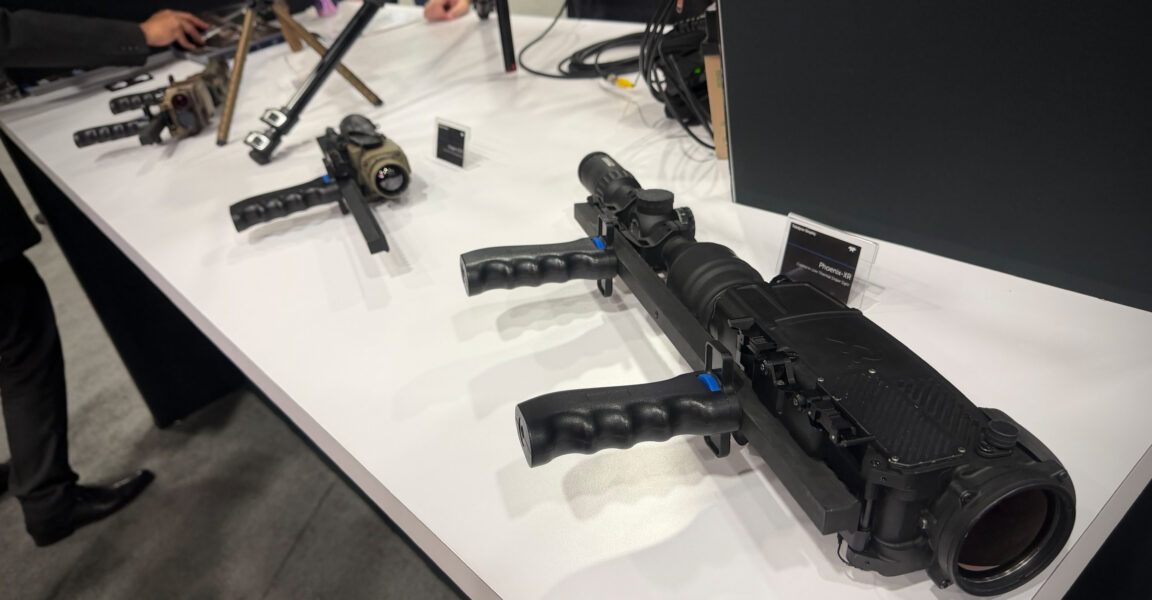
Teledyne Qioptiq brought several thermal weapons sights including the Phoenix-XR (right) and the Dragon-C12 S (middle) to the 2026 AUSA conference. (Breaking Defense)
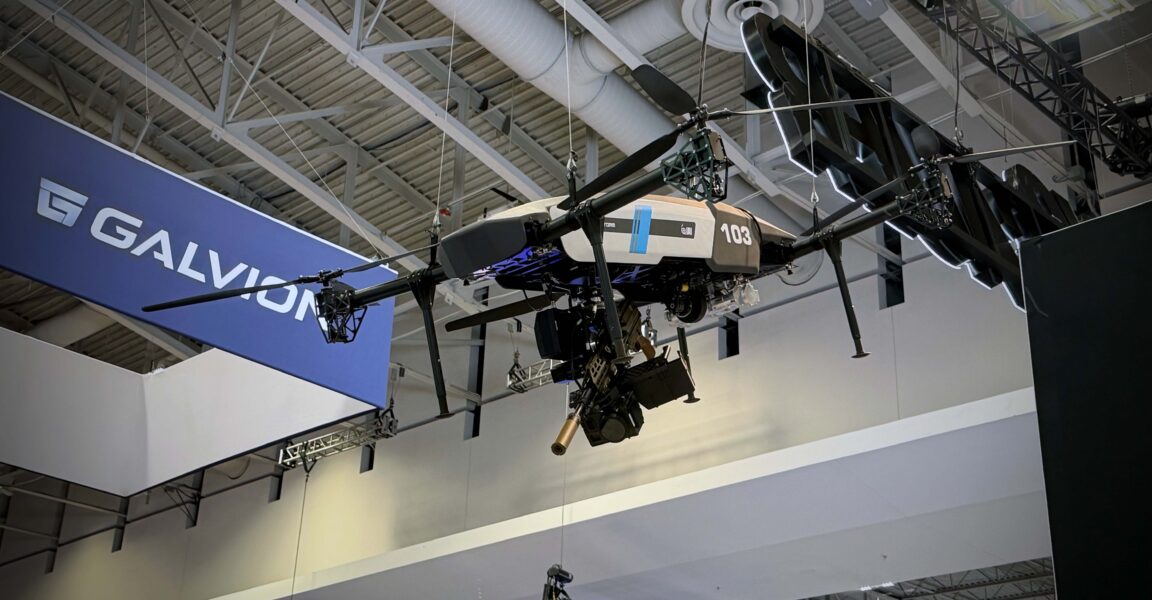
Israel Aerospace Industries’ and Sig Sauer’s Fire Storm 250 armed tactical quadcopter hangs above attendees of the conference. (Breaking Defense)
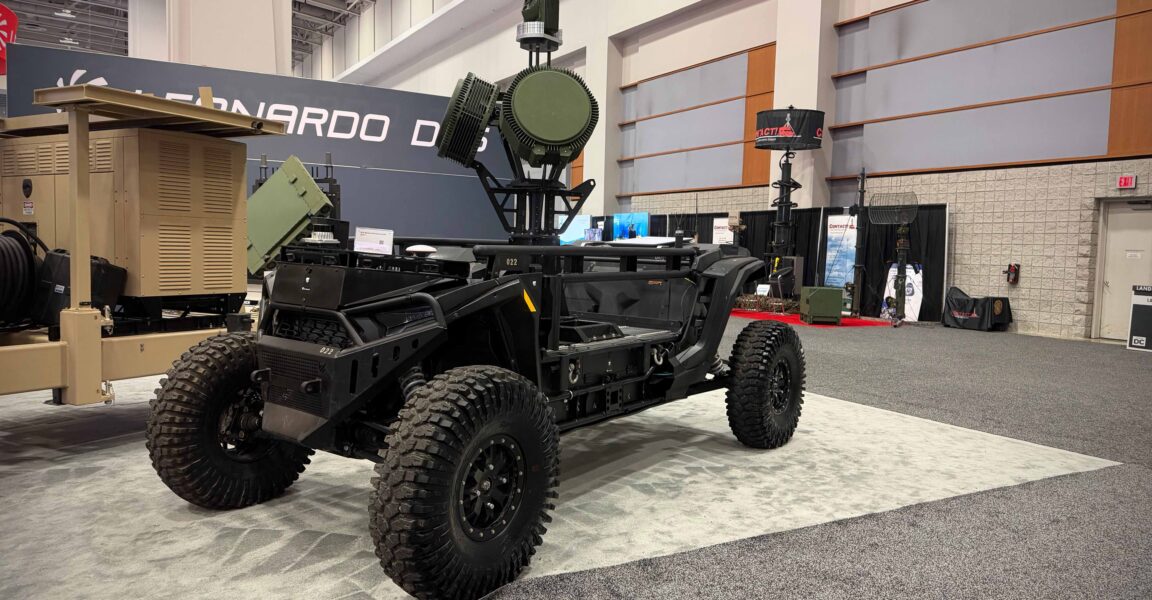
OverlandAI’s ULTRA autonomous ground system hosts a multi-mission hemispheric radar from Leonardo DRS, shown here at the 2026 AUSA expo. (Breaking Defense)
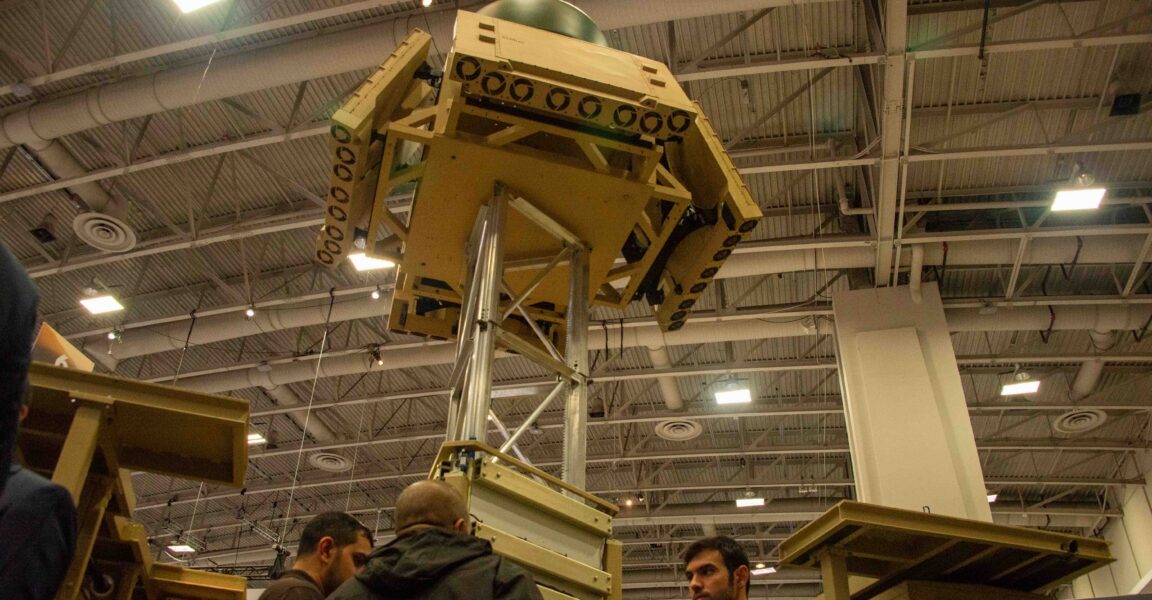
Leonardo DRS displays its Extended Mast Surveillance System, which features an exMHR radar system on a trailer platform with an extendable mast for a higher-altitude perspective. (Breaking Defense)