Naval Warfare

Navy awards $619M to Raytheon for SPY-6 radar backfits for destroyers

The contract is part of a larger deal, cumulatively worth $3.2 billion, the Navy and Raytheon inked in 2022.

Raytheon SPY-6
A SPY-6(V)1 radar installation was recently completed on the Navy’s first Flight III destroyer, the USS Jack H. Lucas (DDG 125). (Photo courtesy of Raytheon)

SEA AIR SPACE 2023 — The US Navy has awarded Raytheon a $619 million contract modification that will begin the process of backfitting numerous Arleigh Burke-class destroyers with the company’s premier missile defense radar, SPY-6.

“SPY-6 is the most advanced naval radar in the world providing unprecedented integrated air and missile defense capabilities,” said Kim Ernzen, president of naval power at Raytheon Missiles & Defense. “Integration into the U.S. fleet is well underway with SPY-6 operating on the Navy’s first, new Flight III destroyer. This contract enables the radar to be added to more ships including the first of existing Flight IIA destroyers that will be modernized.”

The new contract award, announced March 29, is part of a larger deal, with a cumulative value of $3.2 billion, the Navy and Raytheon inked last year to outfit the fleet with all variants of its SPY-6 missile defense radar.

“The Navy’s been working closely with us for the last three or four years, getting themselves in a position to be able to get the first backfit installed,” Mike Mills, senior director for naval radars at Raytheon, told Breaking Defense in January of the upcoming contract.

The variant scheduled for installation onboard the Flight IIA Arleigh Burke-class destroyers is the SPY-6(V)4. The destroyer class is one of the longest running ship programs in the Navy, with the first vessel having started construction in 1988. The service just recently announced the class’ lead ship, Arleigh Burke (DDG-51), will receive a five-year service life extension. The ship was on track to leave service in fiscal 2026 but now will remain operational through FY31.

“Arleigh Burke-class destroyers are the backbone of the Navy’s surface fleet and critical to the Nation and the Navy today and long into the future,” Rear Adm. Brendan McLane, commander of Naval Surface Force Atlantic, said in a statement about the life extension.

The other variants of Raytheon’s radar include SPY-6(V)1 which will go onboard certain amphibious vessels, SPY-6(V)2 designed for amphibious assault ships and Nimitz-class aircraft carriers, and SPY-6(V)3 which is being integrated aboard the newer Ford-class aircraft carriers.

When asked about future options remaining on the $3.2 billion contract, a Raytheon spokeswoman told Breaking Defense, “The Navy has two remaining options on the current contract which will add an additional SPY-6 variants to the fleet. These options are typically awarded yearly so we would assume option year 3 in 2024 and option year 4 in 2025. There will be future [requests for proposal] and follow-on contracts that will keep Raytheon delivering SPY-6 Radars to the warfighter over the next decade.”

PHOTOS: Sea-Air-Space 2023

PHOTOS: Sea-Air-Space 2023

Chesty XVI, the official mascot of the US Marine Corps, took a stroll through the Sea Air Space show floor. His presence raised several questions, among them “who is a good dog,” and “is it you? Are you the good dog?” (Aaron Mehta/Breaking Defense)
A Saildrone floats above the show floor at Sea Air Space 2023. Saildrone has become a common tool in the CENTCOM region, and was infamously kidnapped by Iranian forces in 2022. (Aaron Mehta/Breaking Defense)
AeroVironment’s Switchblade 600 bares its teeth at Sea Air Space. The loitering munition has gotten real-world practice during the Ukraine conflict, as a number of the weapons have been sent from the US to Kyiv. (Aaron Mehta/Breaking Defense)
The show floor had a steady stream of conference attendees moving to and fro at National Harbor. (Aaron Mehta/Breaking Defense)
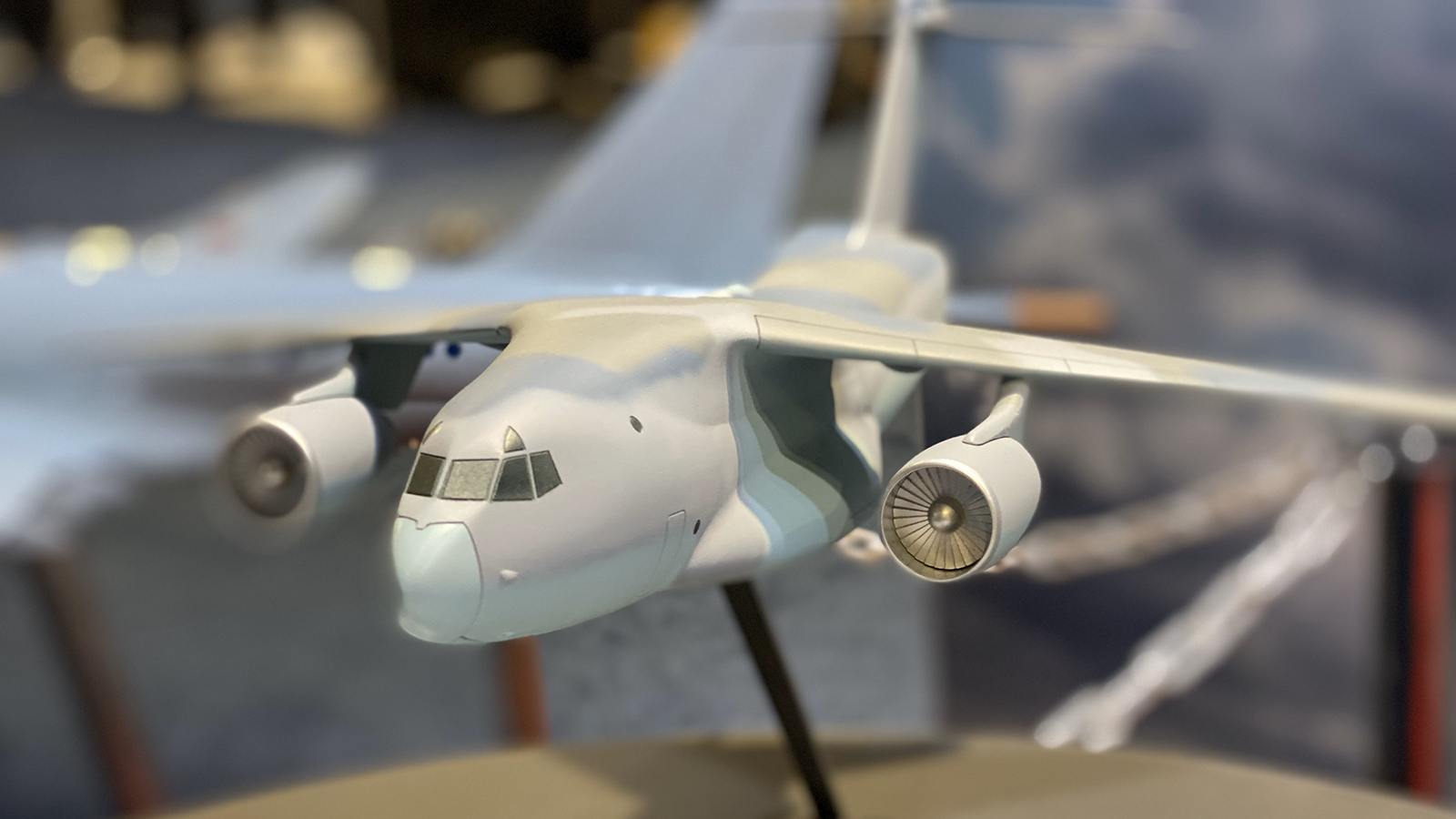
A model of the Kawasaki C-2 transport aircraft is seen on the Sea Air Space 2023 show floor. (Aaron Mehta/Breaking Defense)
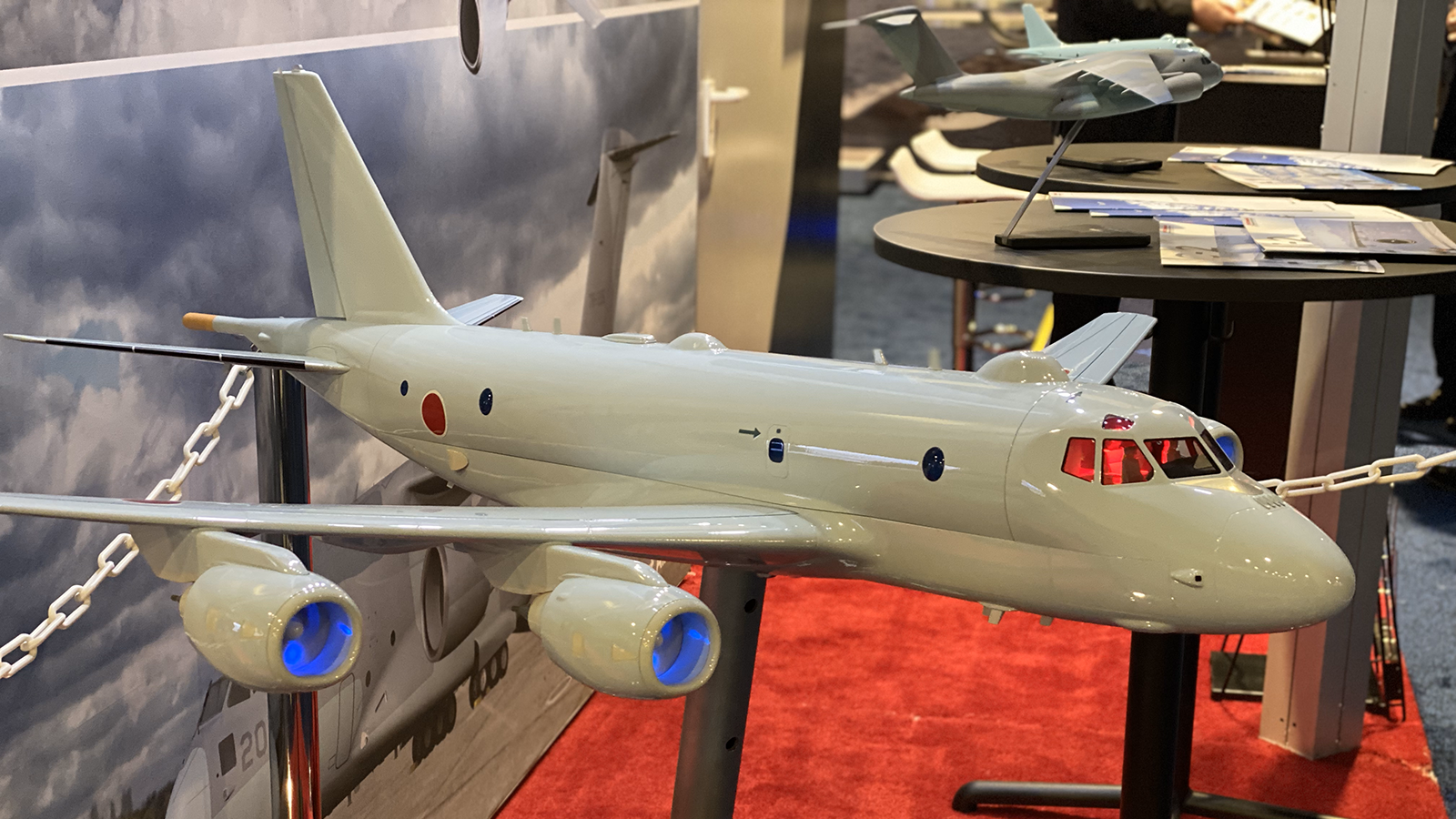
A model of the Kawasaki P-1 Maritime Patrol Aircraft is seen on the Sea Air Space 2023 show floor. (Aaron Mehta/Breaking Defense)
The largest international pavilion came from the Australian government, which took up a huge chunk of the back of the show floor at Sea Air Space 2023. The event occurs just weeks after details of the new AUKUS submarine deal were announced, tying the US and Aussie navies together as never before. (Aaron Mehta/Breaking Defense)
A model aircraft carrier at Sea Air Space 2023 features General Atomics-made aircraft launch system. (Aaron Mehta / Breaking Defense)
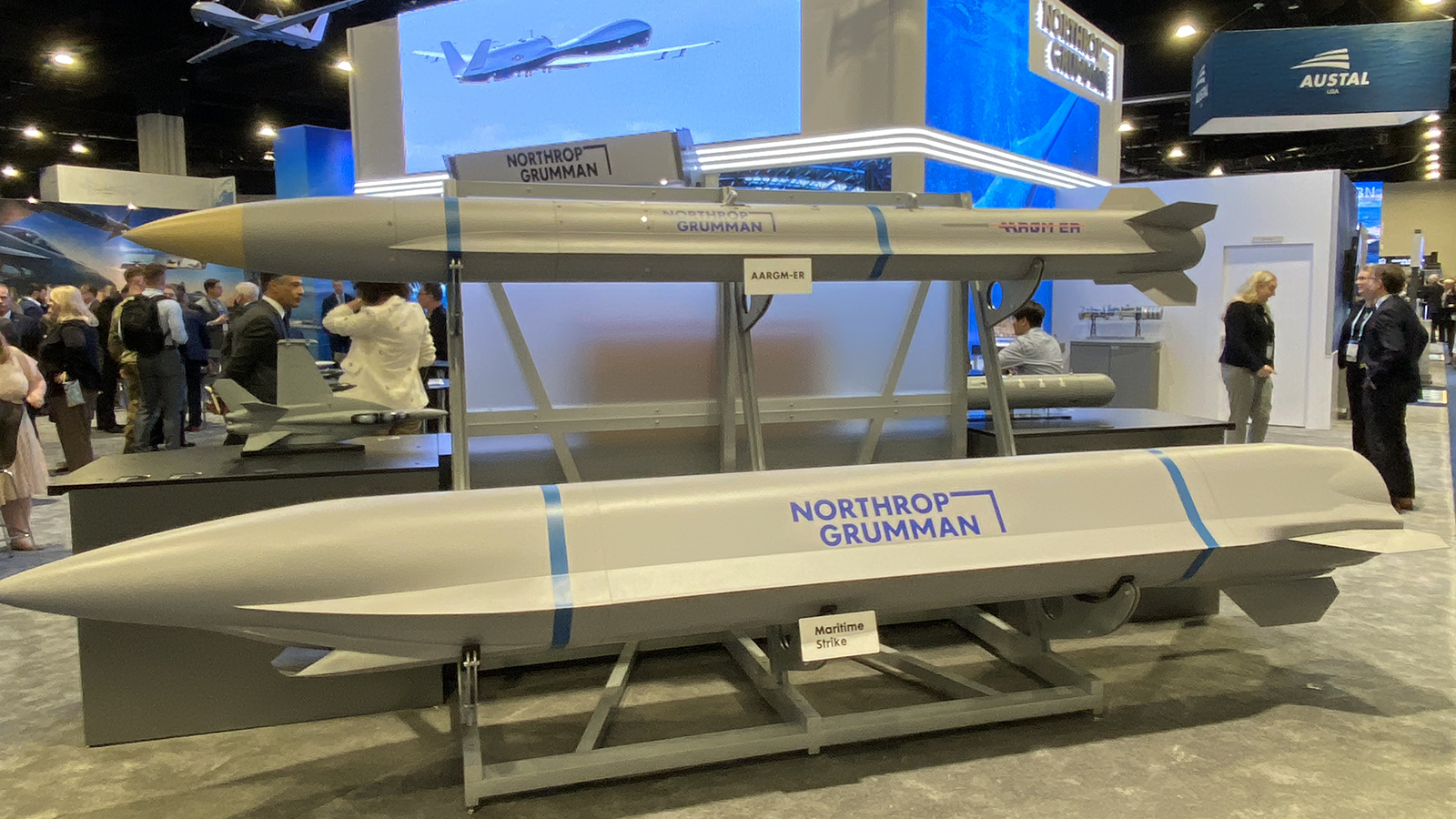
At Sea Air Space 2023, defense giant Northrop Grumman shows off some maritime-centric missiles. (Aaron Mehta / Breaking Defense)
A model of what appears to be a tilt-rotor uncrewed helicopter is shown at Textron's booth at Sea Air Space 2023. (Aaron Mehta / Breaking Defense)
Chief of Naval Operations Adm. Mike Gilday speaks during a panel comprised of himself, Commandant of the Marine Corps Gen. David H. Berger, Commandant of the Coast Guard Adm. Linda Fagan, and Rear Adm. (Ret.) Ann Phillips during the 2023 Sea-Air-Space Exposition held at the Gaylord National Resort and Convention Center, April 3. (U.S. Navy photo by Mass Communication Specialist 1st Class Michael B. Zingaro/Released)
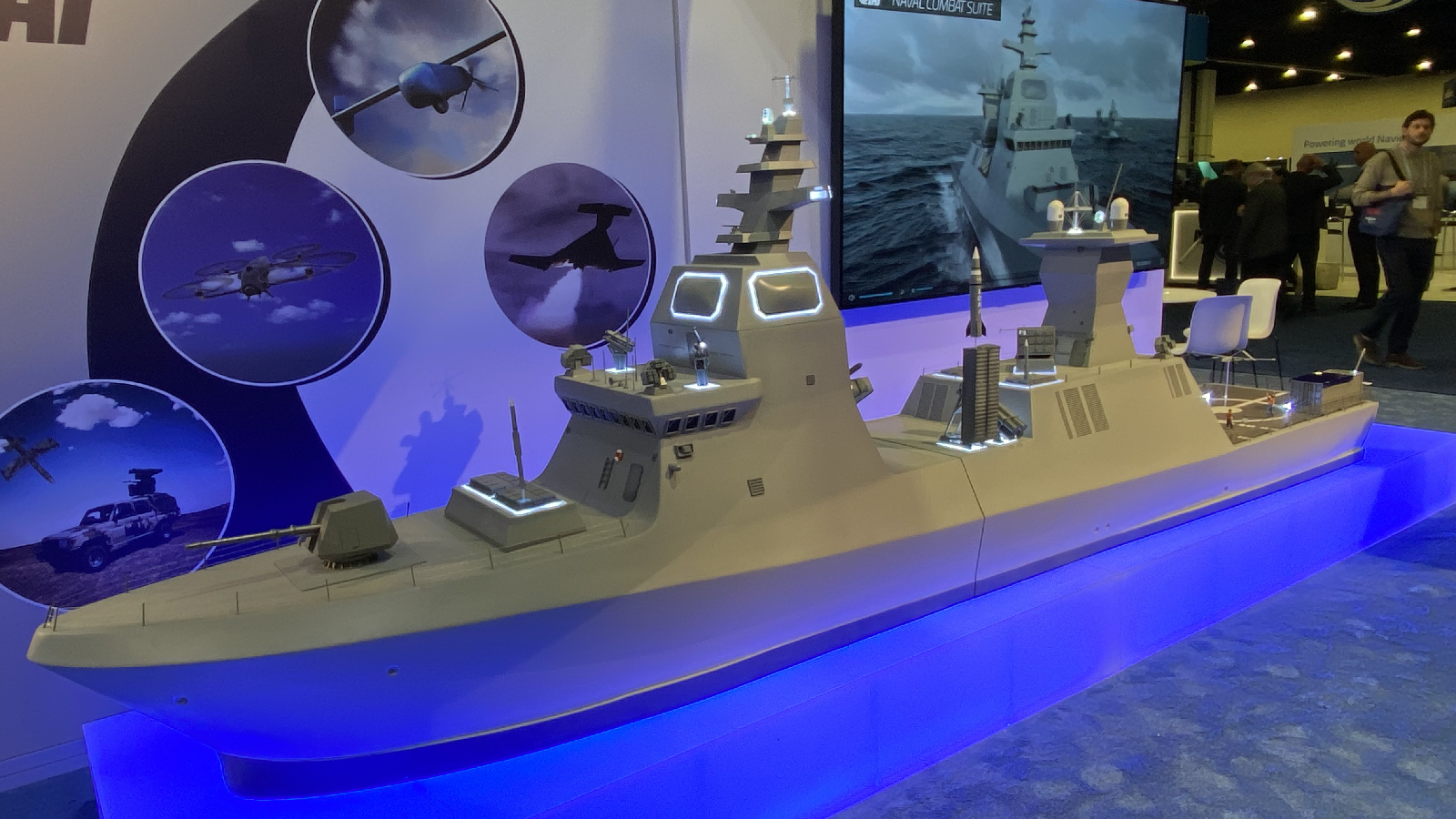
Israel's IAI used a model of a ship to demonstrate it's maritime uncrewed system capabilities at Sea Air Space 2023. (Aaron Mehta / Breaking Defense)
A panel of military officials speak on the Future of Warfighting at the Sea-Air-Space 2023 Exposition, held at the Gaylord Convention Center, National Harbor, Maryland, on April 3, 2023. (Photo by Maj. Guster Cunningham III via DVIDS)
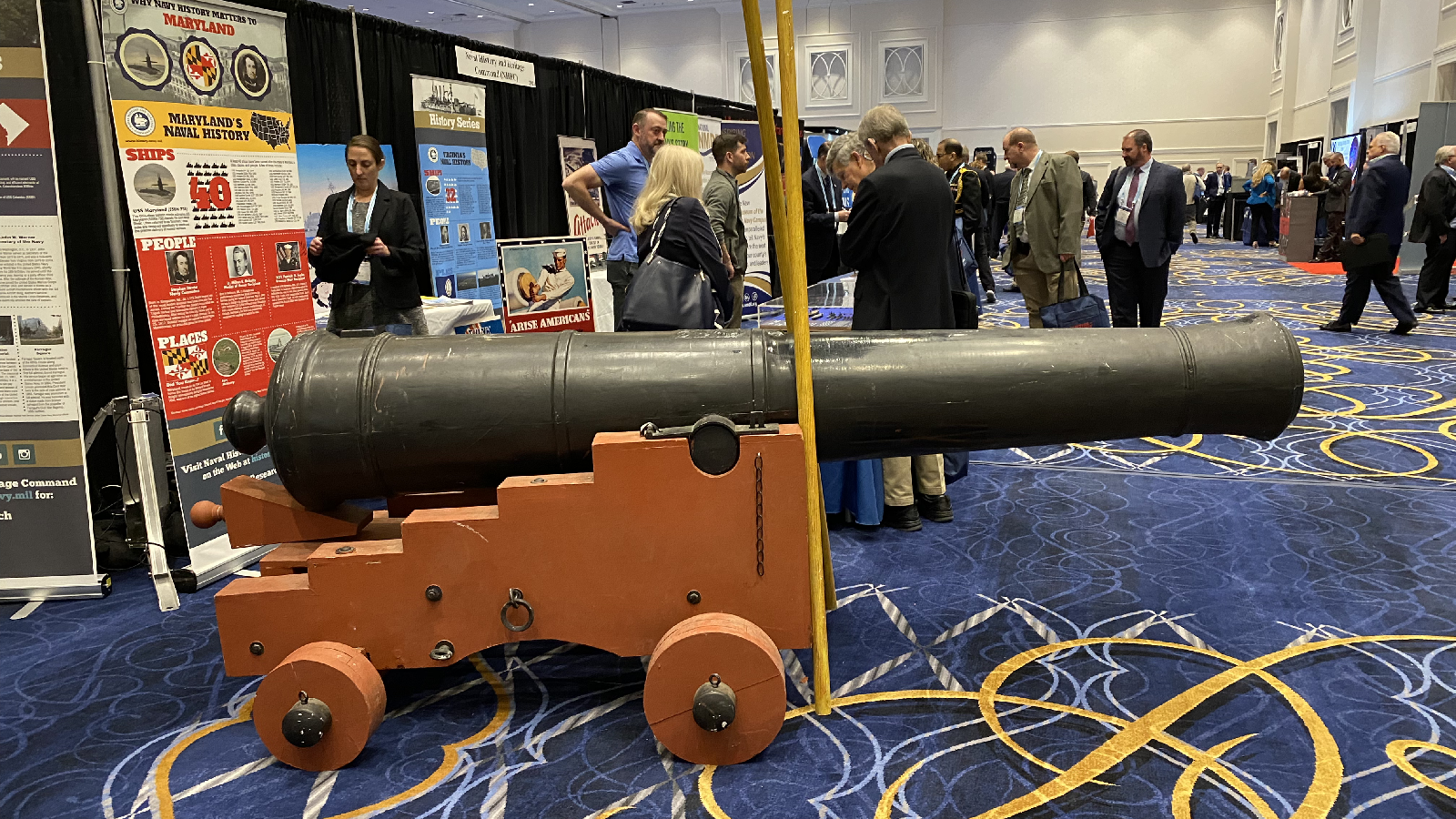
Sea Air Space 2023 is all about modern technology. Here's a throwback to the days of ship-to-ship cannon fire from the Naval History and Heritage Command. (Aaron Mehta / Breaking Defense)
A model of a Bell naval ship-to-shore connector hoverboat sits on display at Sea Air Space 2023. (Aaron Mehta / Breaking Defense)
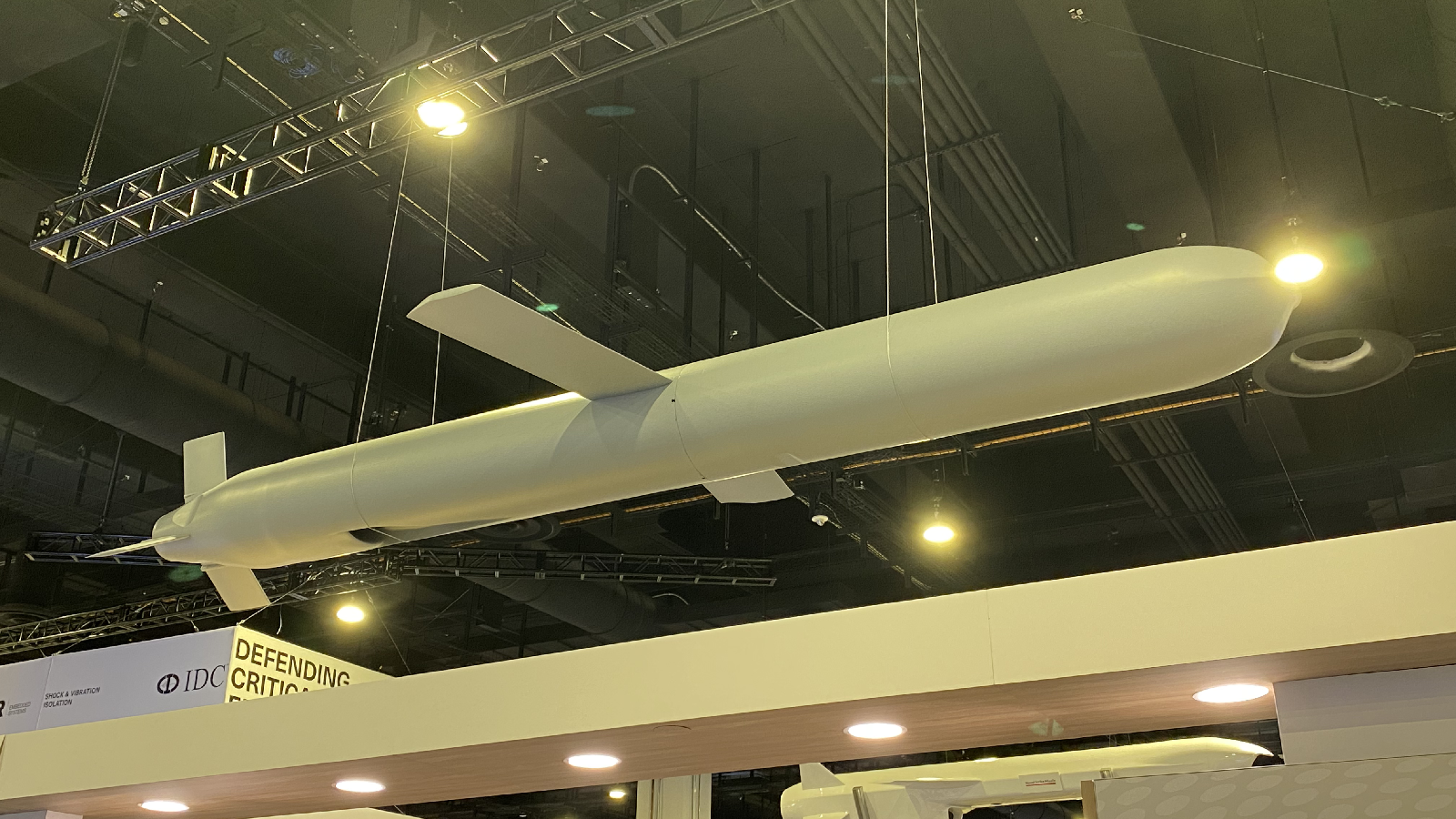
A Raytheon-made Tomahawk missile hangs on display at Sea Air Space 2023. (Aaron Mehta / Breaking Defense)
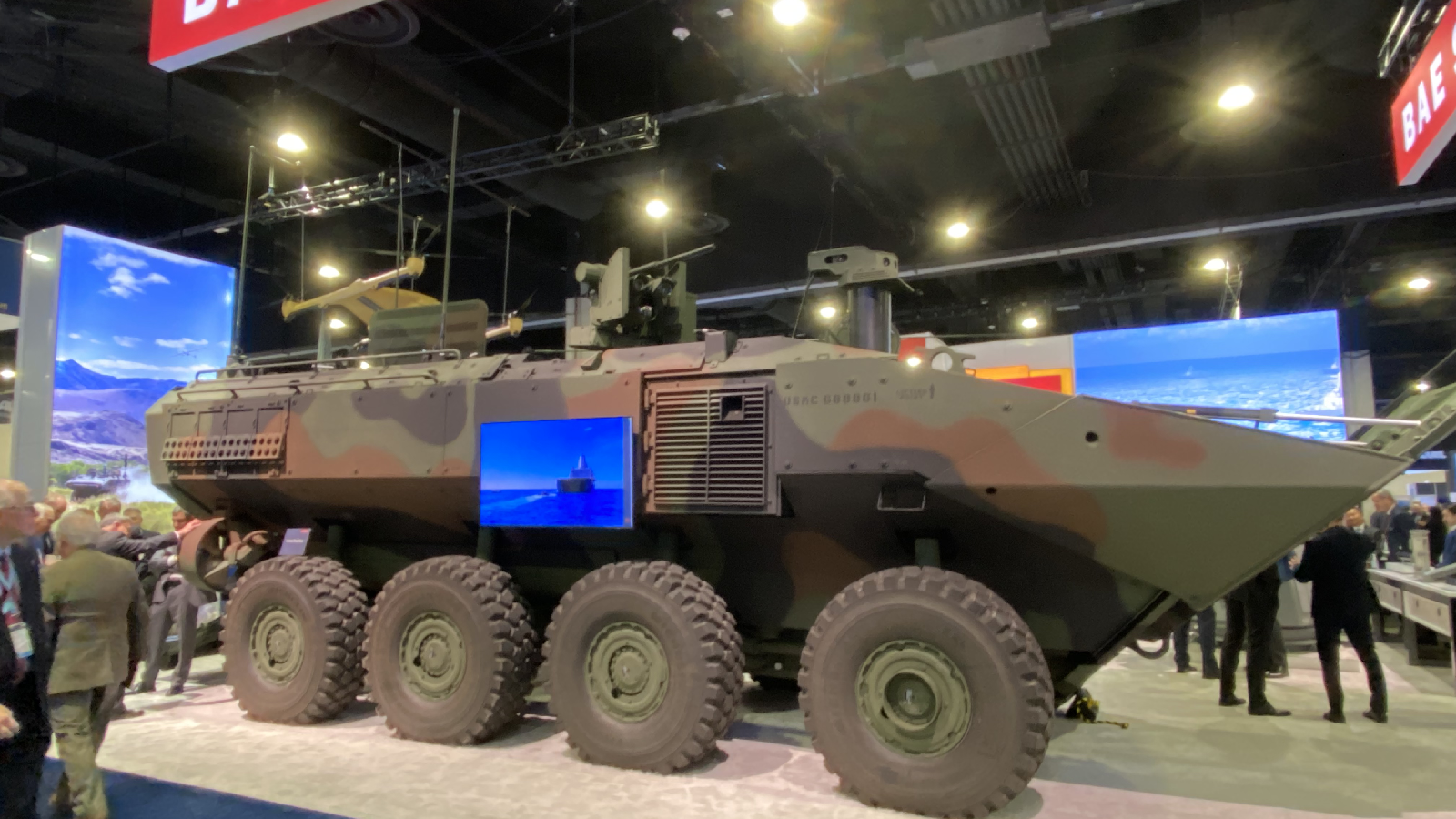
A full-sized version of BAE's Amphibious Combat Vehicle rolled onto the show floor for Sea Air Space 2023. (Aaron Mehta / Breaking Defense)
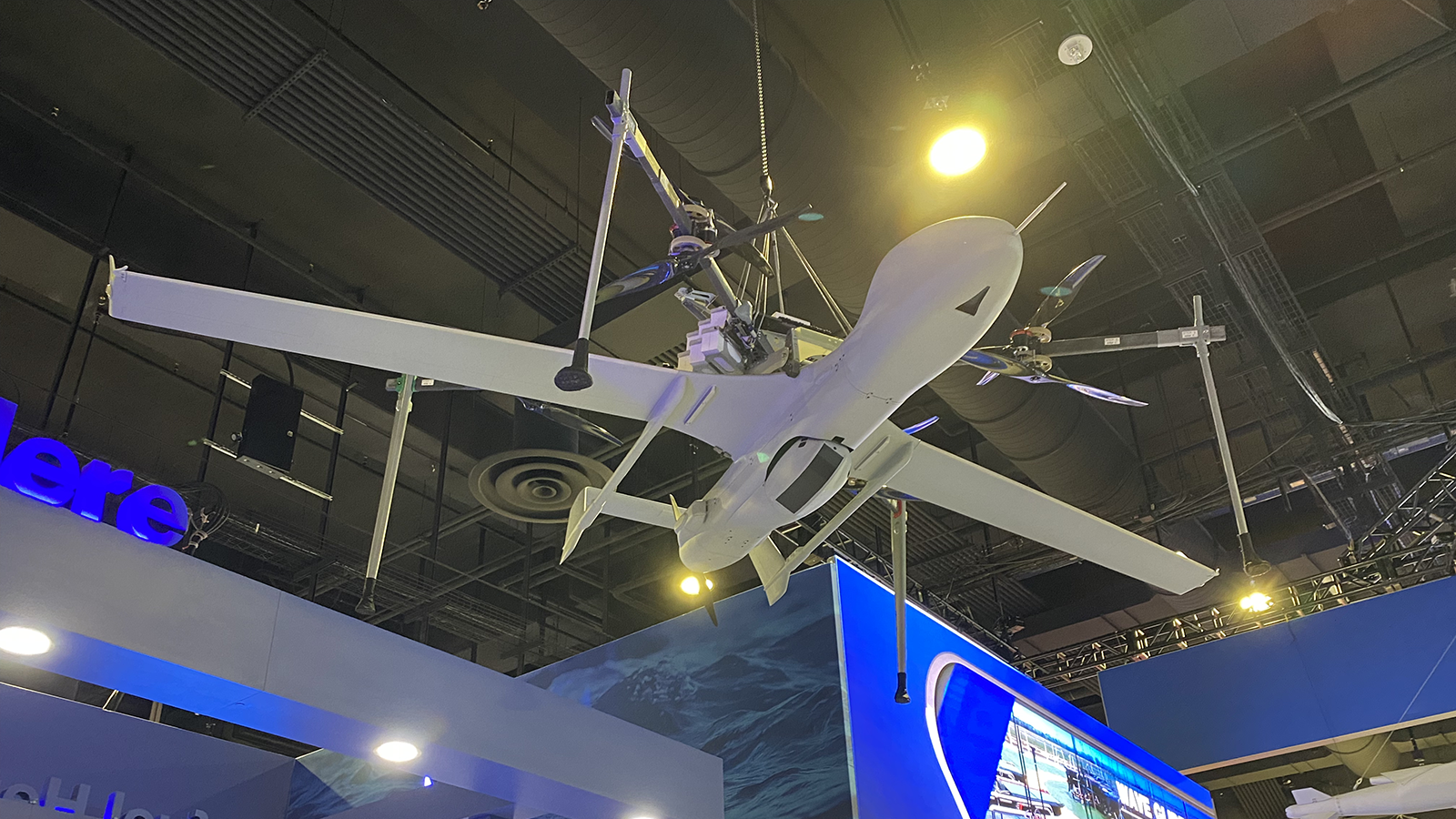
Boeing's Integrator VTOL system lingers above spectators at the defense giant's booth at Sea Air Space 2023. (Aaron Mehta / Breaking Defense)
A model of the Rolls-Royce AE 1107 engine on the Sea Air Space 2023 show floor. The engine is the powerplant for the MV-22, CV-22 and CMV-22 Osprey variants, as well as the engine of choice for the Bell Textron V-280 Valor tiltrotor, which in December won the Army’s Future Long-Range Assault Aircraft (FLRAA) competition to be the successor to the aging UH-60 Black Hawk. (Aaron Mehta / Breaking Defense)
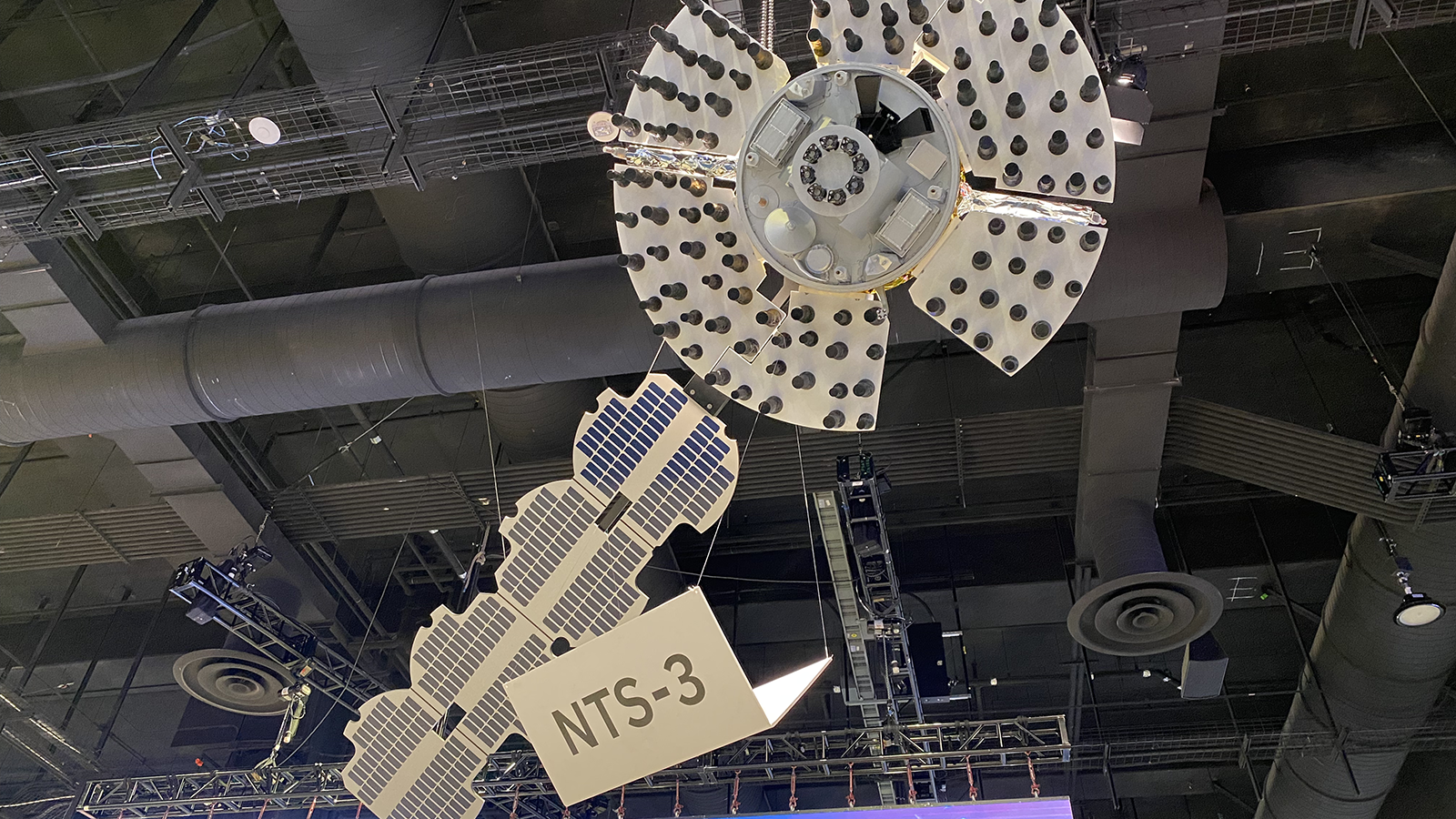
L3Harris shows off a model of its Navigation Technology Satellite – 3 (NTS-3) satellite at Sea Air Space 2023. Funded through the Air Force Research Laboratory, NTS-3 is designed to test new positioning, timing and navigation (PNT) technologies. (Aaron Mehta / Breaking Defense)
A model by Israeli Aerospace Industries at Sea Air Space 2023 shows an uncrewed system coming in for a landing on a ship. (Aaron Mehta / Breaking Defense)