WASHINGTON — The Air Force has picked GE Aerospace and Rolls-Royce to advance engine designs that could power future drones and potentially other aircraft, according to a service spokesperson.
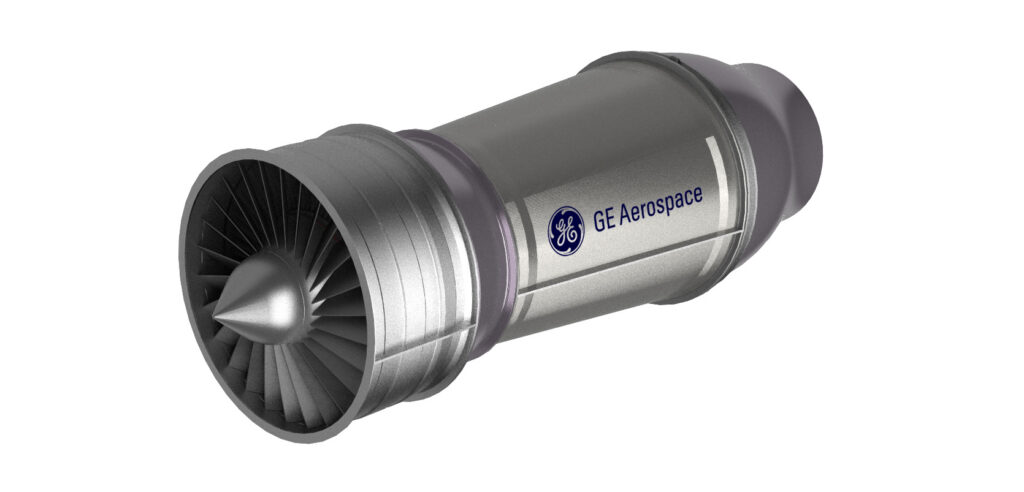
The two engine makers were selected for drones the Air Force dubs Medium Thrust Class Autonomous Collaborative Platforms, the spokesperson told Breaking Defense. In a May press release announcing the award, GE said its contract would complete preliminary design review for a new powerplant the company dubs the GE426
“We’ve proven we can rapidly move from concept to engine demonstration with the GEK800” — a smaller, lower-thrust engine GE developed with Kratos for drone and cruise missile applications — “and our focus now is on applying that process to the GE426 to ensure it provides the performance, affordability, and readiness the warfighter needs,” Steve Russell, vice president and general manager of Edison Works at GE, said in the release.
Asked about Rolls-Royce’s award, which has not been publicly announced, company executive Candice Bineyard in a statement to Breaking Defense today touted the firm’s “AE engine family” without specifying the powerplant in question. The AE 3007N engine, for example, is currently used on the Navy’s MQ-25 Stingray, which made its first flight in April.
“Autonomous aircraft represent a fundamental shift in how the U.S. Air Force will project combat airpower. By leveraging our advanced AE engine family, we can move quickly to deliver the performance, electrical power, and reliability our warfighters need for operational advantage in contested environments,” said Bineyard, director of business development and future programs for defense at Rolls-Royce.
The Air Force spokesperson said the contract for the GE426 was issued as a firm-fixed price deal using Other Transaction Authority under the service’s Propulsion Consortium Initiative 2.0 effort “to explore solutions beyond traditional manned aircraft standards.” The spokesperson did not immediately clarify whether Rolls-Royce’s contract is structured similarly, and did not disclose the dollar values of the awards for either vendor.
Drones are an initial focus for the engine contracts, though “other platforms with similar propulsion characteristics may benefit” from the GE and Rolls-Royce powerplants, the Air Force spokesperson said.


Securing the AI flank to provide trusted decision-making capabilities
AI tools are critical components of modern warfare, but must be protected to ensure they are reliable.
The Air Force has issued multiple contracts spanning a range of engine designs to expand its propulsion options for unmanned platforms, including drone wingmen dubbed Collaborative Combat Aircraft. Beyond drone applications, engines could be used to power other unmanned systems and weapons like cruise missiles.
The second round of the Air Force’s ongoing Collaborative Combat Aircraft program is evaluating a wide variety of designs, spanning from cheaper to more exquisite concepts. However, House authorizers recently noted that the Air Force and Navy in the future may need drones “with sufficient range, speed, and electrical power to potentially self-deploy from the continental United States and conduct varied missions for geographic combatant commanders.” Those types of requirements, should they come to pass, would likely entail more expensive, higher-performance designs.
Breaking Defense Video