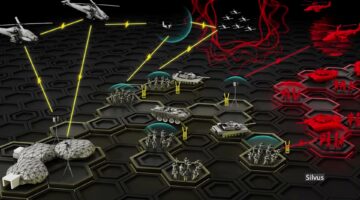
Finding the adversary’s hidden signals is the Army’s next electromagnetic warfare challenge
RF sensing at greater distance gives operators more decision space to act.

RF sensing at greater distance gives operators more decision space to act.

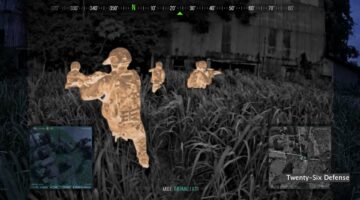
How to give soldiers awareness and targeting without adding complexity.
There is no single answer to the drone threat, pushing the Pentagon toward a broader mix of defenses.


APKWS® laser‑guidance kit provides reliable precision‑guided munitions across missions and platforms, delivered quickly to meet evolving operational demands.


Expanding manufacturing capacity is critical to producing missiles, radars, and launch systems.

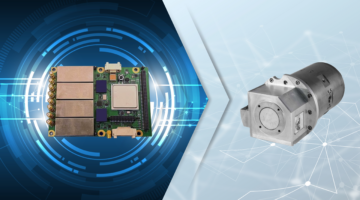
As threats continue to evolve, speed will increasingly depend on what is already available when the need emerges.

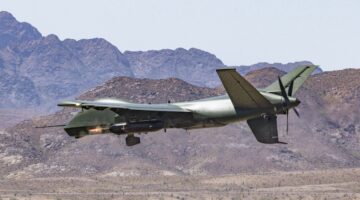
Both aircraft are designed to evolve as threats and mission requirements change.

Explore how software, edge AI and resilient connectivity can strengthen military logistics in contested environments. Join Breaking Defense on Oct. 21 and earn 1 CPE credit.

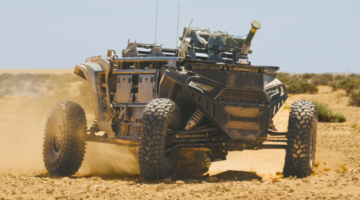
One commander, many robots: Fully autonomous ground vehicles are reshaping the battlefield.


Systems that can work independently while still being part of a unit are critical to carrying out multi-domain operations.


Lithium-metal batteries are one way to break the weight and endurance limits of today’s unmanned systems.


Decentralized Embodied Collaborative intelligence enables better reconnaissance, logistics and combat capabilities.


"Being able to tell the commander you don't need to do something is actually a pretty powerful message, as well."

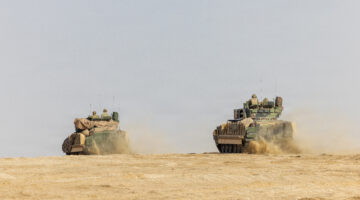
Army vehicles like Bradley need greater power at the sprocket for speed, braking, and maneuverability.


The goal of such weaponization is to tie warfighter needs to the RDT&E cycle.
Increased capabilities of low SWaP software-defined radios make them viable options for smaller platforms.


Former MDA Director Lt. Gen. (ret.) Trey Obering says on-orbit servicing could enhance orbital resilience.