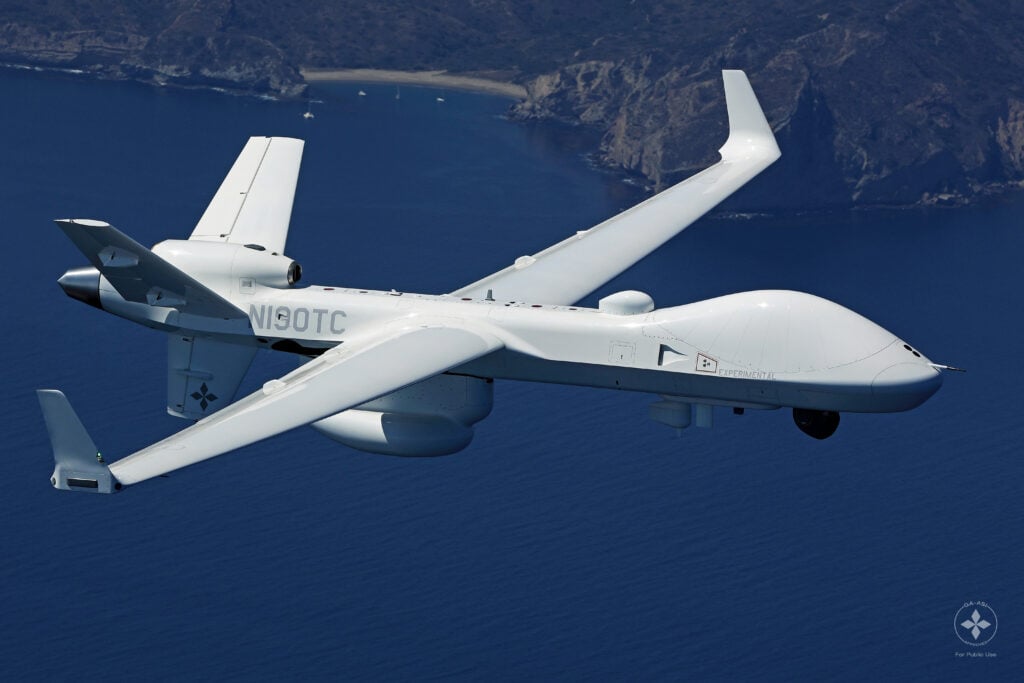
The U.S. Navy-Marine Corps Team faces increasingly complex and contested environments — with threats ranging from low-end, high-volume unmanned aerial vehicles to highly capable ships, submarines, aircraft, and shore batteries armed with long-range weapons able to hold targets at risk at extremely long range.
In such a fast-paced and dense environment, the MQ-9B SeaGuardian® Unmanned Aircraft System (UAS) emerges as a transformative force multiplier.
Built on the airframe of the battle-proven MQ-9A Reaper®, the MQ-9B delivers unmatched endurance, multi-domain awareness, and operational flexibility.
Whether operating left of conflict to detect and deter potential adversaries, or right of conflict to decisively engage them, the MQ-9B can redefine how the Navy and Marine Corps project power and maintain maritime superiority.
Unmatched Endurance
MQ-9B SeaGuardian is derived from a family of aircraft that has logged over 9 million operational hours, most of which have been in combat.
This pedigree ensures that MQ-9B is ready to meet the demands of high-end conflict. Its ability to integrate seamlessly with carrier strike groups, expeditionary strike groups, surface action groups, and amphibious ready groups makes it an indispensable asset for joint and allied operations.
MQ-9B’s endurance is unmatched in its class, which allows the aircraft to provide persistent Intelligence, Surveillance, Reconnaissance, and Targeting (ISR-T) coverage and Anti-Submarine Warfare (ASW) over vast areas. This persistence is critical in contested environments, enabling continuous monitoring of adversary movements and pattern-of-life analysis.
In high-stakes scenarios, MQ-9B’s ability to loiter for extended periods ensures decision-makers have the actionable intelligence needed to stay ahead of evolving threats.
Multi-Domain Awareness Left of Conflict
In the left-of-conflict phase before hostilities, when deterrence and situational awareness are paramount, MQ-9B excels.
Its advanced sensor suite — including a multi-mode maritime radar, electro-optical/infrared systems, and signals intelligence payloads — provides a comprehensive intelligence picture across domains. This capability enables the MQ-9B to monitor adversary activities and surveil maritime and littoral zones with precision.
In its ASW configuration, SeaGuardian’s self-contained sonar suite can hunt submarines by dispensing and monitoring sonobuoys. It can also seamlessly integrate with existing crewed sub-hunting aircraft such as the P-8A Poseidon, expanding its reach and allowing the Navy to send unmanned aircraft into zones considered too dangerous to risk losing valuable aircraft and irreplaceable human lives.
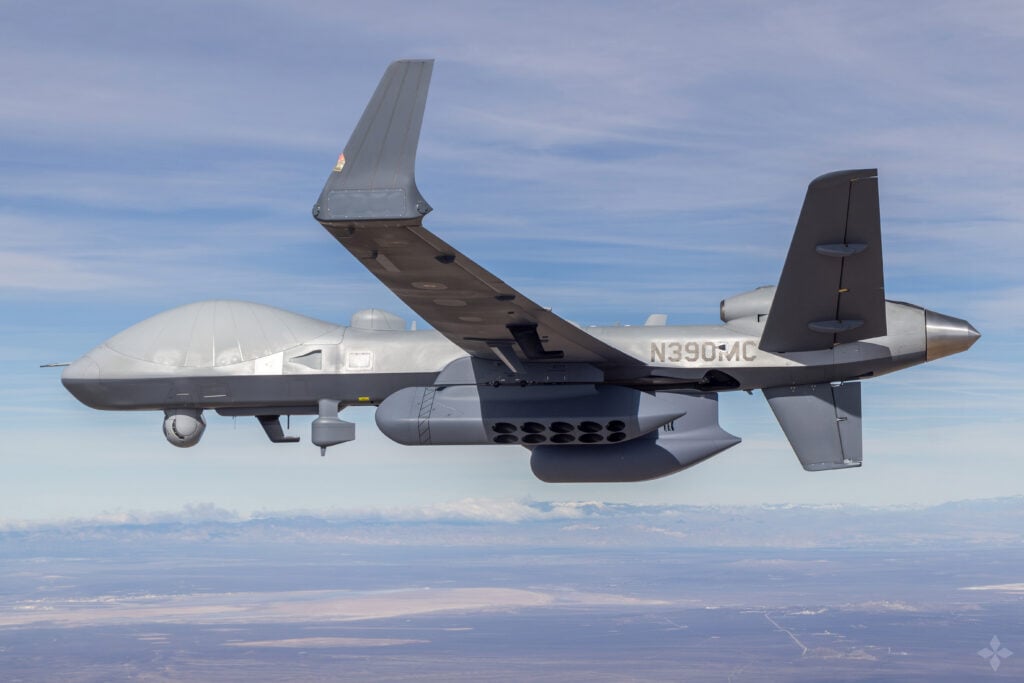
MQ-9B’s ability to operate in all weather conditions further enhances its utility.
With a rugged, damage-tolerant airframe and state-of-the-art de-icing systems, the aircraft can perform missions in the harshest environments, from the Arctic to the Antarctic and everywhere in between.
This all-weather performance ensures the Navy and Marine Corps can maintain a persistent presence, even in the most challenging operational conditions.
The MQ-9B SeaGuardian’s advanced radar systems are designed to thrive in challenging maritime environments, providing unparalleled situational awareness in conditions where traditional systems might falter.
Its ability to see through clouds, fog, and mist ensures a clear operational picture in degraded environments.
The forthcoming MQ-9B Short Takeoff and Landing (STOL) version will further expand the aircraft’s operational flexibility.
With the ability to take off and land on short or ad-hoc runways, the MQ-9B STOL will be capable of operating in the rugged environments where U.S. and partner forces might be called upon to fight. This capability enhances the Navy and Marine Corps’ ability to project power and sustain operations in austere locations.
Moreover, the MQ-9B is the first unmanned aircraft in its class to achieve NATO STANAG-4671 airworthiness certification, allowing it to integrate seamlessly into civilian and military airspace.
This capability enables MQ-9B to conduct ISR-T missions during peacetime, disaster relief operations, and homeland security tasks without violating airspace norms.
By providing continuous domain awareness, the MQ-9B helps deter potential adversaries and strengthens their ability to respond to emerging threats.
Enhanced Survivability Right of Conflict
If conflict becomes unavoidable, MQ-9B’s enhanced survivability and operational flexibility make it an invaluable asset.
The MQ-9B is more than just a collector — it’s an effector.
Its ability to provide kill-quality targeting data to both manned and unmanned systems ensures that it can play a decisive role in joint and coalition operations.
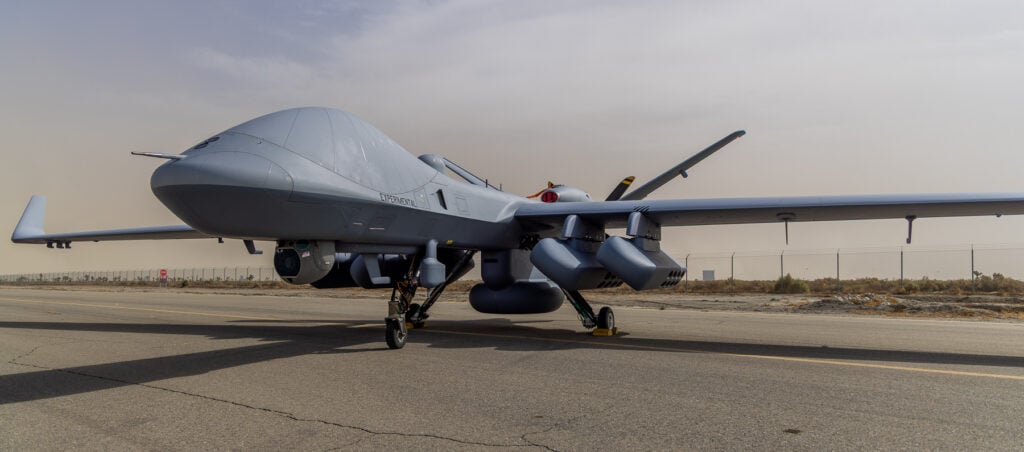
Already the most combat-proven UAS system on Earth, the MQ-9B is becoming even more dangerous to adversaries of the United States and its partners.
GA-ASI announced in February that it is integrating long-range weapons, giving MQ-9B the ability to engage enemy targets from well outside a denied area.
SeaGuardian’s advanced radar has proven to be an excellent complement to the U.S. Navy’s Net-Enabled Weapons, specifically, the AGM-158C Long Range Anti-Ship Missile (LRASM) from Lockheed Martin. Its long-range high target quality standoff capability allows for precise targeting with an in-flight target update capability for highly contested environments.
Furthermore, SeaGuardian’s ASW package gives it the ability to not only detect and track enemy submarines but also to launch torpedoes. This means that if MQ-9B is operating in a theater, enemy submarine captains will need to adapt their operations anywhere within the aircraft’s prodigious combat radius or risk their own destruction.
This revolutionary capability fills critical ISR-T and ASW gaps at a fraction of the cost of traditional methods and greatly expands the reach and effectiveness of the Navy’s manned ASW and maritime patrol aircraft.
The roles MQ-9B can play don’t end there.
MQ-9B’s modular payload architecture allows it to adapt to evolving mission requirements. From electronic warfare to communications relay, the aircraft can be configured to meet the specific needs of any operation. This adaptability ensures the MQ-9B remains relevant in a rapidly changing threat environment.
Cost-Effective Modernization
In an era of constrained budgets, the MQ-9B offers a cost-effective solution for modernizing the Navy and Marine Corps’ ISR and strike capabilities.
As a fully mature design derived from a proven legacy platform, the MQ-9B delivers generational-leap capabilities at a fraction of the cost of a clean-sheet design. Its lifecycle cost is dramatically lower than that of manned equivalents, making it an attractive option for budget-conscious modernization efforts.
MQ-9B’s interoperability with allied forces further enhances its value. By enabling seamless integration into joint and coalition operations, the MQ-9B strengthens partnerships and enables maritime forces to operate effectively alongside their allies. This interoperability is critical in today’s interconnected battlespace, where coalition operations are the norm.
The MQ-9B SeaGuardian is more than just an unmanned aircraft — it’s a strategic asset that empowers the U.S. Navy and Marine Corps to dominate across domains.
From its unmatched endurance and multi-domain awareness to its enhanced survivability and cost-effectiveness, the MQ-9B is uniquely suited to meet the challenges of modern conflict.
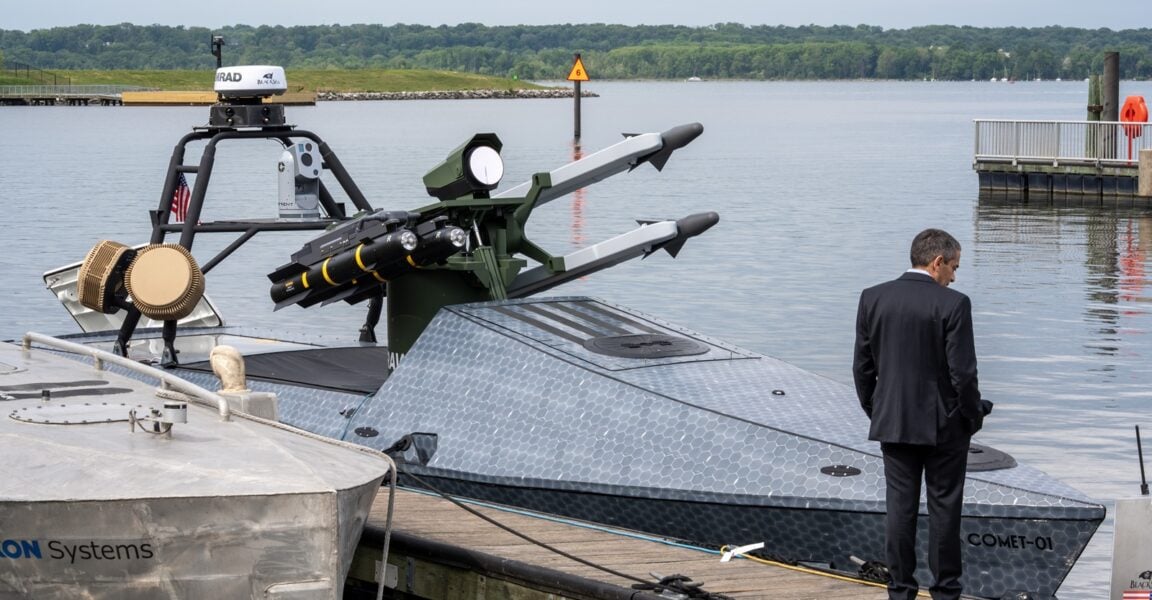
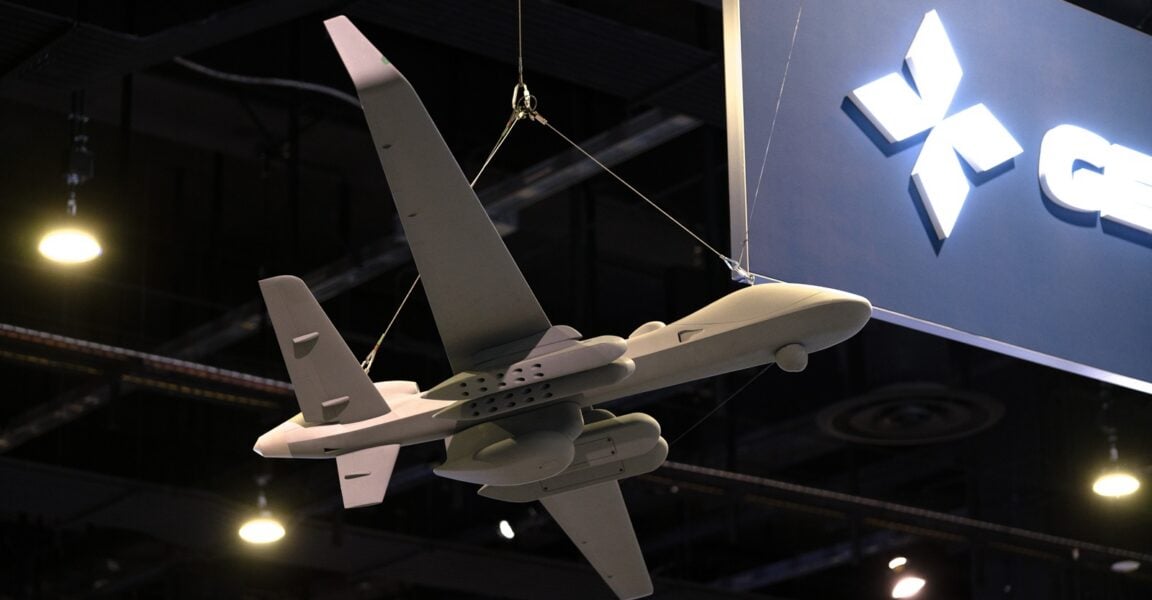
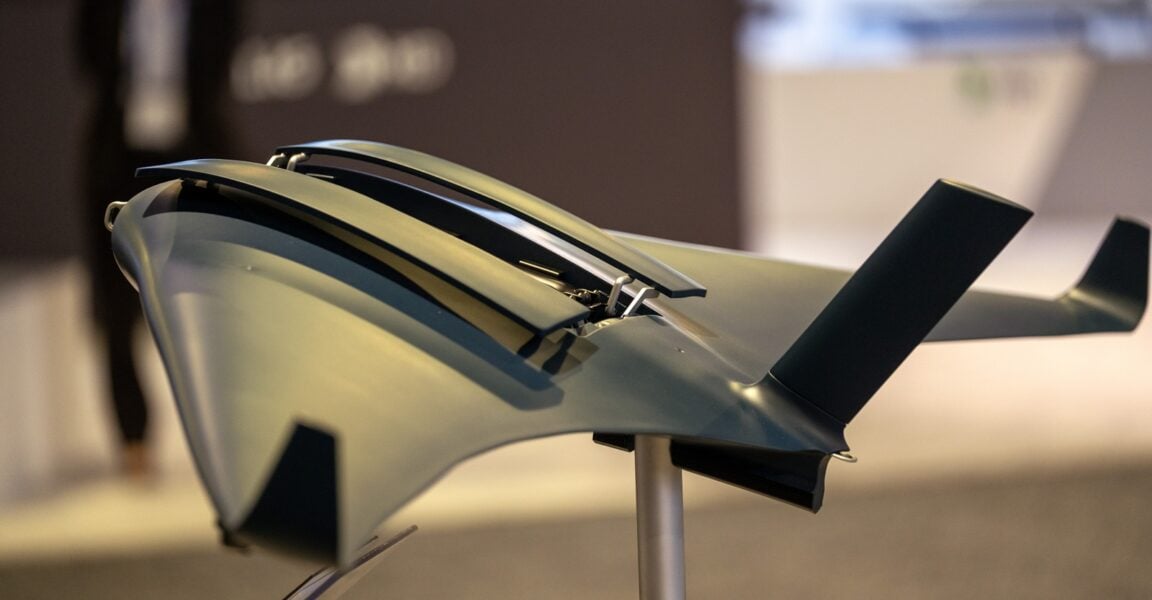
PHOTOS: Sea Air Space 2026

 Gallery