
MODERN DAY MARINE 2023 — When Gen. Eric Smith, currently the assistant commandant, takes the helm as the Marine Corps’ acting commandant on July 10, he’ll face a unique set of circumstances not seen by any Marine in more than 100 years.
“They are not ideal,” the four-star general said on the sidelines of the Modern Day Marine exposition on Thursday when asked about the implications of the service not having a Senate-confirmed leader, a casualty of a political blockade on the Hill.
Beyond what it means for him personally, Smith said “the ripple effect is actually pretty significant,” for those further down the line as well.
What happens when the 38th commandant, Gen. David Berger, steps down next month has been on the mind of both reporters and the crowd during the Modern Day Marine exposition this week — the first audience question Smith fielded after his Thursday speech was about as much.
Ostensibly, the last time in the service’s history a Marine held the title “acting commandant” was Col. William Biddle from December 1910 to February 1911, according to Marine Corps University. His tenure as the acting chief ended when he was “chosen” as the 11th commandant and promoted to the rank of major general. (Some reports differ, however, and a spokesperson for the Marine Corps agency charged with recording the service’s official history could not immediately confirm this fact.)
And while in many government jobs there’s little daylight between what an “acting” official does compared to someone officially in the role, that’s not the case with the senior-most Marine. Here are some takeaways about the historic position the soon-to-be “acting commandant” will be in, as told by the Marine at the center of it.
Read more of Breaking Defense’s coverage of the Modern Day Marine exposition.
Why Does Smith Becoming Acting Commandant?
First, let’s back up. President Joe Biden formally nominated Smith to become the 39th commandant of the Marine Corps last month, and his June 13 confirmation hearing was relatively smooth, reflecting the trust the general has built with lawmakers throughout his term as the second in command. Berger became commandant on July 11, 2019, and will relinquish his office on July 10, one day short of his four-year limit.
Smith has not yet been confirmed by the Senate due to an outstanding effective hold placed on military nominations by Sen. Tommy Tuberville, R-Ala., over the Pentagon’s policies around servicemembers obtaining abortions.
But, even if he weren’t the nominee, Smith would still become the acting chief in face of such a delay. That is because by law, Smith said, the current commandant may only serve for four years and, if no replacement is nominated and confirmed prior to current chief’s departure, then the No. 2 in command automatically takes the helm in the interim.
While speaking to reporters, Smith was careful not to chastise lawmakers for the hold on his nomination, saying that would be politicizing the military. But, he added, “I will tell you if you do that, here’s what happens:”
He Will Still Be The Assistant Commandant
Despite the extra workload associated with being the acting commandant, Smith will remain as the Marine Corps’ second most senior officer. To manage both billets simultaneously, Smith said he’ll have to delegate certain responsibilities to various subordinate officers.
In turn, those officers, who also already have full-time workloads, will likely end up doing the same to their subordinates. And the chain goes on.
The real impact to all of this — aside from everyone having to do more work — is that one of the assistant commandant’s chief responsibilities is to be present on a variety of oversight boards and councils to ensure “that there’s synergy across the Marine Corps in the Marine Corps message across all forums,” he said.
“That will be harder to maintain because it’s parceled out to four, five, six, seven officers,” he added.
No Commandant’s Planning Guidance
The commandant’s planning guidance, as the name implies, is a document each new Marine Corps chief regularly publishes at the start of their tenure to provide the force with a preview of the direction the new top officer plans to take it.
In Berger’s guidance, he previewed many of the changes to come as part of his plan to revamp the service, dubbed Force Design 2030, and set the tone for four years that would be filled with changes — some less comfortable than others.
As acting chief, Smith said he won’t be permitted to publish that guidance; that privilege is reserved for the 39th commandant, “whoever that may be,” he added.
“I can give guidance to the force as the acting commandant, but it does not carry the same weight quite as the commandant’s planning guidance,” he said.
No, He Can’t Move Into The House
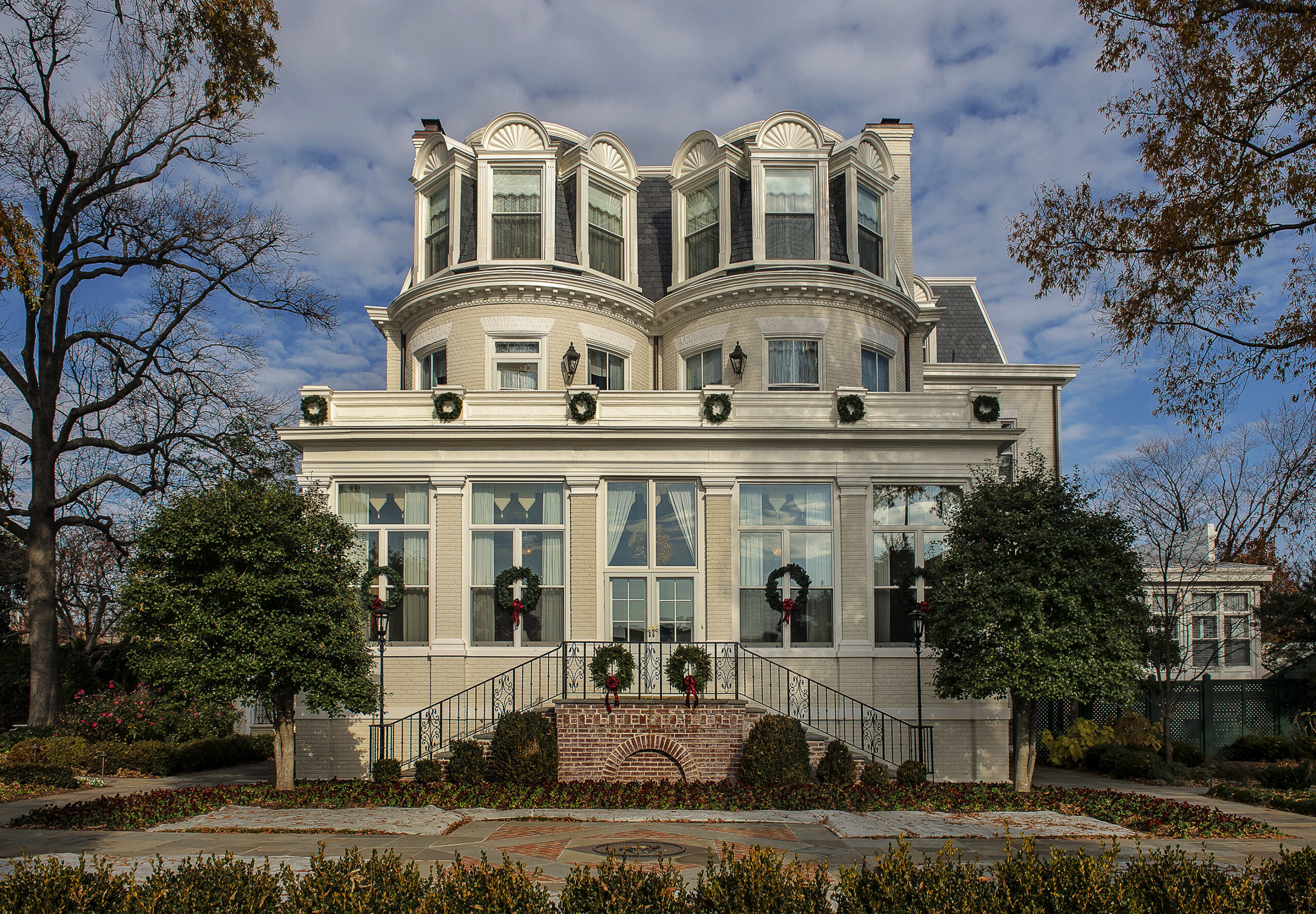
Anyone who has visited Marine Corps Barrack Washington has likely taken notice of an elegant home sitting on one side of the parade ground. That is the “Home of the Commandants,” the building intended to house the current Marine Corps chief.
The service claims it is the “oldest, continuously occupied public building in Washington, DC,” constructed in 1801 under the supervision of President Thomas Jefferson and the service’s second chief Lt. Col. William Ward Burrows.
For those who have entered it — this reporter has on just a few occasions — its atmosphere is as proud and stately as its name implies. While the exact décor of the home is dictated by the current occupant, its most striking feature is the presence of numerous portraits, all of which depict past Marine Corps chiefs.
The service says this tradition was started by the 12th commandant, Maj. Gen. George Barnett, who wanted to document the “successive changes in uniforms.” Then-acting Navy Secretary Franklin Roosevelt approved the idea, according to the Marine Corps.
As for Smith, he may not inhabit the historic house at while serving as acting commandant, he said.
Breaking Defense Video