Land Warfare

Army modernizing, moving to multi-vendor approach for aging fires system

"I don't want one teammate. I want a team of industry that's going after this really robust set of applications that modernizes this sort of monolithic, single application," Mark Kitz told Breaking Defense.

NY National Guard Soldiers train for artillery raid at Fort Drum
Sgt. Victor Sanchez operates an advanced field artillery tactical data system to calculate aiming data to relay to the howitzer teams during an air assault artillery raid on Fort Drum, N.Y. (U.S. Army National Guard photo by Sgt. Alexander Rector)

AUSA 2023 — The Army wants to modernize its aging system for planning and executing fires, and is planning to move to a multi-vendor approach in what one service official told Breaking Defense is a brand new move for the service. 

Historically, “a very small number of industry” has been involved in the Advanced Field Artillery Tactical Data System (AFATDS), the Army’s main command and control system, because “it’s very complicated, it’s very niche,” Mark Kitz, program executive officer for command, control, communications-tactical (PEO C3T) said in an interview Monday.

“However, at the end of the day, it’s just data where we’re building applications on top of data,” he said. “And so in my first couple of months here, what one of the challenges I’ve [given] to industry is, ‘Hey, let’s not treat AFATDS as this really special thing. Let’s treat it as an application that any number of vendors can be developing on top of when we treat it as just fires data.’”

Because the system is so old — Kitz said the code for AFATDS was written in 1995 — anytime the service wants “to do sort of a data exchange, we have to go back and modify that system,” he added.

“Fires is all about moving data …To me, that’s the key part here,” he said. And we built this huge application over 20 years, that does so many things. And it works really, really, really, really, really good. But anytime we want to do anything different…we have to change or modify this monolithic application. What we want to do then, is turn it on its head, and sort of build out the suite of applications so that as we want to share data with a coalition partner, as we want to build a new variant of this technology, we can do that much more readily.”

To help modernize AFATDS, the Army is opening up the competition to all industry vendors, a new approach that will allow the service to have multiple vendors build out the software development process for the system. According to the Army, Leidos is the primary contractor for the system. 

The service is planning to formally ask industry through a request for information for AFATDS modernization before the Army’s next technical exchange meeting slated for this December.

“Here’s the bottom line, though…I want to increase the pool of industry partners that are able to compete, and I want it to be a team of industry,” Kitz said. “I don’t want a lead system integrator. I don’t want one teammate. I want a team of industry that’s going after this really robust set of applications that modernizes this sort of monolithic, single application.” 

PHOTOS: AUSA 2023

PHOTOS: AUSA 2023

A Blade-55 UAV from Alare Technologies lingers over visitors at AUSA 2023. (Brendon Smith / Breaking Defense)
At AUSA 2023, Boeing's Compact Laser Weapon System (CLWS) was seen fitted on a Polaris MRZR vehicle. (Tim Martin / Breaking Defense)
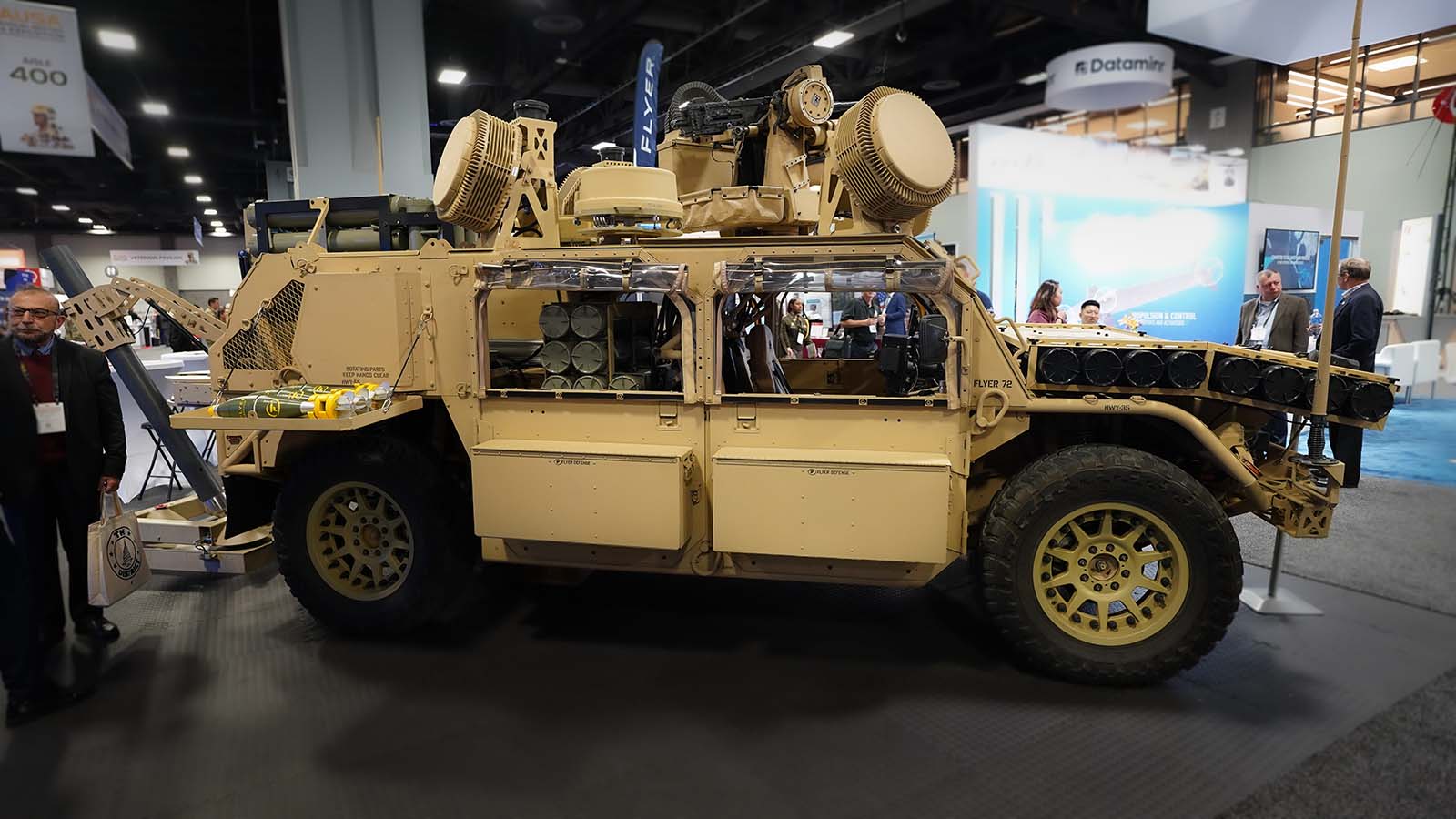
From Flyer Defense, "The Beast" Multi-Purpose Mobile Fire Support System is shown on the AUSA 2023 show floor. (Brendon Smith / Breaking Defense)
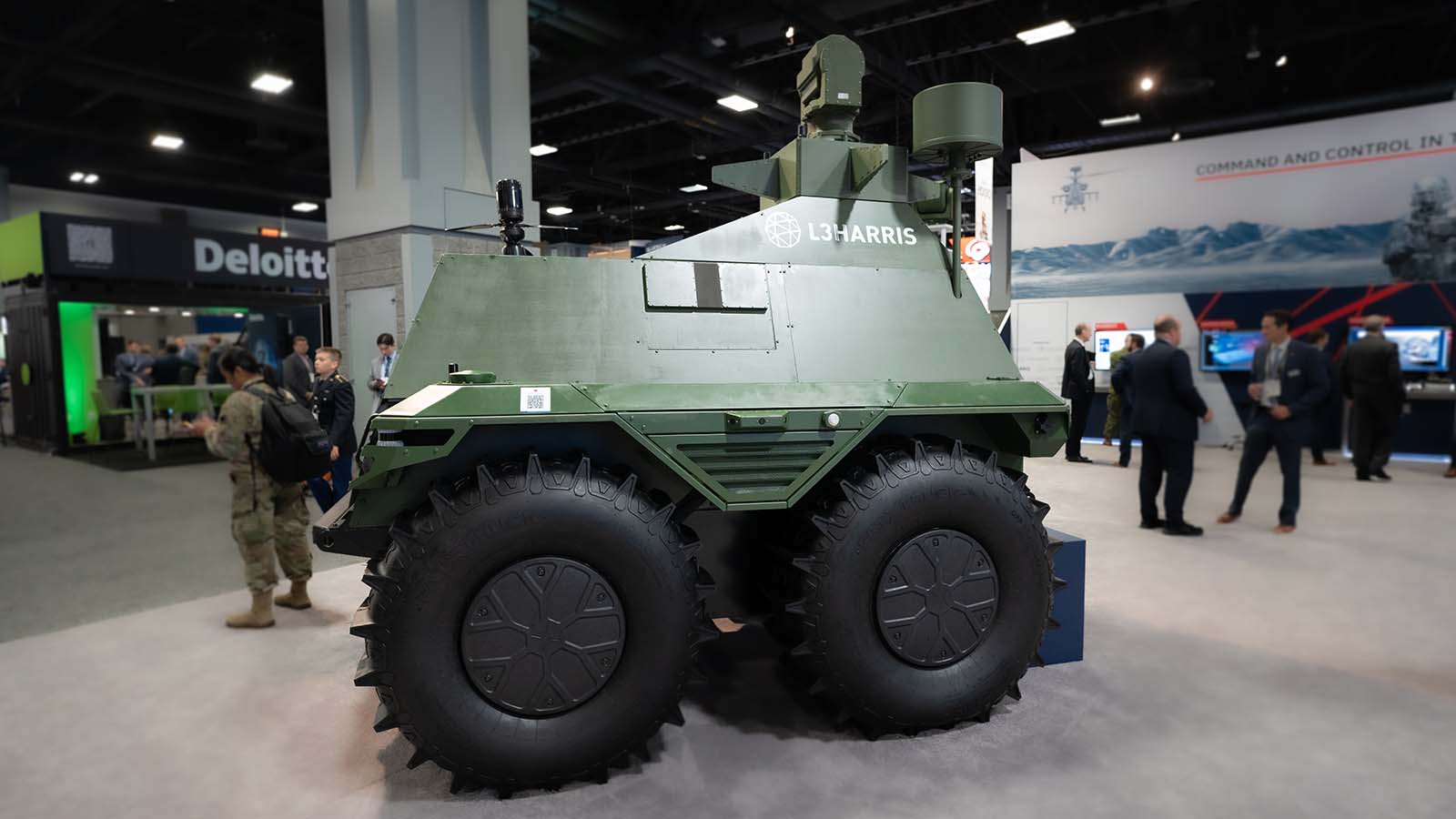
This squat robot, seen on the show floor at AUSA 2023, is made by L3Harris as a counter-UAS system. (Brendon Smith / Breaking Defense)
Leonardo DRS showed off a Stryker vehicle outfitted with its own c-UAS system at AUSA 2023. (Brendon Smith / Breaking Defense)
Among the many products on display by Northrop Grumman were several chain guns. (Brendon Smith / Breaking Defense)
The defense firm Recluse showed off its hybrid electric cargo UAV. (Brendon Smith / Breaking Defense)
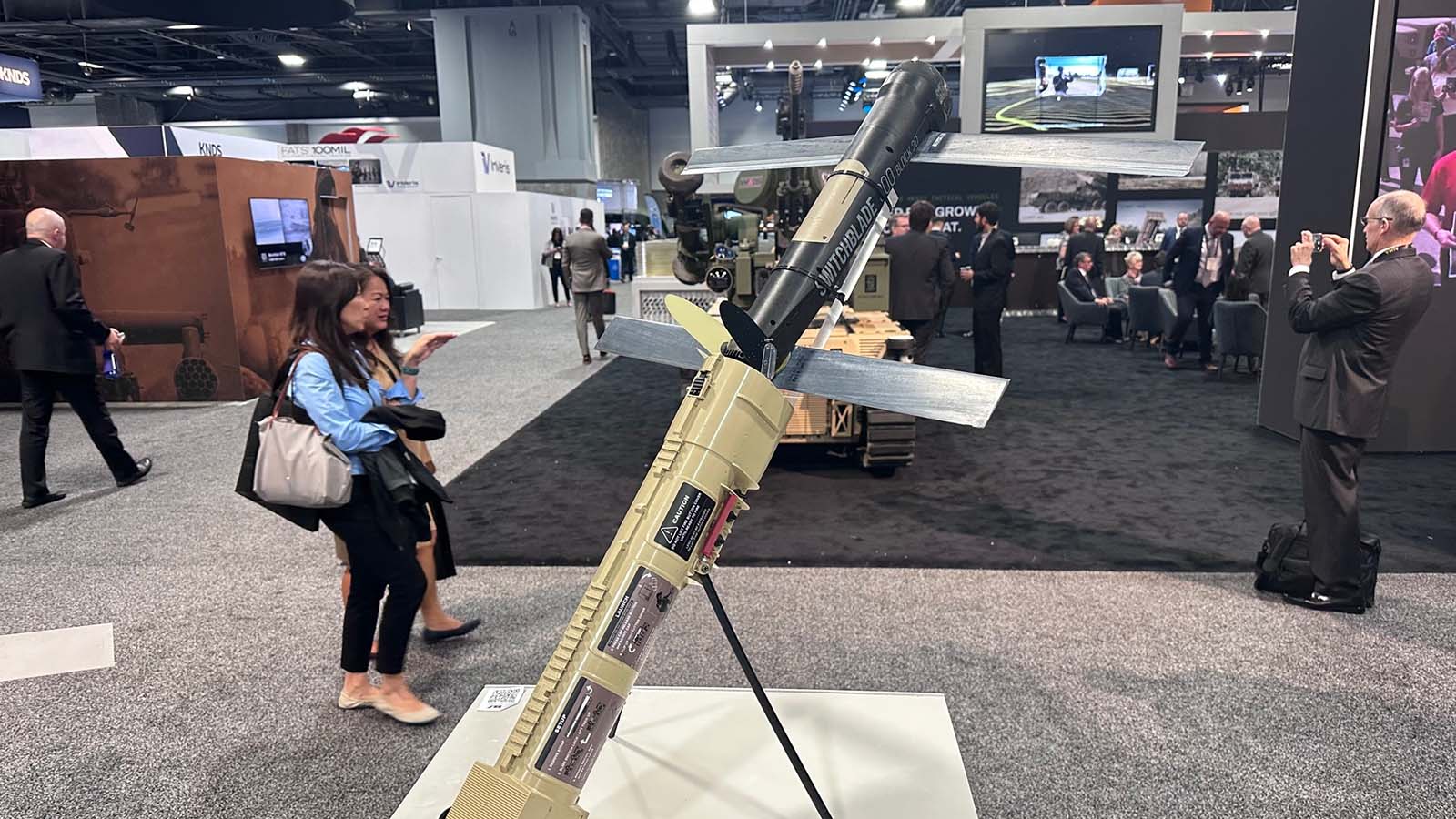
AeroVironment's Switchblade launcher sits on display at AUSA 2023. (Tim Martin / Breaking Defense)
General Dynamics 10-ton TRX-Shorad tracked robotic weapon at AUSA 2023. (Brendon Smith / Breaking Defense)
HDT Global's Wolf robotic system, configured with some serious firepower, at AUSA 2023. (Sydney Freedburg / Breaking Defense)
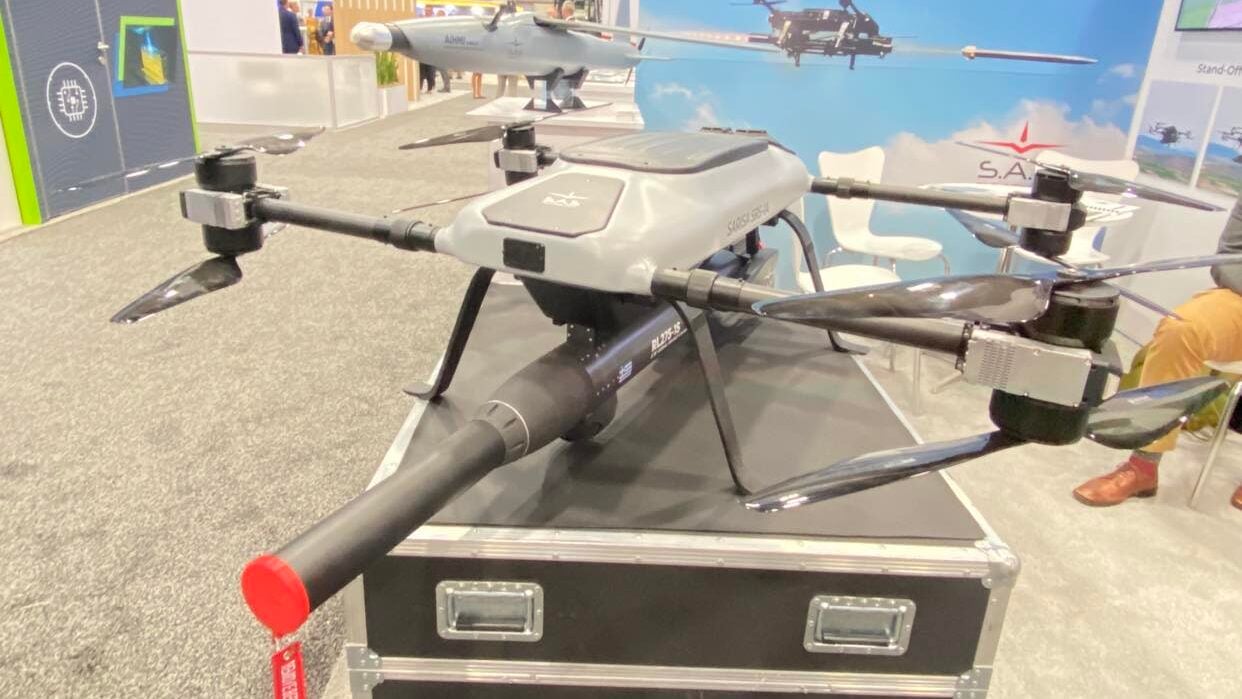
SARISA SRS-1A quadcopter equipped with a rocket launcher at AUSA 2023.
Qinetiq's RCV-L on display at AUSA 2023. (Brendon Smith / Breaking Defense)
A Mine-Resistant Ambush Protected, better known as MRAP, vehicle by Canadian firm Roshel sits on display at AUSA 2023. (Brendon Smith / Breaking Defense)
At Sig Sauer's booth at AUSA 2023, the firm displayed a small but very heavily armed robot. (Sydney Freedburn / Breaking Defense)
A model of a Textron Systems M3 Ripsaw Remote Combat Vehicle takes aim (at the ceiling) at AUSA 2023. (Brendon Smith / Breaking Defense)
Built for wide-area recon, Rohde & Schwartz's COMINT system is designed for radio monitoring and radio location. The system is shown here at AUSA 2023. (Brendon Smith / Breaking Defense)
AeroVironment’s Jump 20 VTOL fixed-wing drone lingers above visitors at AUSA 2023. (Brendon Smith / Breaking Defense)
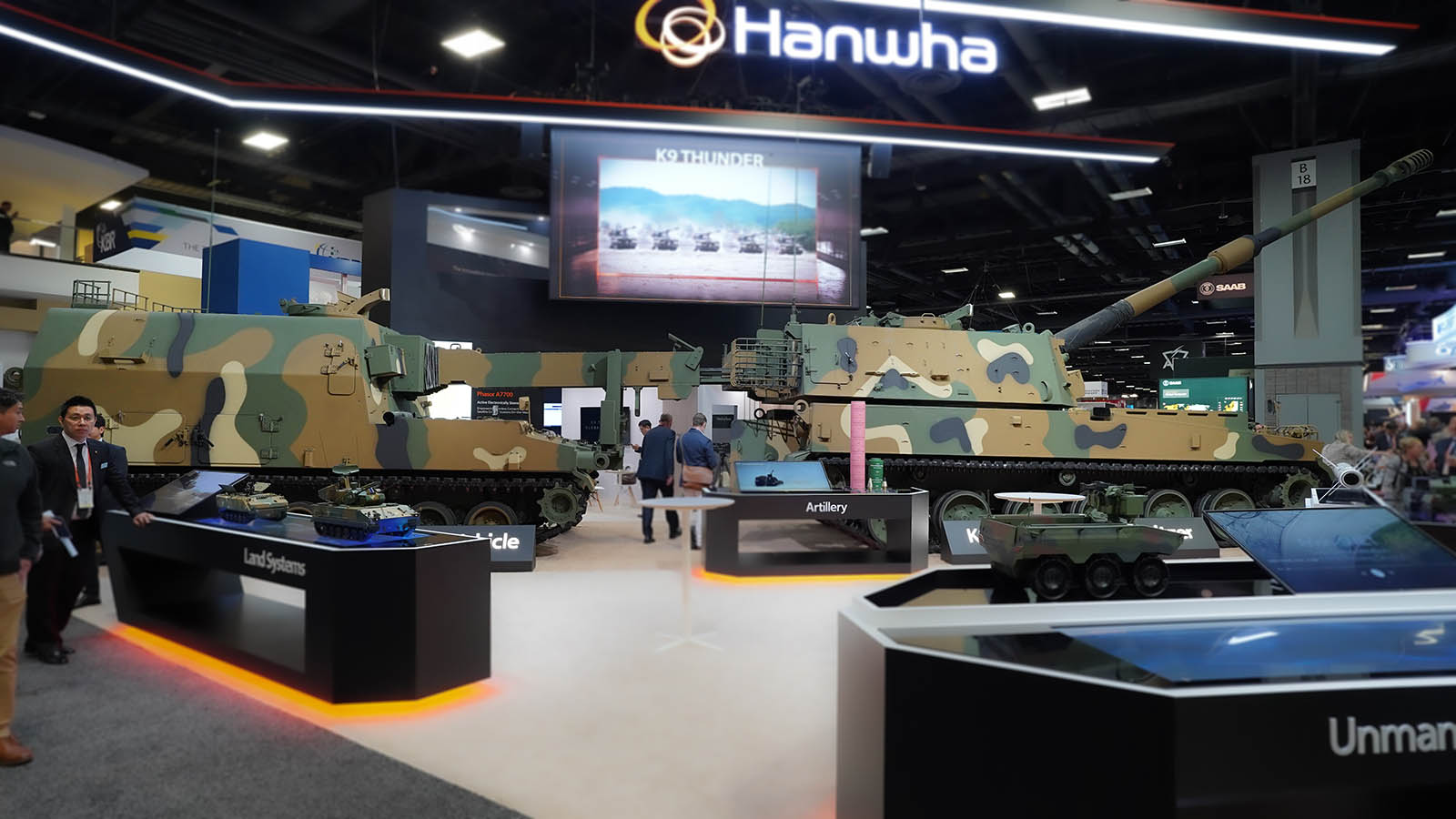
The South Korean defense contractor Hanwha brought out the big guns for AUSA 2023. (Brendon Smith / Breaking Defense)
Israel Aerospace Industries put its Rex robotic ground vehicle on display at AUSA 2023. (Brendon Smith / Breaking Defense)
Rheinmetall’s SSW40 automatic shoulder-fired grenade launcher, along with its munitions, on display at AUSA 2023. (Brendon Smith / Breaking Defense)
Greek firm SAS showed a loitering munition at the Hellenic Pavilion at AUSA 2023. (Aaron Mehta / Breaking Defense)
Attendees pose with a soldier mascot at AUSA 2023. (Aaron Mehta / Breaking Defense)