WASHINGTON — The Army has selected three companies to move on to the next phase of its Flight School Next competition, the service’s new multi-faceted program to train helicopter pilots at Fort Rucker.
Today Bell, M1 and Lockheed Martin confirmed to Breaking Defense that they have been selected to move on to Phase III of the competition, which entails submitting a full written Commercial Solution Proposal for their offering, per the original commercial solutions opening (CSO) posted in December.
“We are grateful for the Army’s confidence in our Flight School Next solution to move on to Phase III,” Todd Morar, vice president of Air and Commercial Solutions at Lockheed Martin said in a company statement today. “For years we have been refining a comprehensive solution that aligns with the Army’s vision for a modern, affordable and high quality training pipeline that will produce fundamentally better aviators.”
Today’s announcement comes after the same three companies were selected to move to the second phase of the competition last month. That phase involved giving presentations on pricing, innovation and the companies’ overall frameworks for the program according to the CSO.
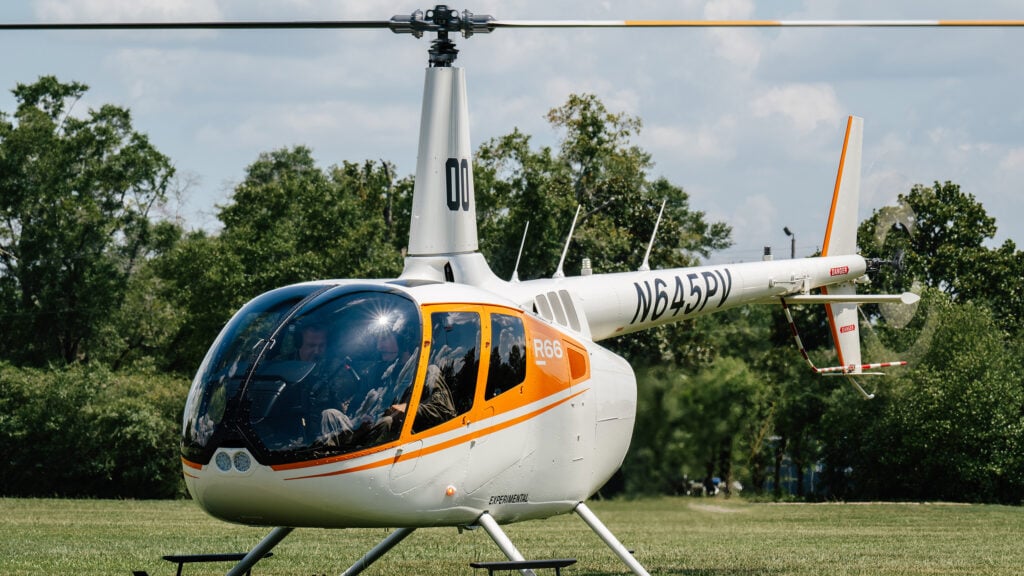
Lockheed had previously identified itself as a prime contractor for the overall competition, and today revealed that it would be partnering with civilian helicopter manufacturer Robinson for the program. Robinson will be competing as a sub contractor with its R-66 aircraft for both Lockheed and M1.
RELATED: Army advances Bell, M1, Lockheed to second phase of Flight School Next competition
“We are proud to be selected by Lockheed Martin as the platform of choice for the Army’s next primary trainer, a decision that aligns mission requirements with fiscal reality,” President and CEO of Robinson David Smith said in Lockheed’s statement today.


Securing the AI flank to provide trusted decision-making capabilities
AI tools are critical components of modern warfare, but must be protected to ensure they are reliable.
M1 also confirmed to Breaking Defense that the company is moving forward in the competition with Robinson’s R-66.
“We are proud to have multiple proposals selected to advance to Phase III,” George Krivo, chairman and CEO of M1 said in a company statement today. “This is M1’s top priority. Every day we work to further refine and improve our solution to ensure the Army can produce more proficient Army Aviators in an efficient, effective, and innovative manner.”
As for Bell, it is competing as its own entity and is offering its 505 model for the competition.
“Our team is proud and excited to move on to the next phase of Flight School Next,” John Novalis, strategic director of Flight School Next at Bell, said in a company announcement today. “This next phase is a critical point in the competition and Bell along with our teammates are ready to demonstrate what we believe is the most cost-effective and low-risk solution for the Army’s next-generation flight training program.
The Flight School Next program includes more than the airframes itself, as the service is also looking for a new curriculum and a new acquisition model. Per the original CSO, Flight School Next will have a contractor-owned, contractor-operated (COCO) model, which allows the company to own and run the program instead of the government.
The primes’ role in Flight School Next will be to handle the finances, big-picture repairs, supply chain management, logistical support and more, while the subs will handle supplying the helicopters and its spare parts, component-level repairs, technical support, most of the curriculum and upgrades.
RELATED: Inside six helo companies gunning for the Army’s Flight School Next program
The service’s goal is to make an award by the end of September, and it is looking to provide training for 900 to 1,500 rotary wing pilots per year with a period of performance of 26 years, according to the CSO.
Along with Bell, Lockheed, M1 and Robinson, the incumbent flight school vendor Airbus replied to the original call-for-solutions notice in November, and told Breaking Defense it was bidding its UH-72 Lakota fleet. A spokesperson for the company last week referred all queries regarding Flight School Next to the Army, but the Army declined to comment on the program.
Other companies originally vying for the program include Leonardo with its TH-73 helo and Boeing as its prime; MD Helicopters with its 530 helo; and Enstrom Helicopters with its 480B model. Spokespeople for Boeing, MD Helicopters and Enstrom Helicopters declined to comment if they would be moving forward in the program.
UPDATED 2/04/2026 at 3:42 p.m. EST to include a statement from M1.
Breaking Defense Video