Land Warfare

Army’s contested logistics team close to ‘fully’ operational: General Rainey

“Contested logistics are hard enough without running a resupply operation and not getting the right thing: There's a lot of room there for progress,” Gen. James Rainey told Breaking Defense.

resupply
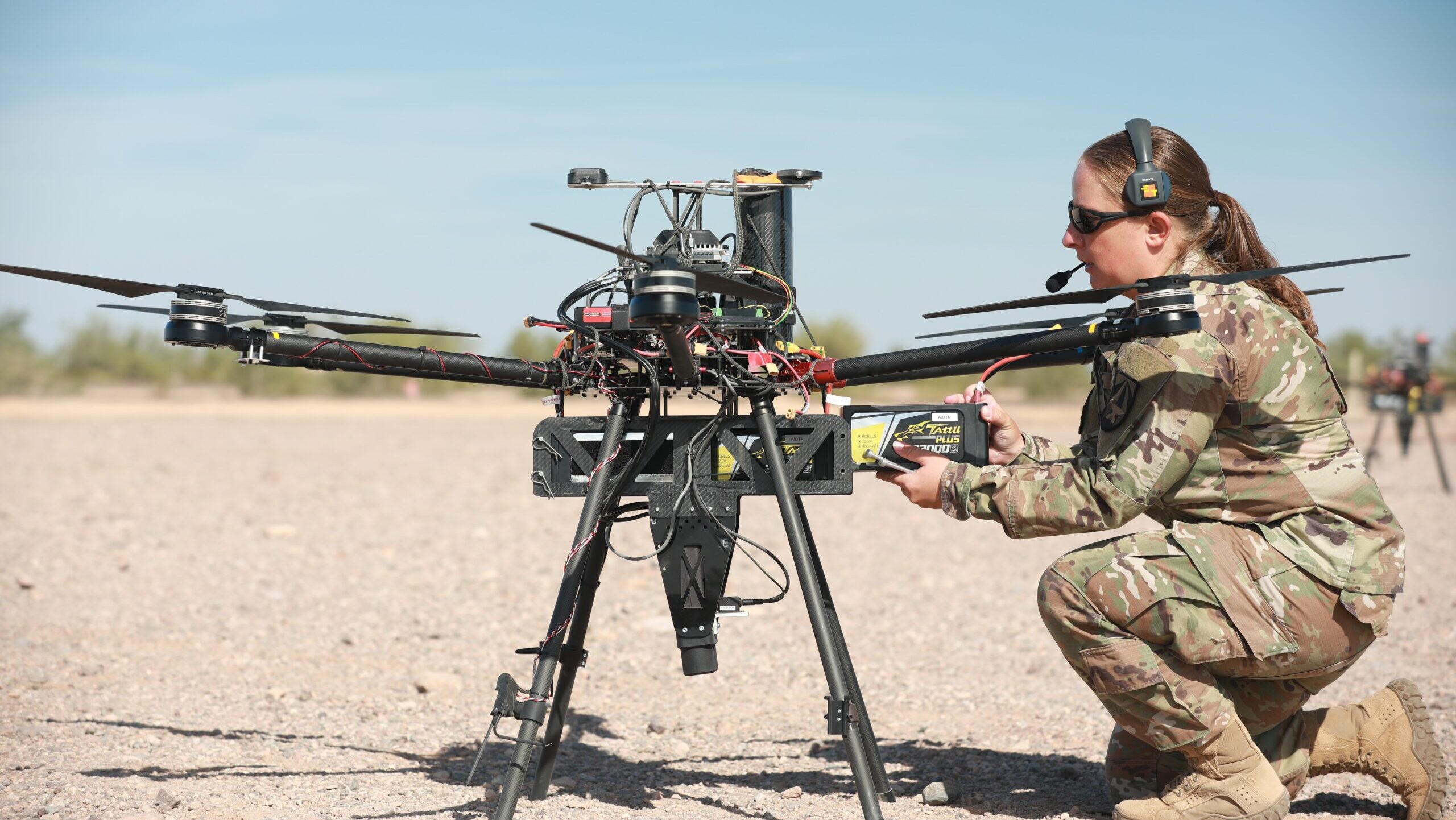
Army Staff Sgt. Elise Denning, assigned to Artificial Intelligence Integration Center, conducts maintenance on an unmanned aerial system in preparation for Project Convergence 2021 at Yuma Proving Ground, Arizona. (US Army/Spc Destiny Jones)

AUSA 2023 — The Army’s newest cross-functional team dedicated to contested logistics planning will be “fully” operational later this month, when it’ll begin in earnest to examine a host of technologies to sustain soldiers in remote locations, according to a four-star general in charge of the service’s future-focused outfit.

The contested logistics cross-functional team’s portfolio includes high-profile tech like autonomy applicable to larger manned and unmanned platforms, but also solutions for predictive logistics, autonomous resupply, alternative fuel sources and “all things batteries.”

“Contested logistics are hard enough without running a resupply operation and not getting the right thing: There’s a lot of room there for progress,” Army Future Command (AFC) Chief Gen. James Rainey told Breaking Defense in an interview ahead of this week’s Association of the United States Army conference in Washington, DC. “Autonomous and robotic resupply, leveraging all the new technology that’s out there… that you can do on land and at sea and in air.”

Earlier this year, the service announced it was standing up a contested logistics CFT in Huntsville, Ala., in a partnership between Army Future Command (AFC) and Army Materiel Command. It’s tasked, in part, with planning for how the service will sustain the future force, at the division level and below, in hard-to-reach or dangerous areas, like the Indo-Pacific region should conflict break out there.

That latest CFT joins the original list of eight — long-range precision fires, next-generation combat vehicles, future vertical lift, the network, air-and-missile defense, soldier lethality, synthetic training environment, and assured positioning, navigation and timing/space — designed to shepherd in a host of modernization programs spanning across six priority areas.

While the new team’s portfolio is likely to evolve as the service develops plans for the force of 2040 and beyond, for now Rainey said he doesn’t envision that it will be tasked with larger development projects like the Maneuver Support Vessel fleet designed to ferry troops and equipment around in the Indo-Pacific region. However, the work they do could contribute to those watercraft plans.

That’s a bigger effort, but [the CFT] is involved in that,” the four-star general said. “They’re doing autonomous and robotic work that would support watercraft as part of contested logistics.”

More details about contested logistics plans could emerge this week during the Army’s annual conference, but regardless, it is expected to be a hot topic among industry looking for ways to help the service identify new requirements and fill those it already has.

PHOTOS: AUSA 2023

PHOTOS: AUSA 2023

A Blade-55 UAV from Alare Technologies lingers over visitors at AUSA 2023. (Brendon Smith / Breaking Defense)
At AUSA 2023, Boeing's Compact Laser Weapon System (CLWS) was seen fitted on a Polaris MRZR vehicle. (Tim Martin / Breaking Defense)
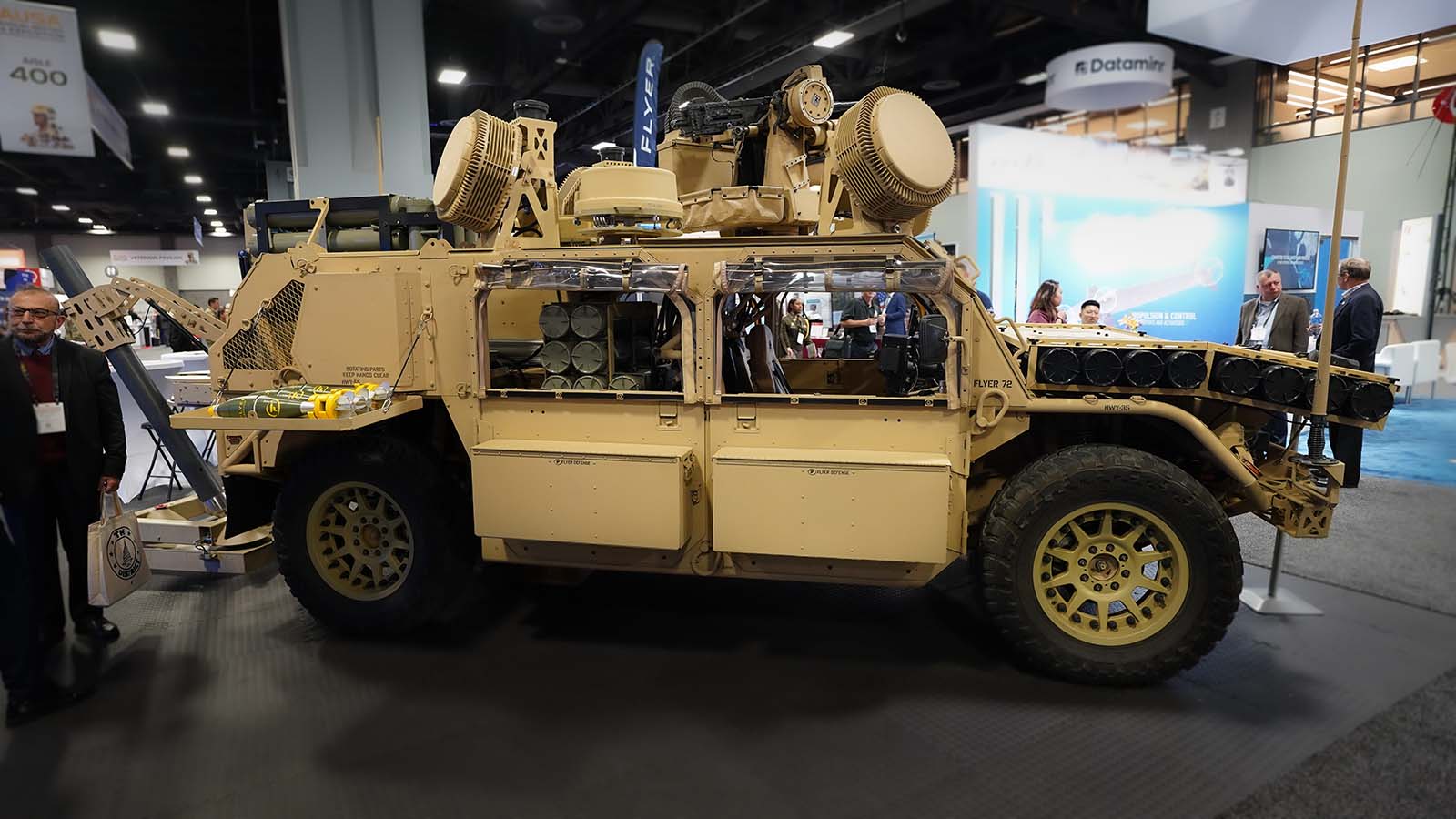
From Flyer Defense, "The Beast" Multi-Purpose Mobile Fire Support System is shown on the AUSA 2023 show floor. (Brendon Smith / Breaking Defense)
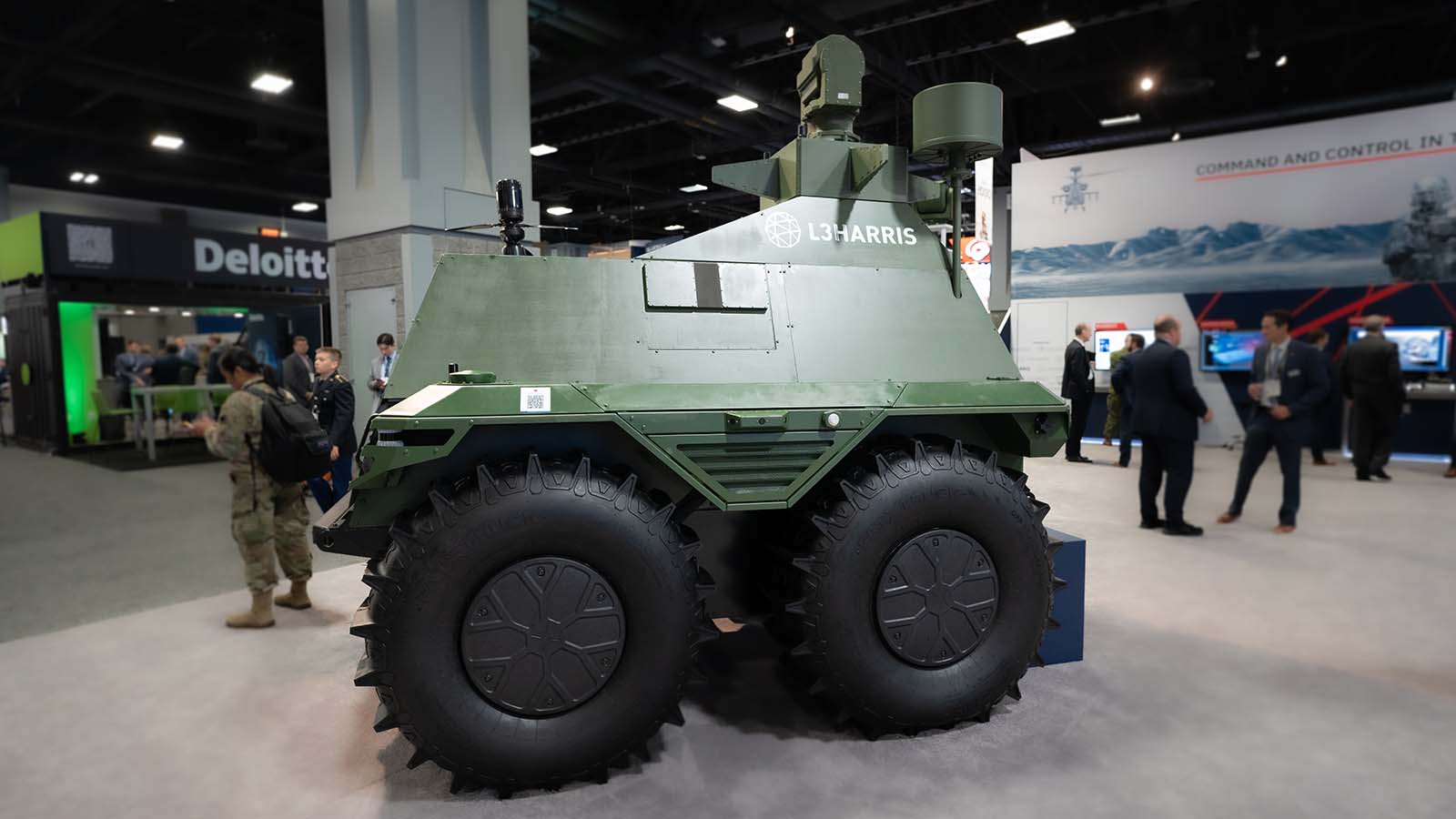
This squat robot, seen on the show floor at AUSA 2023, is made by L3Harris as a counter-UAS system. (Brendon Smith / Breaking Defense)
Leonardo DRS showed off a Stryker vehicle outfitted with its own c-UAS system at AUSA 2023. (Brendon Smith / Breaking Defense)
Among the many products on display by Northrop Grumman were several chain guns. (Brendon Smith / Breaking Defense)
The defense firm Recluse showed off its hybrid electric cargo UAV. (Brendon Smith / Breaking Defense)
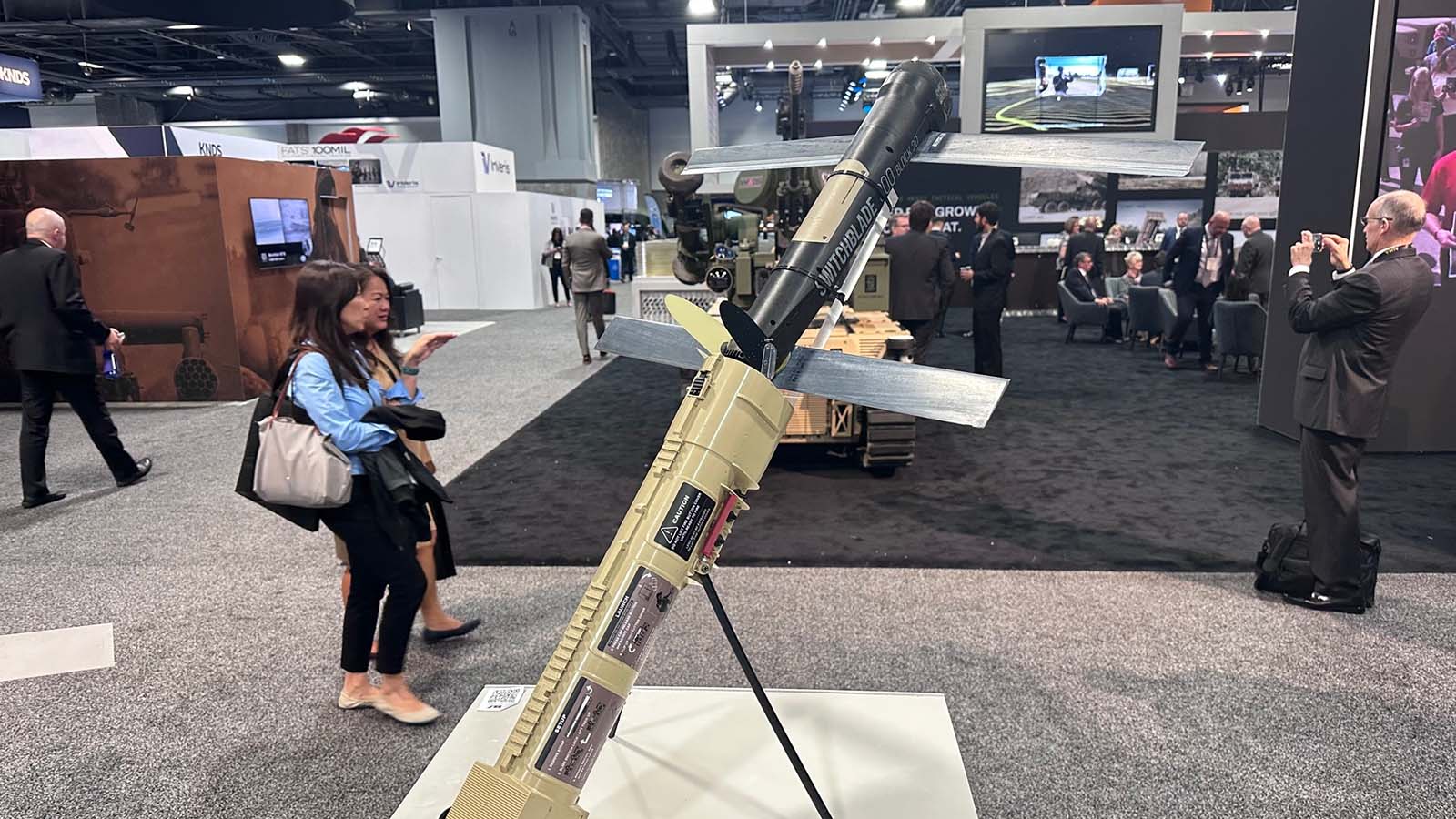
AeroVironment's Switchblade launcher sits on display at AUSA 2023. (Tim Martin / Breaking Defense)
General Dynamics 10-ton TRX-Shorad tracked robotic weapon at AUSA 2023. (Brendon Smith / Breaking Defense)
HDT Global's Wolf robotic system, configured with some serious firepower, at AUSA 2023. (Sydney Freedburg / Breaking Defense)
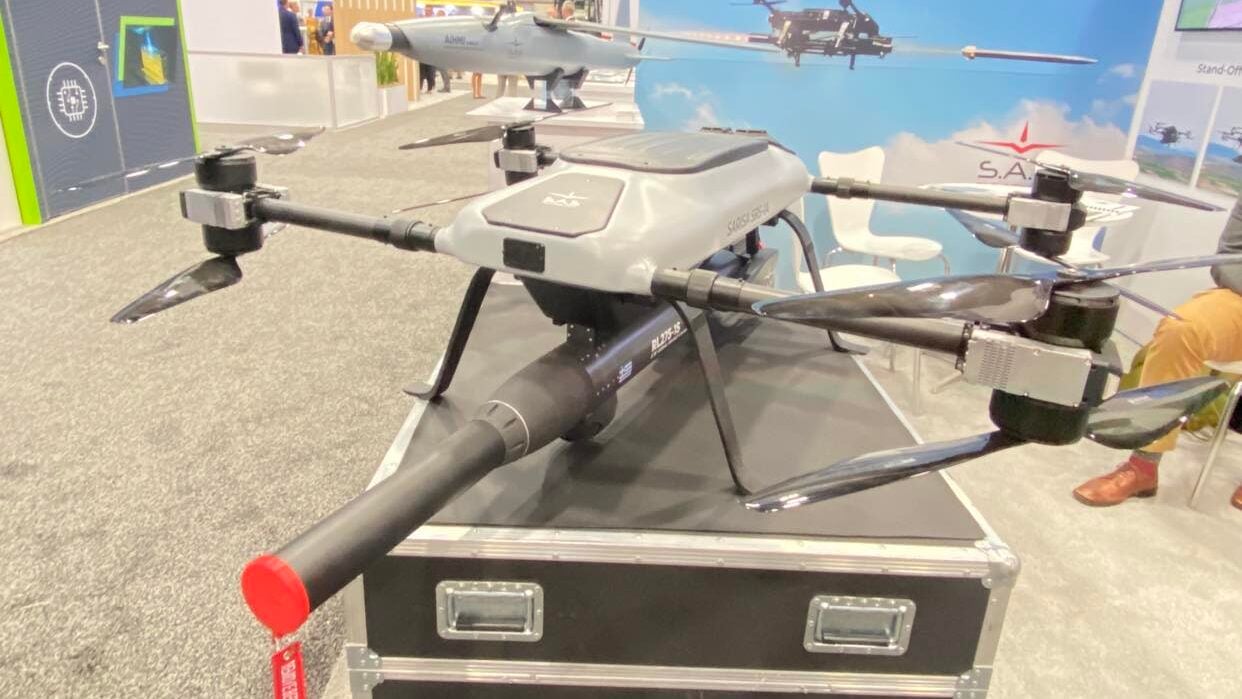
SARISA SRS-1A quadcopter equipped with a rocket launcher at AUSA 2023.
Qinetiq's RCV-L on display at AUSA 2023. (Brendon Smith / Breaking Defense)
A Mine-Resistant Ambush Protected, better known as MRAP, vehicle by Canadian firm Roshel sits on display at AUSA 2023. (Brendon Smith / Breaking Defense)
At Sig Sauer's booth at AUSA 2023, the firm displayed a small but very heavily armed robot. (Sydney Freedburn / Breaking Defense)
A model of a Textron Systems M3 Ripsaw Remote Combat Vehicle takes aim (at the ceiling) at AUSA 2023. (Brendon Smith / Breaking Defense)
Built for wide-area recon, Rohde & Schwartz's COMINT system is designed for radio monitoring and radio location. The system is shown here at AUSA 2023. (Brendon Smith / Breaking Defense)
AeroVironment’s Jump 20 VTOL fixed-wing drone lingers above visitors at AUSA 2023. (Brendon Smith / Breaking Defense)
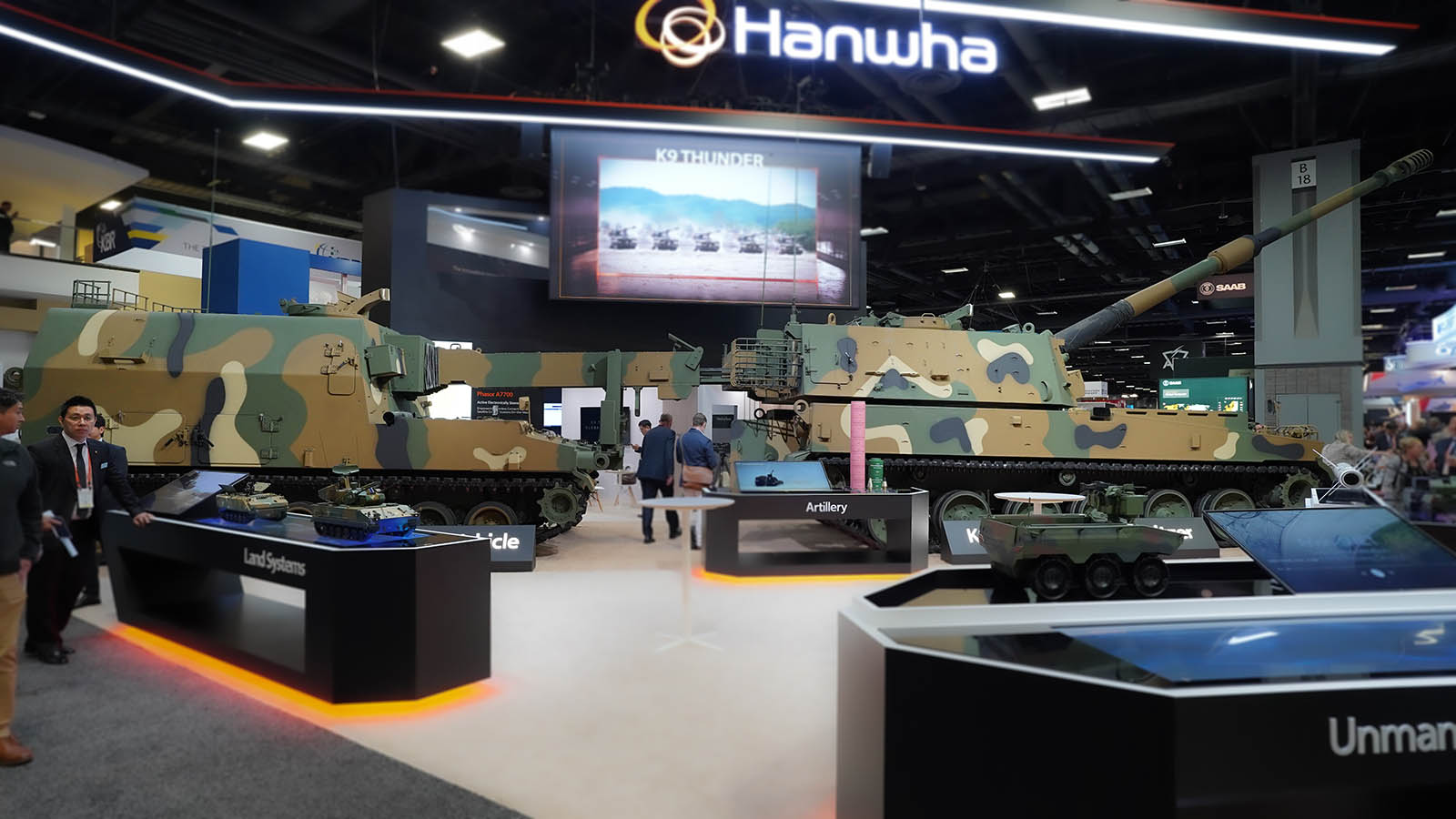
The South Korean defense contractor Hanwha brought out the big guns for AUSA 2023. (Brendon Smith / Breaking Defense)
Israel Aerospace Industries put its Rex robotic ground vehicle on display at AUSA 2023. (Brendon Smith / Breaking Defense)
Rheinmetall’s SSW40 automatic shoulder-fired grenade launcher, along with its munitions, on display at AUSA 2023. (Brendon Smith / Breaking Defense)
Greek firm SAS showed a loitering munition at the Hellenic Pavilion at AUSA 2023. (Aaron Mehta / Breaking Defense)
Attendees pose with a soldier mascot at AUSA 2023. (Aaron Mehta / Breaking Defense)