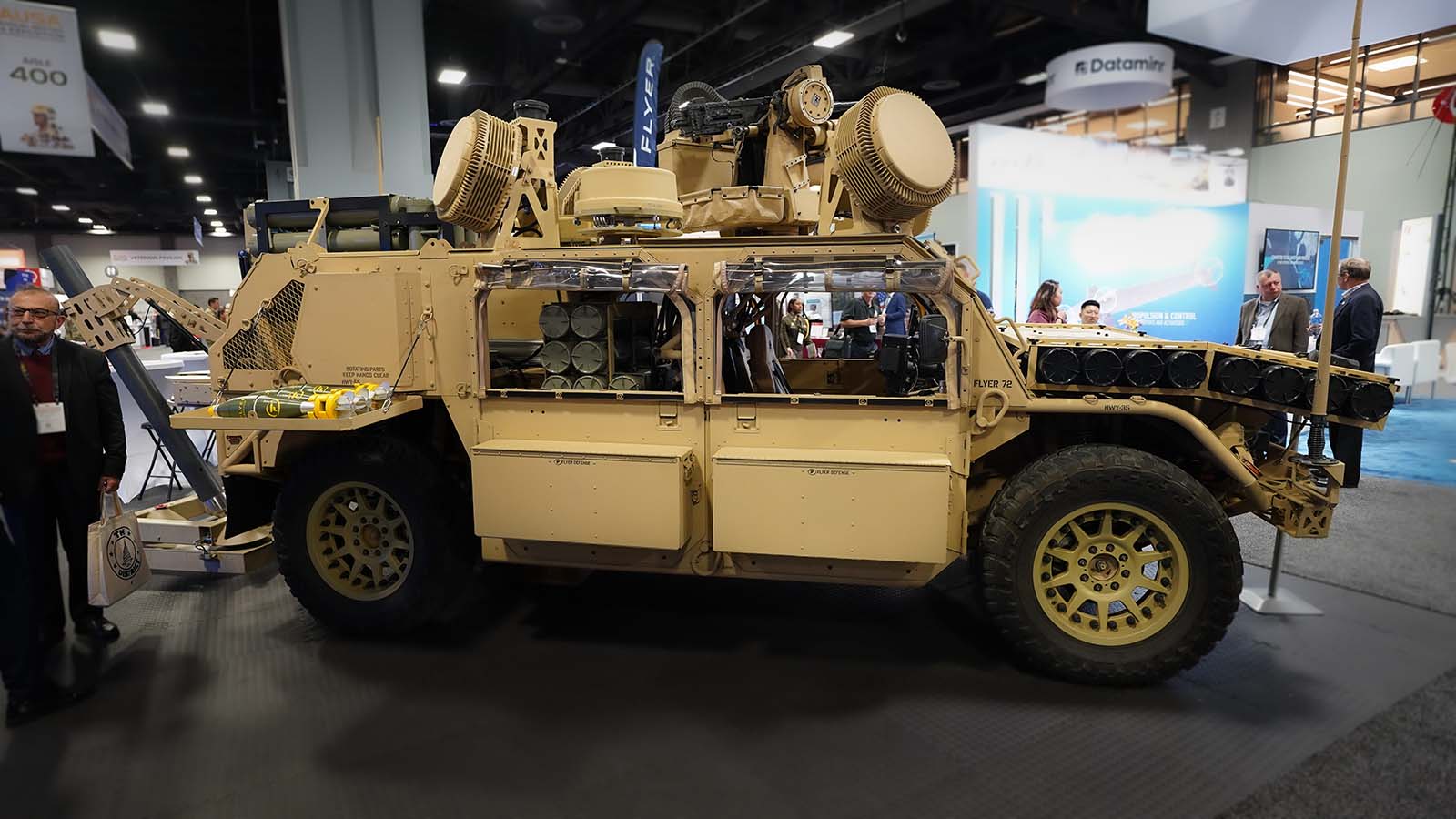
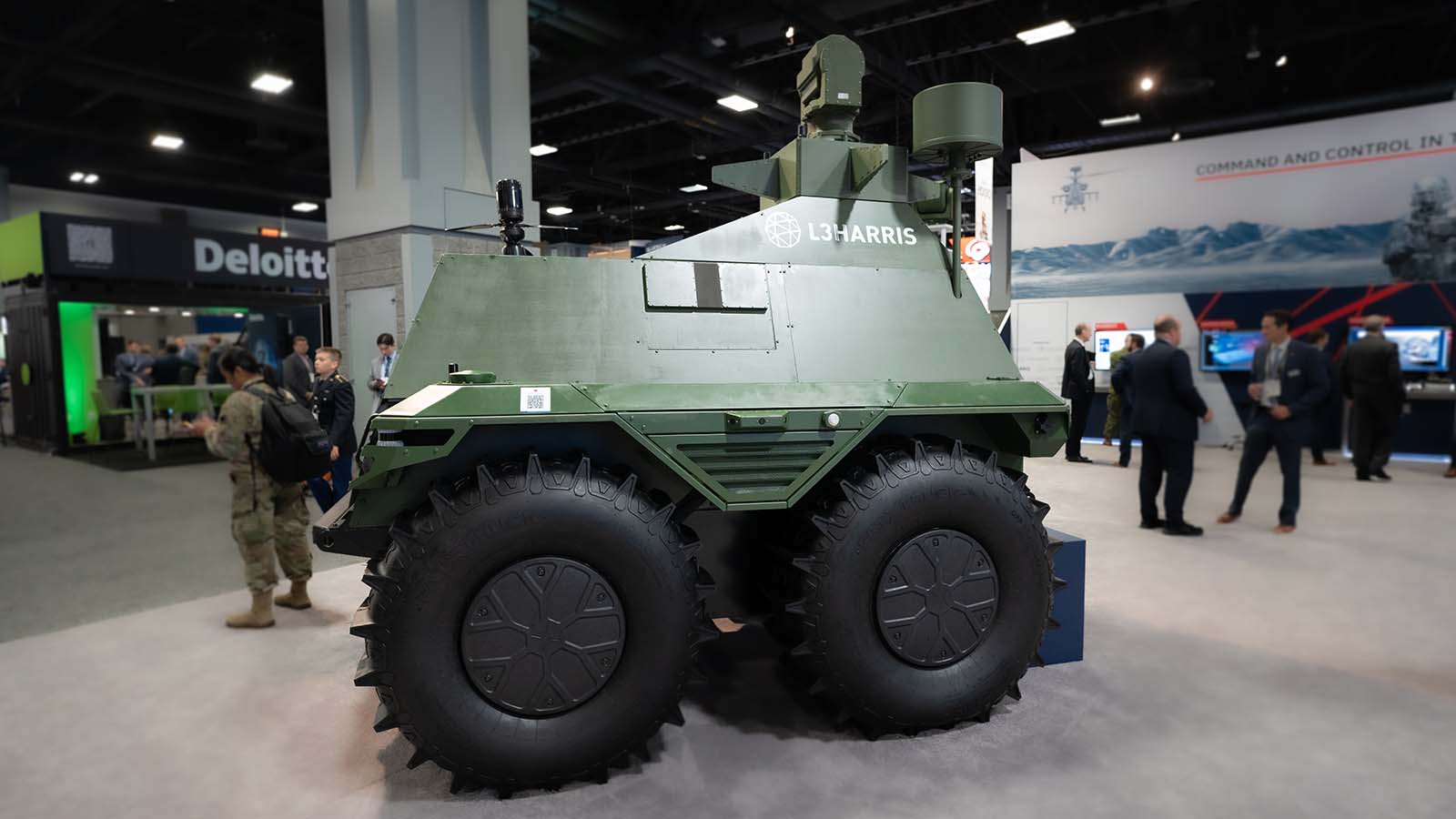
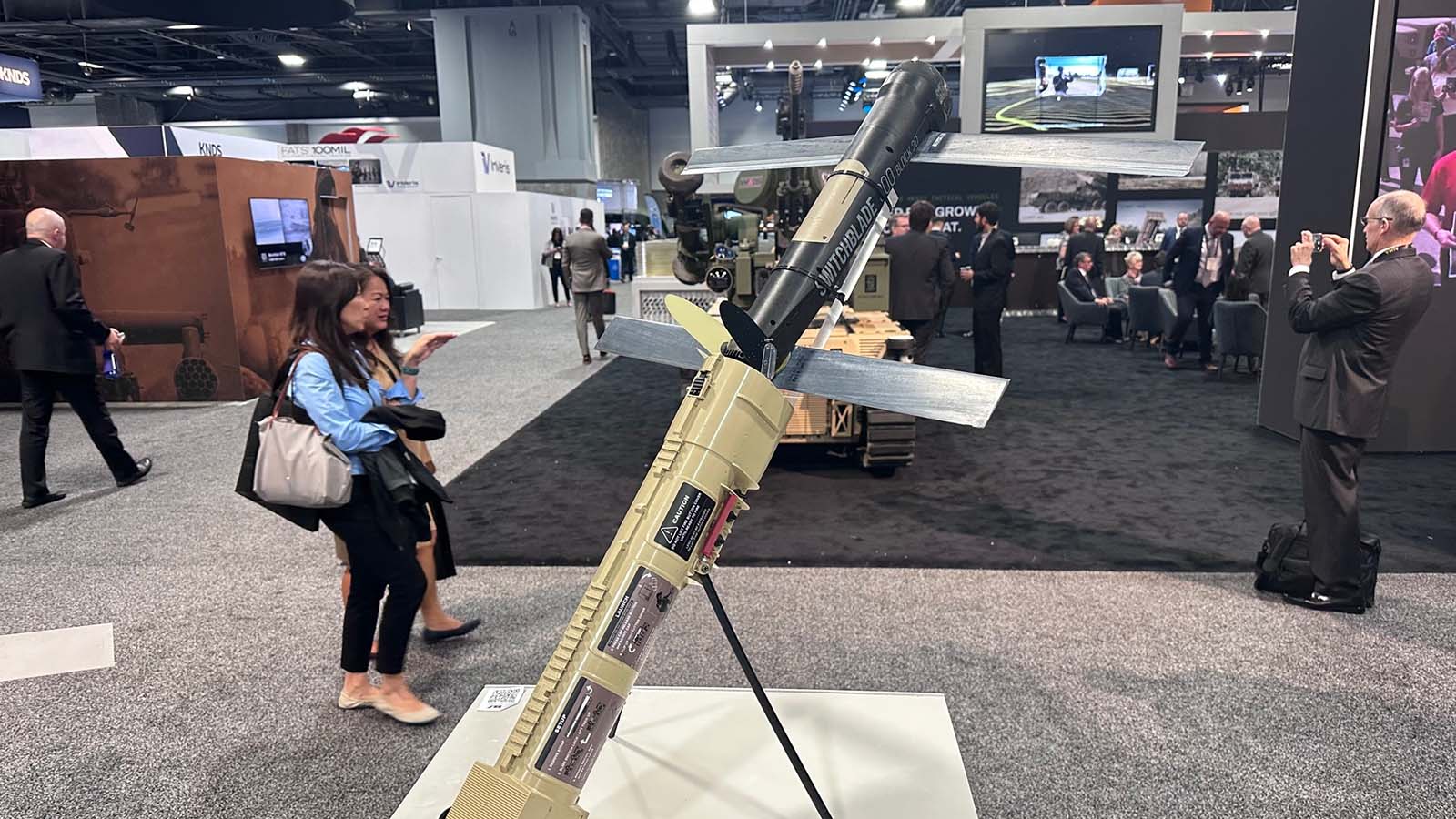
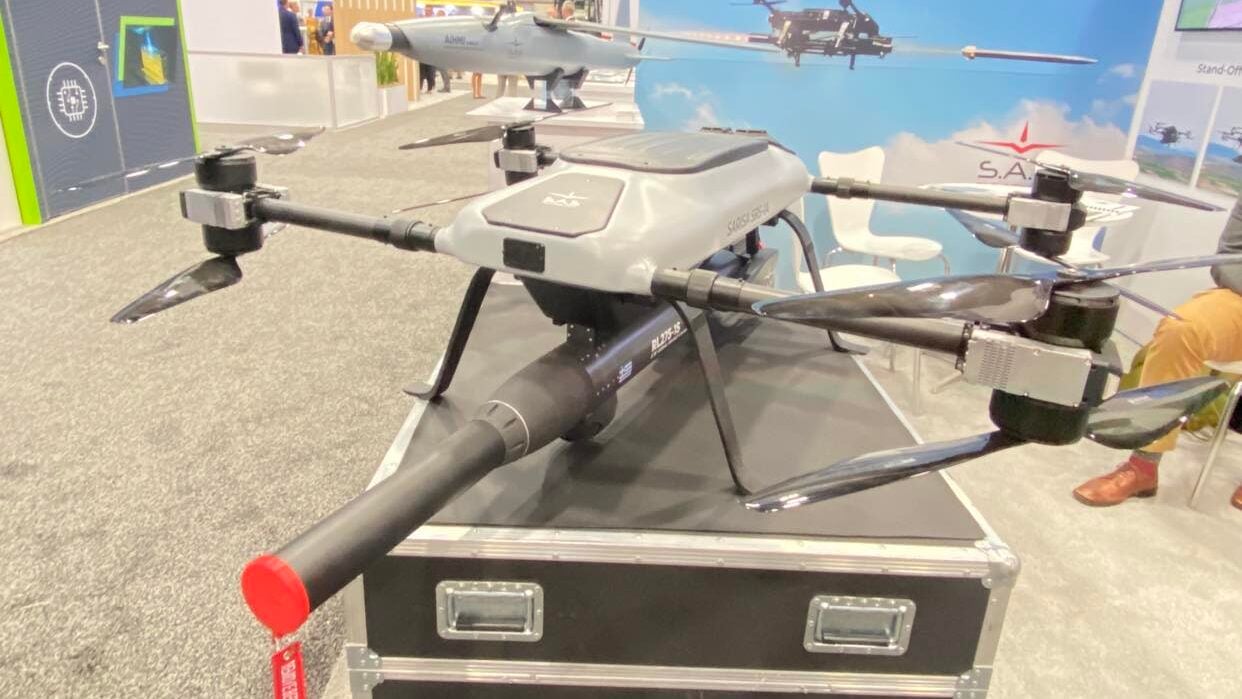
(US Army Photo by Patrick Hunter)
AUSA 2023 — Gen. James Rainey bills himself as more of a “front windshield person, than a rearview mirror person,” an apt quality for the man in charge of the forward-obsessed Army Futures Command.
He became AFC’s second-ever leader last year, and with that gig comes with simple tasks like shepherding in new weapon programs, eyeing what the Army of 2040 will need and crafting the service’s next operating concept.
Ahead of this year’s Association of the United States Army conference in Washington, DC, he spoke with Breaking Defense about ideas to reshape the service (lightening up heavy formations, for one) and how observations from the war in Ukraine, like constant surveillance, fit in.
This interview has been edited for length and clarity.
BREAKING DEFENSE: Now that you’ve been in this position for a year, what are your big takeaways from heading up this newer command?
RAINEY: The most pleasantly surprising thing is the incredible amount of talent that exists in the Army and the joint force. The AFC [is] about a 90 percent civilian workforce, and the incredible talent that resides with our department … not just the AFC, but across the Training and Doctrine Command and the [acquisition workforce]. There are folks that have an incredibly deep understanding of some technical aspect, and then have 10, 20, 30, 40 years of continuity doing that. Then you mix in a small amount the world’s best warfighters and trainers.
Another positive is, I have not talked to a single person in Congress, industry or anywhere in the military that doesn’t want to help; [who] doesn’t want to be part of the solution, to make sure that we stay the most dominant military in the world.
But some of the processes are harder than they need to be, and slower than I would personally like them to be … like budgeting, requirements development and acquisition. Like I said, great people doing things the right way, we just got to get faster.
In 2021, the Army announced plans to have 24 new capabilities in soldiers’ hands in fiscal 2023. It had a loose definition of what that meant, but what is your assessment of the objective?
I think the goal has been overblown … [but] we did 24 for 24. Some of those were no kidding fieldings. Some of those were soldier touchpoints. Some of those were experiments and pilots. But we’re trying to deliver the Army of 2030 and design the Army of 2040. So, that’s a year’s worth of progress. We said we would do it, we did it. We’ve got a lot of work left to do and I’m more interested in ‘24, ’25, ’26 ’27, ’28, 2030 and 2040.
Speaking about the future, what is the status of the Army’s operating concept?
We have a very good draft of our next operating concept period from about [the] 2030 to 2040 timeframe. [I’ve] been working on it for three years, but in hyper speed for the last one. That’s with our senior leadership now. We feel really good about it [and will] probably have it out on the street by no later than a year from now.
You do the concept to determine … the required capabilities. So, based on this concept, what capabilities do we not have [now] that we need? Not just material capabilities, but leader skills, like [the] workforce. Kind of a no brainer is we know that we need to upskill the workforce, the Army, in terms of technical and data-centric skills. We have great data people in the Army, [but] we don’t have enough of them, and we don’t have them in the right place.
We [also] know there’s going to be some new material capabilities we don’t have, [and] it’ll drive our experimentation… [through] Project Convergence.
We’ll [also] have a professional dialogue and discourse and debate and argue about it, strengthen it, continuously improve it, and then it will get modified, and it’ll end up being our next doctrine.
RELATED: ‘Good, healthy debate’: Eyeing Indo-Pacific, Army leaders grapple with force structure shake up
As part of your look ahead, what observations are you taking from the war inside Ukraine?
We’re paying attention to Ukraine, and what’s going on there, and we’re paying attention to a bunch of other things all over the world, and we’re putting them through the lens of, “How does this apply … to our priority theater in the Indo-Pacific?”
It’s very complicated but I always start with what’s not changing. [As] you watch this tragedy unfold, and it is indisputable that war remains a contest of wills between humans, it’s a human endeavor and that has never changed and there’s no indication that that’s going to change. In fact, I think you’re seeing the difference between men and women that are fighting for their homeland and something they believe in fighting for against [men and women] that are not.
We’re a joint force and every domain matters, but the land domain is absolutely decisive. That remains unchanged. And [so does the fact that] we’re a values-based military, and we abide by the law of armed conflict, and that’s not going to change.
As far as what is changing, there are some big ones out there. I believe we’re going to operate under constant observation, in constant contact of some form, whether it be social media, electromagnetic phase. That’s a big change to what we’ve done in the past.
We’re gonna have to wrap our [heads] around the [fact that] defense technology is way easier to integrate if you’re defending. Defense has always been a stronger form of war, but it’s getting stronger and stronger, and offense is getting more costly and more difficult. But offense remains the decisive [factor]. That’s how you win, on offense, not on the defense.
I think the importance of fires and the horrific reality of urban combat [are another]. And then, you know, the technology’s impact [and] constantly adapting artificial intelligence and machine learning, system-on-system warfare, that we need to be ready for as we take what we’re seeing in Ukraine and apply it to a potential conflict with a near-peer competitor.
So, what kinds of changes could be afoot for the Army and the AFC as you take those observations from Ukraine and examine their applicability in the Indo-Pacific region?
Data centric warfare, integration of humans and machines to optimize both land-based long-range fires and cross-domain fires. [Also], the importance of protection. [You need] to protect yourself, your formations and, really, the joint force in an incredibly complicated environment [against] a good enemy with a deep magazine.
Contested logistics. The Army does logistics for the whole joint force and doing that, on long lines of communications that are going to be contested.
We need to lighten up … our heavy formations, not just for the Indo-Pacific, but for the dangerous world we live in. We got to increase the lethality and survivability of our light formations. They’re very deployable — strategically and operationally mobile — but we’ve got to be able to keep them alive on the battlefield. And we got to leverage technology to extend the ranges at which they can see and kill people.
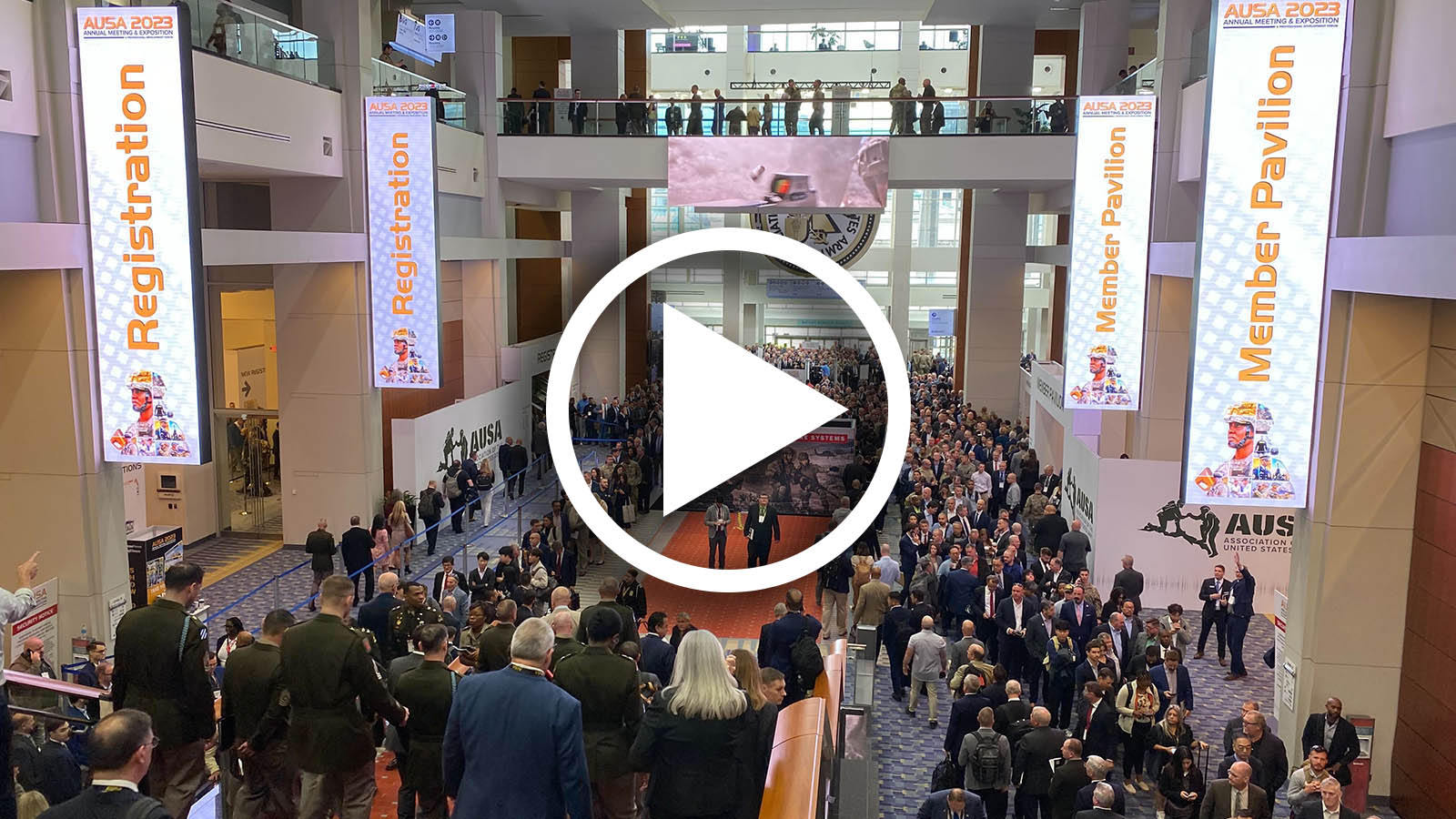
PHOTOS: AUSA 2023
 Gallery