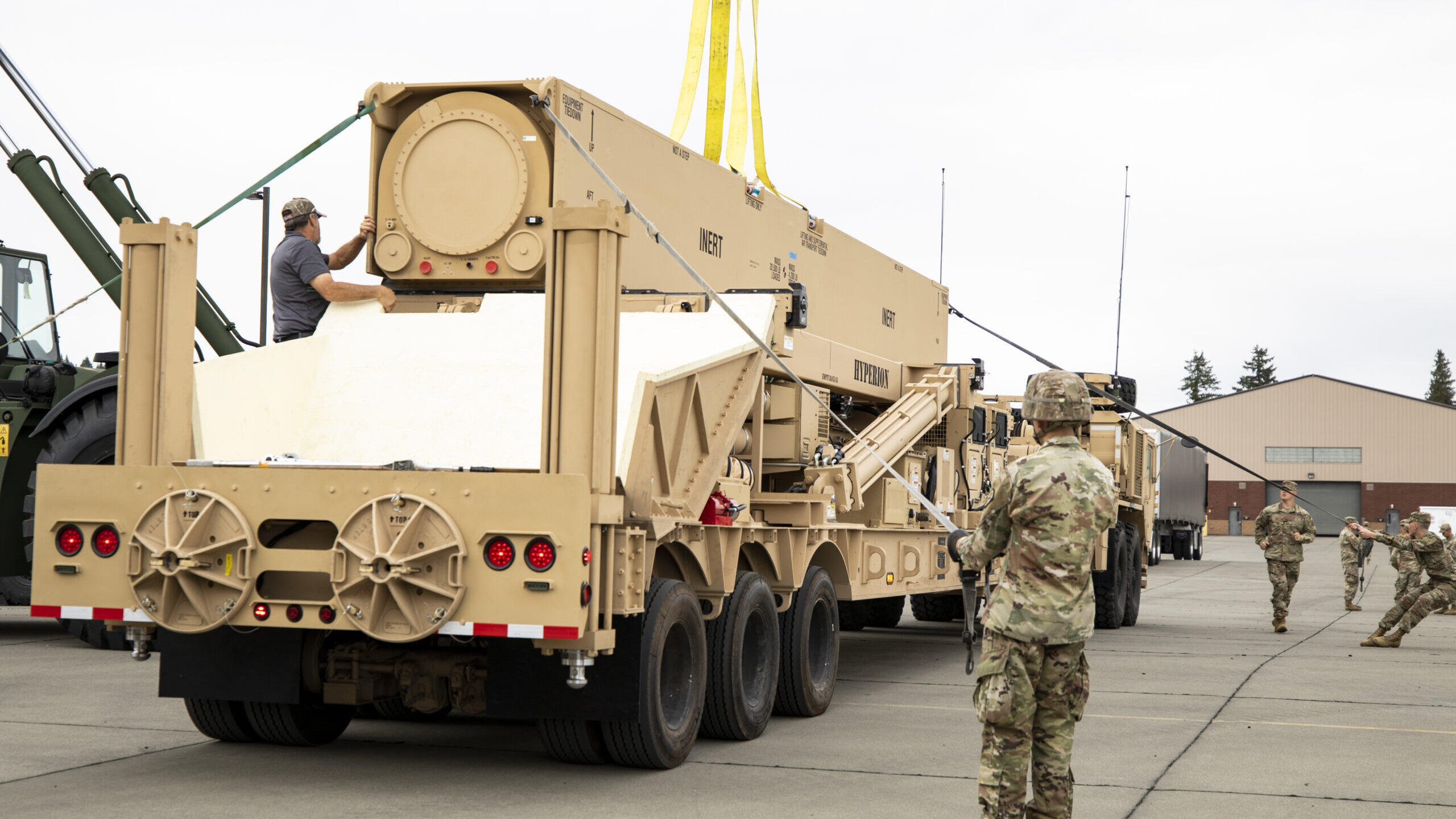
AUSA 2023 — Defense Department efforts to speed acquisition of new hypersonic weapons continue to be challenged by the fact that the underlying technologies and industry supply chain have yet to fully develop, according to a senior Army official.
“Some of the hypersonic technologies and some of the hypersonic supply chain is immature,” said Chris Mills, Army Hypersonics Project Office deputy director at the Rapid Capabilities and Critical Technologies Office.
“DoD has put a pretty sizable amount of investment into improving that primarily in the areas of hypersonic materials to deal with high temperature applications on hypersonic vehicles because, obviously, if you’re going extremely fast, you’re dealing with heat and plasma and the like. So there’s been a lot of investment in that area from the department in general, and a lot of collaboration across hypersonic programs, whether it be Army, Navy, or Air Force, and also DoD has got several offices that are laser focused on on how to leverage that technology,” he told a seminar at the annual Association of the US Army (AUSA) conference sponsored by Defense News.
Mills explained part of the problem is that the industry base is small — “and we’re talking small,” he said. “So we’ve got to keep these companies that have that technology in business and in producing, and leveraging that capability.”
Further, he said, the supply chains for several related technologies also have been challenged. For example, there is “huge demand” across the myriad DoD missile programs now underway for booster and other missile tech, and the electronics supply chain has been chronically stressed.
Even some of the baseline capabilities, such as metal forging and the creation of alloys, demand is outstripping supply, he added.
Col. Alexander Rasmussen, chief of the Space Development Agency’s Tracking Layer for keeping tabs on both ballistic and hypersonic missiles from low Earth orbit, told the seminar that the agency has learned some lessons from its early struggles with supply chain issues that slowed some of its first planned launches.
“One of the things we’ve talked about a lot with industry is that it isn’t just-in-time ordering anymore, it’s over there now. When the contract’s awarded, order now. That’s the best way we’re going to reduce risks to the supply chain and maintain schedule margin,” he said.
Despite the current obstacles, Mills said that “between now and end of the calendar year we’re working toward fielding” the Long Range Hypersonic Weapon (LRHW) — which is using the Common Hypersonic Glide Body being developed jointly with the Navy. The service’s initial goal was to get that done by the end of the 2023 fiscal year.
“We are confident in end calendar year. There’s a lot of details into getting there, some of which I can go into and others I can’t,” he said. “A lot of the work that’s required has already been accomplished.”
Mills explained that the unit charged with testing LRHW, the I Corps’ 5th Battalion, 3rd Field Artillery Regiment, 17th Field Artillery Brigade at Joint Base Lewis-McChord, Wash., has been training with ground equipment for years now. (The first prototype hardware was delivered in October 2021.)
“The remaining pieces are just as getting the missiles and the equipment to them, and getting ready to let them use this in defense of the country,” Mills said.
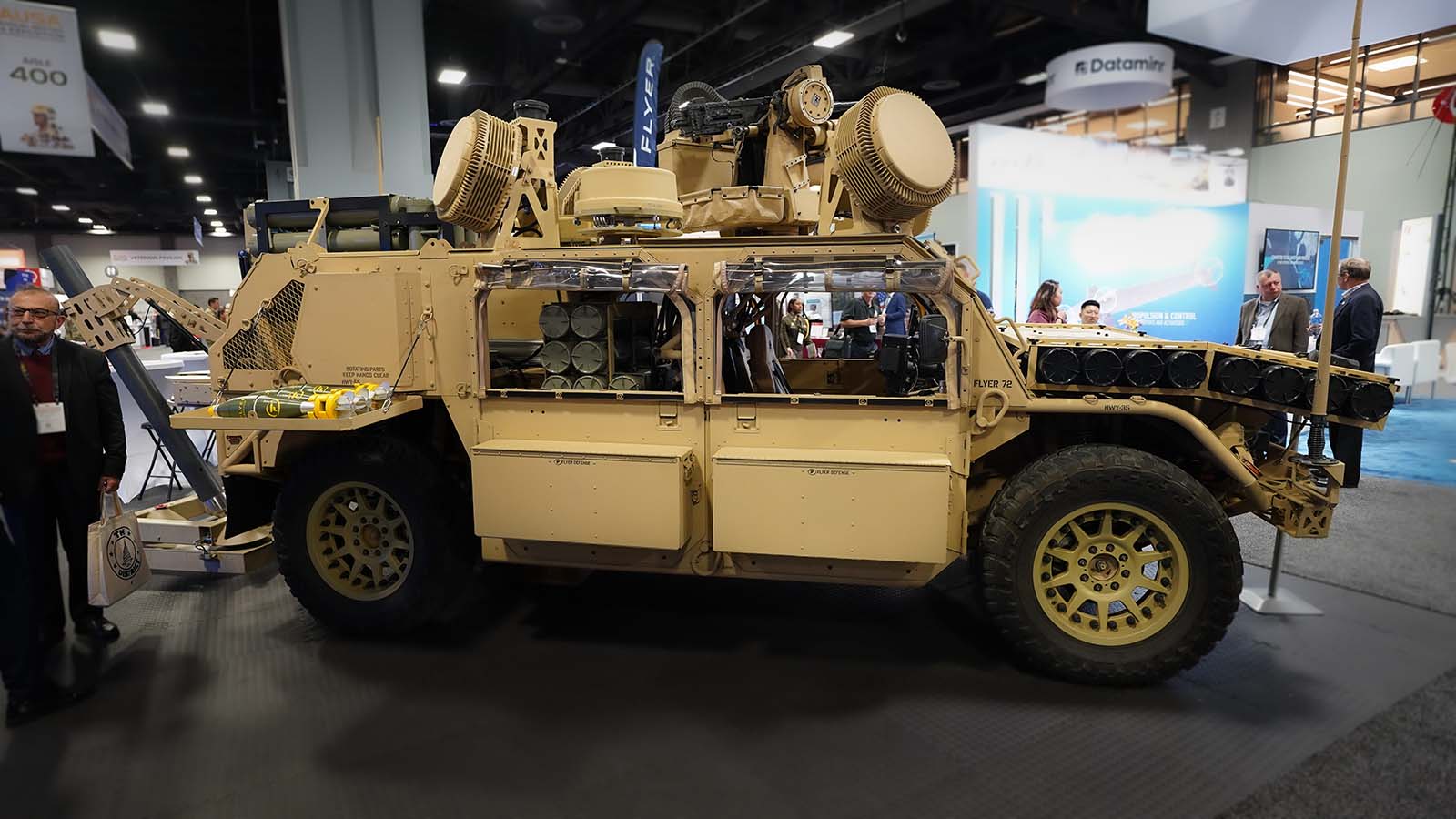
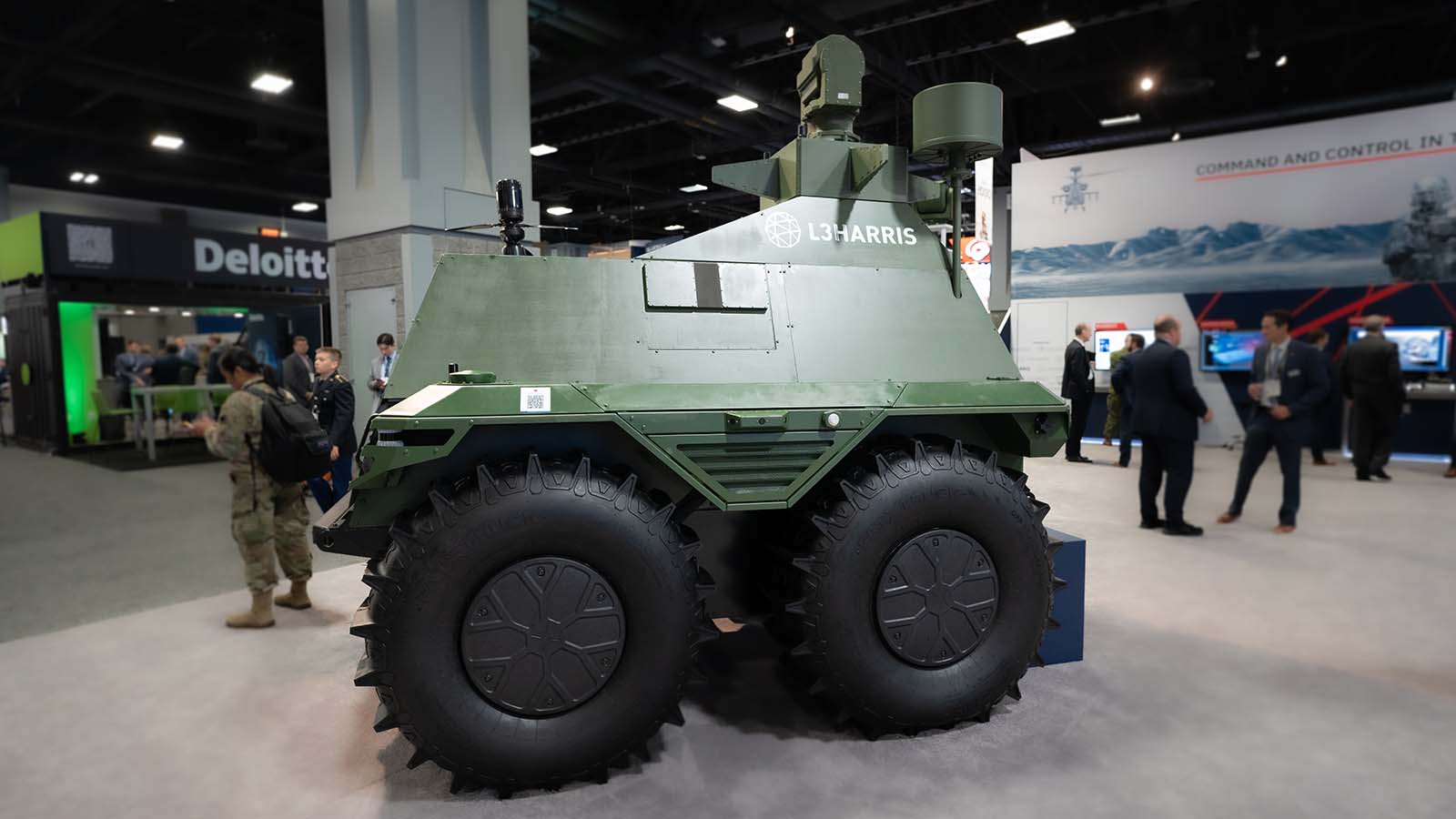
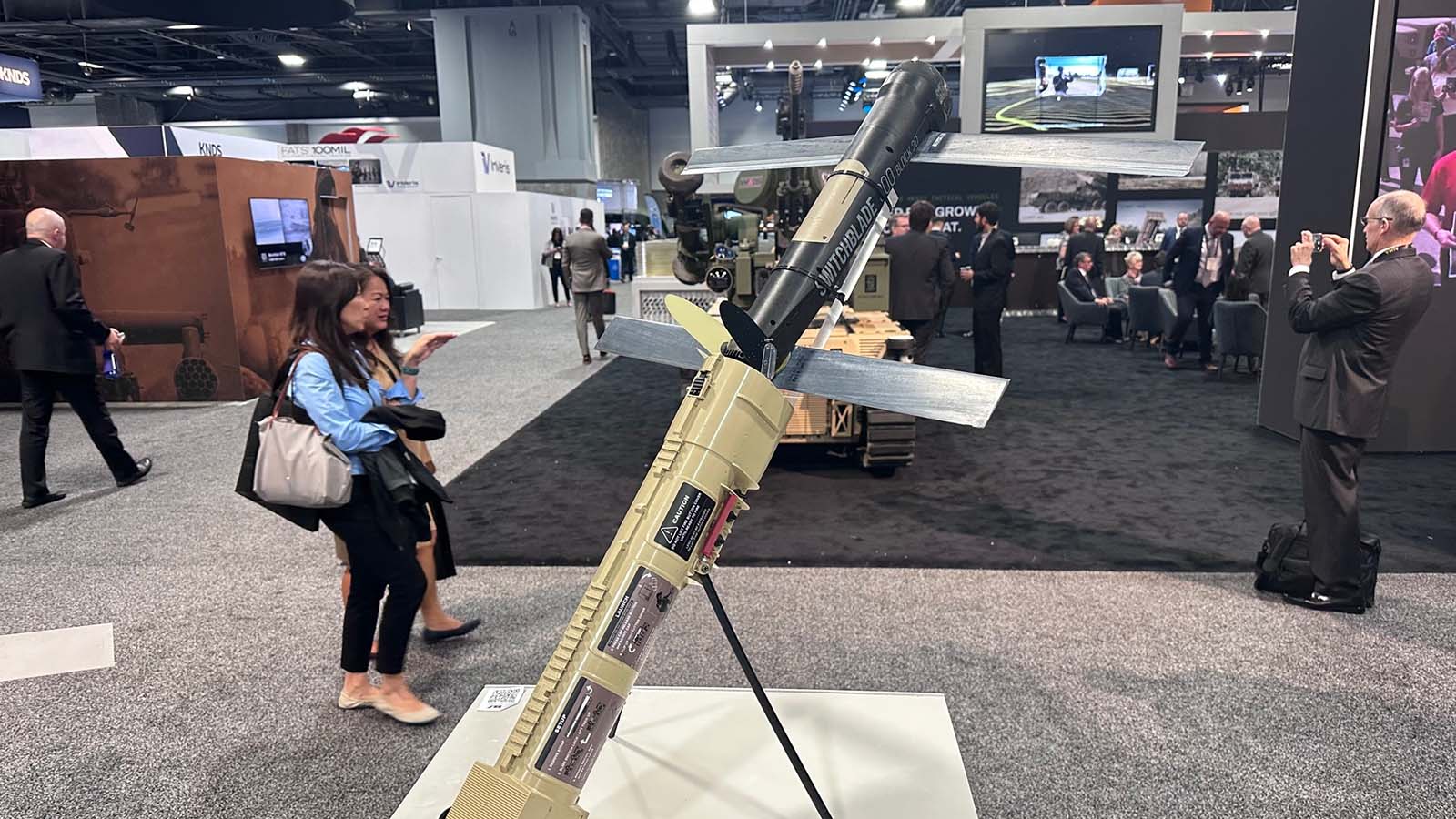
PHOTOS: AUSA 2023

 Gallery











Breaking Defense Video