WASHINGTON — The Army announced it has selected M1 Support Services, an aviation training services specialist based in Texas, to lead the service’s Flight School Next initiative, meant to train the next generation of helo pilots, in a contract worth up to $10 billion over the next three decades.
“Flight School Next delivers a critical improvement in our Initial Entry Rotary Wing Training model. Simply put, it delivers new military helicopter pilots with far better foundational skills,” Maj. Gen. Clair Gill, commanding general of the Army Aviation Center of Excellence, said in an Army release published Thursday.
The announcement is the culmination of a months-long competition, which began with six helicopter manufacturers, some competing as prime contractors and some as subs, gunning to provide the service with curriculum and airframes for its future aviators.
The Army announcement said the indefinite-delivery/indefinite-quantity contract calls on M1 to “provide aircraft, maintenance, simulators, flight and academic instruction and related support services while enabling the Army to maintain oversight of training standards, safety requirements and operational outcomes.” The contract’s “period of performance” will last up to 26 years, with the first task order covering a three- to four-year period in “support” of the “contractor’s transition.”
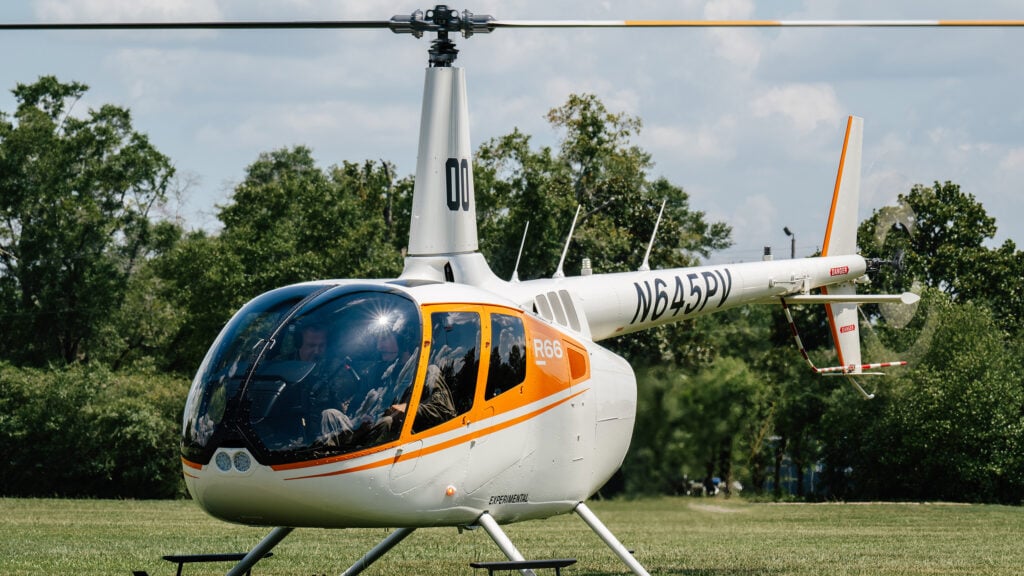
The announcement did not say what aircraft M1 would provide, but an M1 spokesperson told Breaking Defense the company planned to use the R-66 made by Robinson Helicopter. A spokesperson for Robinson, which was a subcontractor to M1 for the competition, declined to comment for this report. A spokesperson for Fort Rucker, where helo training takes place, did not immediately respond to a request for comment Friday.
Back in February M1 said in a statement that it also would be partnering with General Dynamics Information Technology, Quantum Helicopters and the University of North Dakota Aerospace Foundation for the competition in addition to Robinson.
As it stands, Airbus provides its curriculum and its UH-72 Lakota for pilot training at Fort Rucker. While the Lakota is viewed as an advanced and trusted airframe, its heavy automation and high-tech avionics can become a crutch for new pilots who instructors argue should first learn to master the basics of flight on simple controls, Army officials have previously stated.
The Army ultimately wanted to shake up the way it trained its aviators and get back to those basics to avoid future accidents at a time when helicopter mishaps have worried lawmakers, Maj. Gen. Clair Gill, the program acquisition executive of Maneuver Air, told reporters last fall. As a result, the Army began looking for a “very simple aircraft,” he said.

Winning the information war is as much about ideas and perception as it is about data
"Being able to tell the commander you don't need to do something is actually a pretty powerful message, as well."
The Army has sought a slew of requirements for the training aircraft in its past solicitations, but the three most prominent are that the aircraft have a turbine single-engine, counterclockwise-rotating rotor system and Instrument Flight Rules (IFR) certification. Though it doesn’t have a single-engine, the Lakota has a counterclockwise-rotating rotor and is IFR certified.
The R-66 has a single engine and a counterclockwise-rotating rotor system, but was not IFR certified as of last fall. It’s unclear if the aircraft is now certified.
With Flight School Next, the Army is also looking to shake up the way it acquires the aircraft. The new program will be run on a contractor-owned, contractor-operated (COCO) model, which allows M1 to own and run the program instead of the government.
Breaking Defense Video