Air Warfare

Boeing pitches new surveillance, strike missions for MQ-25 tanker drone

The aerospace giant showed off an armed MQ-25 model outfitted with two Lockheed Martin-made Long Range Anti-Surface Missiles during the Sea Air Space conference earlier this week.

GHWB Operates the MQ-25 Aircraft
A Boeing unmanned MQ-25 aircraft is given operating directions on the flight deck aboard the aircraft carrier USS George H.W. Bush (CVN 77). (U.S. Navy photo by Mass Communication Specialist 3rd Class Brandon Roberson)

SEA AIR SPACE 2024 — The Navy’s MQ-25 Stingray hasn’t yet hit the carrier deck, but Boeing believes now is the time for the sea service to start thinking about upgrades for the tanker drone that the company says could open up new missions such as gathering surveillance or striking enemy targets.

The aerospace giant showed off such a lethal variation of the MQ-25 model outfitted with two Lockheed Martin-made Long Range Anti-Surface Missiles during the Sea Air Space conference earlier this week.

Troy Rutherford, Boeing’s MQ-25 program manager, said Boeing and the Navy are in the early stages of discussing alternate configurations for the MQ-25, a drone with a75-foot wingspan that the service currently plans on using as an aerial refueler and is scheduled to become operational in 2026 after carrier trials next year.

Because the MQ-25 started off as Boeing’s offering for the Navy’s defunct Unmanned Carrier-Launched Strike & Surveillance program, “that capability to haul weapons or sensors is inherently still built in the airplane. It’s just not something that’s currently activated,” Rutherford told Breaking Defense in an interview.

While fielding the tanker version remains the priority, Boeing and the Navy are “now starting to open up conversations about what else can it do as we start to look at air wing of the future,” Rutherford said.

Asked by Breaking Defense about conversations with Boeing about alternative missions for the MQ-25, Naval Air Systems Command said, “The MQ-25 program is intended to pave the way for future multi-mission UASs [unmanned aerial systems] to keep pace with emerging threats. The primary mission of MQ-25 today is aerial refueling, which is set for IOC [initial operational capability] in 2026.”

The Navy intends to buy 76 MQ-25s over the program of record and has requested $553 million to procure three aircraft in fiscal 2025. The Navy awarded Boeing a $657 million contract modification for two MQ-25s late last month, and a request for proposals for the first batch of low-rate production aircraft is expected in May, said Rutherford.

Capt. Daniel Fucito, who leads the Navy’s unmanned carrier aviation efforts, told Breaking Defense this week that the two recently ordered aircraft will be the first MQ-25s to be built with components for which the Navy and Boeing were forced to find replacements due to issues with parts obsolescence.

“The production line is maturing,” Fucito said, adding that addressing the obsolescence issues “was the right thing to do at the time.”

Congress approved a Navy request to reprogram funding to address the MQ-25 obsolescence issues in March, reported Inside Defense then.

A Collaborative Combat Aircraft for the Navy?

Discussions about future MQ-25 configurations come as the Navy also begins publicly talking about potential interest in drone wingmen, known also as collaborative combat aircraft, envisioned to fly alongside manned aircraft.

Rear Adm. Stephen Tedford, the Navy’s program executive for unmanned systems and weapons, told reporters on Monday he believes Navy CCAs should have a service life of a “couple hundred hours” and a unit cost of under $15 million.

Fucito — who leads the Navy’s CCA effort as well as the MQ-25 program — characterized discussions as “very young,” adding that the service’s experiences operating the MQ-25 onboard the carrier deck will “set the stage” for a future CCA program.

“At some point in time, we will reach out to the industrial base [with a request for information],” he said. “As far as what that date is, it’s not firm. We have some learning to go.”

The Air Force is bullish on its own CCA program, having identified five vendors competing to build the first round of drones, with a downselect to two or three companies anticipated to occur over the next few months.

PHOTOS: Sea Air Space 2024

PHOTOS: Sea Air Space 2024

Rudder was a very good boy while touring the Sea Air Space show floor. Yes he was. (Aaron Mehta/Breaking Defense)
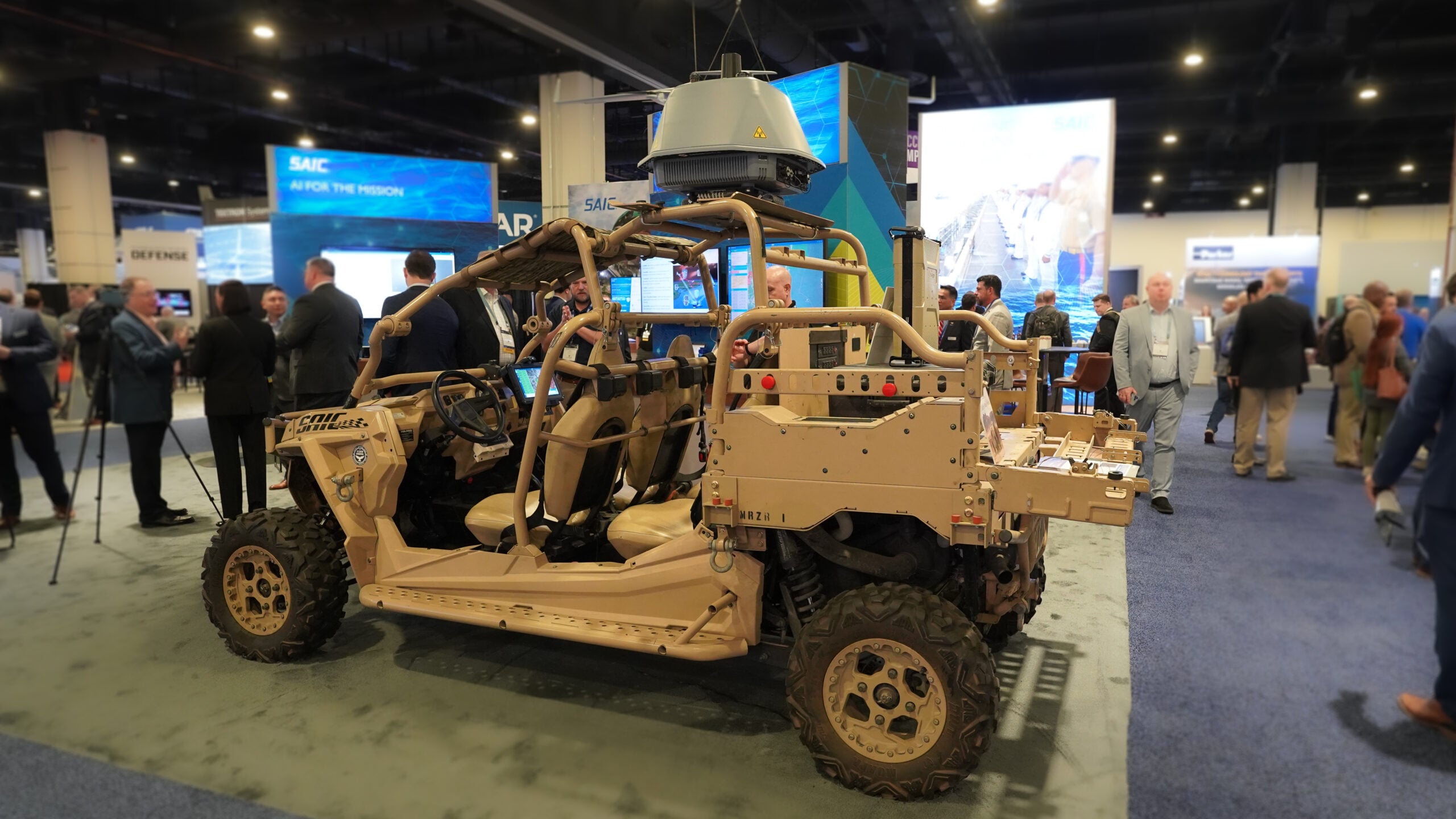
D-Fend Solutions and SAIC were showing off a mobile CUAS solution that allows modular configurability to tailor for mission specific goals. (Brendon Smith / Breaking Defense)
TenCate is the new manufacture of the Navy's two piece suit pictured here. The "Defender M" fabric technology is inherently flame resistant according to the company and could prove crucial during deck fires. (Brendon Smith / Breaking Defense)
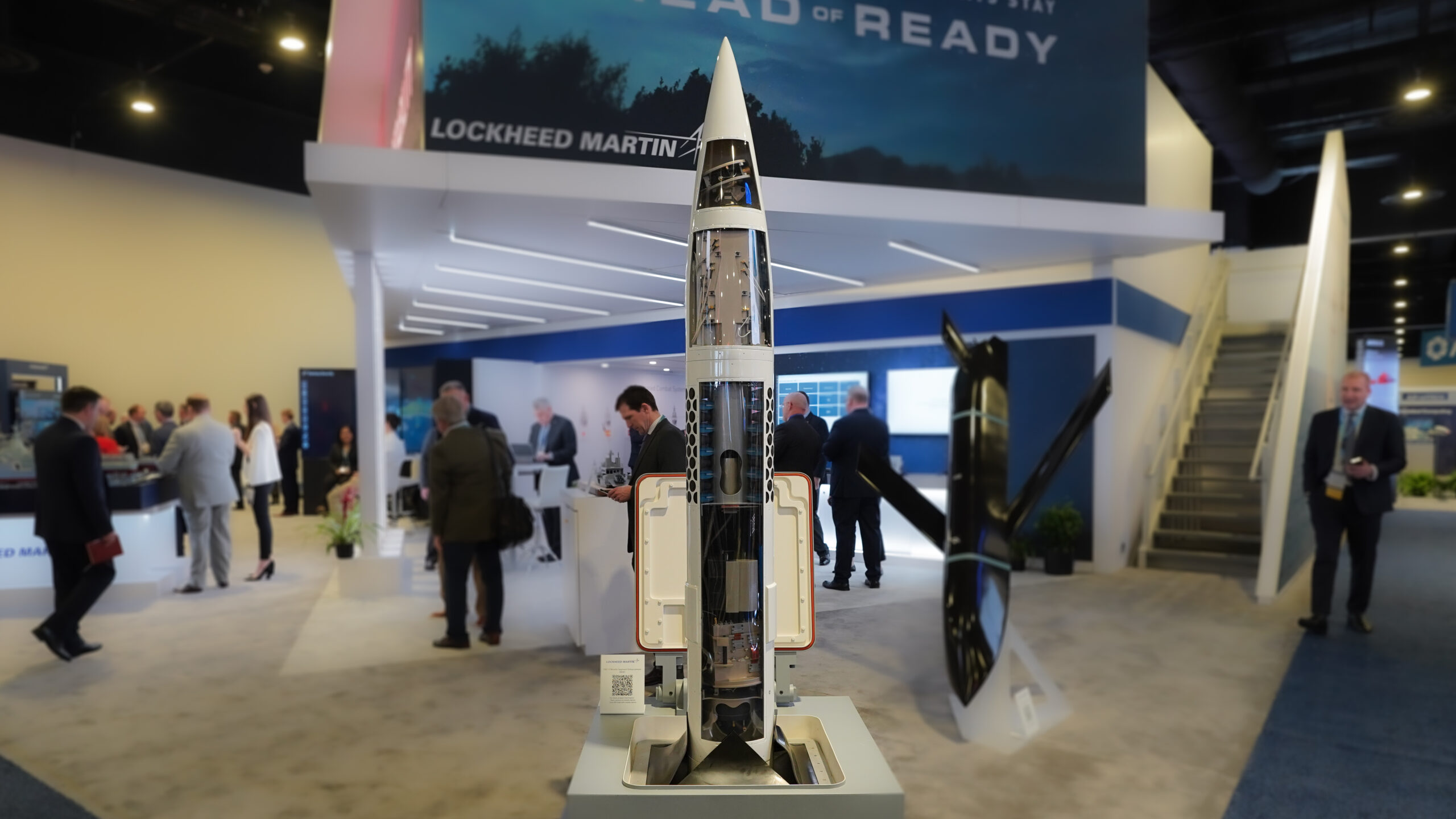
Lockheed offered an interesting look at the internals of their PAC-3 Missile. (Brendon Smith / Breaking Defense)
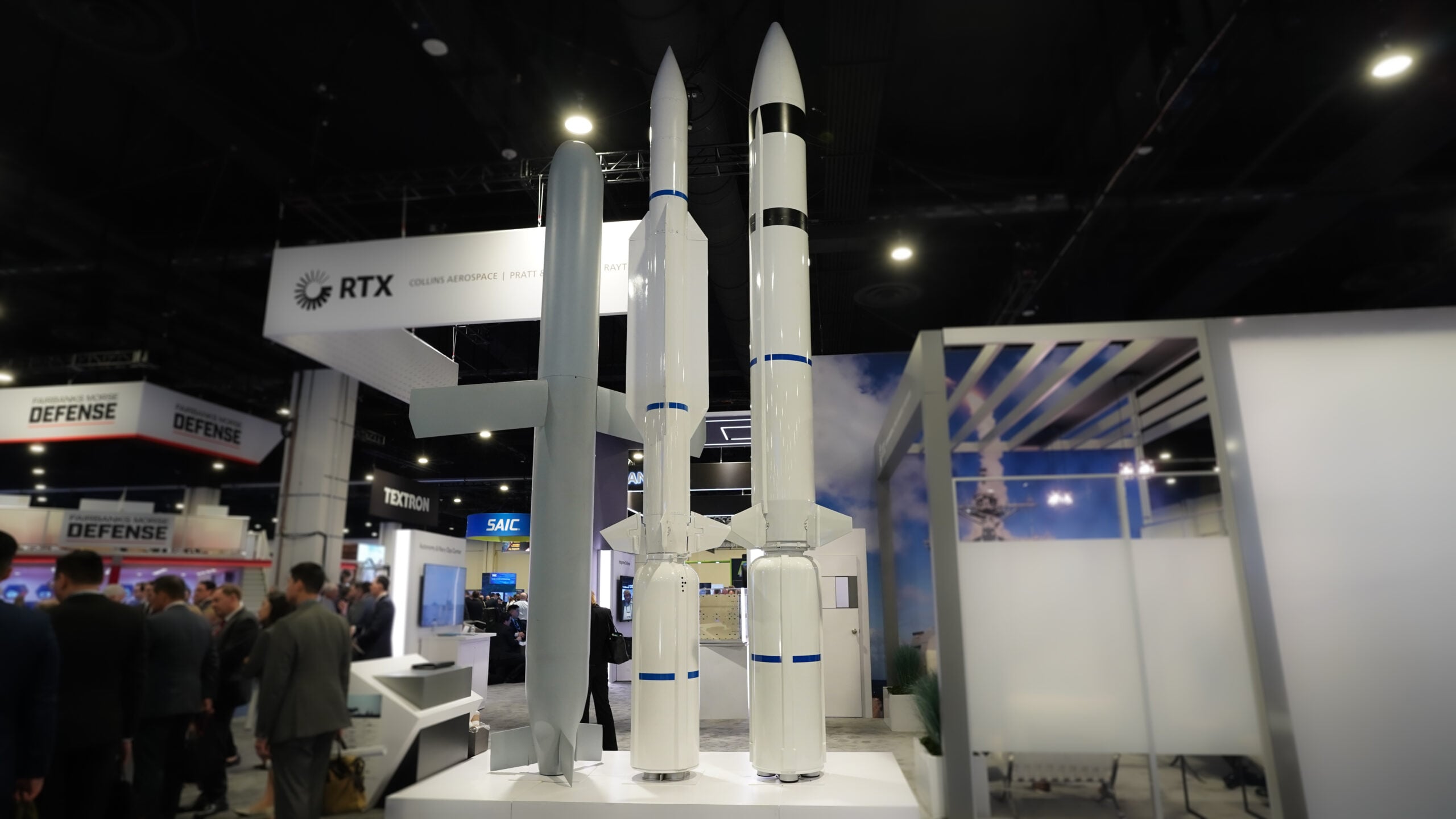
At the Raytheon booth, their new missle offerings could be seen from across the show floor. Up close it was hard to take in the enormity. Raytheon says these missiles, both. long and short range, will prove critical. (Brendon Smith / Breaking Defense)
The Australian pavilion at Sea Air Space 2024 was a popular location for visitors, with the AUKUS agreement being a major part of this year's conversation. (Aaron Mehta/Breaking Defense)
At the BlueHalo booth their CUAS offering touts advanced tracking that can operate in any sky condition, longer range, and a more powerful "High Energy Laser." (Brendon Smith / Breaking Defense)
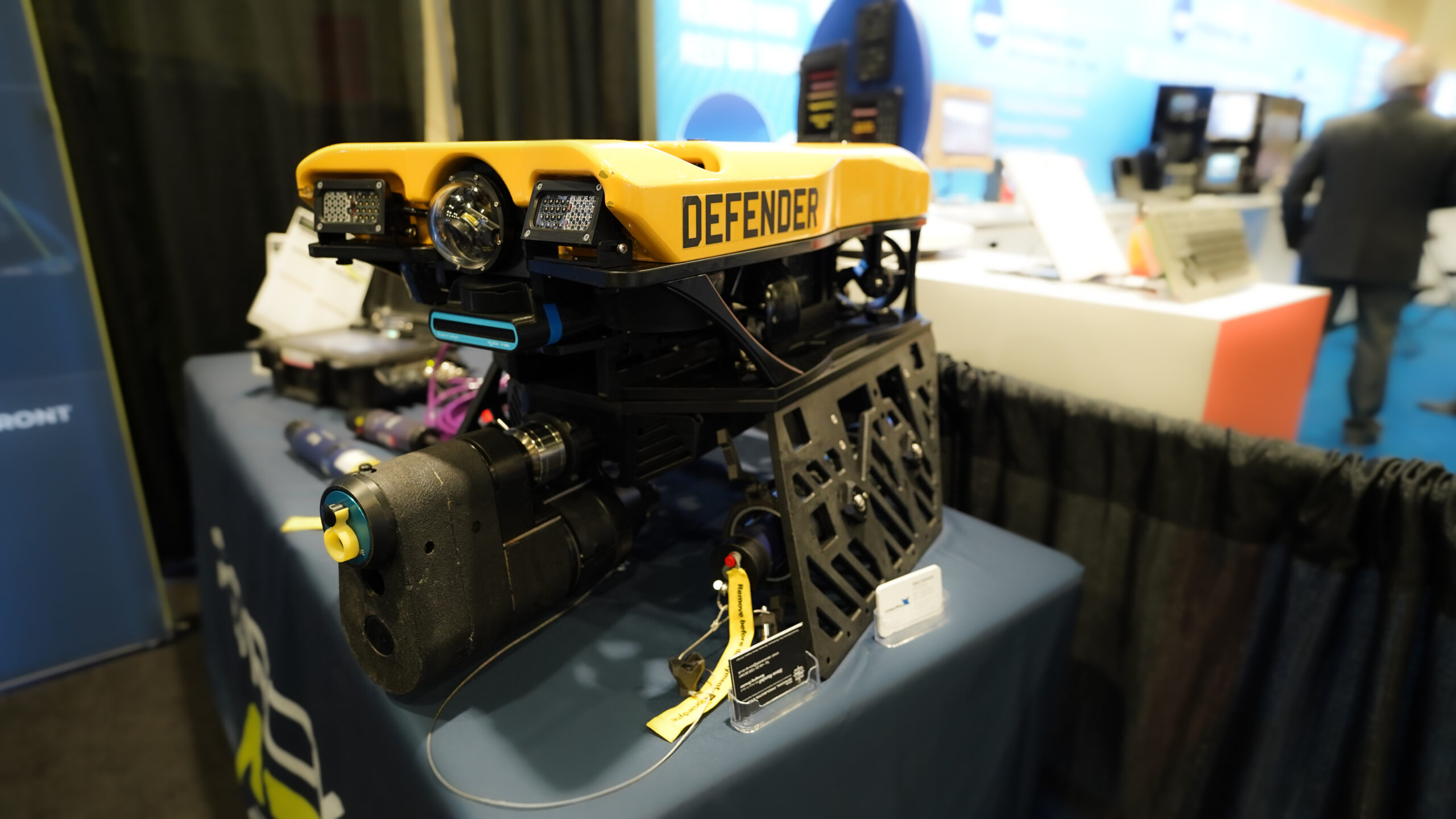
The Forcys Defender is a deep sea submersible meant to snuff out underwater explosives from a distance. (Brendon Smith / Breaking Defense)
US Secretary of the Navy Carlos Del Toro was the keynote speaker on day 2 of the 2024 Sea-Air-Space conference. Del Toro recently released a shipbuilding review that found serious delays for key navy programs. (Brendon Smith / Breaking Defense)
DroneShield's RfPatrol Mk2 is a compact mobile CUAS system that aims to provide highly effective low maintenance support. (Brendon Smith/Breaking Defense)
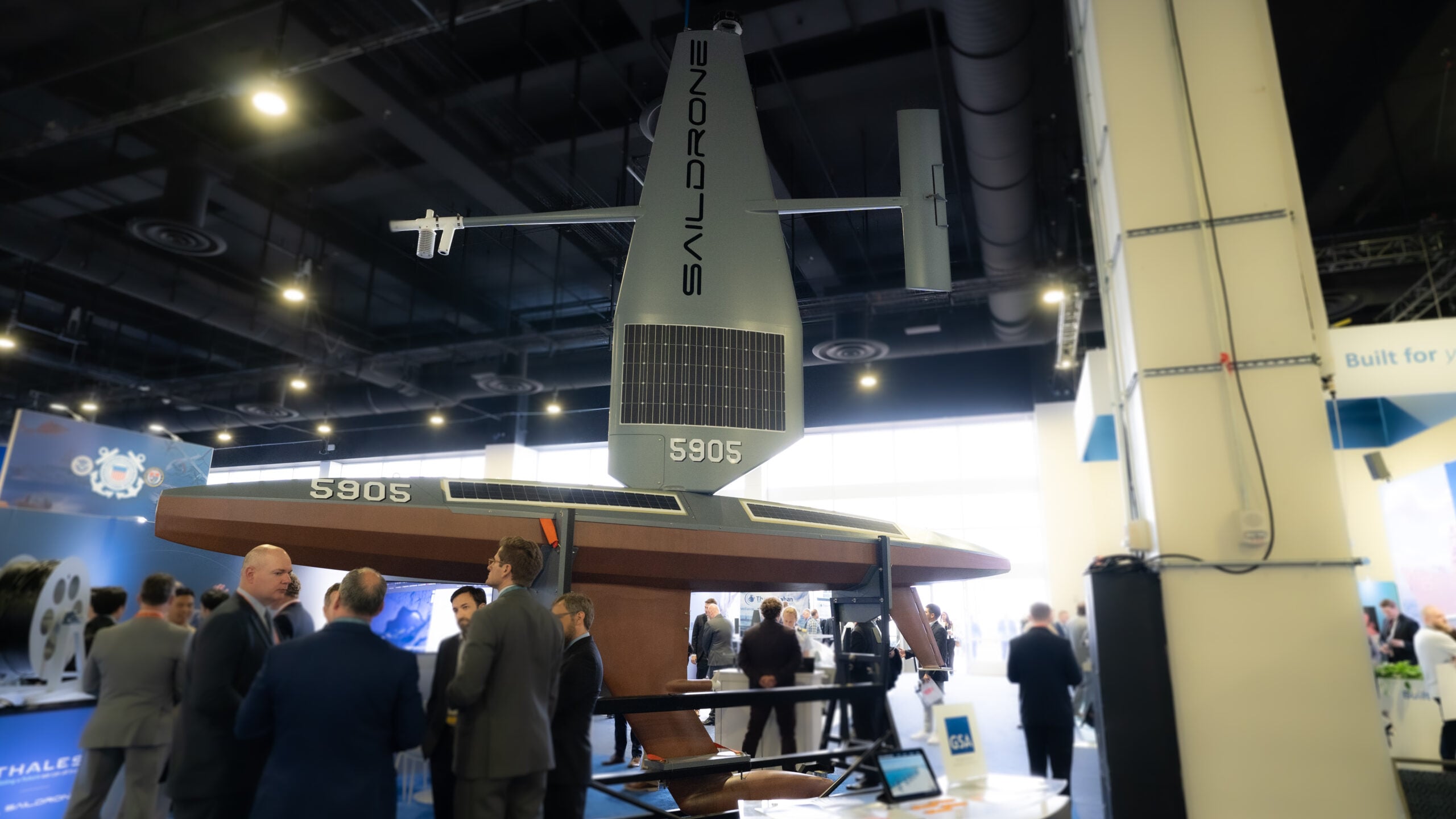
Surface drone maker Saildrone brought a model of its 5904 long range autonomous MDA/ISR solution. The company has seen its systems active in the waters of the Gulf in recent years. (Brendon Smith / Breaking Defense)
The show isn't just about big hardware. Defense Marine Solutions offers an "expansion of DMS' marine propulsion and propeller repair" with state of the art underwater support systems. (Brendon Smith / Breaking Defense)
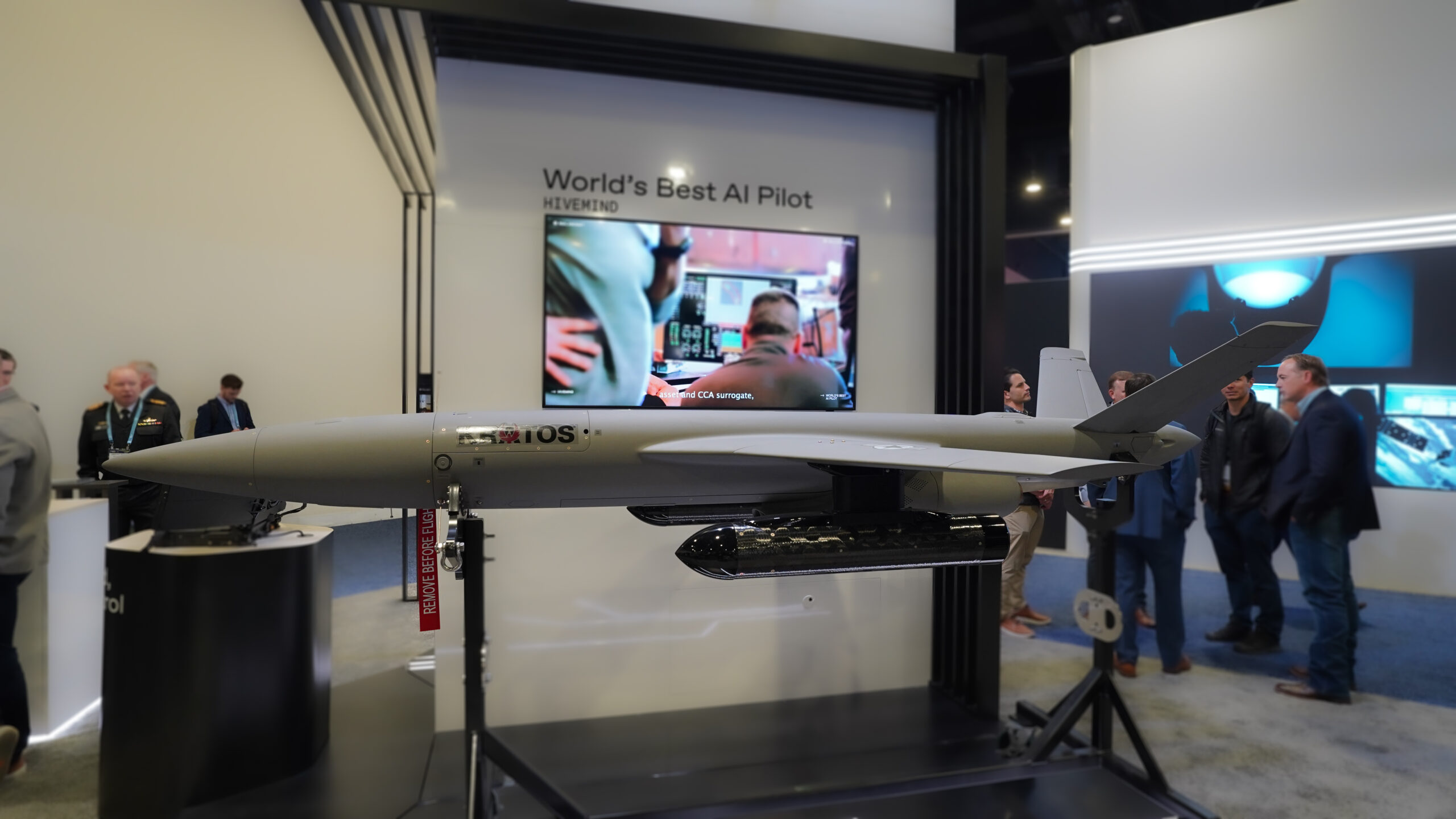
Kratos is teamed with Shield AI on this system, which the companies say will deliver state of the art AI drone piloting and the ability to complete mission objectives without gps, waypoints, or comms. (Brendon Smith / Breaking Defense)
A look at Northrop Grummans Autonomous VTOL Uncrewed Aircraft System at their booth. This was the first time the company brought the UAS to a show. (Brendon Smith / Breaking Defense)
Attendees gathered on the showroom floor for a packed NavAir leadership panel. (Brendon Smith / Breaking Defense)
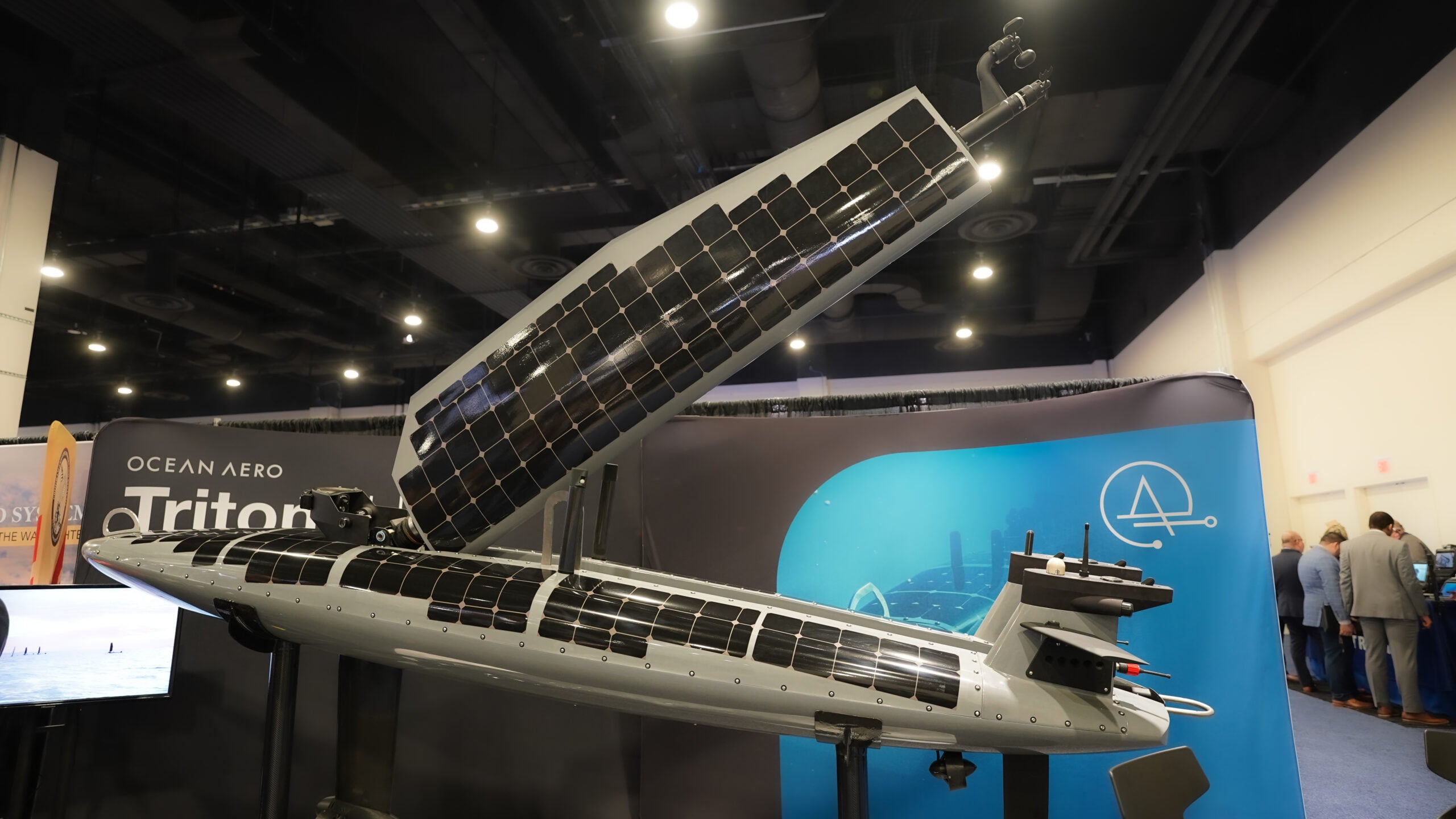
What the company says is a first of its kind fully solar unmanned submarine, Ocean Aeros "Triton" looks to allow longer duration surveys and other deep sea mission objectives. (Brendon Smith / Breaking Defense)
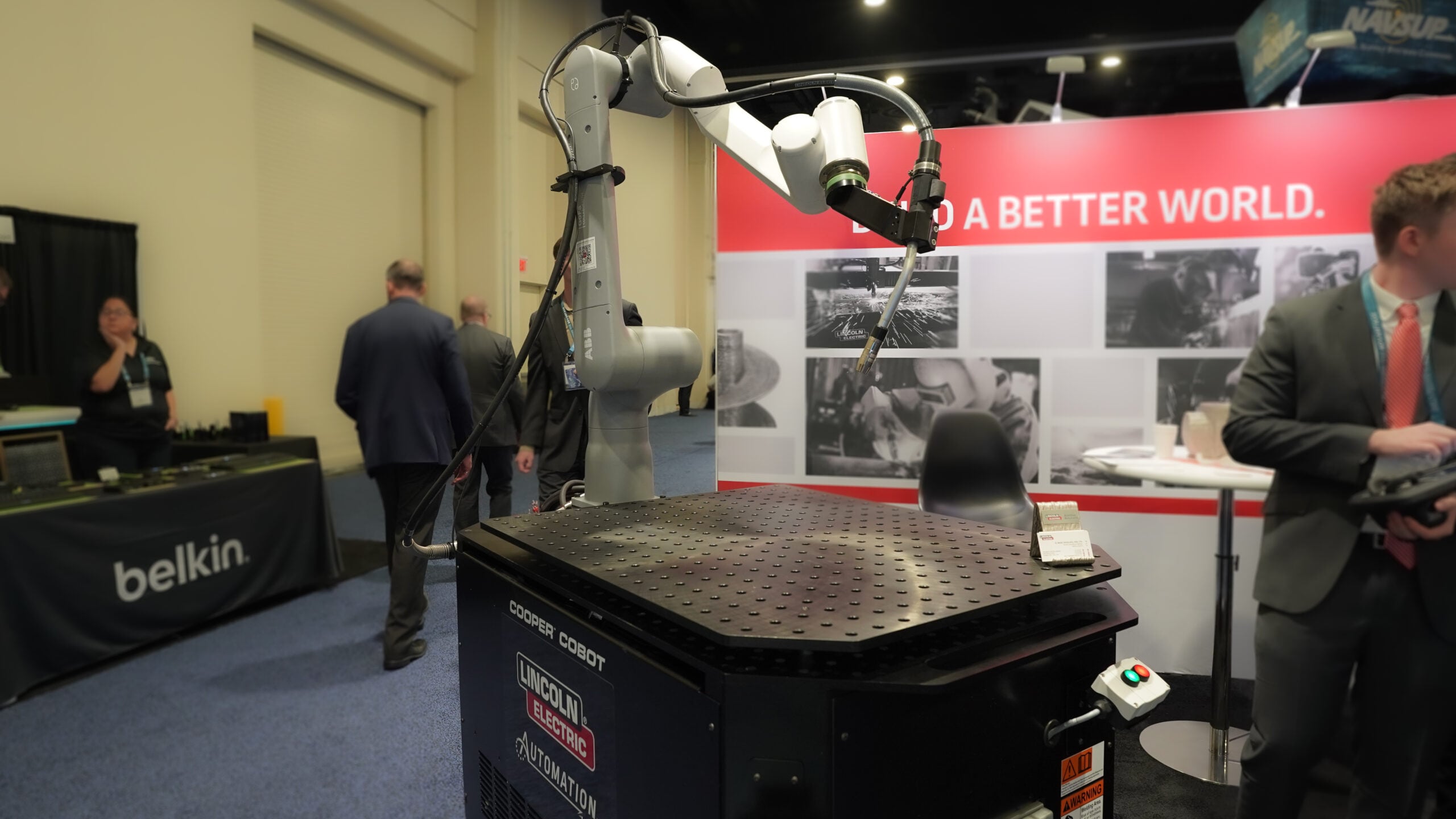
Lincoln electrics Cooper Cobot is meant to increase welding efficiency and accuracy. Acting as a productivity enhancing collaborator for its human counterparts. (Brendon Smith / Breaking Defense)
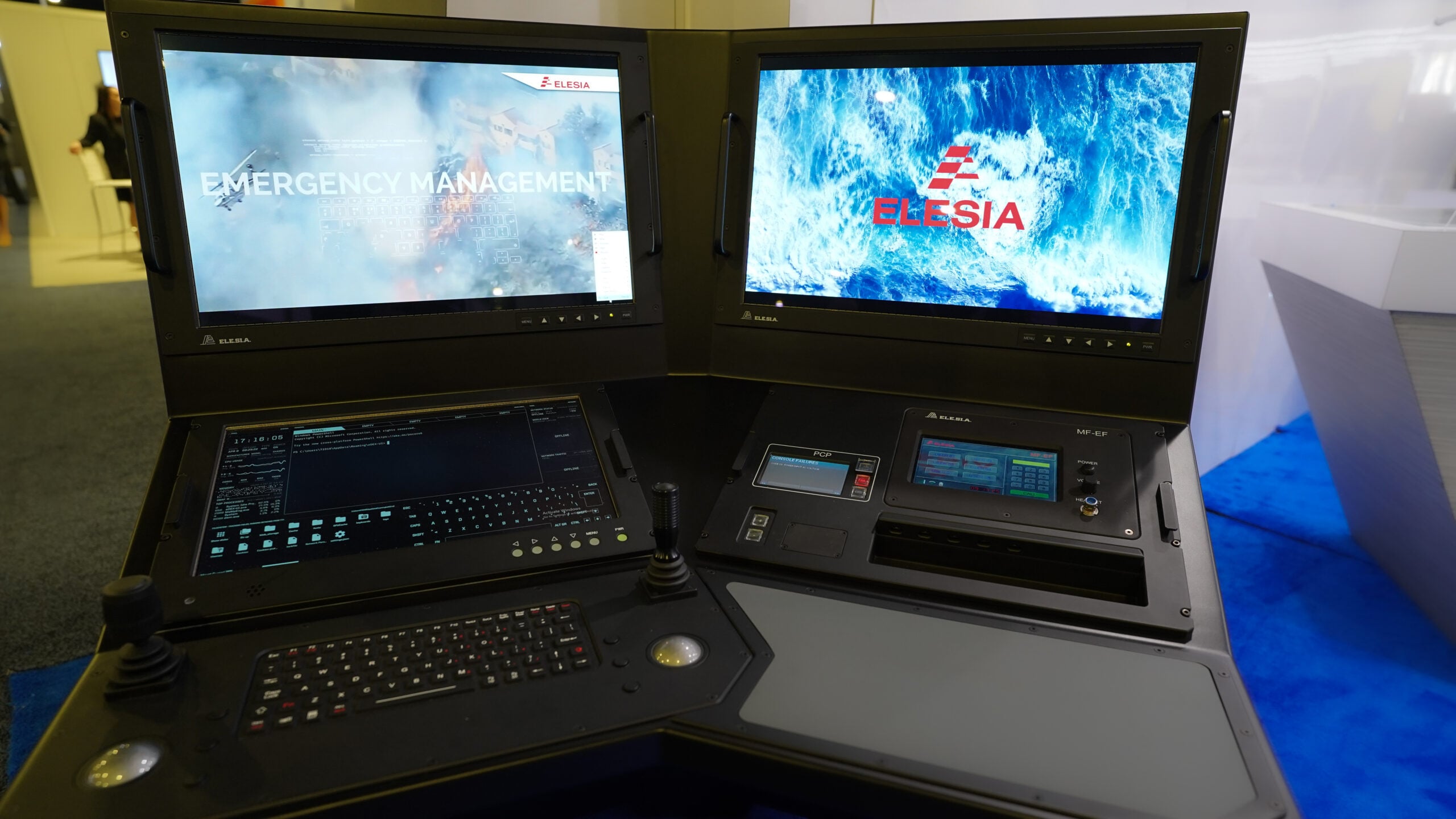
ELESIA's Single Operator MFC12 Console resists shock and vibrations on navy operations by "floating" within various shock absorbers. (Brendon Smith / Breaking Defense)
Attendees taking a break from the showroom floor to witness the solar eclipse Monday. (Brendon Smith / Breaking Defense)
A cartoonist at the Carahsoft Booth was drawing caricatures of various attendees throughout the show. (Brendon Smith / Breaking Defense)
The Arete PILLS is what the defense firm says is a "streak tube imaging lidar" system with high resolution cameras and a AIRTRAC laser enhancing pulse rate frequency. (Brendon Smith / Breaking Defense)
ANDURIL's Roadrunner-M missle interceptor is "built for ground-based air defense that can rapidly launch, identify, intercept, and destroy" various aerial threats. (Brendon Smith / Breaking Defense)