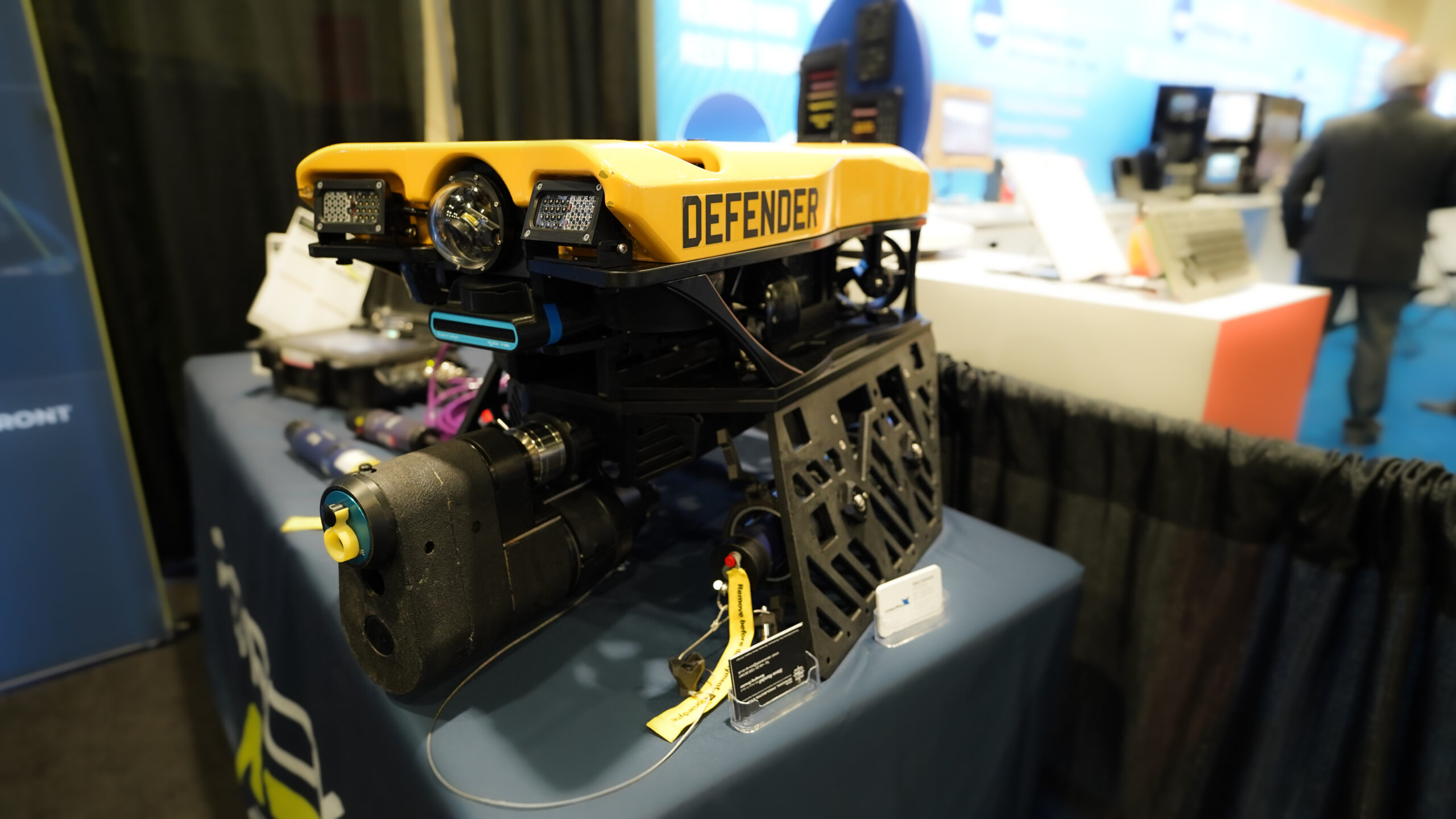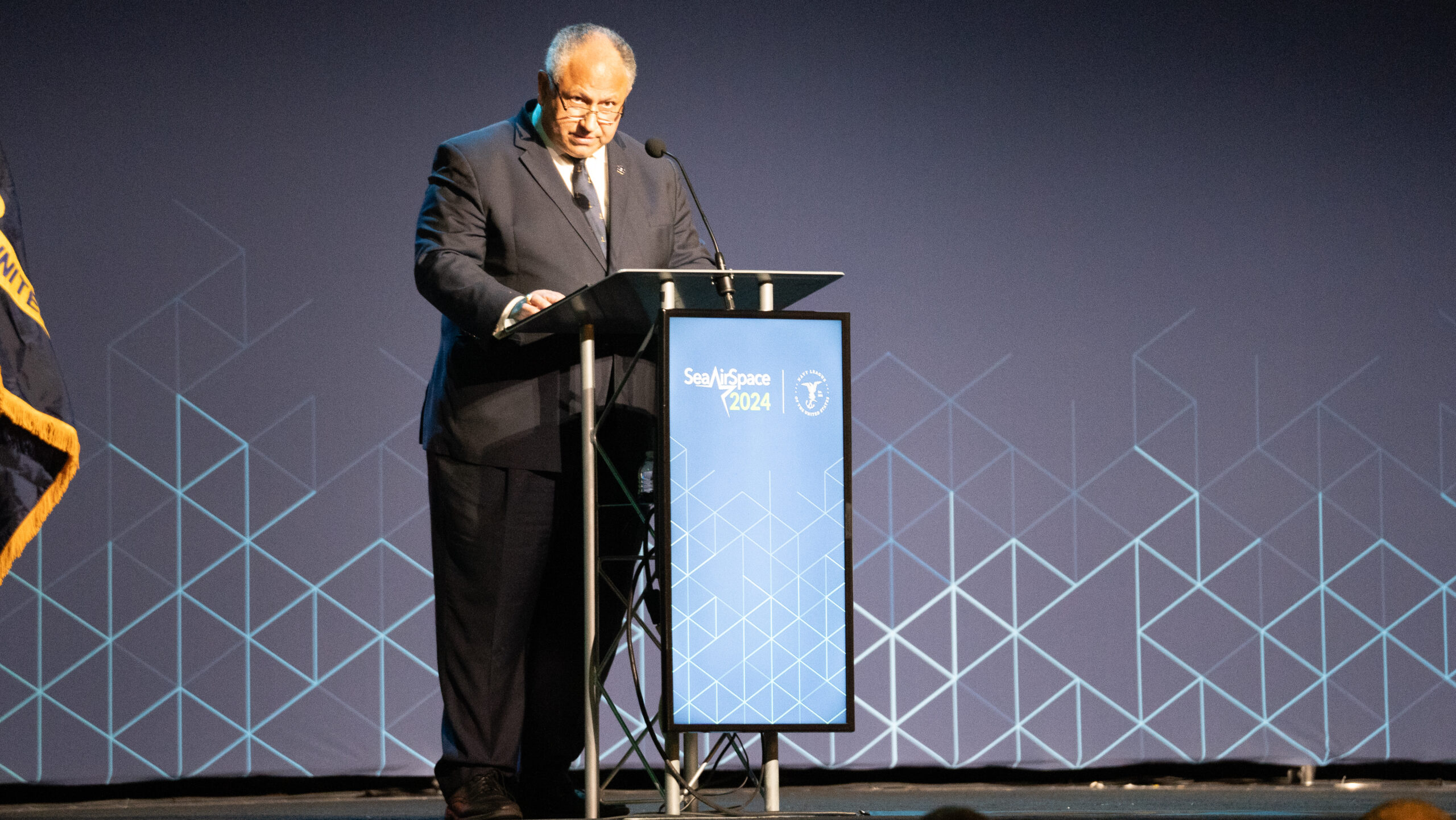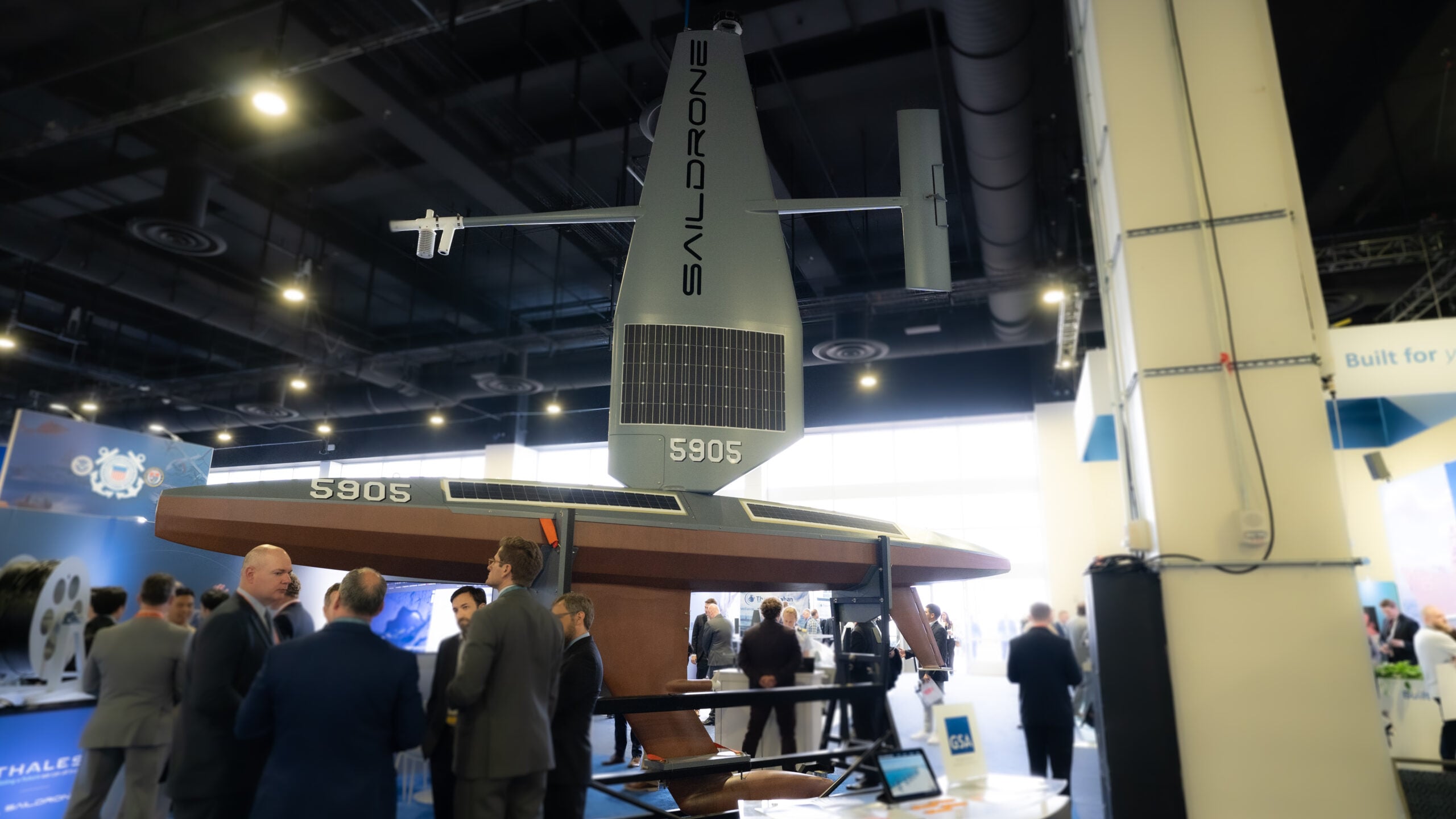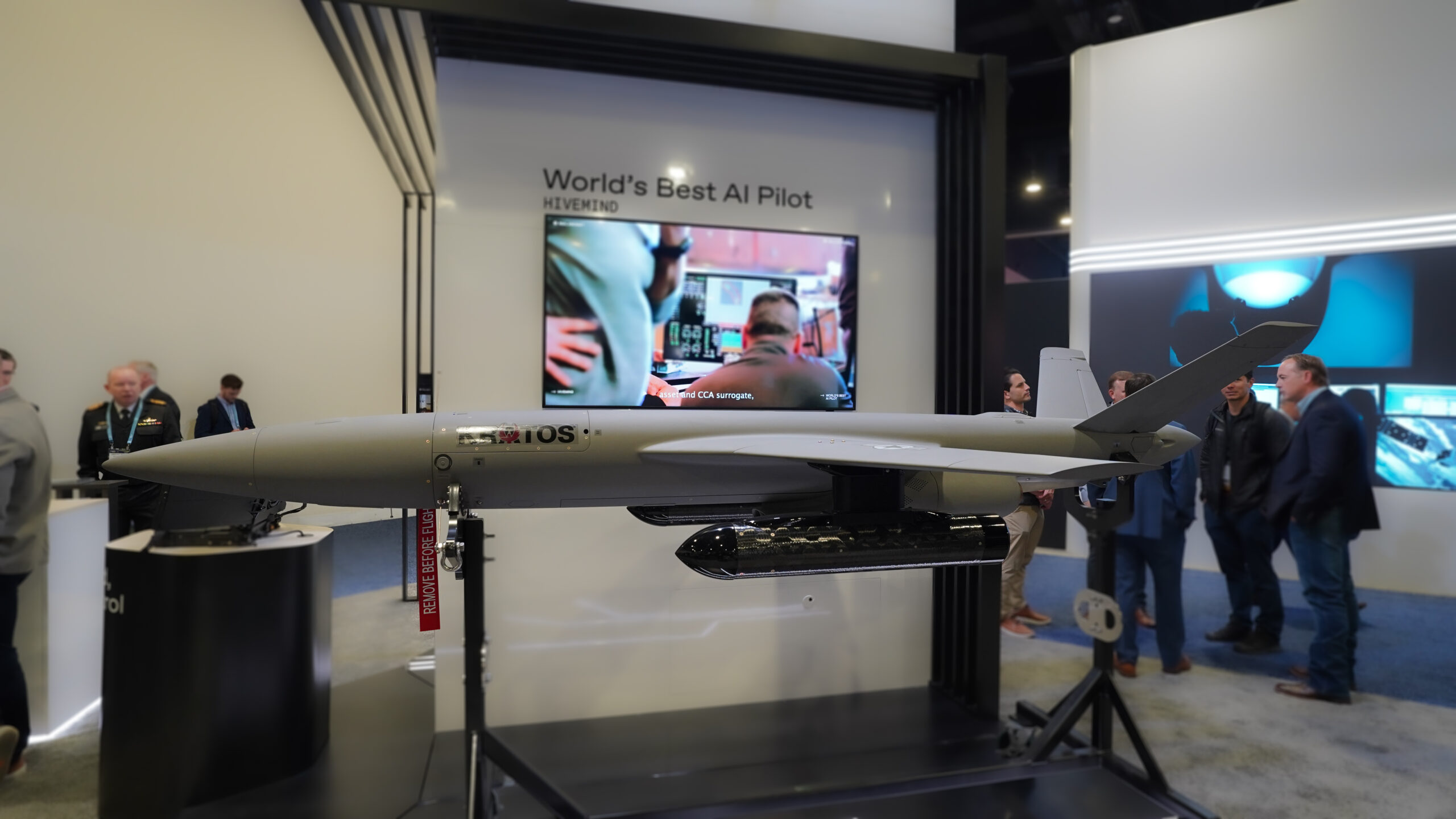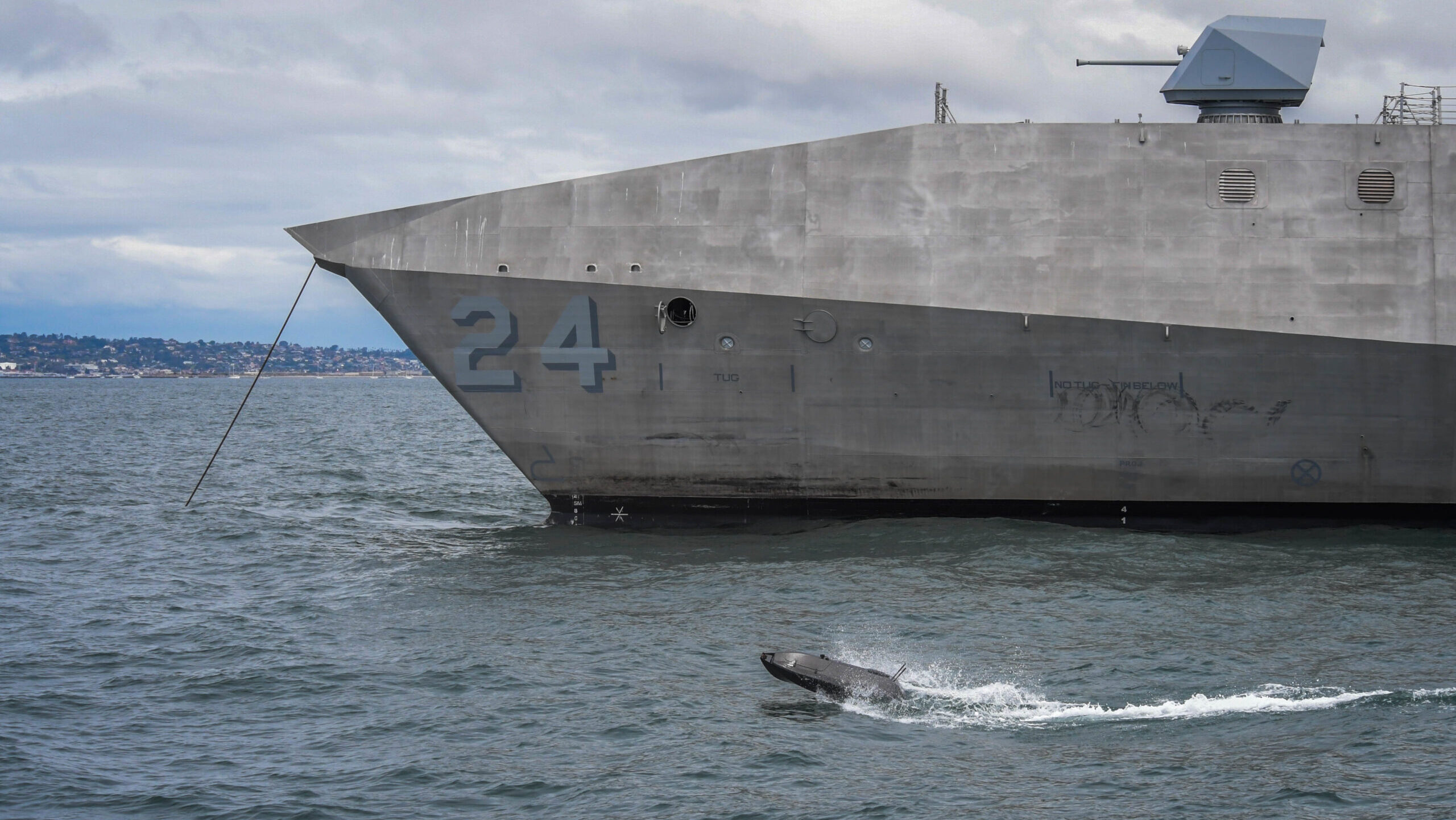
SEA AIR SPACE 2024 — Navy commanders and ashore headquarters are struggling to catch up to the bumper crop of unmanned systems the service has started using in the air, at sea, and underwater, two admirals said this week, lending urgency to initiatives to standardize control systems and data-sharing.
Last year, Navy leaders designated 4th Fleet, which patrols the relatively peaceful waters of the Western Hemisphere, to lead some real-world trials on how manned and unmanned systems can best work together in a “hybrid fleet.” Combining different systems creates a “Reese’s effect” where the whole is greater than the sum of the parts, said the 4th Fleet commander, Rear Adm. Jim Aiken, referencing the famed chocolate-and-peanut-butter candy, during a panel at this week’s Sea Air Space mega-conference just outside of Washington, DC.
Sometimes that means robots teamed with humans, he said, as with a group of unmanned boats that are helping the Coast Guard keep track of Haitian migrants in the Caribbean. Sometimes it’s robots helping robots, he went on, such as a sensor-laden balloon he has acting as an eye-in-the-sky for an unmanned surface vessel.
All this is happening “right now,” Aiken enthused.
But all these new sensors produce a tremendous amount of data, often in inconsistent or incompatible formats — an embarrassment of riches that 4th Fleet is struggling to make best use of, Aiken acknowledged.
“What we didn’t realize was the volume of data we were going to get at headquarters,” he said. “That’s one of the big challenges we have.”
How bad can it get? In one earlier exercise in the Pacific, Integrated Battle Problem 2021, the service had dozens of unmanned systems in play. Each used its own bespoke software and control system, often operated by a contractor that jealously guarded their intellectual property — and competed for Navy attention like overeager eight-year-olds in art class. They kept saying, “Admiral, come on over here!’ ‘Admiral, come on over here!’…Everyone wanted to show me their displays [and] what they could do,” Aiken recalled. But the only way for the commander to get a complete picture of what everyone was doing was to run from one screen to the next and try to put it all together in their head, because there was no unified network or master display.
“I don’t have the capability to take in 40 things or 50 things at the same time,” Aiken said. “The problem [that] the staff and I have talked a lot about is that integration and sharing [of data], trying to compile that data on one screen, one pane.”
Aiken argued it will take new tools and techniques to forge one-off unmanned experiments into a true “hybrid fleet,” acting not as individual tactical experiments but as a coherent operational force.
Rear Adm. Kevin Smith, one of Aiken’s fellow panelists at Sea Air Space, is hard at work on standardizing and synthesizing these disparate systems. He’s head of the Navy’s Program Executive Officer (PEO) for Unmanned and Small Combatants, which he emphasized is working closely with the PEO for Integrated Warfare Systems and Naval Information Warfare Systems Command (aka NAVWAR) to come up with a unified approach. The challenge, he said: “How do you get a common picture and a common understanding?”
There are several major pieces, Smith and aides outlined:
- Smith’s PEO is developing an Unmanned Maritime Autonomous Architecture (UMAA) [PDF] that will require contractors to comply with government-designed, government-owned interfaces and compatibility standards.
- The PEO also runs a Rapid Autonomy Integration Lab (RAIL), which in February picked Sigma Defense as Autonomy Baseline Manager (ABM) to help integrate software from different vendors for different unmanned systems to a common, compatible baseline.
- Third, the Navy is developing a Common Control System (CCS) to go on both manned and unmanned vessels in the “hybrid” fleet.
All these different elements are meant to work together, explained Bryan Clark, the panel moderator and a former Navy submariner himself. “How it is supposed to work is that UMAA establishes the interfaces between the software in mission systems, the software that controls vehicles, and the software that does mission planning and command and control [C2],” the Hudson Institute scholar explained in an email to Breaking Defense.
“The ABM is intended to be a vendor who is in charge of managing the software ecosystem and ensuring the software of each of the three elements is interoperable,” Clark continued. “The RAIL is intended to be a software environment the Navy can use to assess how well the software for mission systems, vehicles, and C2 interact and how data is shared between them and with outside users — it is a kind of digital sandbox that allows assessing software interoperability without having to connect all the physical systems in an experiment.”
Finally, Clark said, the Common Control System “is the C2/mission planning system that can interface, via UMAA, with the vehicle control software for various vehicles.”
“This is still not solved for the Navy,” Clark emphasized. But the overall goal is to make operating manned and unmanned systems in concert a streamlined and routine process.
“We want to normalize this,” Aiken said. “We don’t want it to be one-off or specialized; we want it to be something we can do each and every day.”
PHOTOS: Sea Air Space 2024
 Gallery