Naval Warfare

With Navy exercise, unmanned surface vessel firm Saronic sees ‘next step’

“We are in active conversations with many of the stakeholders who are relevant to things like Replicator and we’re excited to collaborate with the government when the time is right,” Saronic exec Rob Lehman told Breaking Defense.

saronic ship formation
A formation of Saronic-made unmanned surface vessels during testing in Texas. (Saronic)

SEA AIR SPACE 2024 — Autonomous surface vessel startup Saronic showed off a pair of its automated boats during a recent Navy exercise, in what co-founder and Chief Commercial Officer Rob Lehman described to Breaking Defense as “the next step” for his company.

According to Lehman, both the company’s 6-foot Spyglass and 14-foot Cutlass vessels took part in the US Navy’s Integrated Battle Problem (IBP) 24.1 exercise, the first time the Cutlass sailed in a live exercise. For both systems, the company said it was able to quickly integrate payloads provided by the Navy, including an Anduril-made loitering munition. The firm also said it demonstrated swarming capabilities for Spyglass, operating on high seas in both day and night conditions.

The firm was able to integrate the payloads onto Cutlass “in a matter of hours, not days or weeks,” Lehman said, a feat he chalked up to the design having an open architecture built in from conception — part of the company’s plan to be able to provide for multiple mission areas.

“There’s no point in us delivering a closed system that only works with our equipment on our terms, and we fully understand that that is a nonstarter for DoD writ large and the Navy in particular. So from day one, we’ve made these platforms open and easily integrated with,” he said, later noting that “optionality is the name of the game for us.”

Saronic, founded in September 2022, has raised over $70 million from defense-focused VC firms. It currently boasts 85 employees and 100,000 square feet of manufacturing and testing facilities. The latter is key to what Lehman indicated is a differentiator between his firm and other startups: an early focus on how to manufacture at scale.

“Unless you start off with scale in mind, and have your manufacturing team weigh in on those engineering [early design] decisions, you’re going to falter when you go from developing and delivering” small numbers to scale, he said. “So you have to be intentional about it on the front end to make sure you’re not getting bitten on the back end and incurring huge costs and huge delays.”

That design strategy, he said, included considering how to make sure platforms can be assembled by “relatively low-end manufacturing manpower,” as opposed to relying on highly-skilled, hard-to-find workers that are in heavy demand in the defense industry.

So far, the company has produced 20 Spyglass models and a prototype of Cutlass. But if given orders, Lehman said, right now it could crank out 10 of each of its three different sizes per month — including the in-development 24-foot Corsair.

“If you wait to have a contract in hand to deliver hundreds of vessels, you’re already too late. Private capital has let us lean in and be intentional about investing in our ability to manufacture at scale so we can break the paradigm” of step-by-step production, Lehman said.

Lehman also stressed that the decision to build new platforms from the ground up with autonomy in mind matters, as opposed to trying to retrofit existing vessels with autonomy. While that can work in limited ways, he argued, true autonomy requires too much technology to be fully integrated. (All three Saronic variants use the same autonomous backend.)

“Unless you’ve architected your platform from the ground up to support all of the [possible] sensor selection, the network architecture, the computing board” and other requirements, it’s never going to reach the levels envisioned by DoD planners, Lehman said.

As of now, the company is not on contract with any DoD customers. Like everyone in the unmanned business, however, the firm is keeping a close eye on Replicator, Deputy Defense Secretary Kath Hicks’s plan for swarms of unmanned systems.

“Obviously we think it’s a great fit” for Replicator, Lehman said, while noting that the majority of that effort remains behind closed doors. “We’ve been really intentional about building relationships across the ecosystem,” he said, including inside the Pentagon and with end-users, to make sure we “fully understand the ecosystem and an ecosystem understands” the company.

“We are in active conversations with many of the stakeholders who are relevant to things like Replicator and we’re excited to collaborate with the government when the time is right,” he added.

PHOTOS: Sea Air Space 2024

PHOTOS: Sea Air Space 2024

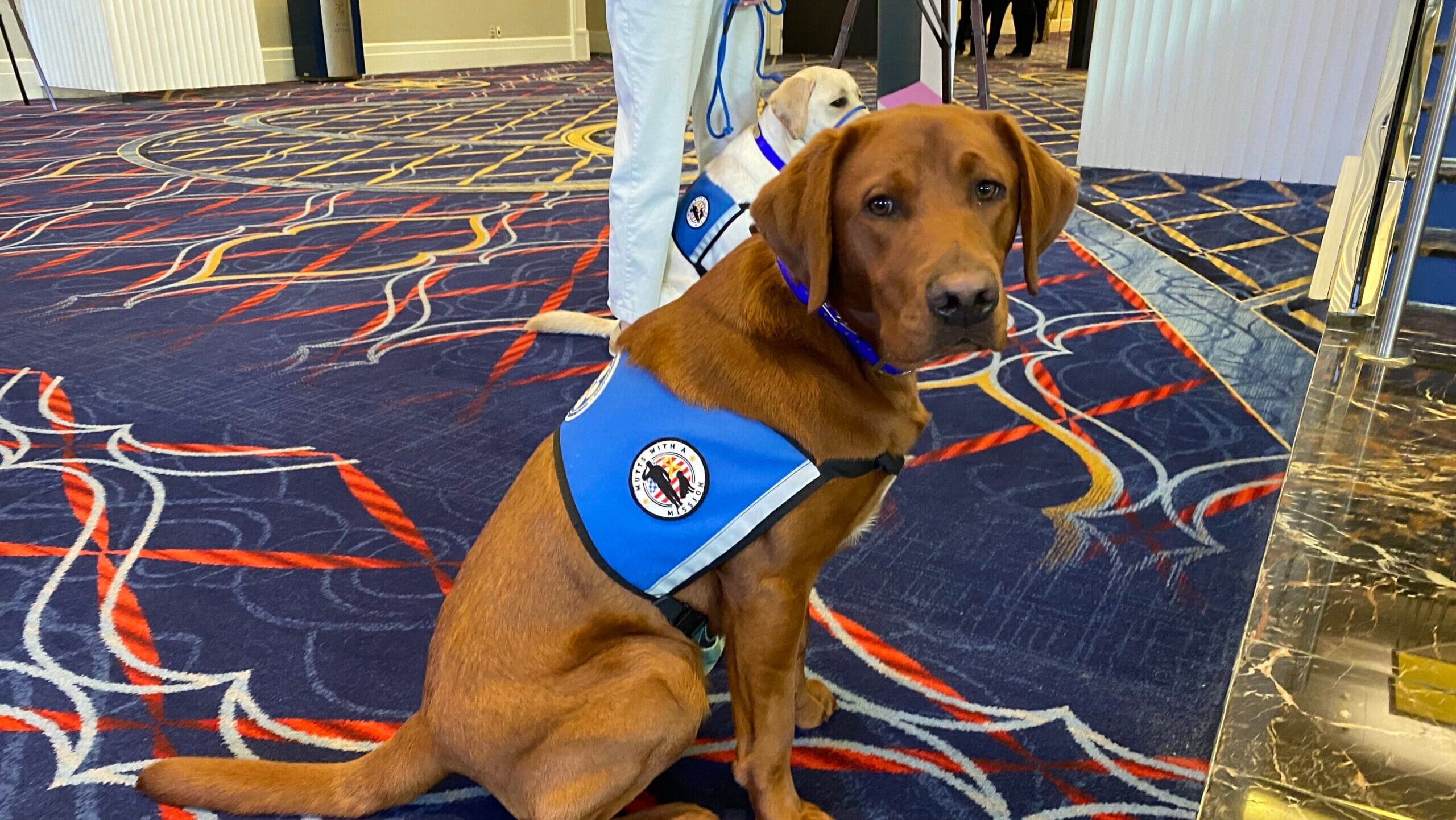
Rudder was a very good boy while touring the Sea Air Space show floor. Yes he was. (Aaron Mehta/Breaking Defense)
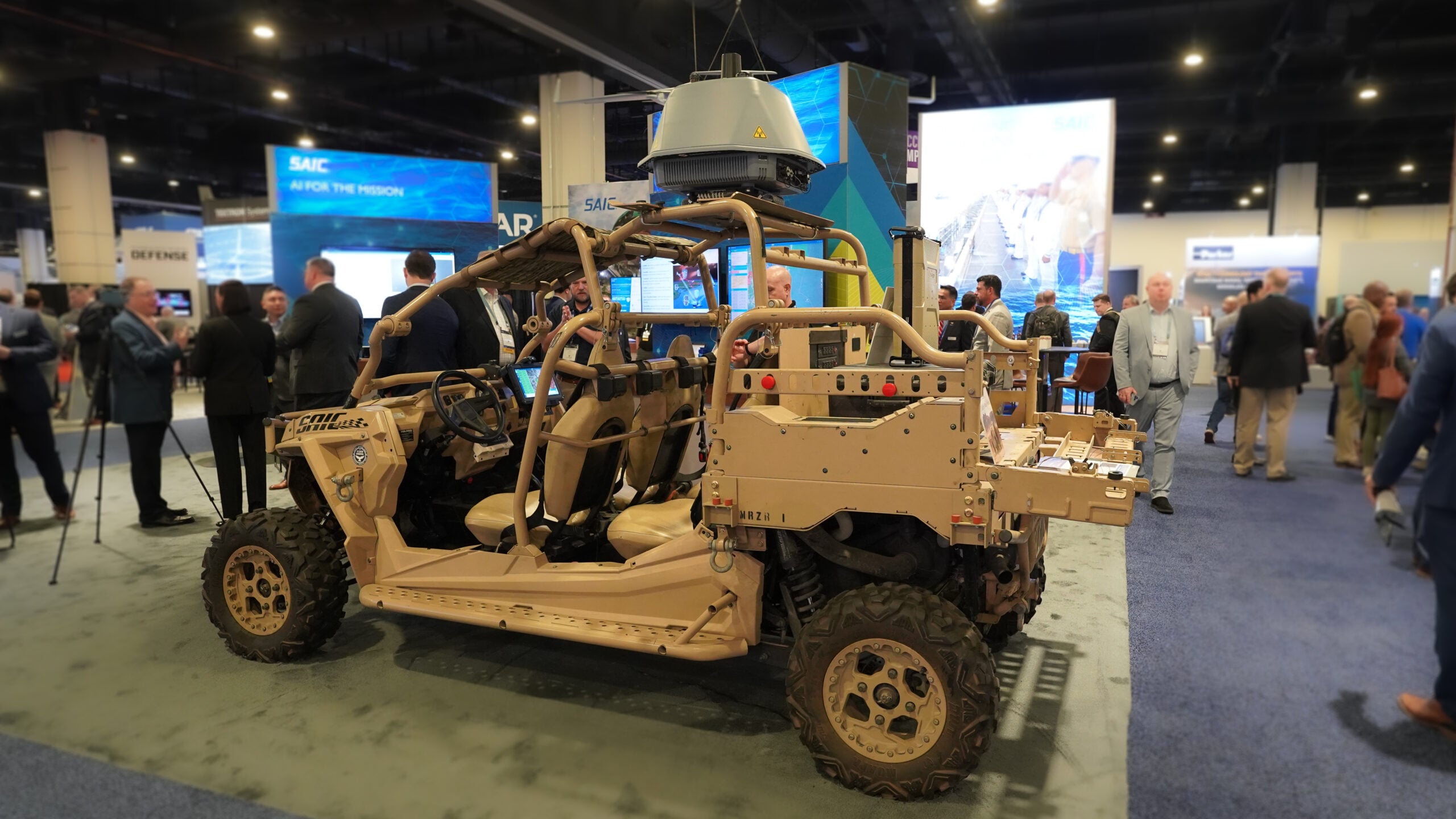
D-Fend Solutions and SAIC were showing off a mobile CUAS solution that allows modular configurability to tailor for mission specific goals. (Brendon Smith / Breaking Defense)
TenCate is the new manufacture of the Navy's two piece suit pictured here. The "Defender M" fabric technology is inherently flame resistant according to the company and could prove crucial during deck fires. (Brendon Smith / Breaking Defense)
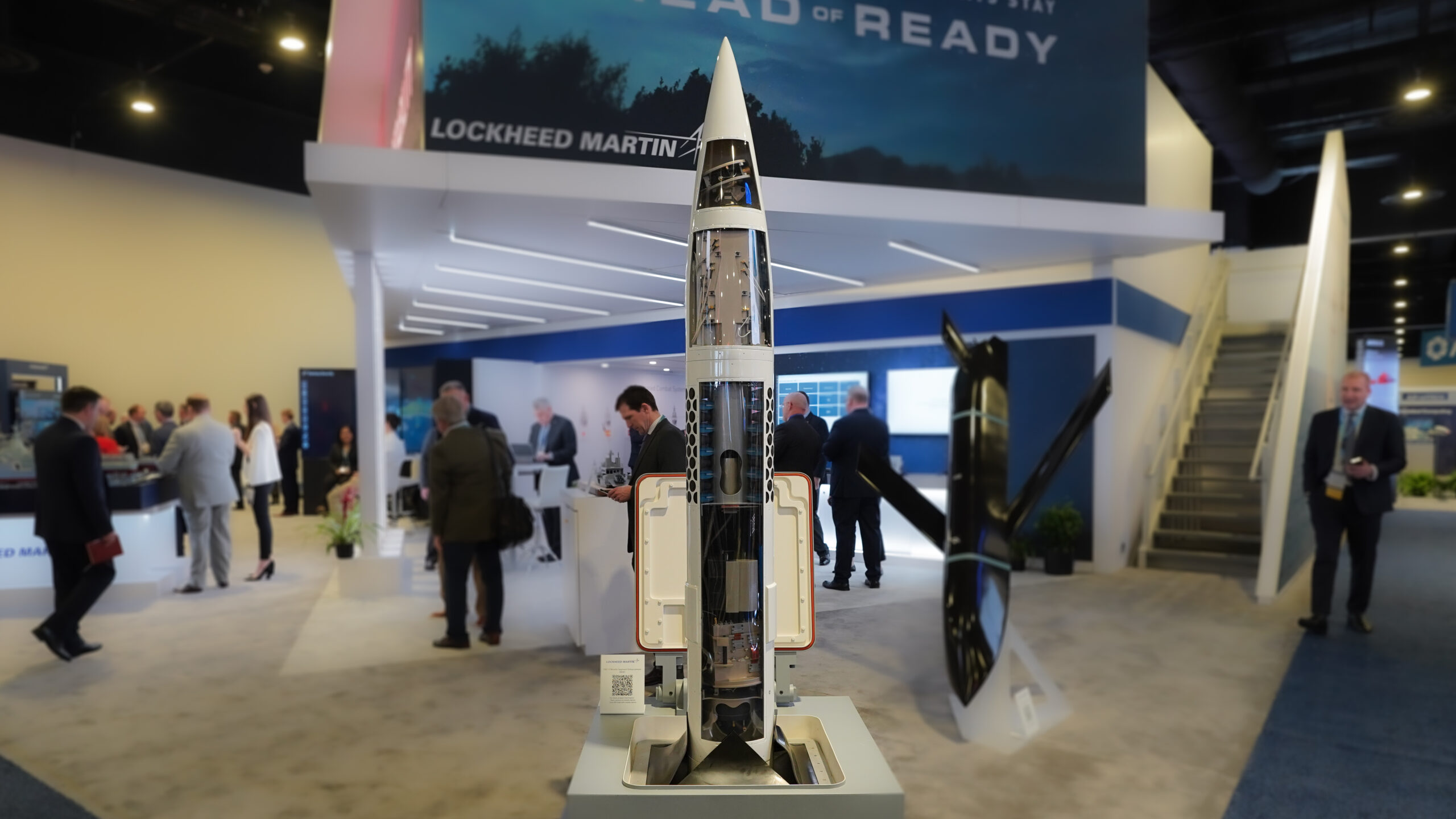
Lockheed offered an interesting look at the internals of their PAC-3 Missile. (Brendon Smith / Breaking Defense)
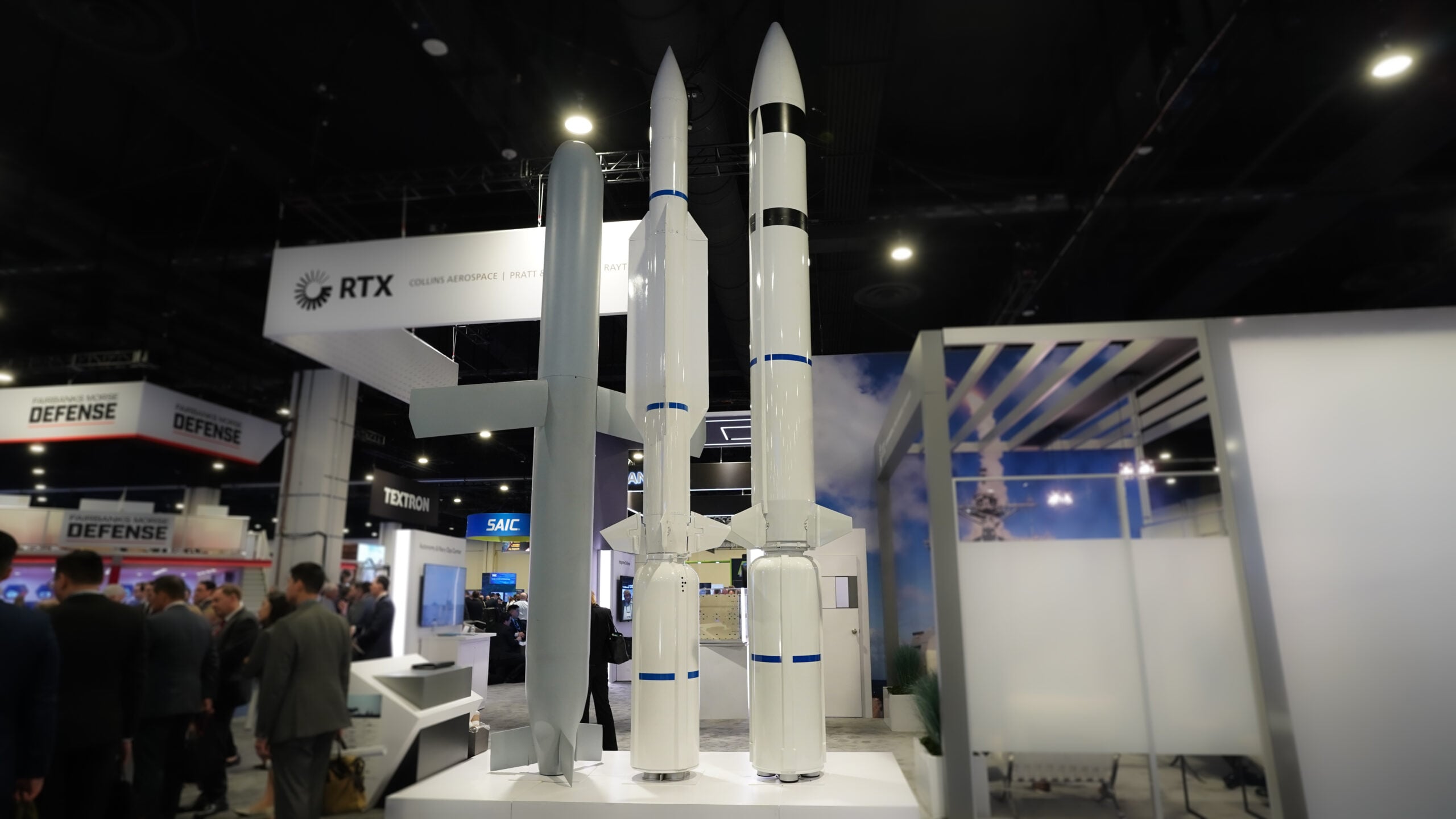
At the Raytheon booth, their new missle offerings could be seen from across the show floor. Up close it was hard to take in the enormity. Raytheon says these missiles, both. long and short range, will prove critical. (Brendon Smith / Breaking Defense)
The Australian pavilion at Sea Air Space 2024 was a popular location for visitors, with the AUKUS agreement being a major part of this year's conversation. (Aaron Mehta/Breaking Defense)
At the BlueHalo booth their CUAS offering touts advanced tracking that can operate in any sky condition, longer range, and a more powerful "High Energy Laser." (Brendon Smith / Breaking Defense)
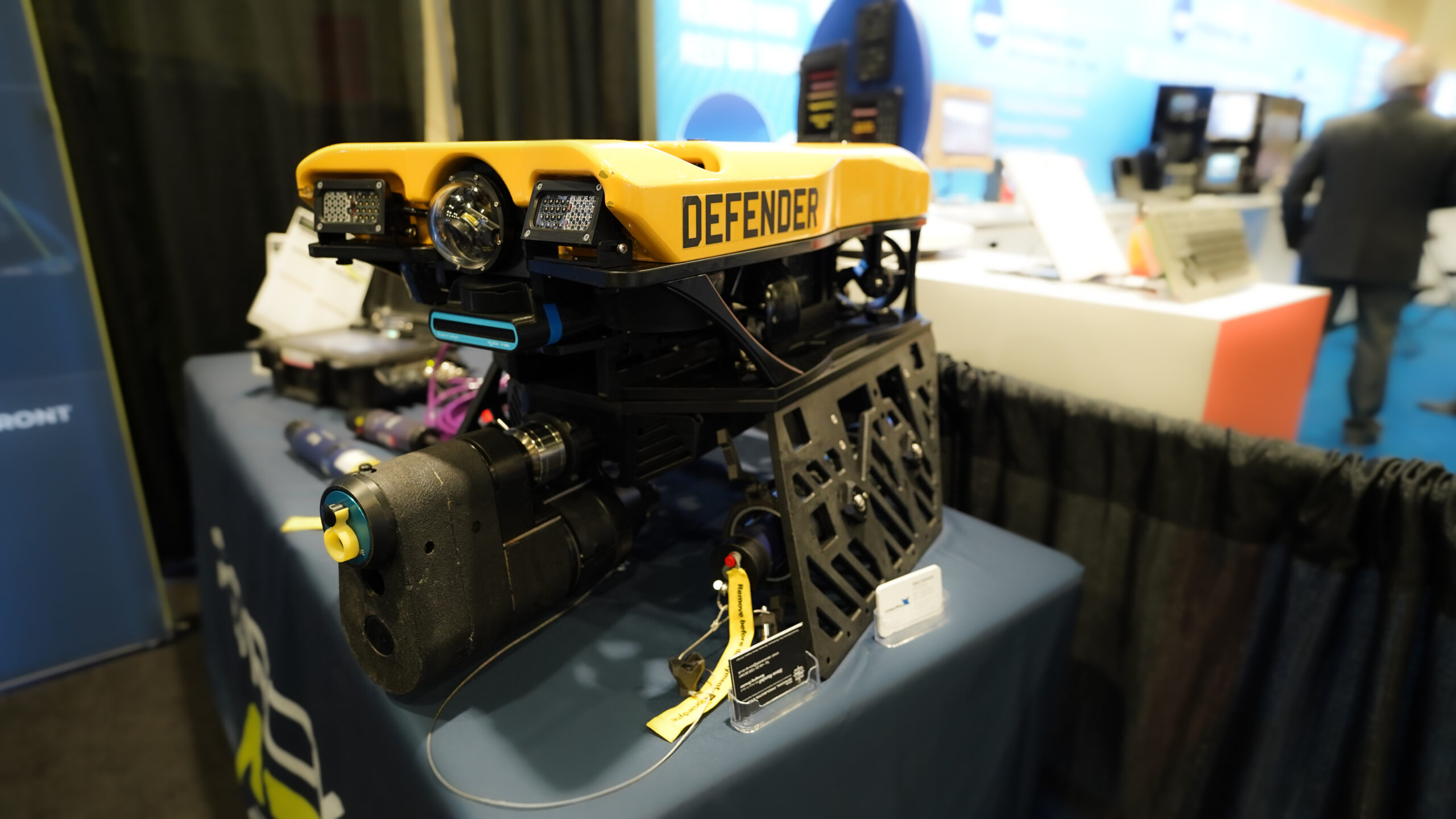
The Forcys Defender is a deep sea submersible meant to snuff out underwater explosives from a distance. (Brendon Smith / Breaking Defense)
US Secretary of the Navy Carlos Del Toro was the keynote speaker on day 2 of the 2024 Sea-Air-Space conference. Del Toro recently released a shipbuilding review that found serious delays for key navy programs. (Brendon Smith / Breaking Defense)
DroneShield's RfPatrol Mk2 is a compact mobile CUAS system that aims to provide highly effective low maintenance support. (Brendon Smith/Breaking Defense)
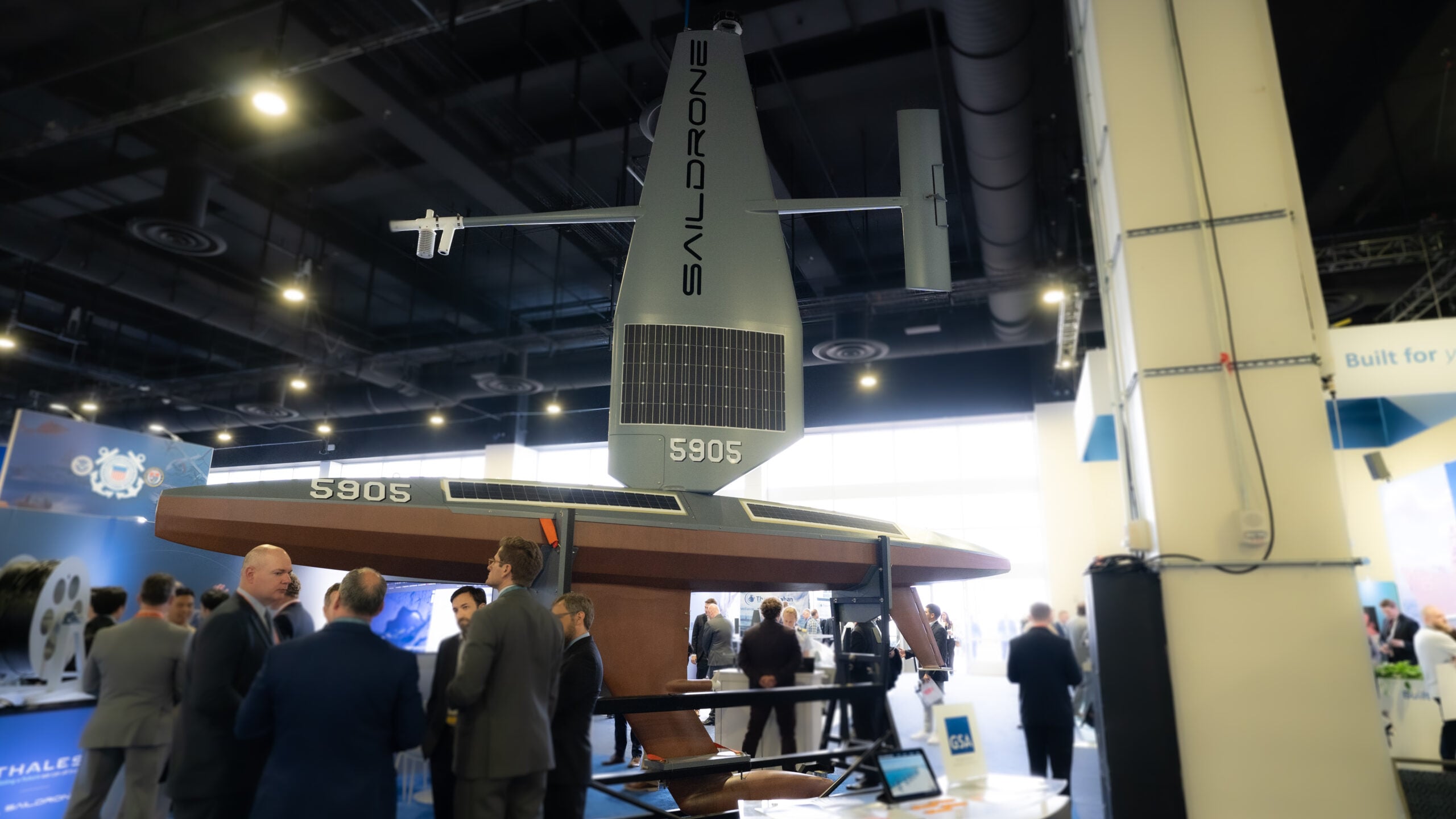
Surface drone maker Saildrone brought a model of its 5904 long range autonomous MDA/ISR solution. The company has seen its systems active in the waters of the Gulf in recent years. (Brendon Smith / Breaking Defense)
The show isn't just about big hardware. Defense Marine Solutions offers an "expansion of DMS' marine propulsion and propeller repair" with state of the art underwater support systems. (Brendon Smith / Breaking Defense)
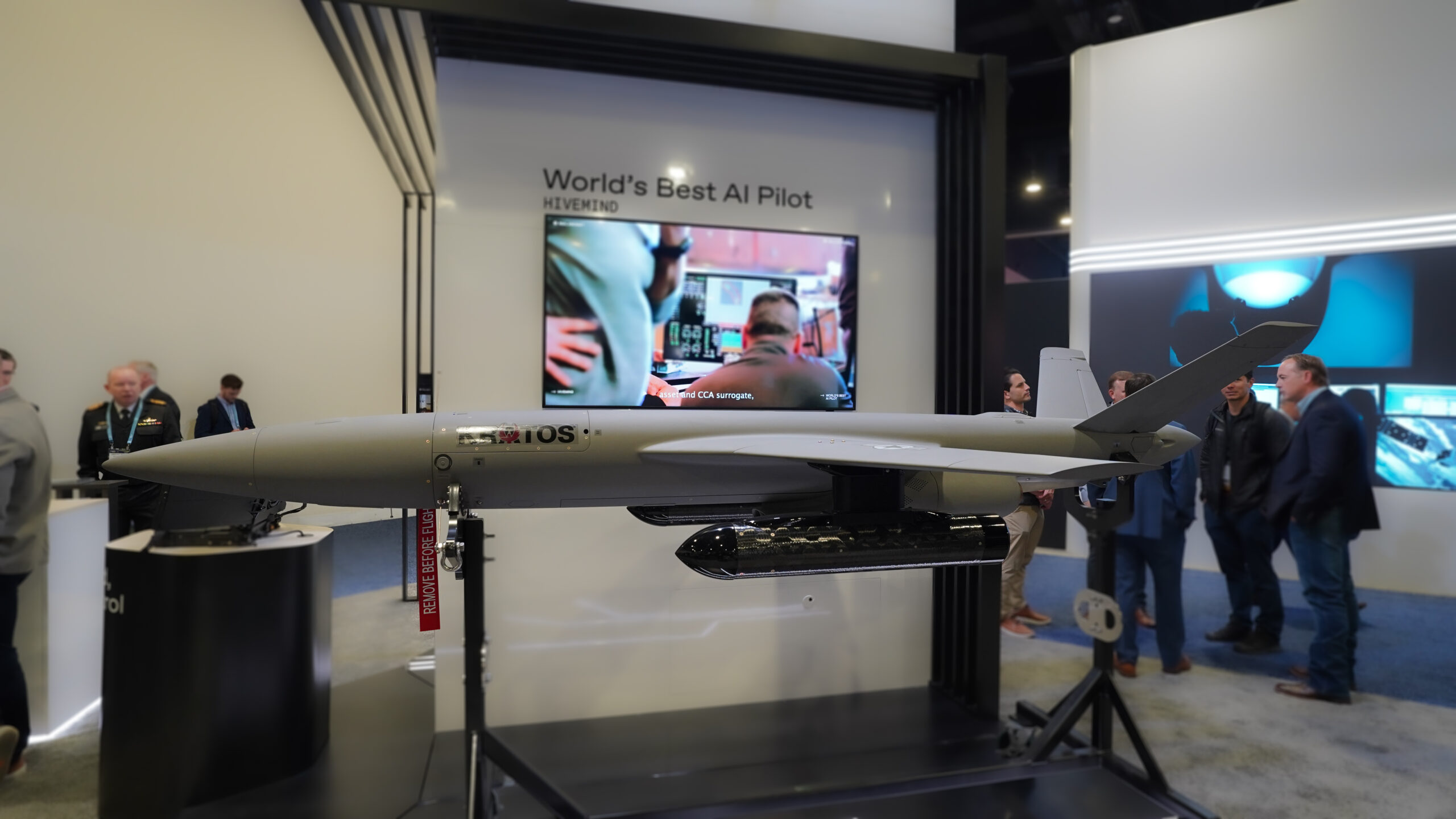
Kratos is teamed with Shield AI on this system, which the companies say will deliver state of the art AI drone piloting and the ability to complete mission objectives without gps, waypoints, or comms. (Brendon Smith / Breaking Defense)
A look at Northrop Grummans Autonomous VTOL Uncrewed Aircraft System at their booth. This was the first time the company brought the UAS to a show. (Brendon Smith / Breaking Defense)
Attendees gathered on the showroom floor for a packed NavAir leadership panel. (Brendon Smith / Breaking Defense)
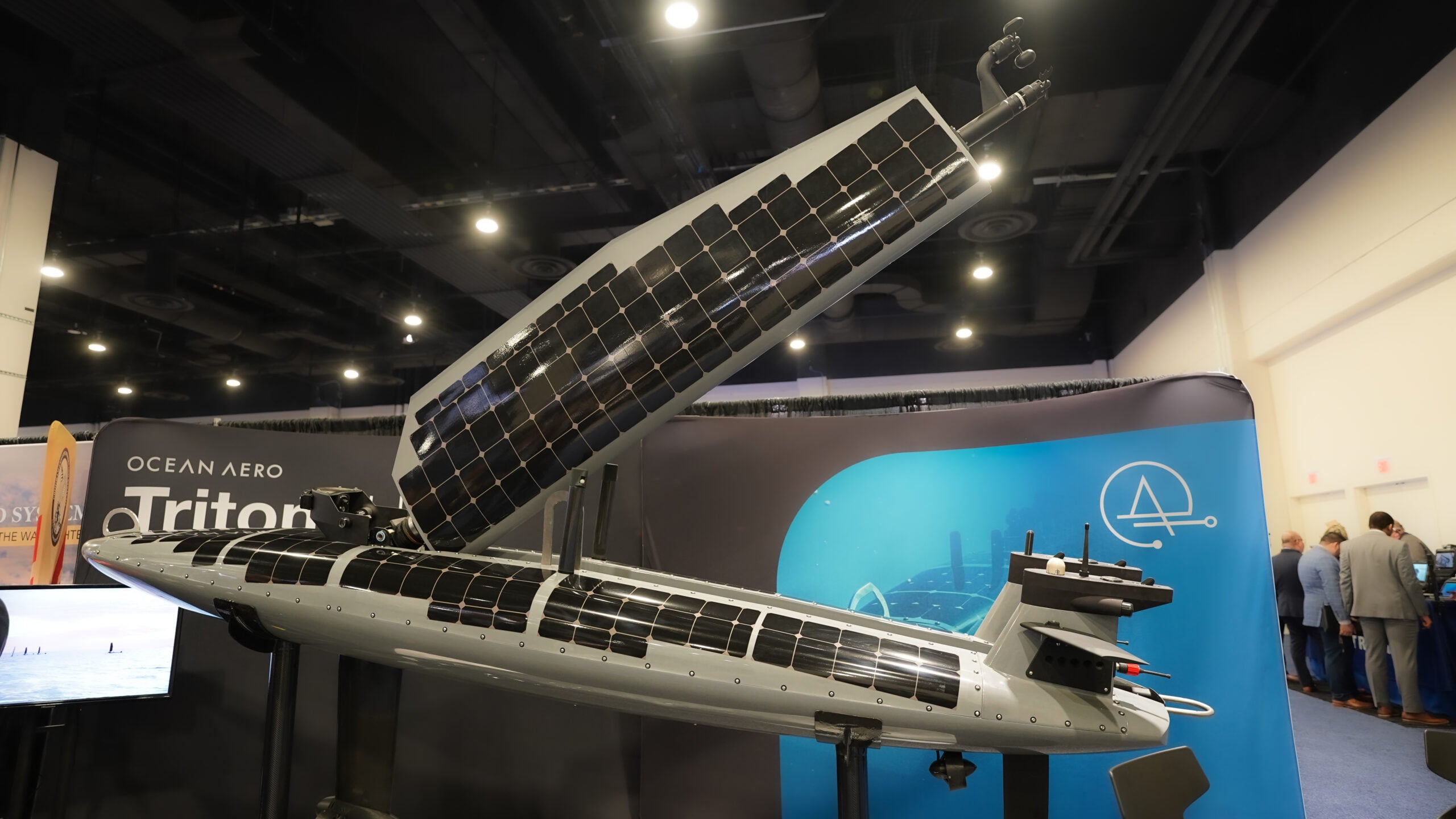
What the company says is a first of its kind fully solar unmanned submarine, Ocean Aeros "Triton" looks to allow longer duration surveys and other deep sea mission objectives. (Brendon Smith / Breaking Defense)
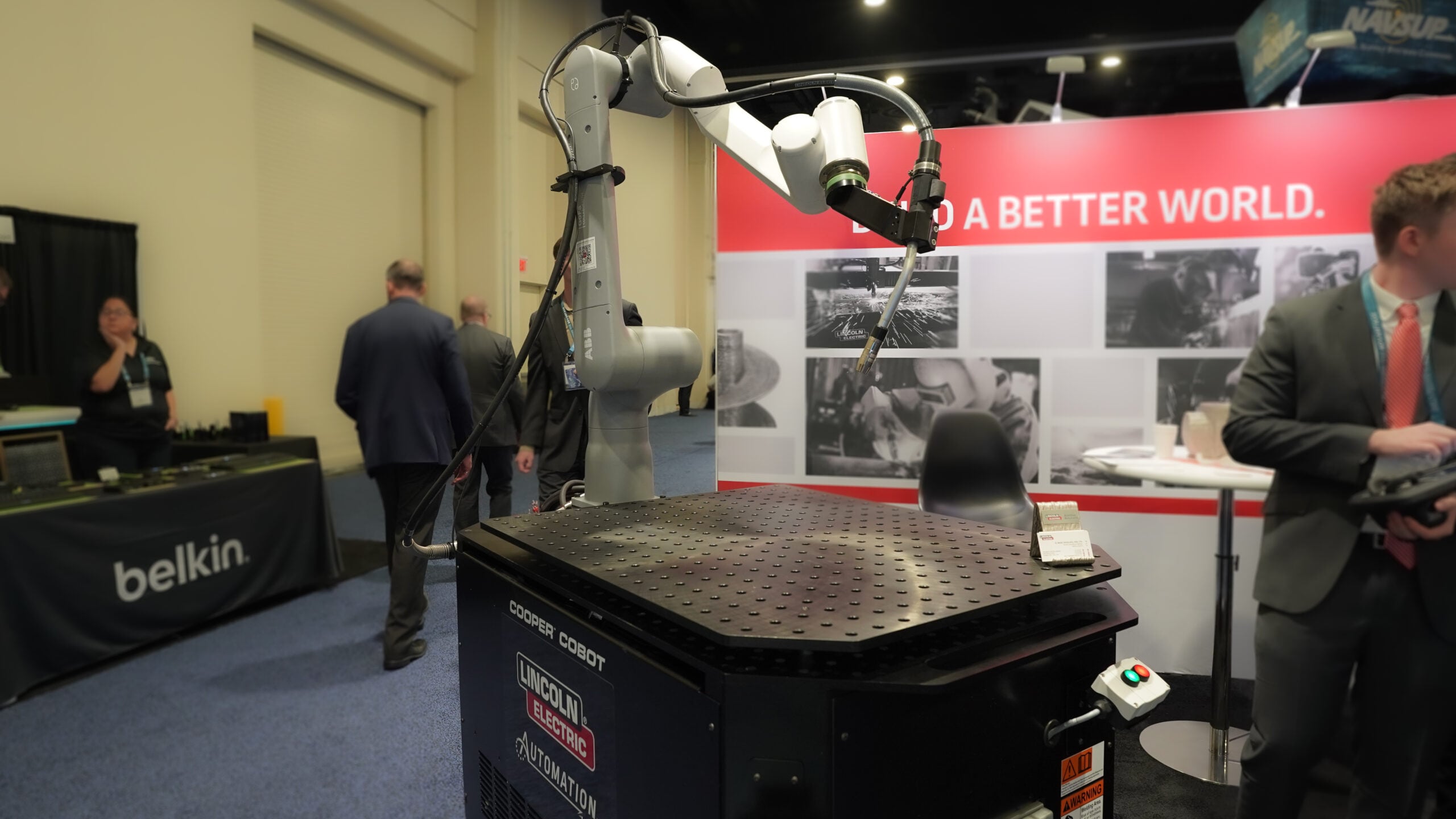
Lincoln electrics Cooper Cobot is meant to increase welding efficiency and accuracy. Acting as a productivity enhancing collaborator for its human counterparts. (Brendon Smith / Breaking Defense)
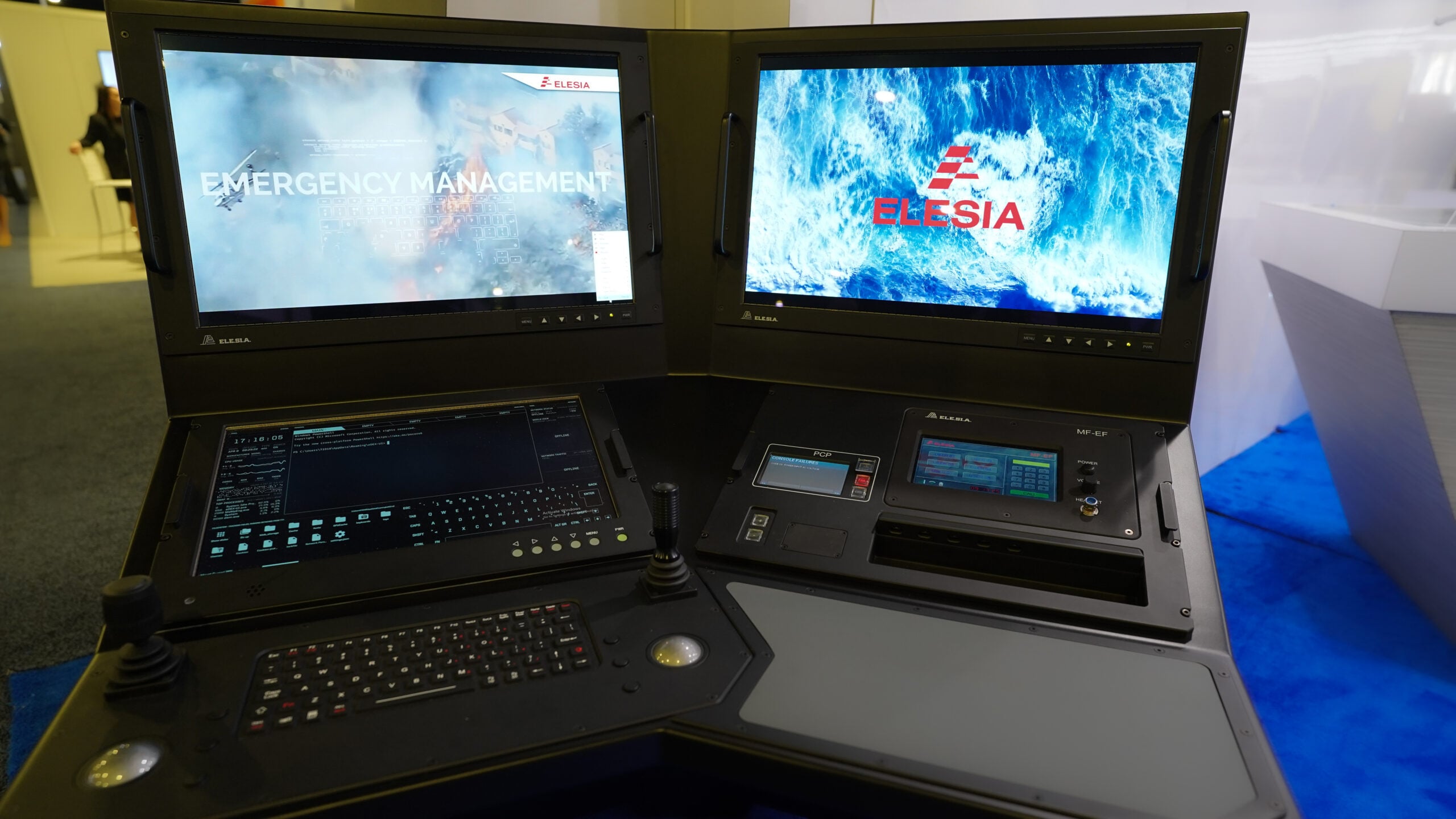
ELESIA's Single Operator MFC12 Console resists shock and vibrations on navy operations by "floating" within various shock absorbers. (Brendon Smith / Breaking Defense)
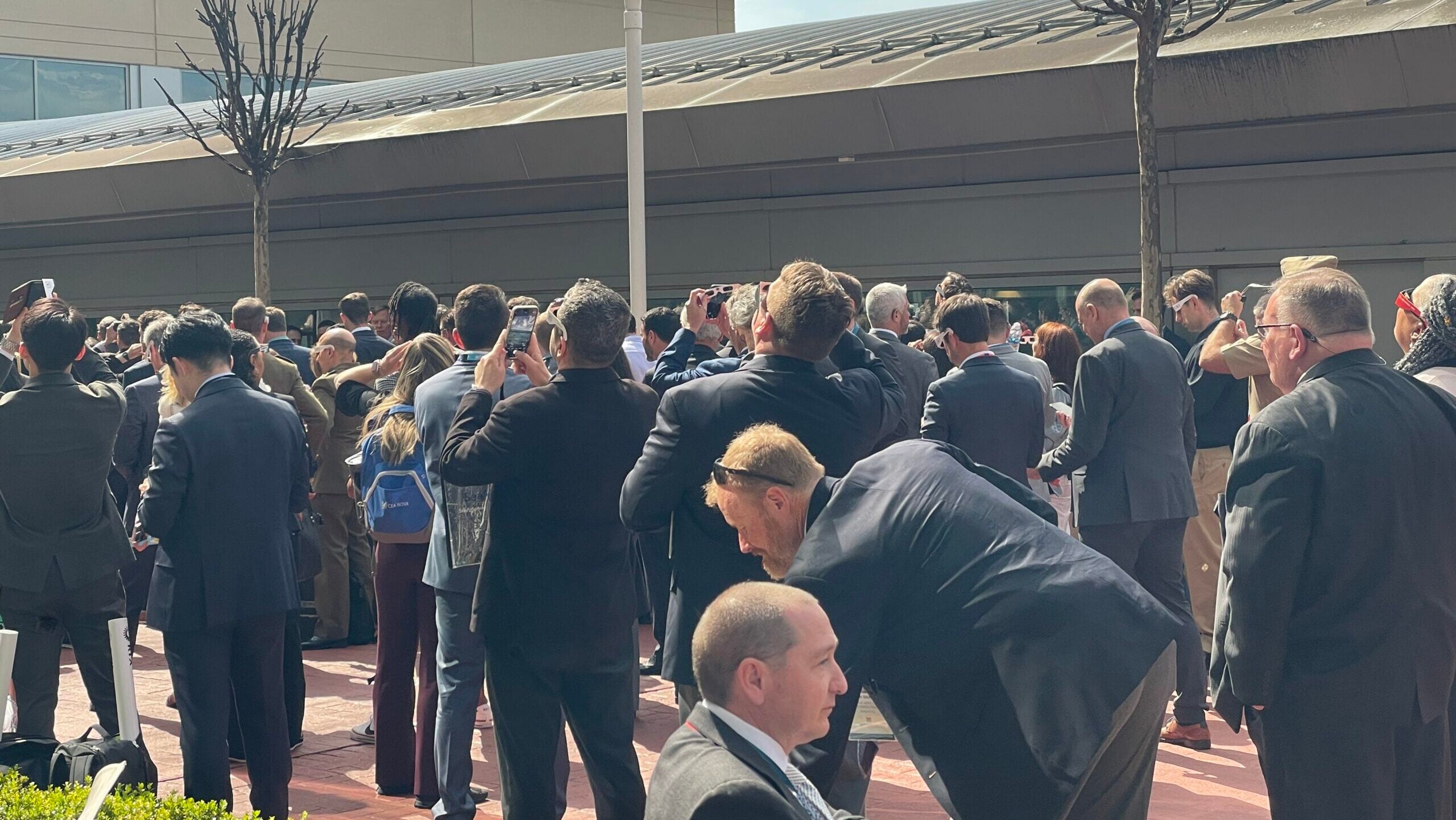
Attendees taking a break from the showroom floor to witness the solar eclipse Monday. (Brendon Smith / Breaking Defense)
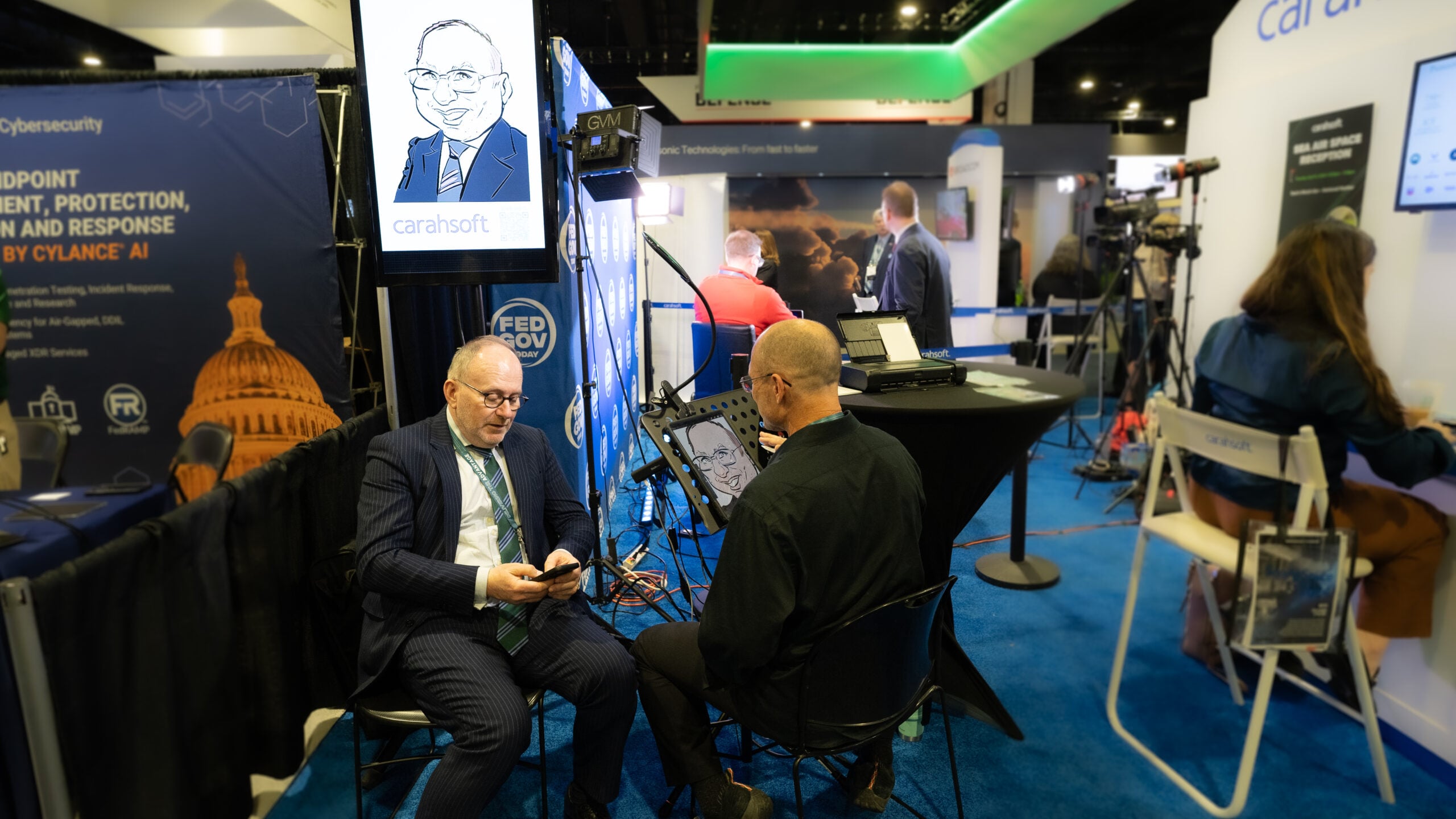
A cartoonist at the Carahsoft Booth was drawing caricatures of various attendees throughout the show. (Brendon Smith / Breaking Defense)
The Arete PILLS is what the defense firm says is a "streak tube imaging lidar" system with high resolution cameras and a AIRTRAC laser enhancing pulse rate frequency. (Brendon Smith / Breaking Defense)
ANDURIL's Roadrunner-M missle interceptor is "built for ground-based air defense that can rapidly launch, identify, intercept, and destroy" various aerial threats. (Brendon Smith / Breaking Defense)