Naval Warfare

As tariffs loom, HII’s Kastner confident in company’s American supply chain

“We’re obviously a little different. We buy and build in America,” said HII CEO Chris Kastner.

Chris Kastner Greets Interns at HI-PIC
HII President Chris Kastner greets interns at HI-PIC, Monday, Aug. 15, 2022, in Honolulu. (Photo by Marco Garcia courtesy of HII)

WASHINGTON — HII President Chris Kastner expressed confidence that the Trump administration’s tariffs on aluminum and steel will have little impact on his supply chain given the company’s reliance on buying and building domestically.

“We’re obviously a little different. We buy and build in America,” he told a group of reporters on Wednesday ahead of next week’s Sea Air Space exposition. “Ultimately, if tariffs bring more manufacturing into the United States and creates more jobs for manufacturing workers in the United States, I’m happy, because we need to broaden that base.”

The comments come as the White House has rolled out, and at times delayed, a variety of tariffs aimed at the European Union, China, Canada and Mexico, all of which have responded in kind with reciprocal actions.

Most concerning for shipbuilders is a 25 percent tariff on imports of steel and aluminum. In general, Congress has enacted laws that require the US Navy to “Buy American,” which limits the amount of foreign-made materials allowed to be used in the production of a Navy ship. But such laws do not insulate the supply chain from the changes in pricing American manufacturers may make in response to retaliatory tariffs from foreign countries.

When pressed, Kastner declined to comment on the secondary and tertiary effects of the tariffs, saying, “Tariffs is not a story for us. It just isn’t … It’s clear that there’s demand for manufacturing talent in the United States right now. If we can expand that, that’s only positive.”

During a Senate Armed Services Committee hearing in March, Brett Seidle, the Navy’s acting acquisition executive, said that half of the Navy’s aluminum and a third of its steel in 2023 was sourced from Canada.

“Clearly tariffs in those arenas could drive cost,” he told lawmakers at a March 25 hearing. “We are expecting impacts, but we don’t have our hands around yet just what those impacts are.”

When asked by Sen. Tim Kaine, D-Va., about the difficulty of shifting the service’s supply chain to 100 percent American “overnight,” Seidle repeated that the service doesn’t yet have a full grasp of the potential impacts.

“It would be hard,” Kaine added, responding to his own question.

For its part, the Canadian government on March 13 enacted a 25 percent reciprocal tariff on a “list of steel products worth $12.6 billion and aluminum products worth $3 billion, as well as additional imported goods worth $14.2 billion, for a total of $29.8 billion.”

“Canadian steel and aluminum make the U.S. stronger, and these unjustified tariffs will raise prices for everyone and threaten jobs on both sides of the border,” said Mélanie Joly, Canadian minister of foreign affairs.

PHOTOS: Sea Air Space 2025

PHOTOS: Sea Air Space 2025

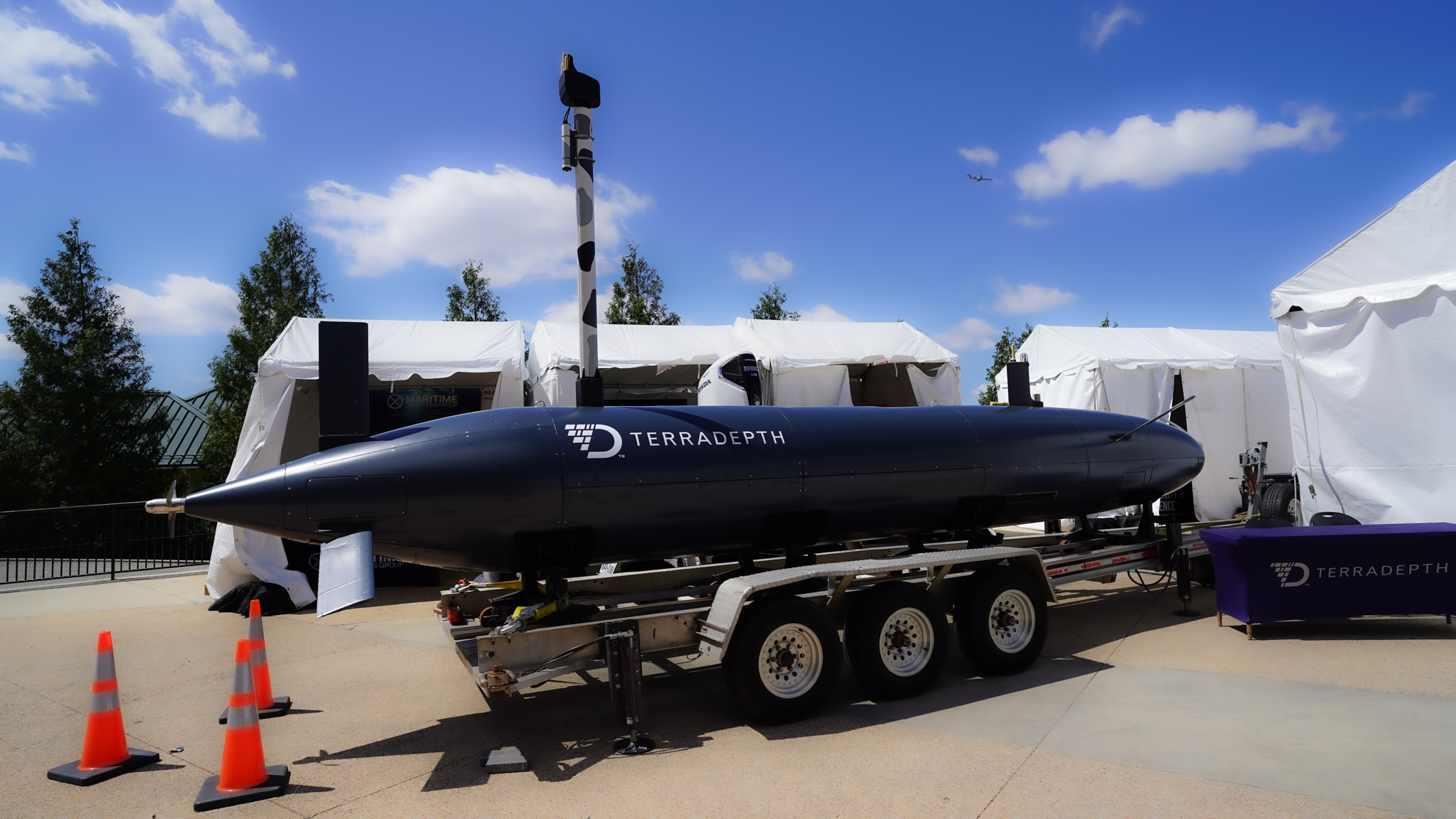
The Terradepth booth located outside on the Sea Air Space plaza showcased what it called its autonomous underwater submarine and Absolute Ocean platform solution. According to Terradepth, "Absolute Ocean is a secure seabed data management platform designed to enable real-time access, collaboration, and analysis of subsea data." (Brendon Smith / Breaking Defense)
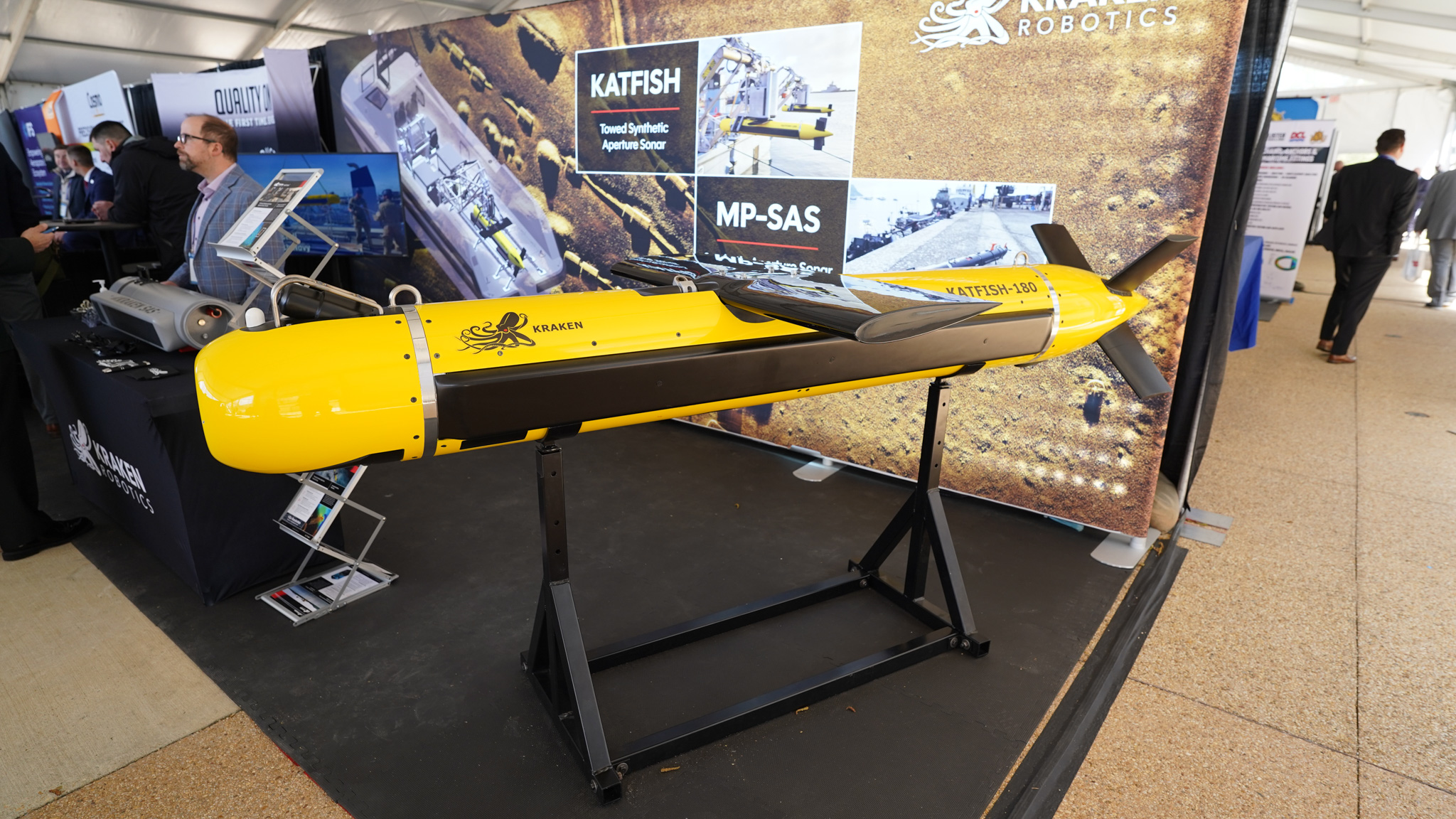
Spotted at Sea Air Space 2025, Kracken's Katfish 180 is a "high speed, actively stabilized Synthetic Aperture Sonar towfish that operates at speeds up to 10 knots." (Brendon Smith / Breaking Defense)
Kongsberg was at Sea Air Space 2025, presenting a 1-1 replica of the Joint Strike Missile. The Norwegian firm says it is designed to deal with threats both on land and at sea. (Brendon Smith / Breaking Defense)
Leidos' latest unveiling at Sea Air Space 2025, the SEA DART UUV is an affordable underwater vessel that doesn't compromise on capability. It is set to tackle a variety of mission sets from military operations to scientific pursuits, the company said. (Brendon Smith / Breaking Defense)
BAE Systems BOFORS 40 MK 4 Naval Gun System can "go from warning to destruction in less than 0.5 seconds." The company said weapon, on display at Sea Air Space 2025, is automatically loaded and can be both remotely and locally controlled. (Brendon Smith / Breaking Defense)
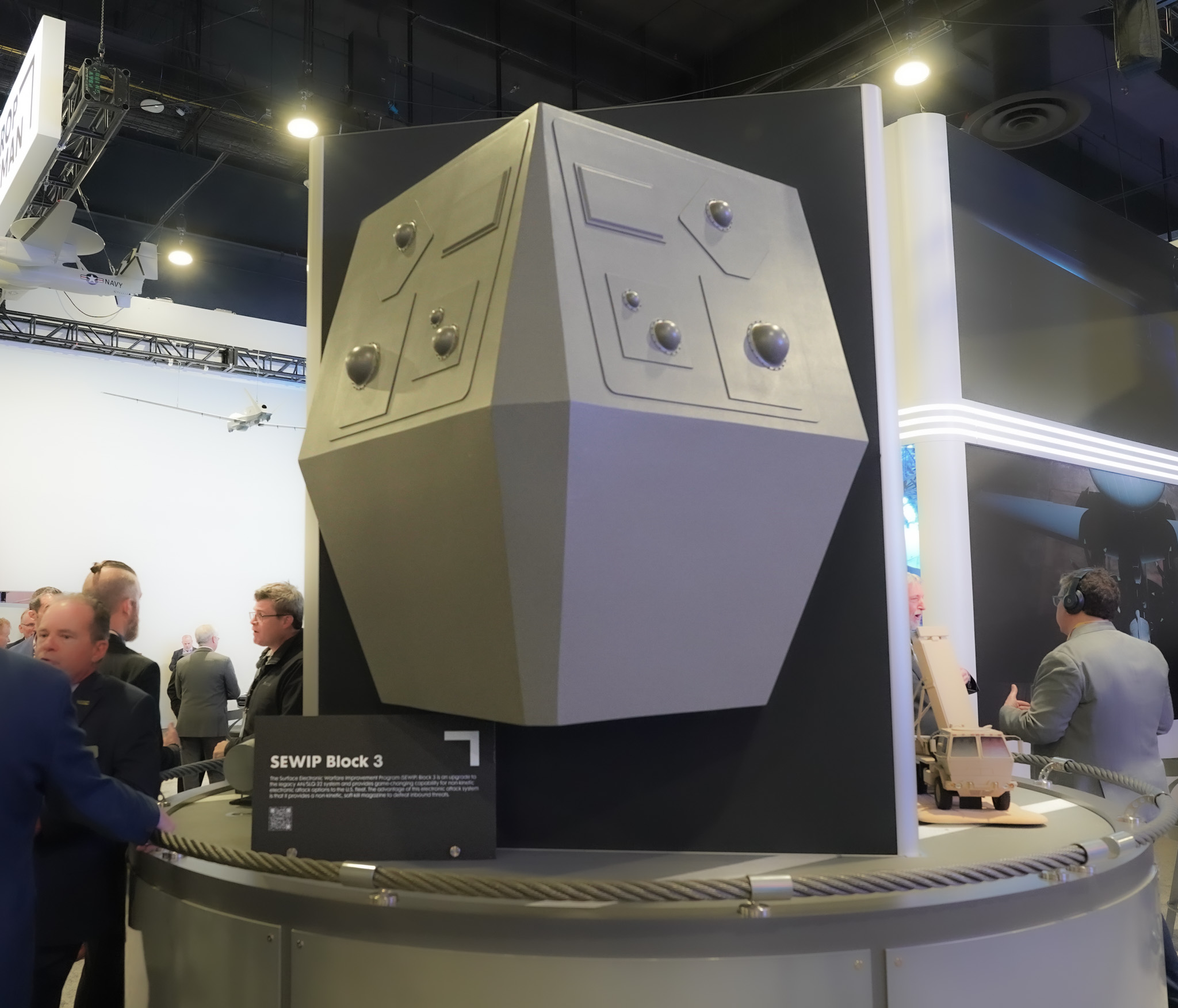
Northrop Grumman said its SEWIP BLOCK 3, on display at Sea Air Space 2025, iterates on previous versions bringing electronic attack capabilities to defend against anti ship missiles and offers hopes of future proofing for integration with AI and machine learning. (Brendon Smith / Breaking Defense)
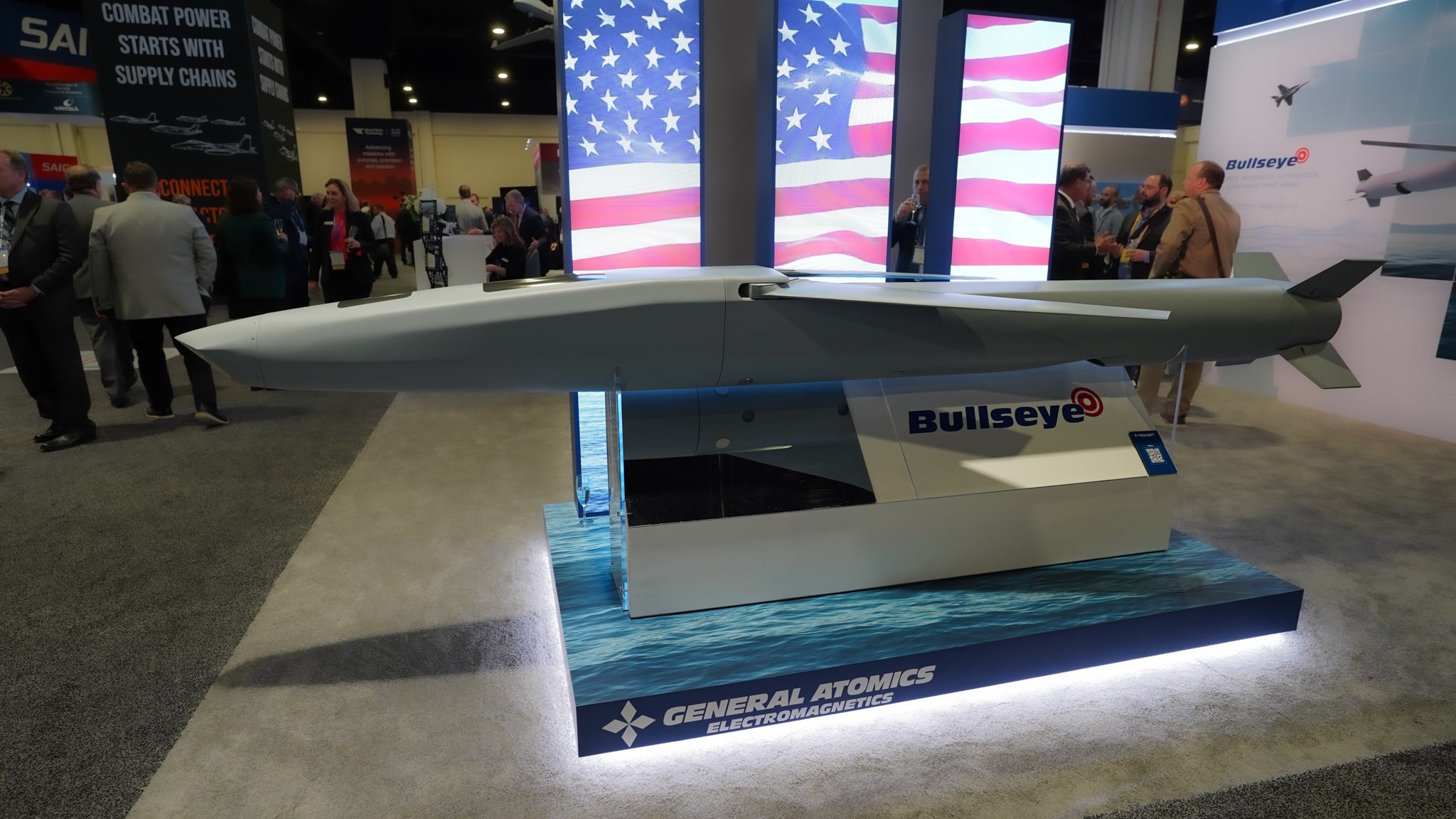
A surprise announcement was made by General Atomics on Day 1 of Sea Air Space 2025 regarding their new long range precision guided Bullseye Missile, a partnership with Israel Defense contractor Rafael. (Brendon Smith / Breaking Defense)
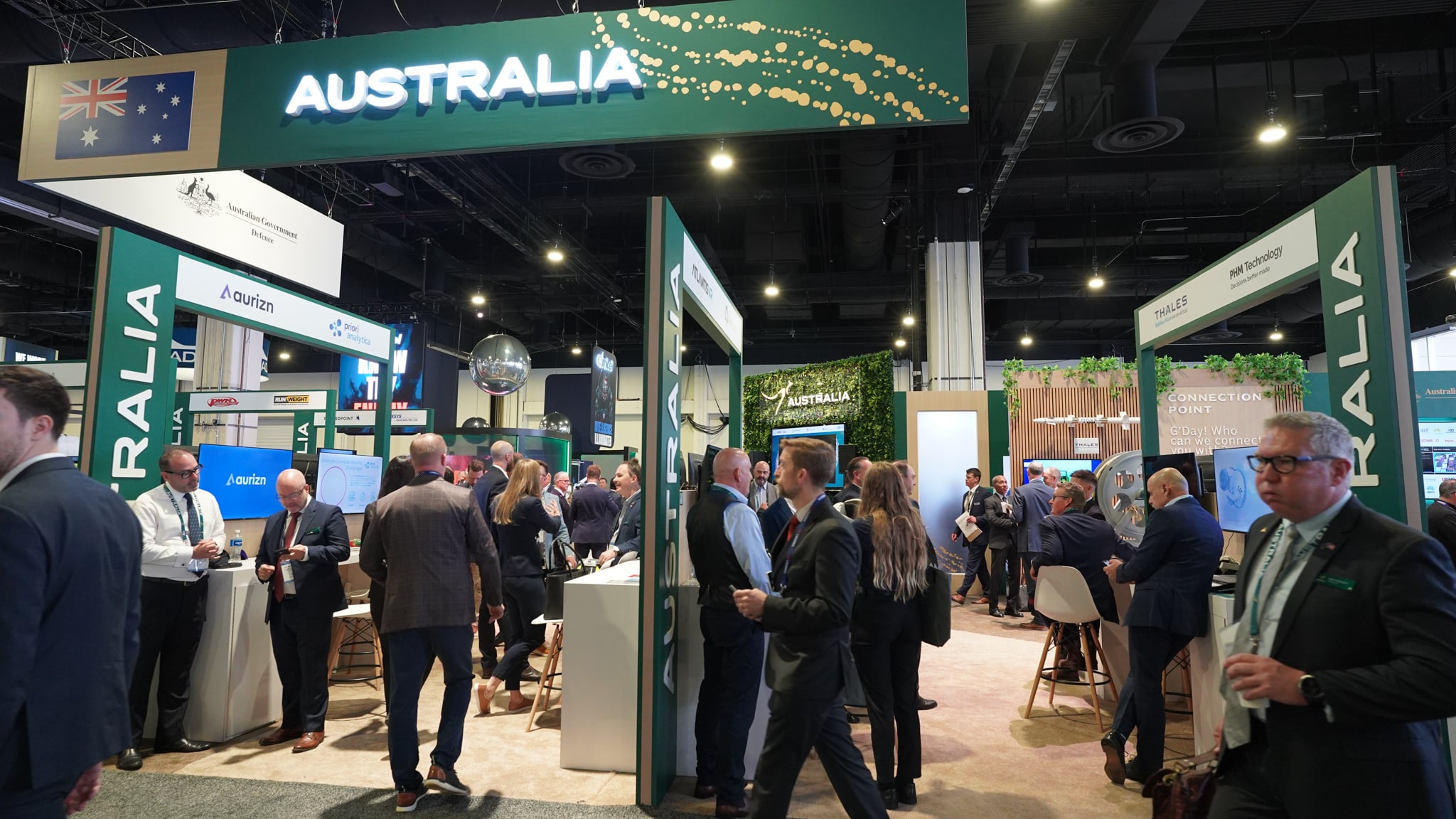
One of the busiest areas of the floor at Sea Air Space 2025 belonged to the Australian contingent at a time of uncertainty in international collaboration. (Brendon Smith / Breaking Defense)
Shield AI shows off its V Bat vertical-takeoff unmanned system at Sea Air Space 2025. (Brendon Smith / Breaking Defense)
A quadcopter unmanned aerial vehicle, the TRV-150c, sits on display at Maryland-based Survice Engineering Company's booth at Sea Air Space 2025. (Brendon Smith / Breaking Defense)
Ahead of Sea Air Space 2025, Anduril announced a new unmanned underwater system dubbed Copperhead. (Brendon Smith / Breaking Defense)
At Leonardo's booth at Sea Air Space 2025 sits a radar from its Gabbiano family of systems. (Brendon Smith / Breaking Defense)
Unmanned tech company firm Saildrone shows off its Voyager USV at Sea Air Space 2025. (Brendon Smith / Breaking Defense)
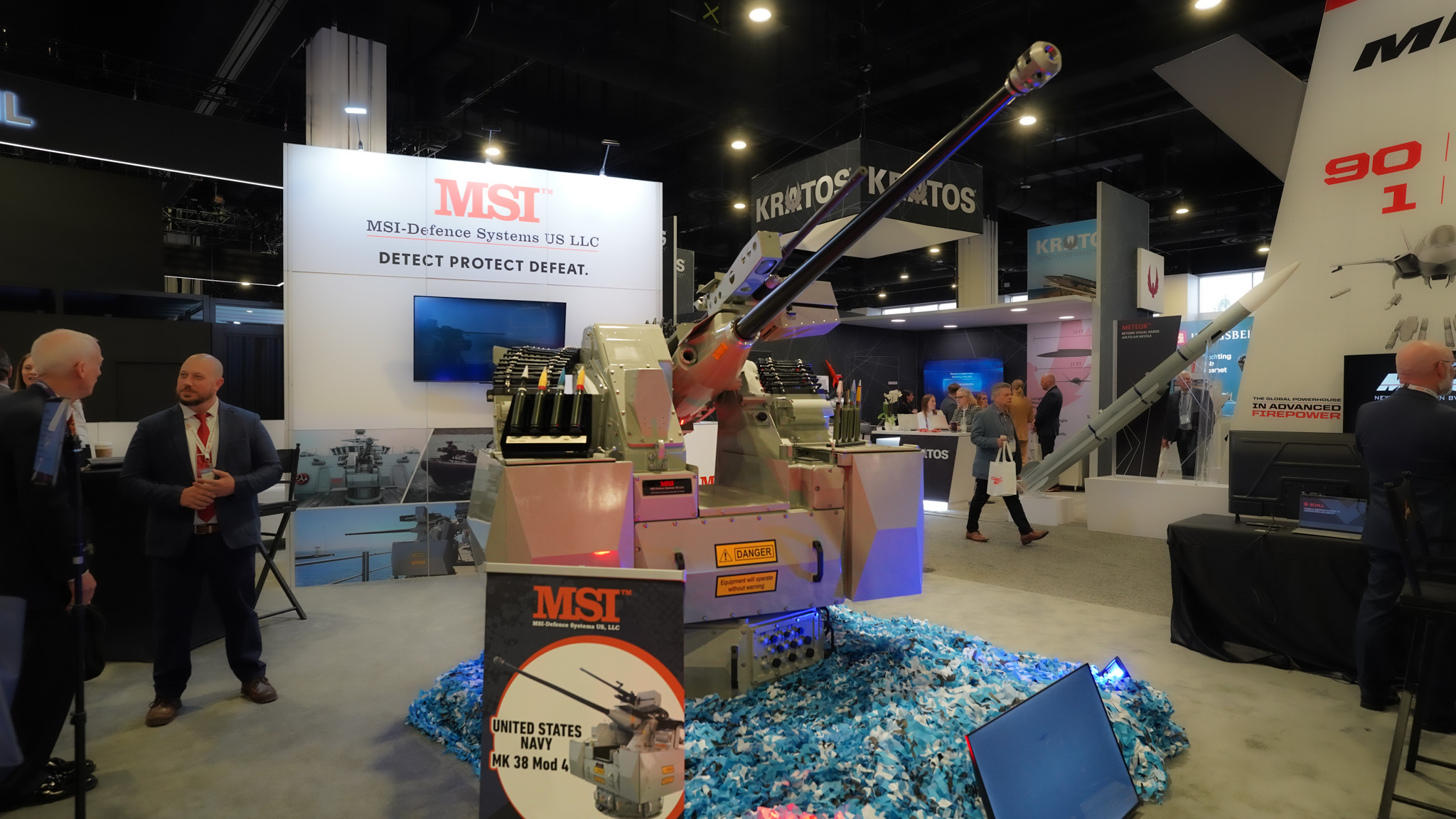
The American arm of British defense MSI-Defence Systems attended Sea Air Space 2025, displaying its MK38 automated naval gun, which is in currently in service with the Navy. (Brendon Smith / Breaking Defense)
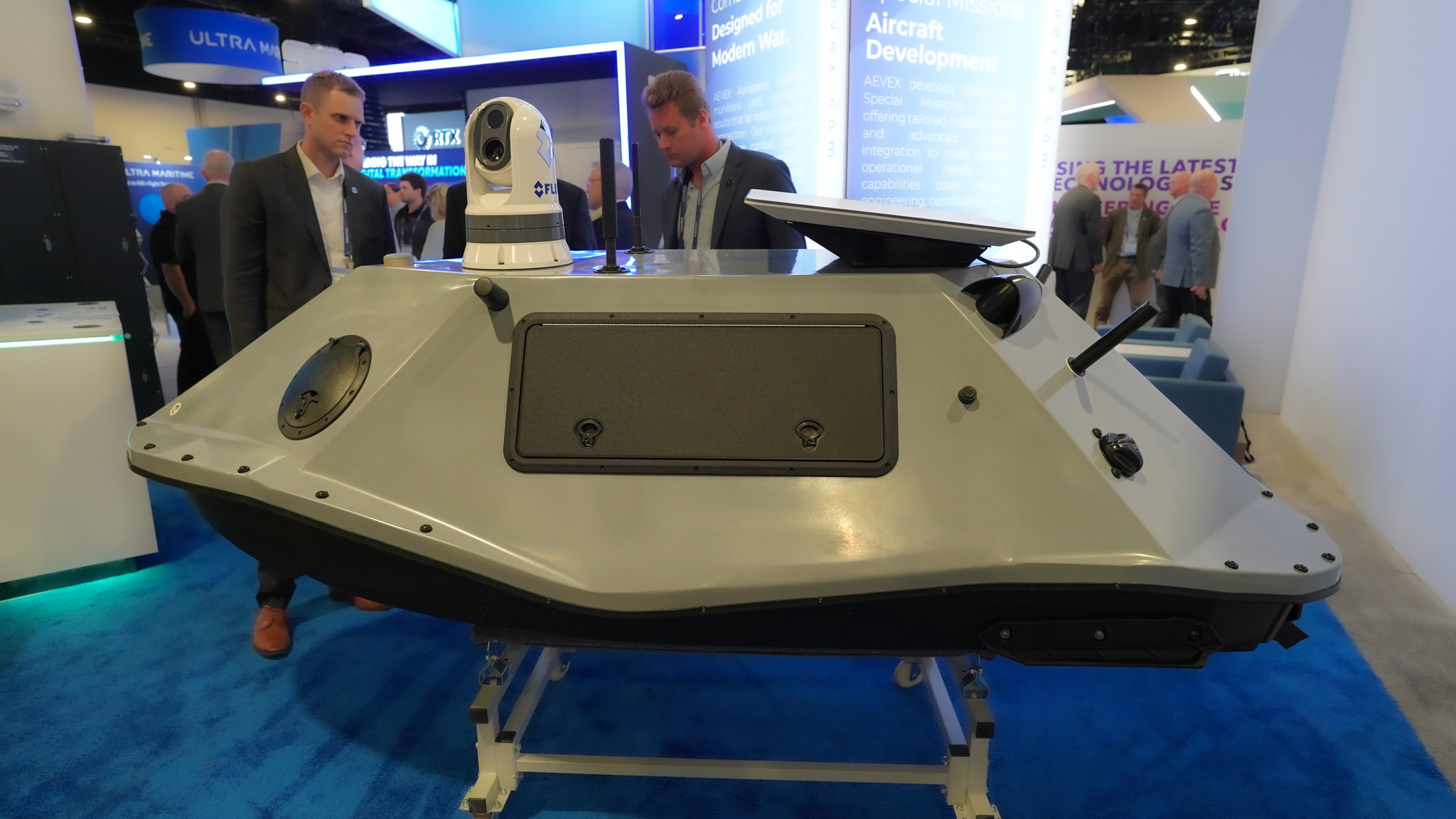
Attendees at Sea Air Space 2025 may pass by the curiously, almost fish-like shape of Aevex's Mako Lite, what the company calls "a rugged, low-visibility" unmanned surface vessel. (Brendon Smith / Breaking Defense)