Naval Warfare

Department of the Navy CIO ‘looking forward’ to working with DOGE on software modernization

"I think that at its essence, what the DOGE wants to do is become more efficient, and that is core to how we view our own portfolio," DON CIO Jane Rathbun told Breaking Defense.

DoDIIS Worldwide Conference 2023 Day 3
DoDIIS 2023 Ms. Jane Rathbun (Photo by Petty Officer 2nd Class Wade Costin)

SEA AIR SPACE 2025 — The Department of the Navy is looking forward to working with Elon Musk’s Department of Government Efficiency (DOGE) in making its software practices more efficient, the DON’s chief information officer said Tuesday. 

According to Jane Rathbun, DOGE recently began working with the DoD’s CIO to cut down software programs and processes across the department that it deemed unnecessary. As far as she knows, no DON programs have been cut yet, though she said she’s hopeful that DOGE’s work will help the Navy to reach its goals related to software modernization and effectiveness. 

“I think that at its essence, what the DOGE wants to do is become more efficient, and that is core to how we view our own portfolio,” Rathburn told Breaking Defense on the sidelines of the Sea Air Space conference Tuesday. “We really would like to see them help us out, solve problems and get on the right path, and so I’m looking forward to engagements on that.” 

Rathbun said cutting down tedious and redundant software acquisition processes and programs is something she’s long been interested in doing, however, she has not had the resources. 

“Are we buying effectively? Are we utilizing the things that we’re buying effectively? There’s always opportunity for improvement, and I would say that’s an area in my portfolio that I want to focus on, but have not had a lot of people to do that, which is something that has always bothered me, and I want to be doing better,” she said during a panel discussion. 

Rathbun said that one way that the DON hopes to achieve the efficiency DOGE is looking for is through the use of commercial off the shelf (COTS) software — software that’s made by commercial companies and is ready to use with no customization needed. It often has capabilities that allow for built-in software updates and has become increasingly popular across the military as the department attempts to catch up to the commercial industry’s modern software practices. 

Utilizing already available software tools cuts down the time the DON wastes on customizing software, a practice that Rathburn is committing to ending. 

“No, we’re not customizing. We’re going to use it as it was intended to be used. If we don’t do that, we will be in this state again of having really old software that hasn’t kept pace with what’s happening in the industry,” she said. “That is costly and that is unsustainable.” 

Meanwhile, Lt. Gen. Melvin “Jerry” Carter, deputy commandant of information for the Marine Corps, said the DON needs to cut back in some areas in order to acquire more pressing capabilities. 

“I would just say looking inward, we had the conversation within the service about our program of records. What I’m talking about is if they are not meeting the mail, and we know that there is a commercial solution out there that can help us go faster, in my opinion, we should have the courage to stop doing some things and invest in other things,” he said during the panel.  

Rathbun pointed to the fact that the Pentagon spends over $5 billion on software annually, which is not much compared to how much it spends on hardware and advanced weapons systems, but department leaders should still try to get the “biggest bang for [their] buck out of that consumption,” she said.

PHOTOS: Sea Air Space 2025

PHOTOS: Sea Air Space 2025

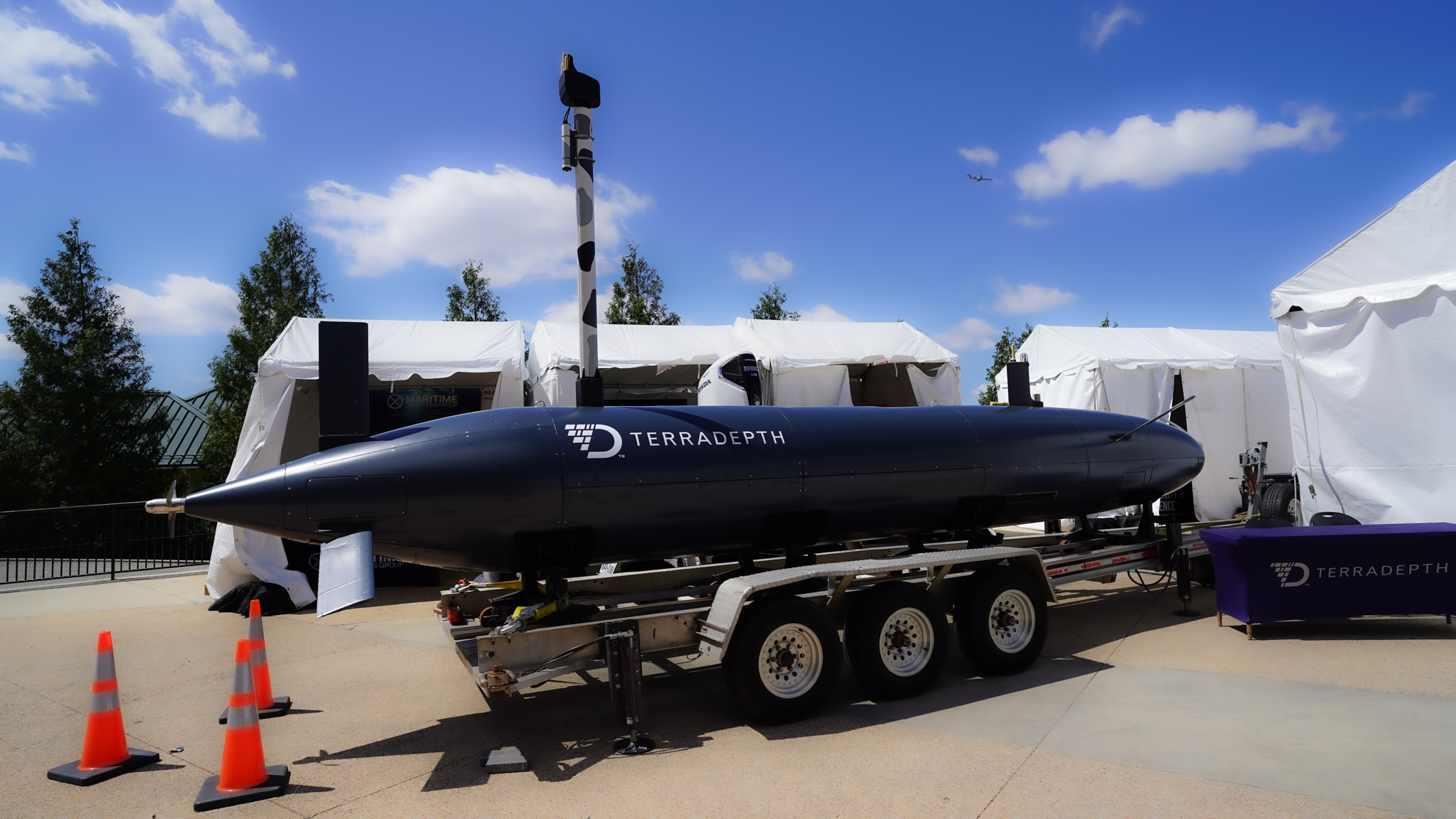
The Terradepth booth located outside on the Sea Air Space plaza showcased what it called its autonomous underwater submarine and Absolute Ocean platform solution. According to Terradepth, "Absolute Ocean is a secure seabed data management platform designed to enable real-time access, collaboration, and analysis of subsea data." (Brendon Smith / Breaking Defense)
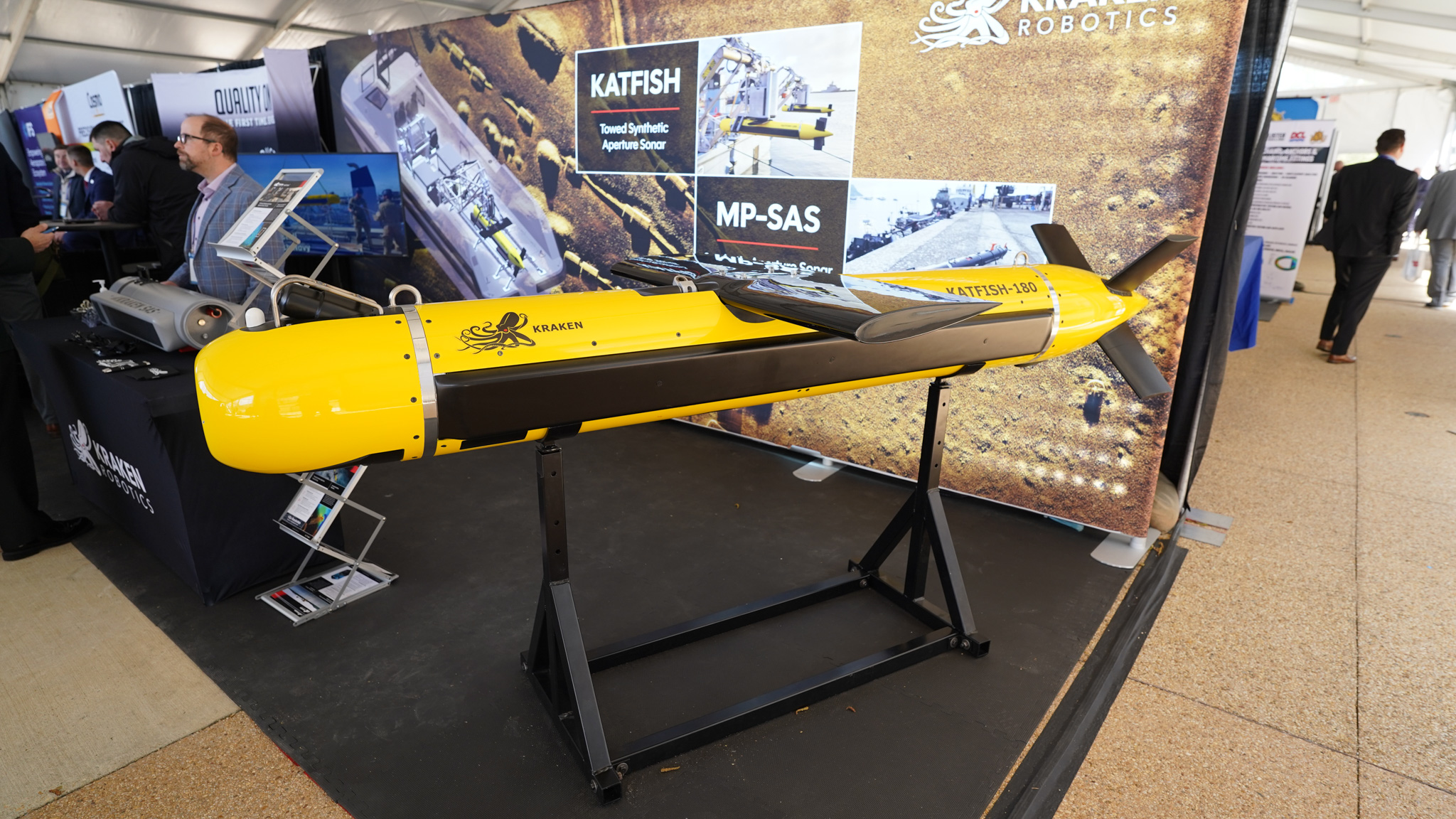
Spotted at Sea Air Space 2025, Kracken's Katfish 180 is a "high speed, actively stabilized Synthetic Aperture Sonar towfish that operates at speeds up to 10 knots." (Brendon Smith / Breaking Defense)
Kongsberg was at Sea Air Space 2025, presenting a 1-1 replica of the Joint Strike Missile. The Norwegian firm says it is designed to deal with threats both on land and at sea. (Brendon Smith / Breaking Defense)
Leidos' latest unveiling at Sea Air Space 2025, the SEA DART UUV is an affordable underwater vessel that doesn't compromise on capability. It is set to tackle a variety of mission sets from military operations to scientific pursuits, the company said. (Brendon Smith / Breaking Defense)
BAE Systems BOFORS 40 MK 4 Naval Gun System can "go from warning to destruction in less than 0.5 seconds." The company said weapon, on display at Sea Air Space 2025, is automatically loaded and can be both remotely and locally controlled. (Brendon Smith / Breaking Defense)
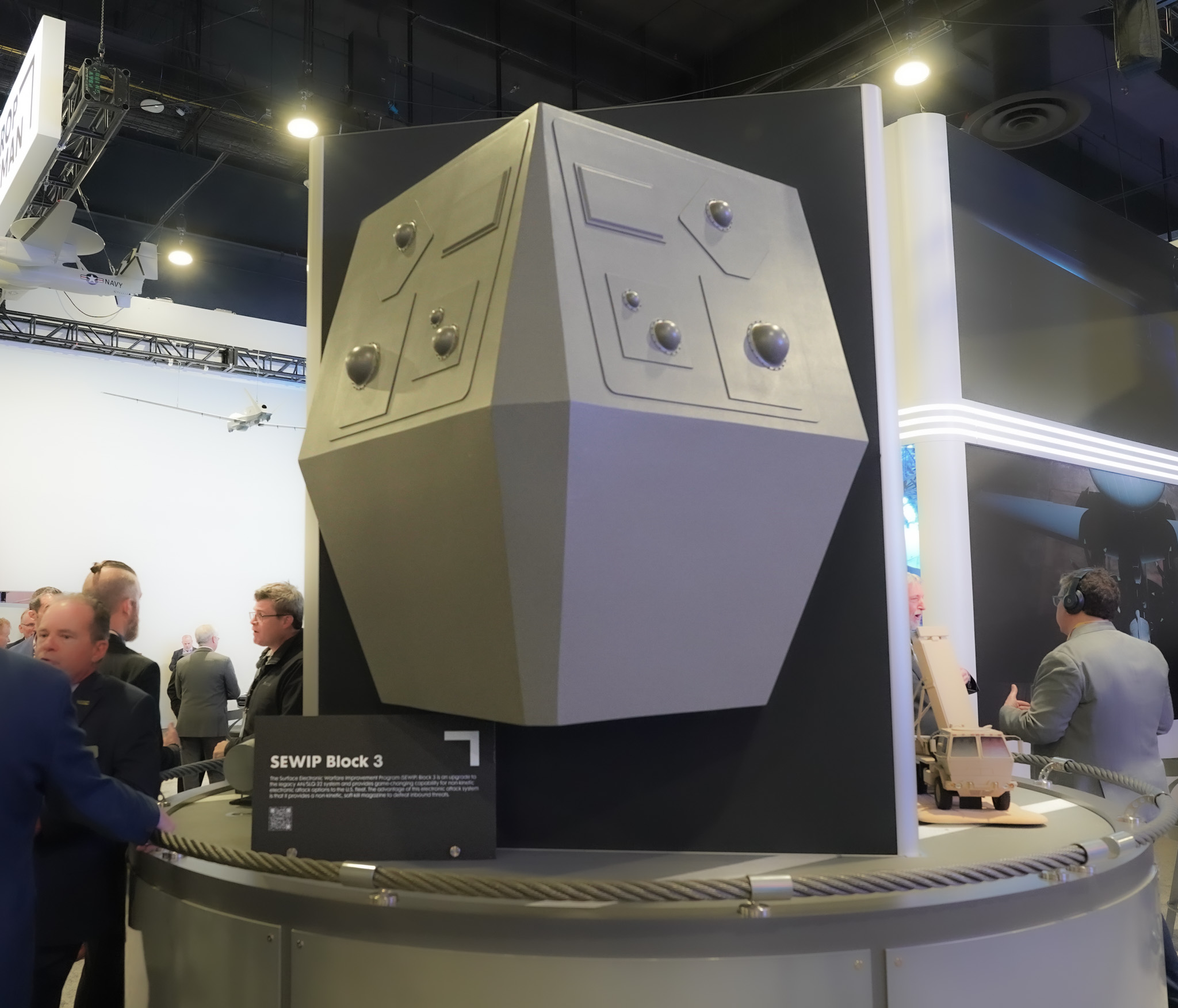
Northrop Grumman said its SEWIP BLOCK 3, on display at Sea Air Space 2025, iterates on previous versions bringing electronic attack capabilities to defend against anti ship missiles and offers hopes of future proofing for integration with AI and machine learning. (Brendon Smith / Breaking Defense)
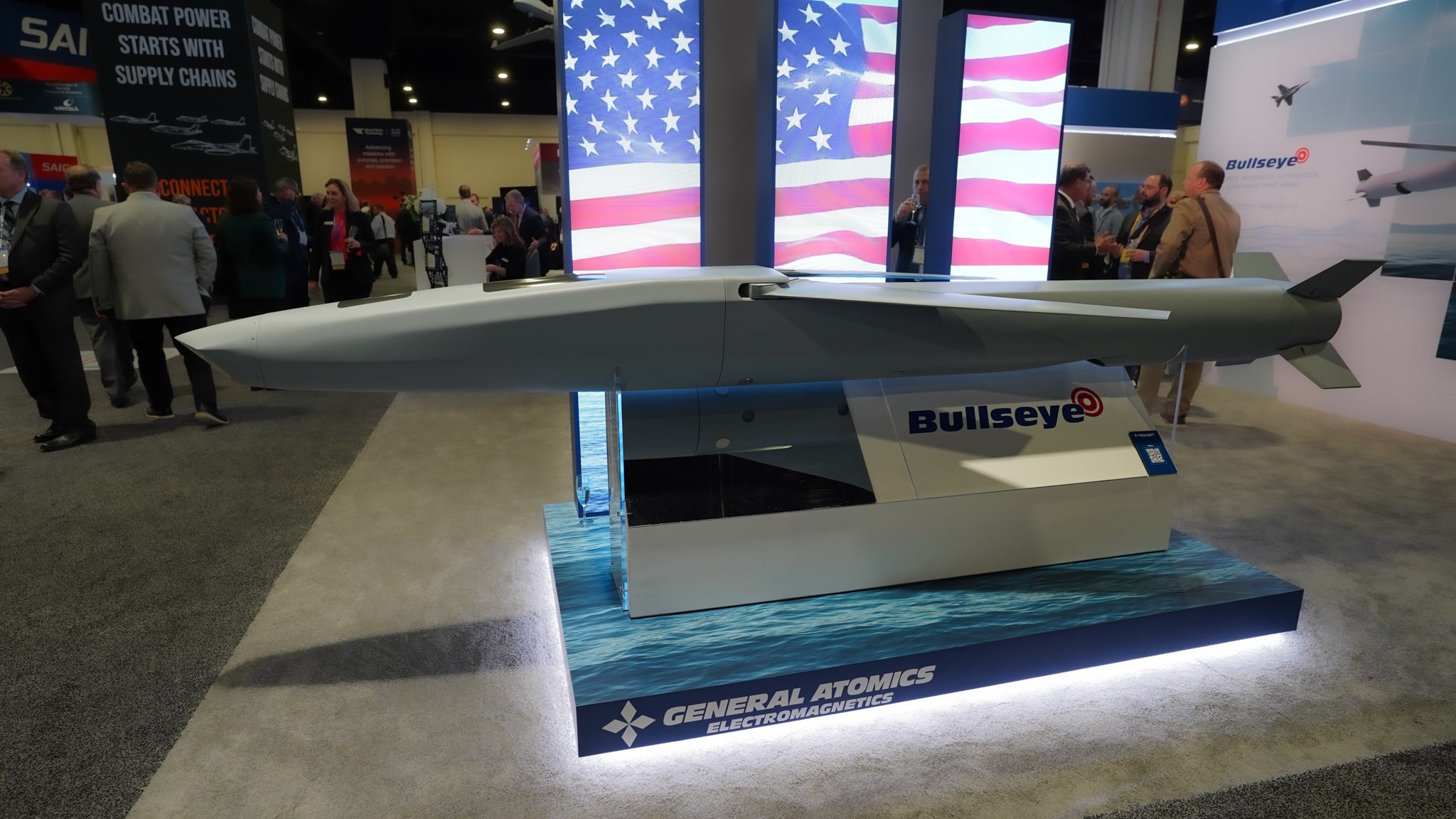
A surprise announcement was made by General Atomics on Day 1 of Sea Air Space 2025 regarding their new long range precision guided Bullseye Missile, a partnership with Israel Defense contractor Rafael. (Brendon Smith / Breaking Defense)
One of the busiest areas of the floor at Sea Air Space 2025 belonged to the Australian contingent at a time of uncertainty in international collaboration. (Brendon Smith / Breaking Defense)
Shield AI shows off its V Bat vertical-takeoff unmanned system at Sea Air Space 2025. (Brendon Smith / Breaking Defense)
A quadcopter unmanned aerial vehicle, the TRV-150c, sits on display at Maryland-based Survice Engineering Company's booth at Sea Air Space 2025. (Brendon Smith / Breaking Defense)
Ahead of Sea Air Space 2025, Anduril announced a new unmanned underwater system dubbed Copperhead. (Brendon Smith / Breaking Defense)
At Leonardo's booth at Sea Air Space 2025 sits a radar from its Gabbiano family of systems. (Brendon Smith / Breaking Defense)
Unmanned tech company firm Saildrone shows off its Voyager USV at Sea Air Space 2025. (Brendon Smith / Breaking Defense)
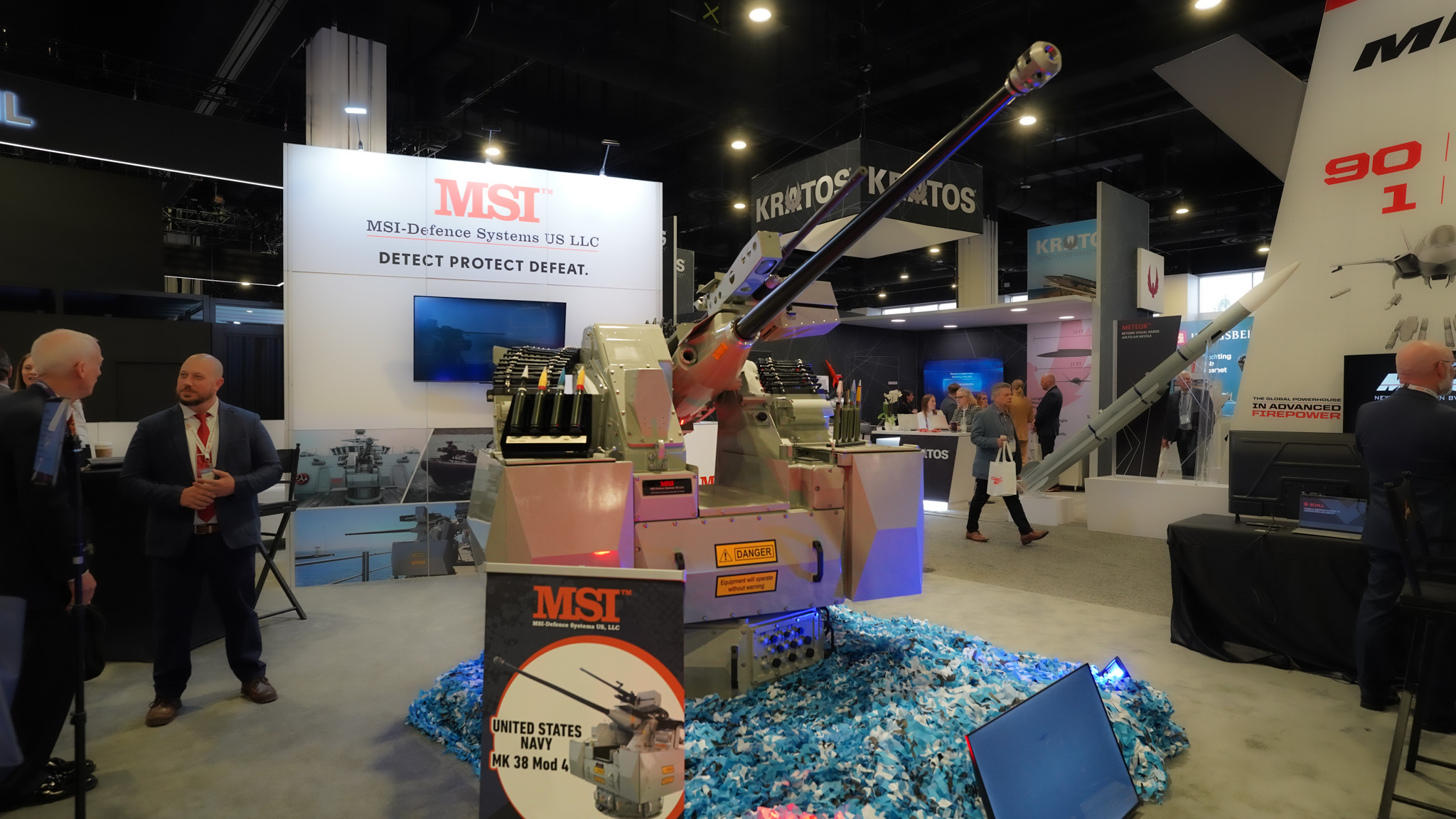
The American arm of British defense MSI-Defence Systems attended Sea Air Space 2025, displaying its MK38 automated naval gun, which is in currently in service with the Navy. (Brendon Smith / Breaking Defense)
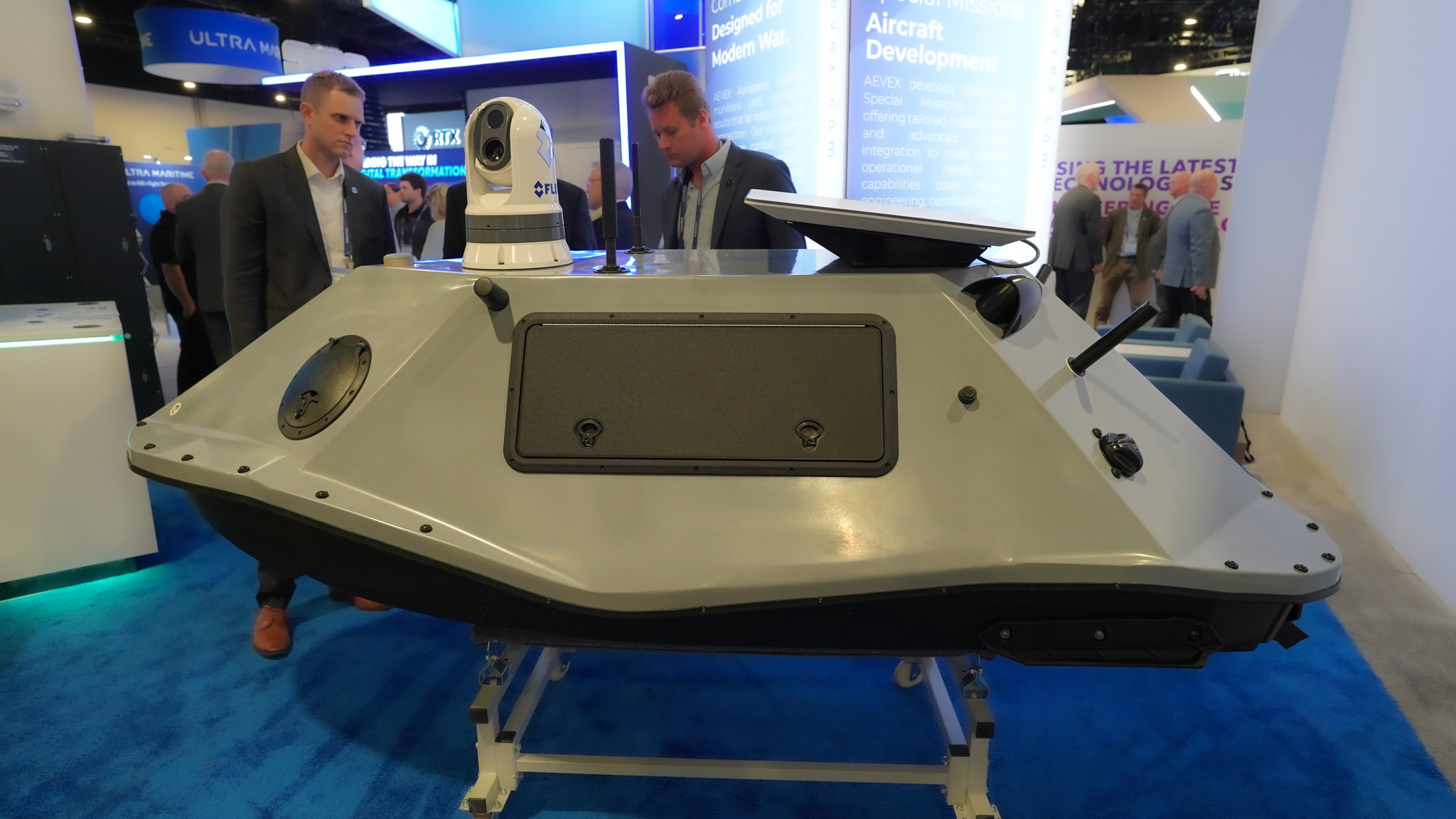
Attendees at Sea Air Space 2025 may pass by the curiously, almost fish-like shape of Aevex's Mako Lite, what the company calls "a rugged, low-visibility" unmanned surface vessel. (Brendon Smith / Breaking Defense)