Naval Warfare

EXCLUSIVE: HII lifts the veil on secretive Dark Sea Labs tech integration office

“Our Dark Sea Labs team enables what no single HII division can do on its own,” Eric Chewning, a senior executive at HII, told Breaking Defense.

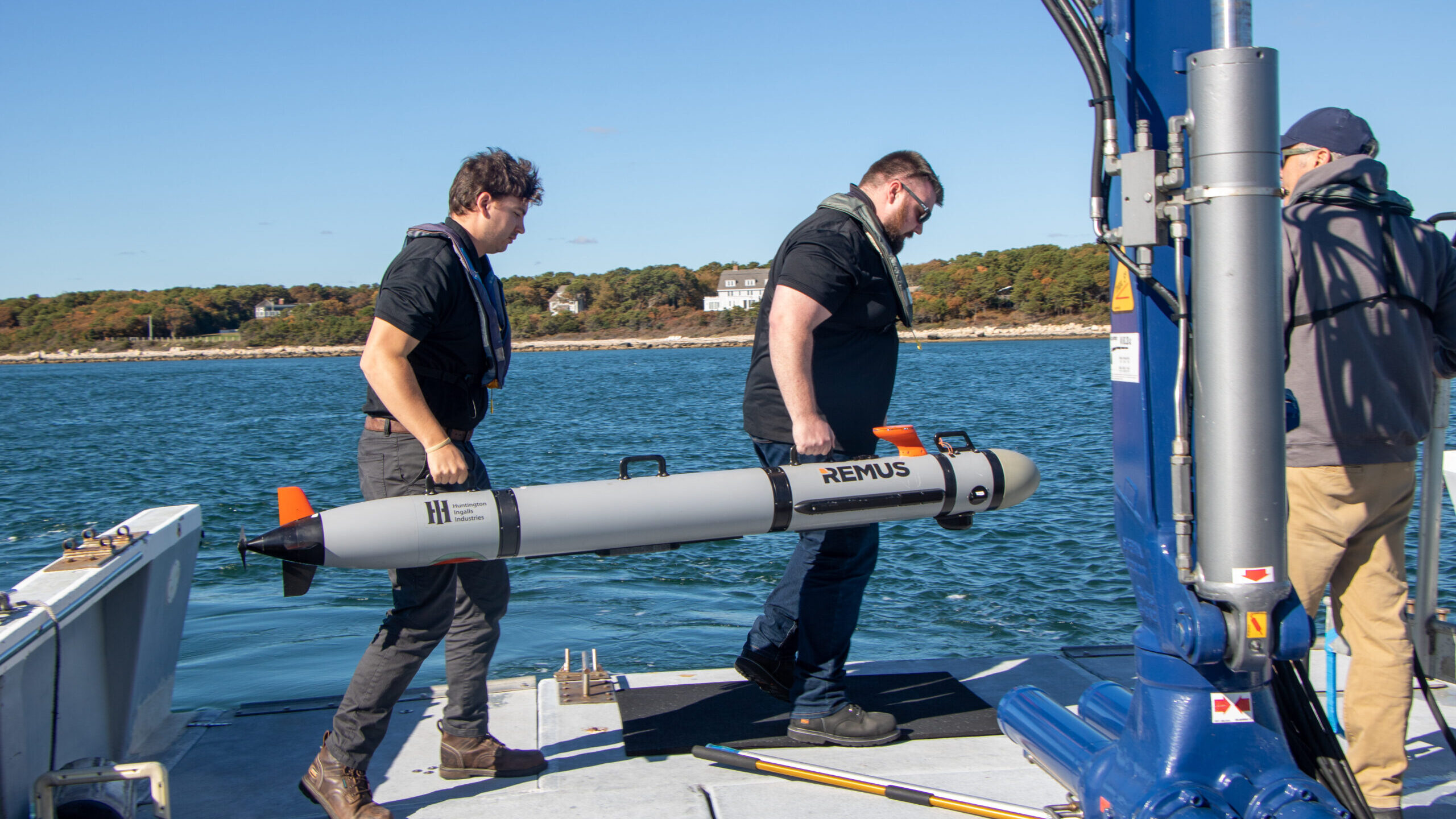
Remus 300 Crew
The crew of an HII-owned boat prepare to deploy a Remus 300 into the water. (Photo by Justin Katz/Breaking Defense)

WASHINGTON — Shipbuilder HII has established an office focused on integrating technologies from across its various business units, with the aim of replicating similar cross-cutting endeavors at the Pentagon, a senior executive recently revealed to Breaking Defense.

The idea for what HII calls its Dark Sea Labs (DSL) is to do “what no single HII division can do on its own,” Executive Vice President of Strategy and Development Eric Chewning told Breaking Defense in an exclusive interview.

On paper, that means proactively looking for opportunities where the research and development of one business unit might stand to benefit another — if only the right conduit was in place to bring the two together.

In practice, Chewning said DSL has had a hand in integrating the Navy’s Conventional Prompt Strike weapon onboard the Zumwalt-class destroyers; using artificial intelligence to improve HII’s shipyards’s output; and working on the launch and recovery of unmanned undersea vehicles from traditional submarines.

RELATED: HII chief: Defense tech business will outpace shipyard growth going forward

Much of the efforts revolve around HII’s Mission Technologies, which, in contrast to the company’s shipyards in Virginia and Mississippi that hold premiere shipbuilding contracts, is focused on technologies such as unmanned systems, C5ISR and artificial intelligence. For example, Mission Technologies is largely responsible for developing the company’s unmanned underwater vehciles (UUVs) that HII hopes will one day operate from the Navy’s submarines.

In a similar vein, HII hopes DSL’s efforts will help the company expand its work inside the Pentagon. Chewning pointed to the recent other transaction agreement (OTA) HII received from the US Army to develop a high-energy laser as a potential future opportunity.

That weapon, HII’s first public debut into the field of directed energy, is envisioned to help Army bases and vehicles defend themselves from small- to medium-sized drones.

“The Army is leading investment in the counter-UAS [mission] and so there’s an opportunity here for us to obviously excel in this program for the Army,” Chewning said. “As the technology is validated and proven, [the goal is to demonstrate] that to other services, and given our deep relationship with the Navy, being able to demonstrate that we’re able to marinize the capability to address the Navy’s problem sets with the same counter-UAS mission.”

Directed energy has proven to be a stubborn technology for the Defense Department. Senior officers from all services have for years expressed interest in using laser weapon systems and funded dozens of research and development efforts. Despite that, the Navy still lacks a program of record to equip its ships with such a weapon.

Chewning, who served in various senior civilian Pentagon roles during the first Trump administration, said demonstrating a technology’s capability successfully through OTAs will be the company’s approach to seeing them turned into programs of record — a strategy that HII has previously had success with through the Navy’s Lionfish program.

Overall DSL, Chewning said, is about “how we can take capability across the different portfolios, whether it’s Ingalls, Newport News or Mission Technologies, and then bring that together … to solve a customer problem set that any single division couldn’t solve on its own.”

PHOTOS: Sea Air Space 2025

PHOTOS: Sea Air Space 2025

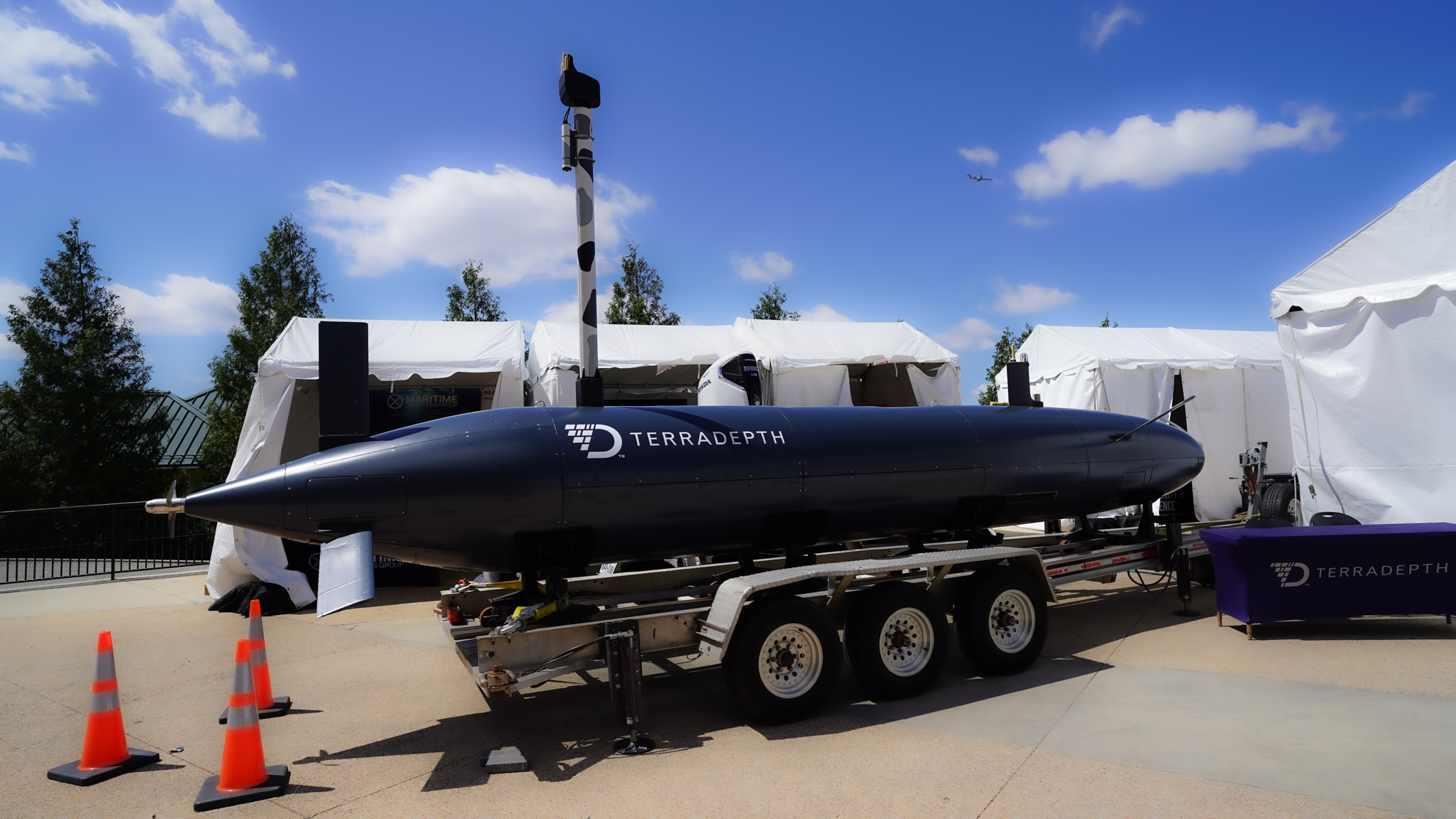
The Terradepth booth located outside on the Sea Air Space plaza showcased what it called its autonomous underwater submarine and Absolute Ocean platform solution. According to Terradepth, "Absolute Ocean is a secure seabed data management platform designed to enable real-time access, collaboration, and analysis of subsea data." (Brendon Smith / Breaking Defense)
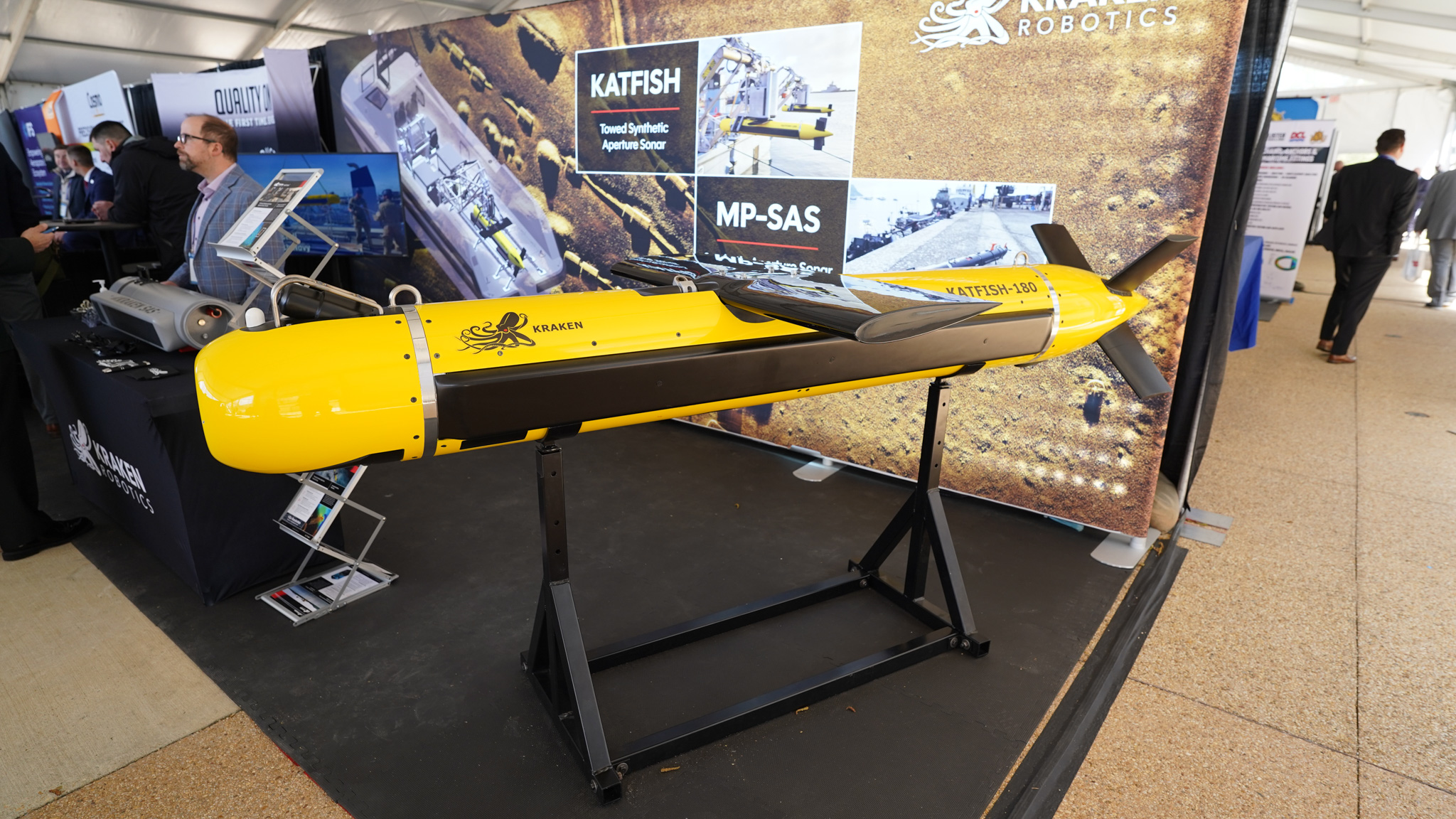
Spotted at Sea Air Space 2025, Kracken's Katfish 180 is a "high speed, actively stabilized Synthetic Aperture Sonar towfish that operates at speeds up to 10 knots." (Brendon Smith / Breaking Defense)
Kongsberg was at Sea Air Space 2025, presenting a 1-1 replica of the Joint Strike Missile. The Norwegian firm says it is designed to deal with threats both on land and at sea. (Brendon Smith / Breaking Defense)
Leidos' latest unveiling at Sea Air Space 2025, the SEA DART UUV is an affordable underwater vessel that doesn't compromise on capability. It is set to tackle a variety of mission sets from military operations to scientific pursuits, the company said. (Brendon Smith / Breaking Defense)
BAE Systems BOFORS 40 MK 4 Naval Gun System can "go from warning to destruction in less than 0.5 seconds." The company said weapon, on display at Sea Air Space 2025, is automatically loaded and can be both remotely and locally controlled. (Brendon Smith / Breaking Defense)
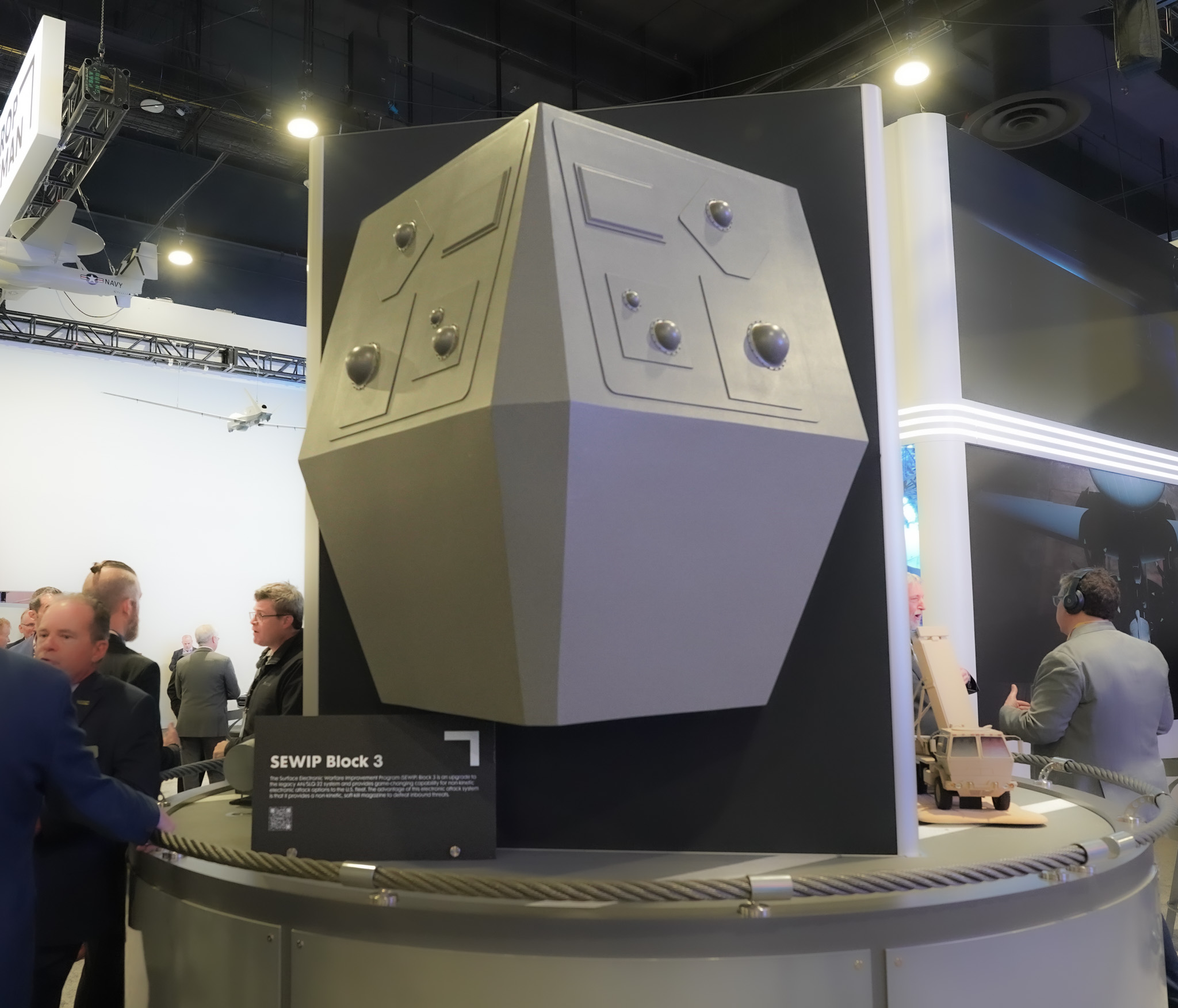
Northrop Grumman said its SEWIP BLOCK 3, on display at Sea Air Space 2025, iterates on previous versions bringing electronic attack capabilities to defend against anti ship missiles and offers hopes of future proofing for integration with AI and machine learning. (Brendon Smith / Breaking Defense)
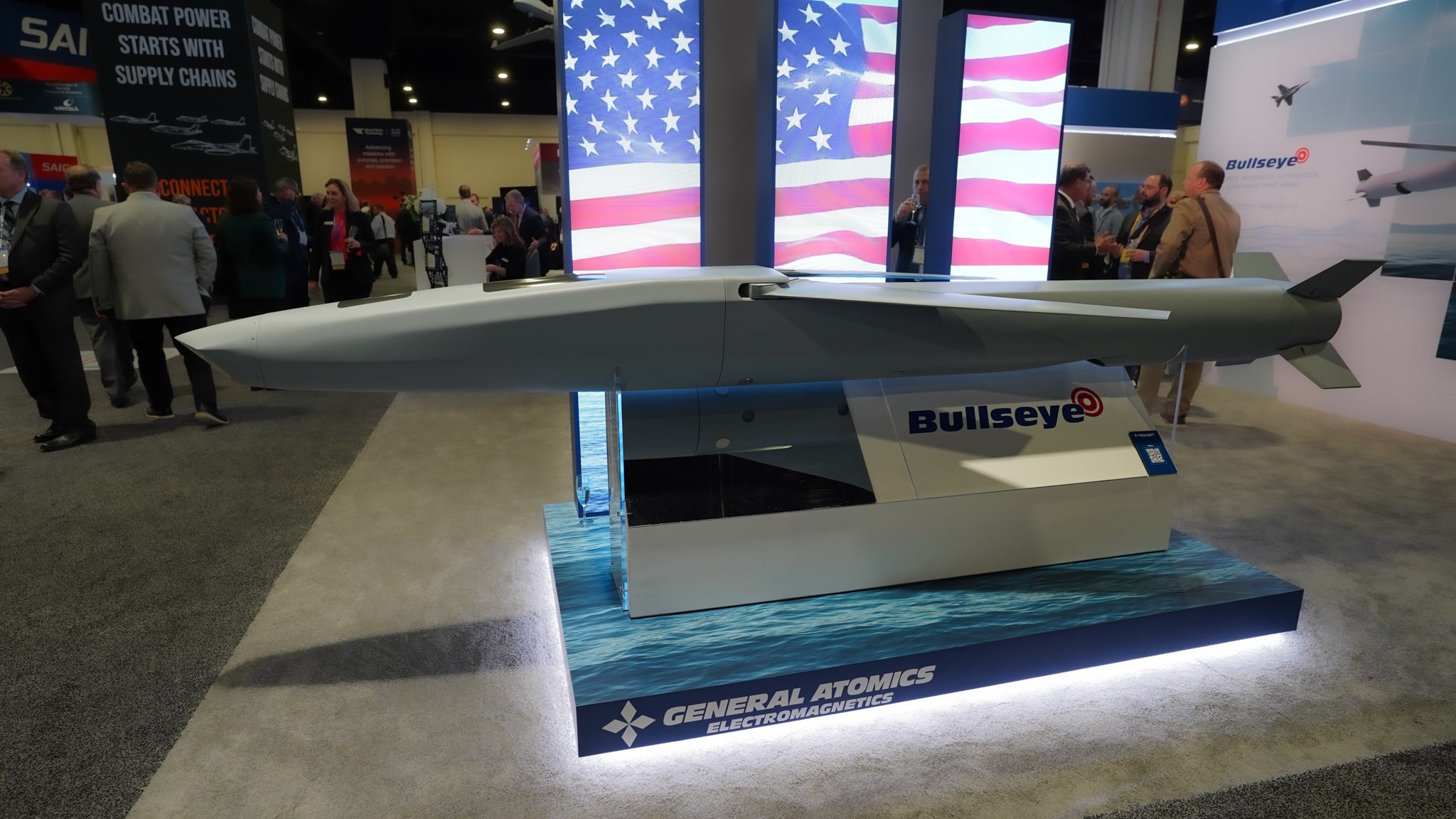
A surprise announcement was made by General Atomics on Day 1 of Sea Air Space 2025 regarding their new long range precision guided Bullseye Missile, a partnership with Israel Defense contractor Rafael. (Brendon Smith / Breaking Defense)
One of the busiest areas of the floor at Sea Air Space 2025 belonged to the Australian contingent at a time of uncertainty in international collaboration. (Brendon Smith / Breaking Defense)
Shield AI shows off its V Bat vertical-takeoff unmanned system at Sea Air Space 2025. (Brendon Smith / Breaking Defense)
A quadcopter unmanned aerial vehicle, the TRV-150c, sits on display at Maryland-based Survice Engineering Company's booth at Sea Air Space 2025. (Brendon Smith / Breaking Defense)
Ahead of Sea Air Space 2025, Anduril announced a new unmanned underwater system dubbed Copperhead. (Brendon Smith / Breaking Defense)
At Leonardo's booth at Sea Air Space 2025 sits a radar from its Gabbiano family of systems. (Brendon Smith / Breaking Defense)
Unmanned tech company firm Saildrone shows off its Voyager USV at Sea Air Space 2025. (Brendon Smith / Breaking Defense)
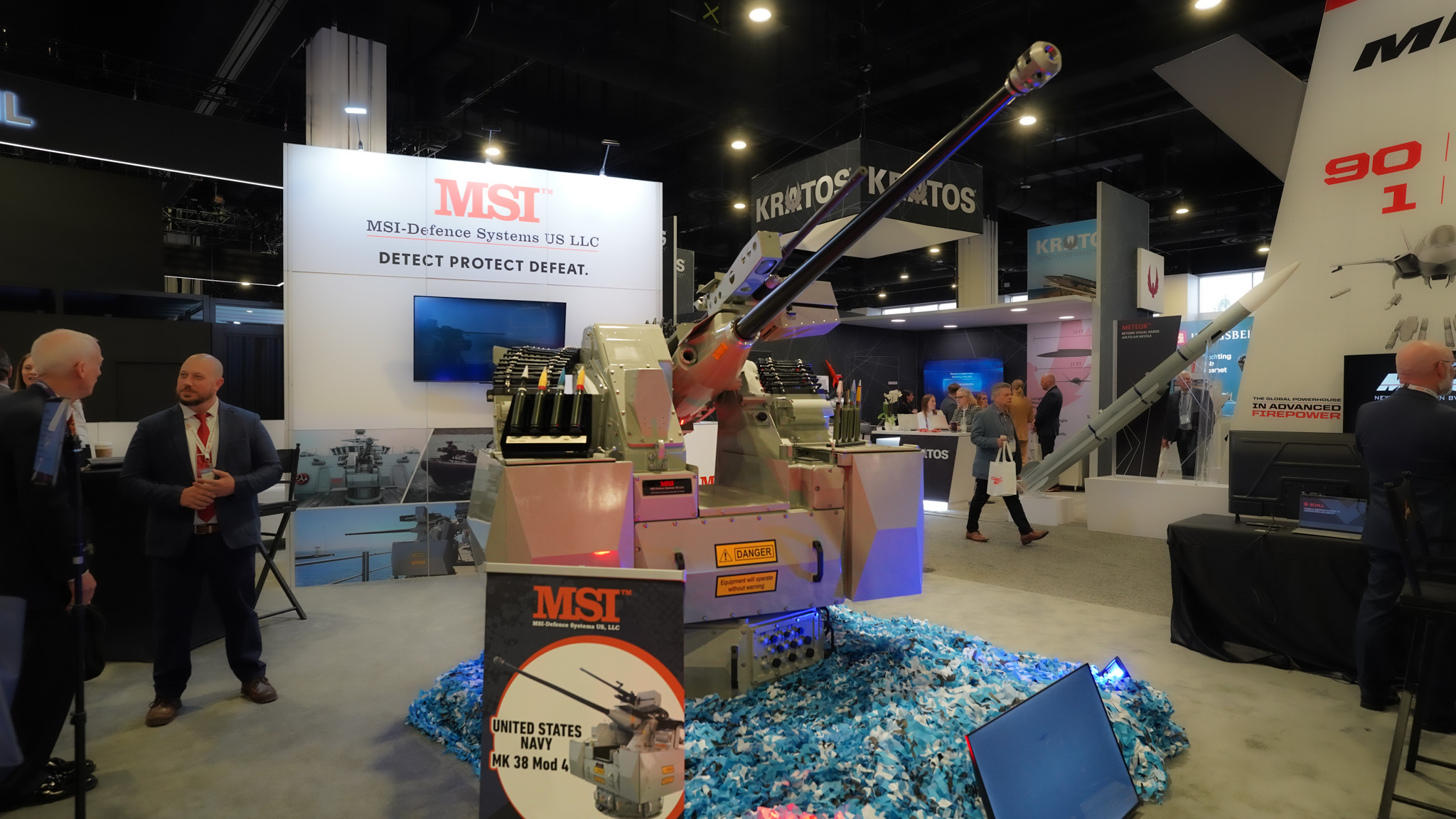
The American arm of British defense MSI-Defence Systems attended Sea Air Space 2025, displaying its MK38 automated naval gun, which is in currently in service with the Navy. (Brendon Smith / Breaking Defense)
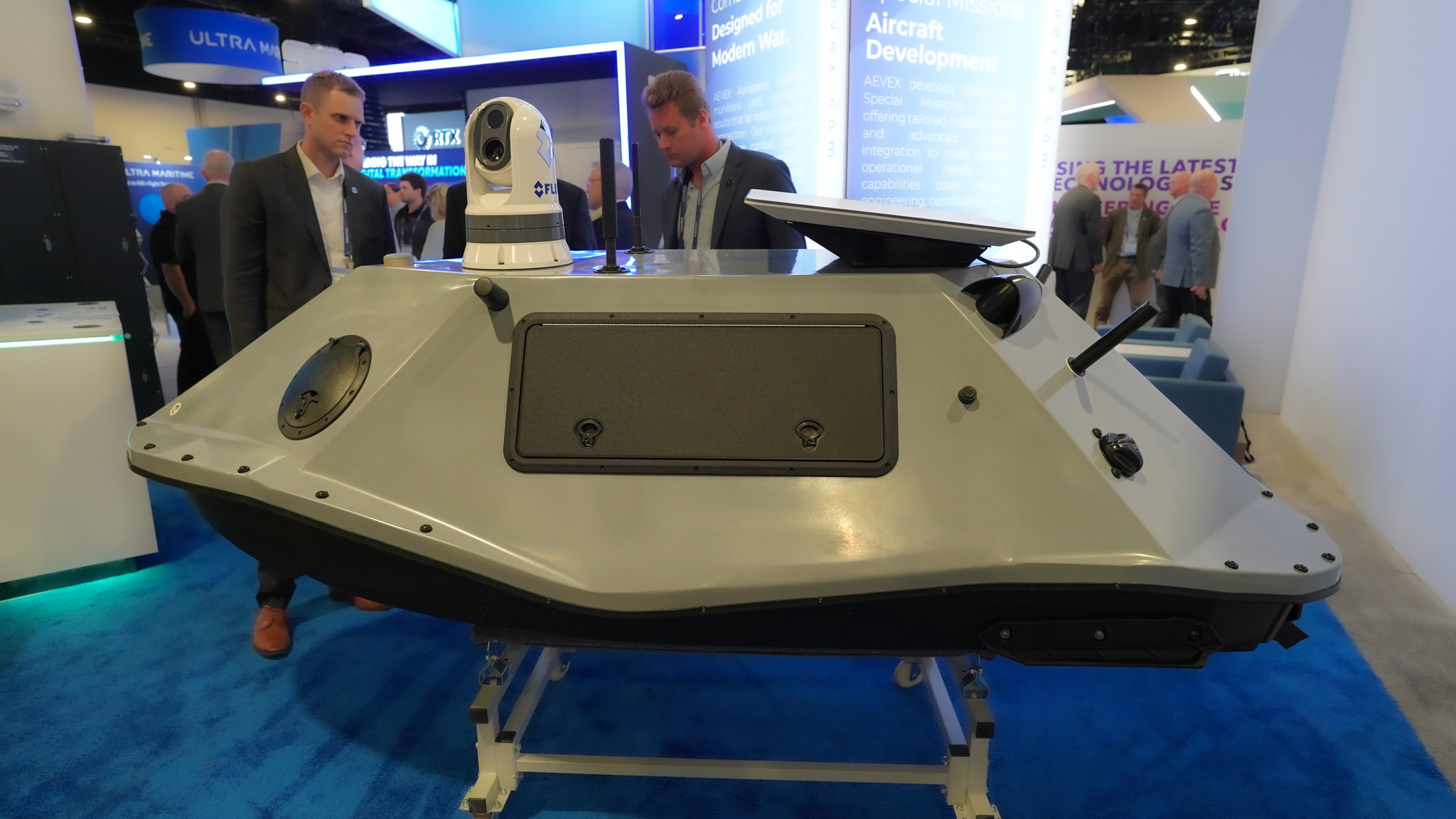
Attendees at Sea Air Space 2025 may pass by the curiously, almost fish-like shape of Aevex's Mako Lite, what the company calls "a rugged, low-visibility" unmanned surface vessel. (Brendon Smith / Breaking Defense)