For the naval community, 2025 was a year about all things “big”: the Navy’s big boss, big international agreements for the Coast Guard and of course, every naval enthusiast’s favorite topic of discussion, big ships!
Some of these activities were expected (movements on ICE Pact), some were rumored, but not certain (a new chief of naval operations), and at least one, in my opinion, felt like it came out of nowhere, (are we really going to build battleships again?)
Before diving into my top five stories for this year, I would be remiss to not acknowledge the shortage of Marine Corps stories. Their absence on this list, I believe, is not an insult, but a testament to what many have told me about that service’s culture: When the commandant tells Marines to get after a goal, they rally and get after it — hard.
[This article is one of many in a series in which Breaking Defense reporters look back on the most significant (and entertaining) news stories of 2025 and look forward to what 2026 may hold.]
In my view, this is at least partly why they have been less prone to questioning and rethinking “big” things as of late. Since the advent of Force Design in 2019, Marine Corps leadership year over year has made that document its north star; persuaded Pentagon and congressional leaders to get behind it and only made minor tweaks around the edges.
With that said, here are five stories from 2025 that made big waves for the sea services.
1. Trump taps Caudle as Navy’s next leader, USMC’s Mahoney as joint chiefs No. 2
Any time there is a change of command at the service chief level, it’s going to be a big deal. But what stands out about Adm. Daryl Caudle’s selection as the 34th chief of naval operations is two-fold: First, it took a long time to make the pick. (Honorary mention to this story which discusses the historic gap between Senate-confirmed CNOs.)
Second, despite President Donald Trump’s tendency to seek unorthodox candidates — see Joint Chiefs of Staff Chairman Gen. Dan Caine’s history — Caudle has the standard resume for a CNO. A career operational submariner and, at that time, the four-star head of US Fleet Forces Command, he likely would have been a leading contender for the job during any presidential administration.
And of course, it’s also worth noting it was at this time then-Assistant Commandant of the Marine Corps Gen. Christopher Mahoney was chosen to become the Vice Chairman of the Joint Chiefs of Staff — putting a Marine in a Joint Staff position that has heavy influence over the Pentagon’s requirements and budget plans broadly.
2. Coast Guard ‘naming and shaming’ amid spike in Chinese activity near Alaska
There are about four or five stories that I would like to highlight that all circle back to the Coast Guard, ICE Pact and recapitalization of the American icebreaker fleet through deals with Finland and Canada. They are all intermingled with one another and have been a major focus for me this year as we watch what the Trump administration decides to do with former President Joe Biden’s last big trilateral security agreement.
I’ve selected this story in particular, which focused on how the Coast Guard is responding to Chinese activity off the coast of Alaska, because this is what all of the preceding items sum up to: American ships (and aircraft) are being deployed to places they’re needed. In this case, they were monitoring a big flotilla of Chinese activity that was happening too close for comfort.
3. What it would take to build Trump’s Golden Fleet ‘battleships’
Are battleships back? The answer is ostensibly “yes.” The White House earlier this week announced its plan for a new class of those ships. And this next story explored what it might take, from a budgetary and industrial base point of view, to make it happen. A brief aside, how people use the word “battleship” tells you a lot about their background — or lack thereof — in all things naval. (Just ask my editors how many times I corrected their usage!) True American battleships were heavily armored warships produced in the 1940s and designed for gun fights with peer navies. In any event, this new class of ships will likely prompt some big changes to the Navy’s long-range shipbuilding plan moving forward and that’s why this story is on the list.
4. ‘Be uncomfortable’: Navy wants new USV to challenge the ‘status quo’
What’s the big idea with unmanned surface vessels!? (Seinfeld fans? Anyone?)
Well, the Navy answered that question in this story about their Modular Attack Surface Craft program, a new USV envisioned to carry a variety of payloads and be easy to build and repair en masse. This story makes the list because, as two senior Navy officials told me, the service is stepping out of its — and industry’s — comfort zone to try something new, and big, with unmanned systems. Whether it pays off will be a question for 2026.
5. Navy’s shipyard revamp strategy evolves amid obstacles, years into $20B effort
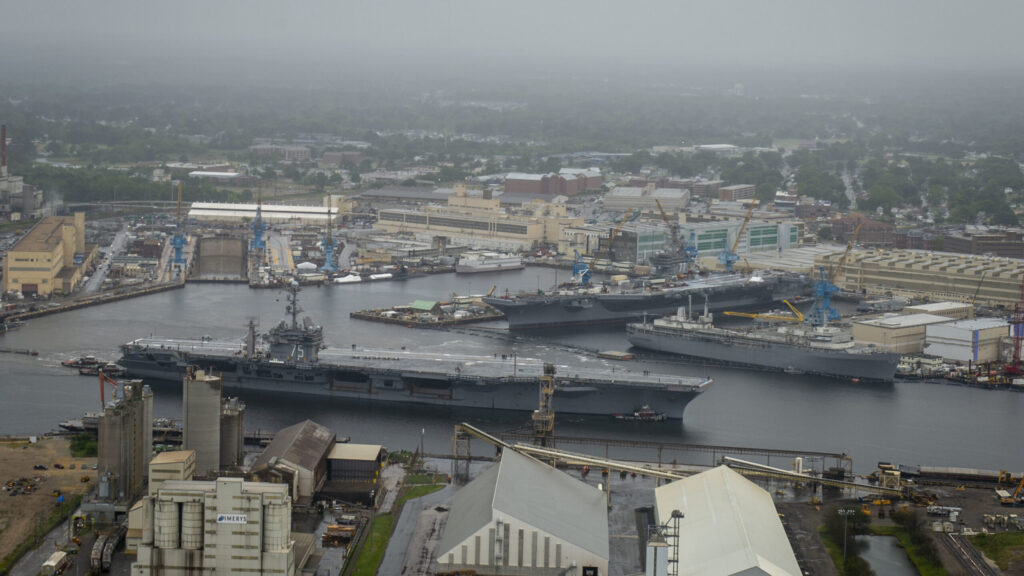
This last story about the Shipyard Infrastructure Optimization Plan program makes the list because ship maintenance — the primary mission of the four public shipyards — is what underpins the Navy’s entire fleet.
When it goes smoothly, you see the iconic photos of aircraft carriers and destroyers sailing in formation with fighter jets flying above. When it goes poorly though — well, everyone has a bad day. This story feature interviews with two top officials overseeing the program who acknowledged the cost and schedule changes, but also argued the Navy is starting to reap real benefits from the decades-long effort that began in earnest in 2018.
Regardless, SIOP is a big program with big goals and based on its importance to keeping all the other big things in the US Navy operating, I imagine it will continue to do big things in 2026 and beyond.