Naval Warfare

Leidos unveils ‘low-cost’ unmanned undersea vessel ‘Sea Dart’

The Sea Dart starts at around $150,000, a Leidos official told Breaking Defense, and works with various payloads and software packages.

DSC05001-2
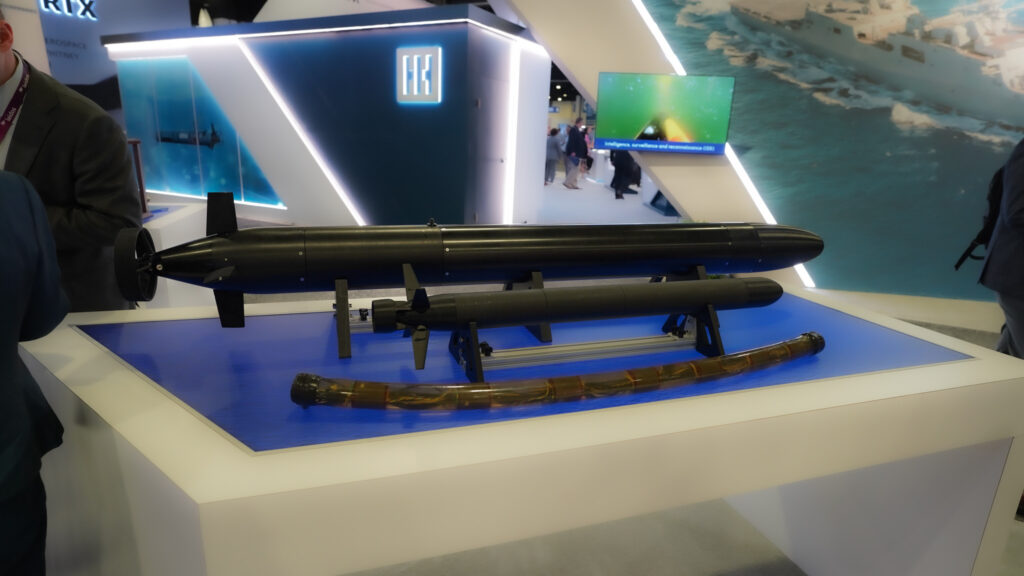
Leidos’ latest unveiling at Sea Air Space 2025, the SEA DART UUV is an affordable underwater vessel that doesn’t compromise on capability. (Brendon Smith / Breaking Defense)

SEA AIR SPACE 2025 — Defense and information technology company Leidos this week unveiled a new unmanned undersea vessel (UUV) called Sea Dart, what the company is advertising as a “low-cost,” versatile maritime weapon.

“The price of UUVs continue to escalate,” Jason Weed, the undersea subject matter expert in Leidos’ Maritime Systems Division, told Breaking Defense Tuesday. But, he said, with the Sea Dart starting at around $150,000 per unit, “we’re able to provide these at scale. You can build 600-700 Sea Darts with $100 million.”

Leidos officially revealed the “low cost” Sea Dart on Monday, saying that it “currently comes in two different standard diameters, six and nine inches, and is transportable by one or two people. It is payload agnostic and compatible with the U.S. Navy’s preferred Underwater Vehicle software architecture as well as the U.S. Navy’s new non-propagating UUV battery design.” (The announcement said the 12-inch diameter version is “under consideration.”

Leidos says the UUV can travel down to 900 meters and can go as fast as 12 knots, and depending on the payloads attached, it has a battery life of up to 19 hours.

Weed said the first Sea Dart bought by a customer, who he declined to identify, went into the water in March. He also declined to say if the Navy was a current customer, but said Leidos “desired” for the Navy to use Sea Dart on a large scale.

He said that apart from being relatively affordable, the Sea Dart uses a commercial, off the shelf model, meaning buyers can purchase the vessel as it is but add any customizations — for example various sizes and types of payloads. It also has an open architecture model that can work with various software systems. So, depending on the payload and software package, Weed said the vehicle can perform counter-mine operations, battle space preparations, environmental sensing or undersea infrastructure monitoring, among other missions.

“There are a lot of concerns right now with underwater critical infrastructure like cables, so this can monitor those and report back if there are any changes,” Weed said.

Sea Dart is the latest collection in Leidos’ “Sea Systems” portfolio. It joins the small unmanned surface vessel Sea Archer and the medium unmanned surface vessels, Sea Hunter, Sea Hawk, Ranger and Mariner.

Unmanned maritime systems have been an emphasis at this year’s Sea Air Space show, with Anduril and HII announcing the delivery of new UUVs they’ve developed as well.

PHOTOS: Sea Air Space 2025

PHOTOS: Sea Air Space 2025

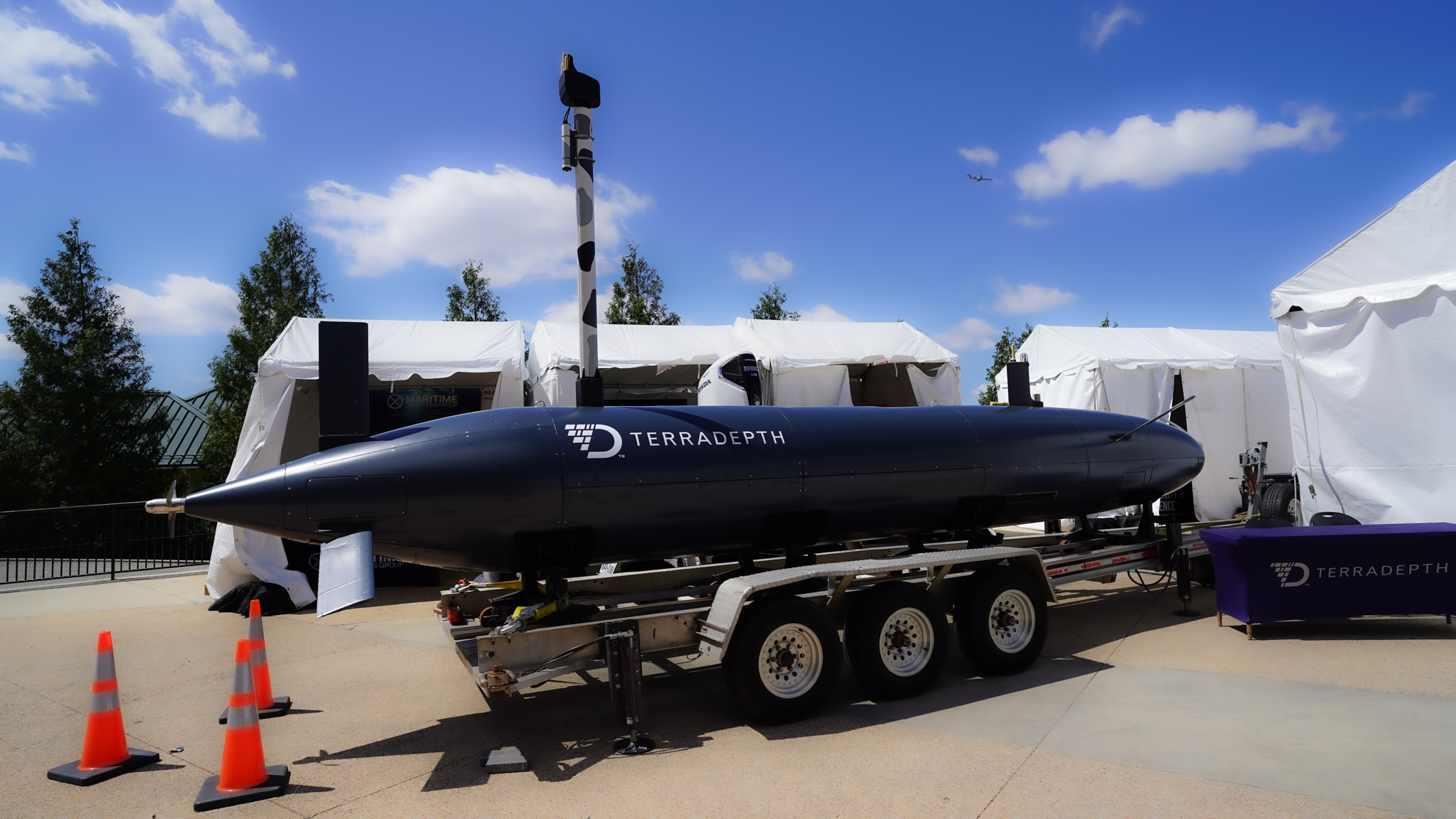
The Terradepth booth located outside on the Sea Air Space plaza showcased what it called its autonomous underwater submarine and Absolute Ocean platform solution. According to Terradepth, "Absolute Ocean is a secure seabed data management platform designed to enable real-time access, collaboration, and analysis of subsea data." (Brendon Smith / Breaking Defense)
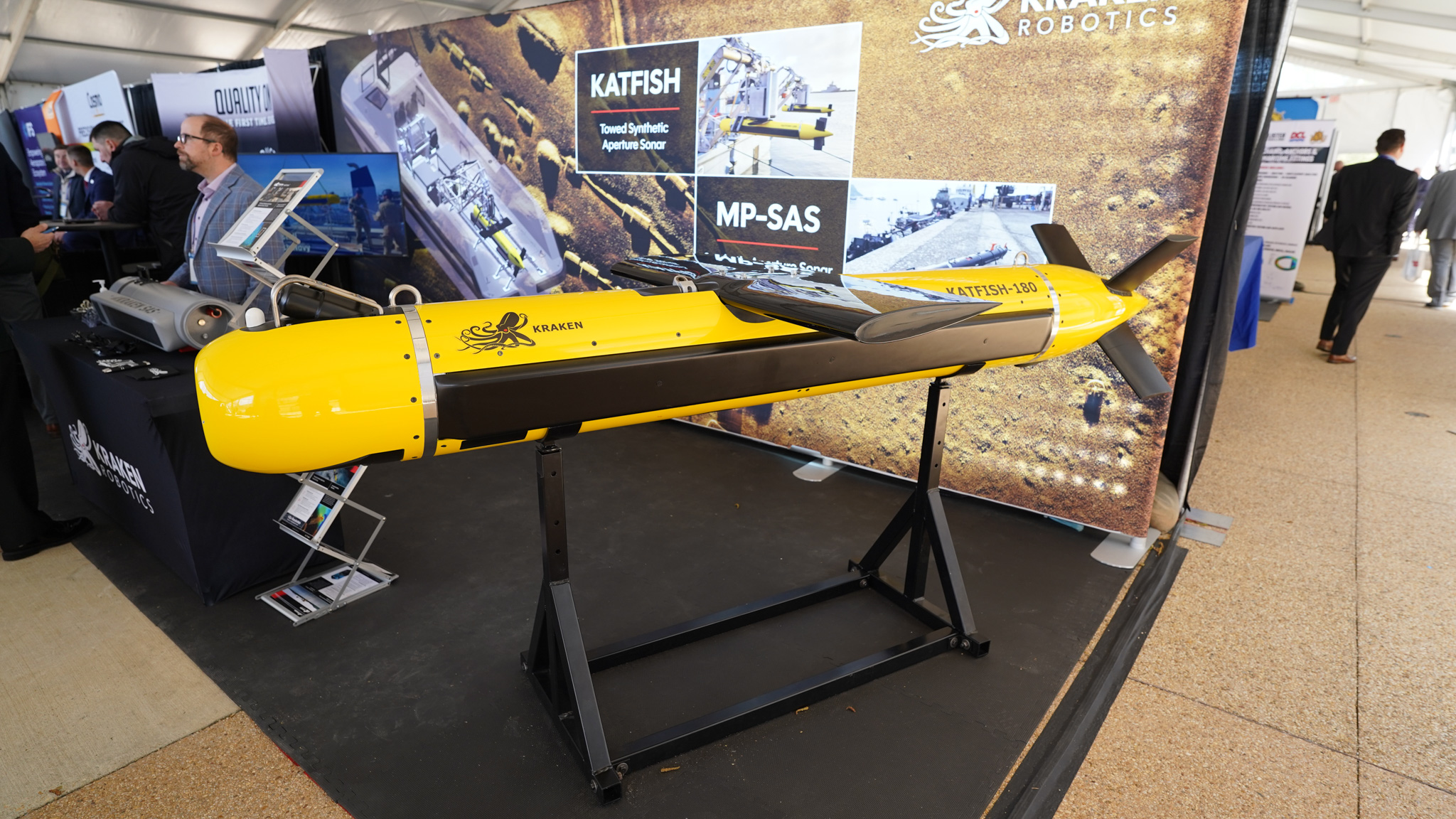
Spotted at Sea Air Space 2025, Kracken's Katfish 180 is a "high speed, actively stabilized Synthetic Aperture Sonar towfish that operates at speeds up to 10 knots." (Brendon Smith / Breaking Defense)
Kongsberg was at Sea Air Space 2025, presenting a 1-1 replica of the Joint Strike Missile. The Norwegian firm says it is designed to deal with threats both on land and at sea. (Brendon Smith / Breaking Defense)
Leidos' latest unveiling at Sea Air Space 2025, the SEA DART UUV is an affordable underwater vessel that doesn't compromise on capability. It is set to tackle a variety of mission sets from military operations to scientific pursuits, the company said. (Brendon Smith / Breaking Defense)
BAE Systems BOFORS 40 MK 4 Naval Gun System can "go from warning to destruction in less than 0.5 seconds." The company said weapon, on display at Sea Air Space 2025, is automatically loaded and can be both remotely and locally controlled. (Brendon Smith / Breaking Defense)
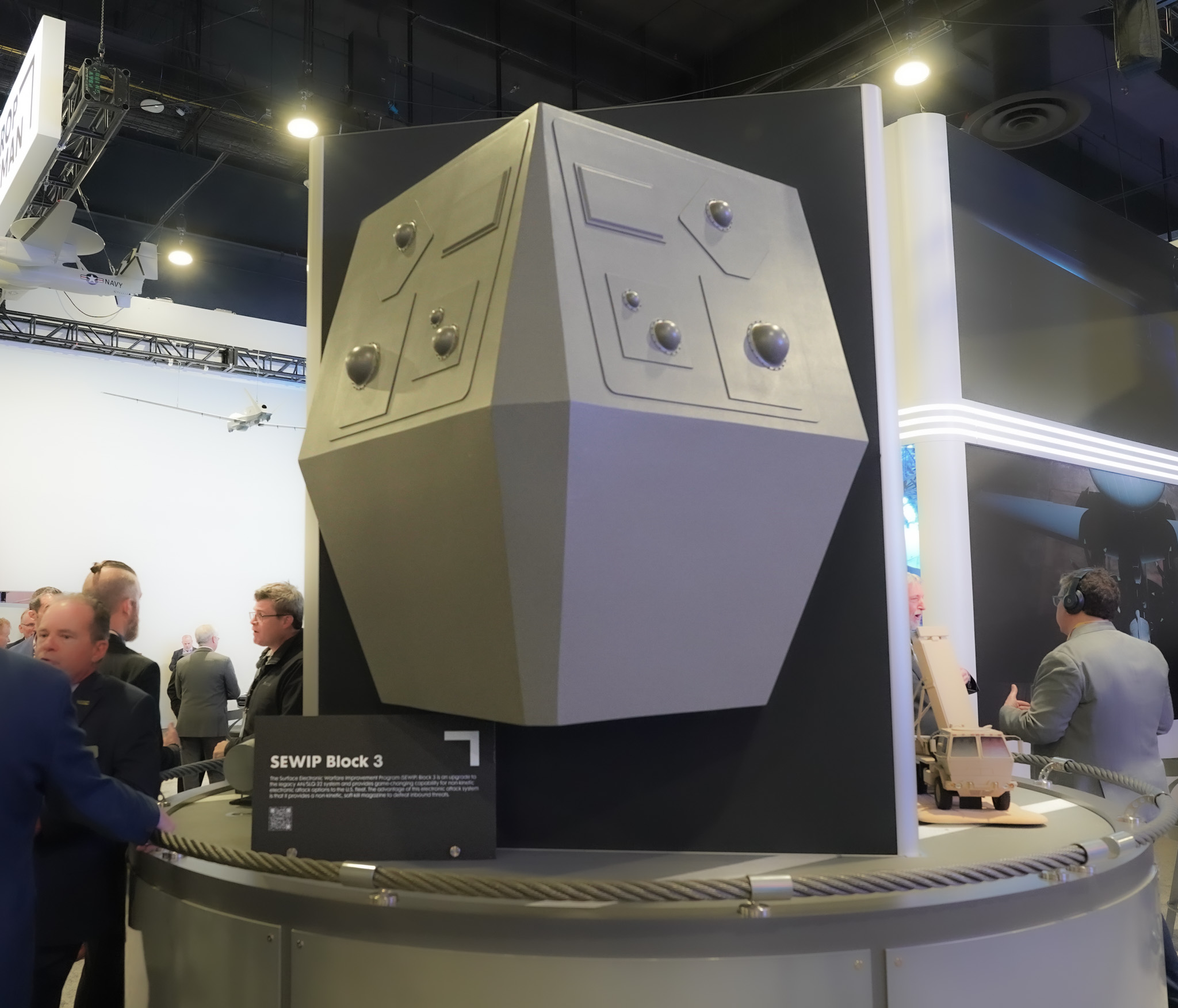
Northrop Grumman said its SEWIP BLOCK 3, on display at Sea Air Space 2025, iterates on previous versions bringing electronic attack capabilities to defend against anti ship missiles and offers hopes of future proofing for integration with AI and machine learning. (Brendon Smith / Breaking Defense)
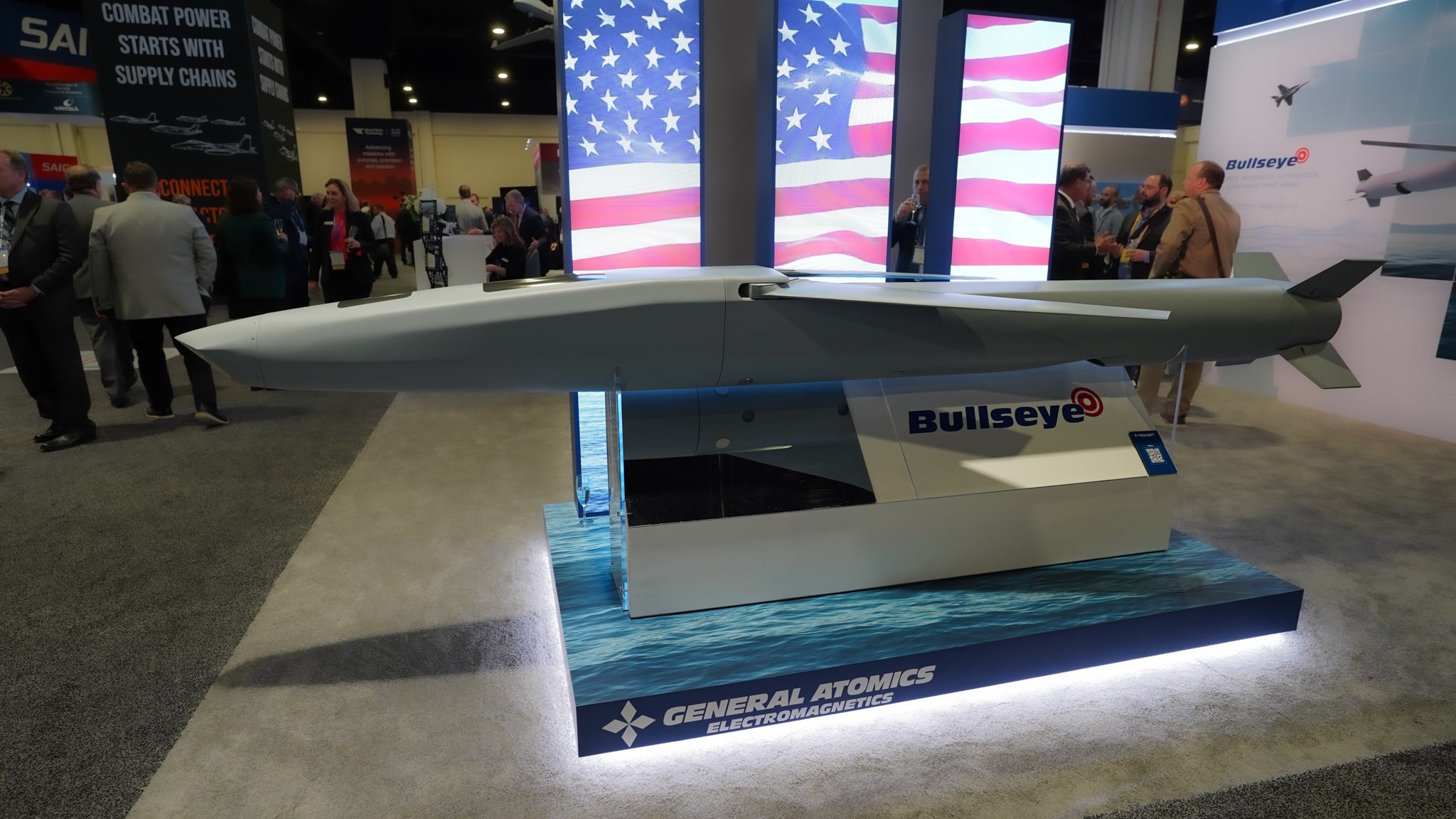
A surprise announcement was made by General Atomics on Day 1 of Sea Air Space 2025 regarding their new long range precision guided Bullseye Missile, a partnership with Israel Defense contractor Rafael. (Brendon Smith / Breaking Defense)
One of the busiest areas of the floor at Sea Air Space 2025 belonged to the Australian contingent at a time of uncertainty in international collaboration. (Brendon Smith / Breaking Defense)
Shield AI shows off its V Bat vertical-takeoff unmanned system at Sea Air Space 2025. (Brendon Smith / Breaking Defense)
A quadcopter unmanned aerial vehicle, the TRV-150c, sits on display at Maryland-based Survice Engineering Company's booth at Sea Air Space 2025. (Brendon Smith / Breaking Defense)
Ahead of Sea Air Space 2025, Anduril announced a new unmanned underwater system dubbed Copperhead. (Brendon Smith / Breaking Defense)
At Leonardo's booth at Sea Air Space 2025 sits a radar from its Gabbiano family of systems. (Brendon Smith / Breaking Defense)
Unmanned tech company firm Saildrone shows off its Voyager USV at Sea Air Space 2025. (Brendon Smith / Breaking Defense)
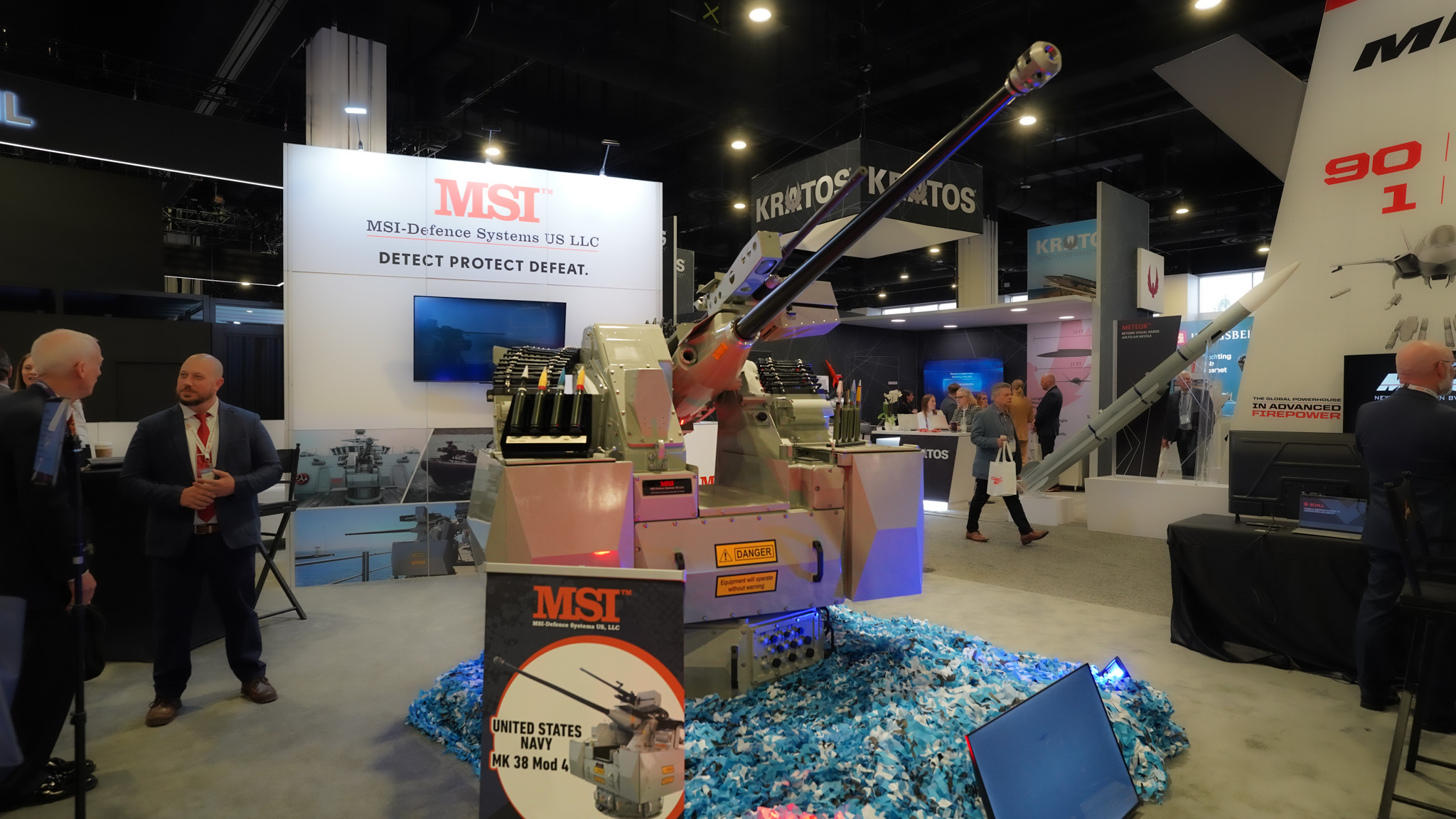
The American arm of British defense MSI-Defence Systems attended Sea Air Space 2025, displaying its MK38 automated naval gun, which is in currently in service with the Navy. (Brendon Smith / Breaking Defense)
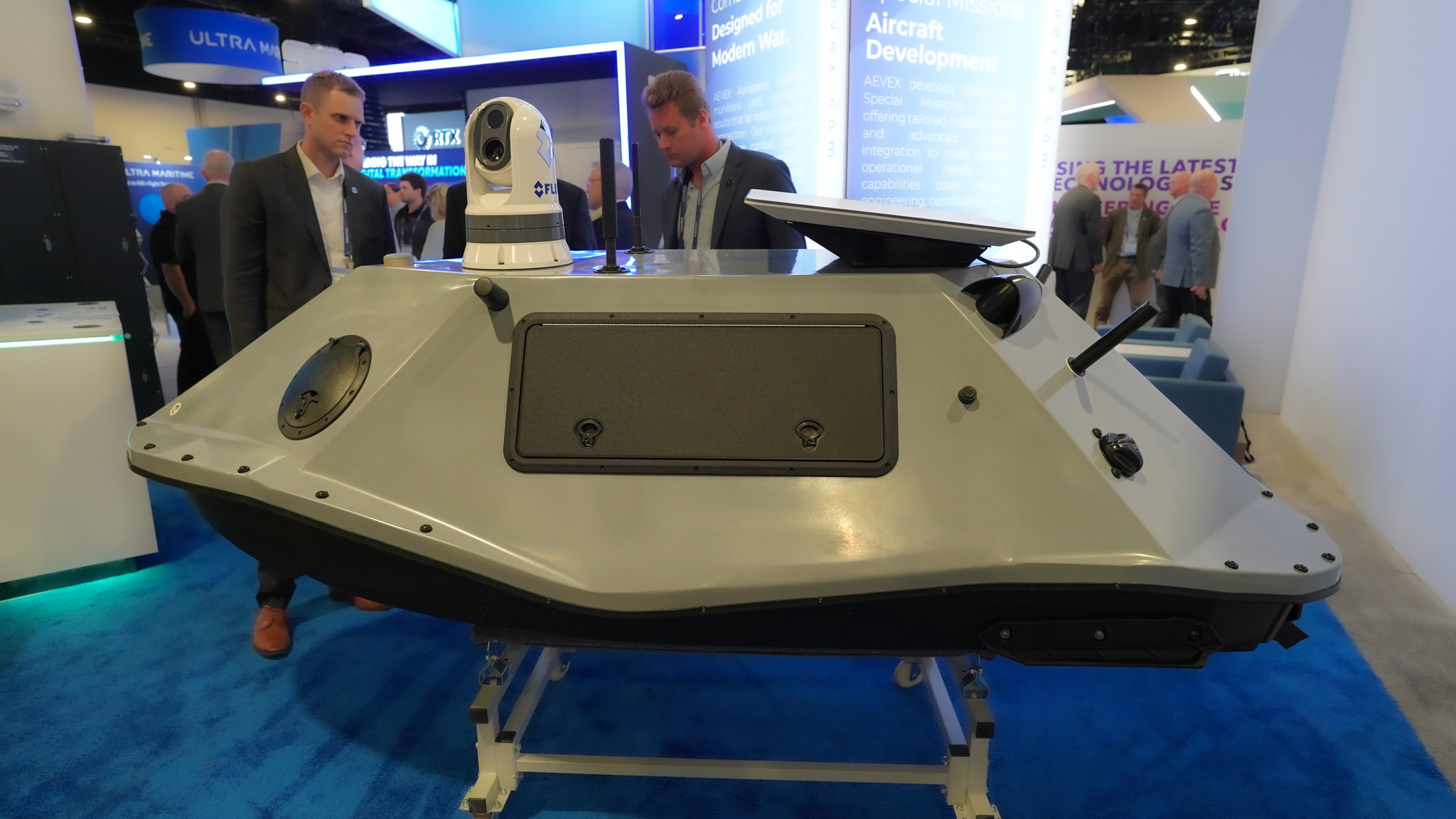
Attendees at Sea Air Space 2025 may pass by the curiously, almost fish-like shape of Aevex's Mako Lite, what the company calls "a rugged, low-visibility" unmanned surface vessel. (Brendon Smith / Breaking Defense)