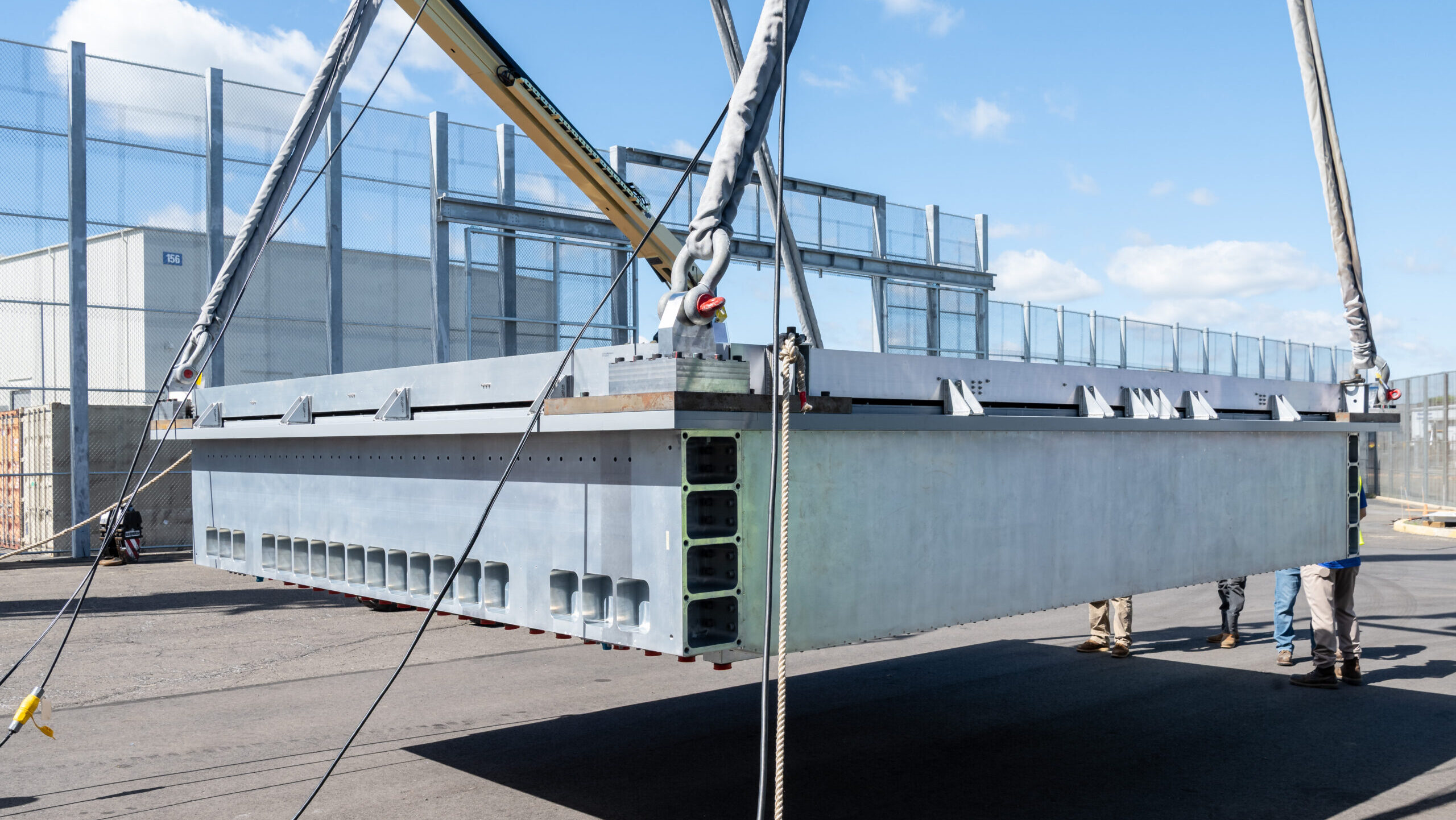
WASHINGTON — Lockheed Martin announced today it delivered the first shipset of four SPY-7(V)1 radar antennas — which will be equipped on Japan’s future Aegis System Equipped Vessel (ASEV) — to Japan’s Ministry of Defense.
“The successful on-time delivery of all antennas for the first ASEV showcases the maturity and scalability of the SPY-7 radar as well as production capacity, while also demonstrating Lockheed Martin’s dedication and expertise in system integration,” Chandra Marshall, vice president of Multi-Domain Combat Solutions at Lockheed Martin, said in a statement.
Japan plans to acquire two warships focused on ballistic missile defense, which are planned for commissioning in Japan’s fiscal year 2027 and 2028.
In addition to Japan, Lockheed also has deals with the Canadian and Spanish militaries to equip certain surface ships with the SPY-7 radar. For Canada, that radar will go on its future River-class destroyers, which will replace the Iroquois-class destroyers and Halifax-class frigates. Meanwhile, the Spanish military is buying SPY-7 for its F-110-class frigates.
Although the radar antennas have been accepted by the Japanese government, the equipment will remain in the United States while Lockheed finishes “full system integration and testing with all four antennas at the Production Test Center in Moorestown, New Jersey … which will significantly reduce integration risk and enable commissioning on schedule,” Marshall said in a statement.
The Japanese government in recent years has pivoted towards higher defense spending in the face of an increasingly aggressive China, approving a record-setting $8.7 trillion yen ($55.1 billion) budget in December.
More recently, Defense Secretary Pete Hegseth in a March trip to the Indo-Pacific lauded Japan and other Asian allies, promising the Trump administration would prioritize the region moving forward. At that time, Hegseth also announced “upgrading” the joint American-Japanese military command, stating DoD will add additional personnel to the headquarters at Yokota Air Base as well as Tokyo.
However, President Donald Trump today announced his administration intends to place a 25 percent tax on goods imported from countries in the region, including Japan, underscoring the economic tensions the administration’s policies have created with American military partners and allies.